
Made to order
- Calibration, operator training, and scan-to-CAD workflow setup
- Tailored warranty with same-week dispatch on critical issues
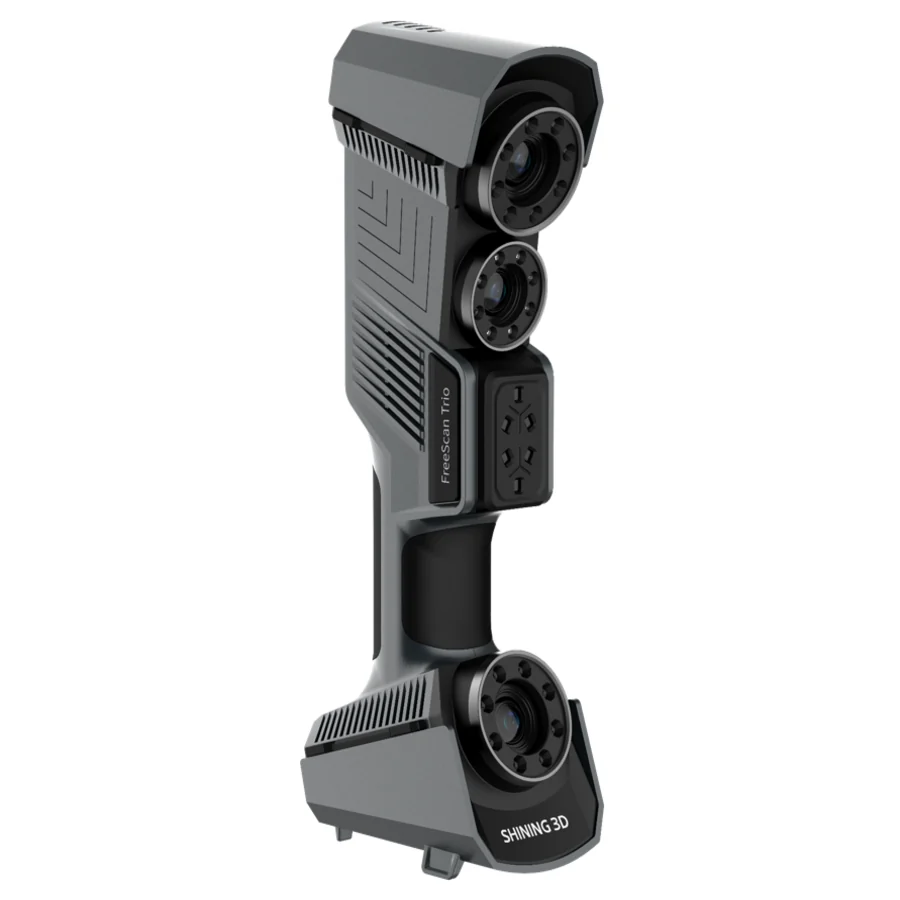
Shining 3D FreeScan Trio Marker-Free Laser 3D Scanner – 98-Line Handheld Metrology | 0.02 mm Accuracy
Handheld laser scanner with a 98-line marker-free mode and 0.02 mm accuracy with markers — Deep Hole Scan for holes, deep pockets, and fin walls.
- ✓ 98 laser lines for marker-free scanning of feature-rich parts
- ✓ Up to 3,010,000 points/s scan rate, point distance 0.01–3 mm
- ✓ Deep Hole Scan with 26 or single laser line
- ✓ 1-year Shining 3D warranty
- ✓ Ship date confirmed by email after you order
What your metrology engineer actually checks
Marker-free speed, certified accuracy with markers
The 98-line mode scans feature-rich parts without markers at up to 3,010,000 points/s. In scan modes with markers the Trio provides 0.02 mm accuracy, and built-in photogrammetry gives 0.02 + 0.015 mm/m volumetric accuracy on large parts — tested to VDI/VDE 2634 Part 3 & ISO 10360 in Shining 3D’s ISO/IEC 17025 accredited lab.
Authorized US reseller
First-line support from our team in California, with warranty repairs by Shining 3D under the 1-year Shining 3D warranty. Formal quotation on our letterhead and US invoicing; our applications engineer helps you choose the right configuration.
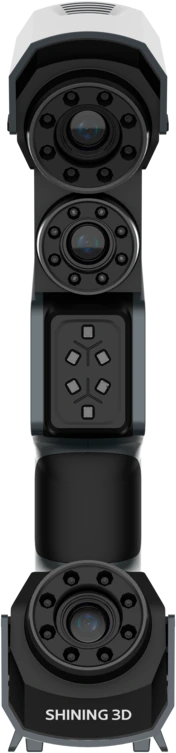
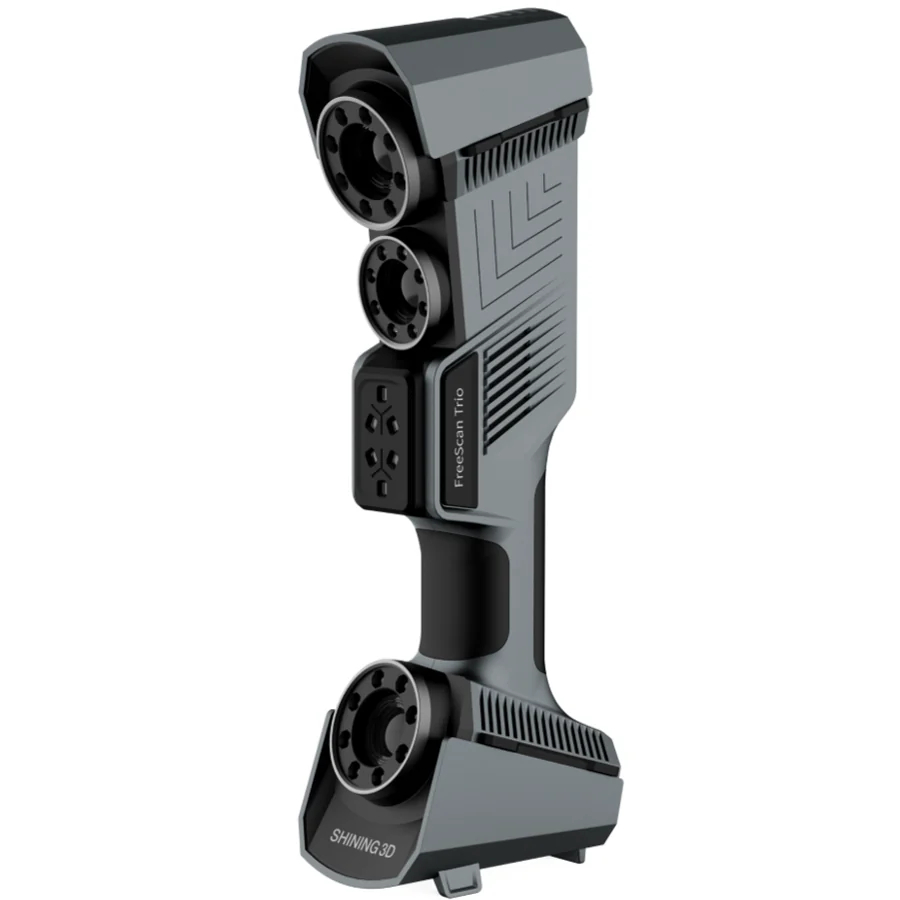
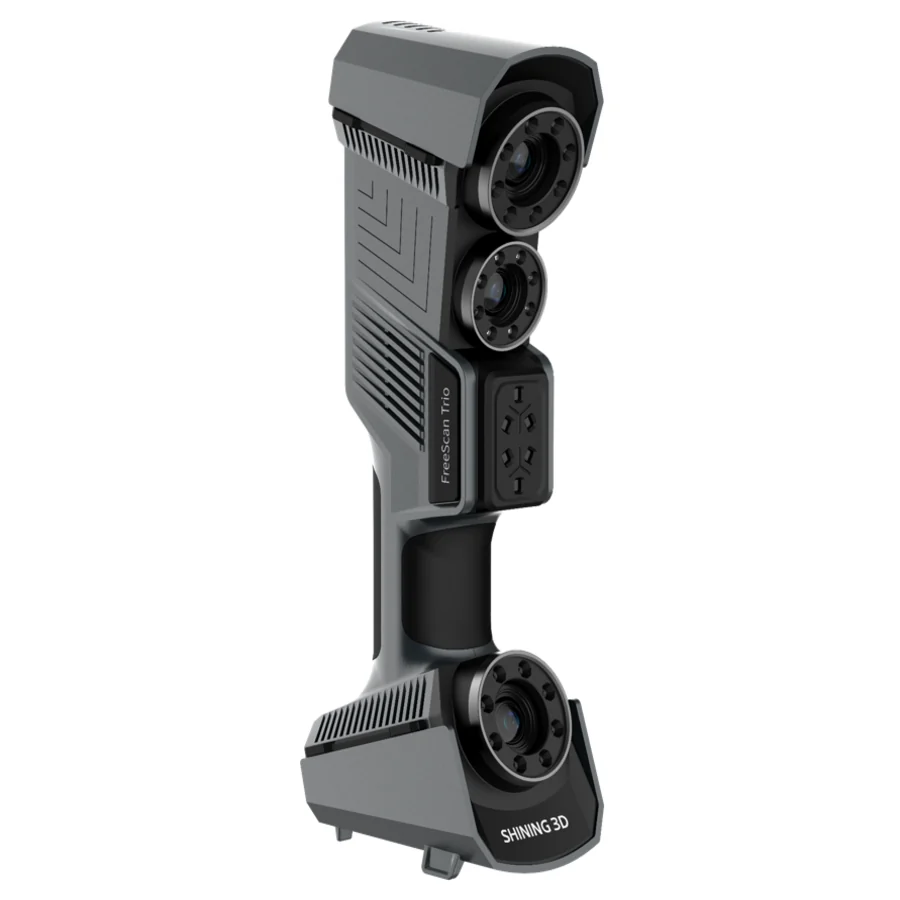
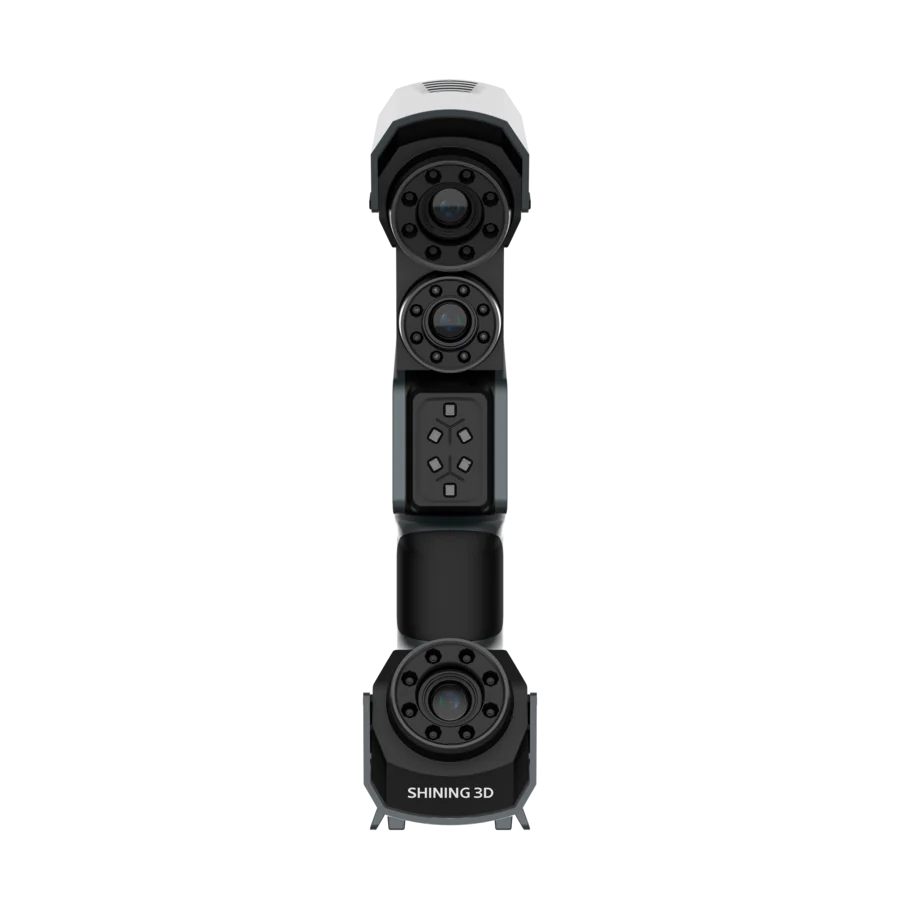
The Shining 3D FreeScan Trio is a marker-free handheld laser 3D scanner that pairs a 98-laser-line mode with a triple 5MP camera system, with a 98-line mode that scans feature-rich parts without markers and 0.02 mm accuracy in scan modes with markers.
Why metrology teams choose the FreeScan Trio
Marker-free capture, deep-hole reach, and certified accuracy with markers.
Marker-free capture at scale
The 98-line mode uses intelligent self-positioning to scan feature-rich parts without markers at up to 3,010,000 points/s — less preparation, more efficiency.
Metrology-grade accuracy
0.02 mm accuracy with markers and point distance down to 0.01 mm, with built-in video photogrammetry (VPG) for volumetric accuracy of 0.02 + 0.015 mm/m on large parts. See full specifications below.
Deep Hole Scan for holes and pockets
Both the 26-line and single-line modes can scan holes, deep pockets, and fin walls, thanks to optimized camera angles.
Four scan modes, three 5 MP cameras
High Speed (26 lines), Detailed (7 parallel lines), Deep Hole (26 / single line), and No Markers (98 lines) modes, all using three industrial 5 MP cameras.
How you buy the FreeScan Trio from Additive Plus
Warranty, support, and ordering — what we put in writing.
1-year Shining 3D warranty
Standard 12-month Shining 3D warranty from the date of your purchase.
First-line support from California
Our team in California is your first line of support; warranty repairs are handled by Shining 3D.
Formal quotation, US invoicing
Formal quotation on our letterhead and US invoicing. Ship date confirmed by email after you order.
Scanning Performance
The FreeScan Trio switches between four laser configurations from one triple 5MP camera system: No Markers Scan (98 laser lines) for feature-rich parts without markers, High Speed Scan (26 laser lines), Detailed Scan (7 parallel laser lines) for fine geometry, and Deep Hole Scan (26 or single laser line) for holes and deep pockets. Scan rate reaches up to 3,010,000 points/s, with point distance of 0.01–3 mm; FreeScan Trio v2.1 adds 0.05 mm high-resolution capture. Accuracy is 0.02 mm with markers, and volumetric accuracy with photogrammetry is 0.02 + 0.015 mm/m. See the full specification table below.
Working Range & Portability
The maximum field of view is 25.6 × 22.8 in / 650 × 580 mm. The FreeScan Trio is a wired handheld scanner that connects to the PC over USB 3.0; Shining 3D notes it works both indoors and outdoors.
Software & Workflow
FreeScan software runs on a connected Windows PC and exports ASC, OBJ, STL, and PLY; Shining 3D lists SHINING3D Inspect, PolyWorks, Geomagic Control X, Geomagic Design X, EXModel Pro, and BlueStar Mapping as compatible. Shining 3D’s recommended PC: Windows 11 Pro 22H2 64-bit, 13th Gen Intel Core i7-13700H or above, 64 GB DDR5 dual-channel RAM, NVIDIA GeForce RTX 4060 Laptop GPU or above with 8 GB+ VRAM, USB 3.0. Accuracy is certified to VDI/VDE 2634 Part 3 & ISO 10360 in Shining 3D’s ISO/IEC 17025 accredited lab.
Typical applications
Marker-free capture for engineering, inspection, and reverse-engineering teams.
Why Source the FreeScan Trio Through Additive Plus
- Authorized Shining 3D reseller in the US
- 1-year Shining 3D warranty
- First-line support from our team in California; warranty repairs by Shining 3D
- Formal quotation on our letterhead, US invoicing
Not sure the FreeScan Trio is the right scanner?
Compare it with the other laser scanners we support.
Dual-mode laserFreeScan ComboCompare scanner →
Large-FOV metrologyFreeScan UE NovaCompare scanner →
| Brand | Shining 3D |
| Country of origin | China |
| Scan Modes | High Speed Scan (26 laser lines) Detailed Scan (7 parallel laser lines) Deep Hole Scan (26 / single laser line) No Markers Scan (98 laser lines) |
| Light Source | Blue laser (450 nm): 26 laser lines, 7 parallel laser lines, single laser line, 98 laser lines (marker-free) |
| Accuracy | 0.02 mm (with markers) |
| Volumetric Accuracy | 0.02 + 0.015 mm/m (with photogrammetry) |
| Resolution | Point distance: 0.01–3 mm 0.05 mm high-resolution capture (FreeScan Trio v2.1) |
| Scan Speed | Up to 3,010,000 points/s |
| Max. FOV | 25.6 × 22.8 in / 650 × 580 mm |
| Camera Resolution | 3 × 5 MP industrial cameras |
| Laser Class | Class 2 (laser power <1 mW, 450 nm) |
| Output Formats | ASC, OBJ, STL, PLY |
| Accuracy Standard | VDI/VDE 2634 Part 3 & ISO 10360 — tested in Shining 3D’s ISO/IEC 17025 accredited accuracy lab |
| Recommended PC Configuration | Windows 11 Pro 22H2 64-bit; 13th Gen Intel Core i7-13700H or above; ≥64 GB DDR5 dual-channel; NVIDIA GeForce RTX 4060 Laptop GPU or above, ≥8 GB VRAM; USB 3.0 |
| Interface | USB 3.0 |
| Certifications | CE, FCC, RoHS, WEEE, KC, FDA, UKCA, IP50, TISAX |
Product videos
We scan for a living. Try it on your part first.
Send us a sample part and we'll scan it on the actual system — handheld or metrology-grade — so you see the data quality before you buy. We can also run scan-to-CAD as a service while you evaluate.
Other products teams run alongside Shining 3D FreeScan Trio Marker-Free Laser 3D Scanner – 98-Line Handheld Metrology | 0.02 mm Accuracy
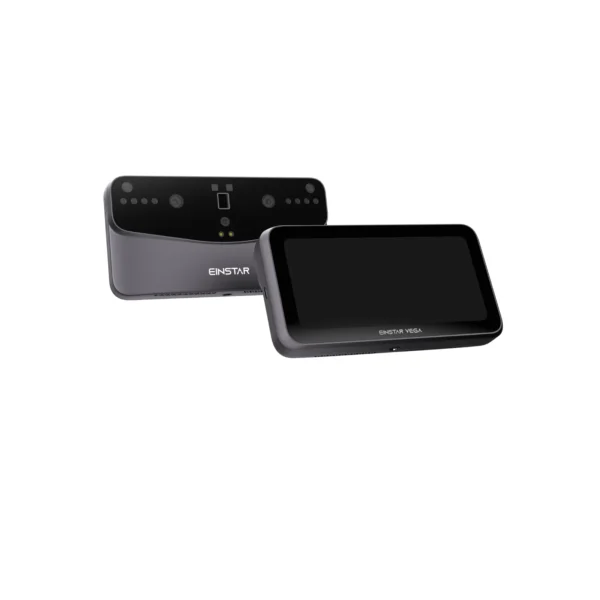
A wireless, all-in-one handheld 3D scanner: the scanner, a 6.4″ touchscreen and the computer in one 535 g device. Scan, process and share without a laptop.
- HD Mode down to 0.05 mm point distance · Fast Mode for people and car-size objects up to 1.5 m away
- 48 MP color camera — geometry and texture in one pass
- 8-core CPU, 32 GB RAM, 512 GB SSD, Wi-Fi 6, 1.5–2 h battery
- 1-year Shining 3D warranty · support from our team in California
Made to order
· Ship date confirmed by email after you order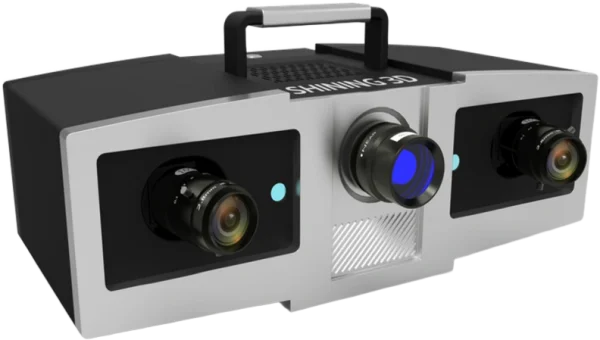
Blue-light structured-light metrology scanner with 0.005 mm single-shot accuracy and three interchangeable working ranges (100/200/400 mm) — a stationary benchtop system for dimensional inspection of small, high-precision parts.
- ✓ Two 5 MP cameras + 1080P blue-LED DLP projector, VDI/VDE 2634 Part 3 accuracy certification (Shining 3D ISO 17025 lab)
- ✓ One-click automatic marker alignment and GREC global deviation control reduce alignment errors across multi-scan datasets
- ✓ Interchangeable 100/200/400 lens configurations match accuracy and scan area to the part
- ✓ 1-year Shining 3D warranty
- ✓ Ship date confirmed by email after you order
Made to order
· Ship date confirmed by email after you order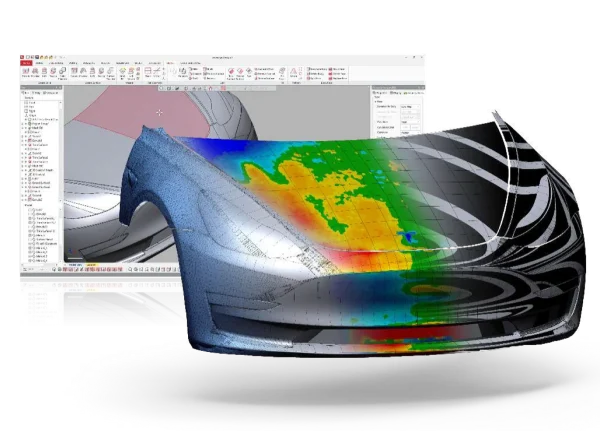
- ✓ Mesh & point cloud to parametric CAD · Auto Surface, feature-based & hybrid modeling
- ✓ Patented LiveTransfer — full feature tree into SOLIDWORKS, NX, Solid Edge, Inventor, Creo; plus neutral STEP, IGES, DXF
- ✓ Accuracy Analyzer real-time deviation check · runs on Windows 10 / 11 (64-bit)
- ✓ Delivered as a licensed download; issued to order · 14-day trial available
In stock
· Delivered as a licensed download; issued to order — 14-day trial available; onboarding scheduled with your team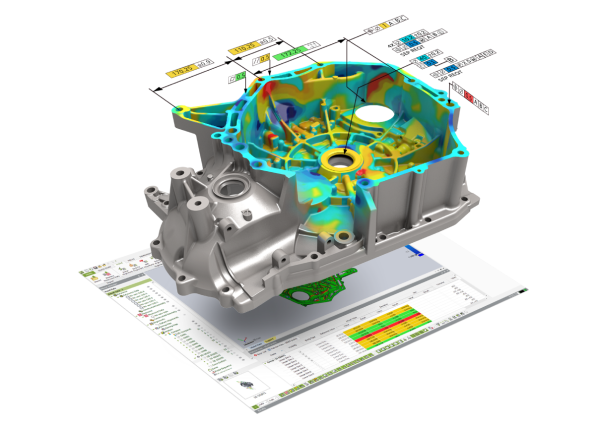
Geomagic Control X is a standalone 3D metrology inspection software — compare 3D scan data to a CAD model, run full GD&T to ASME Y14.5 and ISO, and generate customizable, traceable inspection reports, with scanner-agnostic hardware support and visual-scripting automation.
- ✓ Scan-to-CAD full-field deviation color maps · CAD-free golden-part inspection · automatic feature recognition
- ✓ GD&T to ASME Y14.5 & ISO · 2D + 3D dimensioning · cross-section · multi-alignment · airfoil analysis
- ✓ Live Inspect · trend monitoring · visual-scripting automation · reports to Excel, Word, PowerPoint, PDF & XML
- ✓ Works with major 3D scanners & portable CMMs · delivered as a licensed download, issued to order
In stock
· Delivered as a licensed download; issued to order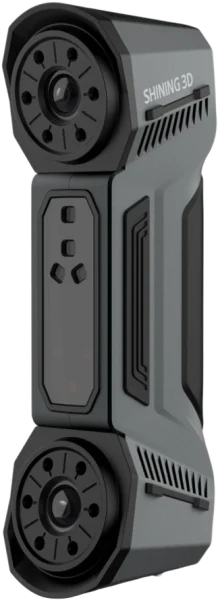
The Shining 3D FreeScan Combo is a dual-mode handheld 3D scanner combining blue laser and infrared VCSEL in a 620 g package, achieving up to 0.02 mm accuracy for metrology, reverse engineering and inspection.
- ✓ Up to 0.02 mm accuracy in laser modes — tested to VDI/VDE 2634 & ISO 10360 in Shining 3D’s ISO 17025 lab
- ✓ Dual light source — 26-line blue laser + marker-free infrared VCSEL in one device
- ✓ Four scan modes — deep bores to large assemblies without switching hardware
- ✓ 1-year Shining 3D warranty · authorized Shining 3D reseller in the US
- ✓ Ship date confirmed by email after you order
Made to order
· Ship date confirmed by email after you order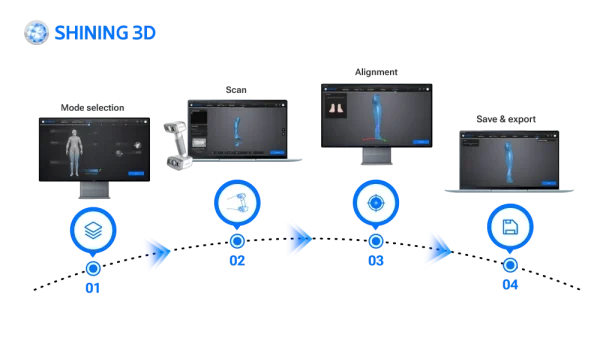
EXScan O&P is orthotics & prosthetics scanning software for the EinScan H2 handheld 3D scanner — preset body scan modes and an intelligent automatic alignment algorithm capture socket, limb, cranial, torso, foot, and seating scans, then export clean STL and OBJ meshes for your O&P CAD/CAM and design software.
- ✓ 8 preset O&P scan modes · cranial, face, upper/lower limb, torso, foot station, seating, socket
- ✓ Intelligent automatic alignment — real-time, step-by-step, minimal manual post-processing
- ✓ Exports STL and OBJ to CAD/CAM and specialized O&P design software
- ✓ Delivered as a licensed download — request editions and pricing
In stock
· Delivered as a licensed download; issued to order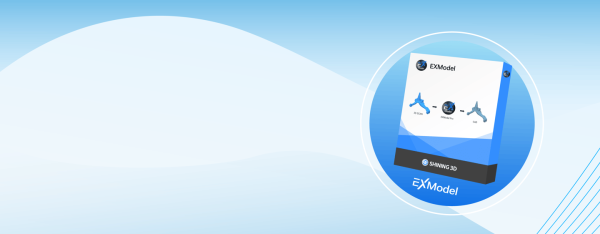
Scan-to-CAD reverse-engineering software that turns a 3D-scan mesh into a professional CAD solid model in a few steps — with seamless one-click import from Shining 3D scanners and export to IGES, STEP, and DXF for CAD/CAM, CNC, or 3D printing.
- ✓ Mesh to production-ready CAD solid · one-click auto-surfacing, feature-based & hybrid modeling
- ✓ One-click scan import from Shining 3D scanners — no export/import juggling
- ✓ Lite (IGES, DXF) and Pro (parametric STEP + full toolset) editions · 30-day free trial
- ✓ Delivered as a license — request editions and pricing
In stock
· License delivered on purchase — 30-day trial available; onboarding scheduled with your team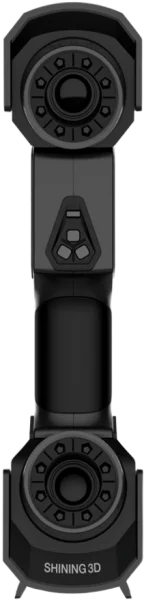
Multi-line laser scanner with 0.02 mm accuracy (with markers) and a 300 mm working distance (200 mm in fine scan) — built-in photogrammetry with no coded targets and a maximum FOV of 600 × 550 mm.
- ✓ 26+7+1 switchable laser line modes for coverage, detail, and deep-pocket scanning
- ✓ Patented built-in scale-bar photogrammetry — no coded targets required
- ✓ 1-year Shining 3D warranty · USB 3.0 wired connection
- ✓ Ship date confirmed by email after you order
Made to order
· Ship date confirmed by email after you orderWhat our customers say
“Harry and team were professional, effective communicators as we set up the order, then they executed quickly and produced an amazing product for us at a very competitive price. Am looking forward to our next print w Additive Plus!”
“Great 3D printing service and the resin parts look super smooth and clean. Really happy with how everything turned out!”
“Harry was very professional and helped me out with my 3D printing needs and explained what options I have in terms of filaments such as PEEK. Highly recommended.”
“I needed a 3D enclosure printed urgently in a specific time period, they did great!”
Common questions
Don't see yours? Email [email protected] — NDA on request, typical reply within 4 hours.
What accuracy can I expect from the FreeScan Trio on a 1-meter part?
Does the FreeScan Trio scan in bright ambient light or outdoors?
Which CAD and QC software does the FreeScan Trio export to?
Can it scan dark or reflective surfaces without spray?
What is the difference between the four scan modes?
How is the FreeScan Trio calibrated?
Does the FreeScan Trio run wireless, or does it need a PC connection?
Place your order, or talk to an engineer first
Order Shining 3D FreeScan Trio Marker-Free Laser 3D Scanner – 98-Line Handheld Metrology | 0.02 mm Accuracy direct, or talk to materials engineer