
Made to order
- Install & operator training Aura slicer setup, on-site
- CFC parameter support for your fibers and matrices
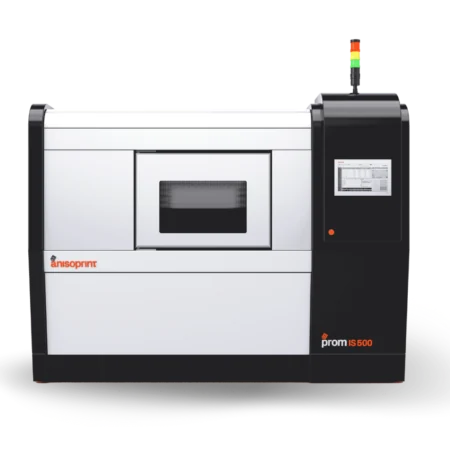
Anisoprint PROM IS 500 Continuous-Fiber Composite FFF 3D Printer – CFC | 600×420×300 mm
- ✔ CFC continuous fiber steered along load paths — ~860 MPa tensile at ~1.4 g/cm³
- ✔ Up to 4 swappable heads: fiber + plastic + soluble support
- ✔ High-temp extruder to 400 °C — PEEK & PEI (ULTEM), heated chamber/bed to 160 °C
- ✔ Made to order — request a quote for lead time, spares & support
What your composites engineer actually checks
Metal-like strength at a fraction of the weight
CFC lays continuous carbon or basalt fiber along load paths inside the polymer — parts reach ~860 MPa tensile at ~1.4 g/cm³, about twice lighter than aluminum, without the cost of a metal print.
An applications engineer on the line
Factory-trained engineers, not a ticket queue. Continuous-fiber design, fiber placement and honest guidance on availability and support in under 24h. NDA on request.
The Anisoprint PROM IS 500 is an industrial continuous-fiber composite 3D printer that coextrudes continuous carbon or basalt fiber inside an engineering polymer — producing parts around 860 MPa tensile at ~1.4 g/cm³, roughly twice lighter than aluminum, across a 23.6×16.5×11.8 in / 600×420×300 mm build volume.
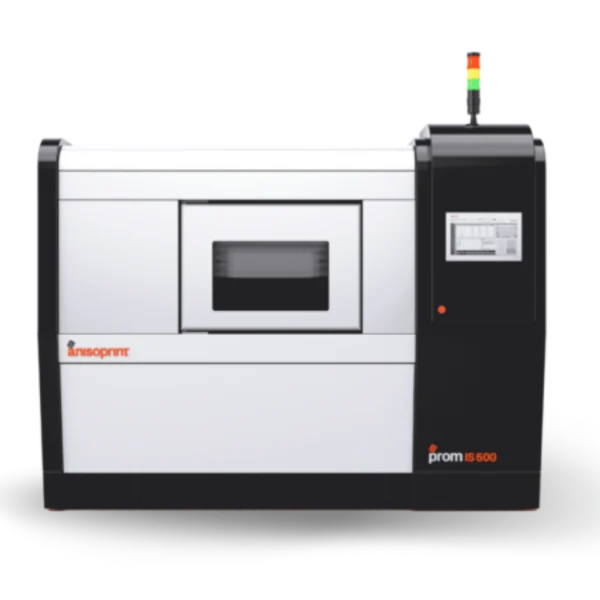
Why engineers choose the PROM IS 500
Composite Fiber Coextrusion puts continuous fiber exactly where the load is.
Continuous fiber, not chopped
CFC coextrudes a continuous carbon or basalt fiber inside the molten polymer, steered along load paths — parts reach ~860 MPa tensile at ~1.4 g/cm³, roughly twice lighter than aluminum.
Up to four swappable heads
CFC fiber heads, pure-plastic FFF heads and a soluble-support head swap in — reinforce where you need it, print plastic elsewhere, and dissolve supports on complex geometry.
High-temp polymers to 400 °C
The optional high-temp extruder reaches 400 °C with a heated chamber and bed to 160 °C — run PEEK and PEI (ULTEM) matrices, not only PA and PC.
600×420×300 mm envelope
A 23.6×16.5×11.8 in / 600×420×300 mm build volume for large structural brackets, tooling and end-use composite parts — sized for 24/7 factory production.
How Additive Plus delivers it
Configured to your parts and supported through qualification.
Confirm fit & availability
We confirm the fiber, matrix and head configuration for your parts — and current lead time, spares and support — before you commit.
Install & train on-site
Engineers install the system, set up the Aura slicer, and train your team on CFC design and toolpaths.
Qualify & support
We help develop CFC parameters and fiber-placement strategy for your load cases — sub-4h reply, NDA on request.
Materials
Continuous fiber reinforcement inside an engineering-polymer matrix, with pure-plastic and soluble-support options.
- Continuous fiber: carbon (CCF) and basalt (CBF)
- Matrix polymers: PA and PC standard; PEEK and PEI (ULTEM) with the high-temp extruder
- Support: soluble-support head for complex geometry
System & Process Specifications
- Build volume: 23.6×16.5×11.8 in / 600×420×300 mm
- Technology: FFF + CFC (Composite Fiber Coextrusion), up to 4 swappable heads
- Extruder: 270 °C standard; 400 °C high-temp option
- Heated chamber / bed: up to 160 °C
- Resolution: from 60 µm layers; nozzle 0.4–1.5 mm; up to ~60 cm³/hr in CFC mode
- Software: Anisoprint Aura slicer · See the full Specifications tab below.
Where the PROM IS 500 runs
Lightweight structural parts and composite tooling.
Need strong functional parts another way?
If continuous-fiber FFF isn’t the fit, compare other routes to durable parts.
SLS in-houseFarsoon FS191MView printer →
Metal & ceramic3DCeram M.A.T.Compare route →
Why Source the PROM IS 500 Through Additive Plus
- Application engineering for continuous-fiber design and fiber placement
- Honest, current guidance on availability, spares and long-term support
- Install, Aura slicer setup and operator training included
- Leasing and financing available for capital equipment
- <24h response · 200+ AM systems delivered across 23 countries
| Technology | FFF + CFC (Composite Fiber Coextrusion) |
| Country of origin | Luxembourg / China |
| Brand | Anisoprint |
| Build Volume | 23.6×16.5×11.8 in / 600×420×300 mm |
| Nozzle Temperature | 270 °C standard / 400 °C high-temp option |
| Bed Temperature | up to 160 °C |
| No. of printing heads | Up to 4 |
| Layer thickness | from 60 µm |
| Material | Continuous carbon & basalt fiber, PA, PEEK, PEI (ULTEM), PC |
Product videos
Send us your part and load case — we'll print a CFC benchmark and share weight and strength data before you commit to a system.
Other products teams run alongside Anisoprint PROM IS 500 Continuous-Fiber Composite FFF 3D Printer – CFC | 600×420×300 mm
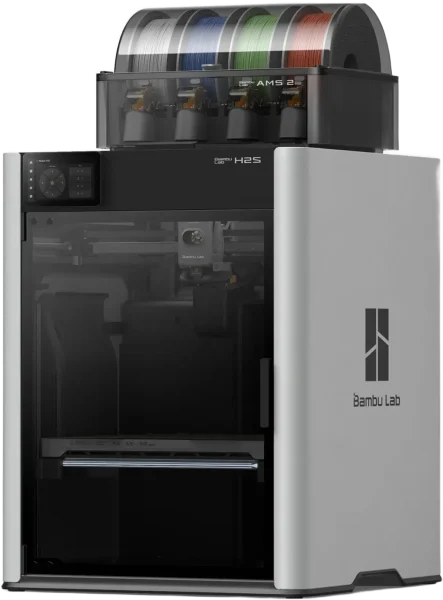
Bambu’s large-format single-nozzle — a 340 mm build for bigger parts and higher throughput, with a 350°C hotend, 65°C active-heated chamber and optional laser & cutting.
- Large 340×320×340 mm build — oversized parts in one piece
- 350°C hotend + 65°C active chamber — engineering filaments without warping
- Optional 10W laser + cutting — one machine, many jobs
- US additive experts · ships in 1–2 business days from US stock · pay over time with PayPal
- Price match against any authorized US dealer · POs, tax-exempt and EDU/GOV orders welcome
In stock
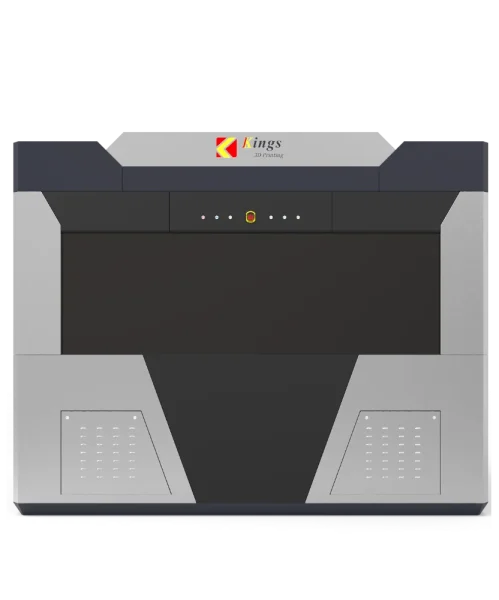
Flagship large-format industrial SLA. Marble frame. Vacuum recoating. The largest single-run parts Kings builds — full automotive body panels, oversize tooling, monumental forms — without stitching or Z-seam artifacts.
- ✓ 106×35×32 in / 2700×900×800 mm build chamber — a full body panel in one run
- ✓ Solid-state 355 nm Nd:YVO4 laser · variable beam · 8.0 m/s scan tuned for the large bed
- ✓ Full-marble machine frame — thermal stability for ±0.1 mm part accuracy
- ✓ Lead time: 8–10 weeks — on-site install, calibration & operator training included
Made to order
· Ships in 8–10 weeks from order placement. Need it sooner? Talk to a specialist.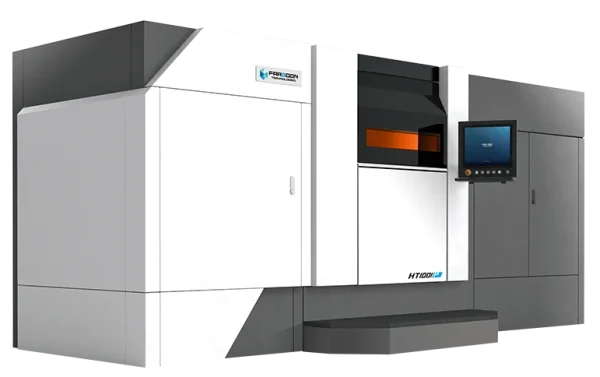
Large-format, high-throughput SLS system: dual 100 W CO₂ lasers drive build rates up to 15 L/h across a metre-scale 39.4×19.7×17.7 in / 1000×500×450 mm build, with a 220 °C chamber for high-performance polymers. Open platform, modular build-station architecture. Sold, installed and supported in the US by Additive Plus.
- Metre-scale build — 1000×500×450 mm for large parts and high-nest batches.
- Dual CO₂ · up to 15 L/h — high-volume production; 220 °C chamber, broad materials.
- Lead time: configured to order — US install, training & validated profiles from California.
Made to order
· Lead time: configured to order — request a build slot. US installation of module and build station, training and process support included from California.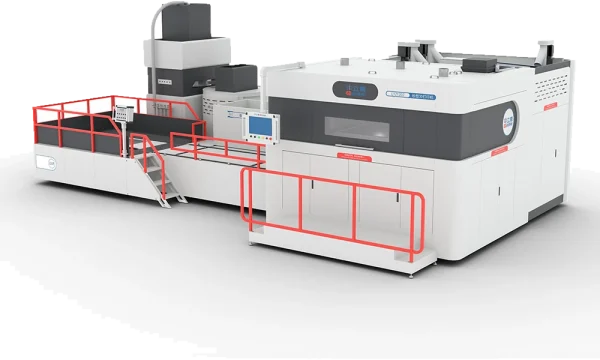
- ✔ 2.5×1.5×1.0 m build box — the largest in the line, full molds and cores in one piece
- ✔ Plus: 312–519 L/h at ~13 s/layer · High-Speed: 213–355 L/h — CAD to sand mold in a day
- ✔ Nitrogen-free furan or inorganic binder; onboard AC, sand recovery & mixer
- ✔ Lead time: configured to order — request a quote for delivery & installation
Made to order
· Lead time: configured to order — request a quote for delivery and installation.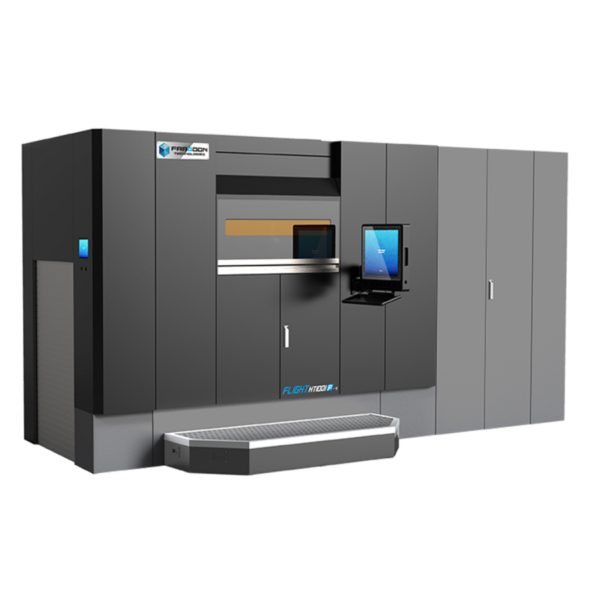
Large-format, high-temperature fiber-laser SLS system with a metre-scale 39.4×19.7×17.7 in / 1000×500×450 mm build. Two to four 300 W fiber lasers and a 220 °C chamber run high-performance and glass-filled polymers at production scale, with fully open parameters and a modular build-station architecture. Sold, installed and supported in the US by Additive Plus.
- Metre-scale build — 1000×500×450 mm for large parts and high-nest batches.
- 2–4 fiber lasers · 220 °C — high-performance, glass-filled & TPU polymers.
- Lead time: configured to order — US install, training & validated profiles from California.
Made to order
· Lead time: configured to order — request a build slot. US installation of module and build station, training and process support included from California.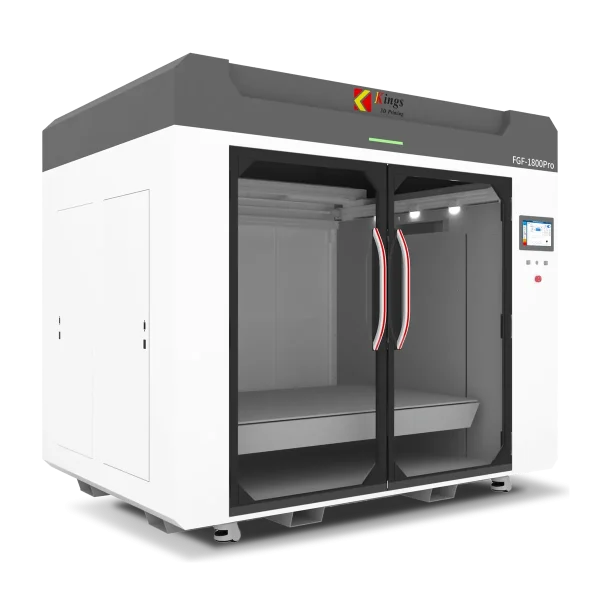
Large-format pellet extrusion 3D printer — 71×47×43 in / 1800×1200×1100 mm enclosed build, raw polymer granules, 1–8 mm nozzle selection, up to 15 kg/h. Optional 450°C high-temp nozzle for PEI+CF and engineering compounds. Material cost 5–10× lower than equivalent filament.
- ✓ Pellet feedstock — 5–10× lower material cost vs. filament at the same polymer
- ✓ 71×47×43 in / 1.8×1.2×1.1 m enclosed build — ~6× the FGF800, runs on single-phase 220 V
- ✓ Lead time: 8–10 weeks — configured to order, installed and trained on-site
Made to order
· Ships in 8–10 weeks from order placement. Need it sooner? Talk to a specialist.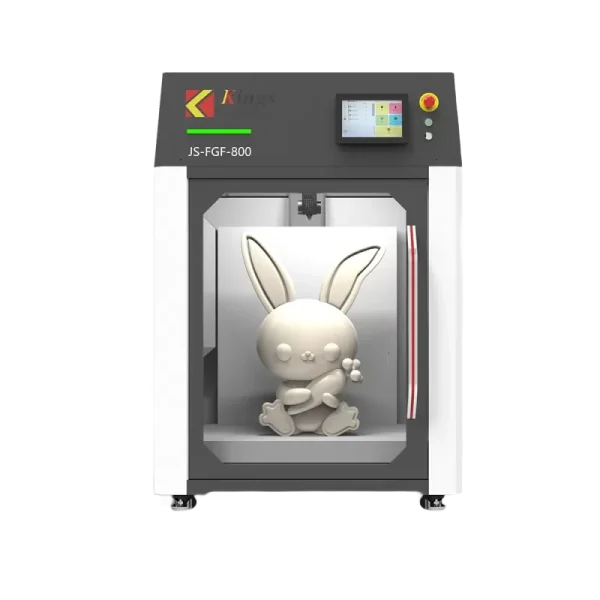
Large-format pellet extrusion 3D printer — 31×24×31 in / 800×600×800 mm, raw polymer granules, 0.4–2 mm nozzle selection. Optional 450°C nozzle for PEEK/PEKK/ULTEM. Material cost 5–10× lower than equivalent filament.
- ✓ Pellet feedstock — 5–10× lower material cost vs. filament at the same polymer
- ✓ Optional 450°C nozzle — PEEK, PEKK, ULTEM at 800×600×800 mm scale
- ✓ Lead time: 8–10 weeks — configured to order, installed and trained on-site
Made to order
· Ships in 8–10 weeks from order placement. Need it sooner? Talk to a specialist.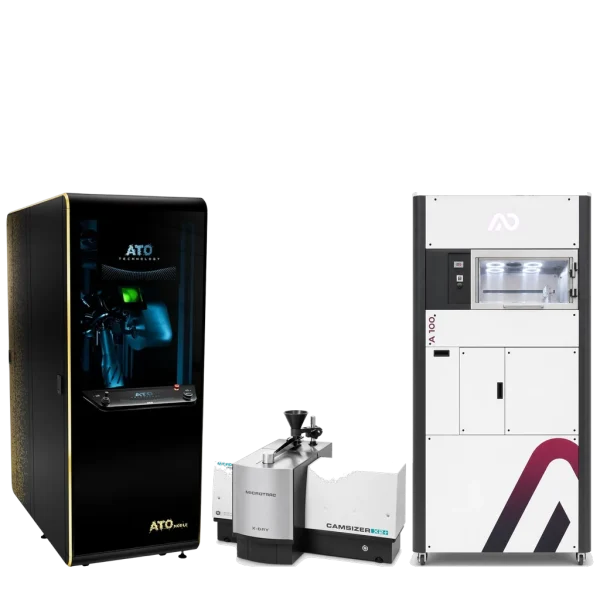
Make your own gold, silver and platinum powder, measure it and print it — the ATO Noble, the Microtrac CAMSIZER X2+ and the AO Metal A100 as one precious-metal cell from one supplier.
- ATO Noble: Au 9 ct to 99.99%, Ag, Pt, Pd, Ir with Zero Loss recovery
- CAMSIZER X2+: size and shape from 0.9 µm to 8 mm in 1–3 minutes
- A100: Ø100 × 100 mm LPBF, optional blue laser for gold and silver
- Installation and training included · 8–14 weeks · 12-month warranty
Made to order
· Lead time 8–14 weeks · installation includedWhat our customers say
“Harry and team were professional, effective communicators as we set up the order, then they executed quickly and produced an amazing product for us at a very competitive price. Am looking forward to our next print w Additive Plus!”
“Great 3D printing service and the resin parts look super smooth and clean. Really happy with how everything turned out!”
“Harry was very professional and helped me out with my 3D printing needs and explained what options I have in terms of filaments such as PEEK. Highly recommended.”
“I needed a 3D enclosure printed urgently in a specific time period, they did great!”
Common questions
Don't see yours? Email [email protected] — NDA on request, typical reply within 4 hours.
What is CFC (Composite Fiber Coextrusion)?
How strong are PROM IS 500 parts?
What fibers and plastics does the PROM IS 500 run?
What is the build volume and how many print heads does it have?
Can it print high-temperature polymers like PEEK or PEI?
Is the PROM IS 500 still available and supported?
What lead time and support come with the PROM IS 500?
Place your order, or talk to an engineer first
Order Anisoprint PROM IS 500 Continuous-Fiber Composite FFF 3D Printer – CFC | 600×420×300 mm direct, or talk to materials engineer