
Made to order
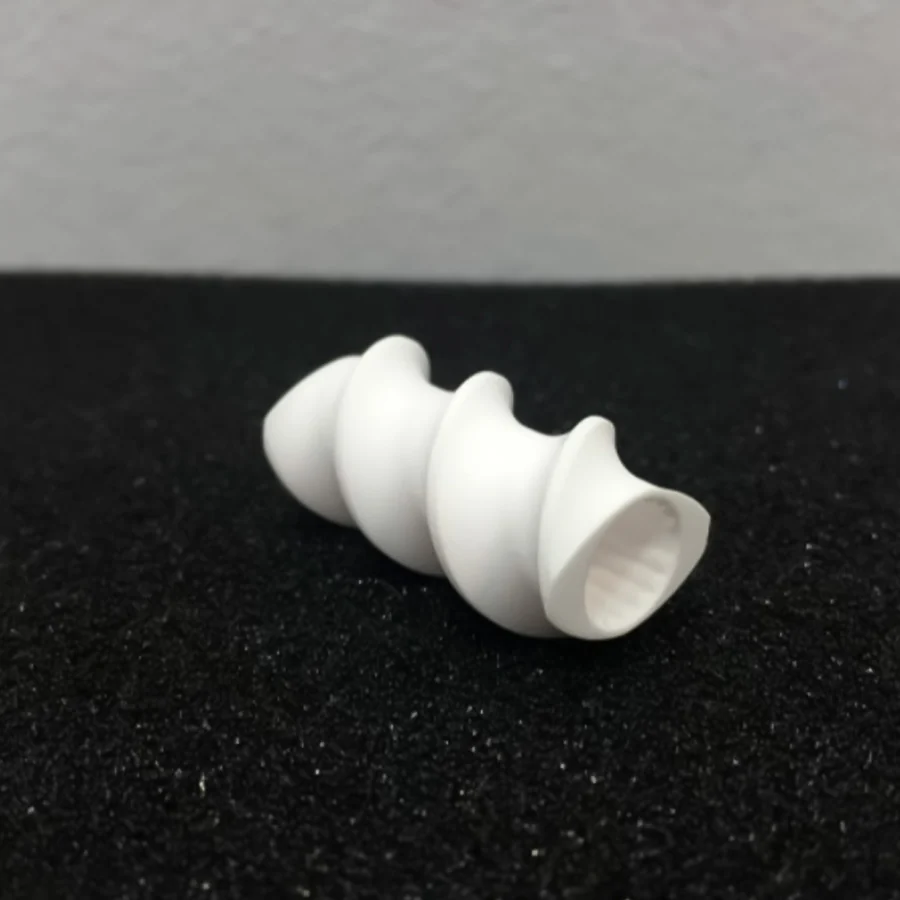
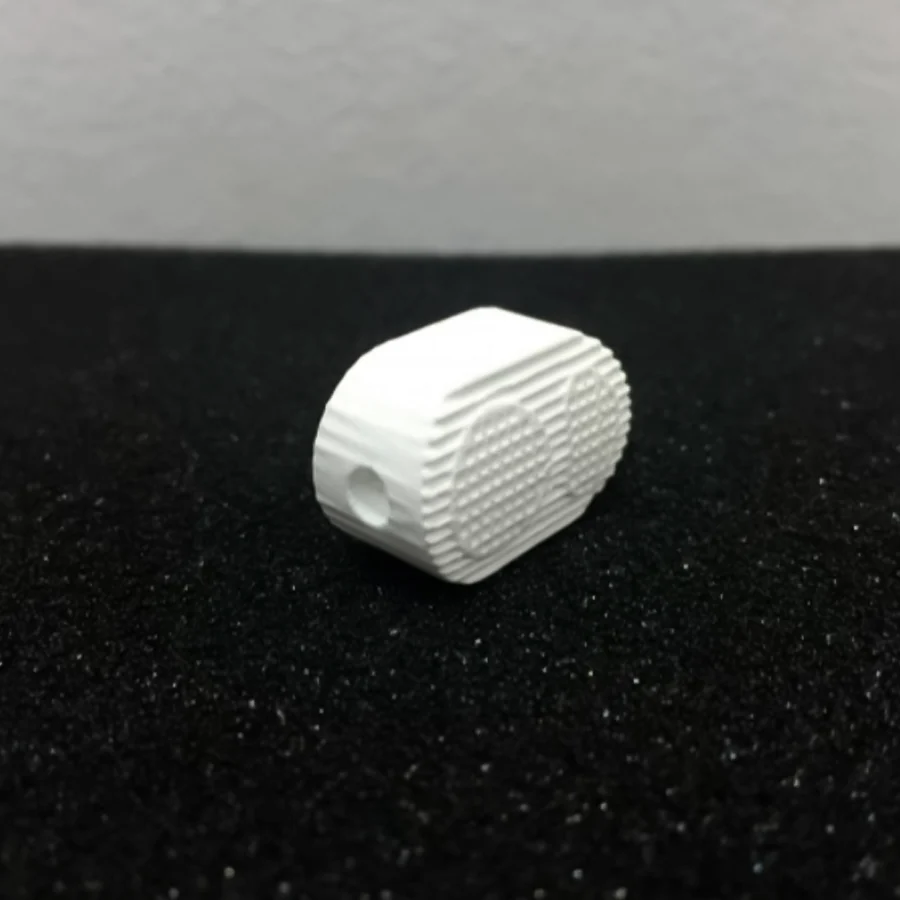
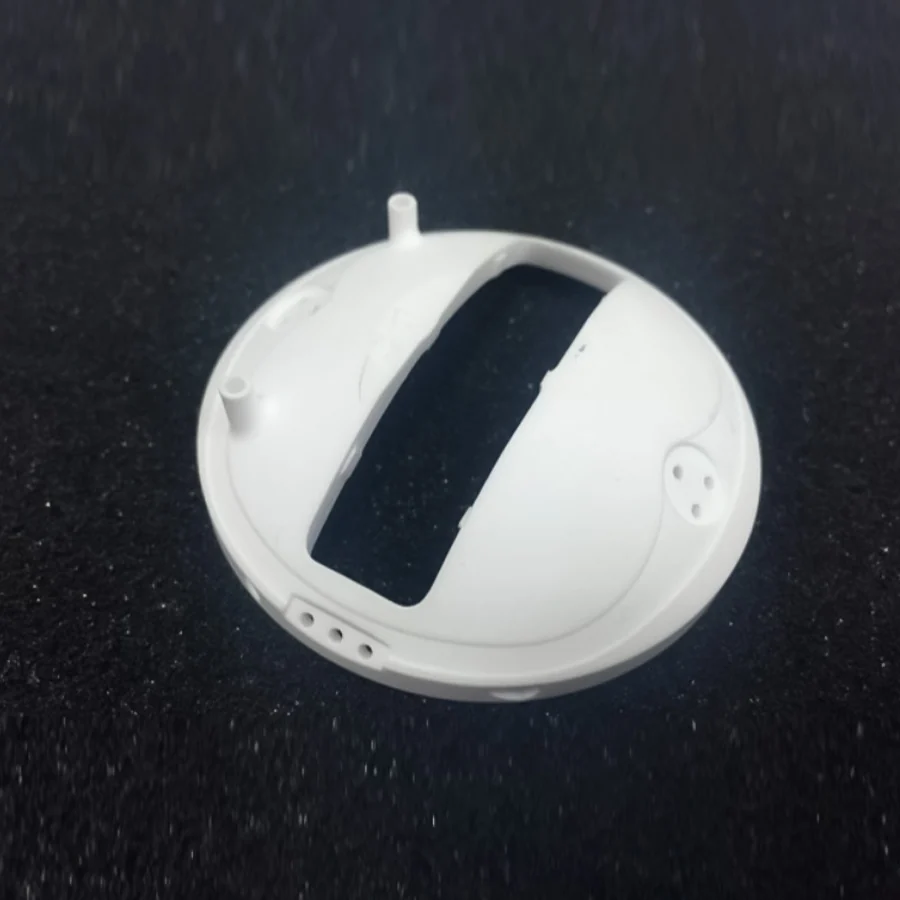
- Install, operator training, and validated print, debind, and sinter parameters for your ceramic
- Tailored warranty with US-held slurry, consumables, and service dispatch
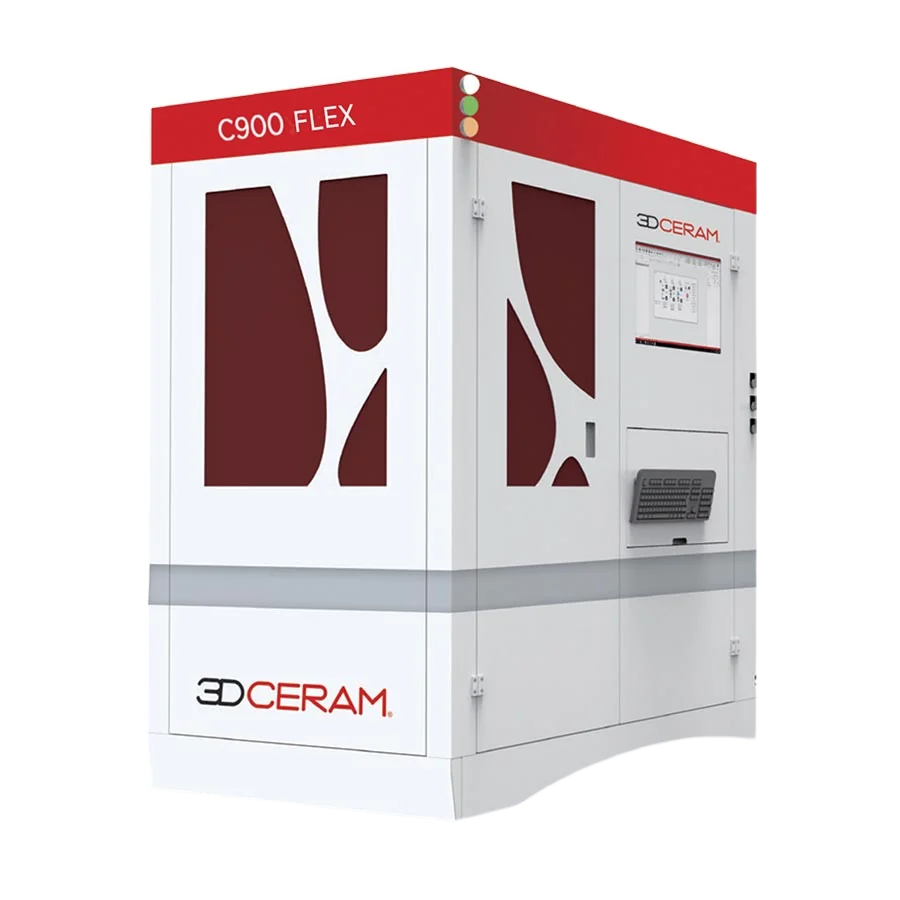
3DCeram C900 FLEX Ceramic SLA 3D Printer – 11+ Ceramic Materials | 300×300 mm
- ✓ 11+ ceramic materials — Al₂O₃, ZrO₂, Si₃N₄, TCP, HA, AlN, cordierite and more
- ✓ Top-down SLA — support-free complex internal geometries in dense ceramic
- ✓ SAM option — 100 mL minimum batch for R&D economy with expensive compositions
What your ceramic process engineer actually checks
Full workflow, not just a printer
Ceramic AM needs debinding and sintering — most vendors stop at the printer. Additive Plus supplies the full chain: C900 FLEX, ceramic pastes, debinding schedules, and sintering. One partner, one validated workflow.
Shrinkage mapped before you print
Sintered parts shrink roughly 15–20% linearly. We supply the shrinkage factors and CAD compensation for your ceramic and geometry, so the sintered result lands on nominal — not after three failed builds.
A materials engineer on the line
Questions on paste selection, debind cycles, or sintering atmosphere go to engineers who have run ceramic AM — not a ticket queue. Sub-4h reply, NDA on request.
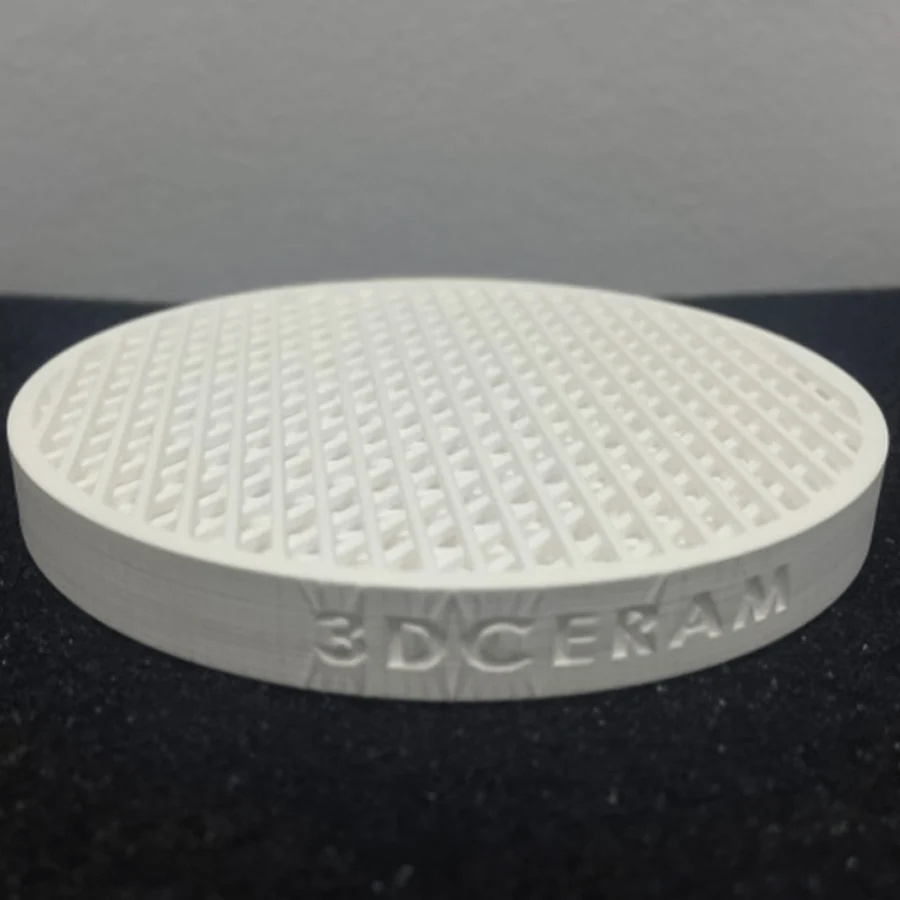
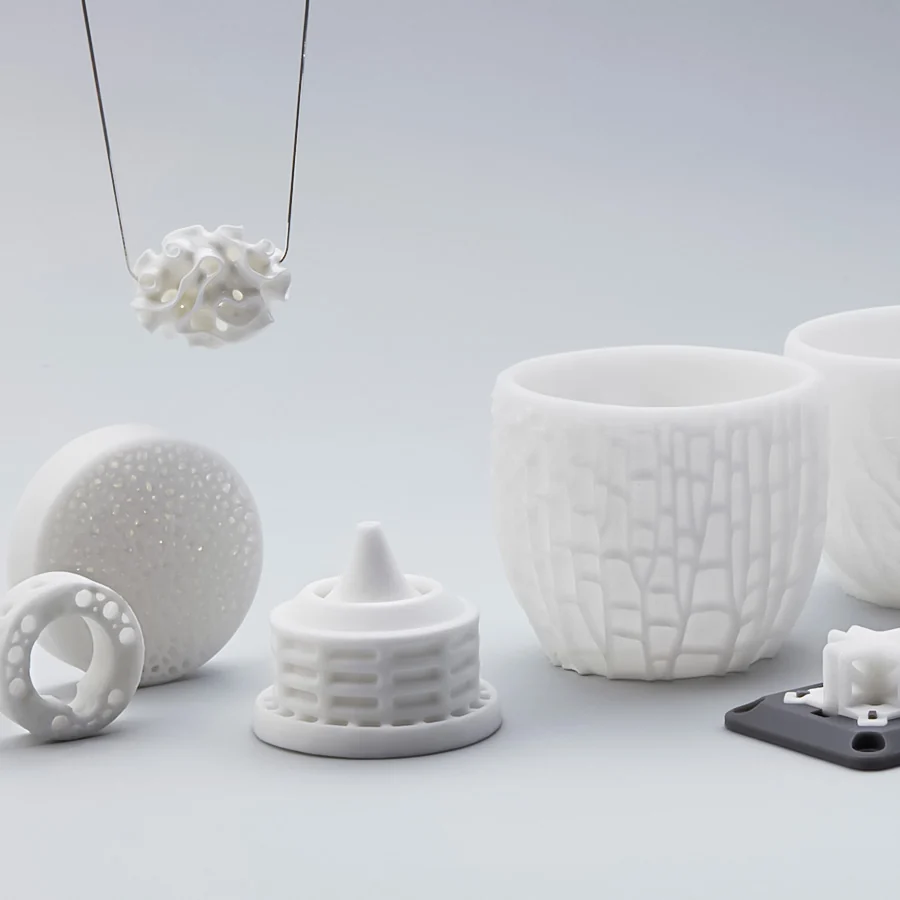
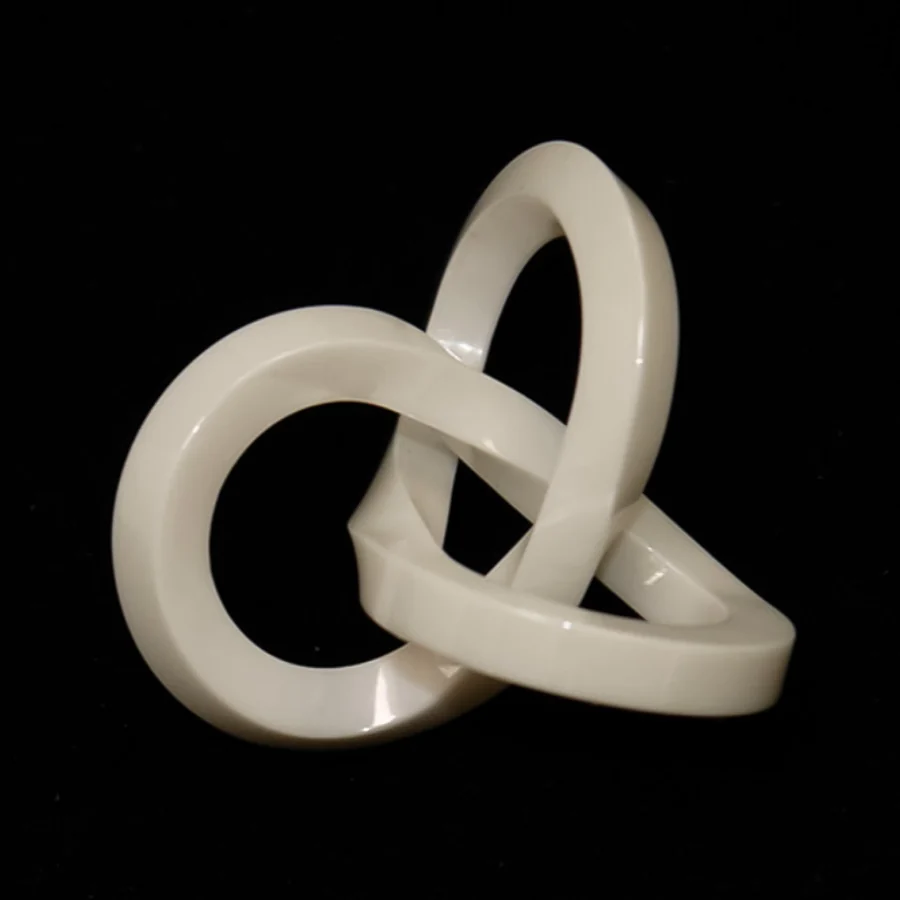
3DCeram C900 FLEX (formerly marketed as CeraMAKER 900) is an industrial ceramic stereolithography 3D printer for high-density technical ceramics. A top-down SLA architecture with a 355 nm UV laser and ~35 µm spot cures ceramic slurry into dense, near-net-shape green bodies at 10–125 µm layer resolution and as-printed roughness down to Ra ≤ 2 µm — internal channels, lattices and undercuts that pressing, casting or machining cannot reach.
Three interchangeable build platforms (100×300, 200×300, 300×300 mm) with 100 mm maximum height cover R&D sample batches through production components. The SAM (Small Amount of Material) option drops the minimum run to 100 mL of slurry — the difference between qualifying and abandoning an expensive or experimental composition.
Why ceramic engineers choose the C900 FLEX
Spec-backed reasons, not marketing.
Top-down SLA, support-free
The platform lowers as the part builds bottom-up. Complex internal channels, lattices and undercuts cure directly into the green geometry — no supports to remove from inside a ceramic part.
11+ validated ceramics
Al₂O₃, ZrO₂, ATZ, zirconia 8Y, Si₃N₄, AlN, TCP, hydroxyapatite, cordierite, fused silica — plus multi-material ceramic + conductive silver for co-sintered electronics.
Three platforms + SAM mode
Swap 100×300, 200×300 and 300×300 mm platforms without reconfiguring the machine. SAM option runs a batch on 100 mL of slurry for lab-economy qualification.
355 nm laser, ~35 µm spot
10 µm layers resolve fine features; 125 µm layers push production throughput. Ra ≤ 2 µm as-printed reduces downstream finishing on the sintered part.
Print → Debind → Sinter: the full ceramic workflow
Ceramic AM does not end at the printer. Every part goes through three stages — plan for them from the CAD file.
Print the green body
The C900 FLEX cures ceramic slurry layer by layer into a near-net-shape green part. Geometry is fixed here — including internal features that can’t be machined later.
Debind
The organic binder is removed thermally on a controlled schedule tuned to the ceramic and wall thickness. Additive Plus supplies the debinding parameters with the system.
Sinter to full density
The part densifies at material-specific temperature and atmosphere and shrinks roughly 15–20% linearly. Parts are scaled up in CAD so the sintered result lands on nominal.
Validated ceramic materials
- Oxide ceramics: Al₂O₃ (alumina), ZrO₂ (zirconia), ATZ (alumina-toughened zirconia), zirconia 8Y
- Bioceramics: TCP (tricalcium phosphate), hydroxyapatite (HA)
- Non-oxide ceramics: Si₃N₄ (silicon nitride), AlN (aluminum nitride)
- Structural / thermal: cordierite, fused silica, Silicore
- Multi-material: ceramic + conductive silver paste for electronics co-sintering
See the full machine specification in the Specifications tab below.
Typical applications
Where technical-ceramic AM earns its place.
Not sure the C900 FLEX is the right platform?
Same ceramic SLA process, different scale and capability.
Need production volume3DCeram C1000 FlexamaticView printer →
R&D only3DCeram C101 EASY LABView printer →
Why source through Additive Plus
- The full ceramic workflow — printer, ceramic pastes, debinding schedules, sintering atmosphere and shrinkage compensation. 3DCeram’s complete process stack, not just machine delivery.
- Paid sample parts before you commit — qualify your geometry and material through print, debind and sinter in our facility first.
- US-based installation and training — factory-certified technicians; slurry and consumables held in-country.
- Leasing and financing available for capital equipment; sub-24h engineer response.
3DCeram ceramic additive manufacturing in action
| Brand | 3DCeram |
| Country | France |
| Weight | 1450 kg |
| Dimensions | 1060 × 2250 × 2040 mm (41.73 × 88.6 × 80.31 inch) |
| Build Volume | 300 × 300 × 100 mm (11.81 × 11.81 × 3.93 inch) |
| Printing technology | SLA |
| Layer thickness | 0,010-0,125 mm |
| Light source | UV Laser |
| UV Wavelength | 355 nm |
| Laser spot diameter | ~ 35 μm |
| Electrical requirements | 220-240 VAC / 50Hz |
| Power Consumption | 2 kW |
| Optimum indoor operation temperature | 20-25 °C, 68-77°F |
| Maximum room temperature variation | 1°C/hour |
| Relative humidity | 50% |
| Compressed air | 6 bars dry |
| Hybrid option | Available |
| Additional equipment | Ceraсleaner - Nitrogen kiln - Sintering furnace |
| Client Operating System | Web Dashboard |
| Warranty | 12 months |
| Technology | CERAMIC SLA |
| Printing Materials | Ceramic Pastes |
Product videos
Send your STL and target ceramic — we print, debind, and sinter a paid benchmark part so you can validate density, shrinkage, and geometry before buying.
Complete the workflow
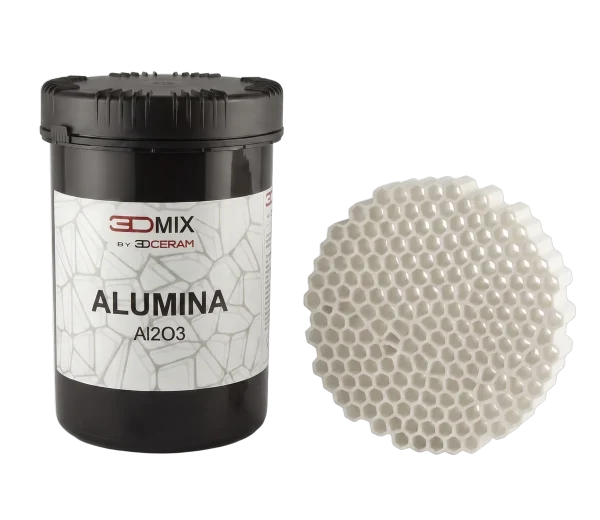
Print dense alumina (Al₂O₃) parts on 3DCeram's Ceramaker laser-SLA platform, then debind and sinter to a hard, electrically insulating technical ceramic.
- ✓ 397 MPa 4-point bending strength at >3.9 g/cc, 16.4 GPa Vickers hardness after sintering
- ✓ Debind and sinter parameters plus the full datasheet included with every order
- ✓ Ceramic SLA paste for the 3DCeram Ceramaker platform — quote-based, mutual NDA before spec review
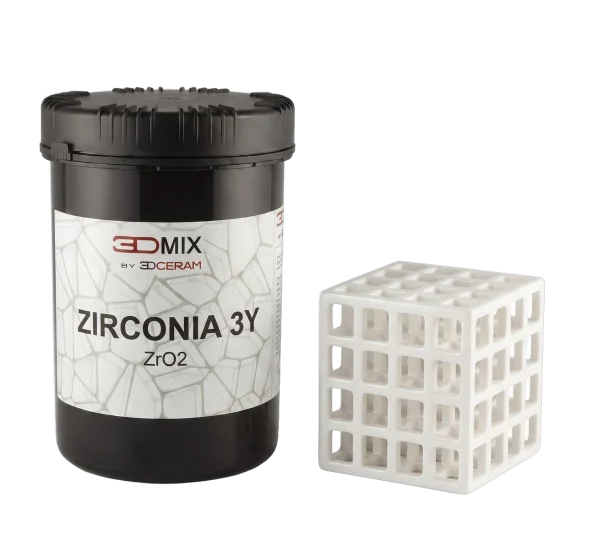
Print exceptionally tough 3Y zirconia (ZrO₂) parts on 3DCeram's Ceramaker laser-SLA platform, then debind and sinter to a dense, biocompatible oxide ceramic.
- ✓ 950 MPa 4-point bending strength at >99.5% density — the strongest single oxide in the range
- ✓ Colourable, biocompatible, sub-0.5 µm grain — jewellery, dental and precision parts
- ✓ Ceramic SLA paste for the 3DCeram Ceramaker platform — quote-based, mutual NDA before spec review
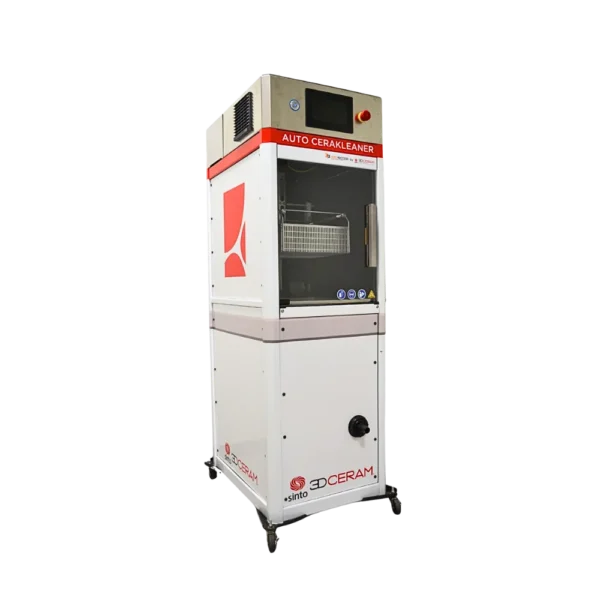
Automated cleaning system that removes excess ceramic paste from freshly printed green parts, leaving them ready to debind — replacing slow, hands-on solvent cleaning in the ceramic AM workflow.
- ✓ Gentle, low-mechanical-stress cleaning of fragile green parts
- ✓ Batch time cut dramatically vs manual (e.g. 60 min → 5 min on 70 alumina parts)
- ✓ Solvent longevity + recycling · no manual solvent contact
Other products teams run alongside 3DCeram C900 FLEX Ceramic SLA 3D Printer – 11+ Ceramic Materials | 300×300 mm
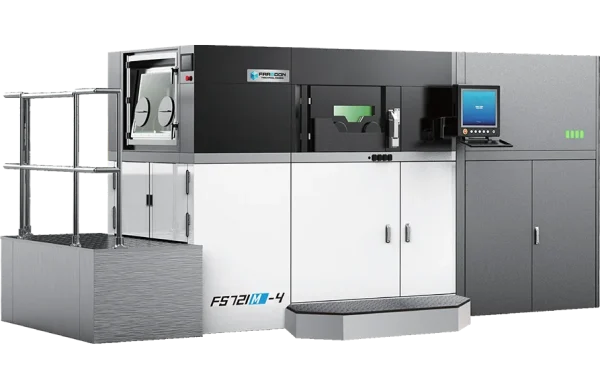
The Farsoon FS721M is a metal LPBF 3D printer with a 28.3×16.5×16.5 in / 720×420×420 mm build envelope, running two or four 500 W lasers, or eight 1000 W lasers.
- ✓ 8×1000 W — top laser configuration
- ✓ 28.3×16.5×16.5 in / 720×420×420 mm build envelope
- ✓ Open platform — full access to process parameters, qualify your own alloy
- ✓ Lead time: built to order — confirmed at quote
Installation and commissioning in the USA: facility and gas planning, start-up and operator training by our US service team.
Made to order
· Built to order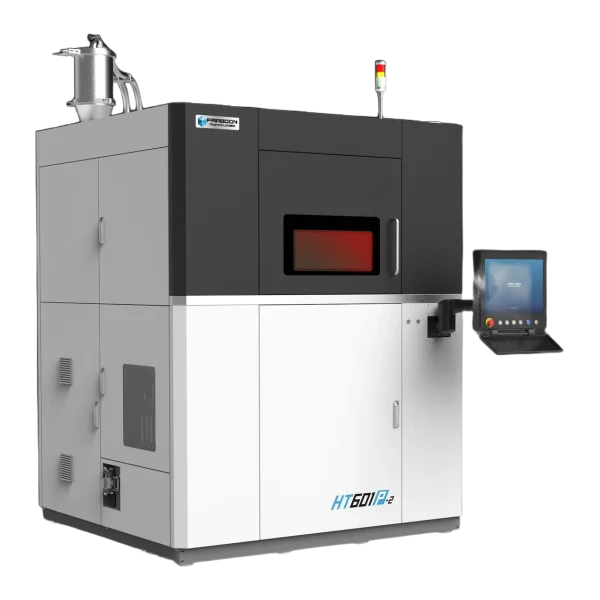
The Farsoon HT601P-2 is a large-format SLS 3D printer built for lower cost per part — a 600 × 600 × 600 mm cubic build, dual 100 W CO₂ lasers reaching up to 12 kg of finished parts per day, and a 220 °C chamber for engineering polymers.
- ✓ Cubic 600 mm build · dual CO₂ for lower cost per part
- ✓ Open platform — PA6, PBT, PA11, PA12, TPU
- ✓ Lead time: configured to order — US install, training and support
Made to order
· Lead time: configured to order — request a build slot. US installation and operator training included.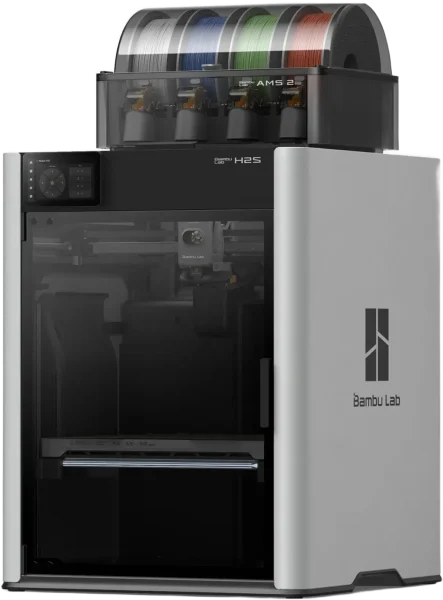
Bambu’s large-format single-nozzle — a 340 mm build for bigger parts and higher throughput, with a 350°C hotend, 65°C active-heated chamber and optional laser & cutting.
- Large 340×320×340 mm build — oversized parts in one piece
- 350°C hotend + 65°C active chamber — engineering filaments without warping
- Optional 10W laser + cutting — one machine, many jobs
- US additive experts · ships in 1–2 business days from US stock · pay over time with PayPal
- Price match against any authorized US dealer · POs, tax-exempt and EDU/GOV orders welcome
In stock
Automated cleaning system that removes excess ceramic paste from freshly printed green parts, leaving them ready to debind — replacing slow, hands-on solvent cleaning in the ceramic AM workflow.
- ✓ Gentle, low-mechanical-stress cleaning of fragile green parts
- ✓ Batch time cut dramatically vs manual (e.g. 60 min → 5 min on 70 alumina parts)
- ✓ Solvent longevity + recycling · no manual solvent contact
In stock
· Lead time, utilities and installation confirmed at quote — configured to order. Install and training included.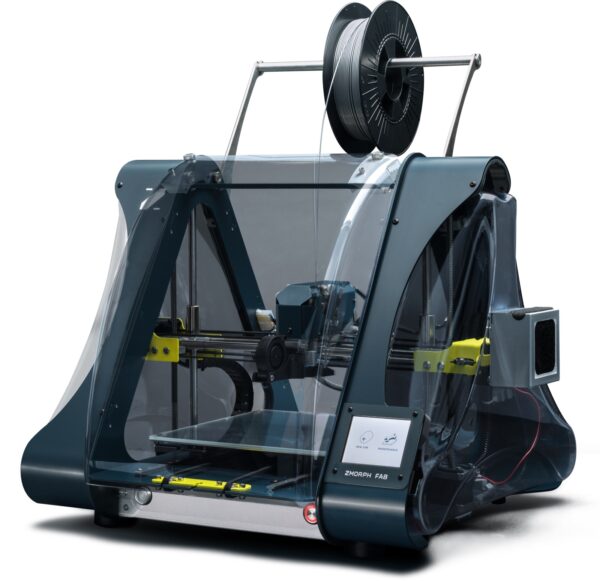
One desktop machine for 3D printing, two-material printing, CNC milling and paste extrusion — four toolheads, swapped in about a minute.
- Single and Dual FFF printing, 235 × 250 × 165 mm, layers 0.05–0.4 mm
- 300 W CNC milling for wood, plastics, PCBs and composites
- Thick Paste toolhead for ceramic, porcelain and silicone
- Lead time 2–3 weeks · remote training · 12-month warranty
Made to order
· Ships in 2–3 weeks · 12-month warranty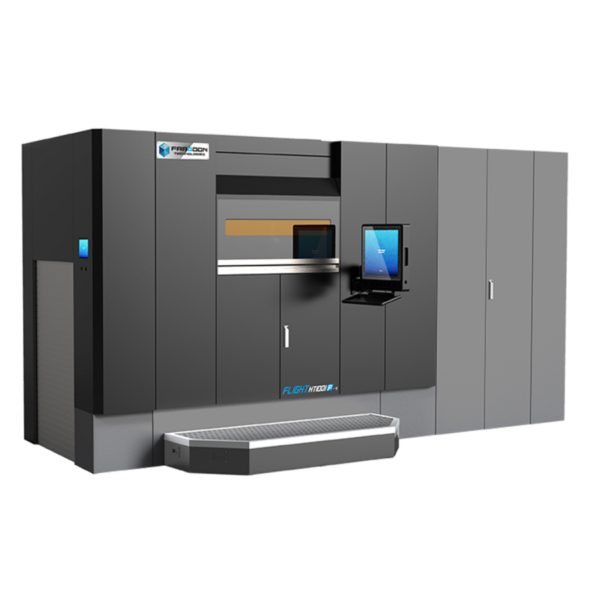
Large-format, high-temperature fiber-laser SLS system with a metre-scale 39.4×19.7×17.7 in / 1000×500×450 mm build. Two to four 300 W fiber lasers and a 220 °C chamber run high-performance and glass-filled polymers at production scale, with fully open parameters and a modular build-station architecture. Sold, installed and supported in the US by Additive Plus.
- Metre-scale build — 1000×500×450 mm for large parts and high-nest batches.
- 2–4 fiber lasers · 220 °C — high-performance, glass-filled & TPU polymers.
- Lead time: configured to order — US install, training & validated profiles from California.
Made to order
· Lead time: configured to order — request a build slot. US installation of module and build station, training and process support included from California.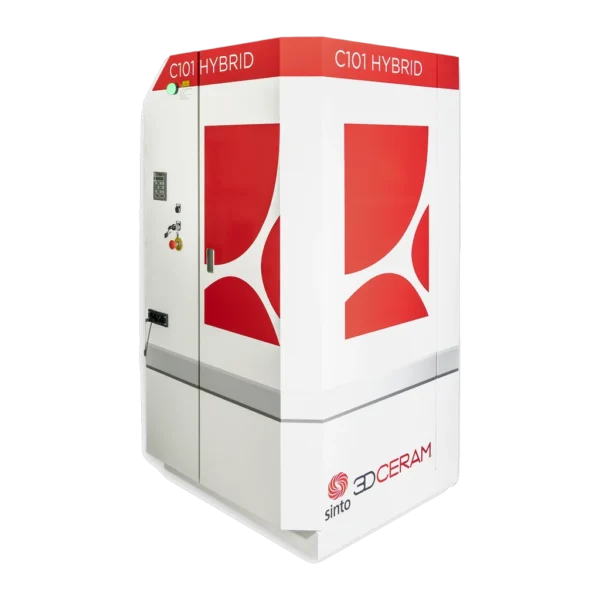
Multi-material ceramic SLA printer that prints two materials in the same layer — ceramic plus a second ceramic, metal or polymer — on a 3.9×3.9×5.9 in / 100×100×150 mm platform. It makes functionally graded and multi-material ceramic parts single-material printing can't. Full print → debind → co-sinter workflow supported by Additive Plus.
- Two materials in one layer — ceramic + ceramic, metal or polymer.
- Open-parameter R&D — 100×100×150 mm build, cartridges from 60 mL.
- Lead time: configured to order — material-pair & co-sinter support from California.
Made to order
· Lead time: configured to order — request a build slot. Installation, training and process support included from California.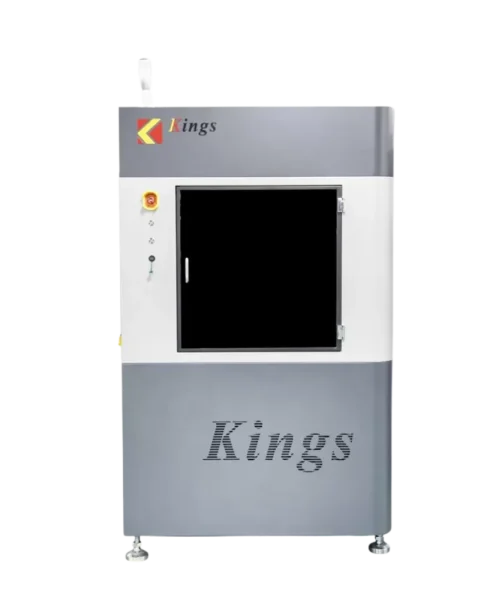
Large-format industrial SLA. Marble frame. Vacuum recoating. Built for automotive panels, one-piece patterns, dental models, and architectural forms — without stitching or Z-seam artifacts.
- ✓ 1000 × 1000 × 600 mm build chamber — a full bumper fascia or a batch of shoe lasts in one run
- ✓ Solid-state 355 nm Nd:YVO4 laser · 0.075–0.8 mm variable beam · 15.0 m/s max scan
- ✓ Full-marble machine frame — thermal stability for ±0.1 mm part accuracy
- ✓ Lead time: 8–10 weeks — on-site install, calibration & operator training included
Made to order
· Ships in 8–10 weeks from order placement. Need it sooner? Talk to a specialist.What our customers say
“Harry and team were professional, effective communicators as we set up the order, then they executed quickly and produced an amazing product for us at a very competitive price. Am looking forward to our next print w Additive Plus!”
“Great 3D printing service and the resin parts look super smooth and clean. Really happy with how everything turned out!”
“Harry was very professional and helped me out with my 3D printing needs and explained what options I have in terms of filaments such as PEEK. Highly recommended.”
“I needed a 3D enclosure printed urgently in a specific time period, they did great!”
Common questions
Don't see yours? Email [email protected] — NDA on request, typical reply within 4 hours.
What post-processing is required after printing on the C900 FLEX?
How much does a C900 FLEX part shrink after sintering, and how do I account for it?
What sintering temperature and equipment does each ceramic need?
What mechanical properties can the C900 FLEX achieve?
Which ceramic materials does the C900 FLEX support?
Is the C900 FLEX suitable for dental zirconia and biocompatible applications?
What is the total workflow time from print to sintered part?
Can Additive Plus print a paid test part before I buy the C900 FLEX?
Place your order, or talk to an engineer first
Order 3DCeram C900 FLEX Ceramic SLA 3D Printer – 11+ Ceramic Materials | 300×300 mm direct, or talk to materials engineer