
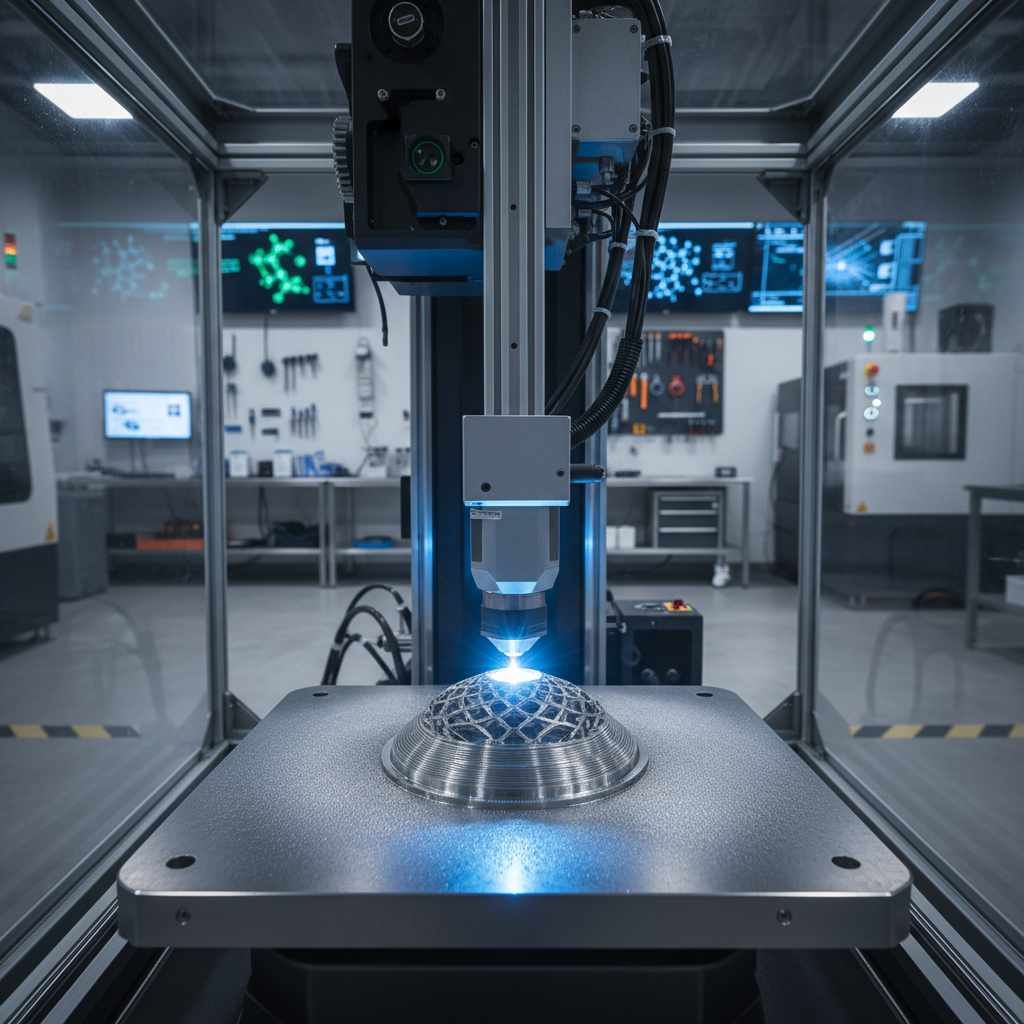
The realm of manufacturing is undergoing a profound transformation, driven by the advent of additive manufacturing (AM). Far beyond merely printing plastic prototypes, this revolutionary technology is now crafting intricate, high-performance components from robust metals. At the forefront of this metallic revolution are stainless steel alloys, a diverse family of iron-based materials renowned for their exceptional corrosion resistance, strength, and versatility. With at least 10.5% chromium content, these alloys form a protective passive oxide layer, making them indispensable across a multitude of demanding industries.
Additive manufacturing processes, particularly laser powder bed fusion (LPBF), are redefining what’s possible with stainless steels. By rapidly solidifying metal powders, AM enables the creation of complex geometries and tailored microstructures, often yielding components with superior mechanical properties compared to their traditionally manufactured counterparts. For instance, fine dendritic structures achieved in grades like 316L can significantly boost yield strength. Leading material providers offer high-quality options, such as stainless steel powders like SS316L, essential for robust AM production.
This guide delves into the intricate world of stainless steel alloys used in AM, exploring their fundamental properties, diverse applications, and critical selection considerations. We will examine various families, from ductile austenitic grades like 316L to high-strength precipitation-hardening (PH) types such as 17-4PH, which can be found in advanced forms like 17-4PH stainless steel filament for specific AM processes. While stainless steels offer a compelling balance of performance and cost, we’ll also briefly compare them against other advanced AM materials like titanium metal alloy, 6061 aluminum alloy, and nickel alloy metals to provide a holistic view. Join us as we explore how these versatile iron-nickel alloy variants are shaping the future of industrial production.
Understanding the Fundamentals of Stainless Steel Alloys for Additive Manufacturing
Stainless steel alloys represent a cornerstone in modern engineering, primarily due to their exceptional balance of strength and corrosion resistance. These iron-based materials are distinguished by a minimum chromium content of 10.5%, which forms a protective, passive oxide layer on the surface, preventing rust and degradation. Within the broad family of stainless steels, there are several key classifications, each designed for specific performance characteristics. These include austenitic grades, known for their ductility and non-magnetic properties (like 316L); martensitic steels, which are hardenable through heat treatment; duplex stainless steels, combining properties of both austenitic and ferritic structures for superior corrosion resistance; and precipitation-hardening (PH) stainless steels, such as 17-4PH, which achieve very high strength through a specific thermal aging process.
When these versatile materials are processed through additive manufacturing (AM) techniques like Laser Powder Bed Fusion (LPBF), their microstructural development is profoundly influenced. The rapid heating and cooling cycles inherent to AM processes lead to unique material characteristics. For instance, AM often produces fine, textured microstructures with a high density of dislocations. While these features can significantly enhance the material’s strength, they may also lead to a reduction in ductility compared to traditionally wrought counterparts. The ability to precisely tailor these microstructures, such as achieving fine dendritic structures in 316L, presents significant opportunities to optimize mechanical properties for specific applications.
However, the journey from powder to a high-performance part in additive manufacturing is not without its challenges. One common issue is the formation of porosity within the printed component, which can arise from suboptimal laser parameters like power, speed, and hatch spacing. Engineers are continually seeking to overcome these hurdles by meticulously optimizing parameters, such as volumetric energy density (VED), to produce dense, defect-free parts. Successfully navigating these metallurgical intricacies is crucial for unlocking the full potential of stainless steel powders in advanced manufacturing.
Key Stainless Steel Alloy Grades for Additive Manufacturing: Properties and Applications
The choice of stainless steel alloy for additive manufacturing is dictated by the specific demands of the end application, including environmental factors, required mechanical properties, and cost. Several grades have emerged as front-runners in AM due to their established performance and adaptability to printing processes.
316L Stainless Steel
As an austenitic grade, 316L is celebrated for its excellent corrosion resistance, particularly in chloride-rich environments, making it ideal for marine and medical applications. In additive manufacturing, 316L can develop a fine dendritic microstructure that significantly boosts its spall strength and yield strength. Careful control over laser parameters, for example, utilizing higher VED, can further reduce porosity and enhance these properties. Studies have shown that tensile strength in AM 316L can increase with optimized texture and grain misorientation, offering superior performance compared to its wrought equivalent in certain aspects. Consequently, 316L stainless steel finds extensive use in aerospace components, complex medical implants, and various marine parts where biocompatibility and resilience against harsh conditions are paramount.
17-4PH Stainless Steel (UNS S17400)
17-4PH is a precipitation-hardening stainless steel renowned for its high strength and hardness. When produced via AM, its tensile properties can exhibit anisotropy and variability, meaning performance might differ depending on the print orientation and can be less repeatable than conventionally manufactured parts. A crucial step in post-processing for AM 17-4PH is stress-relief heat treatment, which generally increases tensile strength while potentially lowering yield strength. This alloy is also known to exhibit Lüders bands, leading to discontinuous yielding, and its strength is significantly enhanced by the formation of nanoprecipitates during heat treatment. Given the phase differences compared to wrought versions, referring to the AM product strictly as “17-4PH” requires nuance. This robust alloy is frequently employed in demanding applications such as tooling, aerospace brackets, and other structural components where high mechanical loads are expected, often necessitating a tool steel level of performance. Engineers leveraging AM often consider 17-4PH stainless steel filament for prototyping and specialized part production.
SuperDuplex Stainless Steel
SuperDuplex stainless steels represent the pinnacle of corrosion resistance, particularly against pitting and crevice corrosion, thanks to their high Pitting Resistance Equivalent Number (PREN) typically around 41, driven by elevated levels of chromium, molybdenum, and nitrogen. These alloys maintain a balanced austenitic-ferritic microstructure, which can be optimized during the AM process to ensure excellent properties in the as-built condition. Their exceptional resilience in aggressive environments makes them indispensable for chemical processing equipment and oil and gas components, where extreme corrosive conditions are commonplace.
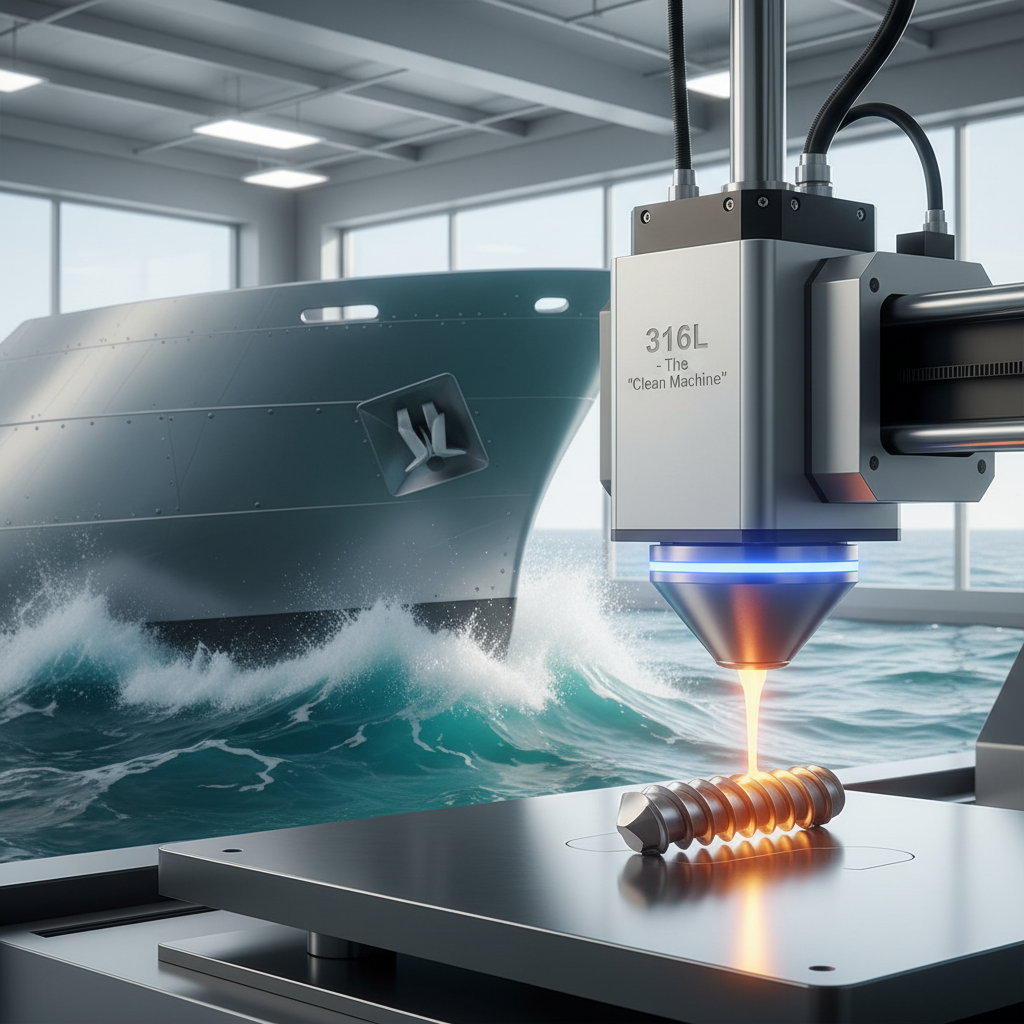
These distinct stainless steel alloys cater to a wide array of industries. From medical devices demanding biocompatibility and high finish to aerospace components requiring high strength-to-weight ratios, and specialized tooling needing exceptional hardness, stainless steels offer a compelling blend of properties.
Metallurgical Considerations for Processing Stainless Steel Alloys in AM
The intricate metallurgical behavior of stainless steel alloys during additive manufacturing is a critical area of focus for engineers and material scientists. AM processes, such as Laser Powder Bed Fusion (LPBF) and Directed Energy Deposition (DED), subject materials to extremely rapid heating and cooling rates. This leads to unique microstructural outcomes that differ significantly from conventional manufacturing. These can include the formation of non-equilibrium phases, distinct segregation patterns of alloying elements, and the development of highly textured grains, particularly observed in iron-nickel-rich austenitic stainless steels like 316L, where nickel plays a vital role in enhancing ductility and corrosion resistance.
The presence and distribution of specific alloying elements are crucial. In austenitic stainless steels, for example, elements like nickel help promote a stable austenite phase, which is beneficial for consistent AM printability. Despite these advantages, several challenges persist in AM processing. These include the management of residual stresses, which can lead to distortion in complex geometries, and the prevention of porosity, which compromises mechanical integrity. Such issues can be mitigated through careful optimization of process parameters, such as employing low hatch spacing and maintaining a high volumetric energy density (VED), which contribute to producing denser, more robust components.
Beyond the printing process itself, post-processing heat treatments are indispensable for tailoring the final properties of AM stainless steel parts. For precipitation-hardening steels like 17-4PH, specific heat treatments are used to refine and precipitate strengthening phases, achieving the desired balance of strength and toughness. Understanding the interplay between AM parameters, microstructure evolution, and subsequent heat treatments is essential for realizing the full potential of stainless steel alloys in demanding applications. Advanced characterization techniques, like those facilitated by instruments such as a camsizer, are crucial for ensuring the quality and consistency of the powder feedstock, which directly impacts the metallurgical outcomes of the printed part. This continuous evolution in metallurgical understanding and process control is paving the way for even more sophisticated and reliable stainless steel components in additive manufacturing.
Deeper into the Crucible: The Science Behind AM Stainless Steels
While the foundational concept of stainless steel alloys as iron-chromium mixes for corrosion resistance is clear, applying these materials in additive manufacturing (AM) processes like laser powder bed fusion (LPBF) introduces a fascinating layer of complexity. The rapid heating and cooling cycles inherent to AM create entirely unique microstructures compared to traditionally wrought materials. We’re talking about fine dendritic structures and high dislocation densities that, paradoxically, can significantly boost yield strength—the point at which a material permanently deforms—beyond that of conventional counterparts. This fine-tuning of internal architecture is a hallmark of AM.
However, this rapid solidification also presents challenges. Porosity, tiny voids within the material, remains a primary concern. The precise interplay of laser parameters—power, speed, and hatch spacing—determines the volumetric energy density (VED) delivered to the powder. Optimizing VED is critical to melting the powder thoroughly and minimizing these defects, ensuring the final part is structurally sound. Understanding these fundamental shifts in material science is paramount for engineers leveraging AM for high-performance applications.
Unpacking the Performance of AM’s Premier Stainless Steel Grades
The “superheroes” of stainless steel in AM reveal their true capabilities and complexities under closer scrutiny, pushing the boundaries of what these materials can achieve.
316L – The “Clean Machine” with an Edge: Beyond its renowned corrosion resistance and biocompatibility, particularly crucial for applications like medical implants or marine components, AM-produced 316L presents distinct advantages. The rapid cooling in LPBF processes leads to a refined, often textured, fine dendritic microstructure. This isn’t just aesthetically pleasing; it directly translates to enhanced mechanical properties, boosting both spall strength (resistance to fracture from shock waves) and yield strength. Crucially, studies show that optimizing laser parameters, particularly higher VED, can further reduce porosity and increase the tensile strength through controlled texture and grain misorientation. For those beginning their journey in metal additive manufacturing, selecting high-quality stainless steel powders like our premium SS316L is a foundational step towards achieving these superior mechanical characteristics.
17-4PH (UNS S17400) – The “Tough Guy” Refined: This precipitation-hardening (PH) stainless steel is prized for its exceptional strength and hardness, making it a go-to for tooling and demanding aerospace brackets. However, in its AM form, 17-4PH exhibits specific metallurgical behaviors. Its tensile properties can be notably anisotropic—meaning strength varies depending on the direction of applied force relative to the build direction—and less repeatable than its wrought equivalent. The key to unlocking its full potential lies in precise post-processing heat treatments. While a stress-relief heat treatment can increase tensile strength, it might slightly reduce yield strength. Furthermore, AM 17-4PH can exhibit Lüders bands, causing discontinuous yielding, and its strength is significantly enhanced by the controlled formation of nanoprecipitates. Leveraging specialized filament like Zetamix 17-4PH stainless steel filament allows for greater control over these microstructural developments, translating to predictable performance.
SuperDuplex – The Environmental Champion: For environments where extreme corrosion resistance is non-negotiable, duplex stainless steels, particularly SuperDuplex grades, shine. These alloys boast a unique microstructure comprising both austenitic and ferritic phases, which, when balanced correctly in the as-built state, provide superior resistance to pitting and stress corrosion cracking. Their Pitting Resistance Equivalent Number (PREN) often exceeds 41, indicating excellent performance in aggressive chemical processing and oil and gas applications. The ability to maintain this optimized phase balance directly through AM offers significant advantages for use in harsh operational conditions.
Each of these grades, when processed through AM, requires careful consideration of its unique metallurgical response to unlock its full potential.
Metallurgical Deep Dive: Tailoring Microstructures in AM
The transformation of stainless steel alloys from powder to part is a dance between heat, solidification, and material science. LPBF and directed energy deposition (DED) processes are characterized by ultra-fast cooling rates, often exceeding 10^6 K/s. This rapid quenching leads to non-equilibrium phases—material states that wouldn’t typically exist under slower cooling—and changes in the segregation of alloying elements. In austenitic grades like 316L, this can result in iron-nickel-rich regions and highly textured grains. Nickel, a critical alloying element in austenitics, is vital for promoting a stable austenite phase, which enhances the printability and overall ductility of the material.
However, these rapid thermal cycles also induce significant internal stresses, leading to potential distortion and the aforementioned porosity. Engineers combat these challenges through meticulous parameter selection, such as employing low hatch spacing and optimizing VED, which helps create a more uniform melt pool and reduces defect formation. Post-processing heat treatments are not merely for stress relief; they are crucial for adapting AM-specific microstructures to desired mechanical properties. For PH steels like 17-4PH, this means precisely controlling the size and distribution of precipitates, which directly dictates the final strength and hardness of the component.
Ensuring the integrity of these AM parts also relies on the quality of the build platform. An optimal foundation is essential for ensuring optimal print quality on machines like the EOS M400, for which we offer robust SS316 stainless steel build plates and additional SS316 stainless steel build plates.
Elevating the Comparison: Stainless Steel Alloys in Context
While the basic trade-offs between stainless steel alloys and other advanced AM materials are understood, a deeper analysis reveals specific AM-driven nuances.
- vs. Titanium (Ti-6Al-4V) Metal Alloy: Titanium remains the undisputed champion for extreme strength-to-weight ratios and biocompatibility. In AM, the ability to create incredibly complex, lightweight lattice structures with a titanium metal alloy makes it indispensable for critical aerospace and medical implants where every gram counts. However, its higher material cost and more complex processing—often requiring inert gas environments and specialized equipment—make stainless steel a more economically viable choice for applications where weight isn’t the absolute primary driver.
- vs. 6061 Aluminum Alloy: While 6061 aluminum alloy boasts lower density and excellent thermal conductivity, particularly valuable for heat exchangers, its mechanical properties fall short of stainless steel for applications demanding high strength and significant corrosion resistance. In AM, aluminum’s lower melting point can sometimes simplify processing compared to steels, but the trade-off in durability often directs designers toward stainless steel for structural components requiring longevity in challenging environments.
- vs. Nickel Alloy Metals (e.g., Inconel): When the environment calls for extreme high-temperature stability and unparalleled corrosion tolerance, specialized nickel alloy metals like Inconel are paramount. An iron nickel alloy, often found in these superalloys, enables performance in environments where even advanced stainless steels would degrade—think turbine blades in jet engines or components in high-temperature chemical reactors. While stainless steel offers an excellent balance of properties for a broad range of industrial applications, nickel alloys justify their higher cost and processing difficulty in the most demanding, critical scenarios. Stainless steel, therefore, occupies a strategic middle ground, offering a compelling blend of value, performance, and printability for a vast array of additive manufacturing needs.
The Horizon: Future Trends and Innovations in Stainless Steel AM
The journey of stainless steel alloys in additive manufacturing is far from complete. Researchers are actively pursuing AM-optimized grades, delving into sophisticated parameter-crystal structure mapping to achieve previously unattainable consistency, particularly in complex alloys like 17-4PH, where precise control over nanoprecipitate formation is crucial. This means developing “recipes” specifically tailored for the rapid thermal cycles of AM, rather than adapting traditional metallurgy.
Advanced LPBF techniques are also paving the way for multi-material prints, allowing for the creation of components with different properties in different sections—imagine a part with a corrosion-resistant core and a wear-resistant surface, all printed in a single build. The drive for defect-free microstructures continues, with the development of sophisticated morphology maps that correlate laser power, speed, and hatch spacing directly to material quality, enhancing dynamic properties such as spall strength. New characterization techniques, like in-situ X-ray scattering during printing, are providing unprecedented real-time insights into solidification behavior. This allows alloy design to be specifically adjusted for AM’s unique thermal profiles, promising a future where stainless steel alloys are not just printed, but truly engineered at the microstructural level for unparalleled performance in increasingly harsh environments.
Conclusion
The strategic selection of stainless steel alloys is paramount for unlocking the full potential of additive manufacturing. As we’ve explored, grades like austenitic 316L offer exceptional corrosion resistance and can achieve enhanced strength through tailored AM processes, making them ideal for critical applications. Similarly, precipitation-hardening 17-4PH provides high strength, albeit with unique anisotropic considerations in its AM form that necessitate careful post-processing.
Successful implementation hinges on a deep understanding of how AM’s rapid solidification impacts microstructure, leading to distinct mechanical properties compared to traditionally manufactured parts. Factors like environmental exposure, load requirements, and desired performance characteristics must guide your choice, always accounting for AM-induced anisotropy and the critical role of heat treatments.
The landscape of additive manufacturing with stainless steel alloys is continuously evolving, driven by ongoing research into AM-optimized grades and sophisticated process controls. By mastering the intricate interplay between material science and manufacturing parameters, engineers and manufacturers are poised to push boundaries, creating high-performance components that redefine industries.
Frequently asked questions
What makes stainless steel alloys ideal for Additive Manufacturing (AM)?
Stainless steel alloys are highly suitable for AM due to their exceptional corrosion resistance (thanks to chromium content) and high strength. AM processes like Laser Powder Bed Fusion (LPBF) can create parts with complex geometries and customized microstructures, making them ideal for demanding applications.
How does 3D printing impact the properties of stainless steel alloys like 316L?
Rapid solidification during 3D printing often leads to a fine dendritic microstructure and high dislocation density in alloys like 316L. This can significantly boost properties such as yield strength and spall strength compared to traditionally manufactured parts.
Which specific stainless steel alloys are most commonly used in AM, and what are their applications?
316L (Austenitic): Known for superior corrosion resistance and biocompatibility, ideal for medical implants, marine components, and aerospace parts. 17-4PH (Precipitation-hardening): Offers very high strength and hardness, making it perfect for tooling, aerospace brackets, and structural parts, especially after heat treatment. You can even find 17-4PH stainless steel filament for certain AM processes. SuperDuplex (Duplex): Boasts excellent pitting corrosion resistance, used in harsh environments like chemical processing and oil/gas.
What is "post-processing heat treatment," and why is it important for 3D printed stainless steel?
Post-processing heat treatment involves applying specific heating and cooling cycles after a part is 3D printed. This process is crucial for refining the microstructure, relieving internal stresses, and, in the case of precipitation-hardening steels like 17-4PH, enhancing their strength and hardness by forming strengthening nanoprecipitates.
How do stainless steel alloys compare to other advanced AM metals like titanium or aluminum?
Compared to titanium metal alloy (e.g., Ti-6Al-4V), stainless steel offers a better cost-to-performance ratio for applications where extreme strength-to-weight isn't the absolute priority. Against 6061 aluminum alloy, stainless steel provides significantly higher strength and superior corrosion resistance, though aluminum is lighter. Nickel alloy metals (like an iron nickel alloy) excel in extreme high-temperature environments where stainless steel would falter, but they are also much costlier and harder to process. Stainless steel provides a balanced value across strength, corrosion resistance, and cost.
What challenges might an engineer face when 3D printing with stainless steel?
Challenges include managing porosity (small internal voids) caused by laser parameters, mitigating residual stress and distortion during the build, and accounting for anisotropic mechanical properties (properties varying with direction) inherent to AM parts. Careful selection of build parameters and post-processing can help overcome these. Using a high-quality build plate, such as an EOS M400 SS316 stainless steel build plate, can also significantly aid in part quality.
Are there specific materials or equipment recommended for successful AM with stainless steel?
Yes, successful AM with stainless steel requires high-purity stainless steel powders formulated for additive processes (like 316L). Robust AM machines, often utilizing Laser Powder Bed Fusion (LPBF) technology, are necessary. Additionally, using appropriate metal build plates made of compatible materials, such as SS316 stainless steel build plates for EOS M400 printers, is critical for adhesion and managing thermal stresses during printing.
Have a question or a project? Let’s talk.
Tell us what you need — a real applications engineer replies within 24 hours. NDA on request, no sales script.