
Made to order
- Install, commissioning and on-site operator training
- Applications support — frequency-to-PSD mapping for your alloys
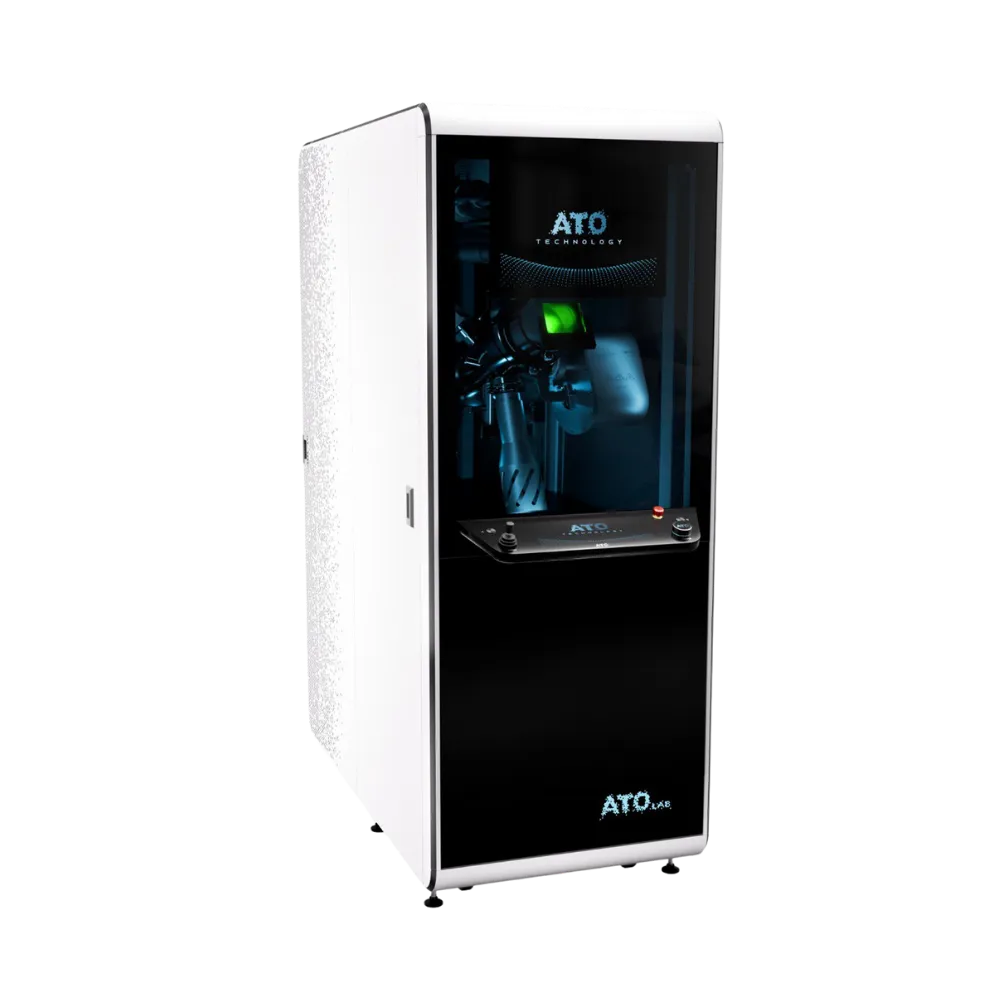
ATO Lab Ultrasonic Metal Powder Atomizer – Ti, Al, Refractory Alloys
Make spherical metal powder in your own lab — 20–120 µm, oxygen below 10 ppm, from wire, rod or scrap, for reactive, refractory and standard alloys.
- Particle size set by ultrasonic frequency: 20, 35 or 52 kHz
- Titanium, aluminum, nickel, steels, refractory metals and HEAs
- Installation, training and US service included · free powder samples
- Lead time 8–12 weeks · 12-month warranty
What your process engineer actually checks
Powder quality we run ourselves
We operate ultrasonic atomization in-house through AO Metal / ATO Lab, so we know what 20–120 µm, low-oxygen, spherical powder has to look like to actually print. A paid trial atomization of your target alloy is available before you commit to a system.
An applications engineer on the line
Factory-trained support, not a remote ticket queue. We match the melting module, feeding system and ultrasonic frequency to your alloys and help map frequency-to-PSD.
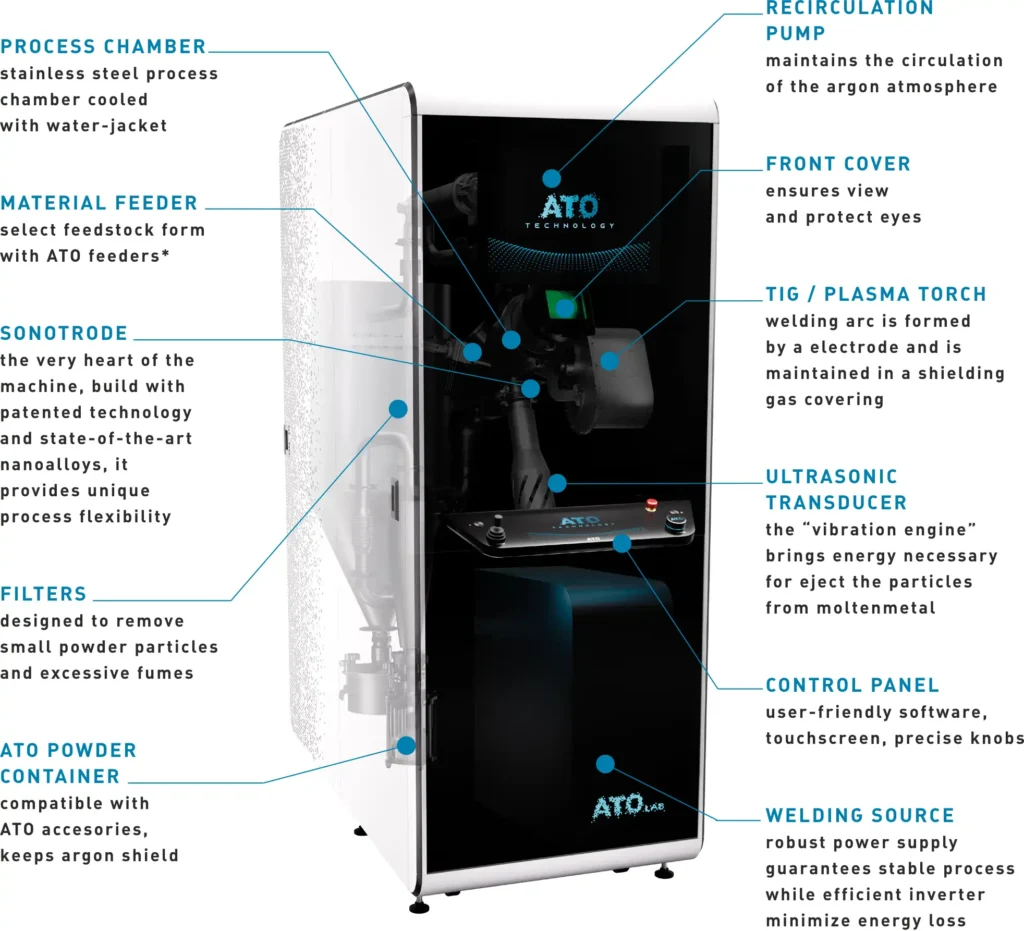
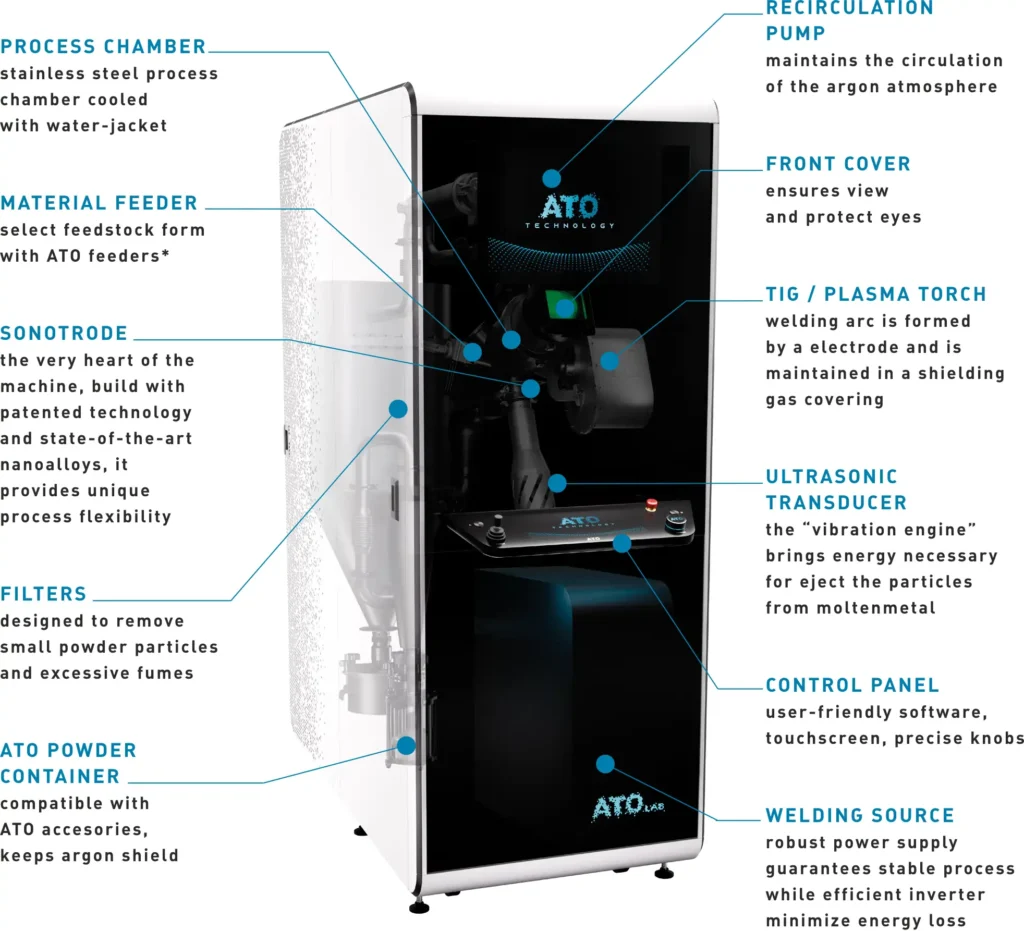
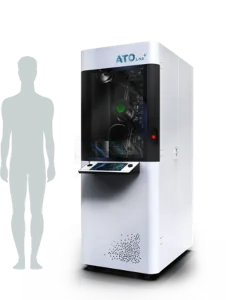
- ATO Lab base unit — TIG melting, patented half-wave nanoalloy sonotrode, vacuum pump, argon recirculation, cyclone and ATO powder container
- Ultrasonic frequency modules — 20, 35 or 52 kHz — to set the particle size
- Feeding system: wire, single rod, multi rod, revolver rod or custom
- Plasma melting or the Induction Melting System (IMS) for crucible and scrap feedstock
- ATO Sieve, ATO Clean and the Passivation Module for print-ready powder
- Installation and on-site operator training — included in every quotation
What the ATO Lab is
The ATO Lab is a lab-size ultrasonic metal powder atomizer made by 3D Lab in Warsaw, Poland — the current, next-generation version of 3D Lab’s lab atomizer. Feedstock — wire, rod or scrap — is melted by a TIG or plasma arc, or by induction, and forms a thin liquid film on the tip of a sonotrode. A piezoelectric transducer drives the sonotrode at ultrasonic frequency; the standing wave in the molten metal becomes unstable and ejects droplets of nearly equal size, which surface tension rounds into spheres while they fall through cooled argon. A cyclone separates the powder into a sealed ATO powder container that keeps the argon shield.
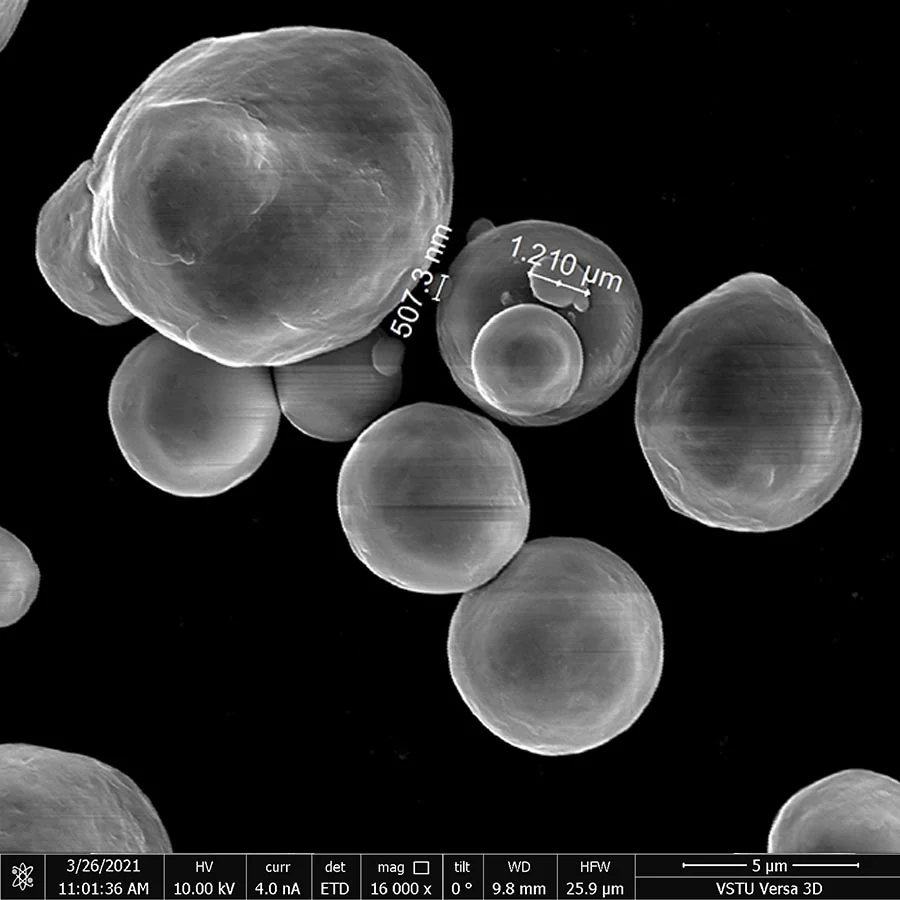
Because droplet size follows the frequency, the particle size distribution is narrow and repeatable: higher frequency gives finer powder, lower frequency coarser. There is no crucible or nozzle in the standard arc-melting route, the chamber runs at about 50 mbar with oxygen below 10 ppm, and batches are sized to the experiment — so a lab can design an alloy, atomize it the same week and qualify it without buying a large minimum order of catalog powder. The method is patent-protected: 3D Lab holds granted patents for ultrasonic atomization in the United States (US 12,090,554 B), Poland, China, Japan, South Korea and India. Published installations include INFN Gran Sasso National Laboratory and REMET.
Specifications
| Manufacturer | 3D Lab, Warsaw, Poland |
| Process | Ultrasonic atomization, patented half-wave nanoalloy sonotrode |
| Particle size (PSD) | 20–120 µm, depends on the frequency module |
| Ultrasonic frequency | 20 / 35 / 52 kHz (upgradable) |
| Throughput | up to 0.3 L/h — several hundred grams per hour |
| Oxygen level | below 10 ppm O2 in the chamber during atomization |
| Chamber pressure | approx. 50 mbar during atomization |
| Melting | TIG (standard) · plasma · induction (IMS module) |
| Melting range | approx. 700–800 °C up to about 3100 °C |
| Input material | wire, rods, scrap, irregular pieces |
| Inert gas flushing | vacuum pump; atmosphere ready in under 15 min |
| Powder collection | cyclone into the ATO powder container, under argon |
| Cooling | liquid, external chiller |
| Control | touchscreen; every run logged; remote control module available |
| Safety | cooling-water monitoring, automatic gas shut-off valves, emergency stops; feedstock-end detection stops the process |
| Certification | CE Declaration of Conformity |
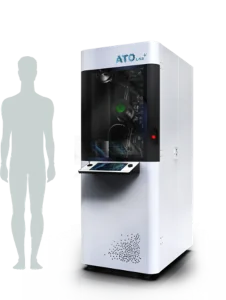
| Dimensions (H × W × D) | 1997 × 813 × 1626 mm (78.6 × 32.0 × 64.0 in) |
| Weight | confirmed in the formal quotation |
| Warranty | 12 months |
| Installation and training | on site, included in every quotation |
| Lead time | 8–12 weeks |
Download: the ATO Lab brochure and the ATO devices brochure are in the Downloads tab above.
Alloys already atomized on ATO
3D Lab has developed stable procedures for these alloys on its ultrasonic atomizers. Other meltable and weldable compositions can be atomized after parameter development.
| Steels | SS316L, SS304, 42CrMo4, AMS5832, PH17-7, Fe 99.5%, FeMn |
| Titanium | Ti Gr.1, Gr.2, Gr.5 (Ti6Al4V), Ti5Al2.5Sn, TiAl, TiMoSi |
| Nickel | Inconel 625, Inconel 718, Ni 99%, NiTi, NiTiHf |
| Aluminum | AlSi10Mg, Al7075, Al4047, Al5183, AlMg, AlMgSc, Al 99.99% |
| Magnesium | AZ31, WE43, WE54, MgAl9Zn1, ZX00 |
| Copper | CuCrZr, CuSn, CuNi3Si, CuAlNiFe, CuMnAl |
| Refractory | Nb 99%, Ta 99%, W90Ni7Fe3, MoSi2 |
| High-entropy | AlCoCrFeNi, CoCrFeMo, FeNiCrMo, NiCrFe, FeNiAlCr |
| Precious | Au 9 ct, 18 ct and 99.99%, Ag 99%, Pt alloys, Ir 99% |
| Special | Zr-based bulk metallic glasses (small quantities), MoS2 |
Which frequency for which process: finer powder from higher frequencies for LPBF and SLM, medium fractions for binder jetting and MIM, coarser powder from lower frequencies for DED, laser cladding and conventional powder metallurgy.
A short video of the atomizer at work is in the Video tab above.
Powder made on ATO
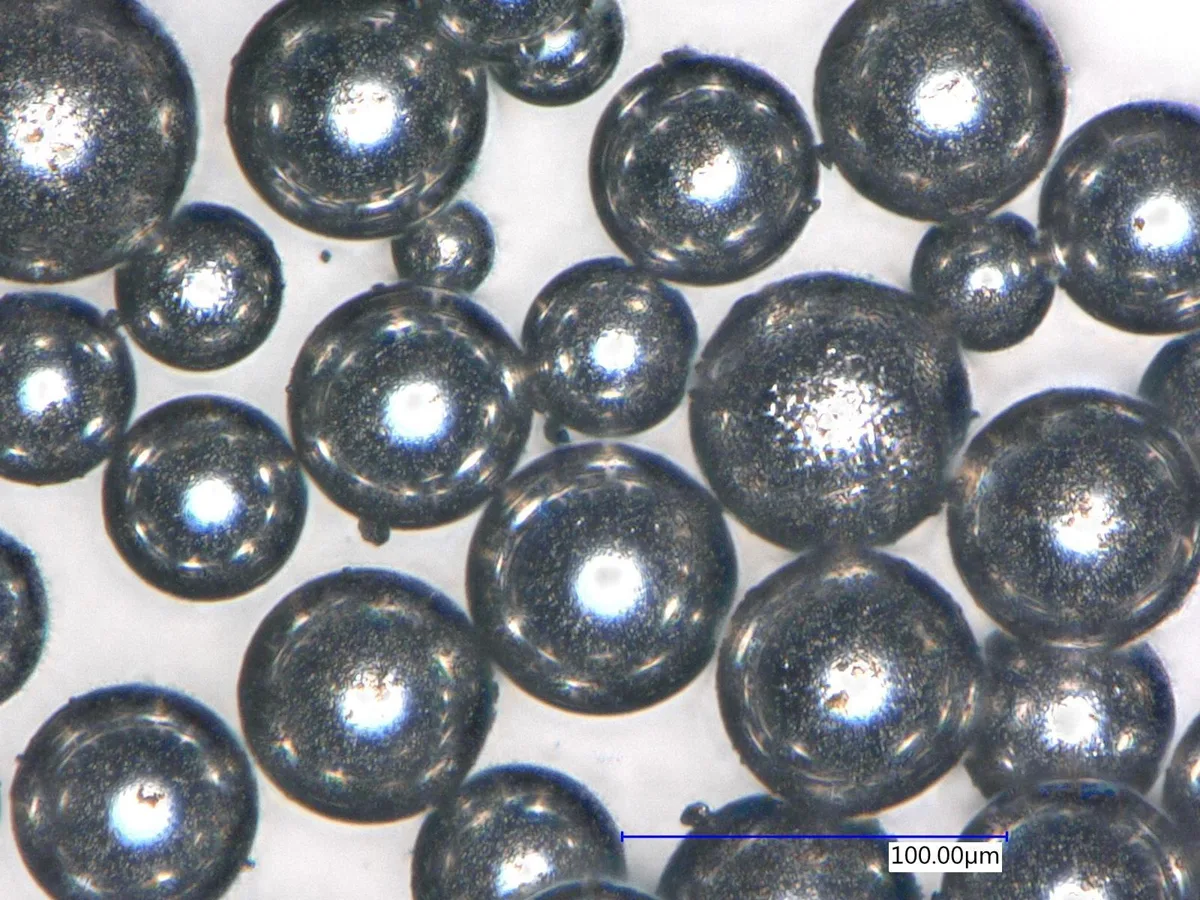
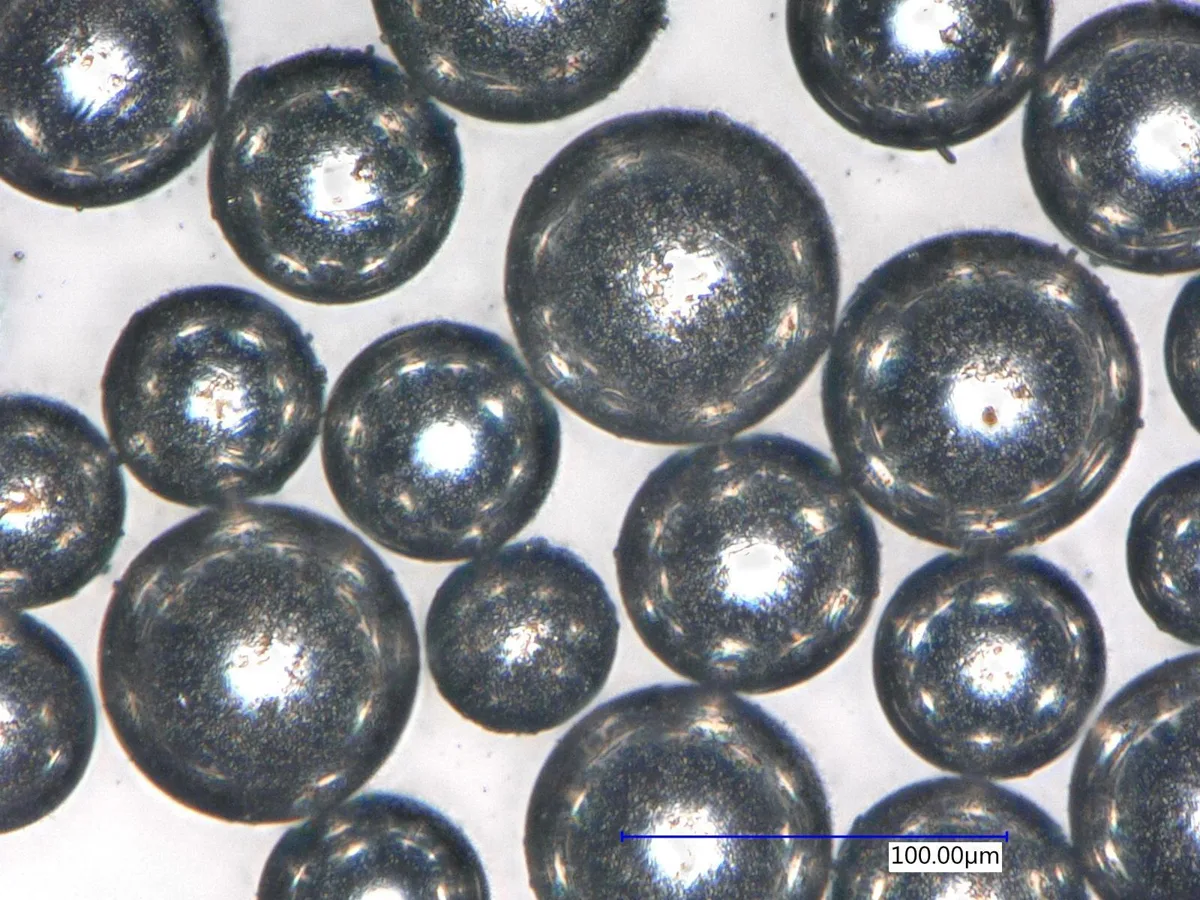
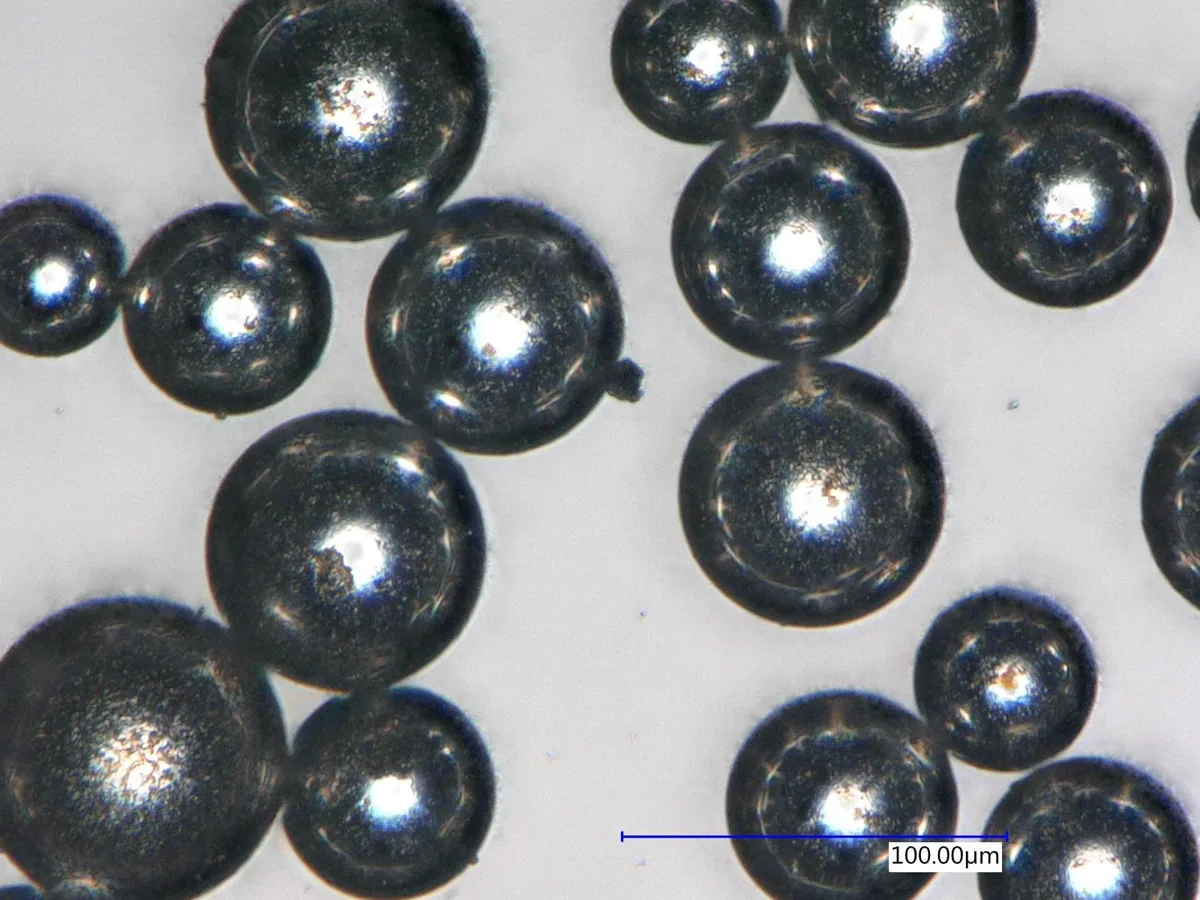
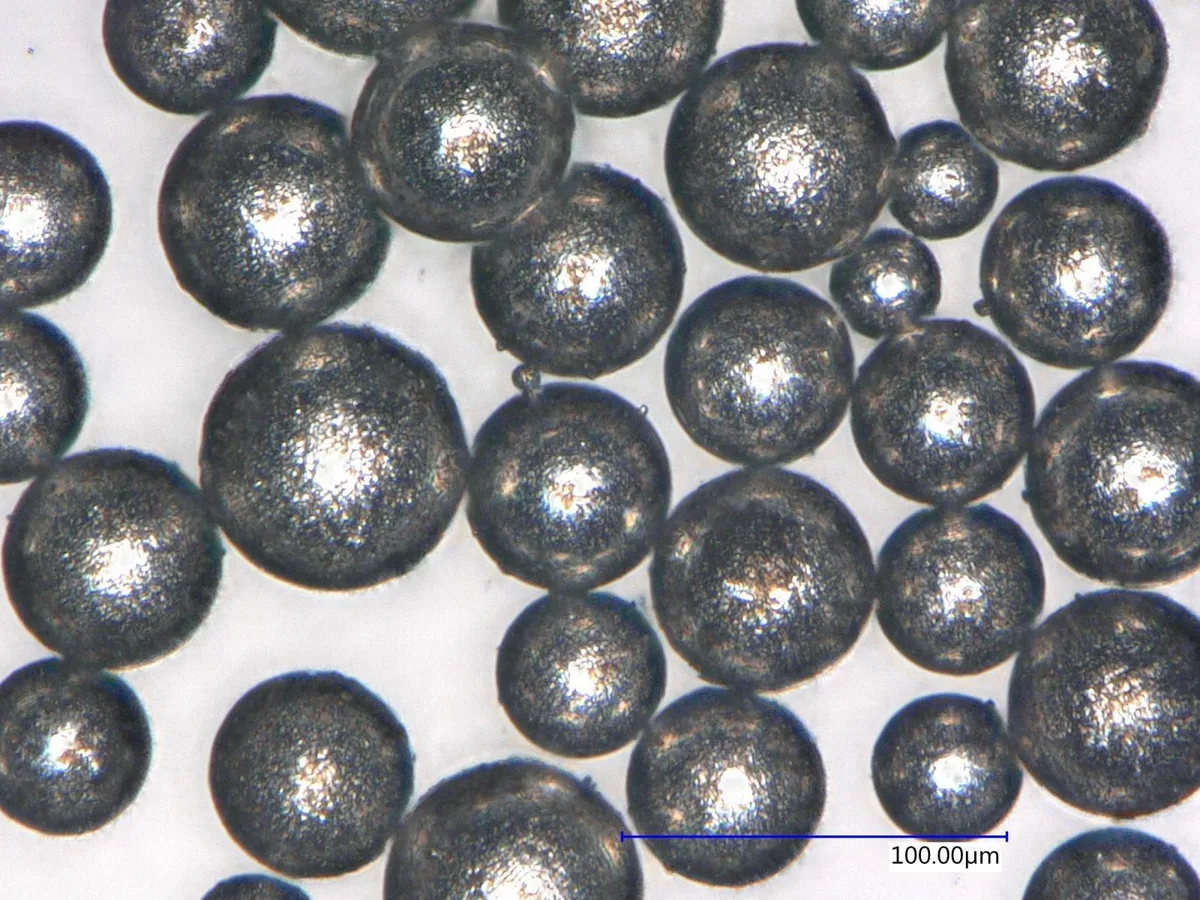
Spherical powder from alloys 3D Lab has atomized on the ATO Lab — titanium alloys, refractory metals, nickel superalloys and precious metals. Images: 3D Lab material reports and case studies.
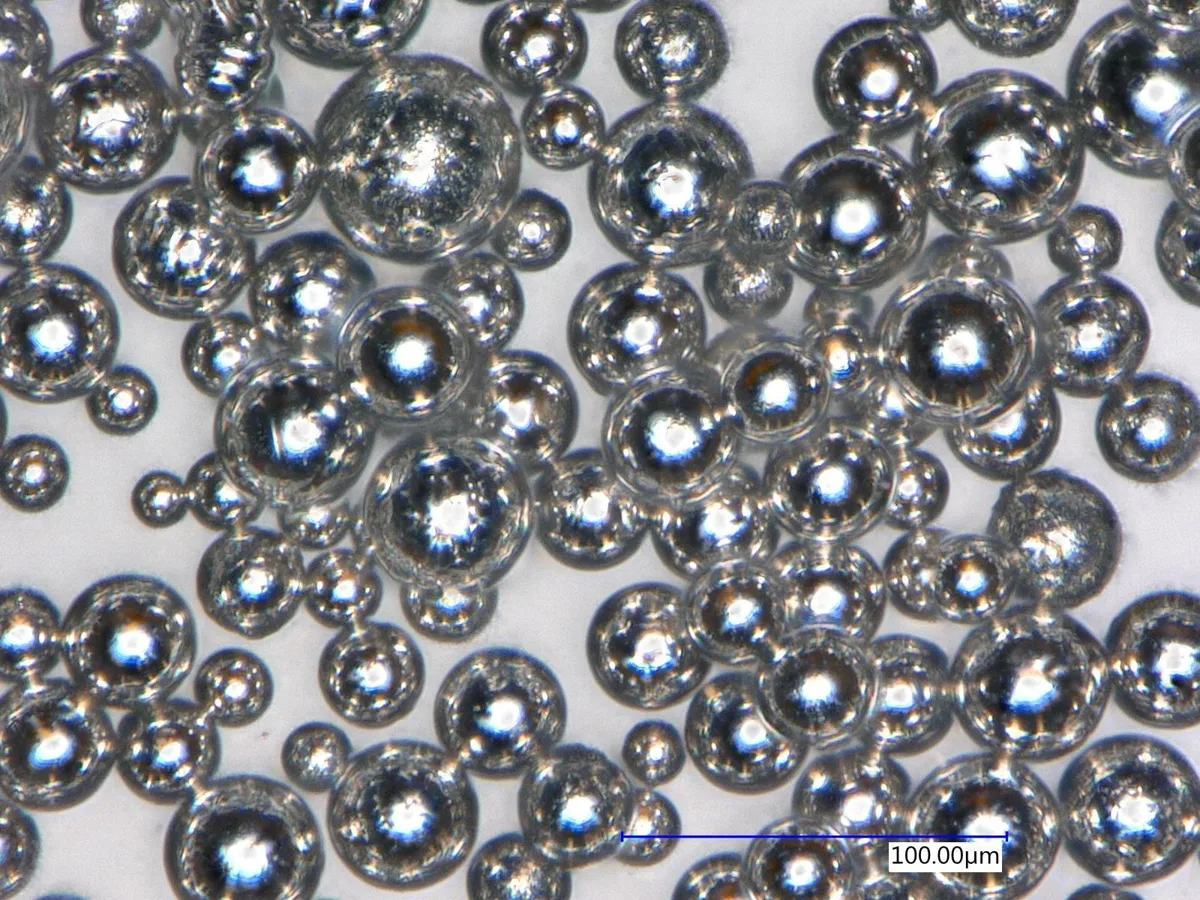
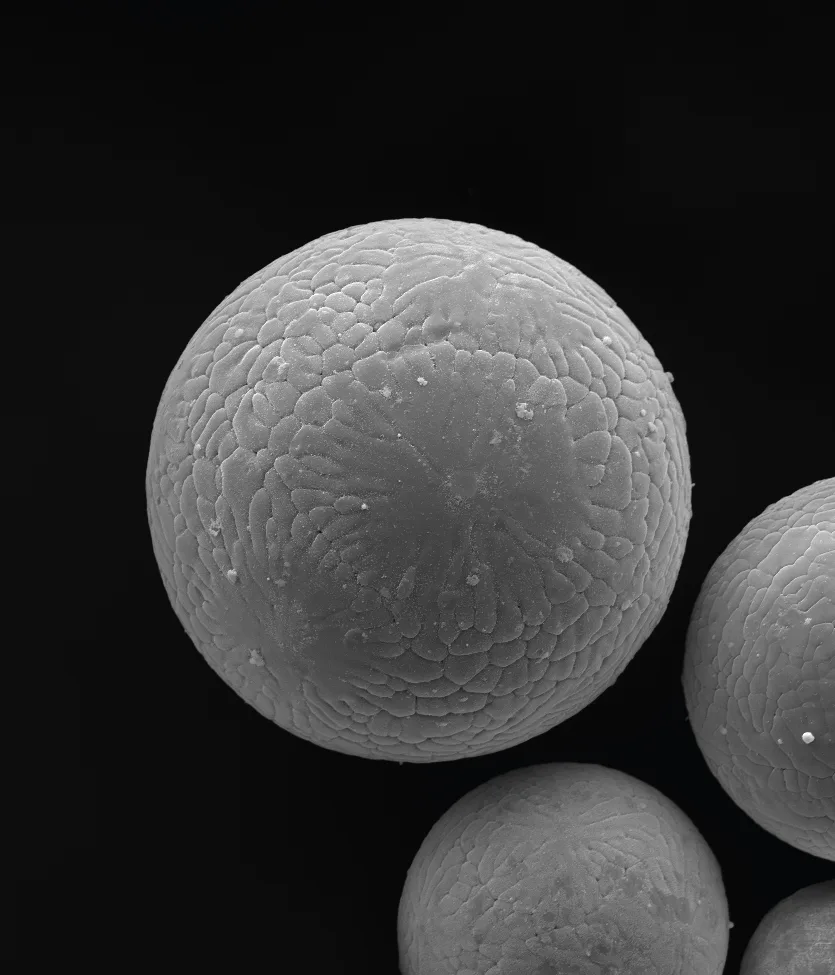
Who already runs ATO — published case studies
Three users have published how they work with 3D Lab’s ultrasonic atomizers (3D Lab case studies).
| FZU — Institute of Physics, Czech Academy of Sciences | Bought an ATO Lab Plus to connect alloy research with part production in-house: alloy design, powder, print-parameter calibration and final parts. Projects run on titanium, zinc, aluminum and high-entropy alloys, with significant progress on beta-titanium alloys. |
| REMET S.A., Poland | A manufacturer of welded structures for the oil & gas and energy sectors. It installed the ATO Lab to make powder in-house from wire and scrap, including compositions not sold commercially (trials included Al-Sc), and to recycle supports and scrap. REMET rates the sphericity of its ATO powder above commercial powders from other suppliers. |
| AZTERLAN, Spain | A metallurgy research center. It uses ATO to make ad-hoc powders for its patented surface-conditioning method for iron castings, which are then coated by laser metal deposition. |
Peer-reviewed research on ultrasonic atomization
| Grzelak et al., Materials 15 (2022) 4938 | Military University of Technology and 3D Lab compared LPBF parts from ultrasonic-atomized and plasma-arc gas-atomized 316L: both routes can deliver material of similar properties. |
| Bałasz, Bielecki, Gulbiński, Słoboda, JAMME 116(1) (2023) | Ultrasonic versus gas atomization: the ultrasonic powder had a finer average particle size, a narrower size distribution and higher sphericity. |
| Hinrichs et al. (KIT, GfE), Metals 11 (2021) 1723 | Mo-20Si-52.8Ti refractory alloy powder made by ultrasonic atomization met the needs of alloy development for powder bed fusion. |
| Monti et al. (Inspire AG, ETH Zürich), Materials & Design 229 (2023) 111907 | A new Al-Cu alloy for LPBF, designed against hot cracking, with its powder developed via ultrasonic atomization. |
Three ways to melt the feedstock
Which feedstock you can use
The ATO Lab takes feedstock in almost any form; the feeding system decides which. Custom feeders are made on request.
| Feeding option | Feedstock | Diameter | Length |
| Wire Feeding System (WFS) | Standard market wire | 0.8–2.4 mm | Continuous |
| Single Rod Feeding System (SRFS) | Rod or bar, incl. freshly cast, porous or non-round | 2–10 mm | Up to 110 mm |
| Multi Rod Feeding System (MRFS) | Straight rods of constant diameter | 4–10 mm | Up to 1,200 mm per rod, several rods per run |
| Revolver Rod Feeding System | Up to 10 rods in a revolver cylinder, sized to match ATO Cast rods | 4–10 mm | Short rods (see note) |
| Induction Melting System (IMS) with crucible | Irregular pieces and scrap | Depends on configuration | Depends on configuration |
Rods for the multi rod and revolver feeders must be straight with a constant diameter; machined and rolled rods both work, sanding is usually not needed. 3D Lab lists revolver rods as up to 110 mm on its technology page and up to 120 mm (ATO Cast rod size) on the module page — the quotation confirms the figure for your configuration.
Infrastructure and installation requirements
The ATO Lab installs in a standard materials lab. This is what facilities and procurement need to plan the installation:
| Footprint (W × D) | 813 × 1626 mm (32.0 × 64.0 in); height 1997 mm (78.6 in) |
| Weight | confirmed in the formal quotation |
| Electrical supply | 3-phase, 400–440 V, 50/60 Hz (±10%), L1/L2/L3/N/PE; configured to the local standard of the destination country |
| Installed power | 12–20 kW depending on configuration; average draw about 4 kW, peaks up to 7.9 kW |
| Process gas | Argon, purity 5.0 (99.999%) or higher recommended; typical use 15–25 L/min, about 90% of the argon is recovered and recirculated |
| Compressed air | Required (compressor or shop air) |
| Cooling | External liquid chiller; water-jacketed stainless steel process chamber |
| Peripherals | Ultrasonic cleaner (ATO Clean) and sieving unit (ATO Sieve); ventilation may be recommended depending on the room |
| Noise | max. 72.9 dB |
| Room | A standard materials lab, R&D facility or SME workshop — no atomization tower, no dedicated powder plant |
Where the ATO Lab stops — and what to take instead
The ATO Lab is a research and small-batch machine: up to about 0.3 L of powder per hour, roughly 0.5 kg/h for Ti6Al4V and 1 kg/h for Inconel 718 or 316 from 1–1.6 mm wire. If you need tonnes of one standard alloy, buying gas-atomized powder remains cheaper. Its range is 20–120 µm; for powders targeting about 25 µm ask about 3D Lab’s Ultra Frequency System module. If you want AI-guided parameter setup, two camera views of the process and one operator supervising several atomizers, look at the ATO Sparq. For gold, silver and platinum, where every gram of loss counts, the ATO Noble adds Zero Loss recovery. Raw powder still needs sieving and, for reactive metals, passivation: plan for ATO Sieve, ATO Clean and the Passivation Module. And if you need a few kilograms of one alloy rather than a machine, order custom alloy powder instead.
Make your own powder, measure it, print it
We supply the ATO Lab, the Microtrac CAMSIZER X2+ particle size and shape analyzer and our own AO Metal LPBF printers. Together they close the loop inside your own laboratory: atomize an alloy, check its size distribution and sphericity, print it, adjust the frequency or the chemistry, repeat. Upstream, ATO Cast casts your alloy into rods and ATO Wipe cleans the feedstock; downstream, ATO Pure cleans and dries the powder. The atomizer, analyzer and printer are also offered together as the R&D Bundle with the AO Metal A50.
Material reports from 3D Lab
3D Lab has documented atomization results for 22 alloys — Ti6Al4V, TiMo, TiZrNb, niobium, CoCr, Inconel 625 and 718, Haynes 282, 316L and 303 steel, aluminum and copper alloys, gold, PtCu, and the magnesium alloys WE43 and ZX00: particle size distribution (D10/D50/D90), circularity and micrographs at ×100 and ×1000.
See it running in California
Before you commit, you can see an ATO atomizer running at UC Irvine (UCI). Tell us which alloys you work with and we arrange the visit; it is a direct way to judge the process, the footprint and the powder with your own eyes before you order an ATO Lab.
In pictures
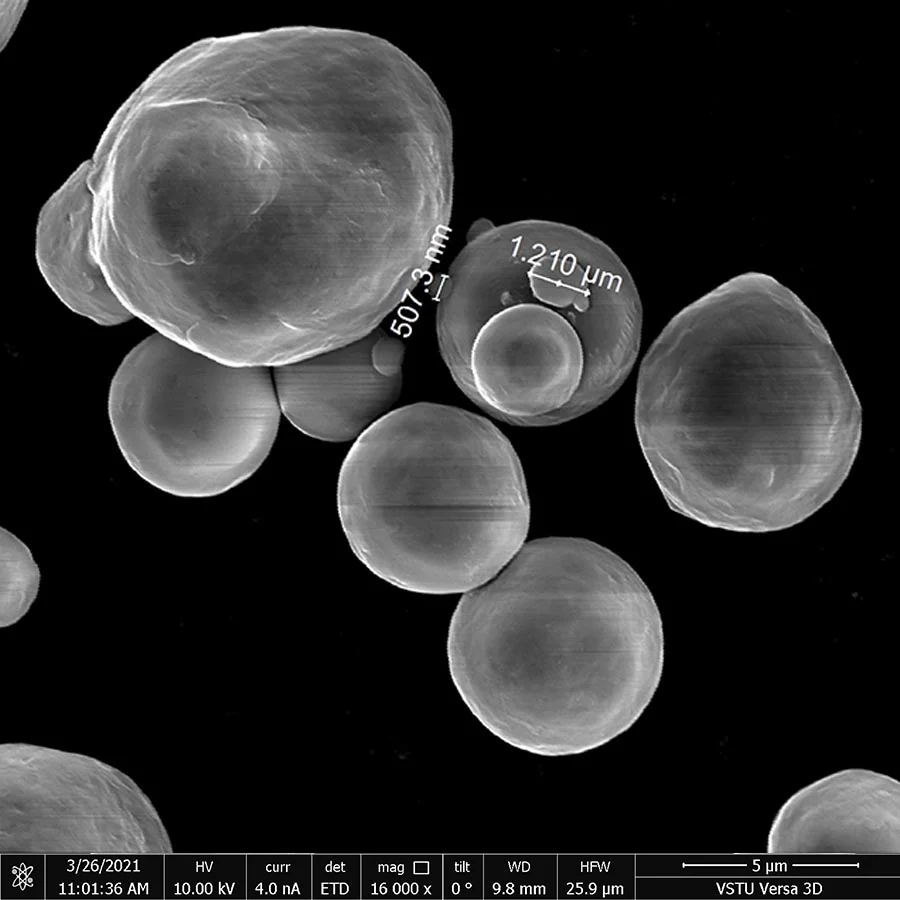
Availability, payment and delivery
Why buy it through Additive Plus
What usually stops people — and the honest answer
Ready when you are
| Brand | 3D Lab |
| Country of origin | Poland |
| Process | Metal powders production |
| Technology | Ultrasonic atomization |
| Meltimg method | TIG, Induction, Plasma |
| Sonotrode type | Half-wave nanoalloy sonotrode - patent pending |
| Inert gas flushing method | Vacuum pump |
| Cooling method | Liquid |
| Processable materials | Non-reactive & reactive alloys (e.g. Ti, Al., Zr alloys, intermetallics e.g. Zr-based bulk metalic glass TiAl, NiAl, NiTi) and other refractory metals |
| Powder quality | Low oxygen content, Narrow PSD, High flowability, Spherical particle shape |
| PSD (particle size distribution) | 20-120 micrometres |
| Powder collecting system | Cyclone |
| Protective atmosphere preparation time | <15 min. |
| Input material | Irregular, Rods, Scrap, Wire |
| Certification | CE |
| Ultrasonic frequency | 20, 35, 52 |
| O2 level | < 150 ppm |
| System throughput | up to 0,3l/h |
| Weight | 600 kg. |
| Dimensions | 1997x813x1626 mm, 78.62x32.01x64.02 in |
| Air supply | Compress air station |
| Inert gas | Argon |
| Power supply | 400V, 20KVA / 3 phase |
| Cleaning unit | Ultrasonic cleaner (ATO Clean) |
| Powder recycling system | Sieving unit (ATO Sieve) |
| Water cooling | External chiller |
| Warranty | 12 months |
| Material | Aluminium, Copper, HEA alloys, Magnesium, Nickel, Reactive metals, Refactory metals, Stainless Steel, Titanium |
Product videos
Send feedstock We atomizePowder + full data
Ask for a free powder sample of a standard alloy, or arrange a paid trial atomization of your own alloy before you decide.
Other products teams run alongside ATO Lab Ultrasonic Metal Powder Atomizer – Ti, Al, Refractory Alloys
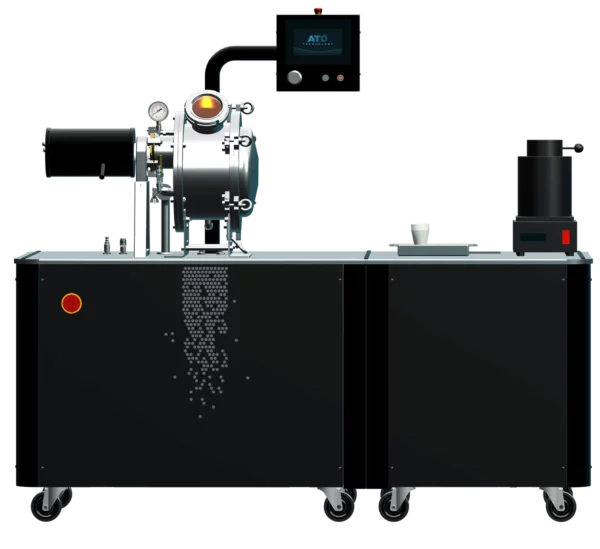
Cast your own feedstock rods for ATO atomizers — from any alloy you design or from AM scrap — with pre-melt purification and induction melting under vacuum.
- Built-in resistance furnace purifies the charge before casting
- 120 mm rods for the Revolver Rod Feeding System · re-cast AM scrap
- Installation, training and US service included · free powder samples
- Lead time 8–12 weeks · 12-month warranty
Made to order
· Lead time 8–12 weeks · installation included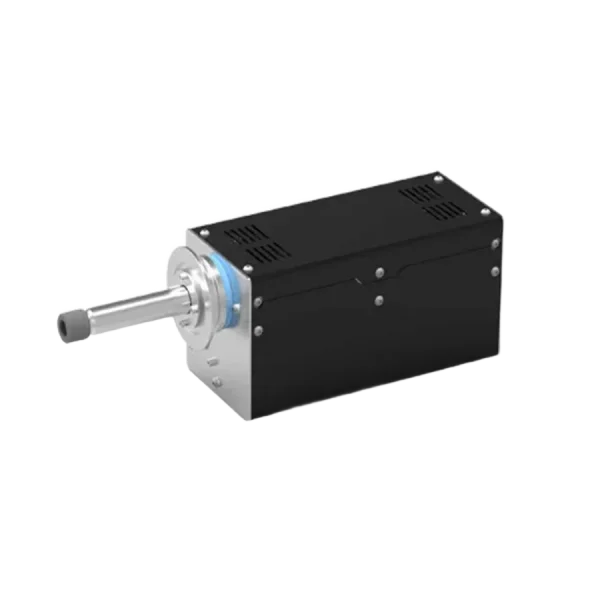
Atomize your own alloys from a single rod on an ATO ultrasonic atomizer — 1 to 10 mm in diameter, up to 110 mm long, cast rods welcome.
- Rods 1–10 mm, 4–6 mm recommended, up to 110 mm long
- Cast rods · upgradeable to a Custom Shape Feeder
- Installation, on-site operator training and US service included in every quotation
- Lead time 8–12 weeks · 12-month warranty
Made to order
· Lead time 8–12 weeks · installation included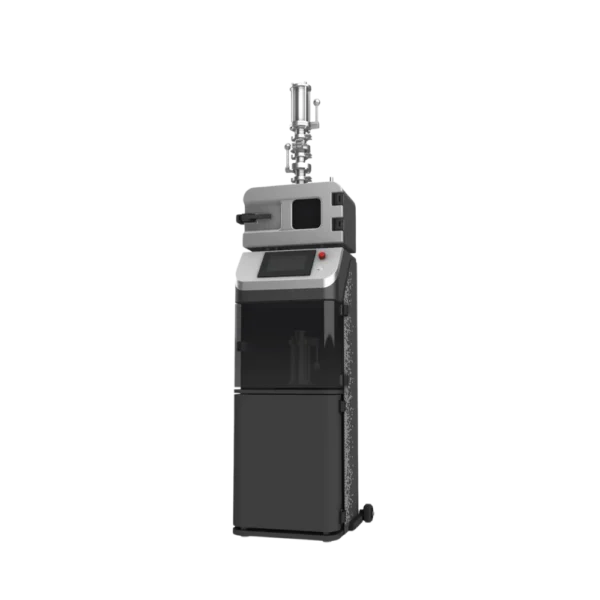
Sieve metal AM powder in an argon atmosphere, straight from the ATO atomizer powder container — ultrasonic vibration keeps the mesh open and the powder away from oxygen.
- Same powder container as the ATO atomizers — transfer under argon
- Screens chosen for your target cut · optional oxygen sensor
- Installation, training and US service included · free powder samples
- Lead time 8–12 weeks · 12-month warranty
Made to order
· Lead time 8–12 weeks · installation included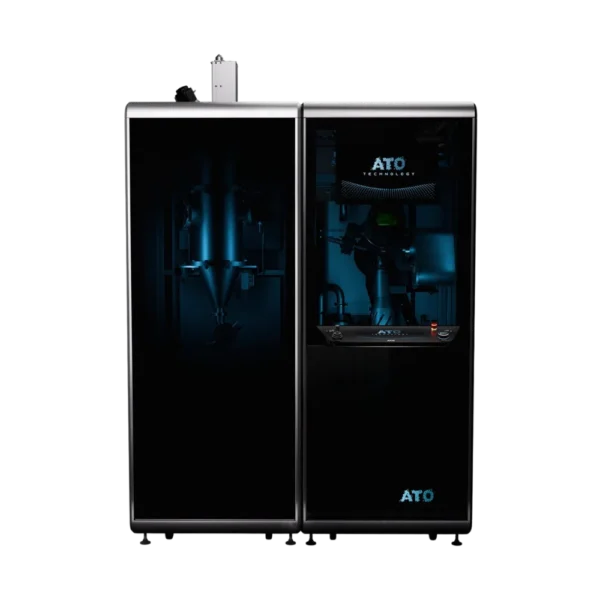
Induction melting in a crucible for your ATO ultrasonic atomizer — atomize feedstock of any shape and keep low-melting-point elements in the alloy.
- 200 cm³ standard crucible · larger on request
- Irregular feedstock, scrap and rods · compatible with ATO rod feeders
- Installation, on-site operator training and US service included in every quotation
- Lead time 8–12 weeks · 12-month warranty
Made to order
· Lead time 8–12 weeks · installation included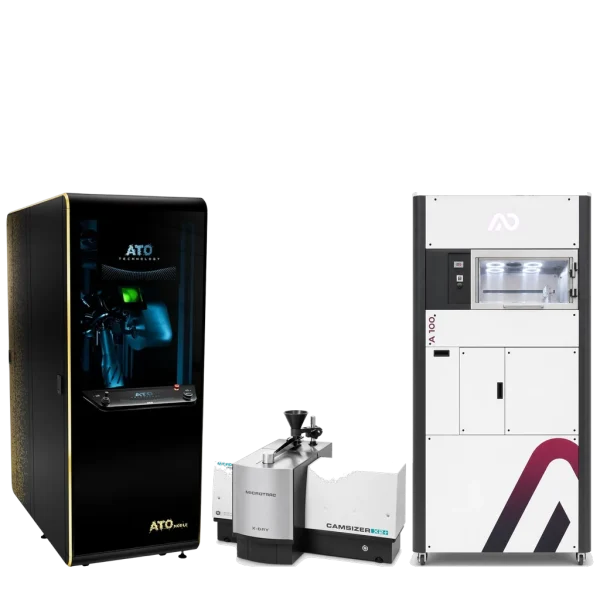
Make your own gold, silver and platinum powder, measure it and print it — the ATO Noble, the Microtrac CAMSIZER X2+ and the AO Metal A100 as one precious-metal cell from one supplier.
- ATO Noble: Au 9 ct to 99.99%, Ag, Pt, Pd, Ir with Zero Loss recovery
- CAMSIZER X2+: size and shape from 0.9 µm to 8 mm in 1–3 minutes
- A100: Ø100 × 100 mm LPBF, optional blue laser for gold and silver
- Installation and training included · 8–14 weeks · 12-month warranty
Made to order
· Lead time 8–14 weeks · installation included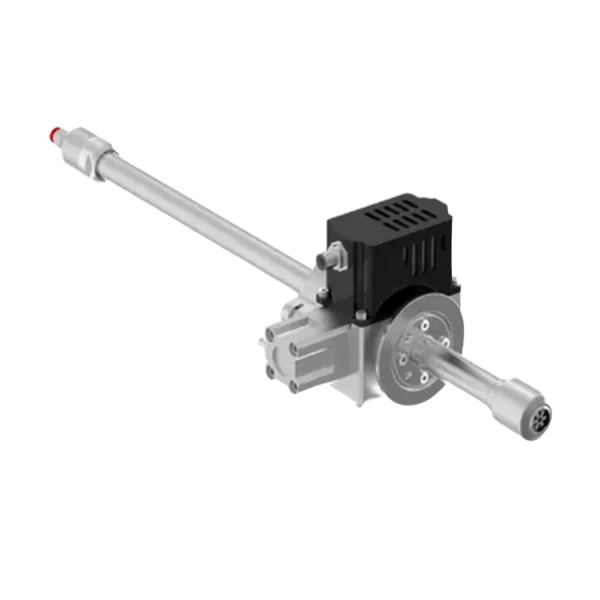
Longer atomization runs from rods on your ATO ultrasonic atomizer — round rods of 4 to 10 mm in self-locking collets, up to 1200 mm per load.
- Up to 1200 mm of rod per load with the extended tube container
- Round rods 4–10 mm · collets 4, 6, 8 and 10 mm
- Installation, on-site operator training and US service included in every quotation
- Lead time 8–12 weeks · 12-month warranty
Made to order
· Lead time 8–12 weeks · installation included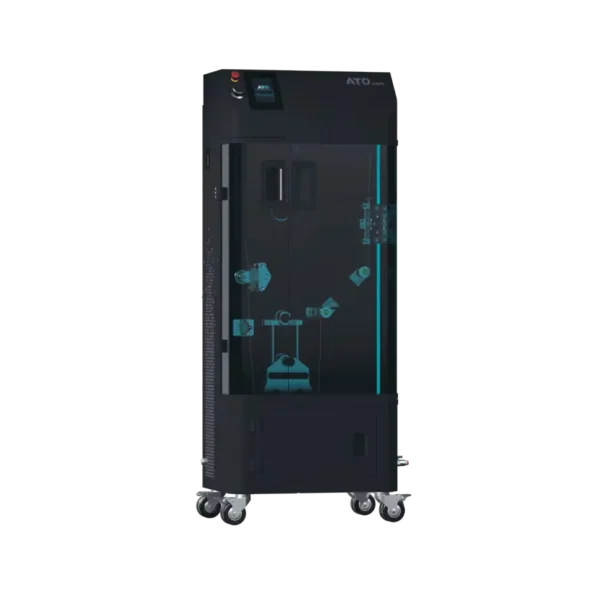
Ultrasonic and brush cleaning of wire and rod feedstock before it reaches the ATO atomizer — set the cleaned length or weight and let it run.
- Wire on spools, plus a rod mode for the Single Rod Feeding System
- Automatic and manual modes · integrated safety sensors
- Installation, training and US service included · free powder samples
- Lead time 8–12 weeks · 12-month warranty
Made to order
· Lead time 8–12 weeks · installation included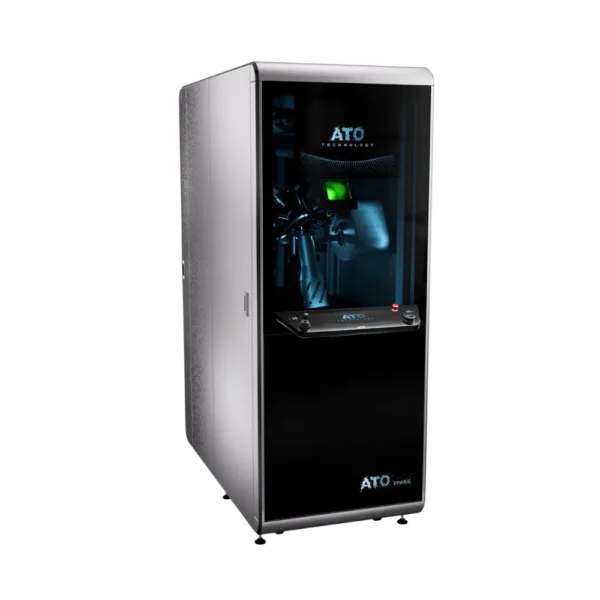
Ultrasonic metal powder atomization with AI-guided setup — 20–120 µm spherical powder, oxygen below 10 ppm, two camera views and remote supervision of several units.
- AI suggests parameters for standard and new alloys
- Reactive, refractory and standard alloys from wire, rod or scrap
- Installation, training and US service included · free powder samples
- Lead time 8–12 weeks · 12-month warranty
Made to order
· Lead time 8–12 weeks · installation includedWhat our customers say
“Harry and team were professional, effective communicators as we set up the order, then they executed quickly and produced an amazing product for us at a very competitive price. Am looking forward to our next print w Additive Plus!”
“Great 3D printing service and the resin parts look super smooth and clean. Really happy with how everything turned out!”
“Harry was very professional and helped me out with my 3D printing needs and explained what options I have in terms of filaments such as PEEK. Highly recommended.”
“I needed a 3D enclosure printed urgently in a specific time period, they did great!”
Common questions
Don't see yours? Email [email protected] — NDA on request, typical reply within 4 hours.
What is the ATO Lab?
What technology does the ATO Lab use?
What are the main benefits of the ATO Lab?
Is the ATO Lab suitable for laboratory use?
Can the ATO Lab produce powder for metal 3D printing?
How is particle size controlled?
What particle size ranges are supported?
What materials can be atomized with the ATO Lab?
Is the ATO Lab suitable for reactive alloys?
How spherical is the powder produced?
How repeatable are the results?
Does the ATO Lab support small batch production?
What feeding systems are available?
What melting options are offered?
Is the ATO Lab modular?
How cost-effective is the ATO Lab compared to traditional atomizers?
Does the ATO Lab help reduce material waste?
What industries use the ATO Lab?
Can the ATO Lab integrate with other ATO systems?
Does the ATO Lab require complex infrastructure?
Is the ATO Lab currently available?
How can I request pricing or technical guidance?
Can the system process scrap or recycled metal?
What throughput does the ATO Lab offer?
What ultrasonic frequencies are available?
Can I customize the melting system?
Which organizations use the ATO Lab?
Is the ATO Lab suitable for alloy development?
Does Additive Plus offer trial atomization?
How much does the ATO Lab cost?
Can I get a free powder sample?
What are the lead time and warranty?
Can I see an ATO atomizer running before I buy?
Which alloys has ATO technology already atomized?
What oxygen level does the ATO Lab reach?
Does atomization change the chemistry of my alloy?
What melting temperatures can the ATO Lab handle?
How long does it take to change from one alloy to another?
What are the electrical requirements?
How much argon does the ATO Lab use?
Is the ATO Lab certified?
Can the ATO Lab be operated remotely?
Is the ATO Lab process patented?
What is the difference between the ATO Lab, ATO Sparq and ATO Noble?
Place your order, or talk to an engineer first
Order ATO Lab Ultrasonic Metal Powder Atomizer – Ti, Al, Refractory Alloys direct, or talk to materials engineer