
Introduction
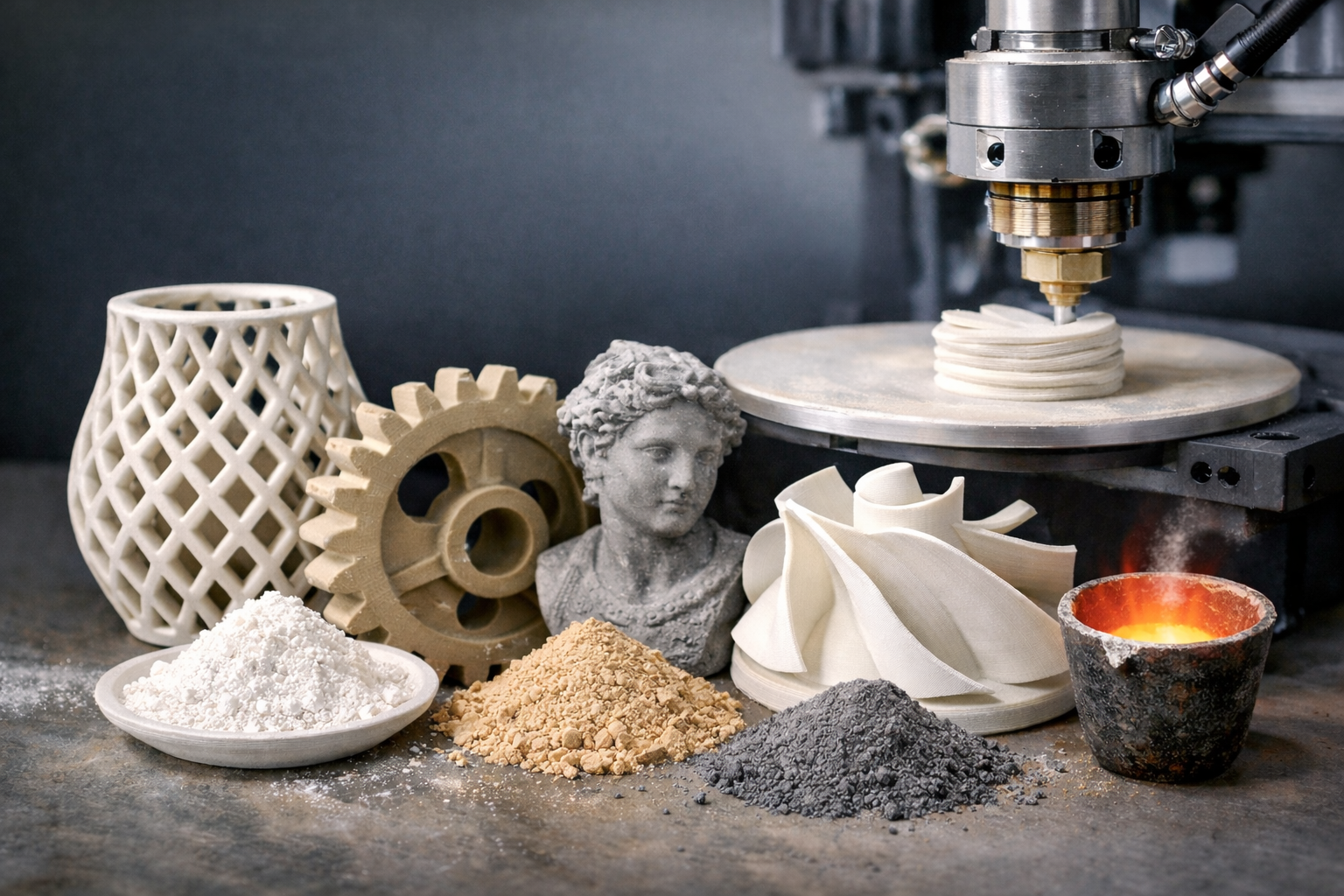
Ceramic 3D printing is rapidly transforming the landscape of modern manufacturing, enabling designers, engineers, and artists to create parts that were previously difficult or impossible to produce with traditional methods. Unlike conventional ceramics, which require molding, casting, or machining, 3D printing ceramics allows for layer-by-layer fabrication of complex shapes with high precision, minimal waste, and faster turnaround times.
The versatility of 3D printed ceramics makes them suitable for both functional components and decorative objects. These materials are prized for their durability, heat resistance, chemical stability, and aesthetic potential, making them ideal for applications ranging from high-performance industrial parts to intricate artistic creations.
Key terms to understand:
- 3D printing ceramics – The process of using additive manufacturing techniques to fabricate parts from ceramic-based materials. This includes powders, pastes, and resins specifically designed for 3D printing.
- 3D-printed ceramics – The final objects or components produced by these processes, which can be functional, structural, or decorative depending on the application.
- 3D-printed ceramic parts – Components that serve a specific purpose, whether in aerospace, medical devices, or industrial tooling, produced using ceramic additive manufacturing.
Industries leveraging ceramic 3D printing are rapidly expanding:
- Aerospace & Defense: Lightweight, heat-resistant components for engines, turbines, and spacecraft.
- Medical & Dental: Custom implants, dental crowns, prosthetics, and surgical tools with exacting tolerances.
- Automotive: High-performance components capable of withstanding high temperatures and mechanical stress.
- Electronics: Heat-resistant substrates, insulators, and functional components for advanced circuits.
- Art & Design: Sculptures, decorative panels, and architectural pieces with complex geometries and fine details.
In this guide, you’ll gain a comprehensive understanding of ceramic 3D printing: from the most common ceramic materials and printing methods to design tips, post-processing techniques, and how Additive Plus supports every stage of the process. Whether you are an engineer looking for high-performance functional parts or an artist exploring new creative possibilities, this guide will help you navigate the opportunities that 3D printed ceramics offer.
By the end, you’ll understand how to choose the right ceramic material, select the ideal printing method, and achieve high-quality results for your projects—all while leveraging the expertise and services offered by Additive Plus.
What Are Ceramics in Additive Manufacturing?
Ceramics are a class of inorganic, non-metallic materials renowned for their unique combination of mechanical, thermal, and chemical properties. Unlike metals or polymers, ceramics can withstand extreme conditions while maintaining dimensional stability, making them an ideal choice for high-performance applications.
Key properties of ceramics:
- Hardness: Ceramics are exceptionally resistant to scratching, wear, and abrasion, allowing parts to maintain their surface integrity even under harsh operating conditions.
- Brittleness: While extremely strong under compression, ceramics can fracture if subjected to tensile stress or impact. Proper design and engineering considerations, such as fillets, wall thickness, and reinforcement, are crucial to prevent cracking.
- Heat resistance: Ceramics can sustain very high temperatures without deforming or losing structural integrity, making them suitable for engines, turbines, and high-temperature tooling.
- Chemical stability: They are highly resistant to corrosion, oxidation, and chemical attack, which makes them ideal for industrial environments and medical applications where durability and longevity are essential.
Comparison with other 3D printing materials:
- Polymers: While polymers are flexible, lightweight, and easy to print, they generally cannot tolerate extreme temperatures or mechanical loads. Ceramics outperform polymers in strength, heat resistance, and wear resistance.
- Metals: Metals offer ductility and high tensile strength, but they are often heavier and conduct electricity. Ceramics provide lightweight, electrically insulating, and thermally stable alternatives, making them ideal for specialized applications like electronic substrates and aerospace components.
Unique Advantages of 3D Printing Ceramics
One of the most exciting aspects of 3D printed ceramics is their ability to produce geometries and features that are impossible or prohibitively expensive with traditional manufacturing techniques:
- Complex geometries: Intricate lattice structures, internal channels, and organic shapes can be printed with precision.
- Micro-precision: 3D printing enables high-resolution features suitable for medical implants, precision tooling, and aerospace components.
- Functional high-temperature components: Parts can be designed to withstand extreme heat, opening possibilities in industries such as defense, energy, and advanced manufacturing.
How Additive Plus Leverages Ceramics
At Additive Plus, we combine the unique properties of ceramics with advanced 3D printing technologies to produce production-ready parts tailored for a wide range of applications. By carefully selecting materials and optimizing print processes, we create components that meet specific mechanical, thermal, and aesthetic requirements.
Whether producing custom dental implants, high-performance aerospace parts, or intricate artistic pieces, Additive Plus ensures that every 3D printed ceramic part is engineered for durability, accuracy, and functionality. Our team also assists in design optimization to minimize material waste, reduce cracking, and ensure successful prints.
With ceramics in additive manufacturing, designers and engineers no longer need to compromise between functionality and complexity—they can achieve both.
Common Methods for 3D Printed Ceramic Production
There are several technologies used in ceramic 3D printing, each with its own advantages, limitations, and ideal use cases. The choice of method depends on factors such as part geometry, required precision, material properties, and production volume. Understanding these processes is essential for selecting the right approach for your 3D printed ceramic parts.
1. Vat Photopolymerization with Ceramic Resins
Vat photopolymerization is one of the most precise methods for producing 3D printed ceramics. In this process, fine ceramic particles are suspended in a light-sensitive liquid resin. A UV or blue light source selectively cures the resin layer by layer, forming the desired shape. Once printing is complete, the part undergoes debinding and sintering to remove the resin and densify the ceramic structure.
How it works:
- A build platform is submerged in a vat of ceramic-filled resin.
- Light selectively cures each layer according to the digital design.
- The process repeats until the full part is formed.
Advantages:
- Exceptional resolution and accuracy, ideal for micro-scale features
- Smooth surface finishes, reducing the need for extensive post-processing
- Ability to produce complex geometries with fine details
Best applications:
- Dental and medical components (crowns, implants)
- Precision engineering parts
- Microfluidic devices and electronics
This method is particularly valuable when surface quality and dimensional accuracy are critical.
2. Binder Jetting with Ceramic Powders
Binder jetting is a highly scalable method that uses a powdered ceramic material combined with a liquid binding agent. The printer selectively deposits the binder onto a powder bed, bonding particles layer by layer. After printing, the part is cured and then sintered to achieve its final strength.
How it works:
- A thin layer of ceramic powder is spread across the build platform.
- A print head deposits a liquid binder to define the part geometry.
- The process repeats layer by layer until the part is complete.
Benefits:
- High productivity, making it suitable for batch production
- Minimal or no support structures, as surrounding powder supports the part
- Ability to create complex internal channels and cavities
- More cost-effective for larger quantities compared to other methods
Best applications:
- Industrial tooling
- Aerospace and automotive components
- Complex geometries requiring internal features
Binder jetting is often chosen for medium to large production runs, where efficiency and scalability are key.
3. Ceramic Paste Extrusion
Ceramic paste extrusion, also known as robocasting or direct ink writing, involves extruding a high-viscosity ceramic paste through a nozzle to build parts layer by layer. This method is highly versatile and accessible, making it ideal for both industrial and creative applications.
How it works:
- A syringe or extrusion system deposits ceramic paste in a controlled pattern.
- Layers are stacked to form the part geometry.
- The printed part is dried and then sintered for final strength.
Advantages:
- Flexible material handling, allowing for a wide range of ceramic formulations
- Suitable for large-scale components and custom geometries
- Lower material waste and relatively simple setup
- Ideal for rapid prototyping and experimentation
Applications:
- Architectural and artistic structures
- Functional prototypes
- Custom research and development projects
This method is especially useful when design flexibility and quick iteration are more important than ultra-high resolution.
Why Process Choice Matters
Selecting the right ceramic 3D printing method is critical because it directly impacts the performance, cost, and manufacturability of your part. Key factors influenced by the process include:
- Mechanical strength: Density and bonding vary depending on the printing and sintering process.
- Thermal properties: Some methods produce parts better suited for extreme heat environments.
- Surface finish: High-resolution methods reduce the need for post-processing.
- Production speed and cost: Some technologies are better for prototyping, while others are optimized for scaling.
At Additive Plus, the process selection is tailored to your application. By evaluating your design requirements, material needs, and production goals, their team ensures that each 3D printed ceramic part is manufactured using the most effective technology.
Key Types of Ceramic Materials for 3D Printing
Selecting the right material is one of the most important decisions in ceramic 3D printing. Different ceramics offer unique combinations of strength, thermal resistance, surface quality, and printability, which directly impact the performance of your final part.
Below are some of the most widely used materials in 3D printing ceramics, along with their properties, advantages, and ideal applications.
1. Ceramic Pastes – Flexible Feedstock for Complex Parts
Overview:
Ceramic pastes are high-viscosity materials specifically formulated for extrusion-based ceramic 3D printing. They are easy to process and allow for precise control during printing, making them ideal for producing intricate and customized geometries.
Key characteristics:
- Smooth extrusion behavior for consistent layer deposition
- Adaptable formulations for different ceramic compositions
- Suitable for both small-scale and large-format printing
Advantages:
- Excellent for rapid prototyping and design validation
- Ideal for low-volume production without the need for expensive tooling
- Enables complex shapes and organic geometries that are difficult to achieve with traditional ceramic forming methods
- Lower material waste compared to subtractive manufacturing
Applications:
- Functional prototypes for engineering validation
- Architectural elements and customized structures
- Art installations and decorative ceramics
- Research and development projects
Explore: Ceramic Pastes Category
2. Fused Silica – Low Thermal Expansion Ceramic
Overview:
Fused silica is a highly specialized ceramic known for its extremely low coefficient of thermal expansion, making it one of the best materials for applications requiring dimensional stability under temperature changes.
Key properties:
- Near-zero thermal expansion
- Excellent thermal shock resistance
- High chemical purity and stability
- Strong resistance to thermal deformation
Advantages:
- Maintains precision and dimensional accuracy even under extreme heat
- Ideal for environments with rapid temperature fluctuations
- Performs well in chemically aggressive environments
Applications:
- Aerospace and defense components exposed to high temperatures
- Optical components and precision instruments
- High-precision molds and tooling
- Semiconductor and electronics manufacturing
Explore: Fused Silica Material
3. Silicore – High-Performance Ceramic Powder
Overview:
Silicore is a high-performance ceramic powder designed for demanding industrial applications. It offers a strong balance between mechanical strength, durability, and heat resistance, making it suitable for functional end-use parts.
Key characteristics:
- High density after sintering
- Strong resistance to wear and mechanical stress
- Reliable performance in high-temperature environments
Advantages:
- Ideal for functional, load-bearing components
- Provides long-term durability in harsh industrial conditions
- Suitable for both prototyping and production parts
Applications:
- Industrial tooling and fixtures
- Mechanical components exposed to friction or wear
- High-performance parts in manufacturing environments
- Components requiring both strength and thermal stability
Explore: Silicore Material
4. Zirconia 3Y – High-Strength Technical Ceramic
Overview:
Zirconia 3Y (yttria-stabilized zirconia) is one of the most advanced and widely used technical ceramics in 3D printed ceramics. It is known for its exceptional toughness, strength, and wear resistance, making it suitable for both medical and industrial applications.
Key properties:
- Very high fracture toughness compared to other ceramics
- Excellent wear and corrosion resistance
- Biocompatibility for medical and dental use
- High density and mechanical strength after sintering
Advantages:
- One of the strongest ceramic materials available for additive manufacturing
- Suitable for precision, high-performance applications
- Combines mechanical durability with aesthetic quality (important for dental uses)
Applications:
- Dental crowns, bridges, and implants
- Medical devices and prosthetics
- Wear-resistant industrial components
- Cutting tools and mechanical parts
Comparison:
Zirconia 3Y stands out by offering a rare balance between mechanical strength and biocompatibility, making it a top choice for both healthcare and engineering applications.
Explore: Zirconia 3Y Material
Choosing the Right Material
Each of these materials serves a distinct purpose in ceramic 3D printing:
- Ceramic pastes are best for flexibility and rapid iteration
- Fused silica excels in high-temperature precision environments
- Silicore is ideal for durable, functional industrial parts
- Zirconia 3Y offers unmatched strength and biocompatibility
At Additive Plus, material selection is guided by your specific application, ensuring that your 3D printed ceramic parts meet the required performance, durability, and design goals.
Comparison: Which Ceramic Material for Your Needs?
Choosing the right material for your ceramic 3D printing project depends on balancing several key factors: mechanical strength, thermal performance, surface quality, and application requirements. Each ceramic material offers unique advantages, so understanding these differences will help you select the best option for your specific use case.
Quick Comparison Overview
| Material | Strength | Heat Resistance | Surface Finish | Best For |
| Ceramic Paste | ⭐⭐⭐ | ⭐⭐ | ⭐⭐⭐⭐ | Complex shapes, prototypes |
| Fused Silica | ⭐⭐ | ⭐⭐⭐⭐⭐ | ⭐⭐⭐ | High-temp parts, precision tooling |
| Silicore | ⭐⭐⭐⭐ | ⭐⭐⭐⭐ | ⭐⭐⭐ | Functional & high-performance components |
| Zirconia 3Y | ⭐⭐⭐⭐⭐ | ⭐⭐⭐⭐ | ⭐ | Wear-resistant, medical & industrial |
How to Interpret This Comparison
Strength
Strength determines how well a material can withstand mechanical loads, stress, and wear:
- Zirconia 3Y leads in strength and toughness, making it ideal for demanding environments.
- Silicore offers a strong balance for industrial applications.
- Ceramic pastes are suitable for prototypes but may not be ideal for heavy-duty use.
- Fused silica prioritizes thermal stability over mechanical strength.
Heat Resistance
Heat resistance is critical for applications exposed to extreme temperatures:
- Fused silica stands out with exceptional resistance to thermal expansion and shock.
- Silicore and Zirconia 3Y also perform well in high-temperature environments.
- Ceramic pastes are typically better suited for moderate thermal conditions.
Surface Finish
Surface quality impacts both aesthetics and functionality:
- Ceramic pastes and resin-based processes often produce smoother surfaces.
- Fused silica and Silicore provide balanced finishes suitable for functional parts.
- Zirconia 3Y may require additional post-processing for refined surface quality, especially in precision applications like dental components.
Material Selection by Use Case
To simplify your decision, here’s how each material aligns with common applications in 3D printing ceramics:
- For rapid prototyping and complex geometries:
Choose ceramic pastes. They offer flexibility, fast iteration, and excellent surface finish for design validation and creative applications. - For extreme temperature environments:
Choose fused silica. Its low thermal expansion and resistance to thermal shock make it ideal for aerospace, optics, and high-precision tooling. - For functional industrial components:
Choose Silicore. It provides a strong combination of durability, heat resistance, and mechanical performance for real-world applications. - For maximum strength and wear resistance:
Choose Zirconia 3Y. It is the best option for medical, dental, and high-wear industrial parts where performance and longevity are critical.
Key Decision Factors to Consider
When selecting a ceramic material, ask the following:
- What mechanical loads will the part experience?
- Will the part be exposed to high temperatures or thermal cycling?
- Is surface finish critical for performance or aesthetics?
- Is the part a prototype or an end-use component?
- What level of post-processing is acceptable?
How Additive Plus Helps You Choose
At Additive Plus, material selection is not a one-size-fits-all process. Their team works closely with you to evaluate your application, design requirements, and performance goals, ensuring the right material is chosen for optimal results.
Whether you need high-strength Zirconia 3Y, thermally stable fused silica, or flexible ceramic pastes for prototyping, Additive Plus provides expert guidance to help you achieve reliable, high-quality 3D printed ceramic parts.
Design Tips for Ceramic 3D Printing
Designing for ceramic 3D printing requires a different approach compared to metals or polymers. Because ceramics are inherently brittle and sensitive to thermal changes, thoughtful design is essential to ensure successful printing, sintering, and long-term performance of your 3D printed ceramic parts.
By applying the right design principles early in the process, you can significantly reduce the risk of warping, cracking, shrinkage, and print failure, while also improving part quality and consistency.
Minimize Warping, Cracking, and Shrinkage
One of the biggest challenges in 3D printing ceramics occurs during drying and sintering, where parts can shrink and deform.
Best practices:
- Design with uniform wall thickness to ensure even shrinkage throughout the part
- Avoid sharp transitions between thick and thin sections
- Incorporate gradual geometry changes to reduce internal stress
- Plan for shrinkage compensation (typically 15–25%, depending on the material and process)
Proper design at this stage helps maintain dimensional accuracy and prevents structural defects.
Optimize Wall Thickness and Structural Integrity
Wall thickness plays a critical role in both printability and final part strength.
Guidelines:
- Avoid walls that are too thin, as they may break during handling or post-processing
- Avoid overly thick sections, which can lead to internal stress and cracking
- Use reinforced structures (such as ribs or lattices) to increase strength without adding excess weight
- Balance thickness based on the selected material and printing method
For example, ceramic pastes may allow thicker builds, while high-resolution resin-based processes require more precise wall control.
Design Smart Support Structures and Internal Channels
Support strategies vary depending on the printing method, but smart design can reduce the need for supports altogether.
Tips:
- Design self-supporting angles where possible
- Use internal channels and hollow structures to reduce material usage and weight
- Ensure internal cavities have escape holes for trapped material or binders
- Consider accessibility for post-processing and cleaning
Efficient support design not only improves print success but also reduces post-processing time and cost.
Use Additive-Friendly Geometry
Certain design features perform significantly better in ceramic additive manufacturing:
- Rounded corners instead of sharp edges to reduce stress concentration
- Fillets and smooth transitions to improve structural integrity
- Tapered walls to support even material distribution and reduce deformation
- Avoid large flat surfaces that may warp during sintering
These adjustments may seem small, but they have a major impact on the durability and reliability of 3D printed ceramics.
Design for Precision and Tolerances
Ceramic parts often require tight tolerances, especially in medical, aerospace, and electronics applications.
Considerations:
- Account for dimensional changes during sintering
- Design critical features with post-processing allowances
- Use high-resolution processes when precision is essential
- Test and iterate designs for optimal accuracy
Understanding how the material behaves throughout the process ensures that the final part meets exact specifications.
Reduce Material Waste and Improve Efficiency
Efficient design is not only about performance—it also impacts cost and sustainability.
Strategies:
- Use lightweight structures such as lattices or hollow sections
- Minimize unnecessary volume while maintaining strength
- Optimize orientation to reduce print time and material use
These approaches are especially valuable for both prototyping and production environments.
How Additive Plus Supports Your Design Process
At Additive Plus, design optimization is a key part of the workflow. Their engineering team works closely with clients to:
- Refine geometries for printability and durability
- Select the right material and process for each application
- Reduce the risk of cracking, shrinkage, and failure
- Improve cost efficiency and material usage
Whether you are developing a prototype or a production-ready component, Additive Plus helps ensure that your ceramic 3D printing project is optimized from the very beginning.
Post-Processing and Finishing
Post-processing is a critical stage in ceramic 3D printing, transforming fragile “green parts” into fully dense, high-performance 3D printed ceramic parts. Unlike polymers or some metals, ceramics require multiple controlled steps after printing to achieve their final strength, durability, and surface quality.
Understanding these steps helps ensure your parts meet both functional and aesthetic requirements.
Debinding and Sintering: Building Strength and Integrity
After printing, ceramic parts typically contain binders (resins or organic materials) that hold the structure together. These must be carefully removed before the part reaches its final state.
Debinding
Debinding is the process of removing these binders without damaging the part.
Key considerations:
- Conducted in a controlled thermal environment to avoid cracking
- Requires slow heating cycles to allow gases to escape safely
- Poor debinding can lead to internal defects or deformation
Sintering
Sintering follows debinding and is the process where ceramic particles fuse together at high temperatures.
What happens during sintering:
- Particles densify and bond, significantly increasing strength
- The part shrinks (typically 15–25%, depending on material)
- Final mechanical and thermal properties are achieved
Best practices:
- Use precise temperature profiles tailored to each material
- Ensure uniform heating to prevent warping
- Plan for shrinkage during the design phase
This step is essential for turning printed shapes into fully functional ceramic components capable of handling demanding environments.
Surface Finishing: Enhancing Performance and Aesthetics
Once sintered, parts can undergo additional finishing processes depending on the application.
Common finishing techniques:
- Polishing:
Improves surface smoothness and reduces friction, ideal for medical or mechanical components. - Glazing:
Applies a glass-like coating for improved aesthetics, chemical resistance, and easier cleaning. - Precision machining:
Used for tight tolerances, flat surfaces, or critical interfaces where high accuracy is required. - Grinding and sanding:
Removes surface irregularities and prepares parts for further finishing.
Benefits of surface finishing:
- Enhanced visual quality for consumer-facing or artistic parts
- Improved mechanical performance (e.g., reduced wear or friction)
- Better fit and assembly for precision applications
Material Impact on Post-Processing
Different ceramic materials require different post-processing approaches, which can influence both lead time and cost:
- Ceramic pastes: Often easier to process but may require additional finishing for improved strength or surface quality
- Fused silica: Requires carefully controlled sintering to maintain dimensional accuracy and thermal properties
- Silicore: Designed for durability, but may need machining for precise tolerances
- Zirconia 3Y: Requires high-temperature sintering and often polishing, especially for medical and dental applications
Selecting the right material early in the process helps streamline post-processing and avoid unnecessary complexity.
Quality Control and Inspection
Post-processing also includes inspection and validation to ensure parts meet required specifications:
- Dimensional accuracy checks
- Surface quality evaluation
- Mechanical and thermal performance testing
These steps are essential for industries like aerospace, medical, and electronics, where reliability is critical.
How Additive Plus Supports Post-Processing
At Additive Plus, post-processing is fully integrated into the ceramic 3D printing workflow, ensuring consistent, high-quality results. Their services include:
- Controlled debinding and sintering cycles using advanced laboratory equipment
- Surface finishing solutions tailored to each application
- Precision machining and quality inspection for tight tolerances
- End-to-end support from prototype to production
By managing the entire process, Additive Plus ensures that every 3D printed ceramic part meets the required performance, durability, and aesthetic standards.
Why Post-Processing Matters
Post-processing is not just a final step—it is what defines the true performance and reliability of 3D printed ceramics. A well-designed and properly processed part will:
- Achieve maximum strength and density
- Maintain dimensional accuracy
- Deliver the desired surface finish and functionality
With the right approach and expert support, post-processing turns a printed form into a high-performance, production-ready component.
Applications of 3D Printed Ceramics Across Industries
3D printed ceramics are transforming industries by enabling components that are lightweight, heat-resistant, durable, and highly precise. Their versatility allows designers and engineers to create parts that were previously impossible or prohibitively expensive with traditional manufacturing methods.
Below are the key industries where ceramic additive manufacturing is making a measurable impact, along with examples of how Additive Plus delivers tailored solutions.
Aerospace & Defense
Applications:
- Lightweight, high-strength components for engines, turbines, and structural assemblies
- Heat-resistant parts capable of withstanding extreme thermal environments
- Precision tooling and molds for prototyping complex aerodynamic components
Why ceramics matter:
- Ceramics provide high-temperature performance without warping or losing structural integrity
- Reduced weight helps improve fuel efficiency and performance
- Ability to print complex geometries allows for innovative design solutions in aerospace and defense
Additive Plus success:
- Delivered custom thermal shields and small-batch engine components
- Supported aerospace R&D teams with rapid prototyping of high-temperature ceramics
- Optimized material selection for extreme conditions, ensuring reliable performance under stress
Medical & Dental
Applications:
- Custom implants and prosthetics tailored to individual patients
- Dental crowns, bridges, and abutments with perfect fit and biocompatibility
- Surgical guides and precision tools for complex procedures
Why ceramics matter:
- High-strength ceramics like Zirconia 3Y combine wear resistance and biocompatibility
- Accurate 3D printing allows for tight tolerances critical in medical and dental applications
- Enables patient-specific solutions that improve outcomes and comfort
Additive Plus success:
- Produced custom dental crowns and implants for clinics, ensuring excellent fit and aesthetics
- Assisted medical device companies in rapid prototyping and small-batch production
- Applied post-processing expertise to achieve polished, functional surfaces for patient-ready parts
Electronics & High-Temperature Insulators
Applications:
- Ceramic substrates for printed circuit boards and semiconductors
- Heat-resistant housings and enclosures for electronics
- Electrical insulation components for high-voltage and high-temperature environments
Why ceramics matter:
- Ceramics provide electrical insulation while withstanding high thermal loads
- 3D printing allows for custom geometries that integrate complex channels and internal structures
- Reduces material waste compared to traditional subtractive processes
Additive Plus success:
- Delivered custom insulators and housings for electronics and high-temperature applications
- Guided clients on material selection for thermal stability and dielectric performance
- Produced small-batch solutions that reduced lead time for critical prototypes
Artistic & Architectural Ceramics
Applications:
- Sculptures, art installations, and decorative pieces
- Custom tiles, panels, and architectural elements
- Complex patterns and geometries impossible with traditional molding
Why ceramics matter:
- 3D printing enables unique designs with intricate details
- Surface finishing options, including glazing and polishing, create high-quality visual results
- Lightweight yet durable, perfect for installations and large-scale decorative elements
Additive Plus success:
- Created custom architectural panels for commercial and residential projects
- Produced limited-edition art pieces with complex internal geometries
- Helped designers iterate quickly with rapid prototyping of artistic ceramics
Why Additive Plus Excels Across Industries
Additive Plus combines:
- Expert guidance on material selection for each application
- Advanced 3D printing technology capable of producing complex, high-performance parts
- Full post-processing capabilities, from sintering to polishing
- Rapid prototyping and small-batch production, allowing faster time-to-market
Whether your project is high-temperature aerospace parts, patient-specific medical implants, electronics insulators, or intricate artistic pieces, Additive Plus ensures that your 3D printed ceramic components meet performance, durability, and aesthetic goals.
Sustainability and the Future of Ceramic Additive Manufacturing
Ceramic 3D printing is not only revolutionizing design and performance but also offering significant environmental advantages over traditional manufacturing methods. As industries worldwide increasingly focus on sustainability, additive manufacturing presents opportunities to reduce waste, save energy, and optimize resource usage.
Environmental Advantages of Ceramic 3D Printing
- Reduced Material Waste
- Traditional subtractive manufacturing (cutting, milling, or drilling) can waste up to 80–90% of raw material.
- Additive manufacturing builds parts layer by layer, using only the material required for the design.
- Ceramics, which are often expensive and energy-intensive to produce, benefit greatly from minimal waste processes.
- Lower Energy Consumption
- Fewer production steps and elimination of large molds or tooling reduces energy use.
- Printing directly from raw powders or pastes avoids the energy costs associated with casting, pressing, or machining ceramics.
- Optimized sintering and post-processing cycles further minimize energy usage.
- Efficient Use of Specialized Materials
- Advanced ceramic powders and pastes can be reused or recycled during production.
- Additive manufacturing allows for small-batch production, reducing overproduction and excess inventory.
Emerging Trends in Ceramic Additive Manufacturing
The field is evolving rapidly, with innovations that expand functionality, performance, and sustainability:
- Multi-Material Printing
- Combines ceramics with metals, polymers, or other composites in a single part.
- Enables functionally graded materials, where properties vary across a component for optimal performance.
- Hybrid Ceramics
- Materials engineered to balance strength, toughness, and heat resistance.
- Allows printing of parts that combine the best properties of multiple ceramics in one structure.
- Advanced Ceramic Resins
- Resins embedded with ceramic particles allow high-resolution, detailed prints with fewer defects.
- New formulations are more energy-efficient during curing and sintering, contributing to sustainable production.
- Sustainable Design Practices
- Optimization for lightweight structures and internal lattices reduces material usage.
- Reduces transportation and packaging footprint for small-batch or on-demand production.
Additive Plus Commitment to Sustainability
At Additive Plus, sustainability is a guiding principle in every aspect of ceramic 3D printing:
- Responsible Material Sourcing: Only high-quality, ethically sourced powders and resins are used.
- Energy-Efficient Processes: Equipment and workflows are optimized to reduce power consumption during printing, debinding, and sintering.
- Waste Minimization: Recyclable powders and reusable pastes are integrated into production cycles wherever possible.
- Sustainable Prototyping: Small-batch and on-demand production reduce excess inventory and unnecessary material use.
- Guidance on Eco-Friendly Design: Engineers work with clients to design parts that minimize material and energy requirements without compromising performance.
The Future of Ceramic 3D Printing
- Expansion into industrial-scale production for aerospace, automotive, electronics, and medical applications.
- Increased adoption of hybrid and multi-material solutions for complex functional components.
- Integration of AI-driven design and simulation tools to reduce trial-and-error, saving material and energy.
- Continued focus on green manufacturing, making ceramic 3D printing both innovative and environmentally responsible.
By embracing these trends, Additive Plus ensures that clients not only achieve high-performance 3D printed ceramic parts but also contribute to a more sustainable future in manufacturing.
Additive Plus Expertise in Ceramic 3D Printing
Additive Plus is a leading provider of industrial-grade ceramic 3D printing solutions, combining advanced technology, deep material expertise, and hands-on engineering support. Whether you are developing prototypes or manufacturing production-ready parts, Additive Plus delivers precision, reliability, and speed at every stage of the process.
Advanced Capabilities
At the core of Additive Plus’s expertise is a comprehensive suite of 3D printing technologies tailored for ceramics:
- Industrial-Grade 3D Printers: High-resolution printers capable of producing intricate geometries, fine details, and high-tolerance parts. Supports a wide range of ceramic processes, including vat photopolymerization, binder jetting, and paste extrusion.
- Diverse Material Selection: From ceramic pastes for complex prototypes to high-performance powders like Silicore and Zirconia 3Y, Additive Plus offers materials suitable for aerospace, medical, electronics, art, and industrial applications.
- Design Support & Optimization: Engineers collaborate with clients to refine geometries, optimize wall thicknesses, and reduce material waste, ensuring parts are both printable and functional.
This combination of technology, material options, and engineering guidance allows Additive Plus to produce high-performance ceramic parts across industries.
Custom Solutions for Prototyping and Production
Additive Plus specializes in tailored solutions to meet project-specific needs:
- Rapid Prototyping: Quickly transform ideas into tangible prototypes for functional testing, design validation, or presentation purposes.
- Small-Batch Manufacturing: Ideal for low-volume production runs, limited editions, or parts requiring specialized materials.
- Material Customization: Guidance on selecting the right ceramic for mechanical, thermal, or biocompatibility requirements.
- Process Expertise: Assistance in choosing the optimal printing method to balance surface finish, strength, and thermal performance.
Clients benefit from faster iteration cycles, reduced production costs, and high-quality outcomes, whether they are creating prototypes, pilot runs, or functional components.
Los Angeles-Based Lab and Rapid Turnaround
Located in Los Angeles, California, Additive Plus operates a state-of-the-art ceramic 3D printing laboratory that enables:
- Fast Production: Short lead times for prototypes and production parts.
- Material Testing: On-site evaluation of new ceramic formulations to ensure optimal performance.
- Post-Processing: Complete services including debinding, sintering, polishing, and glazing, delivering ready-to-use parts.
- Shipping Across the U.S.: Flexible logistics for clients nationwide, including overnight options for urgent projects.
Being locally based in Los Angeles allows Additive Plus to provide hands-on support and rapid consultation for clients in aerospace, medical, electronics, art, and industrial sectors.
Getting Started with Additive Plus
Additive Plus makes it easy for businesses and designers to take full advantage of ceramic 3D printing:
- Explore Materials: Browse a wide selection of ceramic pastes, powders, and high-performance technical ceramics.
- Request Custom Quotes: Receive tailored proposals based on part geometry, material, process, and production volume.
- Leverage Expertise: Collaborate with engineers to optimize your design, reduce waste, and improve success rates.
- Turn Ideas into Parts: From concept to functional, production-ready components, Additive Plus supports every stage.
By combining industry-leading technology, material expertise, and hands-on engineering support, Additive Plus ensures that your ceramic 3D printing projects are efficient, precise, and production-ready.
Conclusion
Ceramic 3D printing is revolutionizing modern manufacturing by enabling the creation of high-performance, precision parts that meet the demanding requirements of industries like aerospace, medical, automotive, electronics, and art. From lightweight engine components to custom dental implants, 3D printed ceramics combine strength, heat resistance, and design flexibility that traditional manufacturing methods cannot match.
Understanding the key types of ceramics—from versatile ceramic pastes to high-precision fused silica, durable Silicore, and tough Zirconia 3Y—is essential for selecting the right material for your project. Each material offers unique benefits:
- Ceramic pastes excel at complex geometries and rapid prototyping.
- Fused silica is ideal for high-temperature, precision components.
- Silicore delivers high-strength, industrial-grade performance.
- Zirconia 3Y balances toughness, wear resistance, and biocompatibility for medical and industrial applications.
By choosing the appropriate material and process, and leveraging expert design optimization and post-processing techniques, you can maximize the performance, reliability, and aesthetic quality of your ceramic parts.
At Additive Plus, we provide end-to-end support for ceramic additive manufacturing: from material selection and design guidance to high-resolution printing, controlled sintering, and finishing services. Our Los Angeles-based lab enables rapid prototyping, small-batch production, and quick turnaround, ensuring your project moves from concept to production efficiently.
Unlock the potential of ceramic 3D printing: explore Additive Plus’s full range of 3D printing ceramics, request custom quotes, and collaborate with our engineers to bring your most innovative ideas to life. Whether your goal is functional prototypes, production-ready components, or artistic creations, Additive Plus empowers you to achieve precision, performance, and innovation at every step.
Discover the full range of 3D printing ceramics at Additive Plus today and transform your concepts into high-quality, functional parts.
Frequently asked questions
What is 3D printing ceramics?
3D printing ceramics is an additive manufacturing process that builds ceramic parts layer by layer using powders, resins, or pastes to create high-precision components.
What are 3D printed ceramics used for?
3D printed ceramics are used in aerospace, medical, electronics, automotive, and art industries due to their strength, heat resistance, and durability.
What is the difference between ceramic 3D printing and traditional ceramic manufacturing?
Ceramic 3D printing allows complex geometries and faster production, while traditional methods rely on molds and casting with more material waste.
What are 3D printed ceramic parts?
3D printed ceramic parts are functional or decorative components created using ceramic additive manufacturing technologies.
Why are ceramics used in 3D printing?
Ceramics are used because they offer excellent heat resistance, chemical stability, hardness, and long-term durability.
What industries use ceramic 3D printing?
Industries such as aerospace, healthcare, electronics, automotive, and art widely use ceramic 3D printing.
What are the main advantages of 3D printed ceramics?
They offer high precision, complex geometries, reduced waste, and excellent thermal and mechanical performance.
Are 3D printed ceramics strong?
Yes, especially materials like Zirconia 3Y, which offer very high strength and wear resistance after sintering.
Can ceramic 3D printing produce functional parts?
Yes, 3D printed ceramic parts are widely used for functional applications in engineering, medical, and industrial sectors.
Is ceramic 3D printing suitable for prototyping?
Yes, it is ideal for rapid prototyping due to its flexibility and ability to produce complex designs quickly.
What materials are used in 3D printing ceramics?
Common materials include ceramic pastes, fused silica, Silicore powders, and Zirconia 3Y.
What is ceramic paste in 3D printing?
Ceramic paste is a printable material used in extrusion-based ceramic 3D printing for complex and custom shapes.
What is fused silica used for in ceramic 3D printing?
Fused silica is used for high-temperature applications requiring extreme thermal stability and precision.
What is Silicore in ceramic 3D printing?
Silicore is a high-performance ceramic powder designed for strong, durable, and heat-resistant industrial components.
Which ceramic material is best for medical use?
Zirconia 3Y is best for medical and dental applications due to its biocompatibility and durability.
Which ceramic material is best for high temperatures?
Fused silica is ideal for extreme heat and thermal shock resistance.
Can ceramic materials be customized for specific applications?
Yes, ceramic formulations can be tailored for mechanical, thermal, or aesthetic requirements.
What are the main methods of ceramic 3D printing?
The main methods include vat photopolymerization, binder jetting, and ceramic paste extrusion.
How does vat photopolymerization work in ceramic 3D printing?
It uses UV light to cure ceramic-filled resin layer by layer, followed by debinding and sintering.
What is binder jetting in ceramic 3D printing?
Binder jetting uses a liquid binder to fuse ceramic powder layers, which are later sintered for strength.
What is ceramic paste extrusion?
It is a process where ceramic paste is extruded layer by layer to build complex structures.
Why is sintering important in 3D printed ceramics?
Sintering fuses ceramic particles together to achieve final strength and density.
What is debinding in ceramic 3D printing?
Debinding removes organic binders from the printed part before sintering.
Do 3D printed ceramics shrink during production?
Yes, they typically shrink 15–25% during sintering, which must be accounted for in design.
How should I design for ceramic 3D printing?
Designs should include uniform wall thickness, smooth transitions, and shrinkage compensation.
What are the challenges in 3D printed ceramic design?
Challenges include brittleness, shrinkage during sintering, and risk of cracking.
Can ceramic 3D printing create complex geometries?
Yes, it can produce highly complex shapes like lattices, internal channels, and organic structures.
What makes 3D printed ceramics different from metal printing?
Ceramics are lighter, electrically insulating, and more heat-resistant but more brittle than metals.
Are 3D printed ceramic parts durable?
Yes, when properly processed, they are highly durable and suitable for industrial use.
What are the applications of 3D printed ceramics in aerospace?
They are used for turbine parts, heat shields, and lightweight structural components.
How are 3D printed ceramics used in healthcare?
They are used for dental crowns, implants, prosthetics, and surgical tools.
Can ceramic 3D printing be used in electronics?
Yes, it is used for insulators, substrates, and heat-resistant electronic components.
Are 3D printed ceramics used in art and design?
Yes, they are widely used for sculptures, architectural panels, and decorative objects.
Where can I get ceramic 3D printing services in Los Angeles?
You can access professional ceramic 3D printing services in Los Angeles through specialized providers like Additive Plus, offering prototyping, production, and full post-processing support.
Have a question or a project? Let’s talk.
Tell us what you need — a real applications engineer replies within 24 hours. NDA standard, no sales script.