
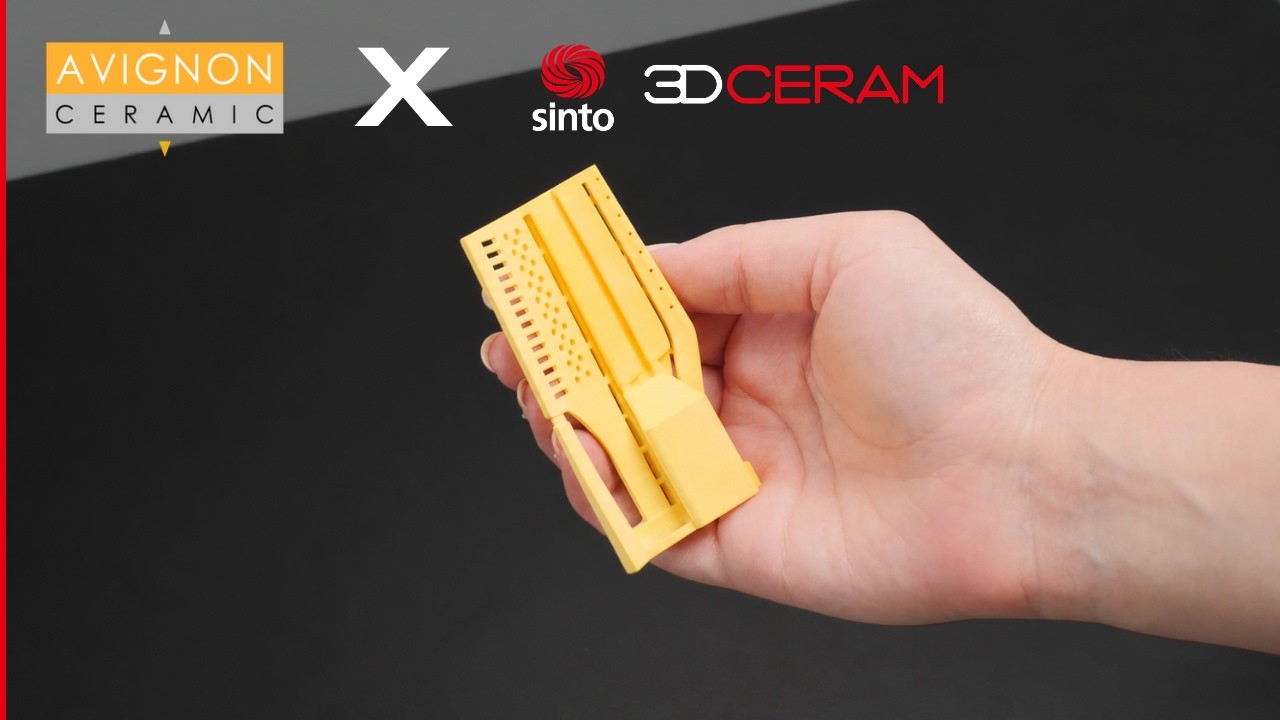
A milestone worth noticing. For years, “3D-printed ceramic cores for investment casting” mostly meant internal R&D. That has changed. In collaboration with Avignon Ceramic, 3DCeram is now producing and supplying additively-manufactured ceramic cores to a major engine manufacturer — one of the first genuine production use cases for AM ceramic cores.
Why additive ceramic cores change the game
- No hard tooling — skip the core-die lead time and cost for prototype and low-volume work.
- Geometries traditional coremaking can’t reach — conformal cooling passages, thin walls, complex internal features.
- Faster iteration — refine a core design and reprint instead of re-cutting a die.
- Built for demanding sectors — aerospace, energy and defense casting programs.
The technology
3DCeram’s SLA ceramic platforms print dense technical ceramics — including silica cores, alumina, zirconia, silicon nitride and silicon carbide — from R&D through production, on systems ranging from lab scale up to the large-format C1000 Dual Laser and C3601 Ultimate. For teams working across metals and ceramics, the M.A.T. multi-material system offers another route to the same parts.
Bringing it to US foundries and engine makers
As 3DCeram’s partner in the United States, Additive Plus — based in California — supports the full path: printing your cores as a service so you can prove the case, then scaling to an in-house system, with local sales, logistics and application-engineering support.
Exploring additive ceramic cores for your castings?
Tell us your part and alloy — our engineers in California will help you scope a first printed core and send a real quote.
Get a real quote →NDA on request · QA report & traceability · Quote in 24h · No commitment
Frequently asked questions
Are 3D-printed ceramic cores used in real production or only R&D?
They are now in production. 3DCeram, with Avignon Ceramic, is producing and supplying additively-manufactured ceramic cores to a major engine manufacturer — one of the first genuine production use cases, not internal R&D.
Which ceramics can be printed for investment casting cores?
Dense technical ceramics including silica, alumina, zirconia, silicon nitride and silicon carbide, on 3DCeram SLA platforms, from R&D through production.
What is the advantage over traditional coremaking?
No hard tooling, complex internal geometries such as conformal cooling passages and thin walls, and faster iteration for prototype and low-volume programs.
Can Additive Plus print cores for us before we buy a machine?
Yes. As 3DCeram’s partner in the US, Additive Plus prints cores as a service so you can prove the case, then scale to an in-house system, with local support based in California.
Have a question or a project? Let’s talk.
Tell us what you need — a real applications engineer replies within 24 hours. NDA standard, no sales script.