
In stock
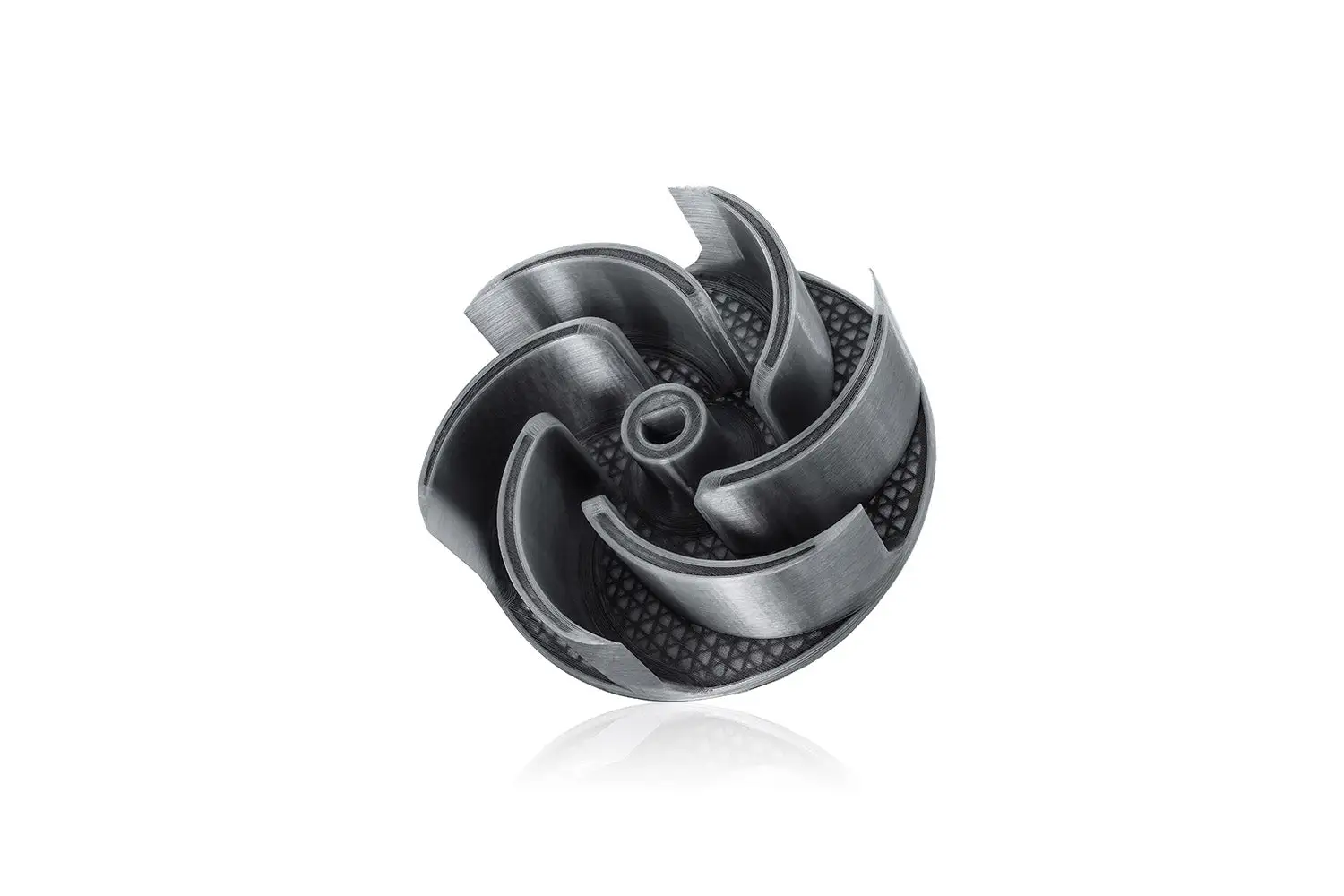
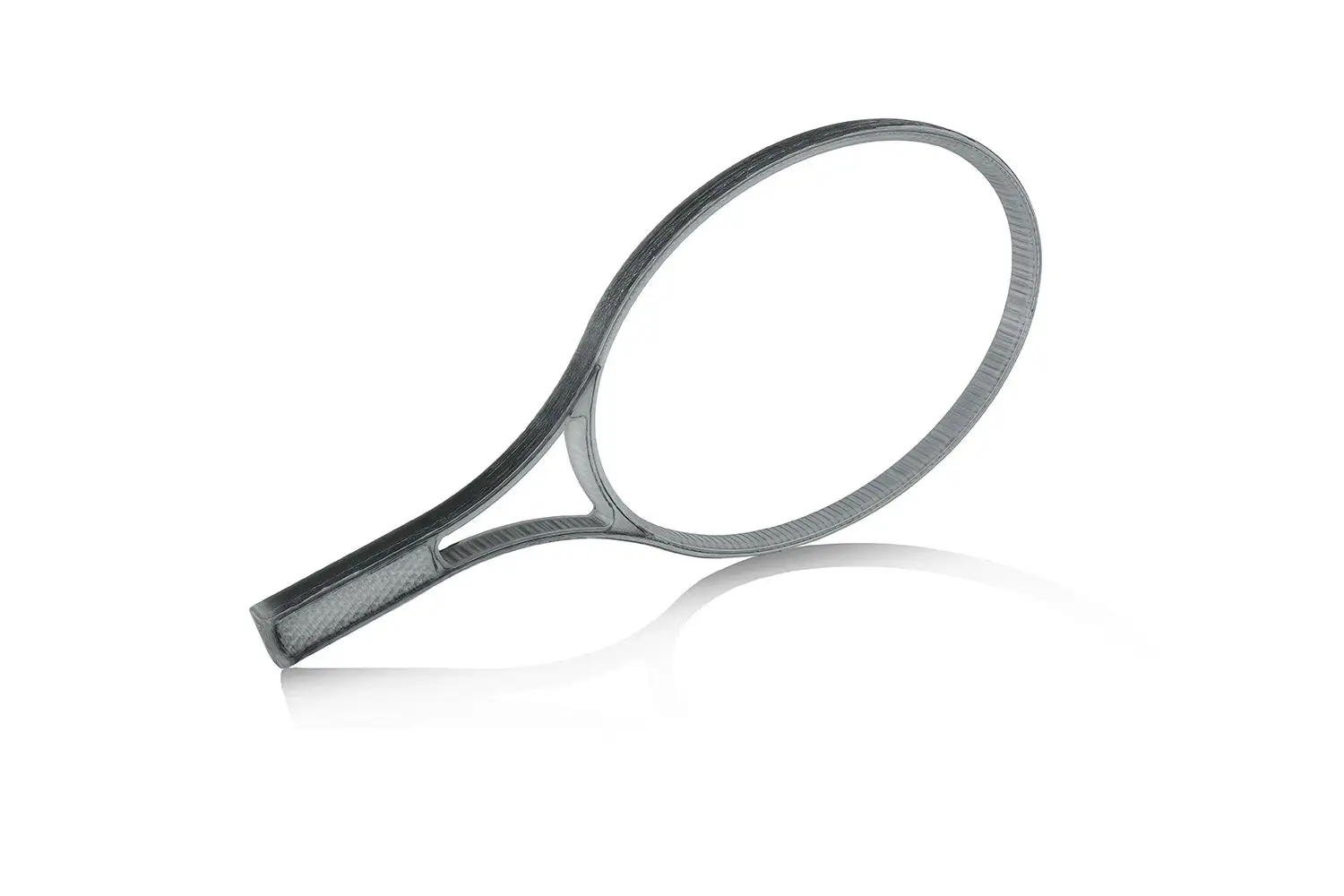
- Install, operator training, and validated print profiles
- Tailored warranty with same-week dispatch on critical issues
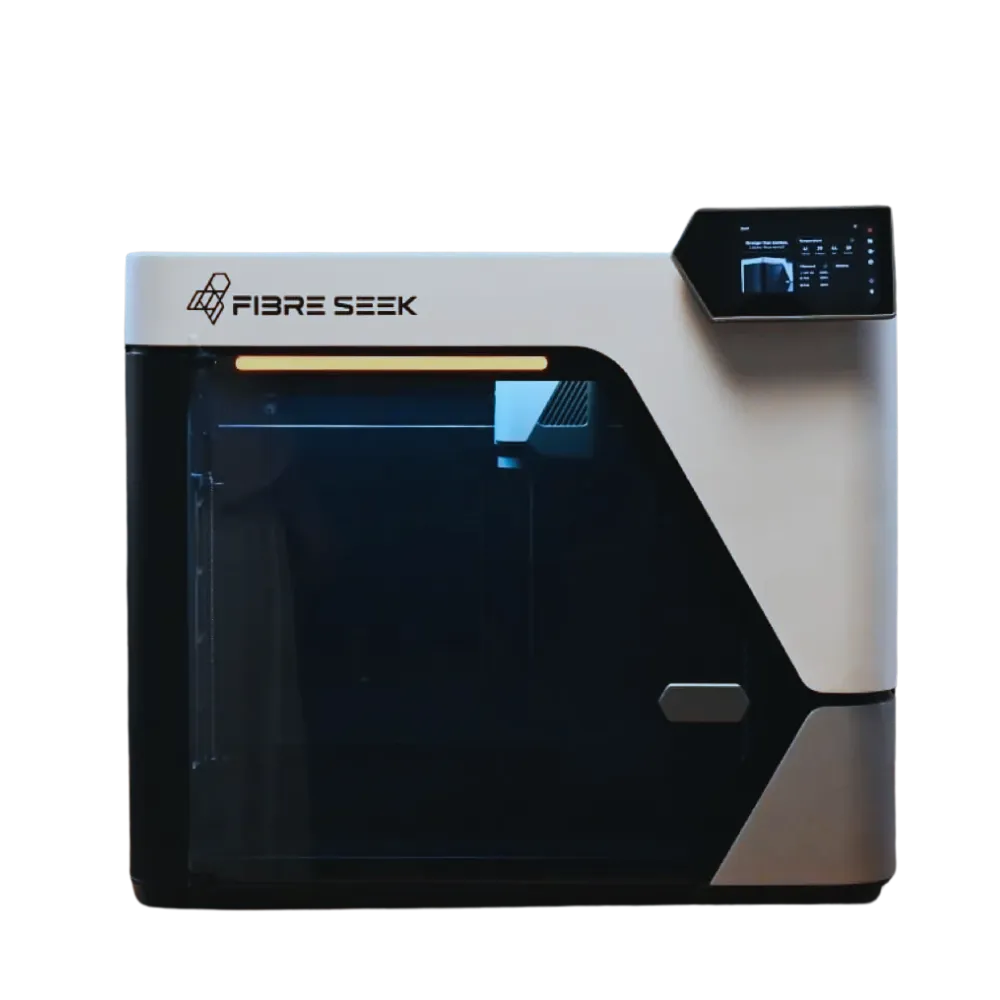
FibreSeeker 3 — Continuous Carbon Fiber 3D Printer
Desktop continuous-fiber 3D printer for load-bearing parts that replace machined aluminum.
- In stock in the US — ship date confirmed by email after you order.
- 1-year warranty in every bundle · 2 years with Pro and Enterprise
- US service from Starter up · support line +1 (747) 800-4854
What your process engineering lead actually checks
Supported by the team that runs it
We run AO Metal and partner systems daily for our own print services, so install, training, and first builds are handled by engineers who actually operate the machine. When you call support, you reach the team that qualified it.
An applications engineer on the line
Questions on build volume, laser config, throughput, or material compatibility? A named applications engineer scopes it directly — not a sales rep. Most replies in under 4 hours, NDA standard.
Aerospace-grade carbon fiber.
On your bench.
The FibreSeeker 3 co-extrudes true continuous carbon or glass fiber with plastic — not chopped filler — to print end-use parts up to 900 MPa that replace machined aluminum.

Already running at tier-1 companies in the US · see printed parts in our showroom.
The printer, or the printer and an engineer.
Every bundle ships the same FibreSeeker 3. What changes is the help around it — onboarding, spares, warranty and how much fiber you start with.
Basic
- FibreSeeker 3 printer + accessory kit
- 1 × X-CCF · 2 × PLA
Starter
- Everything in Basic
- Live video onboarding + review of your first part
- Filament dryer + consumable kit
- 2 × X-CCF · 2 × X-CGF · 4 × PETG · 4 × PLA
Pro
- Everything in Starter
- Spare hotend set (CCF + FFF)
- 6 × X-CCF · 4 × X-CGF · 4 × PETG · 4 × PLA
Enterprise
- Everything in Pro
- First service hour + 2 engineering hours
- 10 × X-CCF · 10 × X-CGF · 4 × PETG · 4 × PLA
Why most teams pick Starter: for $746 more than Basic, support moves to the US — our engineer onboards you live, reviews your first part and stays your contact — plus the dryer, consumables and fiber to print real parts from day one.
Prices are per bundle, before tax and delivery. Need more fiber, extra engineering hours or several machines? Tell us the mix and we will price it.
A US service centre and support line.
With Starter, Pro and Enterprise your FibreSeeker 3 is supported and repaired in the United States — the same team runs your demo, your onboarding and your warranty. Basic is supported remotely by the manufacturer’s engineering team.
- Support line — +1 (747) 800-4854 rings our team in California, not an overseas ticket queue.
- US service centre — warranty repairs, replacement parts and hotends handled in the US. When a unit was damaged in transit, our engineer delivered and set up the replacement on site.
- Fiber and spares in US stock — X-CCF, X-CGF, PETG, PLA and composite hotends, no waiting on overseas freight.
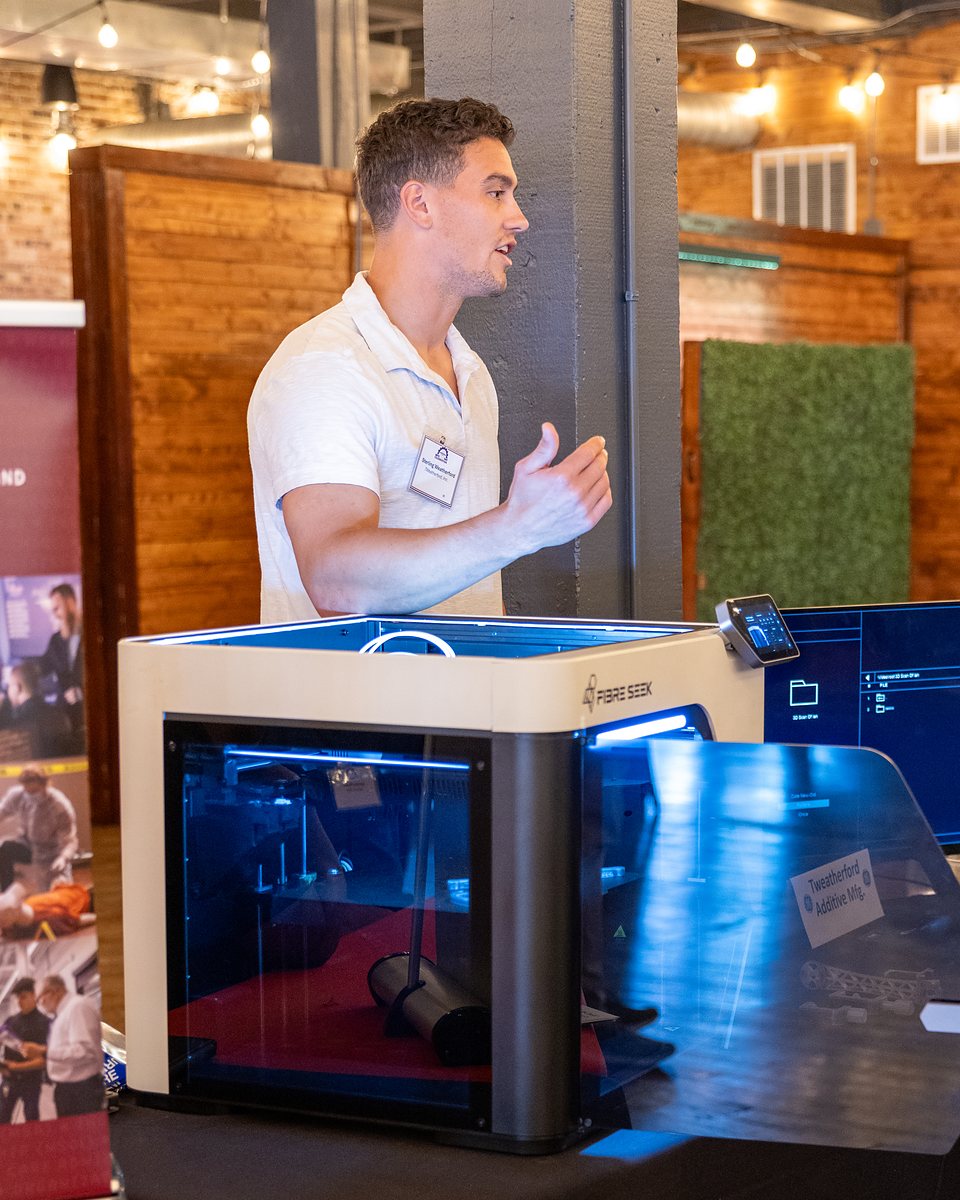
Watch it print, live.
Thirty minutes on Google Meet with a FibreSeeker 3 running on camera. Send a small STEP, STL or 3MF at least 24 hours ahead and we set it up, or we run one of our sample parts.
We start a continuous-fiber print, walk you through the slicer and give you a straight answer: whether your part gains from continuous fiber, what it costs per part and which bundle fits.

- Monday to Friday, 9 am – 6 pm Eastern
- Mutual NDA on request
- No obligation to buy
One nozzle. Two filaments. Tunable strength.
Patented dual-nozzle CFC head
Composite Fiber Co-extrusion (CFC) lays unbroken fiber paths through the part, with a built-in cutter and break and clog sensors on both paths.
All-metal · hardened steel
PLA · PETG · PC · PA · PACF · PETGF
Built-in fiber cutter
Continuous carbon (X-CCF) · glass (X-CGF)
- ▲
Three print modes
High-speed (FFF only, up to 500 mm/s), high-strength (fiber + plastic) and hyper-strength (fiber-dominant) — one machine from prototype to load-bearing part.
- ◎
Lattice infill with fiber
Reinforce the load path and keep the rest light — the slicer routes fiber automatically from presets.
- ◆
65 °C active chamber, auto-leveling
Stable large prints and a calibrated first layer without manual tuning.
- ▸
Built-in 720p camera
Watch prints remotely and record time-lapses from the touchscreen or PC app.
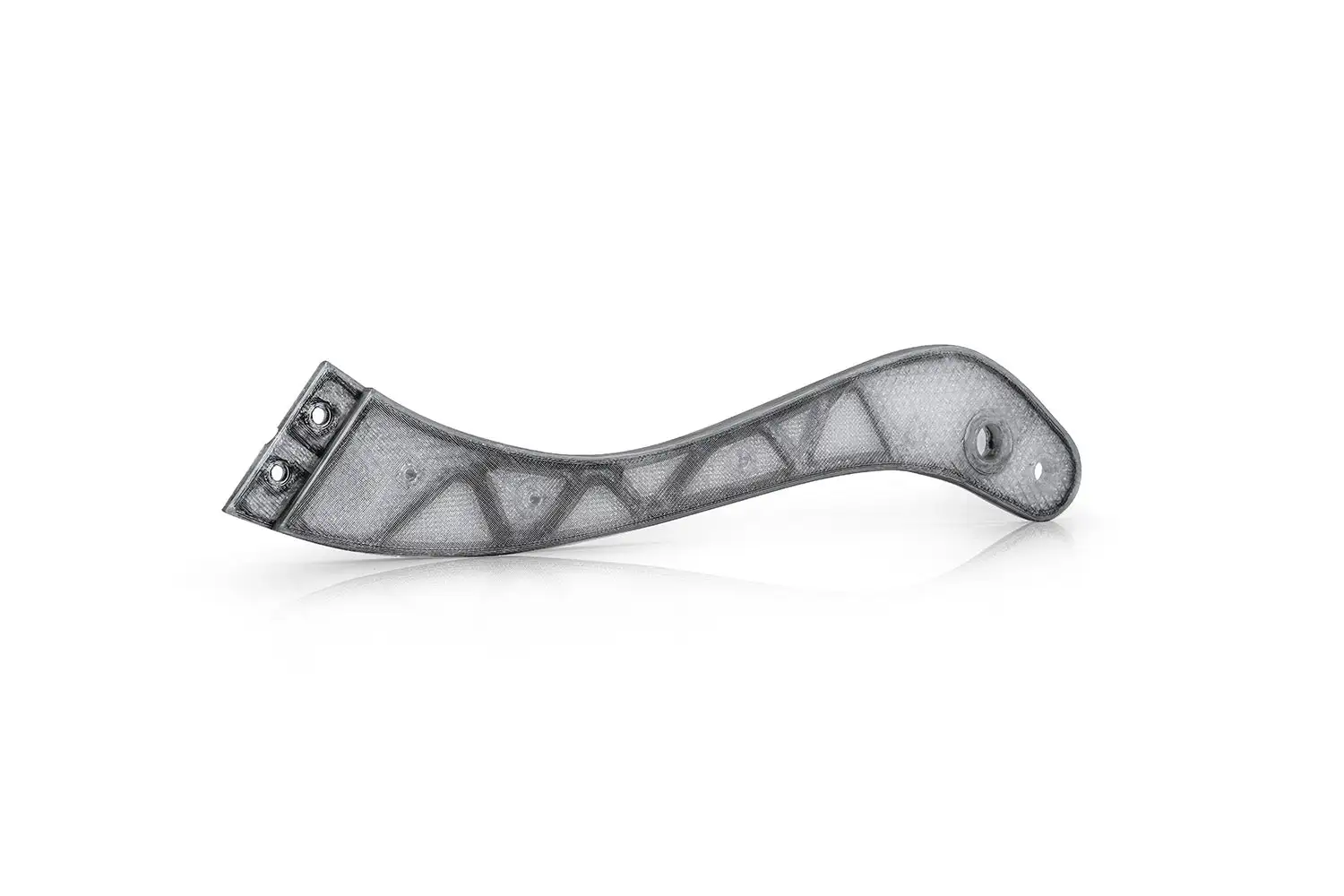
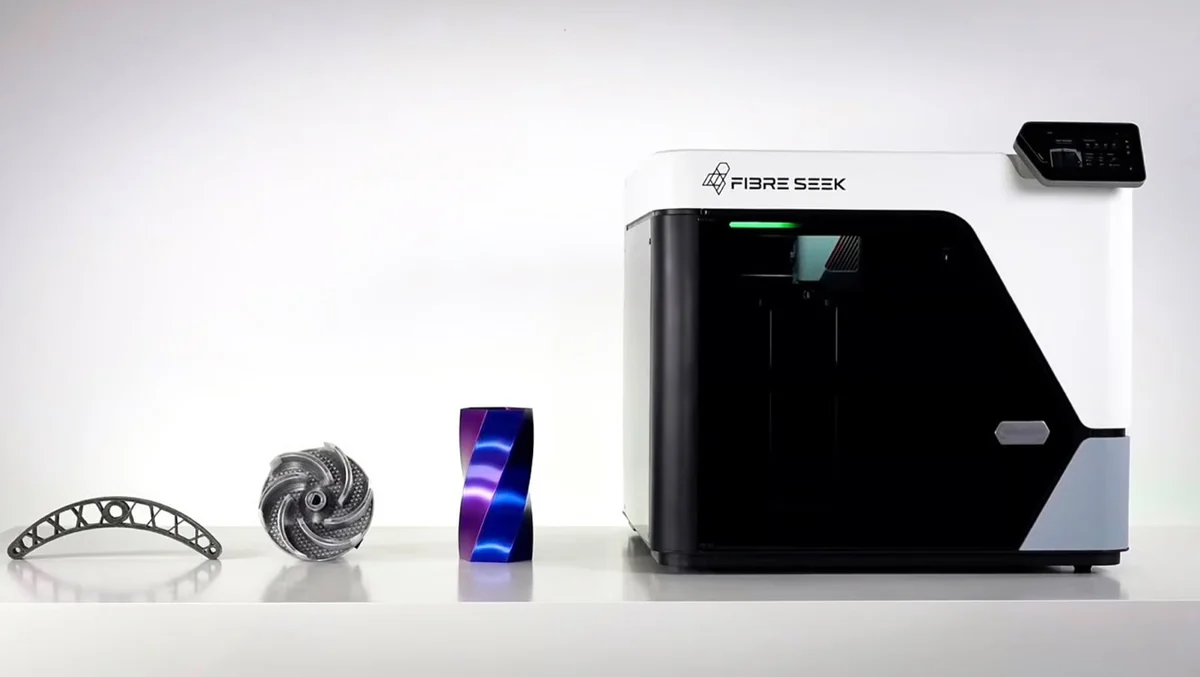
One bracket, two ways to make it.
The manufacturer’s comparison for the same bracket: CNC-milled 6061 aluminum versus printed with X-CCF continuous carbon.
Manufacturer figures. Real results depend on geometry, fiber routing and print settings.
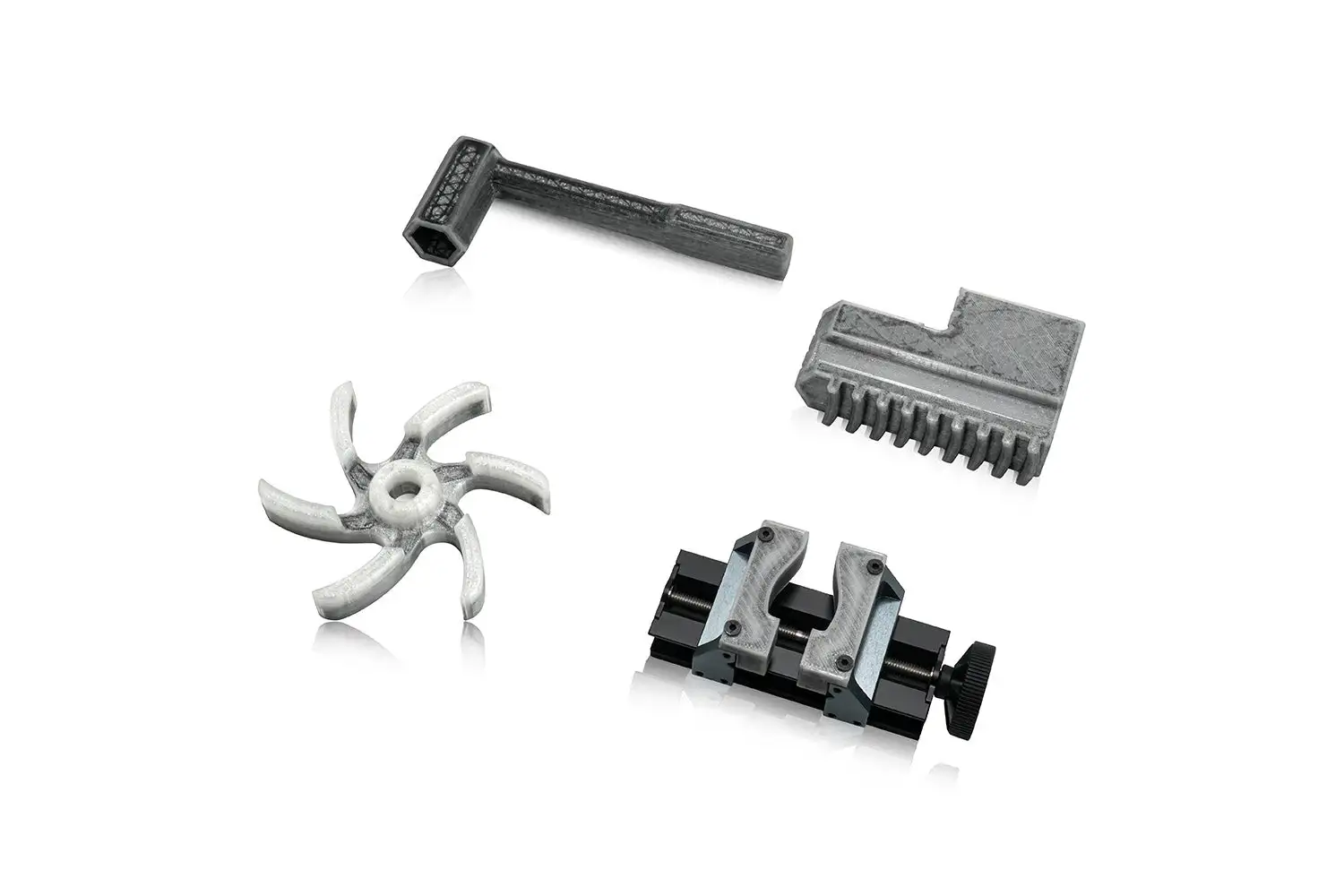
End-use parts, not just prototypes.
Drone & UAV structures
Frames and arms that survive crashes and stay light.
Brackets & mounts
Metal-replacement parts on the load path.
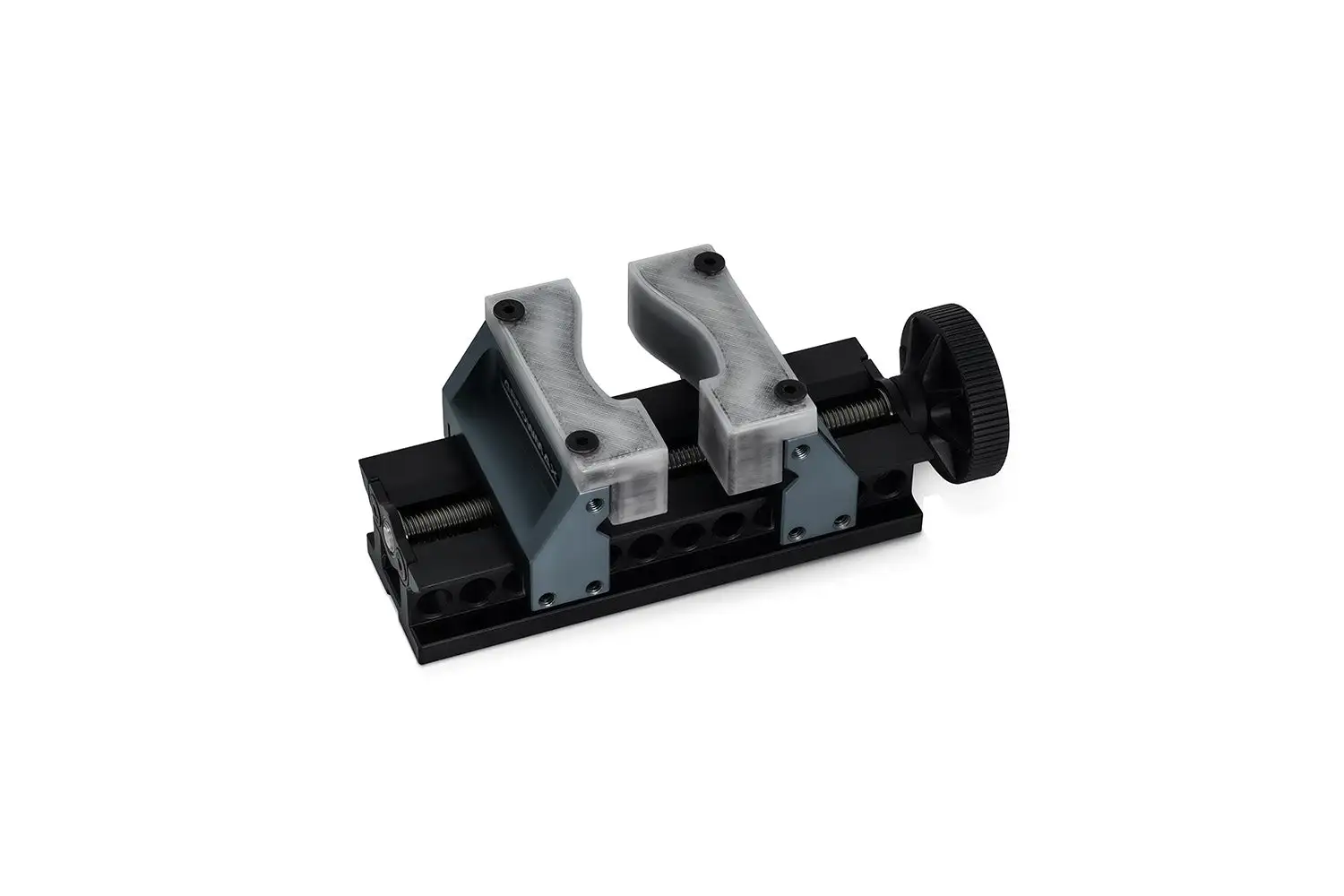
Jigs, fixtures & vise jaws
Stiff, wear-resistant tooling for the shop floor.
Functional R&D
Impellers, housings and test hardware.
Watch the FibreSeeker 3 print continuous fiber.
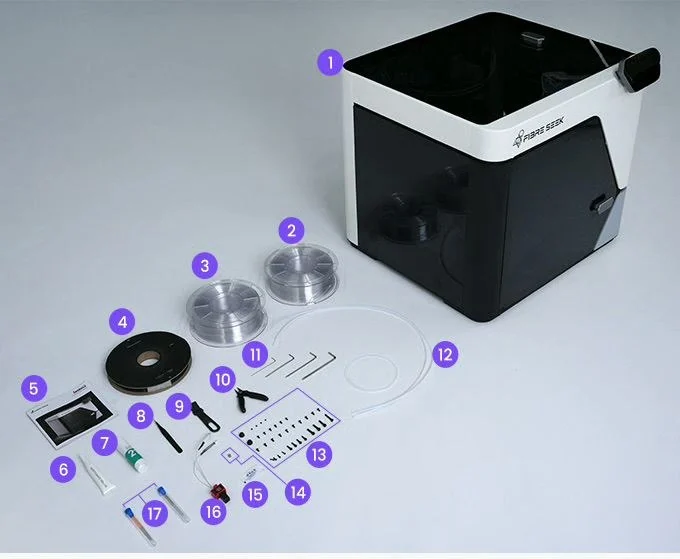
Ready to print the day it arrives.
Every bundle includes the printer, its starter filament and the accessory kit:
Plus a US power cord, the slicer suite (Windows / macOS) and a 1-year manufacturer warranty.
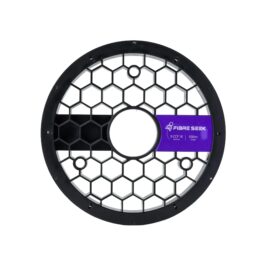
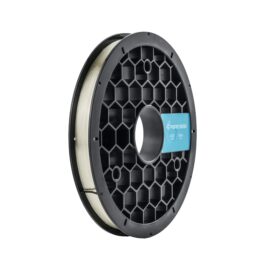
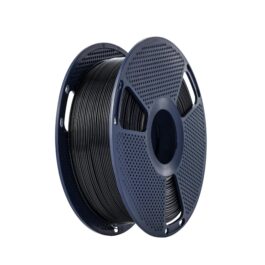
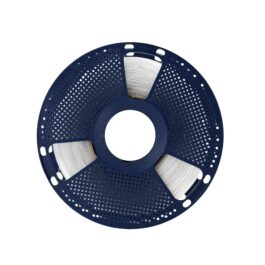
Fiber and filament for FibreSeeker 3.
The same spools the bundles ship with — order more any time, shipped from the US.
One US partner for the printer, the fiber and the service.
Additive Plus is a California additive manufacturing company. We sell and support metal, resin, ceramic and composite printers and run our own 3D printing service — see our 200+ qualified 3D printers and the FFF & composite lineup.
Need a quote for purchasing?
Tell us the bundle, quantity and ship-to address — we email a formal quotation on our letterhead within one business day, ready for your PO. Want advice on a part first? Attach a STEP or STL and the load case. NDA on request.
Questions, answered.
How is this different from a carbon-fiber filament printer? +
Carbon-fiber filaments carry short chopped fibers that add stiffness but little strength. The FibreSeeker 3 lays down continuous fiber — unbroken strands routed through the part like rebar — for up to 900 MPa. More in our guide: chopped vs continuous carbon fiber.
What is the difference between Basic and Starter? +
Basic is the printer as the manufacturer ships it, supported remotely by the manufacturer’s engineers in China. Starter moves support to the US and adds live video onboarding, a fiber-routing review of your first part, a filament dryer, a consumable kit and a working stock of fiber and plastic — so your first continuous-fiber parts come out right instead of after a week of trial and error.
How do I order, and can I pay by invoice? +
Pick a bundle and add it to the cart to pay by card or PayPal — no call needed. Buying on a purchase order? Request a formal quotation: we email it on our letterhead and invoice against your PO.
What’s the lead time? +
The FibreSeeker 3 is in stock in the US. We confirm the exact ship date by email after you order — working to a deadline? Tell us and we’ll say straight away whether we can meet it.
Further reading: desktop vs industrial continuous-fiber printers · how continuous fiber printing works · brackets and fixtures with continuous fiber · all carbon fiber 3D printers
| Bundle | Basic, Starter, Pro, Enterprise |
| Brand | FibreSeeker |
| Technology | FFF |
| Build Volume | 11.81×11.81×9.65 in, 300×300×245 mm |
| Motion Control System | Closed-loop |
| Electrical Requirement | 100–120 VAC / 200–240 VAC, 50/60 Hz, 1350 W max |
| Ambient Temperature | 18-28 °C (64.4-82.4 °F) |
| Operating Temperatures | FFF and CFC nozzles: up to 350 °C · Bed: up to 110 °C · Chamber: up to 65 °C |
| Layer Thickness | 50 µm+ |
| Plastic Filament Diameter | 0.0689in / 1.75mm |
| FFF Nozzle Diameter | 0.0157in / 0.4mm |
| Print Head | Dual nozzle: FFF extruder; CFC extruder with reinforcing filament cutting device |
| Printing Speed | up to 500 mm/s |
| Interface | 5” touchscreen & PC app · 32 GB eMMC + USB · 720p live camera |
| Material | PLA, Carbon Fibre X-CCF, Glass Fibre X-CGF, Glass-filled Nylon PACF, Glass-filled PETG PETGF, PA Filament, PC, PETG |
| Printing Materials | Plastic Filaments |
Product videos
We build our own. Custom configs on request.
Need a specific laser setup, build plate size, or an integrated powder/post-processing workflow? We configure AO Metal systems and bundle OEM equipment to match your application. Demo before you commit.
Other products teams run alongside FibreSeeker 3 — Continuous Carbon Fiber 3D Printer
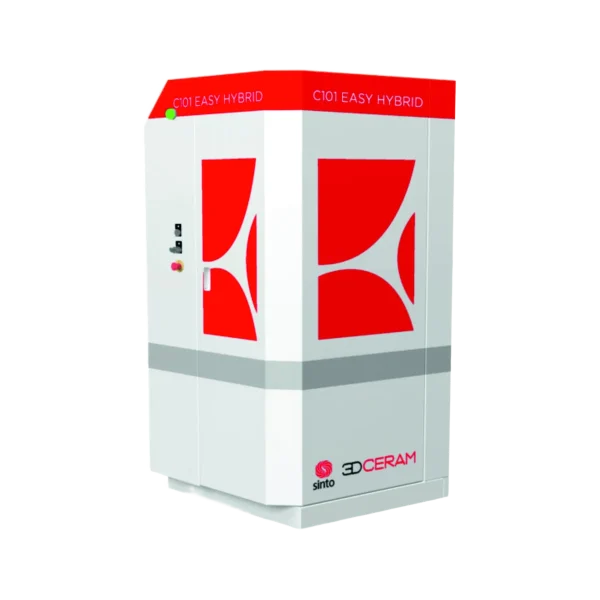
Multi-material ceramic SLA printer that prints two materials in the same layer — ceramic plus a second ceramic, metal or polymer — on a 3.9×3.9×5.9 in / 100×100×150 mm platform. It makes functionally graded and multi-material ceramic parts single-material printing can't. Full print → debind → co-sinter workflow supported by Additive Plus.
- Two materials in one layer — ceramic + ceramic, metal or polymer.
- Open-parameter R&D — 100×100×150 mm build, cartridges from 60 mL.
- Lead time: configured to order — material-pair & co-sinter support from California.
Made to order
· Lead time: configured to order — request a build slot. Installation, training and process support included from California.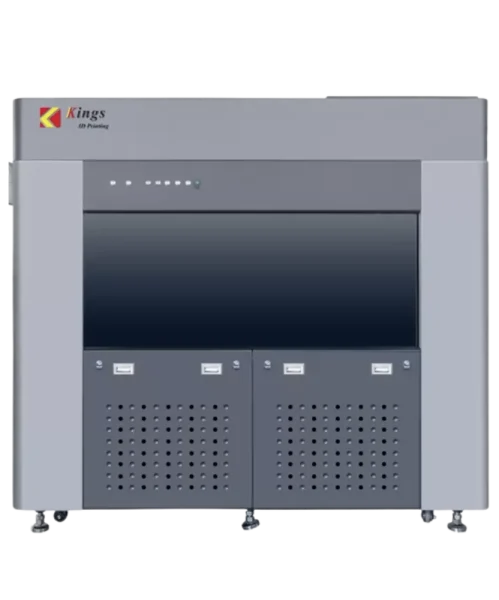
High-speed large-format industrial SLA. 18 m/s scan head. Marble frame. Built to print long automotive patterns, full-scale tooling and large molds fast — without stitching or Z-seam artifacts.
- ✓ 67×32×24 in / 1700×800×600 mm build chamber — long single-piece parts in one run
- ✓ 18 m/s scan head — 20% faster than the 15 m/s Kings SLA standard · 355 nm Nd:YVO4 laser
- ✓ Full-marble machine frame — thermal stability for ±0.1 mm part accuracy
- ✓ Lead time: 8–10 weeks — on-site install, calibration & operator training included
Made to order
· Ships in 8–10 weeks from order placement. Need it sooner? Talk to a specialist.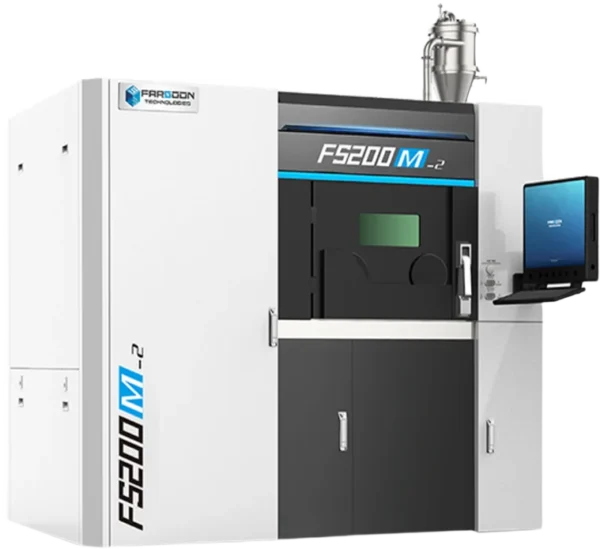
The Farsoon FS200M-2 is a metal LPBF 3D printer with a 16.7×9.1×11.8 in / 425×230×300 mm build envelope, running two 500 W fiber lasers.
- ✓ 2×500 W — dual fiber lasers
- ✓ 16.7×9.1×11.8 in / 425×230×300 mm build envelope
- ✓ Open platform — full access to process parameters, qualify your own alloy
- ✓ Lead time: built to order — confirmed at quote
Installation and commissioning in the USA: facility and gas planning, start-up and operator training by our US service team.
Made to order
· Built to order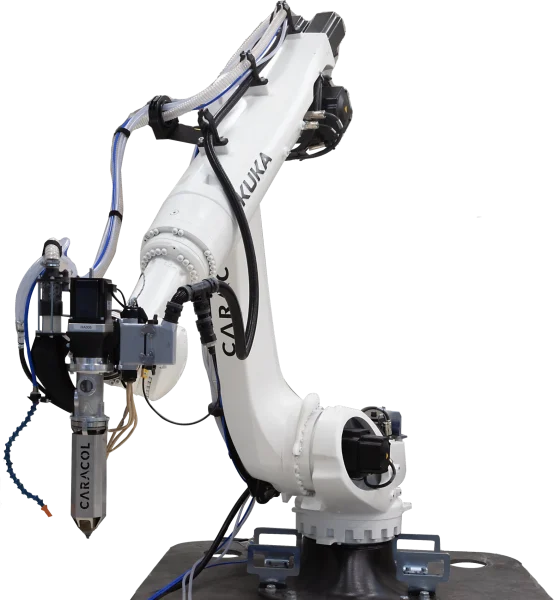
Heron AM configured with the High Versatility (HV) extruder head — Caracol's 6-axis robotic large-format additive platform. 12 kg/h through 2–8 mm nozzles at up to 450°C, pellet-fed with optional hybrid CNC milling. EN9100 and ISO 9001 certified. Priced by configuration.
- ✓ 6-axis robotic LFAM — freeform geometries up to 15 m, beyond any gantry
- ✓ High Versatility head: 12 kg/h, 2–8 mm, 450°C — broadest application span
- ✓ EN9100 + ISO 9001 certified · lead time confirmed at quote
Made to order
· Lead time confirmed per configuration at quote. Talk to a specialist for a schedule.
Heron AM configured with the High Flow (HF) extruder head — Caracol's 6-axis robotic large-format additive platform. 30 kg/h through 5–14 mm nozzles at up to 450°C, pellet-fed with optional hybrid CNC milling. EN9100 and ISO 9001 certified. Priced by configuration.
- ✓ 6-axis robotic LFAM — freeform geometries up to 15 m, beyond any gantry
- ✓ High Flow head: 30 kg/h, 5–14 mm, 450°C — highest throughput, largest parts
- ✓ EN9100 + ISO 9001 certified · lead time confirmed at quote
Made to order
· Lead time confirmed per configuration at quote. Talk to a specialist for a schedule.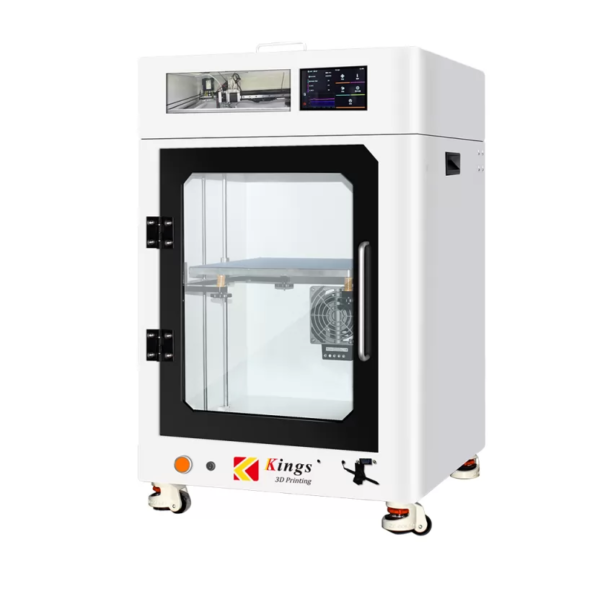
Industrial FFF. Klipper high-speed. Closed-loop servos. Built for functional prototypes, jigs, fixtures and small production runs in standard engineering filaments — with the repeatability hobby machines can't hold.
- ✓ 11.81×11.81×15.75 in / 300×300×400 mm build volume — industrial linear guides on XY
- ✓ Klipper high-speed to 350 mm/s · 70 W Volcano hot end · heated bed to 120 °C
- ✓ Open 1.75 mm ecosystem — PLA, ABS, PETG, TPU from any supplier · BMG dual-drive
- ✓ Ships configured & tested — onboarding and demo units available
Made to order
· Ships in 8–10 weeks from order placement. Need it sooner? Talk to a specialist.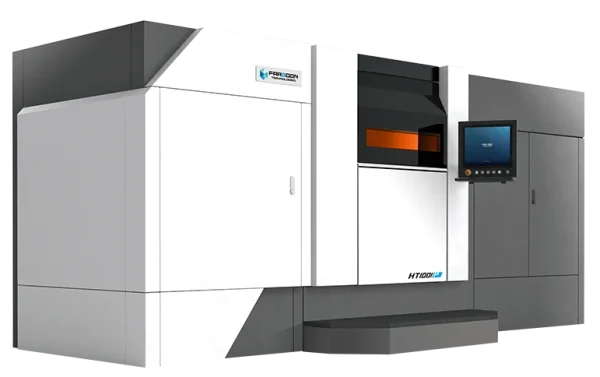
Large-format, high-throughput SLS system: dual 100 W CO₂ lasers drive build rates up to 15 L/h across a metre-scale 39.4×19.7×17.7 in / 1000×500×450 mm build, with a 220 °C chamber for high-performance polymers. Open platform, modular build-station architecture. Sold, installed and supported in the US by Additive Plus.
- Metre-scale build — 1000×500×450 mm for large parts and high-nest batches.
- Dual CO₂ · up to 15 L/h — high-volume production; 220 °C chamber, broad materials.
- Lead time: configured to order — US install, training & validated profiles from California.
Made to order
· Lead time: configured to order — request a build slot. US installation of module and build station, training and process support included from California.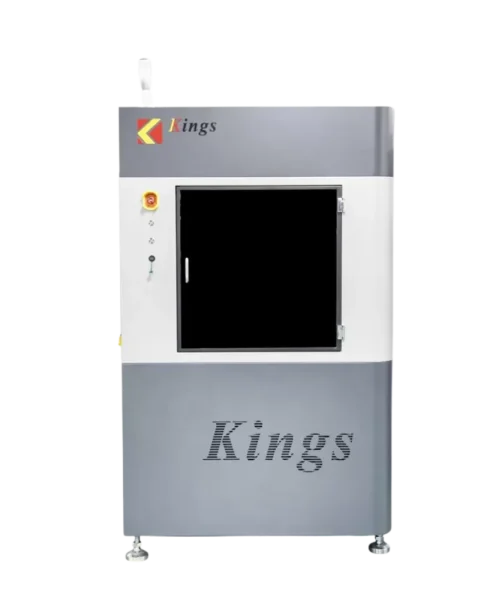
Large-format industrial SLA. Marble frame. Vacuum recoating. Built for long single-piece parts — automotive patterns, extended trim, one-piece molds — without stitching or Z-seam artifacts.
- ✓ 47×32×24 in / 1200×800×600 mm build chamber — a full-length bumper pattern in one run
- ✓ Solid-state 355 nm Nd:YVO4 laser · 0.075–0.8 mm variable beam · 15.0 m/s max scan
- ✓ Full-marble machine frame — thermal stability for ±0.1 mm part accuracy
- ✓ Lead time: 8–10 weeks — on-site install, calibration & operator training included
Made to order
· Ships in 8–10 weeks from order placement. Need it sooner? Talk to a specialist.Common questions
Don't see yours? Email [email protected] — NDA standard, typical reply within 4 hours.
What is the FibreSeeker 3 Continuous-Fibre Carbon Composite 3D Printer?
How does the FibreSeeker 3 work?
What makes the FibreSeeker 3 different from standard carbon fiber 3D printers?
What materials can the FibreSeeker 3 print?
Can the FibreSeeker 3 print continuous carbon fiber?
How strong are parts printed on the FibreSeeker 3?
What industries use the FibreSeeker 3?
What is the build volume of the FibreSeeker 3?
What print speeds does the FibreSeeker 3 support?
Can the FibreSeeker 3 replace aluminum parts?
Is the FibreSeeker 3 suitable for manufacturing?
Is the FibreSeeker 3 suitable for educational and research institutions?
What software is included with the FibreSeeker 3?
What comes with the FibreSeeker 3?
Does the FibreSeeker 3 require calibration before use?
What support does Additive Plus provide?
What is the price of the FibreSeeker 3?
When will the FibreSeeker 3 ship?
Can I schedule a demonstration before purchasing?
Place your order, or talk to an engineer first
Order FibreSeeker 3 — Continuous Carbon Fiber 3D Printer direct, or talk to materials engineer