
Made to order
- Install, operator training, and validated print profiles
- Tailored warranty with same-week dispatch on critical issues
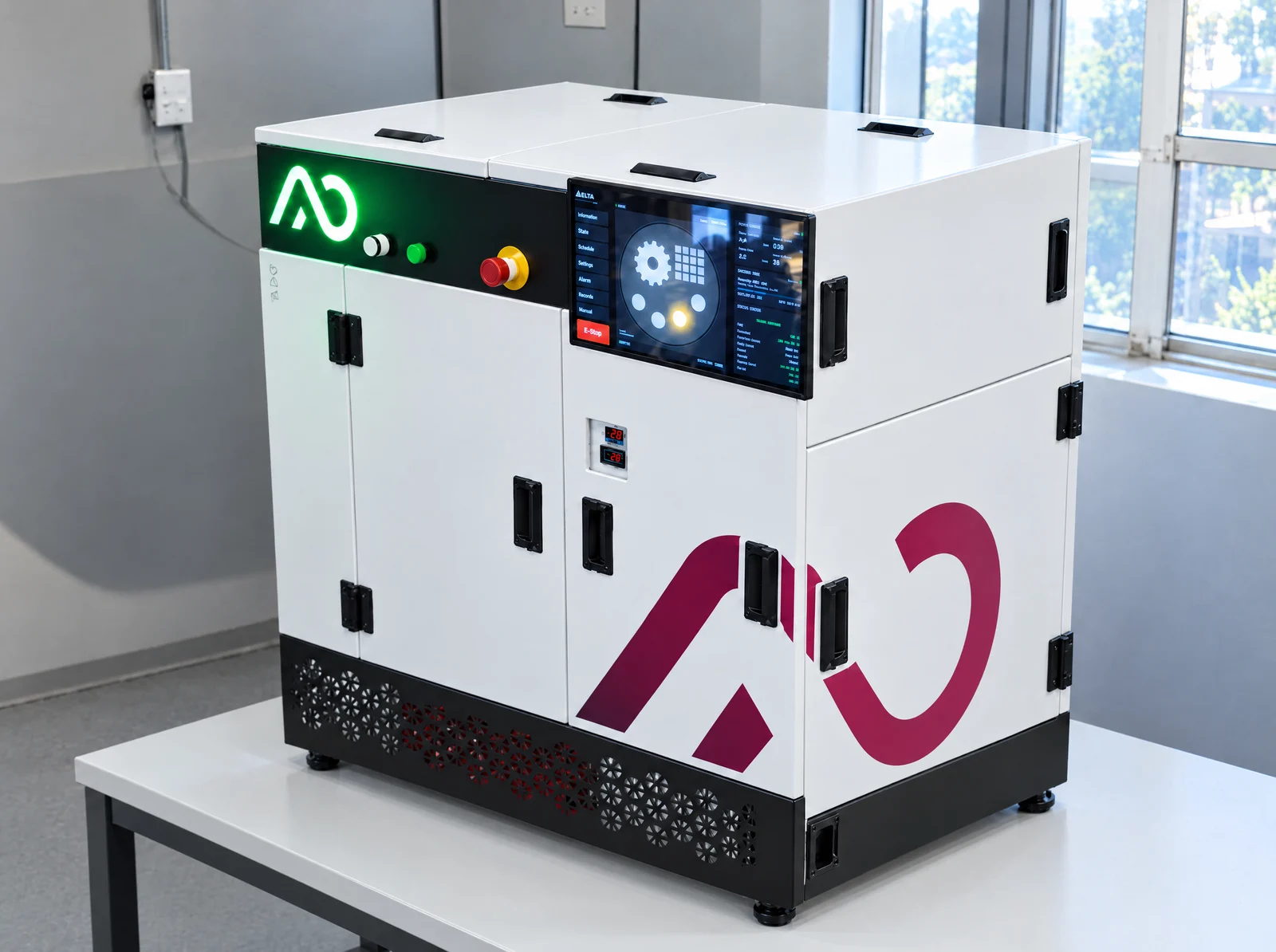
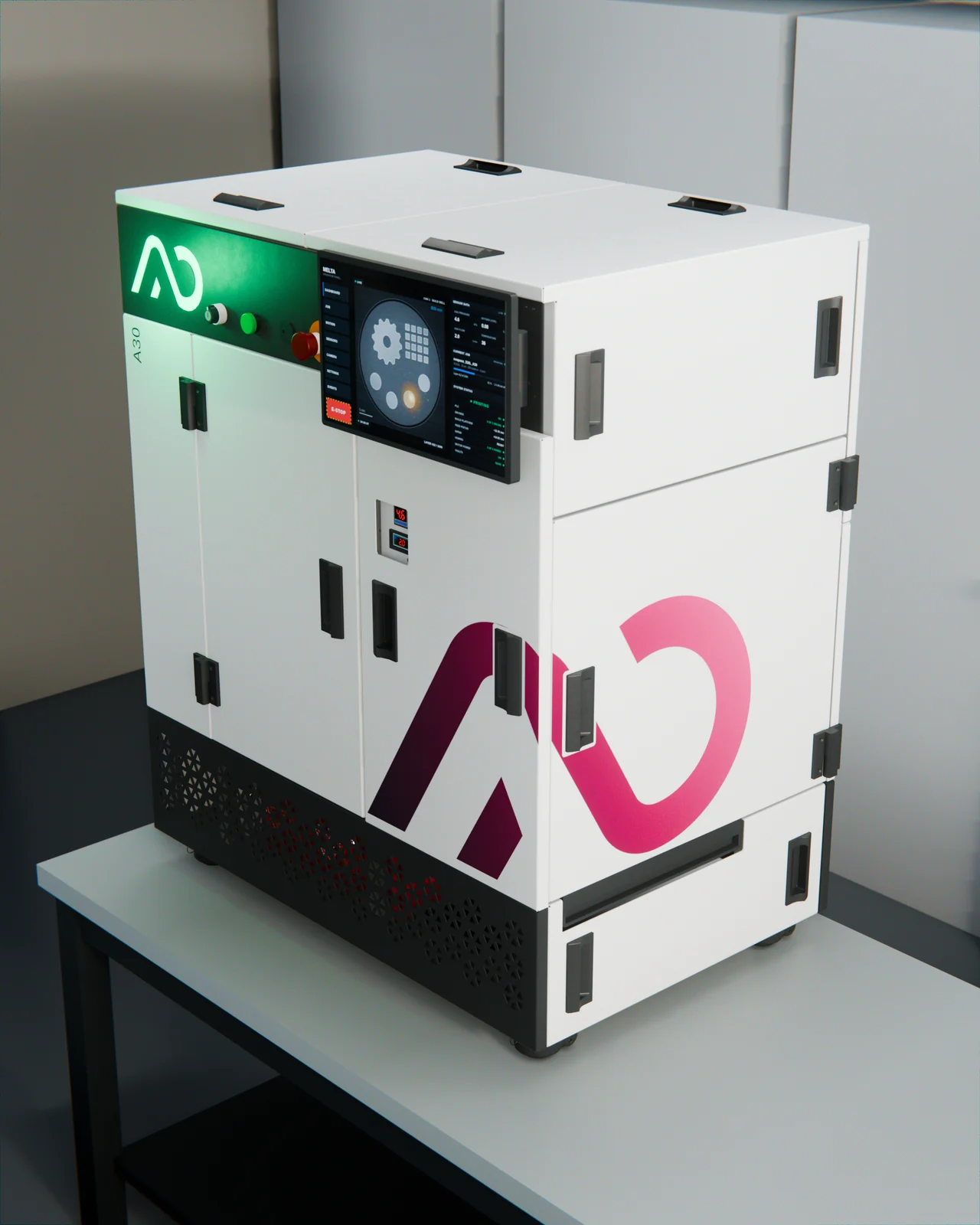
A30 Metal 3D Printer — AO Metal
Every laser parameter is yours — no cartridges, no annual licence, no locked recipes. A test build costs about 71 g of 316L. Fully open material system: the machine runs any metal powder you qualify, and we supply validated parameters for the standard alloys. Desktop LPBF, Ø30 × 60 mm (1.2 × 2.4 in) build, 200 W laser (300 W optional), 120 V. Designed and built in the USA. From $59,000 · 8–14 weeks. Installation and commissioning in the USA: facility and gas planning, start-up and operator training by our US service team.
$59,000
What your process engineering lead actually checks
Supported by the team that runs it
We run AO Metal and partner systems daily for our own print services, so install, training, and first builds are handled by engineers who actually operate the machine. When you call support, you reach the team that qualified it.
An applications engineer on the line
Questions on build volume, laser config, throughput, or material compatibility? A named applications engineer scopes it directly — not a sales rep. Most replies in under 4 hours, NDA on request.
- The A30 printer — 1064 nm fiber laser, Ø30 × 60 mm (1.2 × 2.4 in) build
- AO Build Studio software and slicer, with no annual licence
- Spare-parts kit and warranty
- Training for your team, on your own material
- The print programs we have already validated for your alloys, handed over to you
- Powder supply and a named engineer after delivery
What the A30 is
The A30 is an entry-level benchtop laser powder bed fusion printer: a fiber laser melts metal powder directly into fully dense parts in one step. It is built for the work that comes before production — developing an alloy, dialling in a process window, printing test coupons, and teaching students what those parameters actually do. It runs from a dedicated 120 V single-phase, 50 A circuit with argon under 2 L/min, so it installs in an ordinary laboratory rather than a machine hall.
Specifications
| Build envelope | Ø30 × 60 mm (1.2 × 2.4 in) |
| Laser | 1064 nm fiber · 200 W or 300 W |
| Spot size | 75 µm (55 µm optional) |
| Layer thickness | 15–100 µm |
| Scanning speed | up to 12 m/s |
| Accuracy | ±0.1% |
| Build platform | not heated |
| Power | 120 V AC, 1-phase, 60 Hz · max 2.5 kW · dedicated 50 A circuit |
| Inert gas | argon, under 2 L/min |
| Dimensions | 1000 × 620 × 1100 mm (39.4 × 24.4 × 43.3 in) |
| Weight | approx. 100 kg (220 lb) |
| Software | AO Build Studio + slicer · STL |
| Lead time | 8–14 weeks from order |
Download: A30 brochure · the whole line — A30, A50, A100 · R&D solution
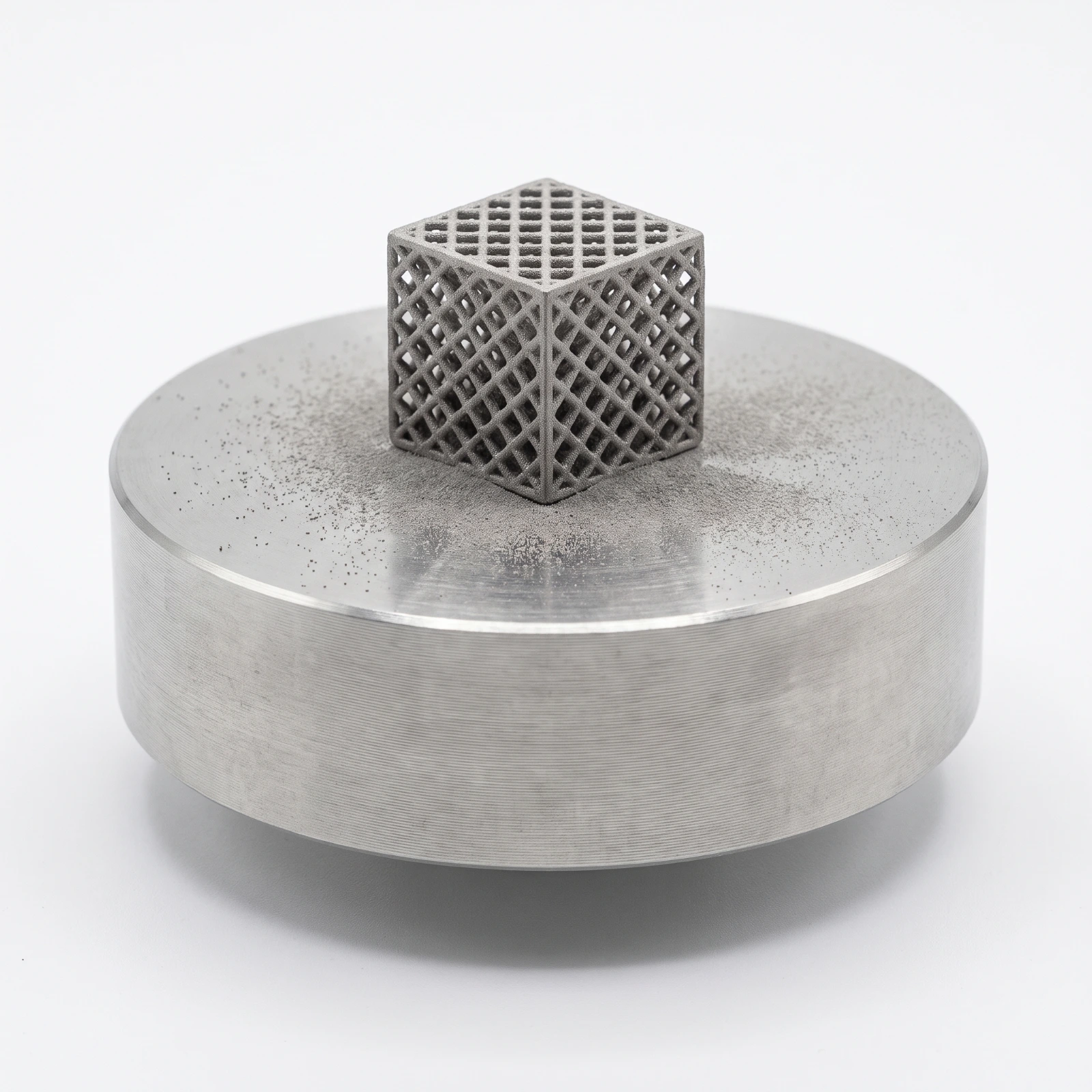
What a trial actually costs in material
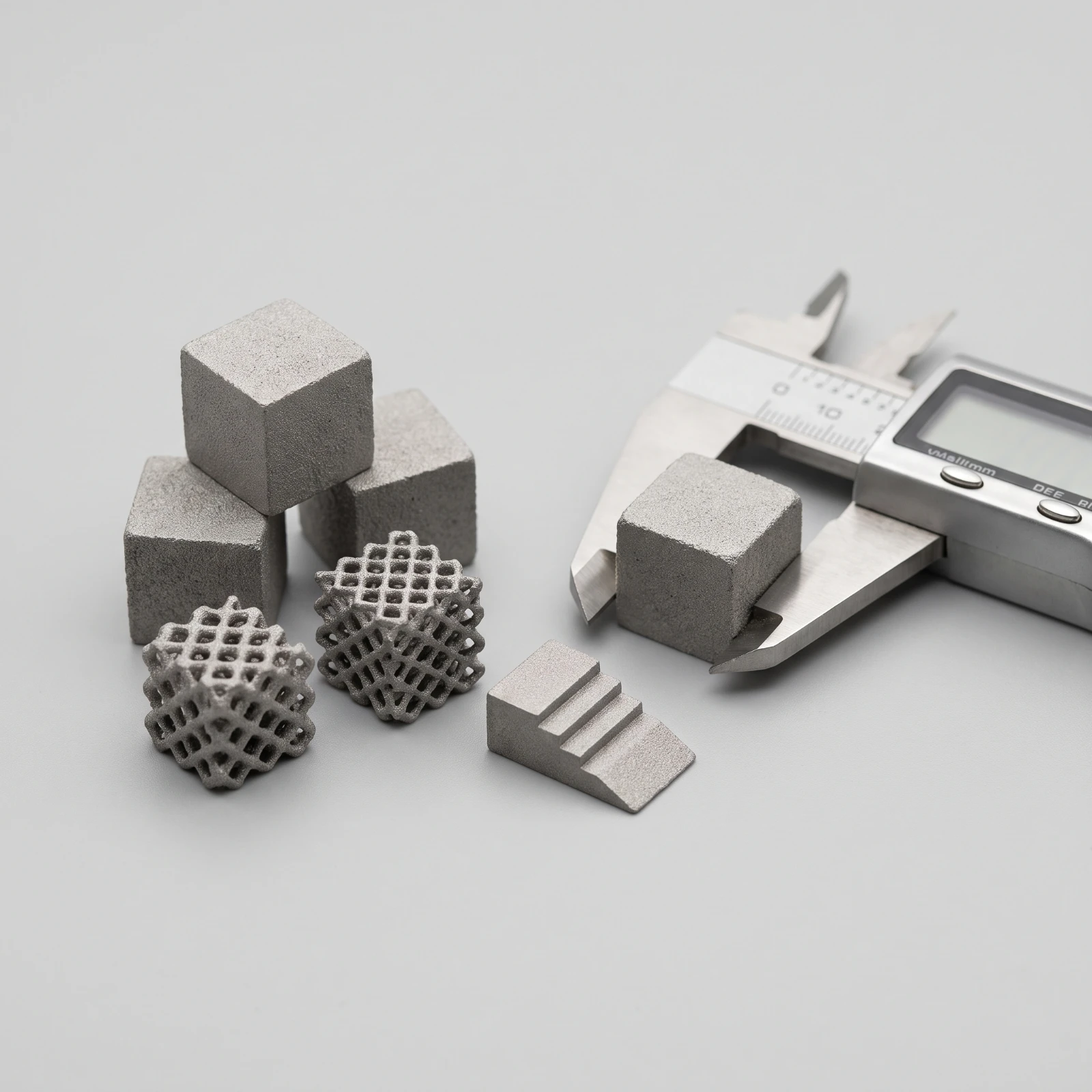
This is the number laboratories ask for and rarely get. For a build of test coupons 10 mm tall:
| Stainless 316L | 71 g |
| Ti-6Al-4V | 41 g |
| Aluminium AlSi10Mg | 25 g |
| CoCr | 77 g |
| Copper | 81 g |
A full-height build takes about 453 g of 316L or 260 g of titanium, and the metal that ends up in a 10 mm cube is 7.9 g. Trying a new alloy here is a question of grams, not kilograms — which is what makes parameter development affordable at all.
Fully open — and we mean the parameters
- Laser power, scan speed and strategy
- Hatch spacing and layer thickness
- Contour and infill exposure — per zone, so different regions of one build can run different settings
- Your own parameter sets, stored in AO Build Studio
- No cartridges and no chipped powder
- No approved-material list
- No annual software subscription
- No permission needed to run a powder you bought or developed yourself
The machine also arrives with the parameter sets our team has already validated — and if your alloy is not in that set, we develop the parameters and hand the program to you. Changing material takes about an hour, so a laboratory can move between alloys within the same day.
Where the A30 stops — and what to take instead
Two things are not available on the A30, and it is better to know now than after the order. The 900 °C heated platform and the 445 nm blue laser are offered on the A50 and the A100 only. The blue laser is what makes copper, gold and silver workable, because those metals absorb blue light far better than infrared. And the build envelope is Ø30 × 60 mm (1.2 × 2.4 in): if your parts are larger, the A50 at Ø50 × 100 mm (2.0 × 3.9 in) or the A100 at Ø100 × 100 mm (3.9 × 3.9 in) carry the same open platform.
Make your own powder, measure it, print it
We are the US distributor for ATO ultrasonic atomizers and for Microtrac particle analyzers including the Camsizer X2. Put them next to the A30 and the loop closes inside your own laboratory: atomize your material into spherical powder, measure particle size distribution and morphology, print, repeat. When you would rather not run that part yourself, we make custom alloy batches in three to four weeks.
Compare the three AO Metal machines
| A30$59,000 / $64,000 | A50from $89,000 | A100from $99,000 | |
| Build envelope | Ø30 × 60 mm (1.2 × 2.4 in) | Ø50 × 100 mm (2.0 × 3.9 in) | Ø100 × 100 mm (3.9 × 3.9 in) |
| Format | Benchtop · ~100 kg (220 lb) | Floor-standing · ~350 kg (772 lb) | Floor-standing · ~350 kg (772 lb) |
| Laser | 200 W or 300 W | 300–1000 W | 300–1000 W |
| 445 nm blue laser | — | optional | optional |
| 900 °C heated platform | — | optional | optional |
| Power | 120 V single phase | 110 V / 220 V 3-ph | 110 V / 220 V 3-ph |
| Best for | Alloy development, coupons, teaching | Larger specimens, copper and precious metals | Small production, larger parts |
| Datasheet | See the A50 | See the A100 |
Availability, payment and delivery
Where the A30 already works
What you will buy with it
What usually stops people — and the honest answer
Ready when you are
| Brand | AO Metal |
| Technology | Metal LPBF |
| Build Volume | Ø30 x 60 mm (1.18" x 2.36") |
| Laser Type | Fiber laser, 1×300W, Fiber laser, 1 x 200 W |
| Max Scanning Speed | Up to 12 m/s |
| Layer thickness | 15–100 µm |
| Inert Gas Protection | Argon |
| Average Inert Gas Consumption in Process | <2 L/min |
| Power Consumption | max 2.5 kW |
| Dimensions | 39.4" x 24.4" x 43.3" (1000 x 620 x 1100 mm) |
| Net Weight | Approx. 100 kg (220 lbs) |
| Operating system | 64 bit Windows 10 |
| Data File Format | STL |
| Operating Ambient Temperature | 22-28°C (71.6-82.4℉) |
| Material | 316L, 420, AlSi10Mg, Maraging Steel Grade 300, ST1 |
| Printing Materials | Metal Powders |
We build our own. Custom configs on request.
Need a specific laser setup, build plate size, or an integrated powder/post-processing workflow? We configure AO Metal systems and bundle OEM equipment to match your application. Demo before you commit.
Other products teams run alongside A30 Metal 3D Printer — AO Metal
The InssTek MX-Fab is an all-in-one 5-axis DED metal 3D printer with a 31×39×28 in / 800×1000×700 mm work envelope — a 1,000 W (up to 2,000 W) ytterbium fiber laser, DMT closed-loop melt-pool control, and up to six powder feeders for multi-material and functionally graded parts.
- ✔ 5-axis DED with real-time DMT melt-pool feedback — dense, near-net-shape metal
- ✔ 30+ qualified alloys: Ti, Ni superalloys, stainless & tool steel, CoCr, Cu — multi-material in one build
- ✔ Fabrication, cladding, and repair on one platform
- ✔ Lead time: configured to order — request a quote for delivery & installation
Made to order
· Quote on request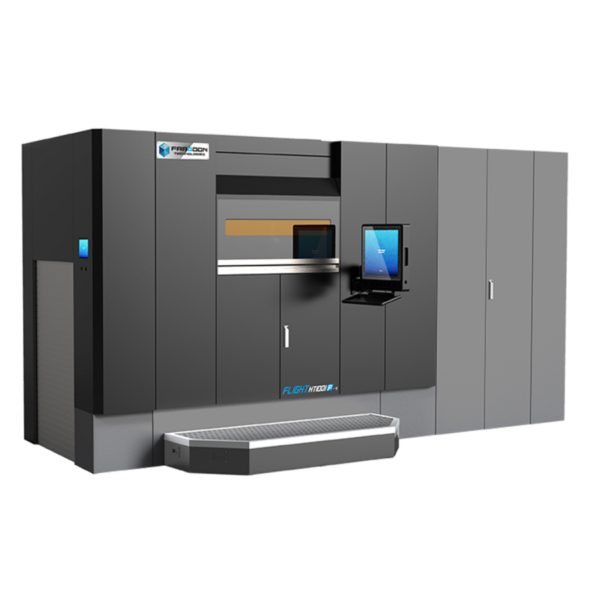
Large-format, high-temperature fiber-laser SLS system with a metre-scale 39.4×19.7×17.7 in / 1000×500×450 mm build. Two to four 300 W fiber lasers and a 220 °C chamber run high-performance and glass-filled polymers at production scale, with fully open parameters and a modular build-station architecture. Sold, installed and supported in the US by Additive Plus.
- Metre-scale build — 1000×500×450 mm for large parts and high-nest batches.
- 2–4 fiber lasers · 220 °C — high-performance, glass-filled & TPU polymers.
- Lead time: configured to order — US install, training & validated profiles from California.
Made to order
· Lead time: configured to order — request a build slot. US installation of module and build station, training and process support included from California.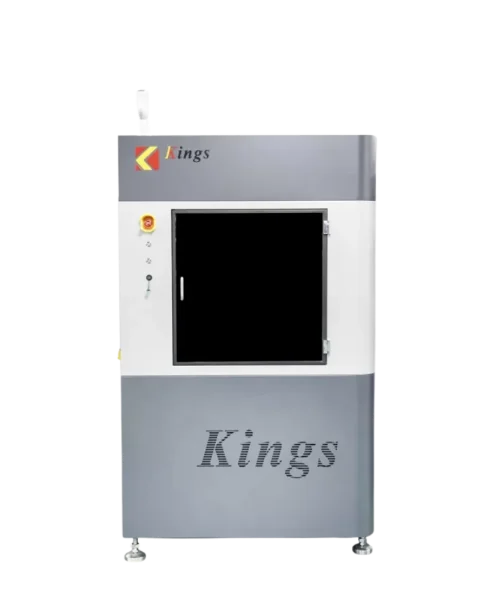
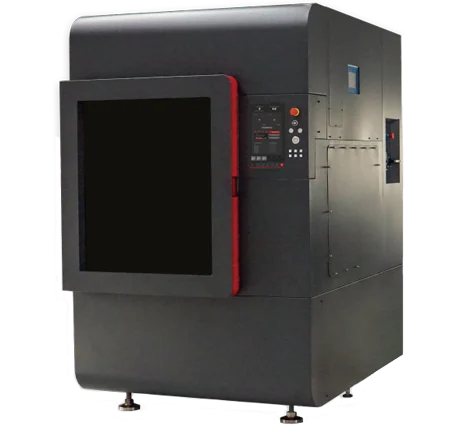
Large-format industrial SLA. Marble frame. Vacuum recoating. Built for automotive panels, one-piece patterns, dental models, and architectural forms — without stitching or Z-seam artifacts.
- ✓ 33×33×20 in / 850×850×500 mm build chamber — a full fascia pattern or a batch of shoe lasts in one run
- ✓ Solid-state 355 nm Nd:YVO4 laser · 0.075–0.8 mm variable beam · 15.0 m/s max scan
- ✓ Full-marble machine frame — thermal stability for ±0.1 mm part accuracy
- ✓ Lead time: 8–10 weeks — on-site install, calibration & operator training included
Made to order
· Ships in 8–10 weeks from order placement. Need it sooner? Talk to a specialist.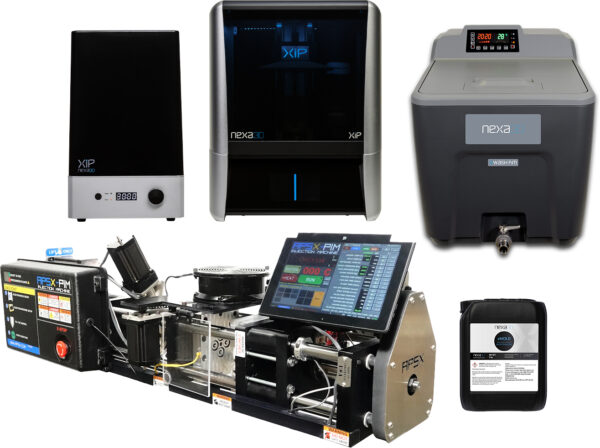
A desktop package to run Freeform Injection Molding: print a dissolvable mold in xMOLD resin on the Nexa3D XiP, inject real production material into it, then dissolve the mold away — end-use parts from a printed tool, at a fraction of hard-tooling cost.
- ✓ Print the mold, mold the part, dissolve the mold — ~2 days CAD-to-part
- ✓ Inject thermoplastics, TPE, LSR silicone, MIM metal, CIM ceramic
- ✓ Package: XiP printer + xMOLD resin + xWASH FiM · priced by configuration
In stock
· Configured and quoted to your setup (incl. injection press). Install and training included; lead time confirmed at quote.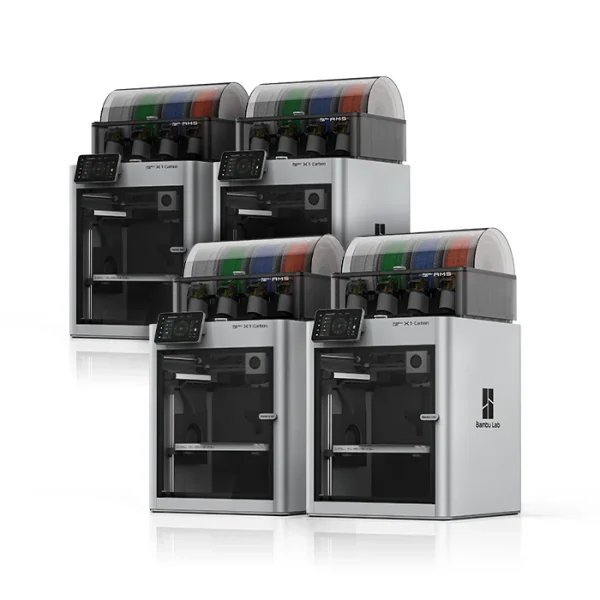
Expert on-site installation and hands-on operator training for your Bambu Lab printer, delivered by Additive Plus. Choose the session length that fits your team.
In stock
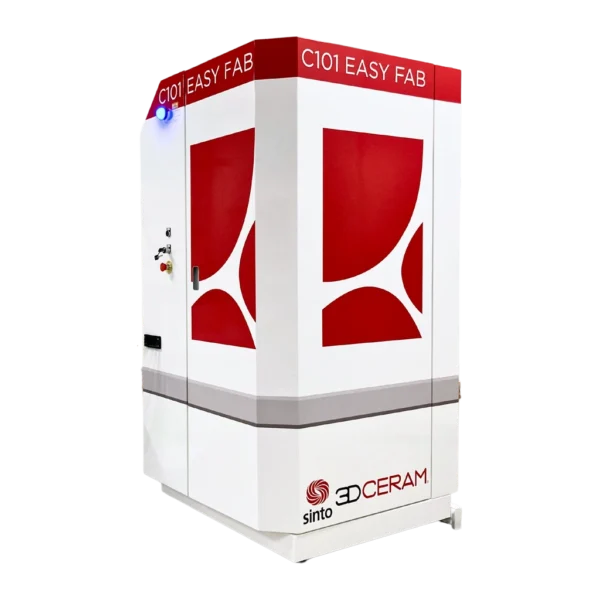
Compact ceramic SLA printer for small-series production of technical-ceramic parts — a 3.9×3.9×5.9 in / 100×100×150 mm build that starts a print from as little as 60 mL of ceramic. A peristaltic pump and pressurized tank hold a stable slurry flow for repeatable parts, and the same process scales up to 3DCeram production systems. Full print → debind → sinter workflow supported by Additive Plus.
- Built for small series — repeatable ceramic parts, not one-off prototypes.
- Print from 60 mL — 10 mL with SAM option · change ceramic in ~20 min.
- Lead time: configured to order — install, training & scale-up support from California.
Made to order
· Lead time: configured to order — request a build slot. Installation, training and process support included from California.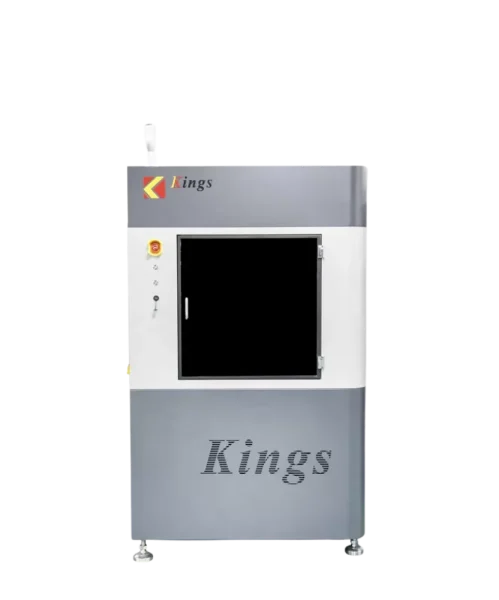
Mid-format industrial SLA. Marble frame. Vacuum recoating. Built for high-volume printing of footwear lasts, dental arch batches, engineering prototypes and patterns — without stitching or Z-seam artifacts.
- ✓ 26×26×16 in / 650×650×400 mm build chamber — nests a full tray of lasts or arches per run
- ✓ Solid-state 355 nm Nd:YVO4 laser · 0.075–0.8 mm variable beam · 15.0 m/s max scan
- ✓ Full-marble machine frame — thermal stability for ±0.1 mm part accuracy
- ✓ Lead time: 8–10 weeks — on-site install, calibration & operator training included
Made to order
· Ships in 8–10 weeks from order placement. Need it sooner? Talk to a specialist.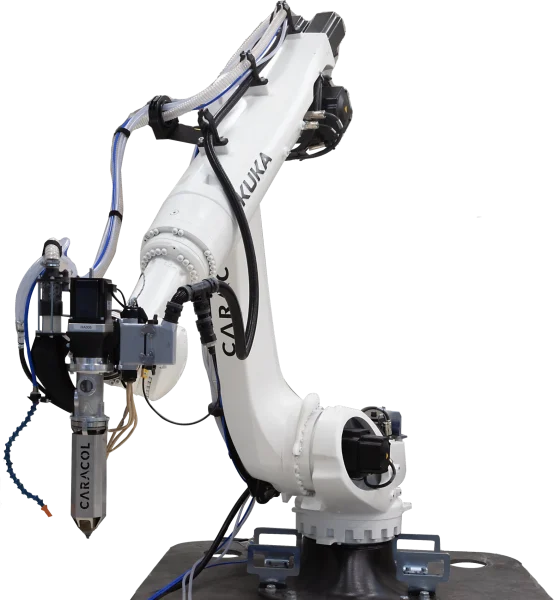
Heron AM configured with the High Flow (HF) extruder head — Caracol's 6-axis robotic large-format additive platform. 30 kg/h through 5–14 mm nozzles at up to 450°C, pellet-fed with optional hybrid CNC milling. EN9100 and ISO 9001 certified. Priced by configuration.
- ✓ 6-axis robotic LFAM — freeform geometries up to 15 m, beyond any gantry
- ✓ High Flow head: 30 kg/h, 5–14 mm, 450°C — highest throughput, largest parts
- ✓ EN9100 + ISO 9001 certified · lead time confirmed at quote
Made to order
· Lead time confirmed per configuration at quote. Talk to a specialist for a schedule.What our customers say
“Harry and team were professional, effective communicators as we set up the order, then they executed quickly and produced an amazing product for us at a very competitive price. Am looking forward to our next print w Additive Plus!”
“Great 3D printing service and the resin parts look super smooth and clean. Really happy with how everything turned out!”
“Harry was very professional and helped me out with my 3D printing needs and explained what options I have in terms of filaments such as PEEK. Highly recommended.”
“I needed a 3D enclosure printed urgently in a specific time period, they did great!”
Common questions
Don't see yours? Email [email protected] — NDA on request, typical reply within 4 hours.
What is the AO Metal A30 Metal 3D Printer?
What printing technology does the A30 use?
What materials can the AO Metal A30 print?
What is the build volume of the A30?
Is the AO Metal A30 suitable for universities and research laboratories?
What makes the A30 different from filament-based metal 3D printers?
Is the material system open?
What laser options are available?
What level of accuracy can the A30 achieve?
Can the A30 be used for metal alloy development?
What software is included with the printer?
What facility requirements does the A30 have?
Is the AO Metal A30 made in the USA?
What industries use the AO Metal A30?
What is included with the AO Metal A30?
What is the lead time for the AO Metal A30?
Can I schedule a demo or speak with an applications engineer?
Place your order, or talk to an engineer first
Order A30 Metal 3D Printer — AO Metal direct, or talk to materials engineer