
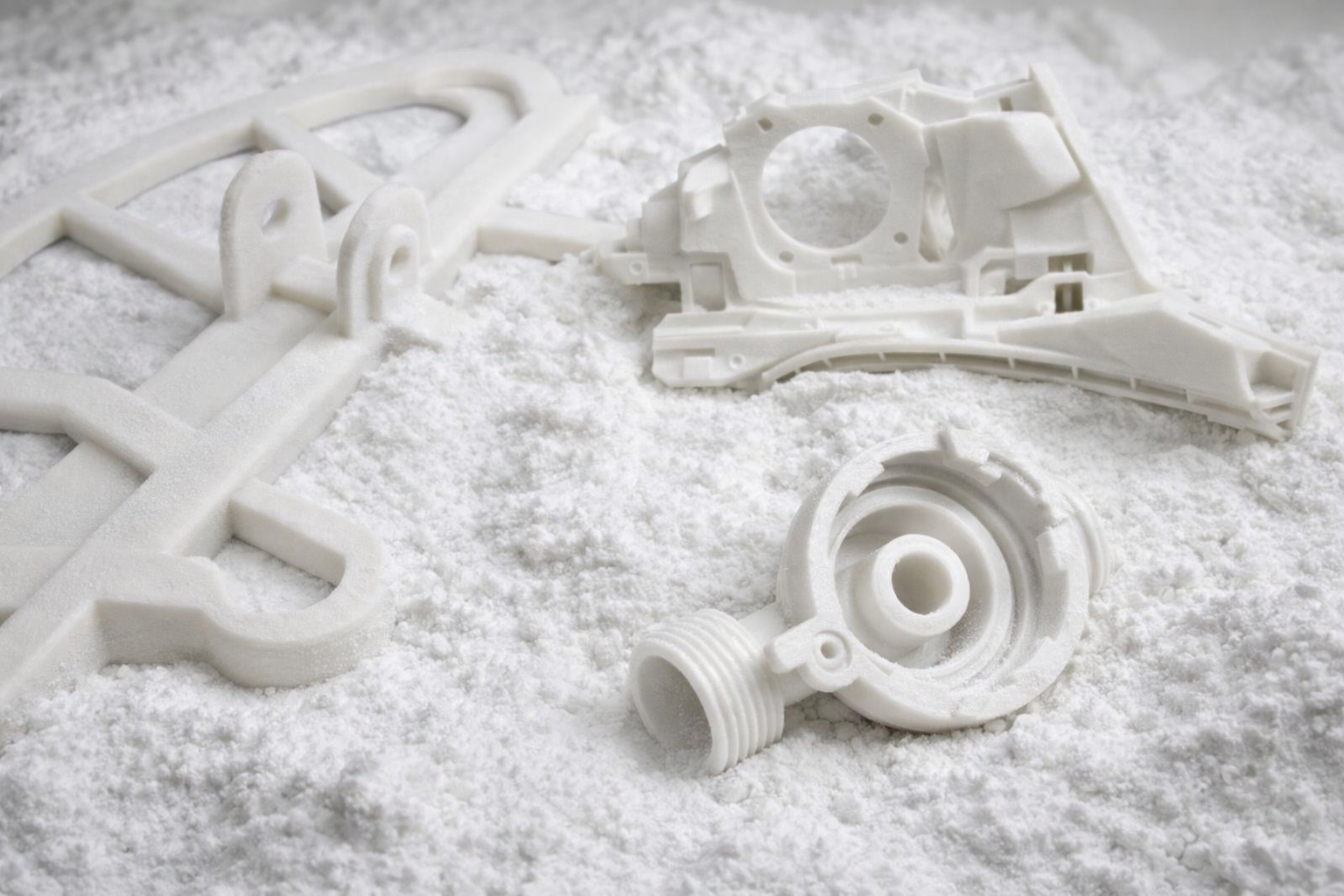
In the dynamic landscape of modern manufacturing, the ability to transform digital designs into robust, functional physical objects with unparalleled precision has become a cornerstone of innovation. Leading this transformative charge is the selective laser sintering 3d printer, a powerful additive manufacturing technology that has redefined what’s possible in rapid prototyping and end-use production.
At its core, SLS 3D printing operates by utilizing a high-powered laser to selectively fuse powdered materials, layer by microscopic layer, crafting intricate geometries directly from a 3D model. Unlike many other additive processes, SLS distinguishes itself by eliminating the need for support structures, unlocking extraordinary design freedom and enabling the creation of complex internal channels and interlocking parts. This fundamental advantage makes the SLS 3D printer an indispensable tool across diverse sectors, from aerospace and automotive to medical devices and consumer goods.
Throughout this guide, we will delve into the intricate mechanics of how powder transforms into robust parts, explore the compelling advantages that position SLS as a preferred choice, and compare it with other prominent technologies, such as SLS vs DMLS 3D printing. We’ll also examine the essential 3D printing post-processing steps that refine these exceptional creations. Prepare to uncover why Selective Laser Sintering stands at the vanguard of industrial 3D printing, driving efficiency, innovation, and unprecedented design possibilities.
How Does It Work? The Magic Recipe!
An SLS 3D printer might sound complicated, but understanding its mechanics reveals a carefully orchestrated sequence that transforms raw powder into robust, functional components. This powder bed fusion technique stands out for its precision and ability to create intricate designs without the need for external support structures.
The Preheating Phase
The journey begins with a crucial preheating stage. The powder reservoir and build area within the selective laser sintering 3d printer are meticulously heated to a temperature just below the melting or glass transition point of the specific polymeric material being used. This controlled thermal environment is maintained throughout the entire printing process by infrared heaters positioned above the build platform. This preheating is vital, as it ensures the powder is receptive to sintering without prematurely fusing, establishing optimal conditions for precise layer bonding.
Layer-by-Layer Construction
Once the ideal temperature is achieved, a counter-rotating leveling roller spreads an exceptionally thin layer of powder—typically around 0.1 mm thick—evenly across the build platform. This precise control over layer thickness directly influences the final part’s resolution and surface quality. The entire operation occurs within a closed chamber, often filled with inert nitrogen gas. This inert atmosphere minimizes oxidation and degradation of the powder material, ensuring consistent and high-quality part properties. For more about optimizing additive manufacturing processes, you can explore guides on smart CAD optimization programs that enhance design and production.
Laser Sintering and Cross-Section Fusion
The core of the SLS 3D printing process involves a focused CO₂ laser beam. This powerful laser scans across the powder bed, selectively fusing material exactly where the part’s geometry dictates. Guided by highly precise galvanometers, the laser melts powder particles together to create the cross-section of each layer. A key advantage of this method is that the surrounding unsintered powder naturally supports subsequent layers. This eliminates the need for dedicated support structures, a common requirement in many other 3D printing technologies, thereby reducing post-processing and increasing design freedom.
Iterative Building Process
After each layer is completed and fused, the build platform precisely lowers by a distance corresponding to the layer thickness defined in the slicing software. A fresh, thin layer of powder is then spread and leveled across the newly lowered platform. The CO₂ laser then scans and fuses the next cross-section. This iterative cycle continues, layer by layer, until the entire part is fully constructed within the powder bed. The result is a solid, functionally complete part ready for retrieval and subsequent finishing.
Materials Used in SLS
SLS 3D printing primarily utilizes thermoplastic polymer powders, with nylon and polyamide being the most common choices. These materials are highly valued for their excellent mechanical properties, offering strong layer adhesion and isotropic characteristics. This means that the part’s tensile strength and mechanical hardness remain consistent across all three axes, providing uniform strength. While polymers are standard, the versatility of SLS can extend to working with ceramic, glass, and even certain metal powders, depending on the specific application requirements and the printer’s configuration.
Why is SLS So Cool? The Superpowers!
SLS 3D printing offers a compelling suite of advantages, making it a preferred technology for tackling complex manufacturing challenges across various industries.
Design Freedom Without Support Structures
One of the most transformative benefits of SLS is the elimination of dedicated support structures. Since the unsintered powder naturally acts as a support for the part during the printing process, designers gain unparalleled creative freedom. This capability allows for the creation of intricate internal channels, complex overhanging features, thin walls, and hollow spaces that would be exceptionally difficult or impossible to produce with other additive manufacturing methods. This expanded design envelope not only drives innovation but also significantly reduces post-processing labor and material waste.
Exceptional Speed Without Resolution Compromise
SLS stands as one of the fastest 3D printing technologies available, particularly for polymer powders which require minimal laser exposure to sinter effectively. Crucially, this speed advantage does not come at the expense of resolution or detail. Unlike some competing technologies where a trade-off between speed and precision is often unavoidable, SLS maintains high resolution even at accelerated print speeds. This efficiency translates directly into faster turnaround times, making it ideal for both rapid prototyping and efficient small-batch production. For companies focused on quick iterations, SLS offers a powerful solution, complementing broader strategies in rapid prototyping 3d printing.
Superior Mechanical Properties
Parts produced via selective laser sintering 3d printer technology exhibit exceptional mechanical characteristics, making them suitable for demanding functional and end-use applications. The strong layer adhesion inherent to the sintering process results in isotropic properties. This means a part’s mechanical hardness, tensile strength, and elongation are nearly identical regardless of its orientation, providing consistent strength distribution—a critical feature for components subjected to complex stress patterns.
Material Versatility and Durability
The technology accommodates a diverse range of materials, each with unique properties, allowing manufacturers to select the optimal material for specific functional requirements. Nylon, a widely used material in SLS, offers excellent impact strength, moderate flexibility, and outstanding resistance to environmental factors. Furthermore, certain SLS nylon formulations are FDA-approved (USP Class VI/121C certified) for direct skin contact, expanding its potential for medical devices and consumer health applications.
Excellent Surface Finishing Properties
SLS parts develop a naturally porous surface texture, which proves advantageous for subsequent finishing processes, particularly dyeing and coloring. Hot bath dyeing processes bond effectively with this porous texture, enabling consistent and vibrant color integration directly into the material. This characteristic is especially valuable for consumer products where both visual appeal and functional durability are essential.
Cost-Efficient Small to Medium Batch Production
For low-volume and high-mix production scenarios, SLS presents substantial economic benefits. The process eliminates the need for expensive tooling or molds, and parts can be produced in precisely the quantities required, with no minimum purchase requirements. This inherent flexibility makes SLS an ideal choice for custom parts, spare components, and batch production runs where traditional manufacturing methods would incur prohibitive setup costs. For businesses seeking economical production solutions, the ability to avoid tooling costs is a significant advantage.
Reduced Risk of Part Distortion
The self-supporting nature of the powder bed significantly mitigates the risk of warping and distortion, issues often encountered in other 3D printing technologies that rely on separate support structures. This inherent stability during the build process improves first-pass success rates and contributes to higher part quality consistency, reducing waste and rework.
This concludes an in-depth look at how selective laser sintering works and its compelling advantages. The next section will delve into the specific applications and use cases where an SLS 3D printer truly shines, from prototyping to end-use production.
Expanding the Horizon: Beyond the Basics of SLS Performance
While the fundamental mechanics of a selective laser sintering 3D printer involve layering powder and fusing it with a laser, the true power of SLS 3D printing lies in the advanced engineering principles and material science that underpin its superior performance. Moving beyond basic operation, understanding these nuanced aspects reveals why SLS has become an indispensable tool across diverse industries.
Engineering Excellence: The Isotropic Advantage and Material Mastery
One of the most significant engineering distinctions of SLS 3D printing is its ability to produce parts with near-perfect isotropic properties. Unlike some other additive manufacturing methods where parts can be weaker along the Z-axis (layer-to-layer bond), SLS creates components where mechanical strength, hardness, and elasticity are consistent in all directions. This uniformity is crucial for functional parts that will undergo complex stresses and strains, ensuring reliable performance regardless of how the force is applied. This characteristic positions SLS 3D printers as a go-to for critical, high-performance applications where structural integrity is paramount.
The material versatility is also a key differentiator. While nylon (polyamide) in various forms (PA11, PA12) remains the cornerstone, the advancement of polymer powders has expanded the capabilities of SLS 3D printers. For instance:
- PA12 Nylon: Offers a robust balance of strength, flexibility, and chemical resistance, making it ideal for general-purpose applications, durable prototypes, and end-use components.
- PA11 Nylon: Derived from renewable castor oil, PA11 provides superior ductility and impact strength, especially at low temperatures, making it suitable for automotive components, hinges, and living hinges that require repeated flexing.
- Glass-filled or Carbon Fiber-filled Nylons: These composite materials significantly increase stiffness, strength, and thermal resistance, making them perfect for structural components, housings, and parts requiring enhanced rigidity.
- Thermoplastic Polyurethanes (TPU) and Thermoplastic Elastomers (TPE): These flexible materials enable the creation of gaskets, seals, grippers, and components requiring rubber-like properties, expanding SLS’s reach into soft-touch and elastomeric applications.
Certain nylon formulations are even FDA-approved for direct skin contact or medical applications, highlighting the material science advancements that extend the utility of SLS 3D printing into sensitive fields like healthcare, as explored in our guide to rapid prototyping with 3D printing.
The Unseen Support: How Powder Empowers Design Freedom
The self-supporting nature of the unsintered powder bed is more than just a convenience; it’s a fundamental enabler of unparalleled design freedom. This core advantage means engineers and designers are no longer constrained by the need for external support structures, which often dictate design limitations and add significant post-processing effort and material waste in other 3D printing technologies.
With SLS 3D printers, designers can seamlessly incorporate complex internal channels for fluidics or airflow, intricate lattice structures for lightweighting without compromising strength, and highly organic, interlocking geometries that would be impossible or prohibitively expensive with traditional manufacturing. This capability fosters part consolidation, reducing assembly steps and improving overall product integrity. Imagine creating a single, integrated component that traditionally required multiple pieces to be machined, molded, and assembled—this is the power of support-free design inherent to SLS 3D printing.
Economic Sense: Agile Production and Reduced Risk
For many manufacturers, the economic advantages of selective laser sintering 3d printer technology extend far beyond material cost. For low-to-medium volume production, SLS offers substantial benefits by eliminating the need for expensive tooling, molds, and dedicated fixtures. This “toolless manufacturing” approach allows for incredible agility: parts can be produced on demand, quantities can be adjusted precisely, and design iterations can be implemented rapidly without incurring new tooling costs. This makes SLS ideal for custom products, spare parts, and niche applications where traditional methods would be economically unfeasible.
Furthermore, the inherent stability of the powder bed significantly mitigates the risk of part distortion and warping. This controlled thermal environment, coupled with the support from surrounding powder, results in higher first-pass yield rates and consistent part quality, translating directly into reduced waste and rework—a critical factor for cost-efficient production.
Revolutionizing Industries: Advanced Applications of Selective Laser Sintering
The versatility and robust capabilities of SLS 3D printing have propelled it from a prototyping tool to a critical enabler of advanced manufacturing across a multitude of sectors.
Precision in Motion: Aerospace and Automotive Innovation
In high-stakes industries like aerospace and automotive, every gram of weight saved and every millimeter of precision gained can translate into significant performance improvements. SLS 3D printers are pivotal here, creating lightweight yet strong components such as complex air ducts, fluid manifolds with optimized internal geometries, custom brackets, and ergonomic interior components. The ability to consolidate multiple parts into a single, intricate piece not only reduces weight but also simplifies assembly and improves reliability. This technology is also extensively used for producing custom jigs, fixtures, and end-of-arm tooling for robotic assembly lines, significantly streamlining production processes.
Healing with Precision: Breakthroughs in Medical and Dental Fields
The medical sector has fully embraced SLS 3D printing for its precision, material biocompatibility, and customization capabilities. It enables the creation of patient-specific surgical guides, anatomically accurate models for pre-surgical planning (reducing operative time and risk), and truly customized orthotic and prosthetic components that offer superior fit and comfort compared to off-the-shelf solutions. The ability to use FDA-approved materials further solidifies its role in producing functional medical devices, contributing to personalized healthcare solutions.
Optimizing Production: Jigs, Fixtures, and End-Use Tooling
Beyond end-use products, SLS 3D printers are workhorses in manufacturing support. Production teams leverage them to rapidly create custom jigs, fixtures, and assembly aids perfectly tailored to specific tasks. This dramatically reduces lead times and costs associated with acquiring traditional tooling, allowing for greater manufacturing flexibility and efficiency. Whether it’s a custom holding device for a delicate component or an inspection gauge for quality control, SLS delivers precision-engineered solutions quickly.
The Power of Personalization: Consumer Goods and Custom Manufacturing
For consumer goods, SLS 3D printing unlocks unprecedented levels of personalization and design intricacy. From custom eyewear frames that fit unique facial geometries to bespoke sporting equipment components or highly complex fashion accessories, the technology allows for mass customization on an industrial scale. The ease of dyeing SLS parts means products can be color-matched to brand identities or individual preferences, adding both functional and aesthetic value.
From Prototype to Product: The Shift to End-Use Parts
Increasingly, SLS 3D printers are not just for prototypes but for producing actual end-use components in low-to-medium volumes. This direct digital manufacturing capability allows businesses to move seamlessly from design to functional part without costly intermediate steps or tooling changes. This agility is particularly valuable for launching new products, producing specialized components, or managing spare parts inventory, making it a cornerstone of modern, flexible supply chains.
Beyond the Build: Mastering 3D Printing Post-Processing for SLS Parts
While a part emerging from a selective laser sintering 3D printer is functionally complete, the journey to a finished product often involves meticulous post-processing. These steps are crucial for enhancing aesthetics, refining surface properties, and optimizing performance characteristics. Understanding these phases is key to maximizing the potential of SLS 3D printing.
The Art of Depowdering: Unveiling the Masterpiece
The very first and most critical post-processing step for any SLS 3D printer part is the thorough removal of loose, unsintered powder. This process, often referred to as “depowdering,” involves carefully extracting the printed object from the surrounding powder bed. This can range from manual brushing and vacuuming to sophisticated automated depowdering stations that use air jets and tumbling to remove powder from even the most intricate internal channels and cavities. Incomplete depowdering can affect the final part’s dimensions, aesthetics, and even functionality, making this initial step paramount for achieving the designed quality.
Surface Transformation: From Rough to Refined
After depowdering, SLS 3D printing parts typically have a slightly rough, matte finish—a characteristic texture from the fused powder particles. To achieve smoother surfaces, parts undergo media blasting. This process involves propelling fine abrasive media (such as glass beads, plastic beads, or even ceramic media) at the part surface using compressed air. The type and size of the media, along with the blasting pressure, can be carefully controlled to achieve various surface finishes, from a uniform matte to a more polished, tactile smoothness. This step not only improves the aesthetic appeal but can also enhance the part’s haptics and prepare it for further finishing.
Here’s a visual representation of how a focused laser meticulously builds a part layer by layer within the powder bed of an SLS 3D printer.
Conclusion
Selective Laser Sintering (SLS) 3D printing has unequivocally cemented its position as a cornerstone of modern additive manufacturing. This powerful technology has moved beyond mere prototyping, enabling industries worldwide to transcend traditional design and production limitations, delivering functional, high-performance parts with unparalleled precision and speed.
The enduring appeal of the selective laser sintering 3d printer lies in its unique fusion of capabilities: unparalleled design freedom thanks to the absence of support structures, superior mechanical properties yielding strong, isotropic parts, and impressive material versatility. From aerospace components and medical devices to consumer goods and specialized tooling, SLS 3D printing offers a cost-effective, efficient solution for complex geometries and low-to-medium volume production. It empowers engineers and designers to bring intricate visions to life, validating concepts and producing end-use parts with confidence.
As material science and SLS 3D printer technology continue their rapid evolution, we can expect even greater sophistication and broader applications. The ability to create increasingly robust, customized, and intricate components will only accelerate innovation across every sector.
So, the next time you encounter a groundbreaking custom component or a complex part within an advanced machine, remember it might well have originated from a digital design and the precise action of a laser beam on a bed of powder. The selective laser sintering 3d printer is not just building objects; it’s actively shaping the future, one meticulously fused layer at a time.
Frequently asked questions
What exactly is Selective Laser Sintering (SLS) 3D printing?
Selective Laser Sintering (SLS) is a powerful additive manufacturing technology that builds parts layer by layer using a high-powered laser. This laser selectively fuses powdered material, most commonly thermoplastic polymers like nylon, to create durable, functional objects directly from digital designs. It's known for its ability to produce complex geometries without the need for support structures.
How does an SLS 3D printer create parts without needing support structures?
Unlike many other 3D printing technologies, SLS uses the surrounding unsintered powder as its own support material. As each layer is sintered, the loose powder below and around the part remains in place, providing natural stability. This unique feature grants unprecedented design freedom, allowing for intricate internal channels, complex overhangs, and hollow structures that would be challenging or impossible with other methods.
What types of materials can be used with SLS technology?
SLS primarily utilizes thermoplastic polymer powders, with nylon (polyamide) being the most common choice due to its excellent mechanical properties. However, the technology is versatile and can also work with other materials like TPE, TPU, and even certain ceramic, glass, and metal powders, depending on the specific printer and application. These materials offer properties ranging from high impact strength and flexibility to biocompatibility.
What are the key benefits of choosing SLS for manufacturing?
SLS offers several compelling advantages, including design freedom without supports, exceptional speed without compromising resolution, superior mechanical properties (parts are often isotropic, meaning strength is uniform in all directions), material versatility, and cost-efficiency for small to medium batch production. It also produces parts with good surface finishing properties that are ideal for dyeing.
How do SLS-printed parts compare in strength to parts made with other 3D printing methods?
SLS-printed parts are renowned for their excellent mechanical properties, often exhibiting high strength, durability, and a degree of flexibility. The strong layer adhesion achieved through the sintering process results in isotropic characteristics, meaning the part's mechanical strength and hardness are consistent regardless of its orientation. This makes SLS parts highly suitable for functional prototypes and end-use applications that require robust performance.
What is the difference between SLS and DMLS 3D printing?
While both SLS (Selective Laser Sintering) and DMLS (Direct Metal Laser Sintering) are powder bed fusion technologies, the key difference lies in their materials and applications. SLS uses polymer powders and a CO₂ laser to create lightweight, flexible to rigid plastic parts. DMLS, on the other hand, uses metal powders (like titanium or stainless steel) and a more powerful fiber laser to produce extremely strong, heat-resistant, and conductive metal components, often for high-performance engineering.
What kind of post-processing is typically required for SLS 3D printed parts?
After printing, SLS parts undergo several essential post-processing steps. These typically include depowdering to remove loose, unsintered material, followed by media blasting (e.g., glass bead blasting) to smooth the surface and improve aesthetics. Parts can also be dyed for vibrant coloring or infiltrated with epoxies or other materials to enhance surface properties, increase durability, or achieve a sealed, glossy finish.
Is Selective Laser Sintering cost-effective for production?
Yes, SLS is highly cost-effective for small to medium batch production and customized parts. Because it requires no tooling or molds and eliminates the need for support structures (reducing material waste and labor), it significantly lowers per-part costs for low-volume runs compared to traditional manufacturing methods. This flexibility makes it ideal for rapid iteration, custom orders, and specialized components where minimum order quantities are not desirable.
What are common applications for SLS technology across industries?
SLS technology is used across a wide range of industries for diverse applications. These include functional prototyping and design validation, manufacturing of aerospace and automotive components, production of medical devices and custom orthotics, creation of custom jigs, fixtures, and tooling for manufacturing lines, and the fabrication of consumer goods and end-use parts. Its versatility makes it invaluable for innovative product development and complex engineering solutions.
Have a question or a project? Let’s talk.
Tell us what you need — a real applications engineer replies within 24 hours. NDA on request, no sales script.