
In stock
- Debind & sinter parameters + datasheet in every order
- Mutual NDA before any file or spec review
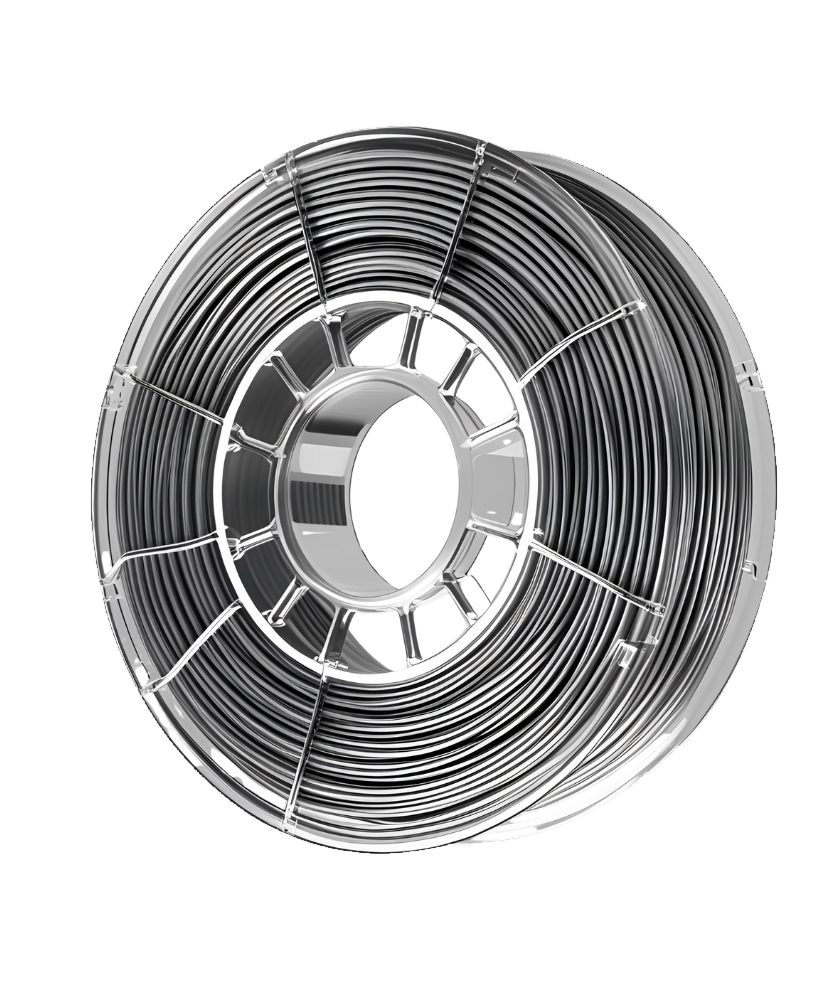
Fila-MAT Metal 316L 1,75mm
Print 316L stainless-steel parts on 3DCeram's M.A.T. FFF platform, then debind and sinter to dense, corrosion-resistant metal.
- ✔ Rp0.2 149 MPa, Rm 485 MPa and 158 GPa modulus after sintering — tested to ASTM E8/E8M
- ✔ Debind and sinter parameters plus the full datasheet included with every spool
- ✔ 1.75mm bound-metal feedstock for the 3DCeram M.A.T. FFF head — mutual NDA before any spec review
What your process engineer actually checks
Third-party mechanical data
Rp0.2 149 MPa, Rm 485 MPa and a 158 GPa Young's modulus after sintering, tested to ASTM E8/E8M. You qualify Fila-MAT Metal 316L against measured numbers, not a filament-vendor estimate.
Debind and sinter parameters included
Every spool ships with 3DCeram's datasheet and the full print, debind and sinter cycle for the M.A.T. FFF head, so green parts reach target density on the first build instead of after trial-and-error.
A materials engineer on the line
Shrinkage, warpage and heat-treatment questions go to an engineer who has run bound-metal FFF — not a ticket queue. Sub-4h reply, mutual NDA standard before any spec review.
.tabs-section .tab-pane table{border-collapse:separate;border-spacing:0;width:100%;border:1px solid #E6E8EC;border-radius:12px;overflow:hidden;margin:18px 0;font-size:15px;line-height:1.45}.tabs-section .tab-pane table th,.tabs-section .tab-pane table td{border-bottom:1px solid #EFF1F4;border-right:1px solid #EFF1F4;padding:11px 14px;text-align:left;vertical-align:top;color:#23262B}.tabs-section .tab-pane table thead th{background:#F4F1E9;color:#1C2A3A;border-bottom:2px solid #D6B16F;font-weight:700;letter-spacing:.02em}.tabs-section .tab-pane table tbody th,.tabs-section .tab-pane table tbody td:first-child{background:#F7F8FA;font-weight:600;color:#101114}.tabs-section .tab-pane table tr td:last-child,.tabs-section .tab-pane table tr th:last-child{border-right:0}.tabs-section .tab-pane table tbody tr:last-child td{border-bottom:0}.tabs-section .tab-pane h2{border-left:3px solid #D6B16F;padding-left:12px;margin-top:30px}.tabs-section .tab-pane ul{list-style:square;padding-left:20px}.tabs-section .tab-pane ul li::marker{color:#D6B16F}.final-cta{display:none}.rev-section{display:none!important}.tabs-section .tab-pane figure{margin:24px auto;text-align:center;max-width:600px}.tabs-section .tab-pane figure img{max-width:600px;width:100%;height:auto;border-radius:14px;border:1px solid #F0EDE8}.tabs-section .tab-pane figcaption{font-size:12.5px;color:#8C877D;margin-top:7px}
.tab-pane .lead{font-size:15.5px;color:#5B5751;line-height:1.6;max-width:820px}
.tab-pane .desc-block{margin-top:32px}
.tab-pane .desc-block-head{margin-bottom:14px;max-width:780px}
.tab-pane .desc-block-head h4{font-size:17px;font-weight:800;letter-spacing:-.01em;color:#323131;margin:0 0 4px;position:relative;padding-left:14px}
.tab-pane .desc-block-head h4::before{content:””;position:absolute;left:0;top:5px;bottom:5px;width:3px;border-radius:2px;background:#D6B16F}
.tab-pane .desc-block-head .sub{font-size:13px;color:#8C877D;line-height:1.55;margin:0;padding-left:14px}
.tab-pane .tbl-note{font-size:12px;color:#8C877D;margin-top:-8px}
.tab-pane .feat-grid{display:grid;grid-template-columns:repeat(2,1fr);gap:14px 28px;margin-top:8px;padding-left:14px}
.tab-pane .feat-grid br,.tab-pane .app-chips br,.tab-pane .alt-grid br,.tab-pane .how-grid br{display:none}
.tab-pane .feat-tile{display:flex;gap:11px;align-items:flex-start}
.tab-pane .feat-tile .ft-ico{width:26px;height:26px;border-radius:6px;background:#FBF9F4;color:#5B5751;display:flex;align-items:center;justify-content:center;flex-shrink:0;margin-top:1px;border:1px solid #F0EDE8}
.tab-pane .feat-tile .ft-ico svg{width:14px;height:14px;fill:currentColor}
.tab-pane .feat-tile h5{font-size:13.5px;font-weight:700;color:#323131;margin:0 0 2px;line-height:1.3}
.tab-pane .feat-tile p{font-size:12.5px;color:#5B5751;line-height:1.5;margin:0}
.tab-pane .how-grid{display:grid;grid-template-columns:repeat(3,1fr);gap:24px;margin-top:8px;padding:22px 24px;background:linear-gradient(135deg,#070F22 0%,#0B1B3A 50%,#2D2A22 100%);border-radius:12px;position:relative;overflow:hidden;color:#fff}
.tab-pane .how-grid::before{content:””;position:absolute;top:0;left:0;right:0;height:3px;background:linear-gradient(90deg,#D6B16F 0%,#FFE2A6 50%,#D6B16F 100%)}
.tab-pane .how-step{position:relative;z-index:1}
.tab-pane .how-step .hs-n{font-family:”SF Mono”,ui-monospace,monospace;font-size:10px;font-weight:700;color:#D6B16F;letter-spacing:.1em;margin-bottom:6px;display:inline-flex;align-items:center;gap:6px;text-transform:uppercase}
.tab-pane .how-step .hs-n::before{content:””;width:14px;height:1px;background:#D6B16F}
.tab-pane .how-step h6{font-size:13.5px;font-weight:800;color:#fff;margin:0 0 4px;line-height:1.25}
.tab-pane .how-step p{font-size:12.5px;color:rgba(255,255,255,.78);line-height:1.5;margin:0}
.tab-pane .app-chips{display:grid;grid-template-columns:repeat(2,1fr);gap:9px 28px;margin-top:8px;padding-left:14px}
.tab-pane .app-chip{display:flex;align-items:center;gap:10px}
.tab-pane .app-chip .ac-ico{width:22px;height:22px;border-radius:5px;background:#FBF9F4;color:#5B5751;display:flex;align-items:center;justify-content:center;flex-shrink:0;border:1px solid #F0EDE8}
.tab-pane .app-chip .ac-ico svg{width:12px;height:12px;fill:currentColor}
.tab-pane .app-chip .ac-t{font-size:13px;color:#323131;font-weight:700}
.tab-pane .app-chip .ac-s{font-size:11.5px;color:#8C877D;font-weight:500;margin-top:1px}
.tab-pane .alt-grid{display:grid;grid-template-columns:repeat(3,1fr);gap:12px;margin-top:8px}
.tab-pane .alt-card{background:#fff;border:1px solid #EAE7E1;border-radius:10px;padding:14px 16px 13px;display:flex;flex-direction:column;gap:5px;position:relative;overflow:hidden;text-decoration:none;transition:border-color .2s,transform .2s,box-shadow .2s}
.tab-pane .alt-card::before{content:””;position:absolute;top:0;left:0;right:0;height:2px;background:#D6B16F;transform:scaleX(.15);transform-origin:left;transition:transform .3s}
.tab-pane .alt-card:hover{border-color:#D6B16F;transform:translateY(-2px);box-shadow:0 6px 16px rgba(20,16,8,.08)}
.tab-pane .alt-card:hover::before{transform:scaleX(1)}
.tab-pane .alt-card .ac-lbl{font-size:10.5px;font-weight:700;color:#8C877D;letter-spacing:.06em;text-transform:uppercase}
.tab-pane .alt-card .ac-name{font-size:15px;font-weight:800;color:#323131;line-height:1.2}
.tab-pane .alt-card .ac-meta{font-size:11.5px;color:#5B5751;line-height:1.4;margin-top:1px}
.tab-pane .alt-card .ac-cta{margin-top:8px;font-size:12px;color:#5B5751;display:inline-flex;align-items:center;gap:5px;font-weight:600;padding-top:8px;border-top:1px solid #F0EDE8}
.tab-pane .alt-card:hover .ac-cta{color:#323131}
.tab-pane .desc-close{margin-top:16px;padding:15px 20px;background:#FBF9F4;border-left:3px solid #D6B16F;border-radius:0 8px 8px 0;font-size:13.5px;color:#5B5751;line-height:1.55;max-width:820px}
.tab-pane .desc-close b{color:#323131;font-weight:700}
.tab-pane .desc-close .btn-spec{display:inline-flex;align-items:center;gap:7px;margin-top:12px;padding:10px 20px;border:0;border-radius:999px;background:linear-gradient(135deg,#FFBF00,#FF9000);color:#1C1A16;font-weight:700;font-size:13px;cursor:pointer;transition:transform .15s,box-shadow .15s}
.tab-pane .desc-close .btn-spec:hover{transform:translateY(-1px);box-shadow:0 6px 14px rgba(255,144,0,.35)}
@media(max-width:760px){.tab-pane .feat-grid,.tab-pane .app-chips,.tab-pane .alt-grid,.tab-pane .how-grid{grid-template-columns:1fr}}
Fila-MAT Metal 316L is 3DCeram’s bound-metal FFF feedstock — 1.75mm filament loaded with 316L austenitic stainless steel powder for the M.A.T. multi-head extrusion printer. Print the green part on a standard FFF head, then debind and sinter to a dense, corrosion-resistant stainless component.
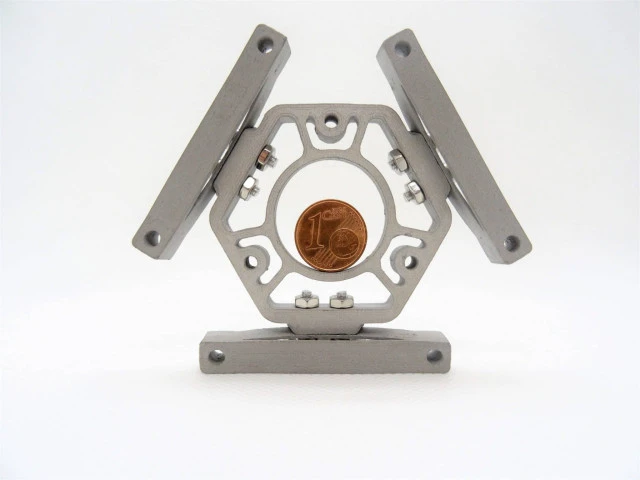
Why engineers choose Fila-MAT 316L
Four things a process engineer checks before qualifying a bound-metal feedstock.
149 MPa yield, 485 MPa tensile
Rp0.2 149 MPa / Rm 485 MPa post-sinter, tested to ASTM E8/E8M — measured austenitic 316L performance, not a filament-vendor estimate.
158 GPa elastic modulus
Stiffness measured to ASTM E8/E8M on sintered specimens. Austenitic 316L — non-magnetic, weldable, corrosion-resistant.
Tested at ESA’s ESTEC facility
Mechanical data measured with calibrated equipment at the European Space Agency’s technology centre in the Netherlands — third-party test conditions.
Debind & sinter parameters included
Every spool ships with 3DCeram’s datasheet and process parameters for the M.A.T. FFF head, so green parts reach target density predictably.
How the Fila-MAT workflow runs
Print, debind, sinter — the same three-step process behind every bound-metal FFF part.
Print on the M.A.T. FFF head
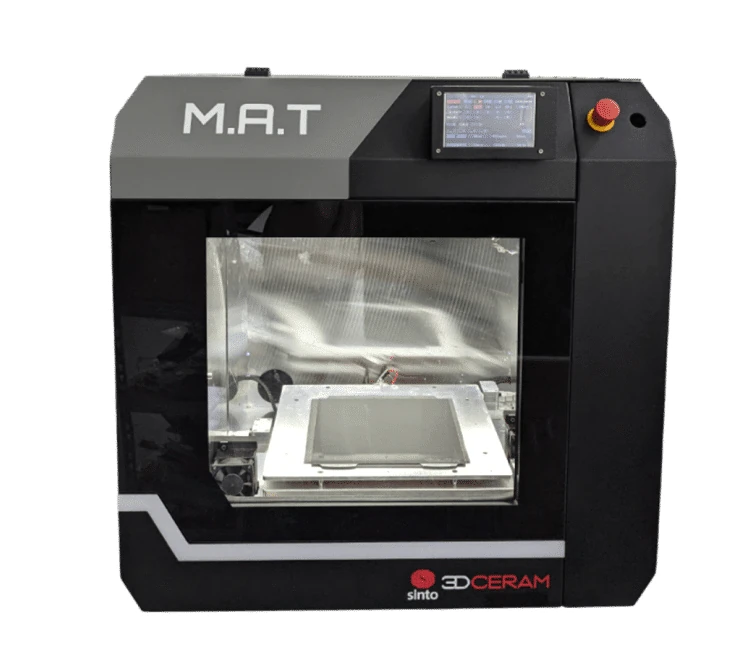
1.75mm feedstock runs on 3DCeram’s M.A.T. printer — max nozzle 270°C, max bed 110°C, with heated filament and print chambers for consistent extrusion.
Debind the binder
Binder-removal parameters ship with every spool’s datasheet, tuned for the 316L feedstock — no trial-and-error on the first batch.
Sinter to dense metal
High-temperature sintering consolidates the part to dense, corrosion-resistant 316L stainless — ready to use.
Material properties (post-sinter)
| Property | Value | Standard |
|---|---|---|
| Yield strength, Rp0.2 | 149 MPa | ASTM E8/E8M |
| Ultimate tensile strength, Rm | 485 MPa | ASTM E8/E8M |
| Elastic modulus | 158 GPa | ASTM E8/E8M |
Tested with calibrated equipment at ESA’s ESTEC technology centre, Netherlands. See the full datasheet in Downloads.
Technical specifications
- Material: 316L austenitic stainless steel, bound-metal FFF feedstock
- Filament diameter: 1.75mm
- Compatible platform: 3DCeram M.A.T. — FFF head, max nozzle 270°C, max bed 110°C, filament chamber ≤50°C, print chamber ≤50–60°C
- Post-processing required: chemical/thermal debind + sinter furnace — parameters supplied with the datasheet on every order
Typical applications
Where teams run Fila-MAT 316L today.
Not sure Fila-MAT 316L is the right fit?
Three reasons teams pick a different feedstock or platform — tap the closest match.
Why source Fila-MAT through Additive Plus
- 3DCeram-qualified feedstock for the M.A.T. FFF head — matched to the machine, not a generic substitute.
- Debind and sinter parameters plus full datasheet included with every order.
- Materials engineer on the line for shrinkage, warpage, and heat-treatment questions — NDA standard.
- Custom alloy or ceramic feedstock sourced and qualified on request, typical lead 3–4 weeks.
| Brand | 3DCeram |
| Printing Materials | Metal Filaments |
| Technology | FFF |
| Application | Composite Tooling, Engineering, Jigs & Fixtures, Manufacturing |
Product videos
We source and qualify. Custom feedstock on request.
Need a specific bound-metal or ceramic filament, or parameters for a printer we don't list yet? Our materials team qualifies the feedstock and verifies sinter behavior before you commit. Typical lead 3–4 weeks.
Complete the workflow
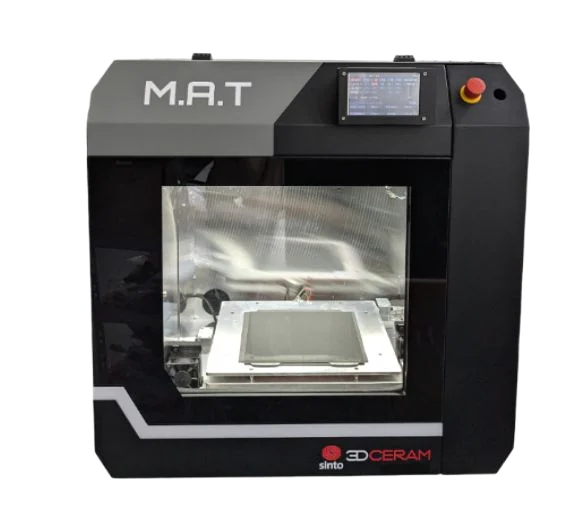
Metal & technical ceramics, printed by extrusion — even silicon carbide.
- FFF · pellet · paste + 3-axis CNC in one machine
- No laser, no loose powder — lab-safe, single-phase
- Official 3DCeram US representative · 12-mo warranty
From $63,000 · Core: FFF + CNC (add Pellet/Paste heads) · made to order, ~3-month build · leasing available
Request a quote Installation and commissioning in the USA: facility and gas planning, start-up and operator training by our US service team.
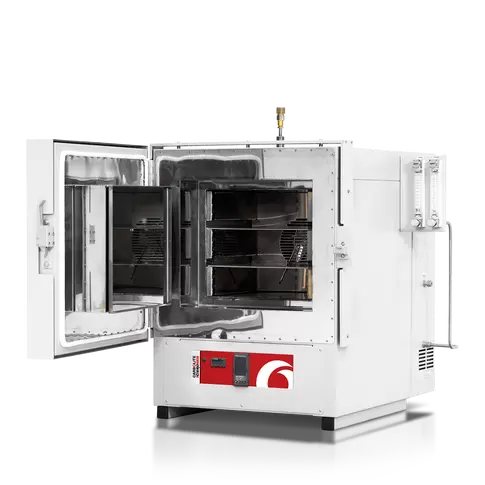
Controlled atmosphere oven for metal AM post-processing and materials research — 400–700°C max (4 grades), 28–1,000 L chambers (5 sizes), O₂ down to 50 ppm with N₂/Ar purge. Seam-welded gas-tight chamber built as an atmosphere unit from the ground up.
- ✓ O₂ down to 50 ppm — atmosphere-controlled heat treatment without vacuum-furnace cost
- ✓ 17 configurations in one family — 28 L lab to 1,000 L production, same gas architecture
- ✓ Seam-welded gas-tight chamber — purpose-built, not a retort-converted standard oven
- ✓ Configured to order — request lead time; install, training & cycle validation included
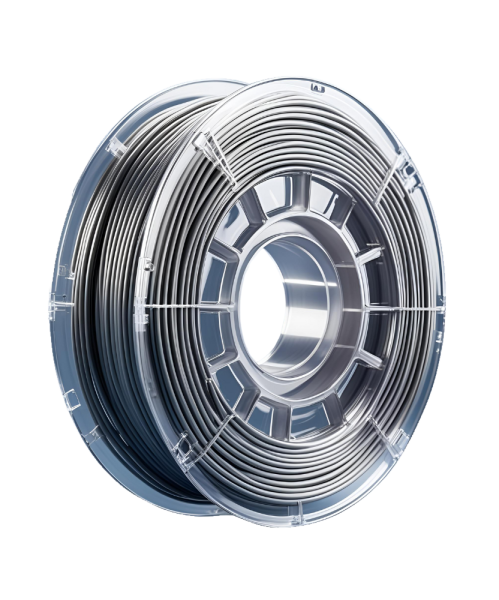
- ✔ Rp0.2 680 MPa / Rm 880 MPa / 257 HV10 — tested to DIN EN ISO 6892 & 6507-1 at ESA's ESTEC facility
- ✔ Debind & sinter parameters plus full datasheet included with every spool
- ✔ 1.75mm bound-metal feedstock for the 3DCeram M.A.T. FFF head — mutual NDA before any spec review
Other products teams run alongside Fila-MAT Metal 316L 1,75mm
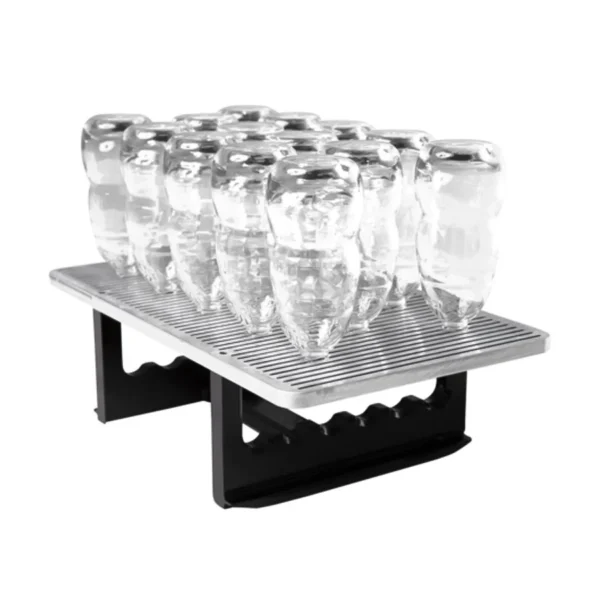
xPP405 Clear is the translucent polypropylene-like LSPc photopolymer — tough and semi-rigid with about 92% elongation at break, in a frosted-clear finish that can be polished for greater clarity.
- ✓ PP-like toughness — 92% elongation, 62 J/m notched Izod
- ✓ Frosted-clear finish, polishable for enhanced clarity
- ✓ 5 kg container for NXE 400 / 400Pro (405 nm LSPc)
- ✓ In stock — ships in 1–2 business days from US inventory
In stock
· In stock — ships in 1–2 business days from US inventory.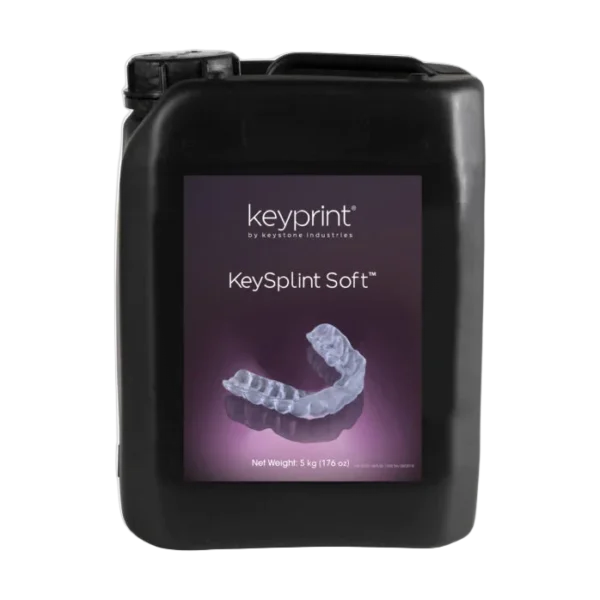
Flexible. Cleared. Bought by the bottle, not the gram. KeySplint Soft prints resilient nightguards, bite planes and repositioners on Nexa3D NXE-series LSPc printers — FDA 510(k)-cleared and Class IIa biocompatible, with 110% elongation at break. This is the 5 kg bulk format for labs printing splints every week.
Choose your shade: Light Violet or Translucent. 5 kg bottle, validated print and post-cure profile included.
In stock
· In stock — ships in 1–2 business days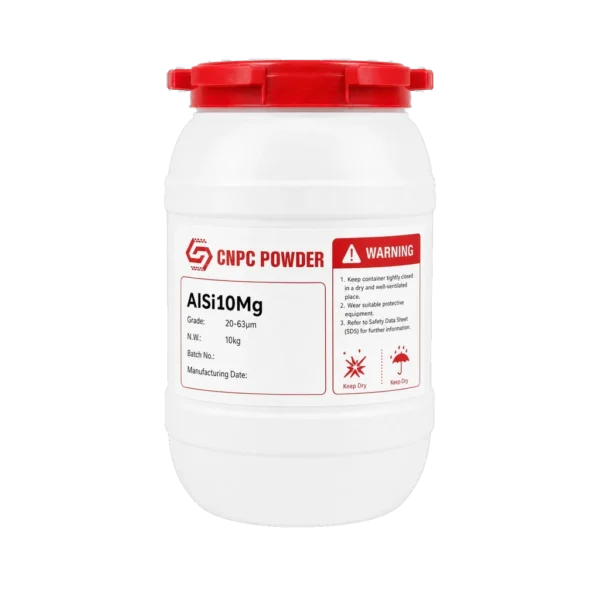
CNPC AlSi10Mg powder for LPBF — made by CNPC Powder, gas-atomized, 20–63 µm, sold in 10 kg lots.
- 10 kg container · $41/kg · $410
- Certificate of analysis (COA) for the lot, on request
- Ship date confirmed by email after you order
Manufacturer: CNPC Powder · materials engineer on call · order below or talk to an engineer first.
Made to order
· Ship date confirmed after you order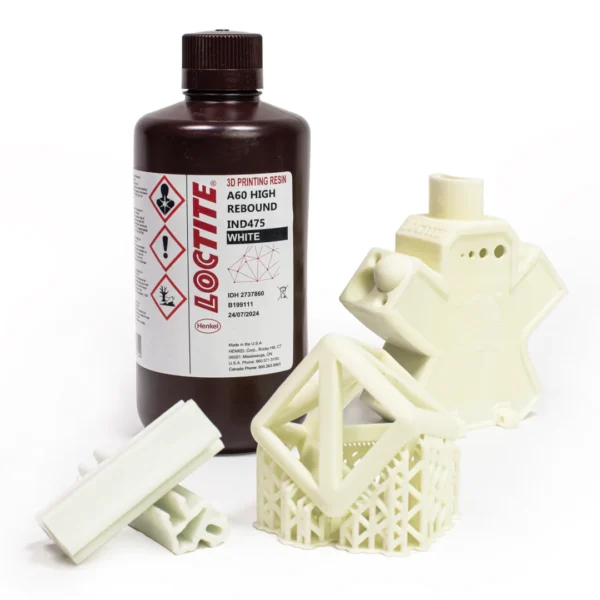
White elastomer resin: High rebound & tear resistance for lattices/prototypes. Easy printing.
Availability: confirmed at order. Supplier stock for this line varies — we verify availability and lead time on every order before processing, and offer an equivalent or a full refund if an item cannot be supplied. Cubic Ink equivalents →
Made to order
· Available to order — we confirm the lead time by email within one business day of your order.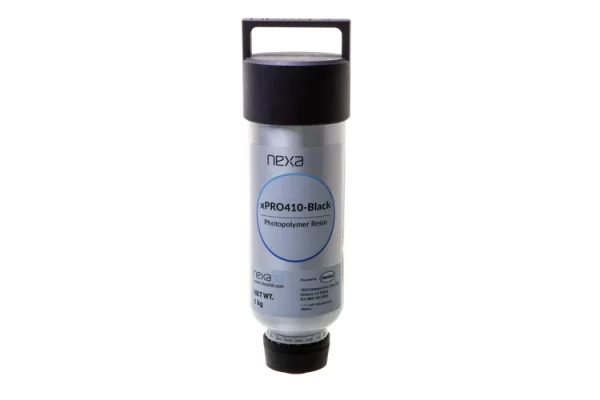
xPRO410 is a rigid, general-purpose LSPc photopolymer built on Henkel Loctite® PRO410 chemistry — supplied in a 1.5 kg smart cartridge that drops straight into the Nexa3D XiP and XiP Pro.
- ✓ Rigid general-purpose resin — 41 MPa tensile, Shore D 79
- ✓ Dimensional accuracy within 0.2% after post-cure
- ✓ 1.5 kg smart cartridge for XiP / XiP Pro (405 nm LSPc)
- ✓ In stock — ships in 1–2 business days from US inventory
In stock
· In stock — ships in 1–2 business days from US inventory.
Easy-printing PET-G pellets qualified for large-format additive manufacturing (LFAM) — low-warp, strong-bonding, glossy big parts for display and enclosures at pellet cost.
- ✓ Low warp and strong layer adhesion — reliable big prints with a clean glossy finish
- ✓ Ships dry with a lot datasheet + drying and extrusion parameters
- ✓ Lead time: 1–2 business days from L.A. stock — volume & PO on request
In stock
· 1–2 Business Days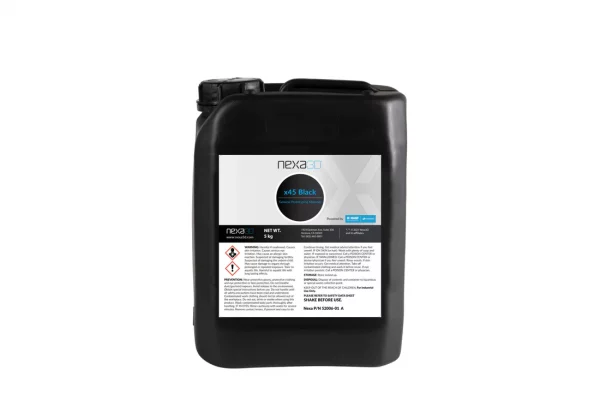
x45 Clear is a tough, durable resin for models and functional prototypes needing high strength — at print speeds beyond 15 cm/hr.
- ✓ High strength and durability for functional prototypes and rugged models
- ✓ Very fast printing — vertical build speed exceeding 15 cm/hr on Nexa3D systems
- ✓ Genuine Nexa3D resin for NXE-series printers · 5 kg
Made to order
· Currently on backorder — contact us for lead time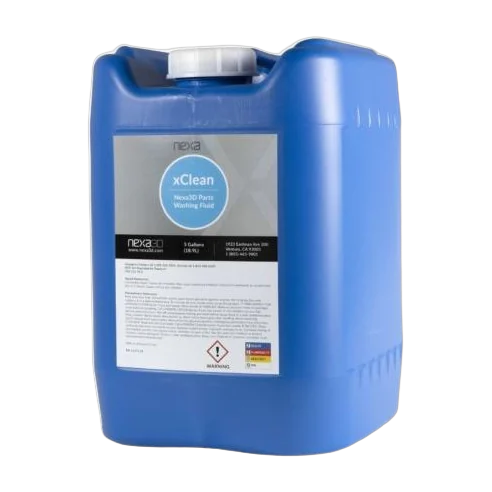
Currently not in stock. Leave a request and we will confirm availability, price and lead time.
Bulk washing solvent for rinsing uncured resin off SLA and LSPc 3D-printed parts — holds around 3× the dissolved resin of IPA and has a higher flash point, in a 5-gallon pack that lowers cost per litre for production.
- ✓ ~3× the resin capacity of IPA — fewer changeouts, less waste
- ✓ Higher flash point than IPA · leaves no greasy residue · water-rinse after
- ✓ 5 gallon (18.9 L) · US-made · available on request (not in stock)
Out of stock
· Not in stock — available on requestCommon questions
Don't see yours? Email [email protected] — NDA standard, typical reply within 4 hours.
What is Fila-MAT Metal 316L and how does it produce metal parts?
Which printer is Fila-MAT Metal 316L compatible with?
What post-processing does Fila-MAT Metal 316L require?
What mechanical properties can I expect after sintering?
How much does a Fila-MAT Metal 316L part shrink during debinding and sintering?
Why choose 316L stainless steel for FFF metal printing?
Does Fila-MAT Metal 316L need heat treatment after sintering?
Place your order, or talk to an engineer first
Order Fila-MAT Metal 316L 1,75mm direct, or talk to materials engineer