
In stock
- Solids loading + debind/sinter guidance in every order
- Mutual NDA before any file or spec review
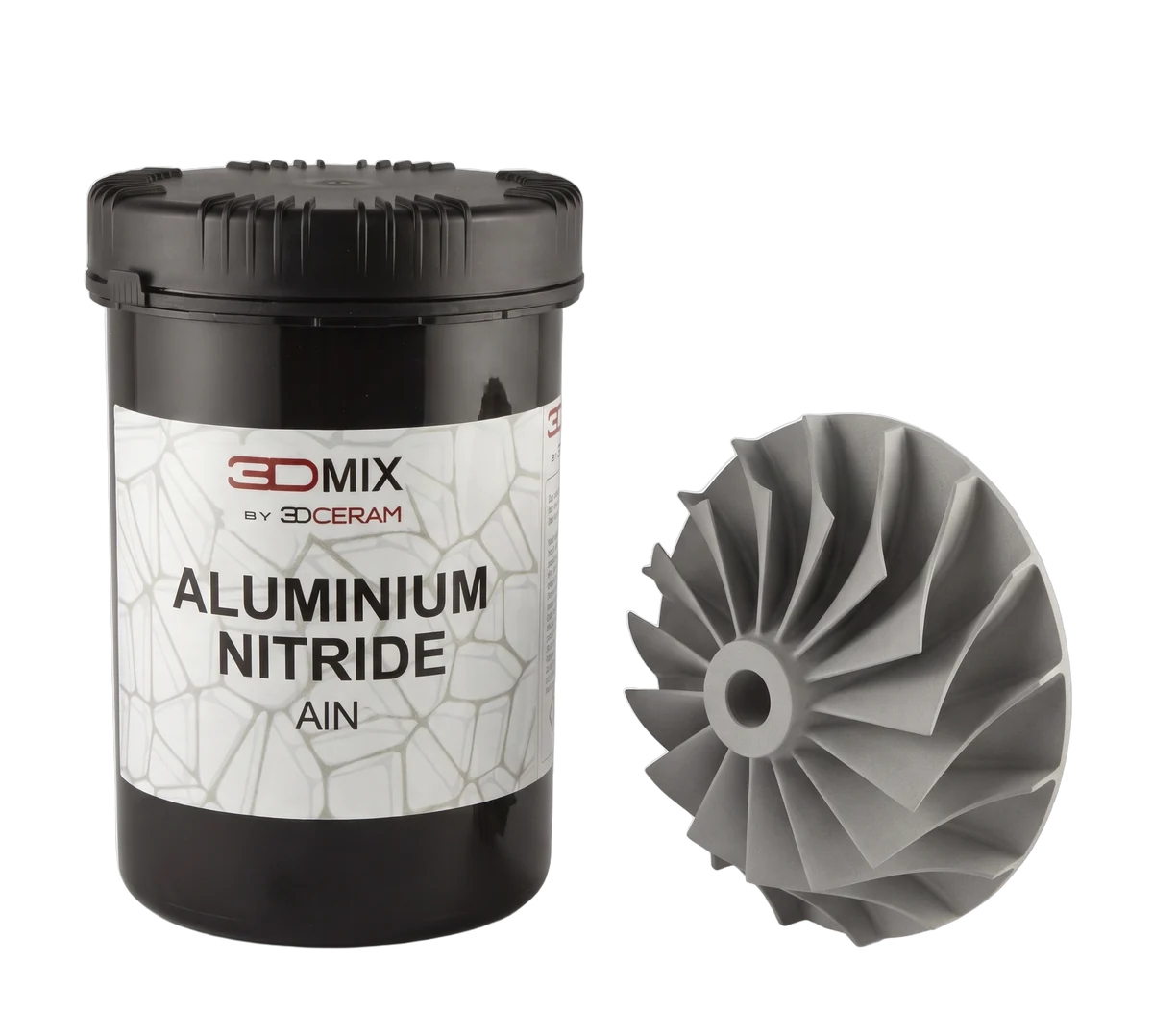
Aluminium Nitride 3D Printing Paste
Print aluminium nitride (AlN) parts on 3DCeram's Ceramaker laser-SLA platform, then debind and sinter to a ceramic that conducts heat yet insulates electrically.
- ✓ 163 W/m·K thermal conductivity with electrical insulation — power-electronics substrates
- ✓ Print conformal cooling and channelled geometries not possible by pressing
- ✓ Ceramic SLA paste for the 3DCeram Ceramaker platform — quote-based, mutual NDA before spec review
What your process engineer actually checks
Functional thermal data
163.1 W/m·K thermal conductivity with electrical insulation and 368 GPa modulus — the property set that makes AlN a power-electronics ceramic, backed by datasheet numbers.
The full ceramic workflow
Every order ships with the debinding and sintering parameters. AlN is sintered to 97% density, and shrinkage is compensated in build prep so conformal cooling geometries land on dimension.
A materials engineer on the line
Non-oxide sintering, solids loading and shrinkage are unforgiving. Talk to an engineer who runs this paste — sub-4h reply, NDA on request.
Aluminium Nitride 3D Printing Paste is a 3DCeram aluminium nitride (AlN) paste for the Ceramaker laser-SLA platform — a non-oxide ceramic that combines very high thermal conductivity with electrical insulation.
Why engineers choose this paste
The go-to ceramic for power electronics: it conducts heat like a metal but insulates like a ceramic.
163 W/m·K thermal conductivity
Moves heat far better than alumina while staying an electrical insulator — ideal for power-electronics substrates.
Electrical insulation
High resistivity for insulating heat-spreader and substrate roles in electronics.
368 GPa modulus
High stiffness and good mechanical strength at 3.22 g/cc density.
Complex SLA geometry
Print channelled and conformal cooling geometries not practical by pressing.
Print → debind → sinter
Ceramic stereolithography on the 3DCeram Ceramaker platform. The green part is larger than the finished part — shrinkage is compensated in build preparation.
Laser SLA print
The ceramic-loaded paste is cured layer-by-layer on a 3DCeram Ceramaker laser-SLA machine into a green part.
Debinding
The organic binder is removed in a controlled thermal cycle, leaving a fragile ceramic-only brown part.
Sintering
Sintered to 97% dense AlN (3.22 g/cc, <5 µm grain) preserving high thermal conductivity.
Typical applications
Thermal-management and insulating parts for electronics.
Aluminium Nitride — physical & mechanical properties
Representative post-sinter values from the 3DCeram material datasheet. Final numbers depend on part geometry and your qualified sinter cycle.
| Property | Value |
|---|---|
| Densification rate | 97% |
| Density | 3.22 g/cm³ |
| Grain size after sintering | <5 µm |
| 4-pt bending strength | 270 MPa |
| Young’s modulus (theoretical) | 368 GPa |
| Thermal conductivity (RT) | 163.1 W/m·K |
| CTE (20 °C) | 2.89 ×10⁻⁶ K⁻¹ |
| Brand | 3DCeram |
| Weight | 5 kg |
| Country of origin | France |
| Printing Materials | Ceramic Pastes |
| Technology | CERAMIC SLA |
| Material | Aluminium Nitride (AlN) |
| Application | Engineering, Jigs & Fixtures, Manufacturing |
We formulate and qualify. Custom variants on request.
Need a specific ceramic chemistry, solids loading, or a tuned binder for your process? Our materials team formulates and verifies rheology and sinter behavior before you commit. Typical lead 3–4 weeks.
Complete the workflow
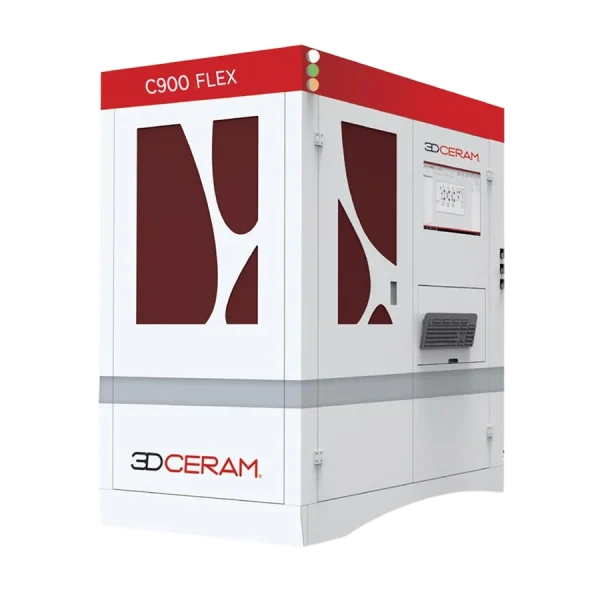
- ✓ 11+ ceramic materials — Al₂O₃, ZrO₂, Si₃N₄, TCP, HA, AlN, cordierite and more
- ✓ Top-down SLA — support-free complex internal geometries in dense ceramic
- ✓ SAM option — 100 mL minimum batch for R&D economy with expensive compositions
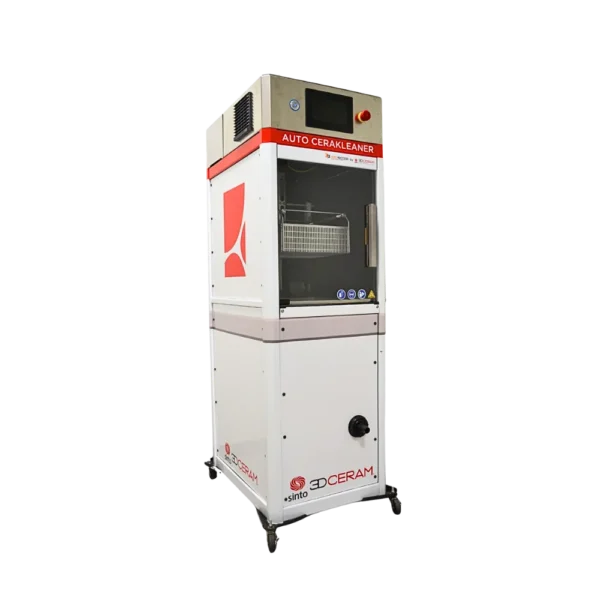
Automated cleaning system that removes excess ceramic paste from freshly printed green parts, leaving them ready to debind — replacing slow, hands-on solvent cleaning in the ceramic AM workflow.
- ✓ Gentle, low-mechanical-stress cleaning of fragile green parts
- ✓ Batch time cut dramatically vs manual (e.g. 60 min → 5 min on 70 alumina parts)
- ✓ Solvent longevity + recycling · no manual solvent contact
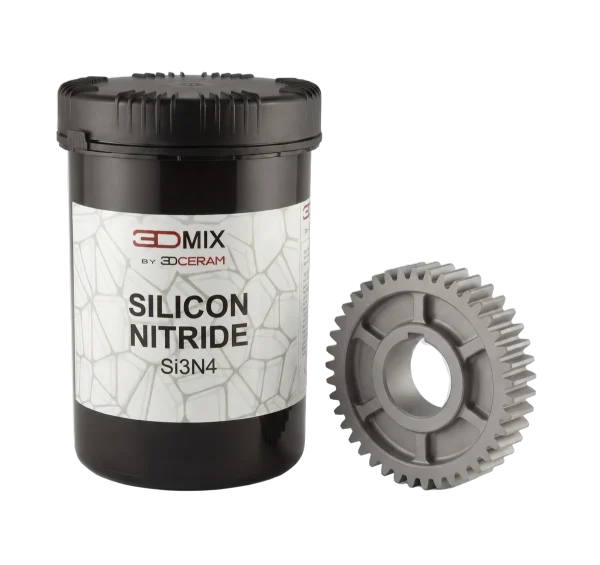
Print silicon nitride (Si₃N₄) parts on 3DCeram's Ceramaker laser-SLA platform, then debind and sinter to one of the hardest, most thermal-shock-resistant ceramics.
- ✓ 881 MPa 4-point bending strength at >97% density, 11 Weibull modulus
- ✓ Thermal-shock resistant with low wettability against molten metal
- ✓ Ceramic SLA paste for the 3DCeram Ceramaker platform — quote-based, mutual NDA before spec review
Other products teams run alongside Aluminium Nitride 3D Printing Paste
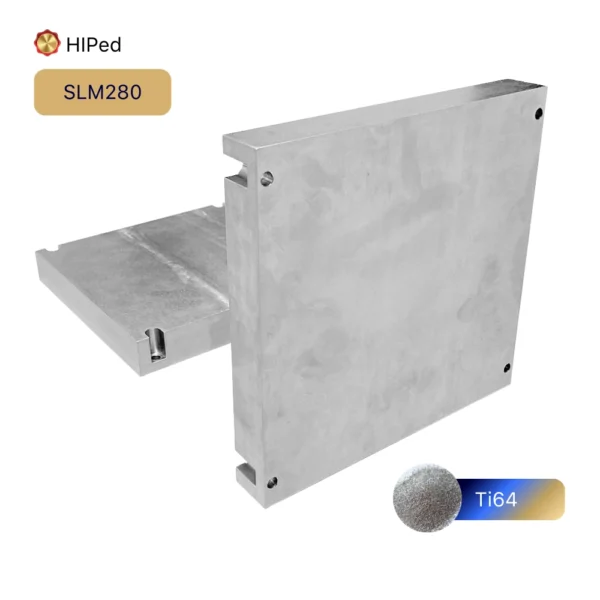
The SLM 280 HIPed Ti64 Build Platform is manufactured via powder metallurgy and hot isostatic pressing (HIP) to deliver a fully dense, fine-grain titanium structure compliant with AMS 4994A. Designed for critical LPBF production, this HIPed titanium build plate for SLM 280 ensures superior thermal stability, minimal warping, and exceptional precision for aerospace, medical, and industrial applications.
 Need a HIPed titanium build platform in custom dimensions or for another LPBF system?
Request a custom quote — we manufacture precision HIPed build plates up to 600×600 mm for most industrial metal 3D printers.
Need a HIPed titanium build platform in custom dimensions or for another LPBF system?
Request a custom quote — we manufacture precision HIPed build plates up to 600×600 mm for most industrial metal 3D printers.Made to order
· 6-8 weeks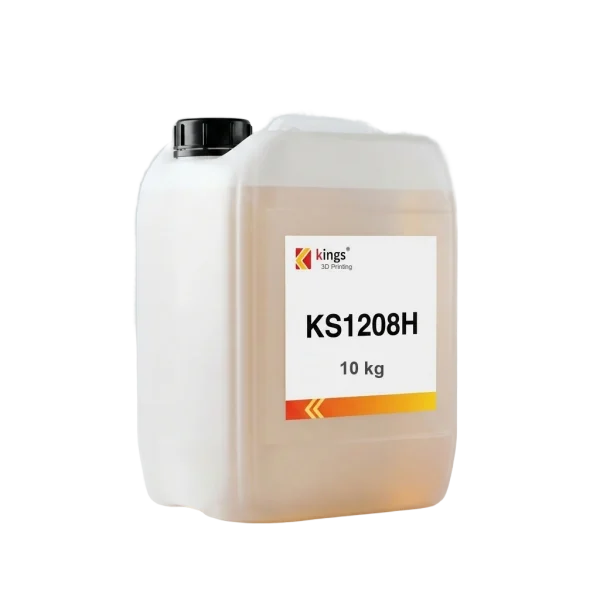
Low-viscosity, semi-translucent laser-SLA resin with a 135 °C glass transition — built for prototypes and quick molds that must hold their shape under heat.
- ✓ Tg 135 °C · 87 Shore D · 65 MPa tensile · 110 MPa flexural
- ✓ 340 cps low-viscosity · 0.08–0.12 mm layers on Kings industrial SLA (355 nm)
- ✓ In stock — ships in 1–2 business days from our Los Angeles warehouse
In stock
· In stock — ships in 1–2 business days from our Los Angeles warehouse.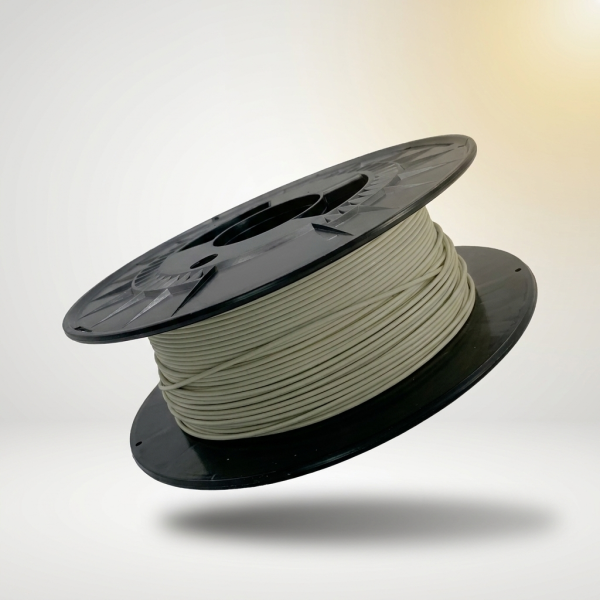
- ✔ Smooth, glazeable porcelain finish with a classic ceramic look
- ✔ Print → debind → fire — ceramic printing on an everyday FFF machine
- ✔ Genuine Zetamix by Nanoe · 500 g spool · lead time 10–20 business days (depending on order queue)
In stock
· Ships in 1–2 business days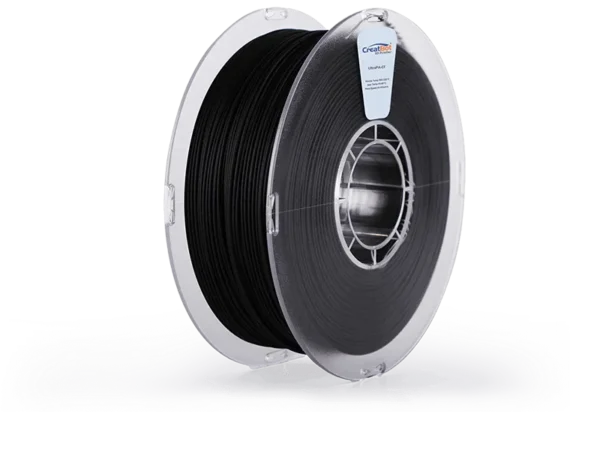
Carbon-fiber-reinforced high-temperature nylon filament for FDM 3D printing — the strongest, stiffest, most heat-resistant material in the CreatBot range (125 MPa tensile, 8512 MPa flexural modulus, 188°C glass transition), for demanding structural and end-use parts.
- ✓ ±0.02mm diameter tolerance — consistent extrusion, low jam risk
- ✓ Validated CreatBot F430 print profile + datasheet included
- ✓ In stock, ships in 1–2 business days
In stock
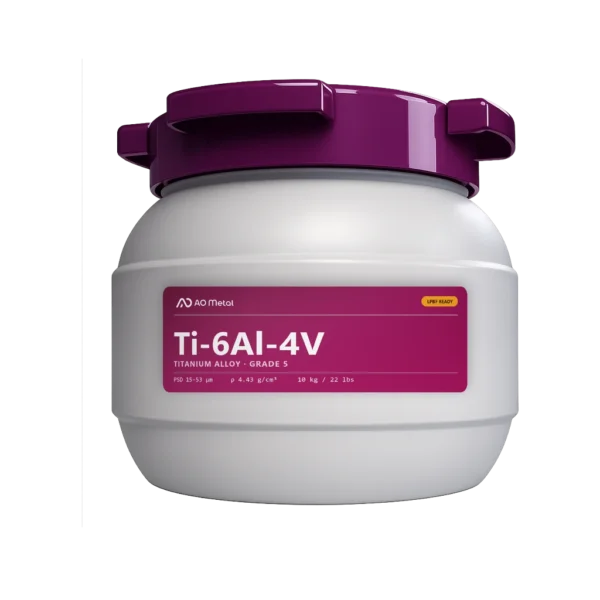
A-Powder Ti-6Al-4V Grade 5 — AO Metal’s LPBF powder line, 15–53 µm, in 10 kg containers.
- Lot certificate of analysis (COA)
Brand: A-Powder by AO Metal
Made to order
· Ships in 6–8 weeks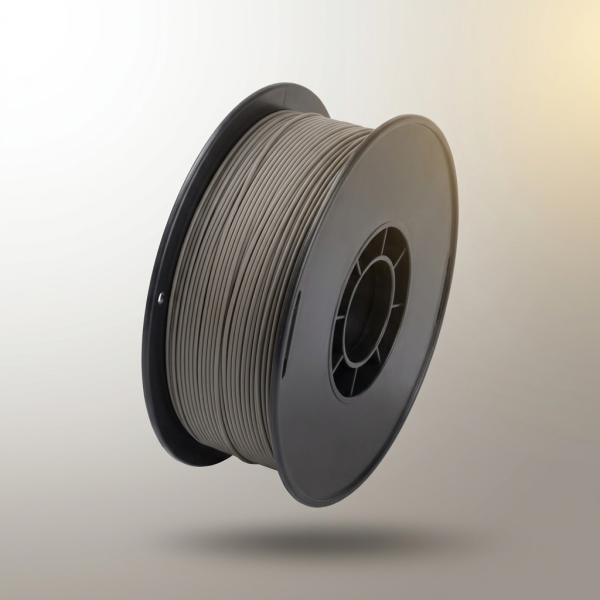
- ✔ Excellent corrosion resistance, ductile and well suited to functional parts
- ✔ Print → debind → sinter to dense 316L on a desktop FFF printer
- ✔ Genuine Zetamix by Nanoe · 500 g spool · lead time 10–20 business days (depending on order queue)
In stock
· Ships in 1–2 business days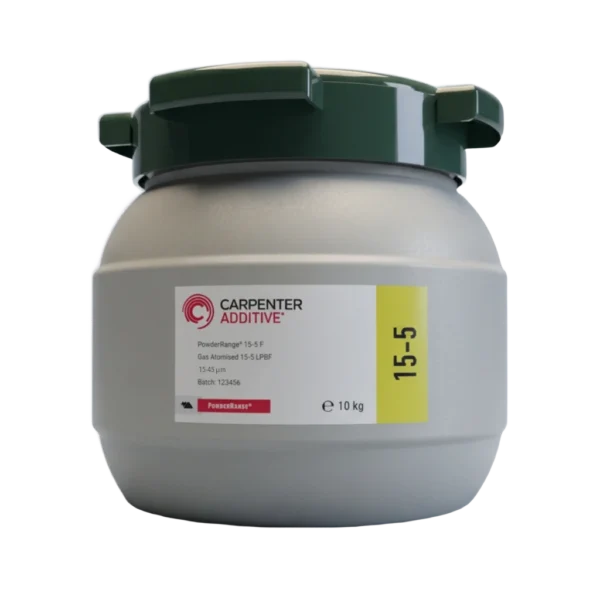
High strength. Cleaner properties. Heat-treatable. Genuine Carpenter PowderRange® 15-5 (15-5PH) precipitation-hardening stainless steel for LPBF metal 3D printing.
- ✓ Gas-atomized, low-oxygen — COA on request
- ✓ Sold in small, workable volumes — no large mill minimums
- ✓ In US stock — ready to ship
In stock
· In US stock · ready to ship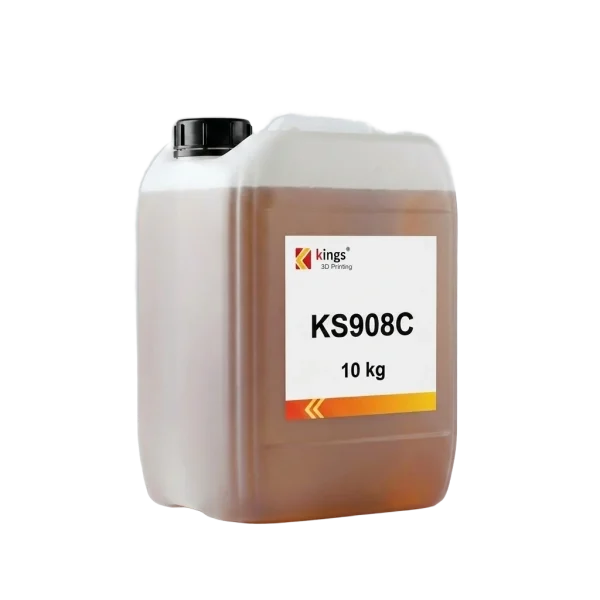
In stock
· In stock — ships in 1–2 business days from our Los Angeles warehouse.What our customers say
“Harry and team were professional, effective communicators as we set up the order, then they executed quickly and produced an amazing product for us at a very competitive price. Am looking forward to our next print w Additive Plus!”
“Great 3D printing service and the resin parts look super smooth and clean. Really happy with how everything turned out!”
“Harry was very professional and helped me out with my 3D printing needs and explained what options I have in terms of filaments such as PEEK. Highly recommended.”
“I needed a 3D enclosure printed urgently in a specific time period, they did great!”
Common questions
Don't see yours? Email [email protected] — NDA on request, typical reply within 4 hours.
What is Aluminium Nitride paste and why is it special?
How does AlN compare with alumina for electronics?
Why does the printed part shrink during processing?
Can I print conformal cooling or channelled geometries?
Which printer runs this paste?
Can I order a sample first?
Place your order, or talk to an engineer first
Order Aluminium Nitride 3D Printing Paste direct, or talk to materials engineer