
Made to order
- Install, commissioning & training set up and dialed in at your site
- Applications engineering reactive-powder handling + integration
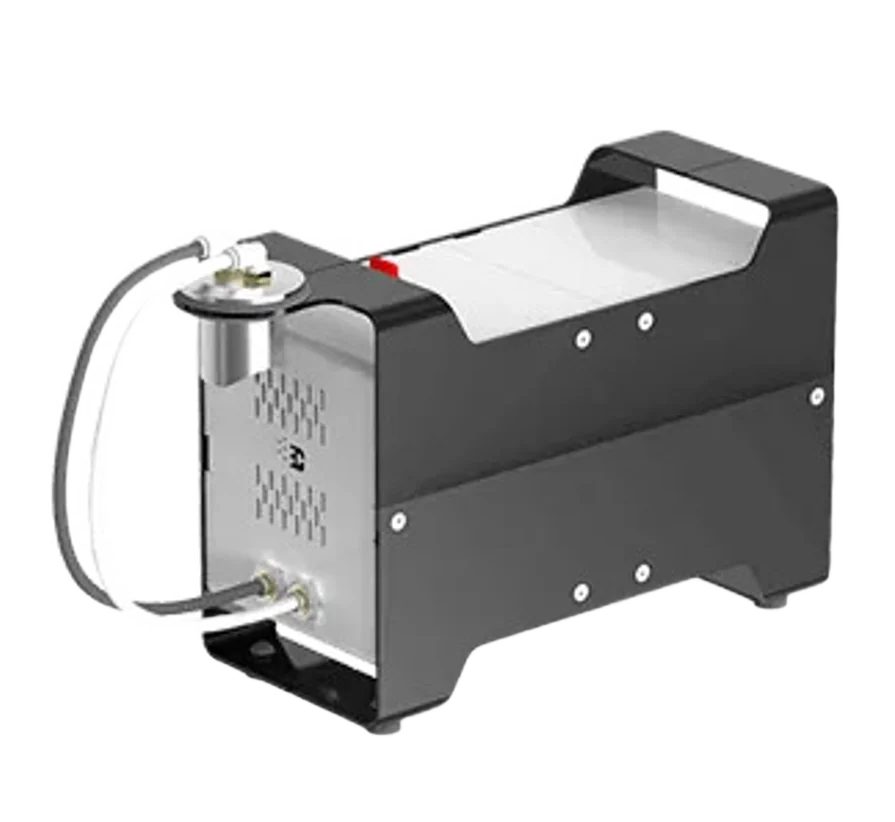
ATO Passivation Module for Reactive Metal Powder
Make freshly atomized reactive powder safe to open — automated, controlled oxygen dosing builds a thin protective oxide layer inside the 3D Lab powder container.
- Automated passivation cycle of 1–2 hours, depending on the material
- Designed for opening the container with no ignition or explosion risk
- Installation, on-site operator training and US service included in every quotation
- Lead time 8–12 weeks · 12-month warranty
What your process engineer actually checks
Reactive powder, handled safely
Freshly atomized titanium, aluminium and other reactive powders are pyrophoric. The Passivation Module builds a controlled oxide layer before the container is opened, so your team handles the powder without ignition or explosion risk.
Controlled, not improvised
Passivation by slow, metered oxygen dosing gives a repeatable oxide layer that protects the powder in storage — not a hand-managed step that varies operator to operator. Typically 1–2 hours, hands-off.
An applications engineer on the line
We run ATO ultrasonic atomization in-house through ATO Lab.
- Automated Passivation Module for 3D Lab powder containers
- Controlled, slow oxygen dosing into the sealed container
- Passivation cycle of 1–2 hours, depending on the material
- Automated, controllable process, designed so passivation runs with no risk of ignition or explosion
- Installation and on-site operator training — included in every quotation
What the ATO Passivation Module is
The ATO Passivation Module is an automated 3D Lab system that passivates metal powder inside a 3D Lab powder container. It slowly introduces a controlled amount of oxygen into the container; the oxygen reacts gradually with the material and forms a thin, protective oxide layer on the surface of the particles, until the powder becomes resistant to further reaction with the environment.
This matters for reactive powders straight out of the atomizer — 3D Lab notes, for example, that titanium readily absorbs oxygen and nitrogen, aluminum has a strong affinity for oxygen and magnesium powder is highly reactive. The cycle takes 1–2 hours depending on the material, and the automated system is designed so that passivation is performed safely, with no risk of ignition or explosion. Once it is complete, the container can be opened safely and the oxide layer helps maintain the quality of the powder over time.
Specifications
| Type | Automated passivation module for metal powder |
| Works with | 3D Lab powder containers; part of the ATO powder production suite |
| Principle | Controlled, slow introduction of oxygen into the powder container |
| Result | Thin protective oxide layer on the particle surface |
| Cycle time | 1–2 hours, depending on the material |
| Control | Automated, controllable process |
| Safety | Designed for passivation with no risk of ignition or explosion |
| Manufacturer | 3D Lab, Poland |
| Installation and training | On site, included in every quotation |
| Warranty | 12 months, US service engineers |
| Lead time | 8–12 weeks |
Where it sits in the powder workflow
Passivation is the step between atomizing a reactive alloy and handling the powder in air:
| After atomization | powder collected in a 3D Lab container under protective gas |
| Passivation | oxygen dosed slowly and under control for 1–2 hours |
| Opening | the container is opened safely once passivation is complete |
| Storage | the oxide layer helps prevent corrosion and degradation over time |
| Next steps | sieving in ATO Sieve, cleaning and drying in ATO Pure, measuring on CAMSIZER X2+ |
How passivation runs
Where the Passivation Module stops — and what to take instead
The Passivation Module is designed for 3D Lab powder containers — for other vessels, ask us first — and it does not clean, dry or classify the powder. To remove fines and surface contamination and dry the powder, add ATO Pure; to split it into the fraction your printer needs, ATO Sieve. Powder that has to stay free of an oxide layer should not be passivated — talk to us about the alloy first. To make the powder, you need an ATO atomizer such as the ATO Lab or ATO Sparq.
Make your own powder, measure it, print it
For reactive alloys the loop has one more step. Atomize on an ATO ultrasonic atomizer, passivate in the container, check size distribution and sphericity on a Microtrac CAMSIZER X2+, print on an AO Metal LPBF printer, and repeat. The atomizer, analyzer and printer are also offered together as the R&D Bundle.
See it running in California
You can see an ATO atomizer running in California, at UC Irvine (UCI). Book your visit on our visit page. Book a visit at UC Irvine
In pictures
Availability, payment and delivery
Why buy it through Additive Plus
What usually stops people — and the honest answer
Ready when you are
| Brand | 3D Lab |
| Country of origin | Poland |
Product videos
We run custom batches too. Try before you build the capability.
Want to validate an alloy before buying the system? Our ATO lab runs a custom batch for you in 3–4 weeks — biocompatible, refractory, proprietary — so you see real powder before committing to in-house atomization.
Other products teams run alongside ATO Passivation Module for Reactive Metal Powder
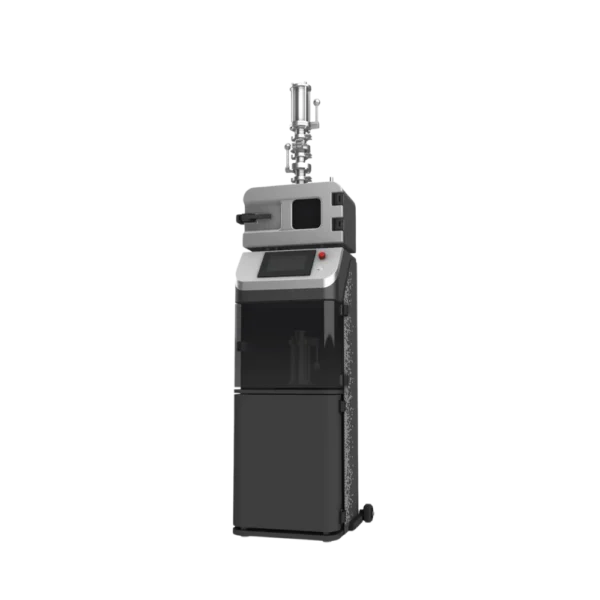
Sieve metal AM powder in an argon atmosphere, straight from the ATO atomizer powder container — ultrasonic vibration keeps the mesh open and the powder away from oxygen.
- Same powder container as the ATO atomizers — transfer under argon
- Screens chosen for your target cut · optional oxygen sensor
- Installation, training and US service included · free powder samples
- Lead time 8–12 weeks · 12-month warranty
Made to order
· Lead time 8–12 weeks · installation included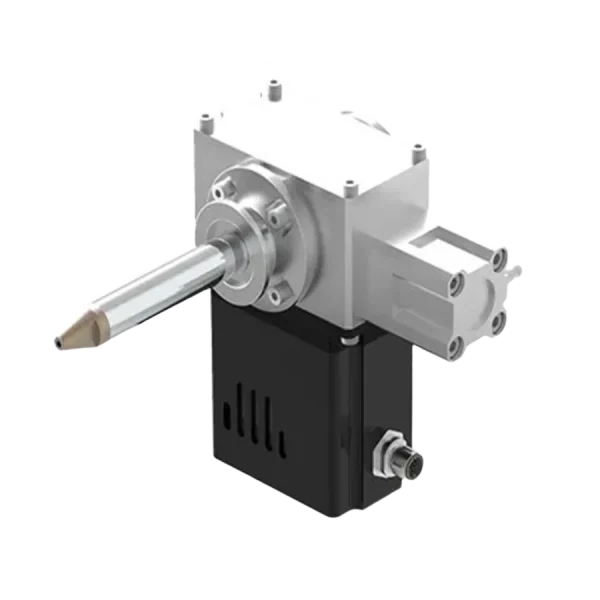
Continuous, automated wire feed for your ATO ultrasonic atomizer — standard welding-market wire, reactive or non-reactive, on extended spools.
- Extended spools · fewer changes, longer runs
- Reactive and non-reactive wire from the welding market
- Installation, on-site operator training and US service included in every quotation
- Lead time 8–12 weeks · 12-month warranty
Made to order
· Lead time 8–12 weeks · installation included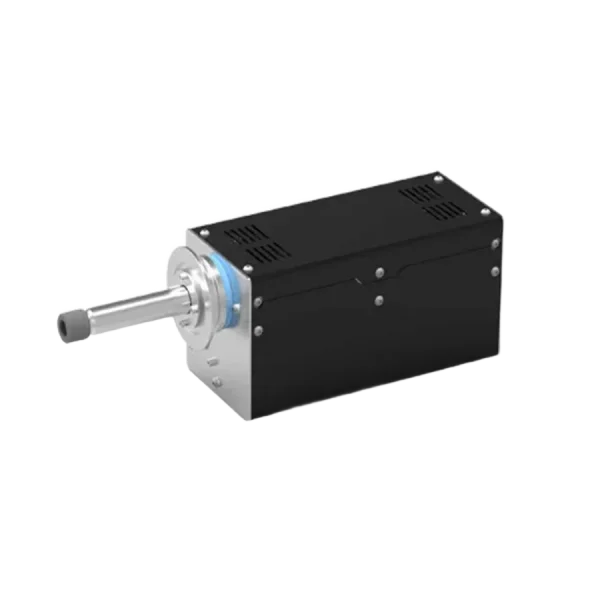
Atomize your own alloys from a single rod on an ATO ultrasonic atomizer — 1 to 10 mm in diameter, up to 110 mm long, cast rods welcome.
- Rods 1–10 mm, 4–6 mm recommended, up to 110 mm long
- Cast rods · upgradeable to a Custom Shape Feeder
- Installation, on-site operator training and US service included in every quotation
- Lead time 8–12 weeks · 12-month warranty
Made to order
· Lead time 8–12 weeks · installation included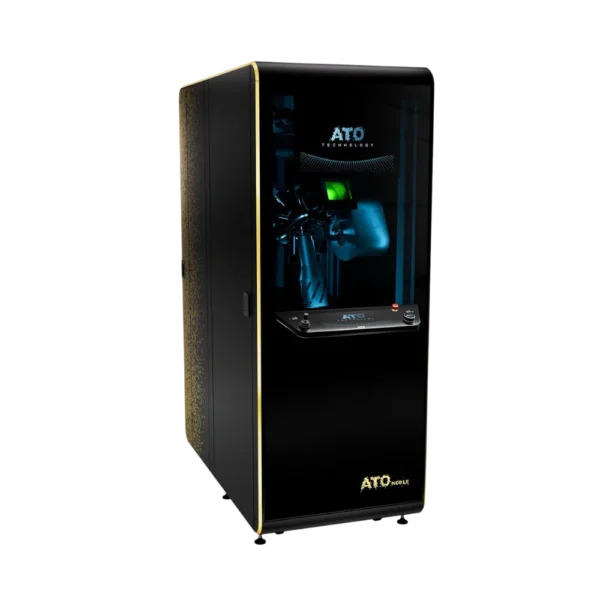
Turn gold, silver and platinum into spherical powder in your own workshop — Zero Loss recovery, no minimum load, composition kept through atomization.
- Au 9 ct to 99.99%, Ag, Pt, Pd, Ir and custom precious alloys
- Particle size set by ultrasonic frequency module
- Installation, training and US service included · free powder samples
- Lead time 8–12 weeks · 12-month warranty
Made to order
· Lead time 8–12 weeks · installation included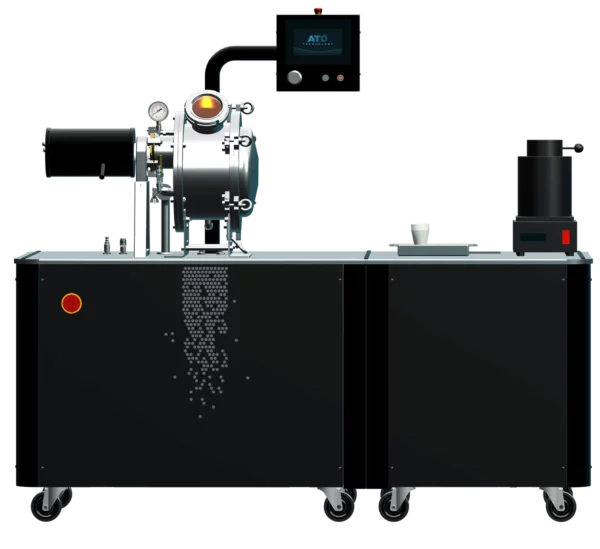
Cast your own feedstock rods for ATO atomizers — from any alloy you design or from AM scrap — with pre-melt purification and induction melting under vacuum.
- Built-in resistance furnace purifies the charge before casting
- 120 mm rods for the Revolver Rod Feeding System · re-cast AM scrap
- Installation, training and US service included · free powder samples
- Lead time 8–12 weeks · 12-month warranty
Made to order
· Lead time 8–12 weeks · installation included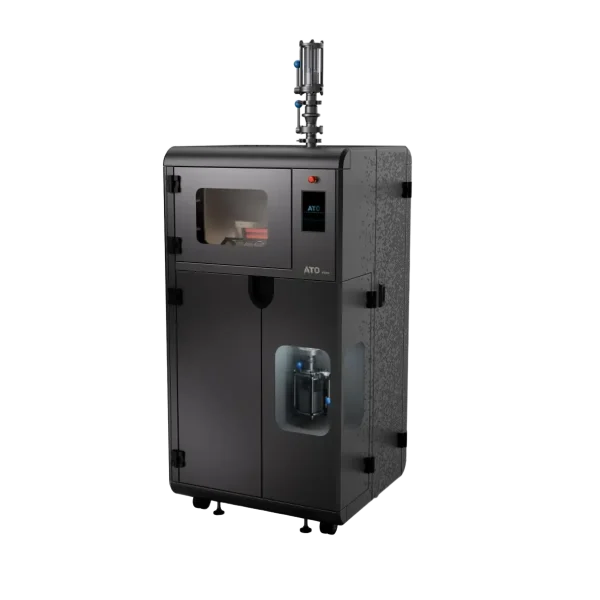
Ultrasonic cleaning and integrated drying for metal powder — removes fines below 5 µm, surface contaminants and moisture, and keeps particle sphericity, so used or freshly atomized powder can be reused.
- Built-in separation of the ultra-fine fraction below 5 µm
- Automated cleaning and drying cycles · lab to production
- Installation, training and US service included · free powder samples
- Lead time 8–12 weeks · 12-month warranty
Made to order
· Lead time 8–12 weeks · installation included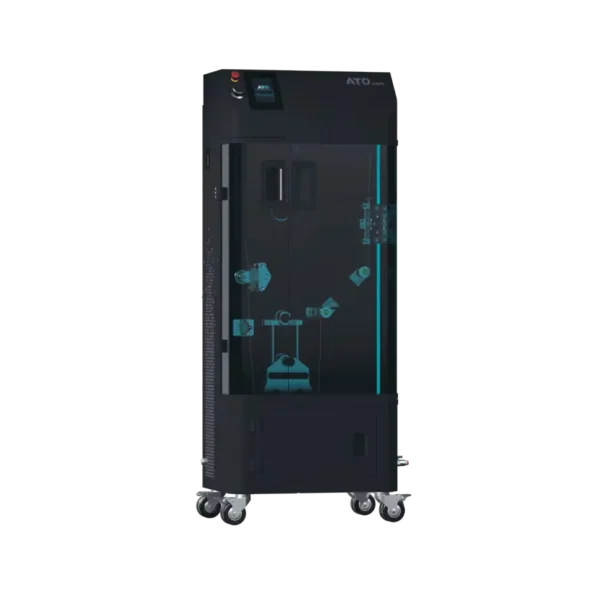
Ultrasonic and brush cleaning of wire and rod feedstock before it reaches the ATO atomizer — set the cleaned length or weight and let it run.
- Wire on spools, plus a rod mode for the Single Rod Feeding System
- Automatic and manual modes · integrated safety sensors
- Installation, training and US service included · free powder samples
- Lead time 8–12 weeks · 12-month warranty
Made to order
· Lead time 8–12 weeks · installation included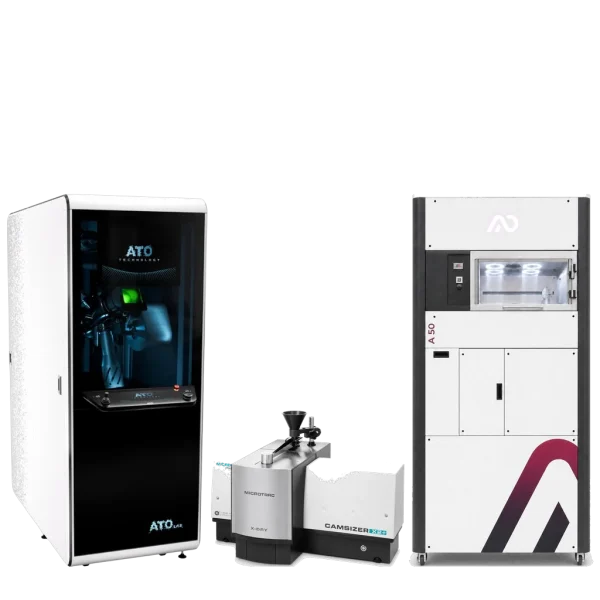
Atomize your own alloy, measure the powder and print it — the ATO Lab, the Microtrac CAMSIZER X2+ and the AO Metal A50 as one materials-development cell from one supplier.
- ATO Lab: 20–120 µm spherical powder, oxygen below 10 ppm
- CAMSIZER X2+: size and shape from 0.9 µm to 8 mm in 1–3 minutes
- A50: Ø50 × 100 mm LPBF, every laser parameter open
- Installation and training included · 8–14 weeks · 12-month warranty
Made to order
· Lead time 8–14 weeks · installation includedWhat our customers say
“Harry and team were professional, effective communicators as we set up the order, then they executed quickly and produced an amazing product for us at a very competitive price. Am looking forward to our next print w Additive Plus!”
“Great 3D printing service and the resin parts look super smooth and clean. Really happy with how everything turned out!”
“Harry was very professional and helped me out with my 3D printing needs and explained what options I have in terms of filaments such as PEEK. Highly recommended.”
“I needed a 3D enclosure printed urgently in a specific time period, they did great!”
Common questions
Don't see yours? Email [email protected] — NDA on request, typical reply within 4 hours.
What does the ATO Passivation Module do?
Why does reactive metal powder need passivation?
How long does passivation take?
Is the passivation process itself safe?
Which containers is it compatible with?
Does the oxide layer affect powder quality?
Which powders should be passivated?
How does it fit with the other ATO devices?
How much does the ATO Passivation Module cost?
What is the lead time and warranty for the ATO Passivation Module?
Can I get a free powder sample or a trial atomization?
Can I see an ATO atomizer running?
Place your order, or talk to an engineer first
Order ATO Passivation Module for Reactive Metal Powder direct, or talk to materials engineer