
Made to order
- Install, commissioning & training Set up and dialed in at your site
- Applications engineering Casting recipes matched to your alloys
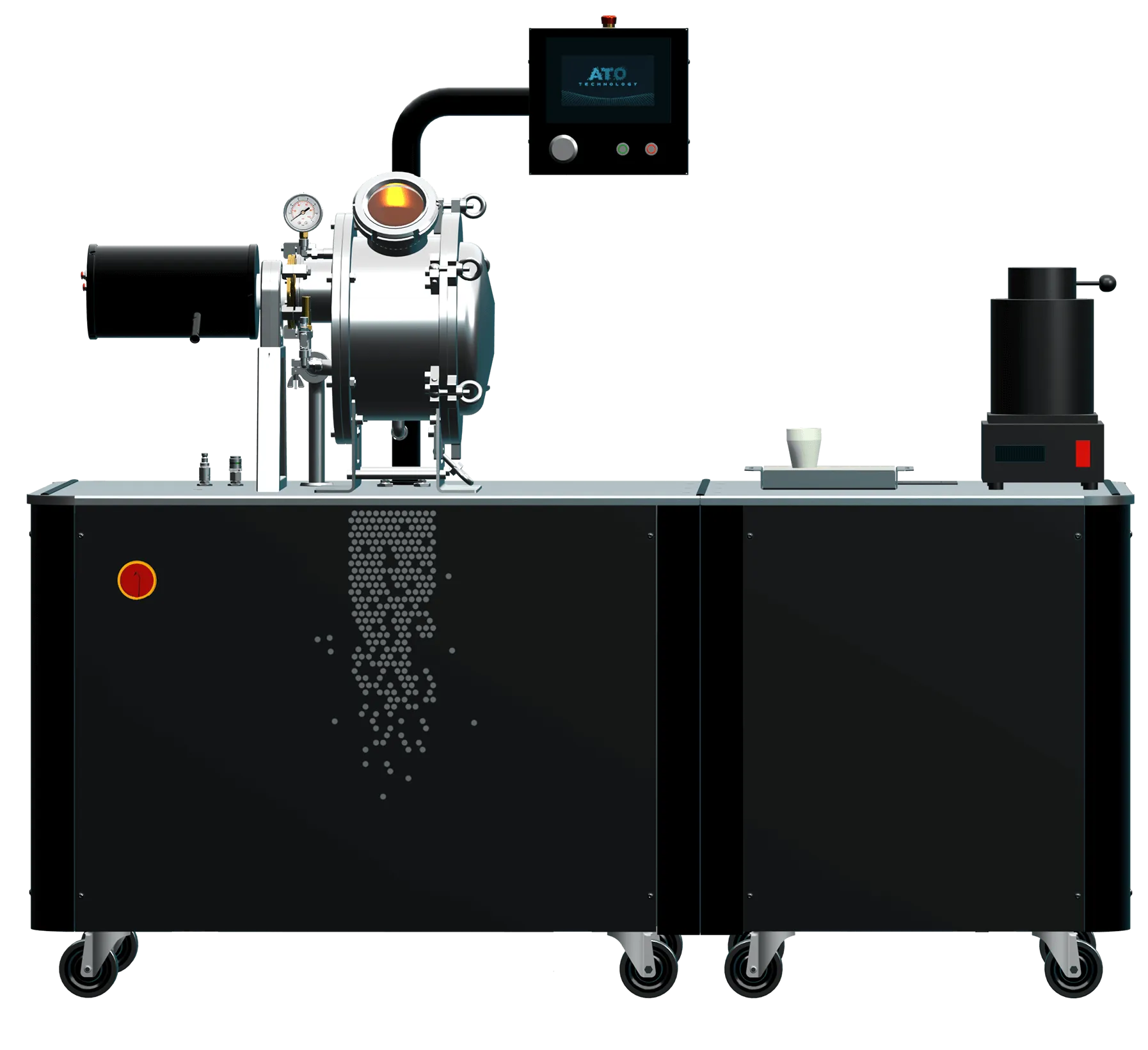
ATO Cast Induction Vacuum Casting Furnace for Atomizer Feedstock Rods
Cast your own feedstock rods for ATO atomizers — from any alloy you design or from AM scrap — with pre-melt purification and induction melting under vacuum.
- Built-in resistance furnace purifies the charge before casting
- 120 mm rods for the Revolver Rod Feeding System · re-cast AM scrap
- Installation, training and US service included · free powder samples
- Lead time 8–12 weeks · 12-month warranty
What your process engineer actually checks
Clean, oxide-free melts
Induction melting under vacuum keeps oxygen and inclusions out of the melt, so the rods or ingots you cast start clean — the difference shows up later as lower oxygen in the atomized powder.
Cast your own feedstock
Cast rods and ingots in-house as feedstock for the ATO rod feeding systems, or for investment casting — controlled composition without depending on outside suppliers.
An applications engineer on the line
We run melting and atomization in-house through ATO Lab and AO Metal.
- ATO Cast induction vacuum casting furnace — compact, for research and production
- Built-in resistance furnace for pre-melting purification of the charge
- Touchscreen control panel with casting software
- 120 mm rods cast in-house — the size the Revolver Rod Feeding System takes, up to 10 at a time
- Installation and on-site operator training — included in every quotation
What the ATO Cast is
The ATO Cast is a compact induction vacuum casting furnace from 3D Lab, the Polish manufacturer of the ATO ultrasonic metal atomizers. It lets your lab design and cast its own feedstock rods from a wide range of alloys, instead of waiting for a supplier to make them. The material is first purified in a built-in resistance furnace, then melted by induction under vacuum, so contamination stays at a minimum and the chemical composition of the alloy is preserved.
The same furnace re-casts additive-manufacturing remnants and scrap into new rods, which puts material you would otherwise throw away back into powder production. Operation runs through a touchscreen panel and casting software, so operators reach consistent results after short training. 3D Lab introduced the ATO Cast at Formnext 2023 and upgraded it in 2025.
Specifications
| Type | Induction vacuum casting furnace |
| Melting | Induction heating under vacuum |
| Purification | Built-in resistance furnace for pre-melting purification |
| Charge | Your alloys from a wide range of compositions, or AM remnants and scrap |
| Output | Cast rods, 120 mm long — feedstock for the ATO rod feeding systems |
| Rod match | Revolver Rod Feeding System: up to 10 rods of 120 mm, dimensions aligned with ATO Cast rods |
| Control | Touchscreen control panel, user-friendly casting software |
| Footprint | Compact — for labs and factories with limited space |
| Use | Research and production |
| Works with | ATO Suite: rod feeding systems on the ATO ultrasonic atomizers |
| Rod diameter, dimensions, utilities, power | stated in the formal quotation for your configuration |
| Manufacturer | 3D Lab, Poland |
| Installation and training | on site, included in every quotation |
| Warranty | 12 months, US service engineers |
| Lead time | 8–12 weeks |
The 120 mm rod length comes from the 3D Lab Revolver Rod Feeding System page. 3D Lab does not publish rod diameter, dimensions or power for the ATO Cast; we put them in the quotation for the configuration you order.
What it does in the powder workflow
The ATO Cast sits at the very start of the ATO chain — before feeding and atomization. It decides what goes into the melt:
| Custom alloy R&D | experimental compositions cast into rods when you need them |
| In-house feedstock | no external supply-chain delay for rods |
| AM scrap recycling | remnants and rejects re-cast into fresh rods — less waste, lower material cost |
| Chemistry control | pre-melt purification and vacuum melting keep the composition you designed |
| Small labs | casting capability in a compact footprint |
The rods then go into a rod feeding system on the atomizer, and the powder that comes out is only as clean as the rod that went in.
From alloy to atomizer-ready rod
Where the ATO Cast stops — and what to take instead
The ATO Cast makes rods; it does not make powder. To turn the rods into spherical powder you need an ATO atomizer — the ATO Lab for research or the ATO Sparq for larger batches — with a rod feeding system. The Revolver Rod Feeding System is built for ATO Cast rods; the Single Rod Feeding System takes rods of 1–10 mm diameter up to 110 mm long, and the Multi Rod Feeding System round rods of 4–10 mm up to 1 m — check the rod format with us if you plan to use cast rods on those two. If your alloy already exists as standard wire, the Wire Feeding System may feed it without casting at all, and the Induction Melting System melts feedstock in a crucible. To clean rods before they go into the melt, add the ATO Wipe. And if you need a powder of your composition without buying the equipment, ask about custom alloy powder.
Make your own powder, measure it, print it
The ATO Cast closes the front of the loop: cast the rod from your own alloy, atomize it on an ATO Lab, check size distribution and sphericity on a CAMSIZER X2+, and print it on an AO Metal LPBF printer. Scrap from the printer goes back into the ATO Cast. The atomizer, analyzer and printer are also offered together as the R&D Bundle.
See it running in California
Customers are welcome to see an ATO atomizer running in California, at UC Irvine (UCI). It is a practical way to judge ATO technology and the powder it makes before you plan the rest of the chain around it. Book a visit and we arrange the date with you.
In pictures
Availability, payment and delivery
Why buy it through Additive Plus
What usually stops people — and the honest answer
Ready when you are
| Brand | 3D Lab |
| Country of origin | Poland |
Product videos
We run custom batches too. Try before you build the capability.
Want to validate an alloy before buying the system? Our ATO lab runs a custom batch for you in 3–4 weeks — biocompatible, refractory, proprietary — so you see real powder before committing to in-house atomization.
Other products teams run alongside ATO Cast Induction Vacuum Casting Furnace for Atomizer Feedstock Rods
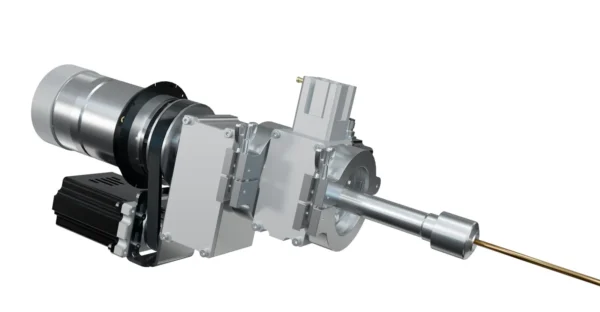
Atomize up to 10 rods in one setup on your ATO ultrasonic atomizer — automated rod change in protective gas, with control of feed speed and rod rotation.
- Up to 10 rods of 120 mm — the ATO Cast rod size
- Automated rod change in protective gas · feed speed and rotation control
- Installation, on-site operator training and US service included in every quotation
- Lead time 8–12 weeks · 12-month warranty
Made to order
· Lead time 8–12 weeks · installation included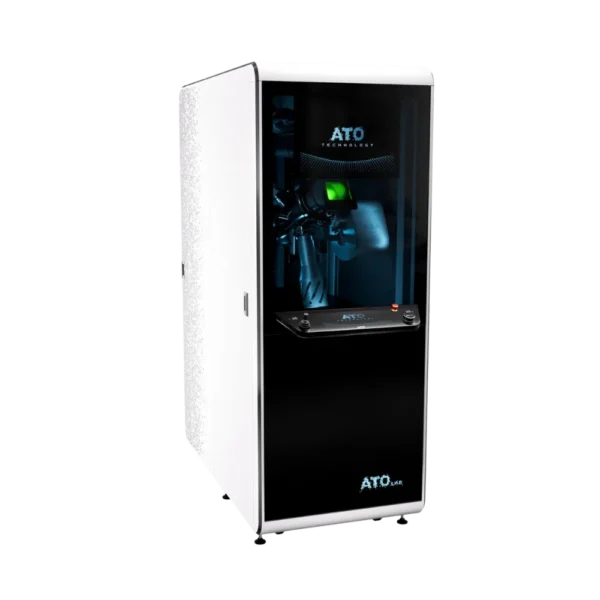
Make spherical metal powder in your own lab — 20–120 µm, oxygen below 10 ppm, from wire, rod or scrap, for reactive, refractory and standard alloys.
- Particle size set by ultrasonic frequency: 20, 35 or 52 kHz
- Titanium, aluminum, nickel, steels, refractory metals and HEAs
- Installation, training and US service included · free powder samples
- Lead time 8–12 weeks · 12-month warranty
Made to order
· Lead time 8–12 weeks · installation included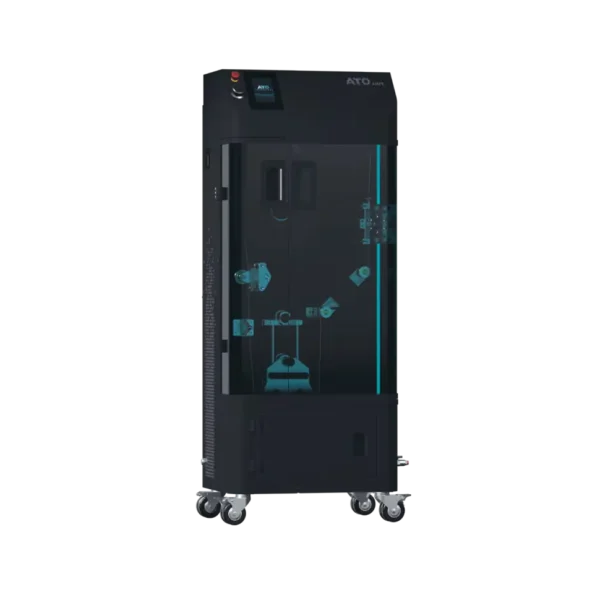
Ultrasonic and brush cleaning of wire and rod feedstock before it reaches the ATO atomizer — set the cleaned length or weight and let it run.
- Wire on spools, plus a rod mode for the Single Rod Feeding System
- Automatic and manual modes · integrated safety sensors
- Installation, training and US service included · free powder samples
- Lead time 8–12 weeks · 12-month warranty
Made to order
· Lead time 8–12 weeks · installation included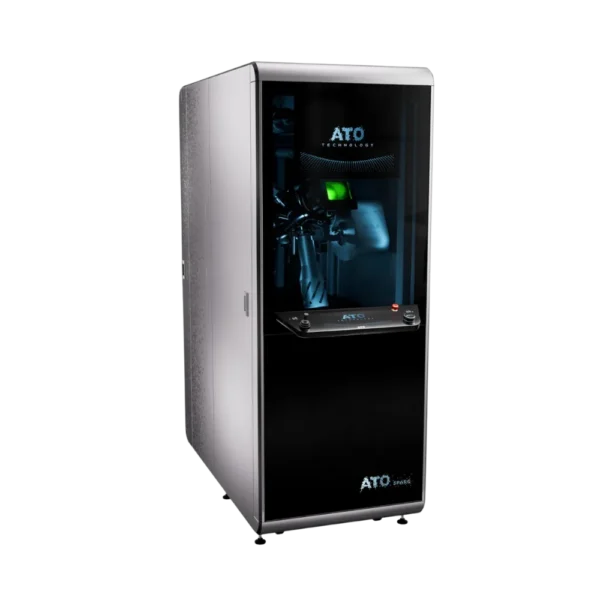
Ultrasonic metal powder atomization with AI-guided setup — 20–120 µm spherical powder, oxygen below 10 ppm, two camera views and remote supervision of several units.
- AI suggests parameters for standard and new alloys
- Reactive, refractory and standard alloys from wire, rod or scrap
- Installation, training and US service included · free powder samples
- Lead time 8–12 weeks · 12-month warranty
Made to order
· Lead time 8–12 weeks · installation included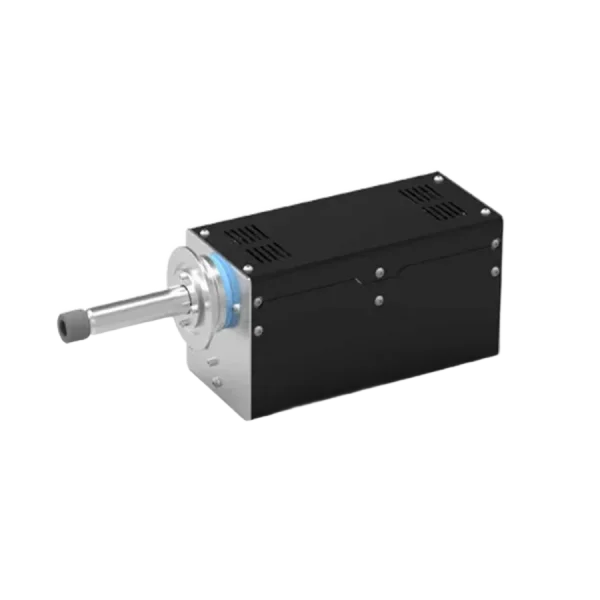
Atomize your own alloys from a single rod on an ATO ultrasonic atomizer — 1 to 10 mm in diameter, up to 110 mm long, cast rods welcome.
- Rods 1–10 mm, 4–6 mm recommended, up to 110 mm long
- Cast rods · upgradeable to a Custom Shape Feeder
- Installation, on-site operator training and US service included in every quotation
- Lead time 8–12 weeks · 12-month warranty
Made to order
· Lead time 8–12 weeks · installation included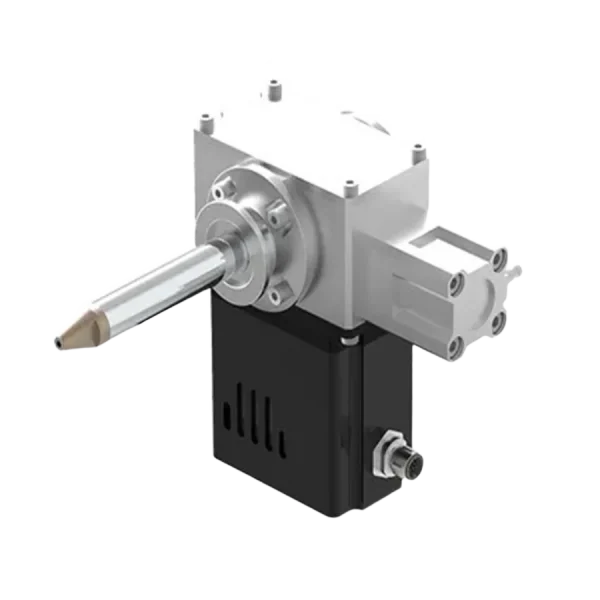
Continuous, automated wire feed for your ATO ultrasonic atomizer — standard welding-market wire, reactive or non-reactive, on extended spools.
- Extended spools · fewer changes, longer runs
- Reactive and non-reactive wire from the welding market
- Installation, on-site operator training and US service included in every quotation
- Lead time 8–12 weeks · 12-month warranty
Made to order
· Lead time 8–12 weeks · installation included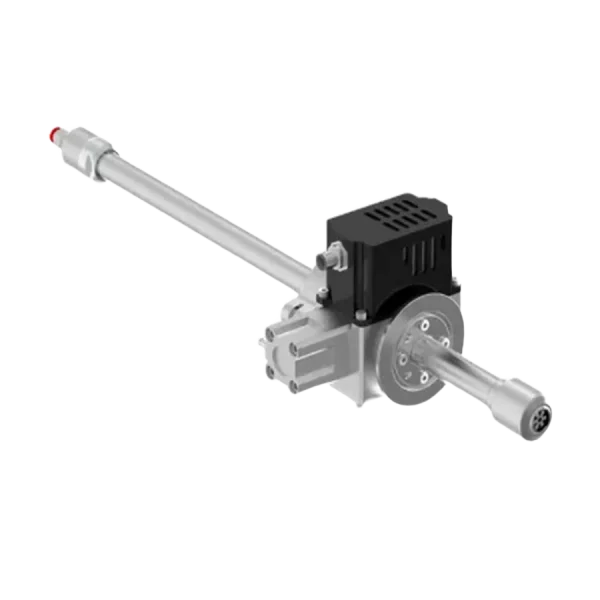
Longer atomization runs from rods on your ATO ultrasonic atomizer — round rods of 4 to 10 mm in self-locking collets, up to 1200 mm per load.
- Up to 1200 mm of rod per load with the extended tube container
- Round rods 4–10 mm · collets 4, 6, 8 and 10 mm
- Installation, on-site operator training and US service included in every quotation
- Lead time 8–12 weeks · 12-month warranty
Made to order
· Lead time 8–12 weeks · installation included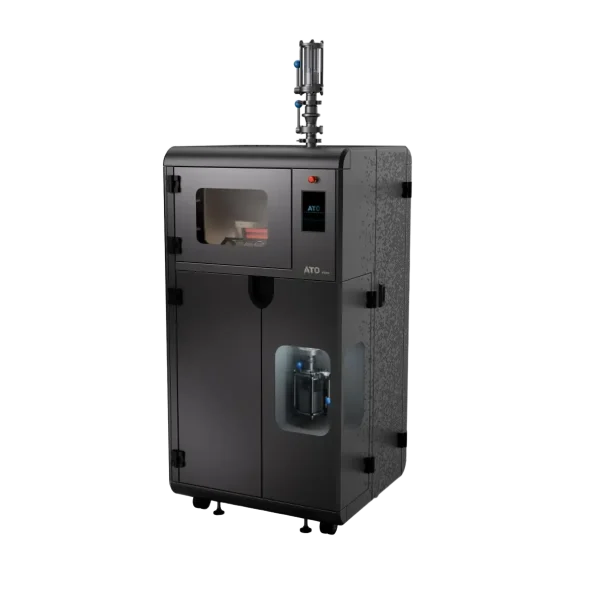
Ultrasonic cleaning and integrated drying for metal powder — removes fines below 5 µm, surface contaminants and moisture, and keeps particle sphericity, so used or freshly atomized powder can be reused.
- Built-in separation of the ultra-fine fraction below 5 µm
- Automated cleaning and drying cycles · lab to production
- Installation, training and US service included · free powder samples
- Lead time 8–12 weeks · 12-month warranty
Made to order
· Lead time 8–12 weeks · installation includedWhat our customers say
“Harry and team were professional, effective communicators as we set up the order, then they executed quickly and produced an amazing product for us at a very competitive price. Am looking forward to our next print w Additive Plus!”
“Great 3D printing service and the resin parts look super smooth and clean. Really happy with how everything turned out!”
“Harry was very professional and helped me out with my 3D printing needs and explained what options I have in terms of filaments such as PEEK. Highly recommended.”
“I needed a 3D enclosure printed urgently in a specific time period, they did great!”
Common questions
Don't see yours? Email [email protected] — NDA on request, typical reply within 4 hours.
What is the ATO Cast?
Why cast feedstock rods in-house?
How does the ATO Cast keep the material pure?
Can the ATO Cast recycle additive manufacturing scrap?
Is the ATO Cast hard to operate?
How does the ATO Cast fit into the ATO workflow?
Does the ATO Cast make metal powder?
What rod size does the ATO Cast produce?
How much does the ATO Cast cost?
What is the lead time and warranty?
Can I get a powder sample before buying?
Can I see ATO equipment running?
Who sells and services the ATO Cast in the US?
Place your order, or talk to an engineer first
Order ATO Cast Induction Vacuum Casting Furnace for Atomizer Feedstock Rods direct, or talk to materials engineer