
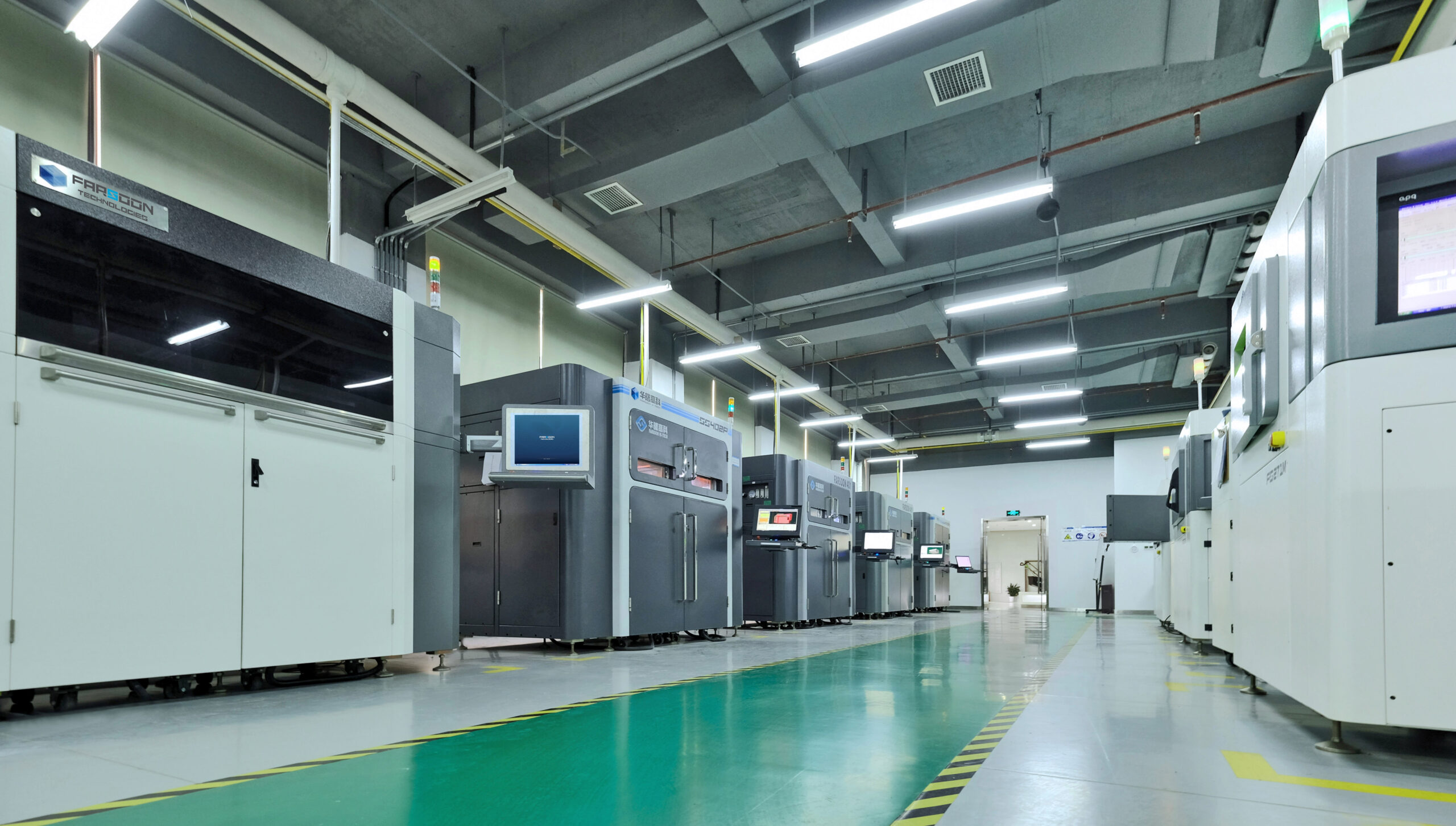
Metal 3D printing has become a cornerstone of modern manufacturing, enabling the production of complex, high-performance components that are difficult or impossible to achieve with traditional methods. From aerospace and automotive to medical and industrial R&D, Laser Powder Bed Fusion (LPBF) systems offer the precision, material flexibility, and mechanical performance required for demanding applications.
Below is an overview of some of the top metal 3D printers available through Additive Plus, ranging from compact lab-friendly systems to industrial-grade platforms designed for production and advanced research.
A100 Metal DMLS 3D Printer – Industrial-Grade Metal Printing
The A100 Metal DMLS 3D Printer is a powerful and versatile LPBF system designed to bridge the gap between laboratory research and industrial production. With a Ø100 × 100 mm build volume, it provides ample space for functional metal parts while maintaining a compact footprint suitable for R&D labs and production environments alike.
Equipped with a standard 300 W laser, the A100 can be upgraded to 500 W or 1000 W configurations, and even supports optional blue laser technology for improved surface quality and enhanced processing of reflective materials. This flexibility allows manufacturers to tailor the system to their specific material and performance requirements.
The A100 supports a wide range of metal powders, including stainless steel, titanium, Inconel, aluminum, and copper. This broad material compatibility makes it an excellent choice for aerospace, medical, and automotive applications, where both mechanical strength and design freedom are critical. Compact yet capable, the A100 is well-suited for metal prototyping, tooling, and small-batch production.
A50 Metal 3D Printer – Balanced Performance and Precision
The A50 Metal 3D Printer is designed for users who require high precision in a compact LPBF system. Featuring a Ø50 × 100 mm build area, it is ideal for producing small, complex metal components and low-volume series with consistent quality.
One of the key advantages of the A50 is its optional multi-laser configuration, including advanced blue laser technology. These options enhance surface detail and allow for more efficient processing of challenging materials. The printer is also equipped with a high-temperature build platform capable of reaching approximately 900 °C, enabling reliable printing of hard-to-process alloys.
Thanks to its balance of precision, thermal control, and material versatility, the A50 is well-suited for advanced engineering applications across multiple industries, including aerospace, medical devices, and high-performance industrial components.
A30 Metal 3D Printer – High-Precision Compact Metal Printer
For research, education, and early-stage development, the A30 Metal 3D Printer offers an accessible entry point into LPBF metal additive manufacturing. With a Ø30 × 60 mm build volume, this compact system is optimized for small parts, material testing, and detailed prototyping.
The A30 uses a high-precision fiber laser to produce metal components with fine details and excellent surface finish. Its energy-efficient operation and streamlined material change process help reduce operating costs and downtime, making it particularly attractive for academic institutions and R&D teams.
Despite its compact size, the A30 delivers reliable performance and precision, making it a practical choice for environments where space, budget, and flexibility are key considerations.
Additional Metal 3D Printer Options from Additive Plus
Beyond the AO Metal series, Additive Plus provides access to a broad range of advanced metal additive manufacturing systems from leading OEMs. These systems support everything from research and prototyping to industrial-scale production.
Farsoon FS121M & FS191M – Compact and Versatile LPBF Printers
The Farsoon FS121M and FS191M are high-performance, compact metal LPBF (Laser Powder Bed Fusion) 3D printers designed to meet the demands of scientific research, prototyping, and medium-volume production. These printers strike an excellent balance between footprint, build capacity, and precision, making them an ideal choice for labs and organizations seeking both flexibility and reliability.
Designed for Research and Innovation
Perfectly suited for research laboratories, R&D departments, and educational institutions, the FS121M and FS191M provide the versatility needed to explore new materials, test prototypes, and refine designs. Their compact size ensures they fit easily into workspaces without compromising performance, while advanced LPBF technology delivers high-quality, precise results for complex geometries.
Support for Multiple Metal Powders
These printers accommodate a wide range of metal powders, enabling experimentation with various alloys including stainless steel, titanium, aluminum, and more. This versatility supports small-batch production, rapid iteration, and the development of specialized components across industries such as aerospace, medical devices, automotive, and research.
Efficiency Without Compromise
Despite their compact design, the FS121M and FS191M do not compromise on performance. They offer fast build times, stable processing, and consistent mechanical properties, making them ideal for projects that require both accuracy and efficiency. Users can easily scale production or experiment with new materials while maintaining the high standards expected from LPBF technology.
Key Advantages:
- Compact footprint for easy integration into labs and production spaces
- Supports a variety of metal powders for alloy experimentation
- Ideal for prototyping, research, and medium-volume production
- Precise, reliable LPBF performance for complex geometries
- Flexible solution for organizations needing high-quality output without large-scale equipment
Farsoon FS200M-2 & FS273M – Mid-Frame Industrial LPBF Printers
The Farsoon FS200M-2 and FS273M are advanced mid-frame LPBF (Laser Powder Bed Fusion) metal 3D printers engineered for industrial-scale production. Designed for users who require higher throughput and larger build volumes, these printers combine speed, precision, and reliability, making them ideal for demanding manufacturing environments.
High-Performance Industrial Solutions
With dual-laser configurations, the FS200M-2 and FS273M deliver increased build speed and efficiency, allowing for faster production of complex metal components. These systems are capable of producing larger parts without compromising accuracy or mechanical performance, making them suitable for aerospace, automotive, medical, and heavy industrial applications.
Precision and Repeatability for Demanding Applications
Built for industrial environments, these printers prioritize repeatability, process stability, and part quality. Users can consistently achieve high-precision results across medium to large production runs, ensuring every component meets rigorous standards. Their robust construction and industrial-grade components make them reliable solutions for continuous operation in production-focused settings.
Versatile Material Support
The FS200M-2 and FS273M support a broad range of metal powders, from stainless steel and aluminum to titanium and specialty alloys. This flexibility allows manufacturers to experiment with new materials, optimize workflows, and scale small-batch prototypes into larger production runs seamlessly.
Key Advantages:
- Mid-frame industrial design for higher throughput and larger build volumes
- Dual-laser technology for faster, more efficient production
- Maintains high precision for complex and large-scale parts
- Reliable and repeatable performance in industrial environments
- Supports a wide variety of metal powders for material versatility
Farsoon FS301M – Large-Format Industrial LPBF Printer
The Farsoon FS301M is a high-end, large-format LPBF (Laser Powder Bed Fusion) metal 3D printer designed for industrial-scale additive manufacturing. Engineered for organizations that demand maximum build volume, material versatility, and precision, the FS301M delivers unmatched performance for complex and high-value metal components.
Large Build Volume for Industrial Applications
With its expansive build platform, the FS301M enables the production of larger and more complex metal parts in a single build. This capability reduces assembly requirements, improves workflow efficiency, and allows manufacturers to tackle demanding projects that smaller systems cannot accommodate.
Precision and Reliability in High-Demand Environments
Designed for industrial use, the FS301M ensures repeatable, high-precision results even under intensive production schedules. Its robust construction and advanced LPBF technology guarantee consistent part quality, making it ideal for industries where reliability and accuracy are critical.
Support for Advanced Alloys
The FS301M supports a wide range of metal powders, including stainless steels, titanium alloys, aluminum, and other high-performance materials. This flexibility allows engineers and manufacturers to experiment with new materials, optimize designs, and produce components that meet stringent industry standards.
Ideal for Aerospace, Automotive, and Engineering Applications
From aerospace components that require lightweight strength to automotive parts and high-performance engineering applications, the FS301M is built to handle complex geometries, demanding mechanical requirements, and industrial-grade production workflows. Its ability to process advanced alloys makes it a versatile solution for cutting-edge manufacturing projects.
Key Advantages:
- Large-format build platform for bigger and more complex parts
- Supports a broad range of metal powders, including advanced alloys
- High precision and repeatable performance for demanding production
- Engineered for industrial environments and high-volume workflows
- Ideal for aerospace, automotive, and high-performance engineering components
Choosing the Right Metal 3D Printer
Selecting the ideal metal 3D printer requires careful consideration of your specific application, material requirements, production volume, and available workspace. With so many options available, understanding the strengths and capabilities of different systems is key to maximizing efficiency, precision, and return on investment.
Compact Systems for Research and Prototyping
For laboratories, research institutions, and small-scale prototyping, compact metal 3D printers such as the A30 and A50 offer an excellent balance of precision, reliability, and flexibility. These systems are designed to handle complex geometries, small-batch production, and experimentation with various metal powders. Their smaller footprint makes them easy to integrate into research labs or R&D departments, providing high-quality results without occupying extensive floor space.
Mid-Frame and Industrial Systems for Production
When higher throughput, larger build volumes, or industrial-grade performance is required, mid-frame and full-scale systems like the A100 and Farsoon LPBF printers deliver robust solutions. These printers are built for industrial environments, supporting advanced alloys and high-volume production while maintaining consistent precision and mechanical performance. Dual-laser configurations, large build platforms, and optimized processing parameters ensure that manufacturers can scale prototypes into full-scale production without compromise.
Material Versatility and Advanced Applications
Different metal 3D printers support varying ranges of powders and alloys, from stainless steel and aluminum to titanium and specialty high-performance materials. Choosing a printer that matches your material goals is essential, whether you’re developing aerospace components, automotive parts, medical devices, or experimental engineering prototypes. Systems that offer broad material compatibility allow for experimentation, optimization, and adaptation to evolving production needs.
Confidence, Support, and Scalability with Additive Plus
At Additive Plus, we provide a comprehensive portfolio of metal 3D printers and supporting technologies, enabling engineers, researchers, and manufacturers to adopt additive manufacturing with confidence. From compact research systems to high-capacity industrial LPBF platforms, our solutions are designed to grow with your production requirements. With expert support, training, and consulting, we help you select the right printer, optimize workflows, and scale your metal additive manufacturing capabilities efficiently.
Key Considerations When Choosing a Metal 3D Printer
- Application Needs: Prototyping, small-batch production, or full-scale industrial manufacturing
- Material Requirements: Alloy compatibility, powder types, and mechanical performance
- Production Volume: Build size, throughput, and repeatability
- Workspace and Footprint: Compact systems vs. mid-frame or large-format industrial printers
- Support and Scalability: Availability of technical support, training, and workflow integration
Conclusion
Selecting the right metal 3D printer is a strategic decision that impacts the efficiency, quality, and scalability of your manufacturing or research operations. Whether you need a compact, precision-focused system or an industrial-grade platform for high-volume production, Additive Plus provides the expertise, equipment, and support to help you succeed in metal additive manufacturing.
Frequently Asked Questions (FAQ) – Metal 3D Printing & LPBF Systems
1. What is metal 3D printing?
Metal 3D printing is an additive manufacturing process that creates metal components layer by layer using digital models, enabling complex geometries and high-performance parts not possible with traditional methods.
2. How does Laser Powder Bed Fusion (LPBF) work?
LPBF uses a high-powered laser to selectively melt metal powder layer by layer. Each layer fuses with the one below, producing precise, dense, and fully functional metal parts.
3. What are the main advantages of LPBF metal 3D printing?
LPBF offers complex geometry, high precision, material flexibility, and excellent mechanical properties, making it ideal for aerospace, automotive, medical, and industrial applications.
4. Which industries use metal LPBF 3D printing?
Industries include aerospace, automotive, medical devices, energy, industrial manufacturing, R&D, and educational institutions.
5. What metals can be used in LPBF 3D printers?
Common metals include stainless steel, titanium, aluminum, Inconel, copper, and specialty alloys, with compatibility depending on the printer and laser configuration.
6. What is the difference between compact, mid-frame, and industrial LPBF printers?
- Compact: Small footprint, ideal for R&D, prototyping, and material testing (e.g., A30, A50).
- Mid-frame: Balanced size and throughput for small-batch production and advanced prototyping.
- Industrial: Large build volume and dual-laser options for high-volume, industrial-grade production (e.g., A100, Farsoon FS301M).
7. How do I choose the right metal 3D printer?
Consider application type, part size, material requirements, production volume, and workspace. Additive Plus provides guidance to match your needs.
8. What is the build volume of typical metal 3D printers?
Build volumes vary:
- A30: Ø30 × 60 mm
- A50: Ø50 × 100 mm
- A100: Ø100 × 100 mm
- Farsoon FS series: Up to large-format industrial sizes.
9. What is the role of laser power in LPBF?
Laser power affects melting efficiency, material compatibility, surface quality, and part density. Higher power enables processing of reflective or high-performance alloys.
10. What is blue laser technology, and why is it important?
Blue lasers improve absorption of reflective metals like copper and aluminum, enhancing surface finish, process stability, and material versatility.
11. Can LPBF parts be used as functional components?
Yes. LPBF parts can achieve mechanical properties comparable to traditional manufacturing, making them suitable for end-use applications.
12. What is the typical layer thickness in metal 3D printing?
Layer thickness generally ranges from 20–50 microns, depending on material, printer, and desired surface quality.
13. How fast is metal 3D printing with LPBF?
Speed varies with laser power, layer thickness, and part complexity. Dual-laser systems and high-power configurations increase throughput.
14. Do I need post-processing for LPBF parts?
Yes. Post-processing may include support removal, heat treatment, surface finishing, and machining to achieve final specifications.
15. What are the most common post-processing techniques?
Techniques include stress relief heat treatment, sandblasting, polishing, machining, and coating, depending on the application.
16. Can LPBF printers produce small, high-detail components?
Absolutely. Compact systems like the A30 and A50 specialize in high-precision small parts, making them ideal for prototyping and research.
17. Are metal 3D printed parts durable?
Yes. With proper material selection and processing, LPBF parts exhibit high strength, corrosion resistance, and thermal stability.
18. Can I experiment with multiple alloys on the same printer?
Many systems support stainless steel, titanium, aluminum, Inconel, and other specialty powders, allowing R&D and small-batch production flexibility.
19. What is the typical size of a research lab metal 3D printer?
Compact LPBF printers usually fit on a desktop or small lab space, with minimal footprint while delivering high-precision results.
20. Are industrial LPBF systems suitable for full-scale production?
Yes. Mid-frame and large-format systems like the A100 and Farsoon FS301M are designed for high-volume production with consistent quality.
21. What maintenance is required for metal 3D printers?
Regular maintenance includes laser calibration, powder handling, optics cleaning, and system checks, all supported by Additive Plus.
22. Can LPBF printers handle reflective metals?
Yes, especially with blue laser or high-power laser configurations, which improve melting efficiency for reflective alloys like copper and aluminum.
23. How do I scale from prototyping to production?
Start with compact or mid-frame printers for prototyping and testing. Transition to industrial-grade systems for higher throughput while maintaining precision and mechanical properties.
24. What safety considerations are there in metal 3D printing?
Safety includes proper powder handling, ventilation, protective gear, and adherence to operating protocols. LPBF systems typically have enclosed build chambers to minimize exposure.
25. How can Additive Plus help with printer selection?
Additive Plus provides consulting, workflow optimization, and hands-on support to select the ideal printer based on materials, build size, and production goals.
26. Can LPBF printers produce multi-material or hybrid parts?
Some systems allow multi-alloy experiments but full multi-material printing is limited. Material versatility is mainly achieved by swapping powders between builds.
27. What factors affect part quality in metal 3D printing?
Key factors include laser power, scan speed, layer thickness, powder quality, thermal management, and part orientation.
28. How does metal 3D printing reduce lead time compared to traditional manufacturing?
By eliminating tooling and enabling direct production from digital files, LPBF accelerates prototyping and small-batch production, significantly reducing time-to-market.
29. What size and type of parts can be produced with industrial LPBF systems?
Large-format printers like the Farsoon FS301M can produce full-scale, complex components for aerospace, automotive, and engineering applications.
30. Why choose Additive Plus for metal 3D printing solutions?
Additive Plus offers a complete portfolio of compact, mid-frame, and industrial LPBF printers, expert consulting, training, and support to optimize your metal additive manufacturing workflow.
Frequently asked questions
What is the build volume of the A100 Metal DMLS 3D printer?
The A100 has a Oe100 x 100 mm build volume, giving ample space for functional metal parts in a compact footprint suited to both R&D labs and production. It ships with a standard 300 W laser that can be upgraded to 500 W or 1000 W, with optional blue laser technology for reflective materials.
Which metals can the A100 LPBF printer process?
The A100 supports stainless steel, titanium, Inconel, aluminum, and copper. This broad material compatibility makes it suited to aerospace, medical, and automotive applications where both mechanical strength and design freedom matter, and covers metal prototyping, tooling, and small-batch production.
What is the difference between the AO Metal A100, A50, and A30 printers?
The three differ mainly in build size and target use. The A100 (Oe100 x 100 mm) bridges research and industrial production; the A50 (Oe50 x 100 mm) balances high precision with an optional multi-laser and a build platform reaching about 900 degrees C for hard alloys; the A30 (Oe30 x 60 mm) is a compact fiber-laser system for research, education, and prototyping.
Which metal 3D printer is best for research and education?
The A30 Metal 3D printer is the accessible entry point for LPBF, aimed at research, education, and early-stage development. With a Oe30 x 60 mm build volume and a high-precision fiber laser, it produces fine detail and good surface finish, while energy-efficient operation and a streamlined material change reduce operating costs and downtime.
What are the Farsoon FS121M and FS191M metal printers used for?
The Farsoon FS121M and FS191M are compact LPBF systems built for scientific research, prototyping, and medium-volume production. They accommodate stainless steel, titanium, aluminum, and other alloys for experimentation, and their small footprint fits labs and R&D departments without compromising precise, reliable performance on complex geometries.
Can the AO Metal printers process reflective materials like copper?
Yes. The A100 and A50 support optional blue laser technology, which improves surface quality and enhances processing of reflective materials such as copper. Blue wavelength light is absorbed more efficiently by reflective metals, and the A100 also lists copper directly among its supported powders.
Have a question or a project? Let’s talk.
Tell us what you need — a real applications engineer replies within 24 hours. NDA on request, no sales script.