
Made to order
- Installation & training on-site setup and DIMENSIONS LS onboarding
- Method + sample run a size and zeta measurement on your own sample
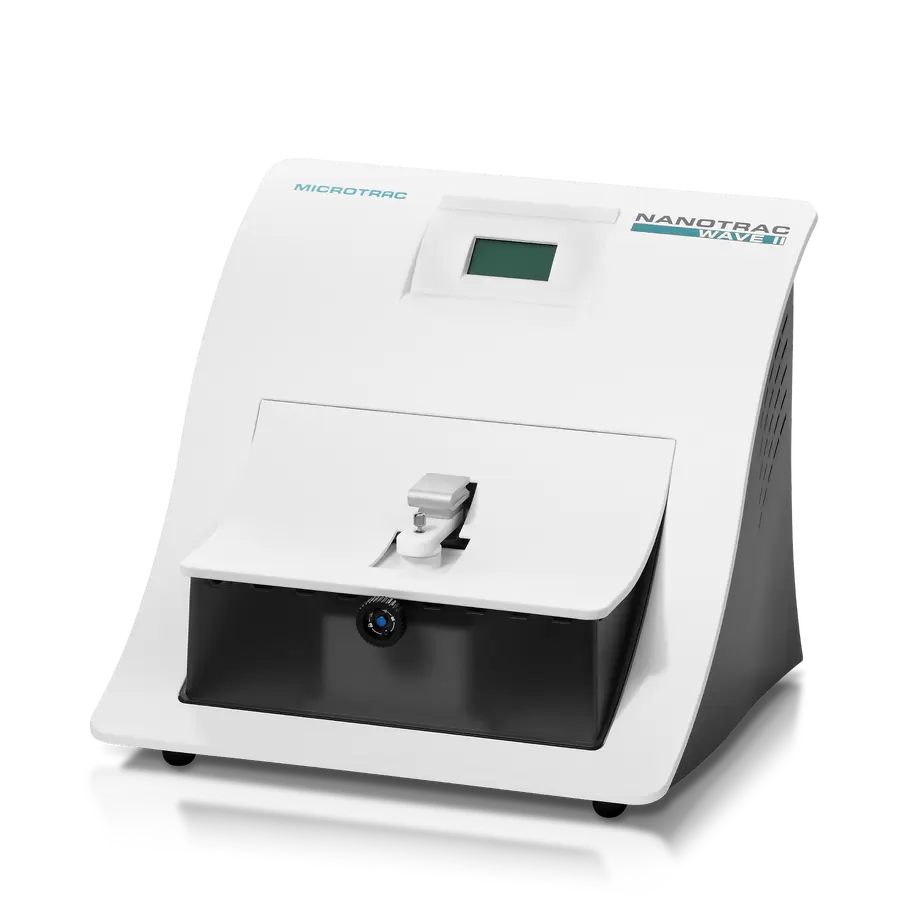
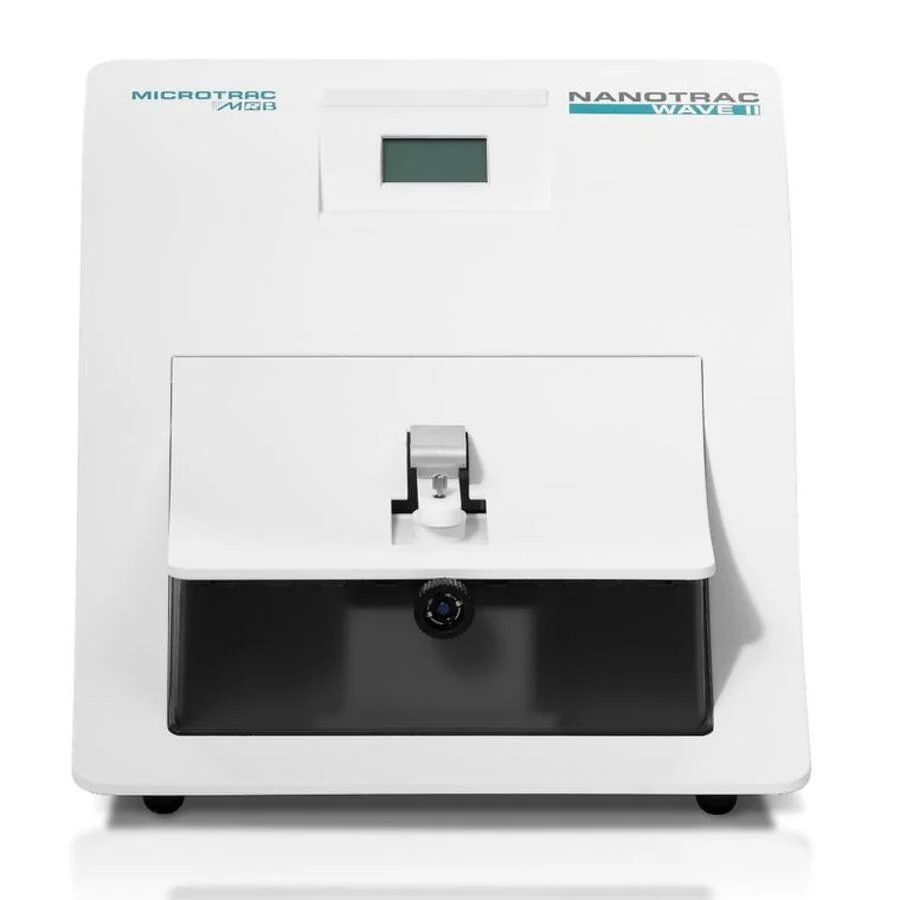
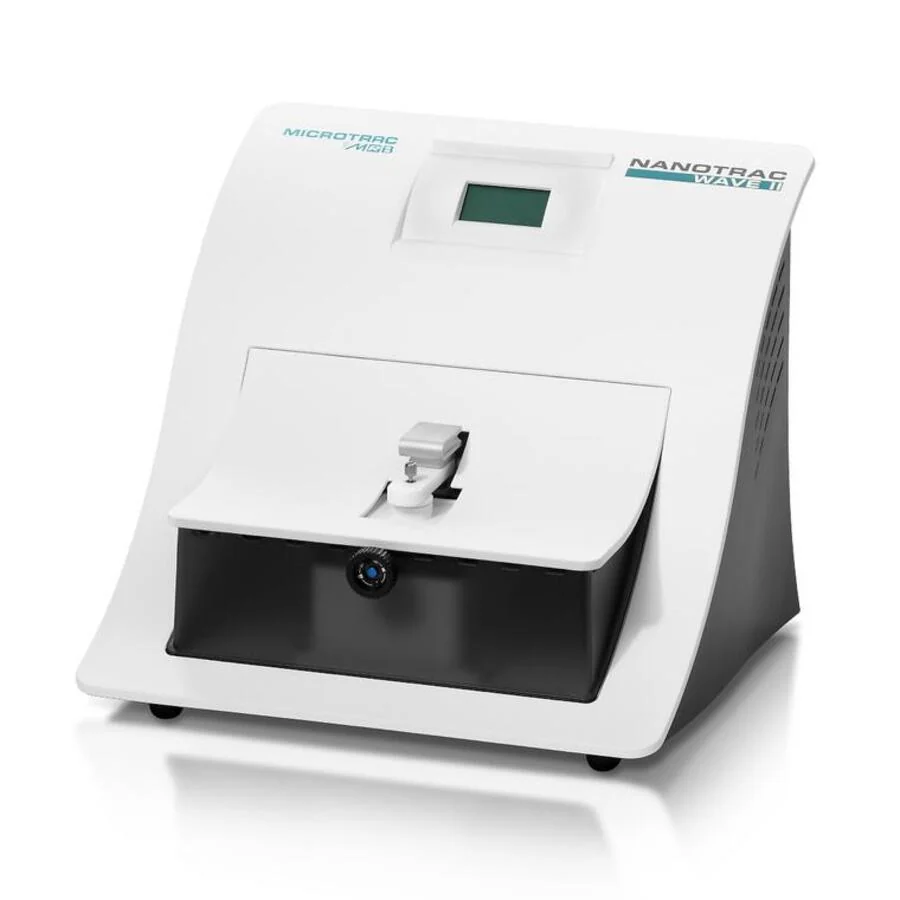
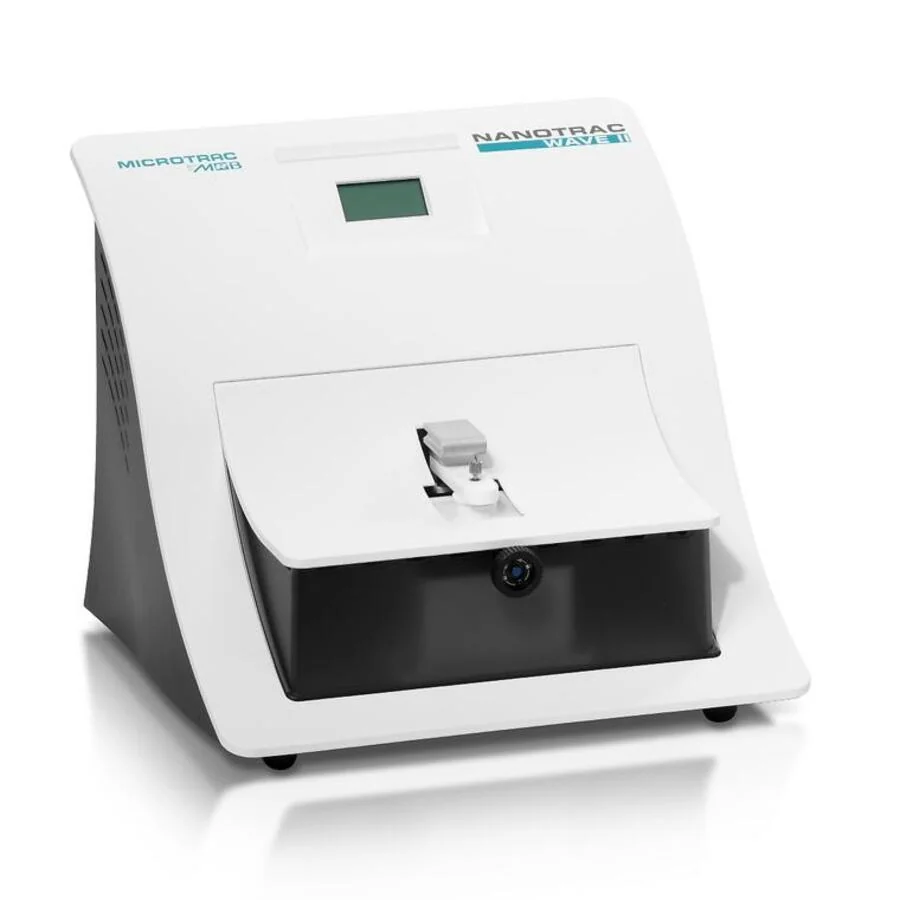
Microtrac NANOTRAC WAVE II Nanoparticle Size & Zeta Potential Analyzer – DLS | 0.3 nm–10 µm
All-in-one dynamic light scattering (DLS) analyzer — nanoparticle size, zeta potential, molecular weight and concentration from 0.3 nm to 10 µm in one compliant benchtop instrument.
- ✔ Size 0.3 nm–10 µm · zeta ±200 mV · MW & concentration
- ✔ 180° backscatter DLS · titration & temperature control
- ✔ ISO 22412 · 21 CFR Part 11 data-integrity features
- ✔ Lead time: configured to order — request current timeline
What your nano lab actually checks
Size, zeta and MW in one
Particle size, zeta potential (±200 mV), molecular weight and concentration on the same stable 180° backscatter optics — with automated titration for isoelectric point and temperature control. No second instrument, and calculations conform to ISO 22412 and 21 CFR Part 11.
An applications engineer on the line
Size, zeta, titration and compliance method development from engineers who run characterization in-house at ATO Lab. Sub-4h reply, NDA standard.
The Microtrac NANOTRAC WAVE II is an all-in-one dynamic light scattering (DLS) analyzer that measures nanoparticle size, zeta potential, molecular weight and concentration in a single compact benchtop instrument — 0.3 nm to 10 µm. It uses the same 180° backscatter Laser Amplified Detection and Frequency Power Spectrum model as the NANOTRAC series (up to 10⁶× the signal-to-noise of standard DLS), with temperature control, automated titration, and calculations conforming to ISO 22412 and 21 CFR Part 11.
Why nanoparticle labs choose the NANOTRAC WAVE II
Size, charge and molecular weight from one compliant instrument — no separate zeta analyzer.
Size + zeta + MW in one
Particle size (0.3 nm–10 µm), zeta potential (±200 mV), molecular weight and concentration on the same stable optics — no second instrument, no re-plumbing between measurements.
Robust zeta by field reversal
Rapid electric-field sequencing prevents electro-osmosis, and mobility is derived from the power-spectrum ratio — reliable charge even on high-concentration samples.
ISO 22412 & 21 CFR Part 11
DIMENSIONS LS calculates to ISO 22412 and supports 21 CFR Part 11 workflows — the data-integrity features regulated pharma and QC labs require.
Titration & temperature control
Automated titration maps zeta vs pH for isoelectric point, with active temperature control (+4 to +90 °C, ±0.1 °C) for stability and aggregation studies.
How Additive Plus supports it
A configured, installed analyzer with a size-and-zeta method dialed in on your material.
Configure to your sample
We match the size and zeta cells, titration and solvent setup to your material and concentration before it ships.
Install & train
Factory-trained engineers install and train your team on DIMENSIONS LS — size, zeta, MW and titration workflows.
Method & QC support
We build the SOP — reproducible size and zeta reporting, isoelectric-point titrations and a 21 CFR Part 11 setup where needed.
What the NANOTRAC WAVE II measures
Full technical specifications are in the Specifications tab. Key measurement capability:
| Parameter | NANOTRAC WAVE II |
|---|---|
| Size range | 0.3 nm – 10 µm (180° backscatter DLS) |
| Zeta potential | −200 to +200 mV · size 10 nm – 20 µm · mobility 0–15 (µm/s)/(V/cm) |
| Also measures | Molecular weight (<300 Da – 20×10⁶ Da), concentration, conductivity |
| Titration & temperature | Automated titration · +4 to +90 °C, ±0.1 °C |
| Sample volume | Size 50 µL – 3 mL · zeta 150 µL – 2 mL |
| Standards | ISO 22412 · 21 CFR Part 11 features |



Typical applications
Where nanoparticle size and surface charge drive stability and performance.
Not sure the NANOTRAC WAVE II is the right analyzer?
A dip probe for reactions, dedicated charge titration, or larger particles.
Charge specialistMicrotrac STABINO ZETACompare analyzer →
Larger particlesMicrotrac BLUEWAVECompare analyzer →
Why source the NANOTRAC WAVE II through Additive Plus
- Authorized US channel — sales, installation, training and service in one place.
- We run powder and nanoparticle characterization in-house at ATO Lab — you talk to engineers who use these methods, not a ticket queue.
- Method development on your material — size, zeta, MW, isoelectric-point titration and 21 CFR Part 11 SOPs.
- Paid sample measurement before you commit — send us your dispersion and get the full size and zeta report. Sub-24h response, NDA standard.
| Brand | Microtrac |
| Country of origin | Germany |
| Measurement principle | Backscattered laser-amplified scattering reference method |
| Measuring range | 0.3 nm - 10 µm |
| Calculation Model | FFT power spectrum |
| Measurement angle | 180° |
| Sample cell | Various sample cell options |
| Zeta potential analysis | yes |
| Zeta measurement range (potential) | -200 mV - +200 mV |
| Zeta measurement range (size) | 10 nm - 20 µm |
| Electrophoretic mobility | 0 - 15 (µm/s) / (V/cm) |
| Conductivity measurement | yes |
| Conductivity range | 0 - 10 mS / cm |
| Molecular weight measurement | yes |
| Molecular weight range | <300 Da -> 20 x 10^6 Da |
| Temperature range | +4°C - +90°C |
| Temperature accuracy | ± 0.1°C |
| Temperature control | yes |
| Temperature control range | +4°C - +90°C |
| Titration | yes |
| Reproducibility (size) | =< 1% |
| Reproducibility (zeta) | + / - 3% |
| Sample volume size measurement | 50 µl - 3 ml |
| Sample volume zeta measurement | 150 µl - 2 ml |
| Concentration measurement | yes |
| Sample concentration | up to 40 % (sample dependent) |
| Carrier fluids | Water, polar and unpolar organic solvents, acid and base |
| Laser | 780 nm, 3 mW; 2 laser diodes with zeta |
| Humidity | 90 % non-condensing |
| Dimensions (W x H x D) | 13.2×15×12.9 in / 355×381×330 mm |
Download Microtrac NANOTRAC WAVE II Nanoparticle Size Analyzer brochure
Download Microtrac NANOTRAC WAVE II Nanoparticle Size Analyzer Application Note 1 brochure
Download Microtrac NANOTRAC WAVE II Nanoparticle Size Analyzer Application Note 2 brochure
Download Microtrac NANOTRAC WAVE II Nanoparticle Size Analyzer Application Note 3 brochure
Product videos
We run this lab daily. Send a sample.
Send us a powder sample and we'll run PSD and morphology on the actual instrument, then share the data and method — so you see repeatability before you buy. We can also run analysis as a service while you evaluate.
Other products teams run alongside Microtrac NANOTRAC WAVE II Nanoparticle Size & Zeta Potential Analyzer – DLS | 0.3 nm–10 µm
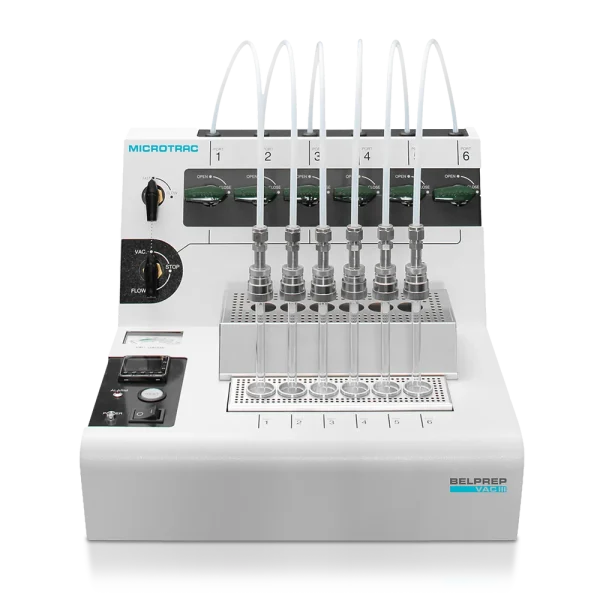
Vacuum degasser for gas adsorption sample preparation — removes moisture and contaminants by vacuum and heat on 3 or 6 ports, so your BELSORP analyzer stays free for measurement.
- ✔ 3 or 6 pretreatment ports · parallel sample prep
- ✔ Vacuum + heat degassing (optional flow + heat)
- ✔ Frees the analyzer — prep while it measures
- ✔ Lead time: configured to order — request current timeline
Made to order
· Lead time: configured to order — request current timeline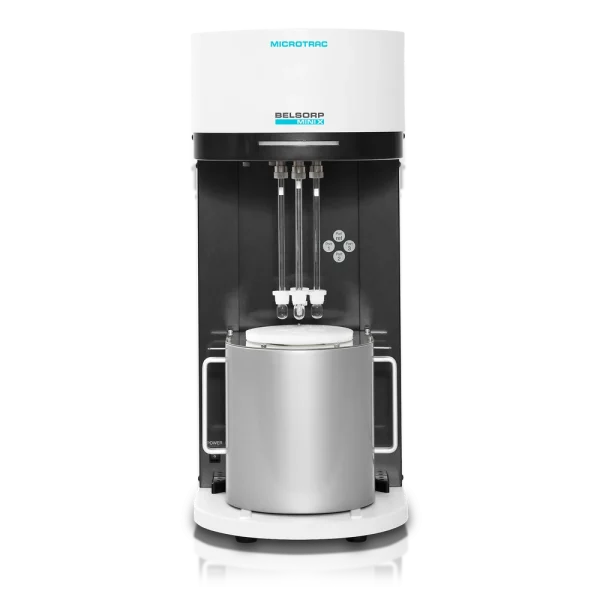
Compact volumetric gas adsorption analyzer for BET surface area and mesopore distribution — up to four samples in parallel, helium-free, from 0.01 m²/g.
- ✔ Surface area from 0.01 m²/g (N₂) — no krypton needed
- ✔ Pore size 0.7–500 nm (0.35 nm with molecular-probe option)
- ✔ Up to 4 ports, independent 133 kPa transducer per port
- ✔ Lead time: configured to order — request current timeline
Made to order
· Lead time: configured to order — request current timeline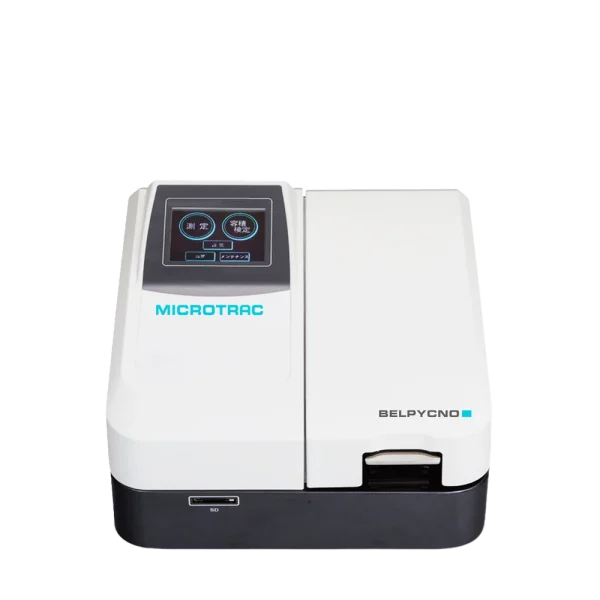
Gas-displacement pycnometer for true and skeletal density of powders and solids — 0.03% accuracy, helium or nitrogen, with 10, 3.5 and 1 cm³ sample cells.
- ✔ Accuracy 0.03% of F.S. + 0.03% of reading · repeatability 0.02%
- ✔ He / N₂ gas displacement · greaseless one-touch cell
- ✔ Three cell sizes: 10 · 3.5 · 1 cm³
- ✔ Lead time: configured to order — request current timeline
Made to order
· Lead time: configured to order — request current timeline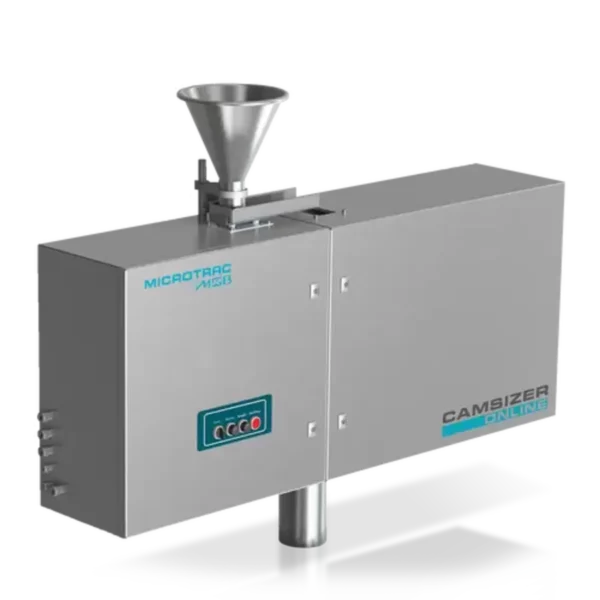
Inline dynamic image analysis for real-time particle size and shape — 30 µm to 30 mm, measured continuously in the process stream so you catch and correct drift before it becomes off-spec product.
- ✔ Inline size + shape in real time · 30 µm–30 mm
- ✔ 100–300 images/s (5 MP) · 32 parameters incl. 3D
- ✔ Self-cleaning · integrates into any process loop
- ✔ Lead time: configured to order — request current timeline
Made to order
· Lead time: configured to order — request current timeline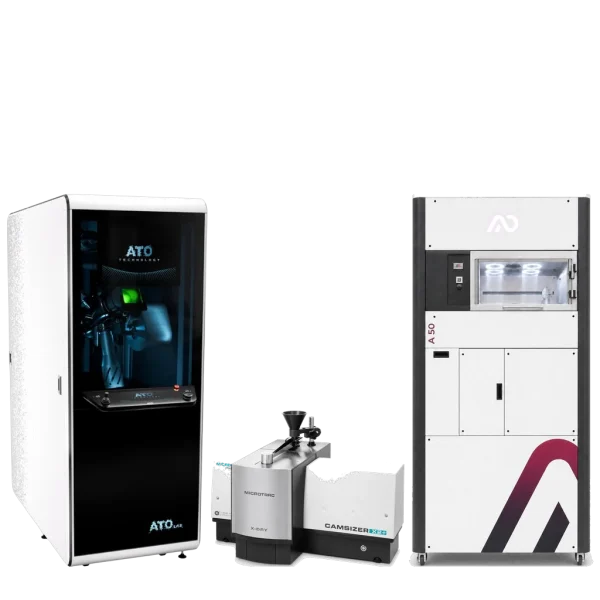
Turn a new alloy into a printed part without leaving the lab. The ATO Lab atomises your own feedstock into spherical powder, the CAMSIZER X2+ measures its size and shape, and the AO Metal A50 prints it with every laser parameter open — no cartridges, no annual licence. Configured to order; lead time on request. Installation and commissioning in the USA: facility and gas planning, start-up and operator training by our US service team.
Made to order
· Lead time on request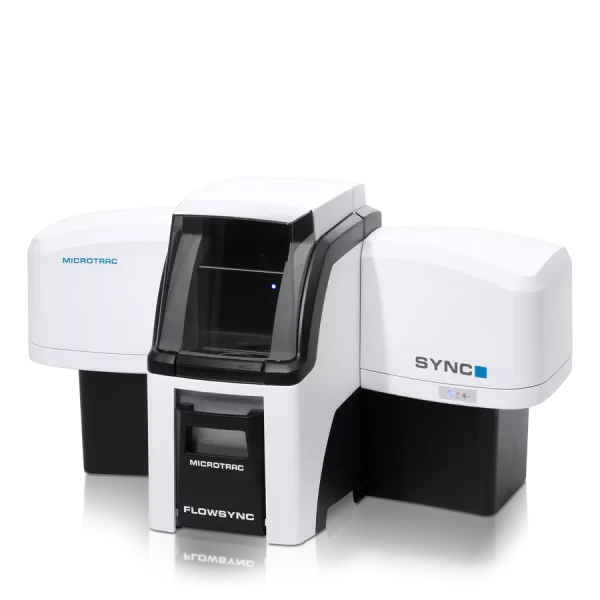
The Microtrac SYNC measures particle size and shape in a single measurement — laser diffraction and dynamic image analysis in one cell, 0.01 to 4,000 µm, wet or dry.
- ✔ Size + shape together: LD (ISO 13320) + DIA (ISO 13322-2)
- ✔ Range 0.01–4,000 µm · patented BLEND routine
- ✔ 5.2 MP camera at 60 fps · 30+ morphology parameters
- ✔ Lead time: configured to order — request current timeline
Made to order
· Lead time: configured to order — request current timeline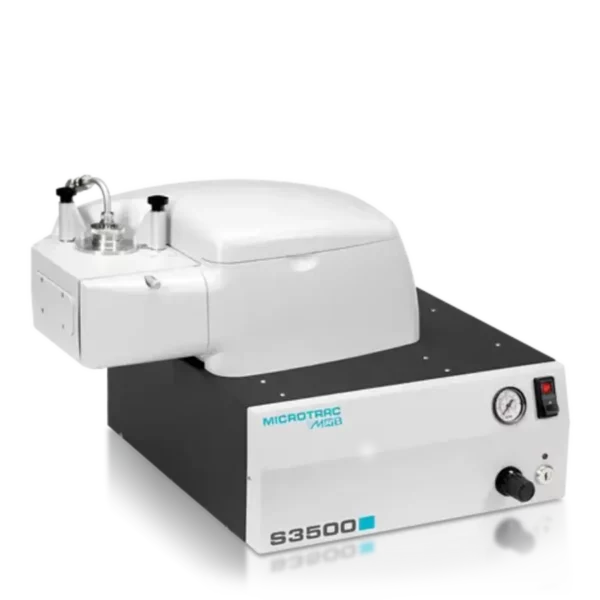
Tri-red-laser diffraction particle size analyzer — 0.02 to 2,800 µm, wet and dry on one bench, with fixed enclosed optics and Modified Mie sizing for non-spherical powders.
- ✔ Range 0.02–2,800 µm · three red 780 nm lasers, 151 detector segments
- ✔ Wet and dry measurement · ~10–30 s per run
- ✔ Fixed enclosed optics — holds calibration, minimal operator intervention
- ✔ Lead time: configured to order — request current timeline
In stock
· Lead time: configured to order — request current timeline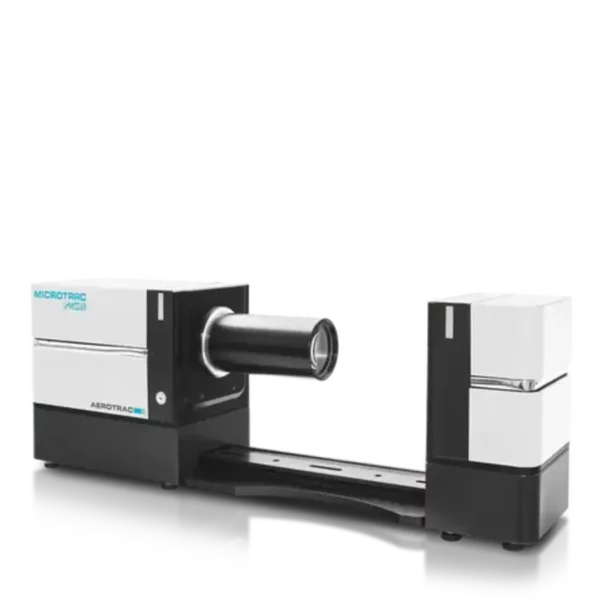
Laser-diffraction spray & droplet size analyzer — 0.5 to 2,000 µm across three lenses, capturing a spray in as little as 0.02 ms with multiple-scattering correction standard.
- ✔ Range 0.5–2,000 µm · F100 / F300 / F600 lenses · 32-segment ring detector
- ✔ Real-time spray capture from 0.02 ms · continuous mode to 600 s
- ✔ Multiple-scattering correction standard · wet, dry & auto-trigger
- ✔ Lead time: configured to order — request current timeline
Made to order
· Lead time: configured to order — request current timelineCommon questions
Don't see yours? Email [email protected] — NDA standard, typical reply within 4 hours.
What does the NANOTRAC WAVE II measure?
How does the WAVE II measure zeta potential?
Can it measure concentrated samples without dilution?
Does it support zeta-vs-pH titration for isoelectric point?
Is the NANOTRAC WAVE II suitable for regulated pharmaceutical QC?
How is the WAVE II different from the NANOTRAC FLEX?
What is the lead time, and can Additive Plus help set up a method?
Place your order, or talk to an engineer first
Order Microtrac NANOTRAC WAVE II Nanoparticle Size & Zeta Potential Analyzer – DLS | 0.3 nm–10 µm direct, or talk to materials engineer