
Made to order

- Installation & training on-site alignment and operator onboarding
- Method + sample run a droplet or powder measurement on your own sample
Microtrac AEROTRAC II Spray Droplet Size Analyzer
Droplet and particle size of sprays, mists and airborne powders by laser diffraction — 0.5 to 2000 µm, measured as the spray forms at intervals from 0.02 ms.
- D50, SMD and density index over time · multiple scattering correction standard
- F100, F300 and F600 lenses · fixing jigs · batch cell for slurry
- Installation and on-site training included · free test measurement
- Configured to order · lead time from 4 weeks
What your spray lab actually checks
Real-time droplet sizing
Capture intervals from 0.02 ms resolve how a spray atomizes across a full pulse — D50, Sauter mean diameter and density index, with multiple-scattering correction standard so dense sprays size accurately instead of biased fine.
An applications engineer on the line
- AEROTRAC II light-emission and detection modules — 635 nm semiconductor laser, 32-element ring detector
- Lenses: F100 (0.5–350 µm), F300 (1.4–1000 µm), F600 (2.8–2000 µm)
- Fixing jigs that hold your spray device in the same position every time
- Batch cell for particle size in slurry
- Integrated model with connected modules (option)
- Software with multiple scattering correction as standard; runs on a Windows PC or laptop
- Installation and on-site operator training — included in every quotation
What the AEROTRAC II is
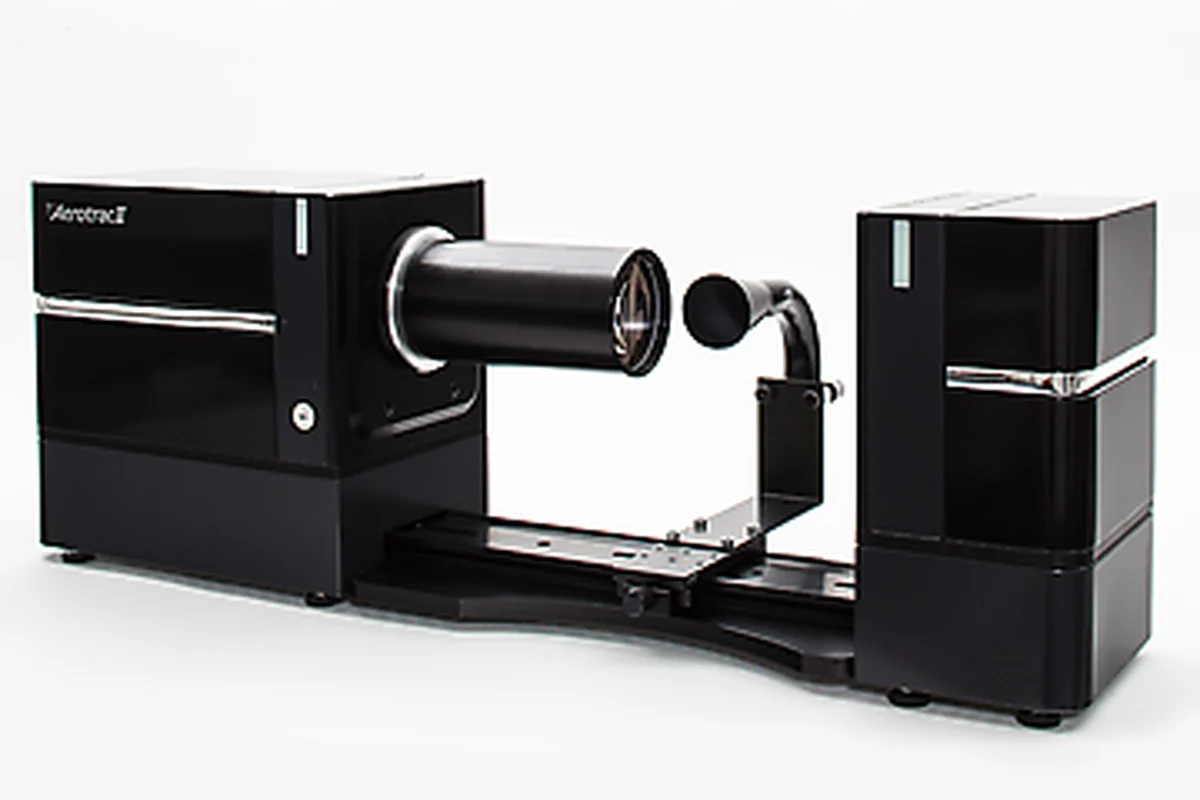
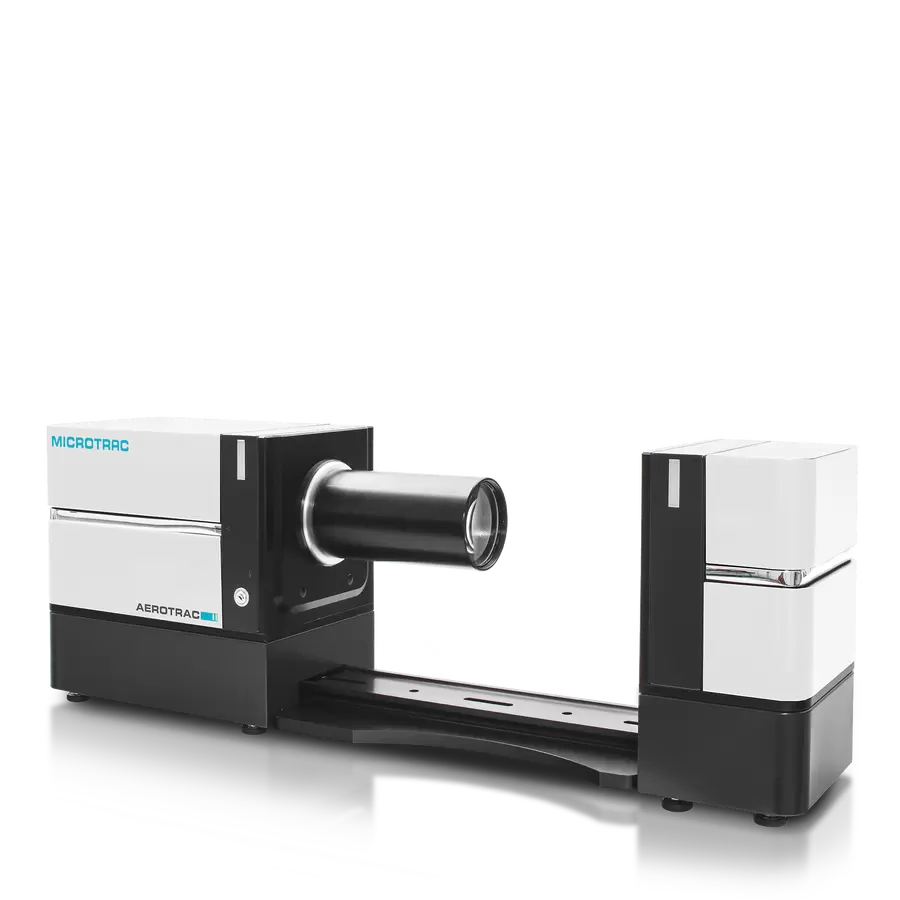
The AEROTRAC II is a laser diffraction analyzer from Microtrac for particles in the air: droplets from injectors and nebulizers, sprays, mists and airborne powders, from 0.5 to 2000 µm. A semiconductor laser crosses an open measuring zone between a light-emission module and a detection module. The spray passes through the beam, and a 32-element ring detector records the scattered light — large particles scatter strongly at low angles, small particles weakly at high angles. The software converts that pattern into a size distribution and repeats it at intervals from 0.02 ms, so you see how a spray develops from the moment it starts instead of one average over the whole event.
Specifications
| Measuring principle | Laser diffraction |
| Measuring range | 0.5 – 2000 µm · F100 lens 0.5–350 µm · F300 lens 1.4–1000 µm · F600 lens 2.8–2000 µm |
| Light source | Semiconductor laser, 635 nm, 3.5 mW, Class 3R |
| Detector | 32-element ring detector with automatic optical axis adjustment |
| Measurement interval | Spray 0.02–500 ms · continuous 1–600 s |
| Number of measurements | Spray 1–100 · continuous 1–9,999 |
| Results | Size distribution (frequency, cumulative), D50, SMD, mode diameter, density index |
| Start modes | Key start, auto start on scattered light, external signal |
| Batch cell | Tempax glass with coating · 5–7 ml |
| Data export | CSV, JPEG, BMP, EMF, PNG, TIFF and more |
| Conditions of use | 10–35 °C · 20–80% RH, non-condensing |
| Power | 85–264 VAC, 47–63 Hz |
| Light-emission module (W × D × H) | 170 × 230 × 240 mm · 5.5 kg |
| Detection module (W × D × H) | 595 × 230 × 240 mm · 11.5 kg with F300 lens |
| Integrated model (option) | 1000 × 230 × 340 mm · 27 kg |
| Data processing | Windows PC or laptop |
| Installation and training | on site, included in every quotation |
| Lead time | from 4 weeks, depending on configuration |
Download: AEROTRAC II brochure (PDF)
What it tells you about a spray
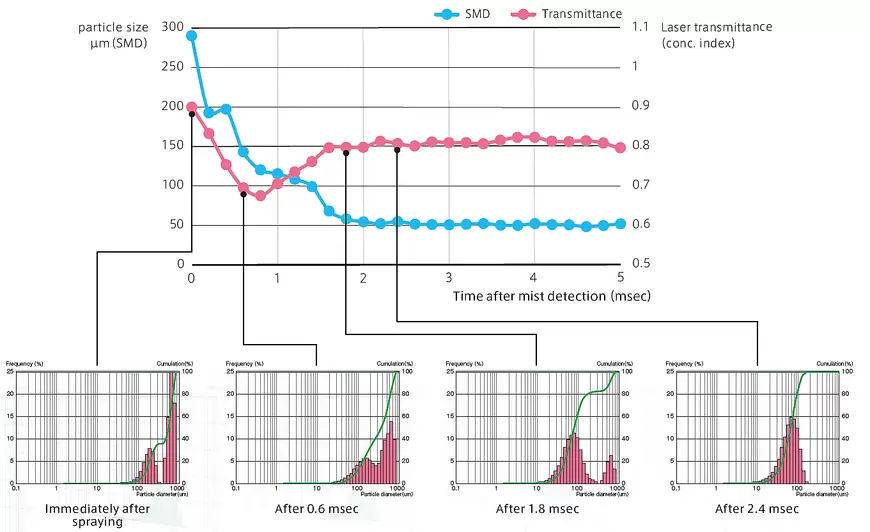
A spray is not one size. In Microtrac’s own example, measured every 0.2 ms from the moment the mist was detected, concentration and droplet size are unstable for the first 2 ms and settle after that. These are the numbers that show it:
| D50 and SMD over time | median and Sauter mean diameter of each capture, shown as a time series |
| Light transmittance | a concentration index of the spray, plotted next to the size |
| Distribution per capture | frequency and cumulative curves, overlaid to compare moments, nozzles or formulations |
| Mode diameter, density index | reported with every measurement |
Measurement and analysis run in separate windows, so past data can be opened and analyzed while a new measurement is running.
Three lenses, three size ranges
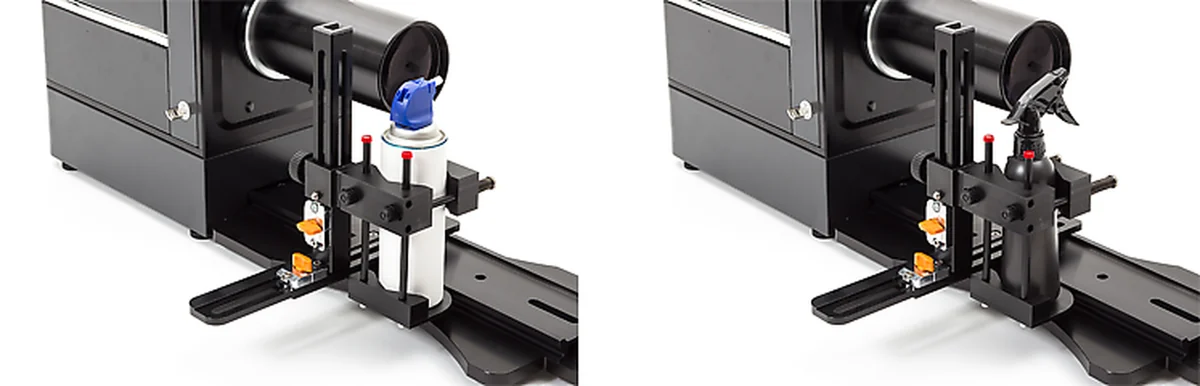
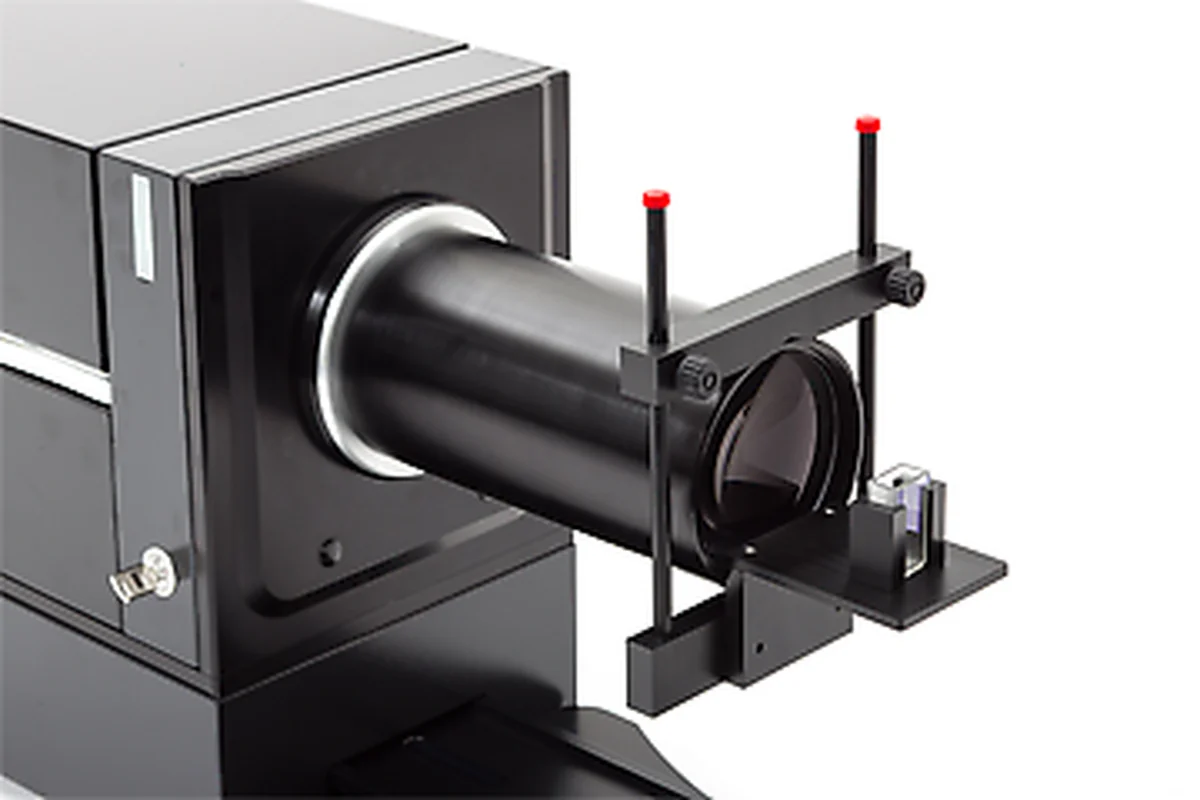
Fixing jigs in several types match different sizes and shapes of spray devices, so every spray starts from the same position. A batch cell measures the particle size distribution in slurry.
Where the AEROTRAC II stops — and what to take instead
The AEROTRAC II measures particles in flight, from 0.5 to 2000 µm, and like every laser diffraction instrument it reports size, not shape. For powders, suspensions and emulsions measured on the bench, look at the Microtrac S3500 or the BLUEWAVE. If you need size and shape in one instrument, there is the Microtrac SYNC. For nanoparticles below the 0.5 µm floor, the NANOTRAC WAVE II uses dynamic light scattering. The laser is Class 3R, so the usual laser safety rules of your lab apply.
In pictures
Availability, payment and delivery
Why buy it through Additive Plus
What usually stops people — and the honest answer
Ready when you are
| Brand | Microtrac |
| Country of origin | USA |
| Measurement principle | Laser diffraction |
| Measuring range | F100 lens: 0.5 to 350 µm F300lens: 1.4 to 1000 µm F600 lens: 2.8 to 2000 µm |
| Light source | Semiconductor laser Wavelength: 635 nm Output: 3.5 mW Laser class: CLASS 3R |
| Detector | 32-element ring detector (with automatic optical axis adjustment function |
| Measuring time | Spray measurement: 0.02 to 500 msec Continous measurement: 1 to 600 sec |
| Number of measurements | Spray measurement: 1 to 100 times Continous measurement: 1 to 9,999 times |
| Data | Particle size distribution (frequency/cumulation), summary data (D50% particle size, SMD, mode diameter etc.) density index |
| Sample Cell | Material: Tempax glass (with coating) Capacity: 5 to 7 ml |
| Ambient temperature | 10 to 35 °C |
| Ambient humidit | 20 to 80% R.H. (no condensation) |
| Power requirements | 85 to 264 VAC, 47 to 63 hz |
| Operating unit | Windows PC (including laptop PC) |
| Dimensions (W x H x D) | Light emission module: 6.69×9.05×9.44 in / 170×230×240 mm; Detection module: 23.42×9.05×9.44 / 595×230×240 mm; For connected modules (option): 39.37×9.05×13.38 in / 1000×230×340 mm |
| Weight | Light emission module: 12.1 lbs / 5.5 kg; Detection module: 25.3 lbs / 11.5 kg (with F300 lens attached); For connected modules (option): 60 lbs / 27 kg |
Product videos
We run this lab daily. Send a sample.
Send us a powder sample and we'll run PSD and morphology on the actual instrument, then share the data and method — so you see repeatability before you buy. We can also run analysis as a service while you evaluate.
Other products teams run alongside Microtrac AEROTRAC II Spray Droplet Size Analyzer
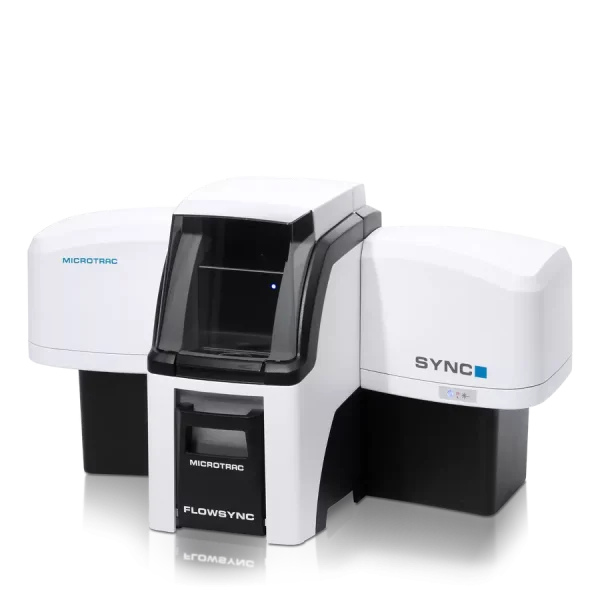
Laser diffraction and dynamic image analysis on the same sample, in the same cell, at the same time — size from 0.01 to 4000 µm and more than 30 shape parameters in a typical 10 to 30 seconds.
- Oversize, sphericity and satellites in metal AM powder, alongside the ISO 13320 size distribution
- FLOWSYNC wet and TURBOSYNC dry modules, changed in less than 15 seconds
- Installation and on-site training included · free test measurement
- Configured to order · lead time from 4 weeks
Made to order
· Lead time from 4 weeks · installation included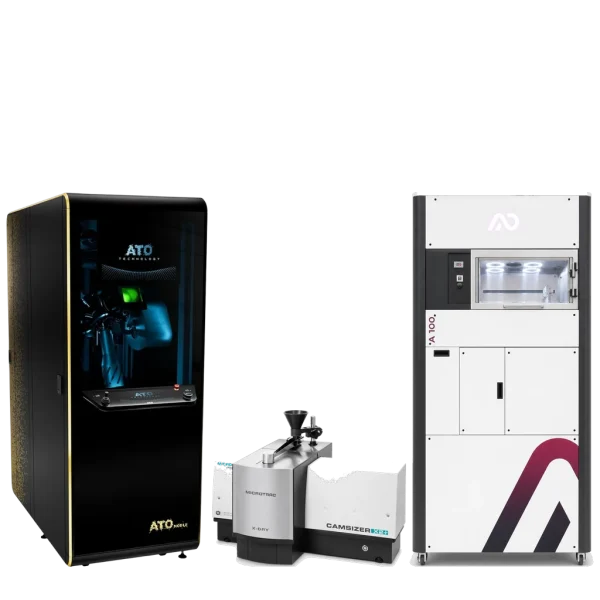
Make your own gold, silver and platinum powder, measure it and print it — the ATO Noble, the Microtrac CAMSIZER X2+ and the AO Metal A100 as one precious-metal cell from one supplier.
- ATO Noble: Au 9 ct to 99.99%, Ag, Pt, Pd, Ir with Zero Loss recovery
- CAMSIZER X2+: size and shape from 0.9 µm to 8 mm in 1–3 minutes
- A100: Ø100 × 100 mm LPBF, optional blue laser for gold and silver
- Installation and training included · 8–14 weeks · 12-month warranty
Made to order
· Lead time 8–14 weeks · installation included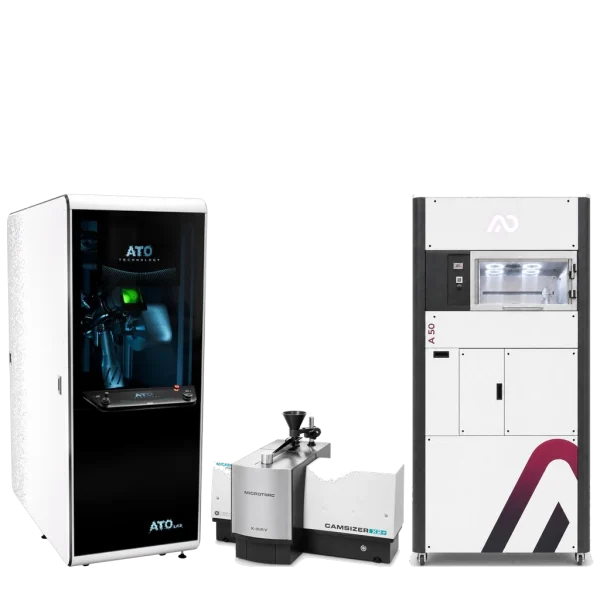
Atomize your own alloy, measure the powder and print it — the ATO Lab, the Microtrac CAMSIZER X2+ and the AO Metal A50 as one materials-development cell from one supplier.
- ATO Lab: 20–120 µm spherical powder, oxygen below 10 ppm
- CAMSIZER X2+: size and shape from 0.9 µm to 8 mm in 1–3 minutes
- A50: Ø50 × 100 mm LPBF, every laser parameter open
- Installation and training included · 8–14 weeks · 12-month warranty
Made to order
· Lead time 8–14 weeks · installation included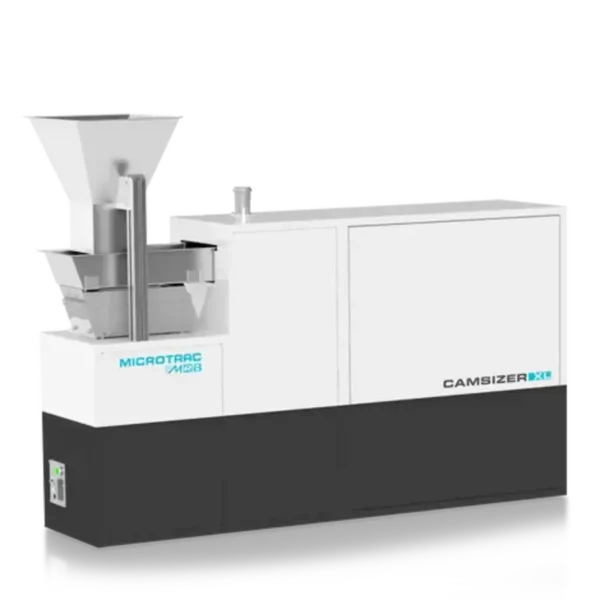
Size and shape of coarse, dry particles from 160 µm to 135 mm — more than 40 parameters from one run of more than 2 kg, in about one to five minutes.
- 15 size, 13 shape and 3 surface-roughness parameters, plus density, transparency and 3D
- High-speed camera, more than 100 images per second, no contact with the sample
- Installation and on-site training included · free test measurement
- Configured to order · lead time from 4 weeks
Made to order
· Lead time from 4 weeks · installation included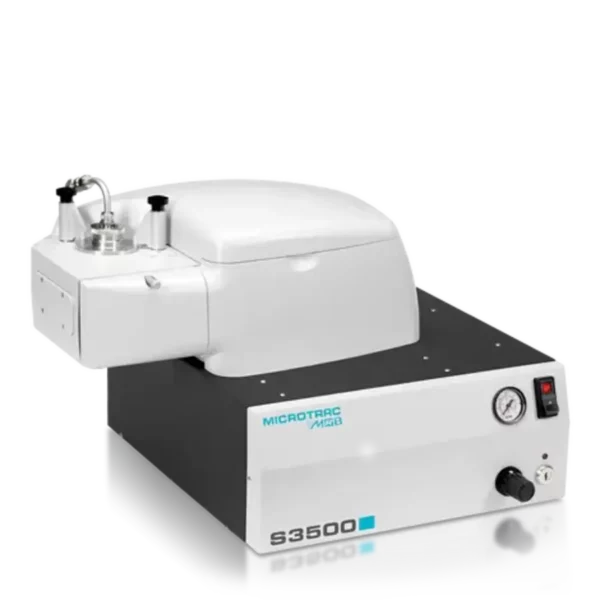
Laser diffraction particle size from 0.02 to 2800 µm, wet or dry, in about 10 to 30 seconds — three red lasers, 151 detector segments and Modified Mie for irregular particles.
- Volume, number and area distributions with d10, d50, d90 for metal powders and other materials
- SDC wet, TURBOTRAC dry and MS30 autosampler options; FDA 21 CFR Part 11 data security
- Installation and on-site training included · free test measurement
- Configured to order · lead time from 4 weeks
Made to order
· Lead time from 4 weeks · installation included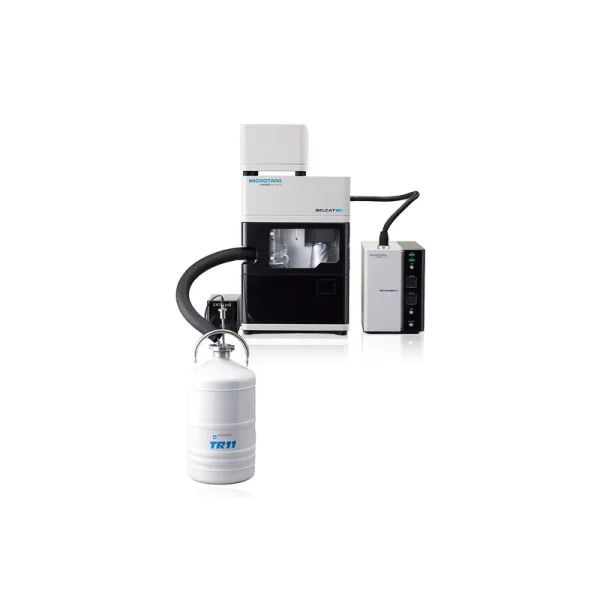
An add-on mass spectrometer for the BELCAT II that tells you which gases evolve in TPD, TPR and breakthrough runs — m/z 1 to 200, up to 16 mass numbers followed at once.
- Faraday cup or SEM detector, resolution M/ΔM ≥ 2M
- Heated hose up to 200 °C for vapors, including ammonia
- Installation and on-site training included · free test analysis of your sample
- Configured to order · lead time from 4 weeks
Made to order
· Lead time from 4 weeks · installation included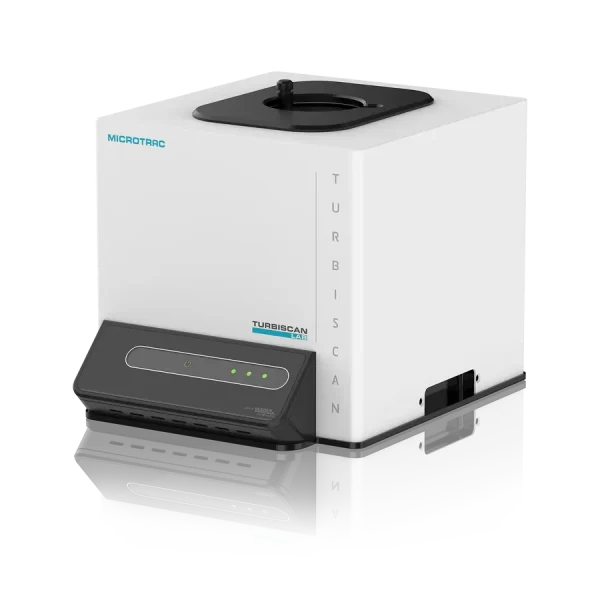
Physical stability of emulsions, suspensions and foams measured on the native sample — up to 1,000× faster than visual observation, 0.0001–95 % v/v, no dilution.
- Sedimentation, creaming, flocculation and coalescence detected and quantified
- One-click Turbiscan Stability Index · room temperature to 60 °C
- Installation and on-site training included · free test analysis of your sample
- Configured to order · lead time from 4 weeks
Made to order
· Lead time from 4 weeks · installation included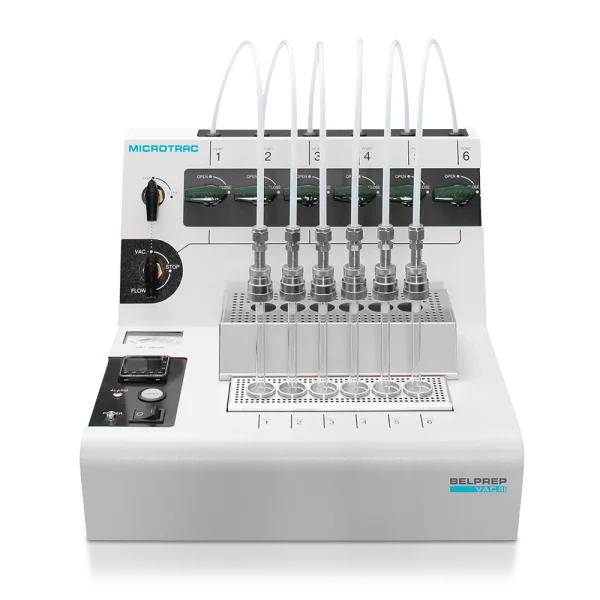
Vacuum degasser for BELSORP gas adsorption analyzers — prepares 3 or 6 samples at up to 430 or 450 °C while the analyzer measures.
- Vacuum / heat degassing, flow / heat under inert gas as an option
- Add-on for BELSORP MINI X, MAX G and MAX X analyzers
- Installation and on-site training included · free test analysis of your sample
- Configured to order · lead time from 4 weeks
Made to order
· Lead time from 4 weeks · installation includedWhat our customers say
“Harry and team were professional, effective communicators as we set up the order, then they executed quickly and produced an amazing product for us at a very competitive price. Am looking forward to our next print w Additive Plus!”
“Great 3D printing service and the resin parts look super smooth and clean. Really happy with how everything turned out!”
“Harry was very professional and helped me out with my 3D printing needs and explained what options I have in terms of filaments such as PEEK. Highly recommended.”
“I needed a 3D enclosure printed urgently in a specific time period, they did great!”
Common questions
Don't see yours? Email [email protected] — NDA on request, typical reply within 4 hours.
What size range does the Microtrac AEROTRAC II measure?
How fast can the AEROTRAC II capture a spray?
Does the AEROTRAC II handle dense, high-concentration sprays?
Can the AEROTRAC II measure powders and slurries as well as sprays?
What data does the AEROTRAC II report?
What laser and detector does the AEROTRAC II use?
How do I measure nebulizers or injectors reproducibly?
How much does an AEROTRAC II cost?
Can I test my sample before buying?
What is the lead time, and who installs the AEROTRAC II?
Place your order, or talk to an engineer first
Order Microtrac AEROTRAC II Spray Droplet Size Analyzer direct, or talk to materials engineer