
Made to order
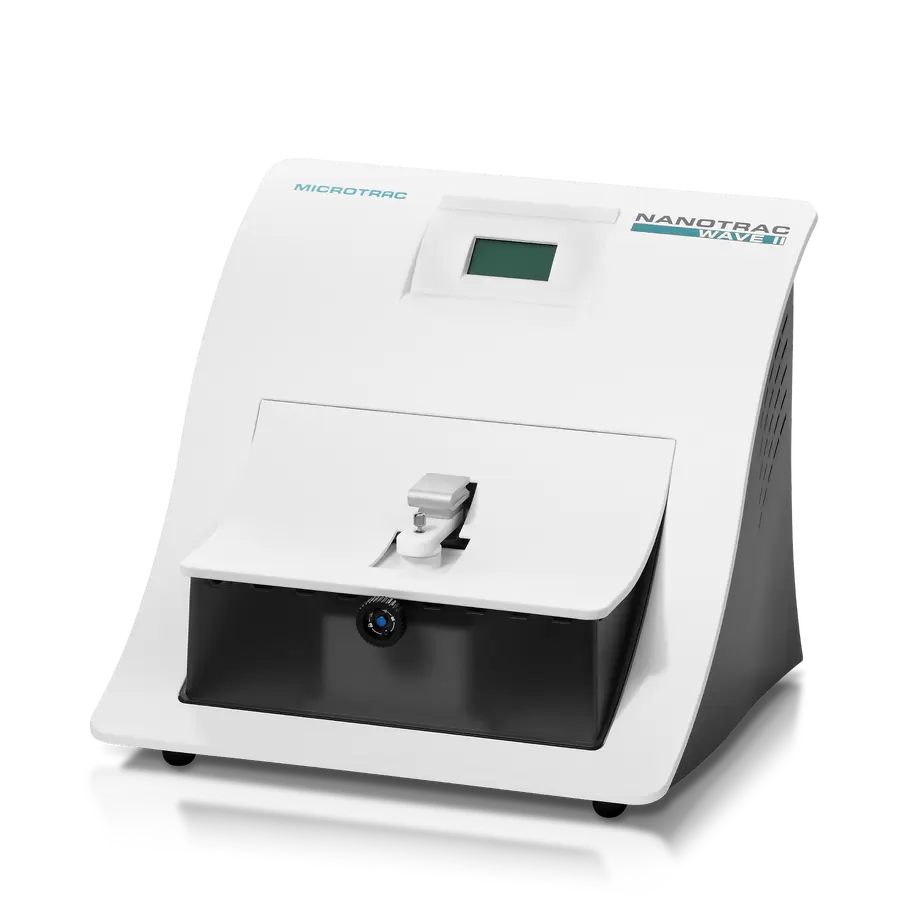
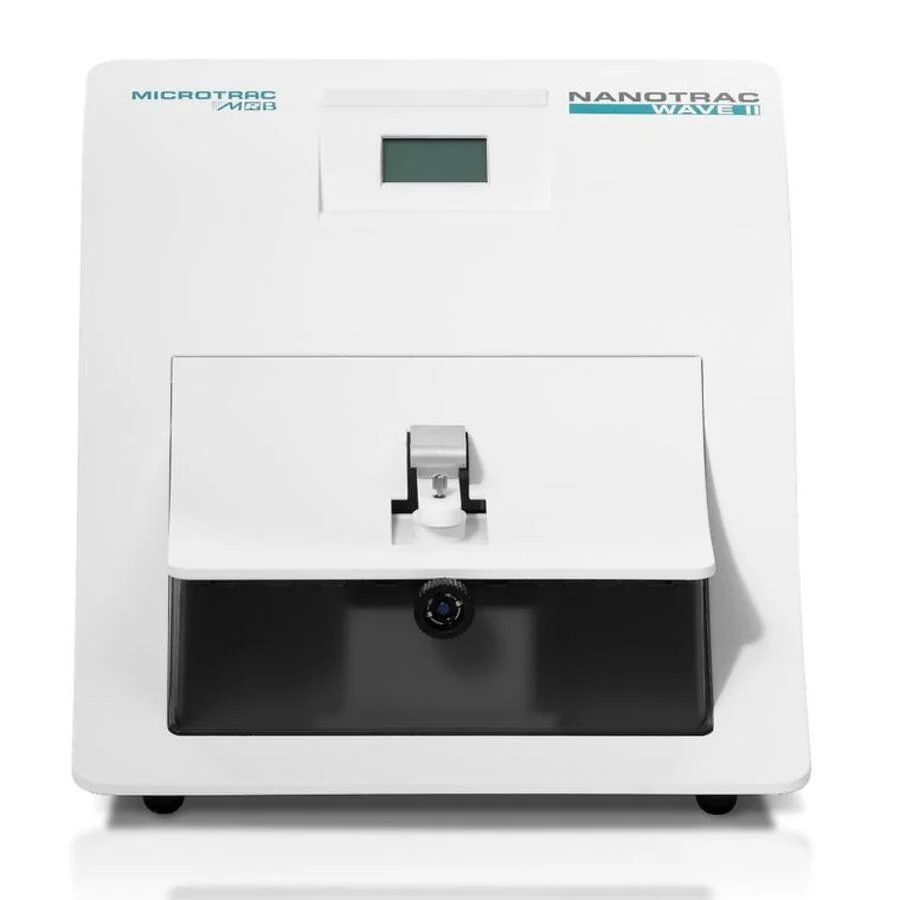
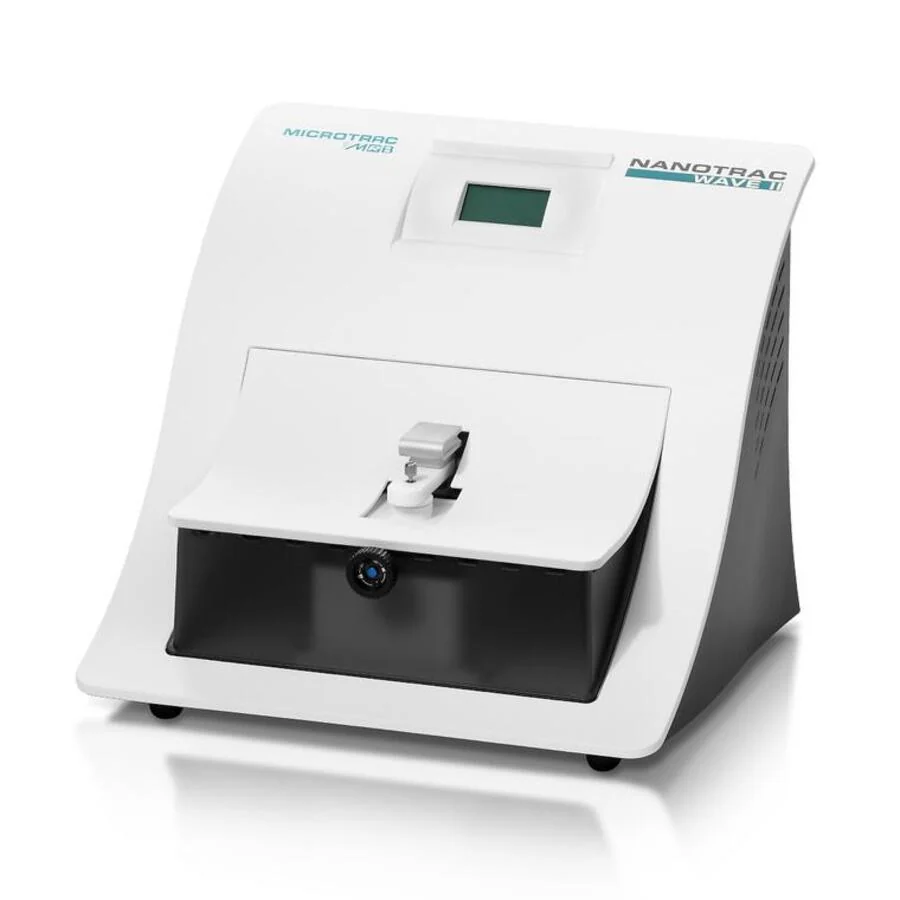
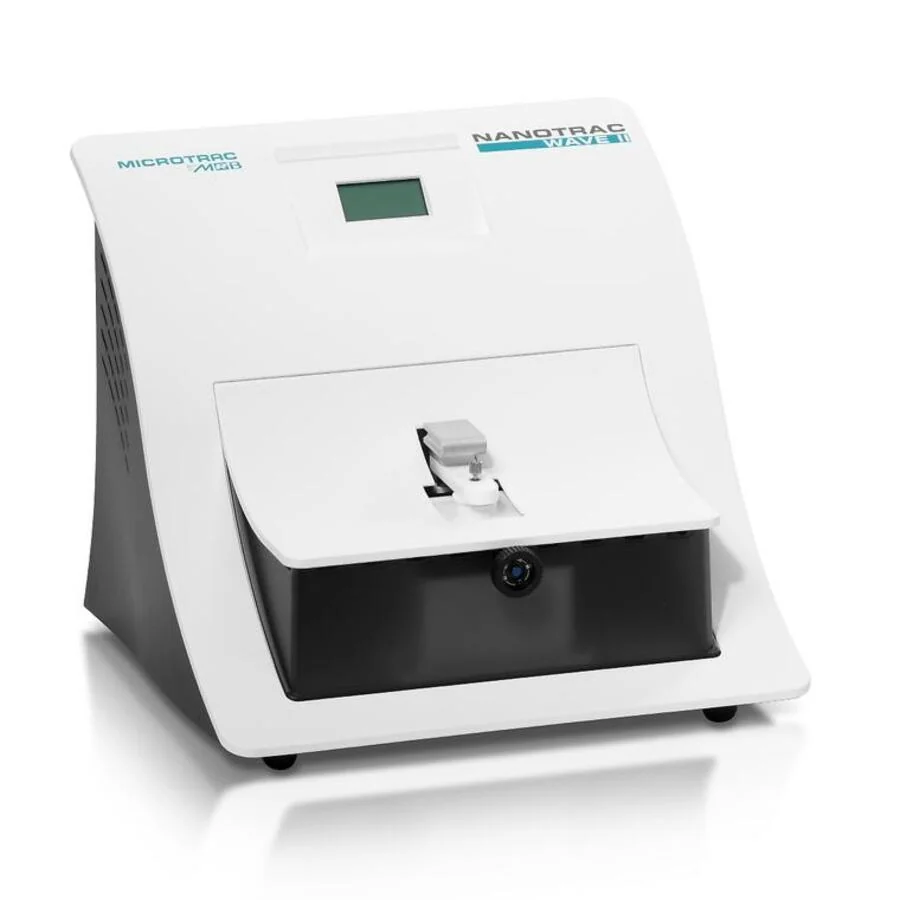
- Installation & training on-site setup and DIMENSIONS LS onboarding
- Method + sample run a size and zeta measurement on your own sample
Microtrac NANOTRAC WAVE II DLS Size and Zeta Potential Analyzer
Nanoparticle size, zeta potential, molecular weight and concentration in one benchtop DLS instrument — 0.3 nm to 10 µm, ±200 mV, up to 40 % concentration.
- 180° backscatter with Laser Amplified Detection — no fitting model to choose
- pH titration for zeta vs. pH · FDA 21 CFR Part 11 compliant
- Installation and on-site training included · free test measurement
- Configured to order · lead time from 4 weeks
What your nano lab actually checks
Size, zeta and MW in one
Particle size, zeta potential (±200 mV), molecular weight and concentration on the same stable 180° backscatter optics — with automated titration for isoelectric point and temperature control. No second instrument, and calculations conform to ISO 22412 and 21 CFR Part 11.
An applications engineer on the line
- NANOTRAC WAVE II base unit — fixed 180° backscatter probe, 780 nm laser, two laser diodes for zeta potential
- Removable, reusable sample cells in Teflon or stainless steel
- Removable zeta potential sample cell, 150 µL – 2 mL, easy to take out for cleaning
- pH titration for zeta potential versus pH
- DIMENSIONS LS software; FDA 21 CFR Part 11 compliant operation
- Installation and on-site operator training — included in every quotation
What the NANOTRAC WAVE II is
The NANOTRAC WAVE II is a benchtop dynamic light scattering analyzer from Microtrac that measures nanoparticle size, zeta potential, molecular weight and concentration with one fixed optical probe. Laser light at 780 nm passes through a sapphire window into the sample; part of it is reflected back at the window and mixes with the light the particles scatter at 180°. This Laser Amplified Detection gives up to 106 times the signal-to-noise ratio of photon correlation spectroscopy, and a frequency power spectrum calculation returns narrow, broad and multimodal distributions without any prior information about the sample. Zeta potential is measured on the same optics: an electric field is applied, and the instrument reads particle mobility and polarity from the change in the power spectrum.
Specifications
| Method | backscattered laser-amplified scattering reference method |
| Calculation model | FFT power spectrum |
| Measurement angle | 180° |
| Size range | 0.3 nm – 10 µm |
| Zeta potential range | −200 to +200 mV |
| Zeta size range | 10 nm – 20 µm |
| Electrophoretic mobility | 0 – 15 (µm/s)/(V/cm) |
| Conductivity range | 0 – 10 mS/cm |
| Molecular weight range | <300 Da to 20 × 106 Da |
| Temperature control | +4 to +90 °C, ±0.1 °C |
| Titration | pH · endpoints pH, volume |
| Reproducibility | size ≤ 1 % · zeta ±3 % |
| Sample volume | size 50 µL – 3 mL · zeta 150 µL – 2 mL |
| Sample concentration | up to 40 % (sample dependent) |
| Carrier fluids | water, polar and non-polar organic solvents, acid and base |
| Laser | 780 nm, 3 mW; 2 laser diodes with zeta |
| Humidity | 90 % non-condensing |
| Dimensions (W × H × D) | 355 × 381 × 330 mm (14.0 × 15.0 × 13.0 in) |
| Standards | ISO 13099-2:2012, ISO 22412:2017 · FDA 21 CFR Part 11 compliant |
| Installation and training | on site, included in every quotation |
| Lead time | from 4 weeks, depending on configuration |
Download: NANOTRAC WAVE II datasheet (PDF) · NANOTRAC series brochure (PDF) · Molecular weight application note (PDF) · Inkjet ink application note (PDF)
What it tells you about a nanoparticle dispersion
Size alone does not say whether a dispersion will stay dispersed. These are the numbers that do:
| Size distribution | narrow, broad or multimodal, with no model to choose; results in as little as 30 seconds |
| Zeta potential | the electrostatic repulsion between particles — positive or negative, and how strong |
| Zeta versus pH | where the charge goes to zero and in which pH range the dispersion stays charged |
| Molecular weight | by hydrodynamic radius or Debye plot; the second virial coefficient shows whether molecules tend to aggregate |
| Concentration | from the loading index, in cm³/mL or particles per mL |
Microtrac application notes show inks of all colors measured at high concentration, where a bimodal distribution stands out clearly, and molecular weights of dextran and polyethylene oxide determined by Debye plot on a NANOTRAC instrument.
The probe also takes concentrated samples up to 40 %, sample dependent, so in many cases the dispersion is measured close to its real state instead of after heavy dilution.
Three measurements on the same optics
Where the NANOTRAC WAVE II stops — and what to take instead
The NANOTRAC WAVE II stops at 10 µm for size and at 10 nm – 20 µm for zeta potential. Its conductivity range is 0 – 10 mS/cm and its titration is pH only. For dispersions with high salt content, polyelectrolyte or salt titrations, or charge on particles up to 300 µm, the STABINO ZETA measures streaming potential with conductivity up to 350 mS/cm. If you need to measure inside a reaction vessel or a pipe, the dip-probe NANOTRAC FLEX does that. Above 10 µm, laser diffraction is the method: see the BLUEWAVE or the SYNC.
In pictures



Availability, payment and delivery
Why buy it through Additive Plus
What usually stops people — and the honest answer
Ready when you are
| Brand | Microtrac |
| Country of origin | USA |
| Measurement principle | Backscattered laser-amplified scattering reference method |
| Measuring range | 0.3 nm - 10 µm |
| Calculation Model | FFT power spectrum |
| Measurement angle | 180° |
| Sample cell | Various sample cell options |
| Zeta potential analysis | yes |
| Zeta measurement range (potential) | -200 mV - +200 mV |
| Zeta measurement range (size) | 10 nm - 20 µm |
| Electrophoretic mobility | 0 - 15 (µm/s) / (V/cm) |
| Conductivity measurement | yes |
| Conductivity range | 0 - 10 mS / cm |
| Molecular weight measurement | yes |
| Molecular weight range | <300 Da -> 20 x 10^6 Da |
| Temperature range | +4°C - +90°C |
| Temperature accuracy | ± 0.1°C |
| Temperature control | yes |
| Temperature control range | +4°C - +90°C |
| Titration | yes |
| Reproducibility (size) | =< 1% |
| Reproducibility (zeta) | + / - 3% |
| Sample volume size measurement | 50 µl - 3 ml |
| Sample volume zeta measurement | 150 µl - 2 ml |
| Concentration measurement | yes |
| Sample concentration | up to 40 % (sample dependent) |
| Carrier fluids | Water, polar and unpolar organic solvents, acid and base |
| Laser | 780 nm, 3 mW; 2 laser diodes with zeta |
| Humidity | 90 % non-condensing |
| Dimensions (W x H x D) | 14.0×15.0×13.0 in / 355×381×330 mm |
Download Microtrac NANOTRAC WAVE II Nanoparticle Size Analyzer brochure
Download Microtrac NANOTRAC WAVE II Nanoparticle Size Analyzer Application Note 1 brochure
Download Microtrac NANOTRAC WAVE II Nanoparticle Size Analyzer Application Note 2 brochure
Download Microtrac NANOTRAC WAVE II Nanoparticle Size Analyzer Application Note 3 brochure
Product videos
We run this lab daily. Send a sample.
Send us a powder sample and we'll run PSD and morphology on the actual instrument, then share the data and method — so you see repeatability before you buy. We can also run analysis as a service while you evaluate.
Other products teams run alongside Microtrac NANOTRAC WAVE II DLS Size and Zeta Potential Analyzer
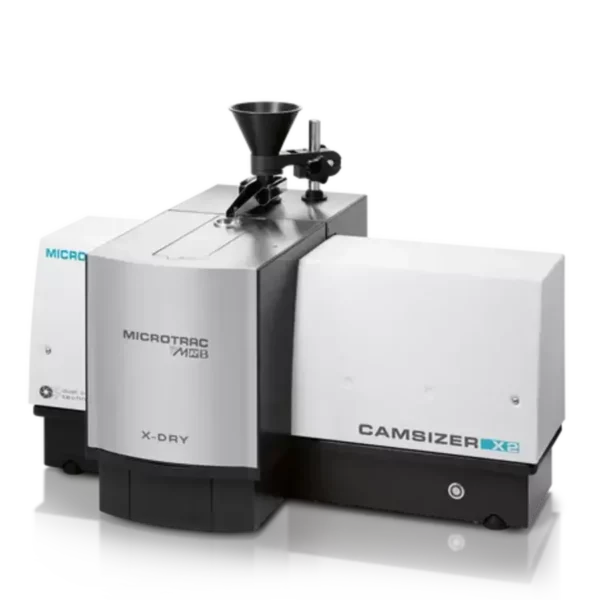
Particle size and shape of your powder in one to three minutes — two cameras, 0.9 µm to 8 mm dry, results comparable with sieving and laser diffraction.
- Sphericity, aspect ratio and irregular particles for metal AM feedstock
- X-Jet air, X-Fall gravity and X-Flow wet dispersion
- Installation and on-site training included · free test measurement
- Configured to order · lead time from 4 weeks
Made to order
· Lead time from 4 weeks · installation included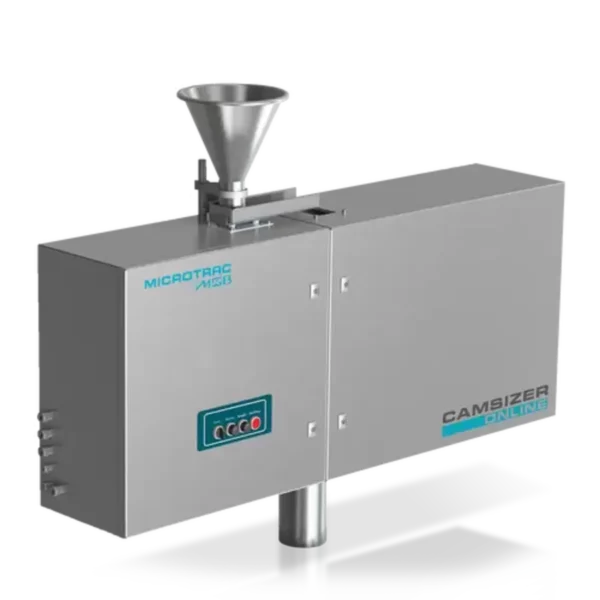
Particle size and 3D shape measured in your process line, not in the lab — 30 µm to 30 mm, with a result every 5 to 10 minutes in the control room.
- More than 35 3D size and shape parameters, built for correlation with sieving
- IP66 stainless steel enclosure, self-cleaning, unattended SOP operation
- Installation and on-site training included · free test measurement
- Configured to order · lead time from 4 weeks
Made to order
· Lead time from 4 weeks · installation included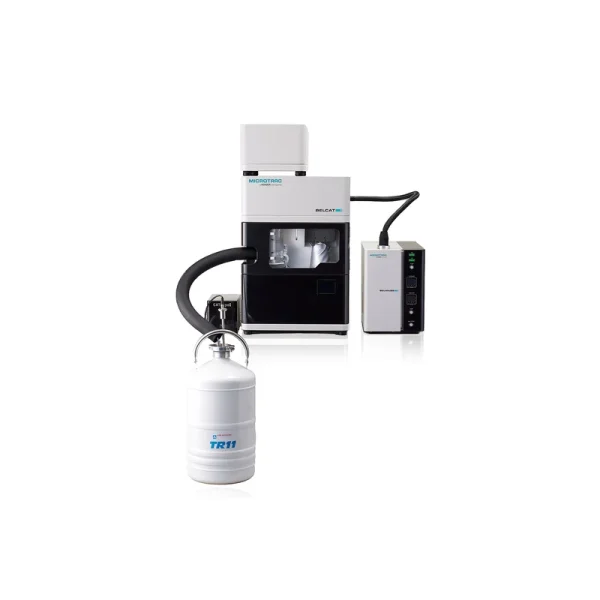
An add-on mass spectrometer for the BELCAT II that tells you which gases evolve in TPD, TPR and breakthrough runs — m/z 1 to 200, up to 16 mass numbers followed at once.
- Faraday cup or SEM detector, resolution M/ΔM ≥ 2M
- Heated hose up to 200 °C for vapors, including ammonia
- Installation and on-site training included · free test analysis of your sample
- Configured to order · lead time from 4 weeks
Made to order
· Lead time from 4 weeks · installation included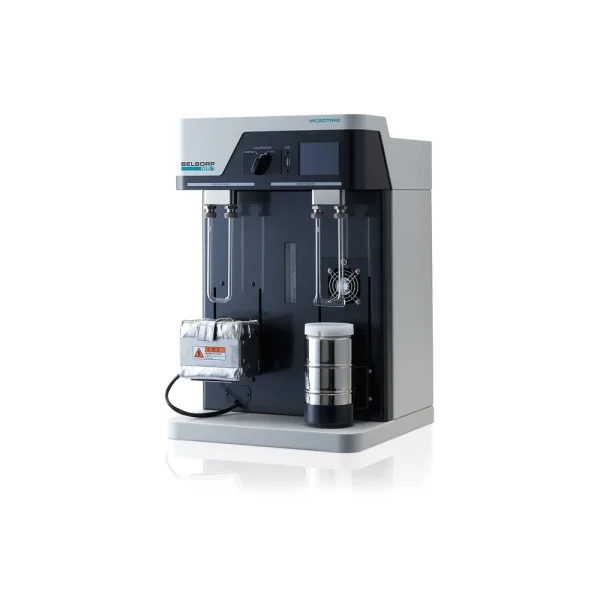
Single-point BET surface area in about 15 minutes — dynamic flow method, from 0.01 m²/g, repeatability within ±1.0 %.
- Pretreatment up to 400 °C at the same time as the measurement
- Touch panel, automatic Dewar, results to USB without manual calculation
- Installation and on-site training included · free test analysis of your sample
- Configured to order · lead time from 4 weeks
Made to order
· Lead time from 4 weeks · installation included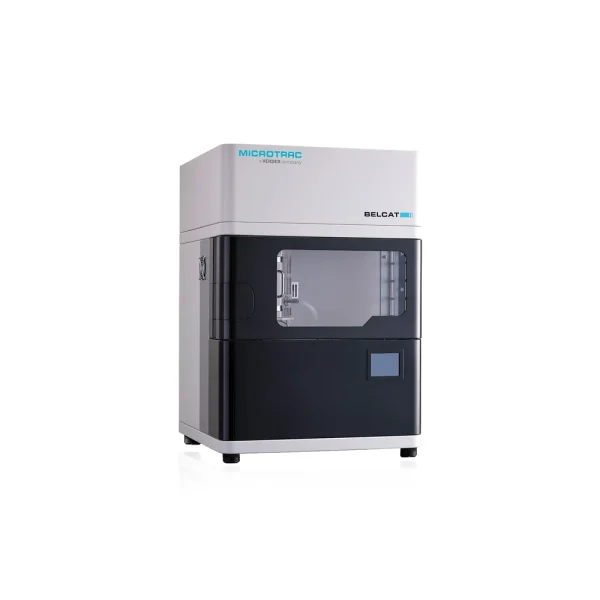
Acid sites, reducibility, coke and metal dispersion of a solid catalyst on one automatic instrument — TPD, TPR, TPO and pulse chemisorption from −120 to 1200 °C.
- Eight gas ports, mixtures blended inside the instrument
- Breakthrough curves and BET; BELMASS II option to identify the gases
- Installation and on-site training included · free test analysis of your catalyst
- Configured to order · lead time from 4 weeks
Made to order
· Lead time from 4 weeks · installation included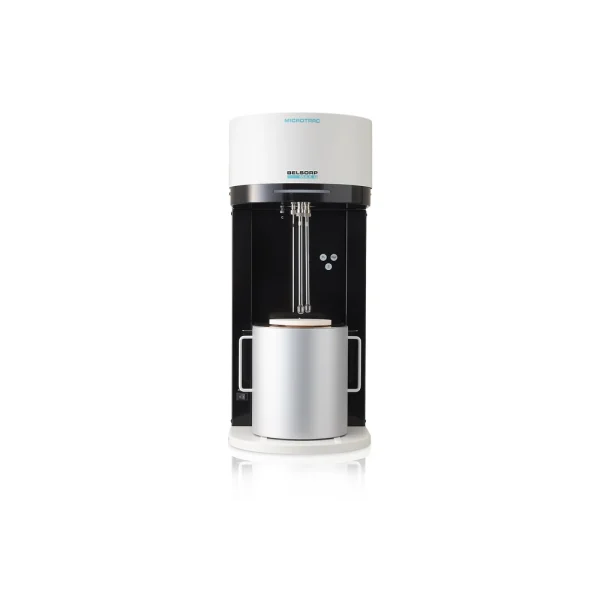
Micropore-capable BET surface area and pore size analyzer — isotherms from P/P₀ = 10⁻⁸, pores 0.35 to 500 nm, krypton down to 0.0005 m²/g.
- One measurement port with dedicated p₀ and free-space ports, AFSM™ accuracy
- BET, BJH, HK, SF and NLDFT / GCMC analysis in BELMASTER 7
- Installation and on-site training included · free test analysis of your sample
- Configured to order · lead time from 4 weeks
Made to order
· Lead time from 4 weeks · installation included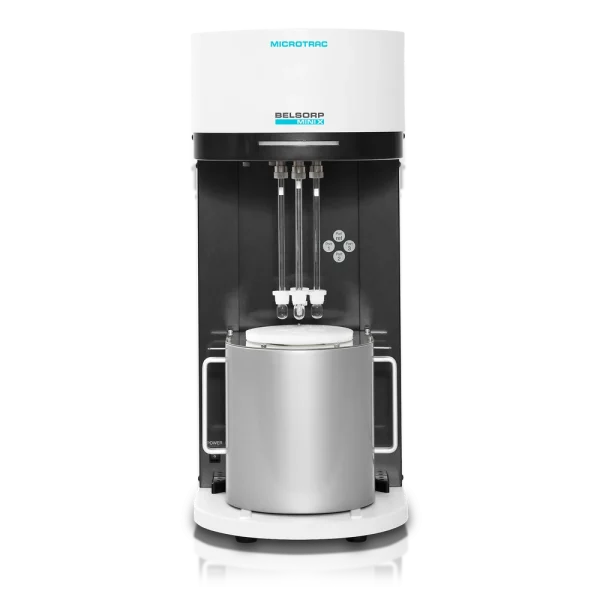
Compact BET surface area and pore size analyzer — up to four samples at once, from 0.01 m²/g with nitrogen, pores 0.7 to 500 nm.
- Each port with its own transducer, helium-free AFSM™2 measurement
- Quick BET: three-point BET of several samples in about 15 minutes
- Installation and on-site training included · free test analysis of your sample
- Configured to order · lead time from 4 weeks
Made to order
· Lead time from 4 weeks · installation included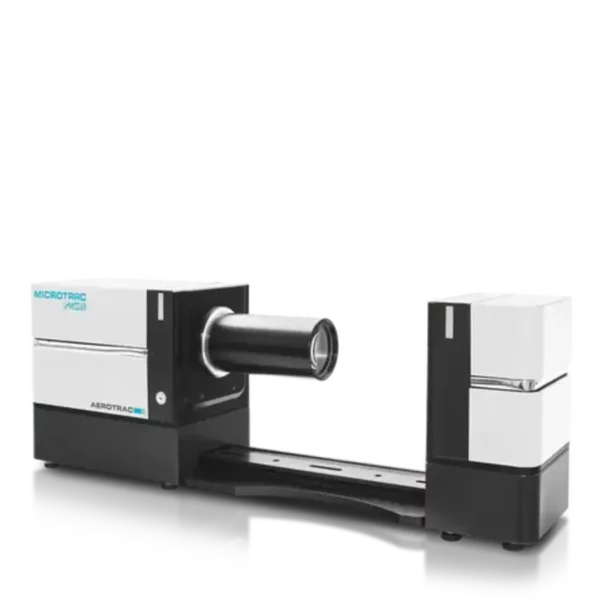
Droplet and particle size of sprays, mists and airborne powders by laser diffraction — 0.5 to 2000 µm, measured as the spray forms at intervals from 0.02 ms.
- D50, SMD and density index over time · multiple scattering correction standard
- F100, F300 and F600 lenses · fixing jigs · batch cell for slurry
- Installation and on-site training included · free test measurement
- Configured to order · lead time from 4 weeks
Made to order
· Lead time from 4 weeks · installation includedWhat our customers say
“Harry and team were professional, effective communicators as we set up the order, then they executed quickly and produced an amazing product for us at a very competitive price. Am looking forward to our next print w Additive Plus!”
“Great 3D printing service and the resin parts look super smooth and clean. Really happy with how everything turned out!”
“Harry was very professional and helped me out with my 3D printing needs and explained what options I have in terms of filaments such as PEEK. Highly recommended.”
“I needed a 3D enclosure printed urgently in a specific time period, they did great!”
Common questions
Don't see yours? Email [email protected] — NDA on request, typical reply within 4 hours.
What does the NANOTRAC WAVE II measure?
How does the WAVE II measure zeta potential?
Can it measure concentrated samples?
Does it support zeta-versus-pH titration?
Is the NANOTRAC WAVE II suitable for regulated pharmaceutical work?
How is the WAVE II different from the NANOTRAC FLEX?
Can it measure liposomes for drug delivery?
How much does a NANOTRAC WAVE II cost?
Can I test my sample before buying?
What is the lead time, and what comes with the NANOTRAC WAVE II?
Place your order, or talk to an engineer first
Order Microtrac NANOTRAC WAVE II DLS Size and Zeta Potential Analyzer direct, or talk to materials engineer