
Made to order
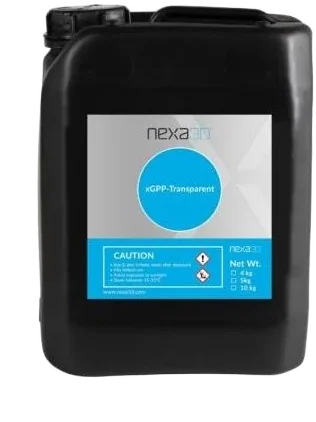
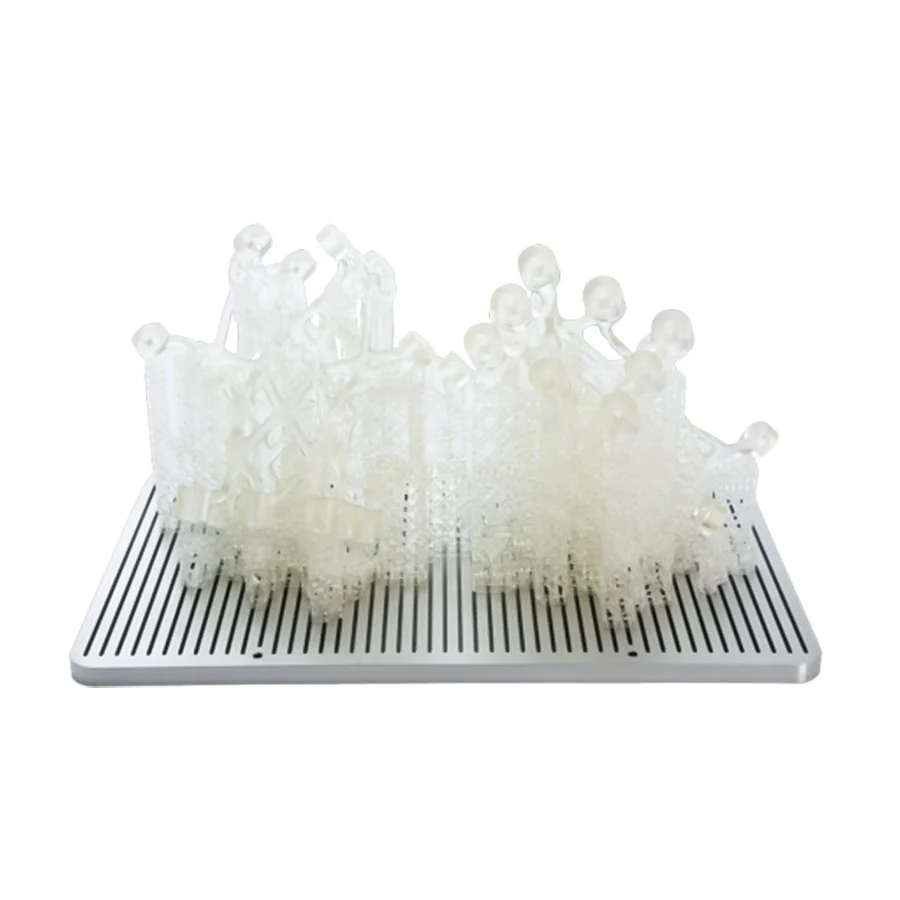
- Lot-matched resin sealed and batch-traceable for repeatable prints
- Validated LSPc profile exposure and cure settings for your Nexa3D printer
Nexa3D xGPP-Translucent Resin – Performance Prototyping & Flow-Model Photopolymer for NXE 400 | 5 kg
General purpose translucent photopolymer for the Nexa3D NXE 400 and NXE 400 Pro. Combines 30–60 MPa ultimate tensile strength, 84–88 D Shore hardness and 59–61 °C HDT at 0.45 MPa with low shrinkage, high accuracy and fast LSPc print speed. The translucent finish makes it the practical choice for air ducts, manifolds and fluid-flow models where you need to see inside the part, and it holds up in snap-fit and functional end-use work. Water absorption is 0.4% to ASTM D570. Supplied to order in 5 kg (12 lb) jerricans.
$1,004
What your process engineer actually checks
Measured numbers over marketing copy
Vendor marketing says xGPP-Translucent takes up no water; the data sheet lists 0.4% water absorption to ASTM D570. We quote the measured figure. Same for the 30–60 MPa tensile strength and 59–61 °C HDT at 0.45 MPa — ranges, because that is what the sheet reports.
A materials engineer on the line
Questions on cure settings, finishing or switching from another resin? Our engineers run Nexa3D LSPc resins in-house. Sub-4h reply, NDA standard.
Nexa3D xGPP-Translucent is a general purpose LSPc photopolymer for performance prototypes and functional end-use parts on the NXE 400 and NXE 400 Pro. The translucent finish lets you see flow paths, fill fronts and trapped air inside ducts and manifolds without cutting the part open.
Why engineers choose xGPP-Translucent
Rigid, accurate, fast — and you can see what is happening inside the part.
59–61 °C HDT at 0.45 MPa
Functional parts hold form through warm assembly checks and flow-rig testing, not just bench display under lab lighting.
Translucent by design
See flow paths, fill fronts and trapped air inside ducts, manifolds and closed channels without sectioning the part.
84–88 D Shore hardness
Hard, rigid surfaces at 30–60 MPa ultimate tensile strength, stiff enough for snap-fit clips and repeated assembly cycles.
0.4% water absorption
Measured to ASTM D570. Vendor marketing describes no water uptake; we quote the figure printed on the data sheet.
How we supply xGPP-Translucent
Vendor-validated chemistry, lot traceability and a cure profile that matches your machine.
Formulated & tested
xGPP-Translucent is a BASF-formulated general purpose photopolymer, validated on the Nexa3D NXE 400 and NXE 400 Pro before it enters our catalogue.
Stocked & lot-matched
Supplied to order in 5 kg (12 lb) jerricans with lot traceability, so a repeat run of flow models prints from the same chemistry.
Print, wash & cure
Print at 405 nm on the NXE 400 or 400 Pro, wash and finish with the standard Nexa3D solvent workflow, dry, then UV post-cure to full properties.
Physical and mechanical properties
| Property | Method | Value |
|---|---|---|
| Ultimate tensile strength | ASTM D638 | 30–60 MPa |
| Elongation at break | ASTM D638 | 4–5.5% |
| Shore hardness (0s, 3s) | ASTM D2240 | 84–88 D |
| HDT @ 0.45 MPa | ASTM D648 | 59–61 °C |
| Water absorption | ASTM D570 | 0.4% |
Printed properties depend on part geometry, orientation and post-cure. Values are typical, not a specification.
Typical applications
Where translucency and rigidity earn their keep.
Compatible printers & post-processing
xGPP-Translucent is qualified for the Nexa3D NXE 400 and NXE 400 Pro, cured at 405 nm under the LSPc process. Those are the only platforms we confirm — Nexa3D publishes no validated profile for xGPP-Translucent on the XiP or XiP Pro desktop machines, so we make no compatibility claim there. Mix the jerrican thoroughly before each print job and pour slowly into the vat so entrained air can clear, since bubbles are far more visible in a translucent part than an opaque one. Printed parts are washed and finished using the standard Nexa3D solvent workflow, dried, and then UV post-cured to reach the published 30–60 MPa tensile range and 59–61 °C HDT at 0.45 MPa. Filter reclaimed resin back into the container between jobs.
Not sure xGPP-Translucent is the right resin?
Three alternatives from the same Nexa3D LSPc line.
Why source xGPP-Translucent through Additive Plus
- Genuine Nexa3D xGPP-Translucent — supplied to order in 5 kg (12 lb) jerricans with lot traceability
- Validated LSPc exposure and cure profiles for the NXE 400 and NXE 400 Pro
- Materials engineers who run Nexa3D LSPc resins in-house — sub-4h reply, NDA standard
- Volume pricing and official purchase orders supported for production accounts
Downloads
| Brand | Nexa3D |
| Available colors | Translucent |
| Weight | 5 kg |
| Country of origin | USA |
| Printing Materials | Resins |
| Technology | LSPc |
| Package | 5 kg jerrican |
| Material form | Liquid photopolymer resin |
| Printer | NXE 400, NXE 400 Pro |
| Tensile Strength | 30–60 MPa |
| Elongation at Break (%) | 4–5.5% |
| Shore Hardness (3s) | 84–88 D |
| [email protected] MPA (°C) | 59–61 °C |
| Water Absorption (24hr) % | 0.4% |
| Resin Type | General |
| Application | Engineering, Jigs & Fixtures, Manufacturing |
We stock the full Nexa3D LSPc resin line and support official purchase orders and volume pricing. Tell us your printer and monthly volume and we'll match the right resin and quantity.
Other products teams run alongside Nexa3D xGPP-Translucent Resin – Performance Prototyping & Flow-Model Photopolymer for NXE 400 | 5 kg
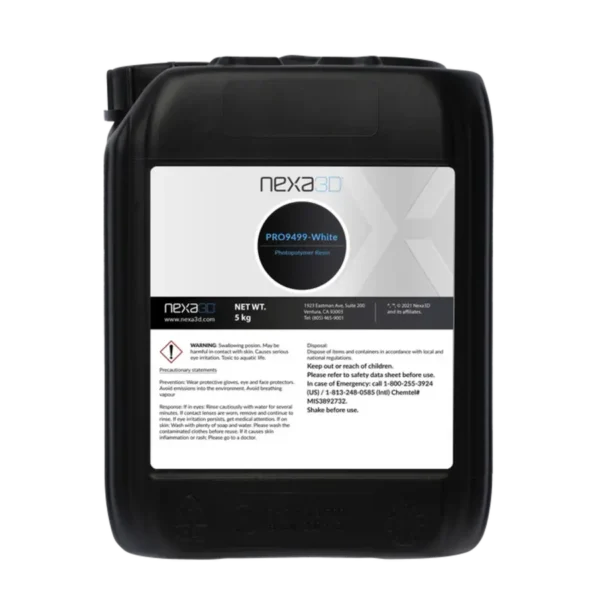
Cost-effective rigid general-purpose photopolymer for the Nexa3D XiP and XiP Pro — accurate models, functional prototypes and jigs in a clean matte white.
- ✓ Rigid, ABS-like: 40 MPa tensile, 95 MPa flexural stress at yield, 77 Shore D
- ✓ Tuned for the XiP LSPc profile — fine detail and repeatable accuracy, first time
- ✓ 5 kg production bottle — lowest cost per part · ships in 1–2 business days
In stock
· 1–2 Business Days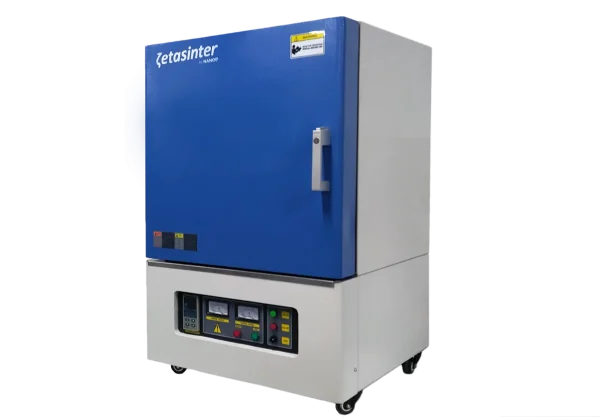
Zetasinter Chamber sinters printed ceramic parts in ambient air, up to 1600 °C.
- ✔ Sinters in ambient air — no gas supply, no atmosphere control to manage
- ✔ 1600 °C maximum: alumina at 1550 °C, white and black zirconia at 1475 °C
- ✔ 250 × 250 × 250 mm chamber takes real parts, not only test pieces
Freight and installation requirements confirmed with you before the order is placed.
Made to order
· Ships from California · timeline confirmed at quotation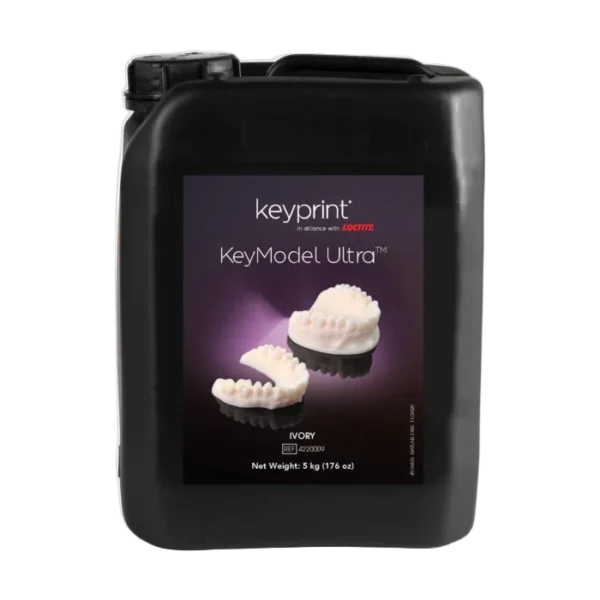
Fast, dimensionally stable ivory resin for dental and orthodontic models.
- ✓ Crisp detail and stable dimensions for aligner and restorative models
- ✓ Ivory finish that trims and scans cleanly
- ✓ 5 kg bottle for Nexa3D NXE / NX series printers (LSPc)
In stock
· 2 Business Days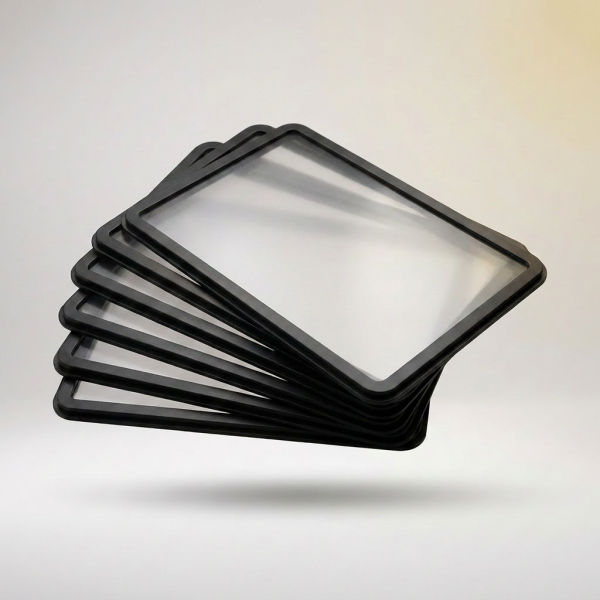
Best value for the XiP Pro — five genuine Nexa3D Everlast-1 membranes at the lowest cost per membrane.
- ✔ Each rated 50,000+ layers (~20 L) — up to 25× the life of standard films
- ✔ Lowest cost per membrane in the Everlast-1 line — genuine Nexa3D OEM
- ✔ Ships fast from our Los Angeles warehouse — lead time 5–15 business days
One purchase order, months of uninterrupted printing.
In stock
· 5–15 Business Days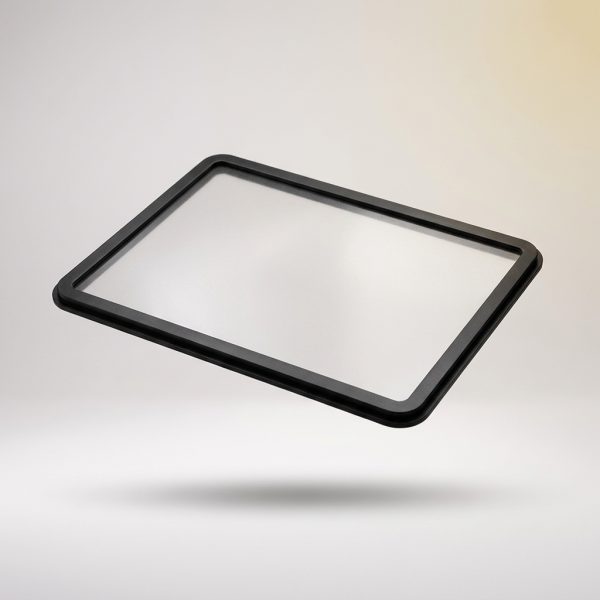
The genuine Nexa3D Everlast-1 membrane keeps your XiP Pro producing consistent parts at industrial volume.
- ✔ Rated 50,000+ layers (~20 L per membrane) — up to 25× the life of standard films
- ✔ Genuine Nexa3D OEM — even resin replenishment for repeatable parts, build after build
- ✔ Ships fast from our Los Angeles warehouse — lead time 5–15 business days
A fresh membrane on schedule is the cheapest insurance against downtime.
In stock
· 5–15 Business Days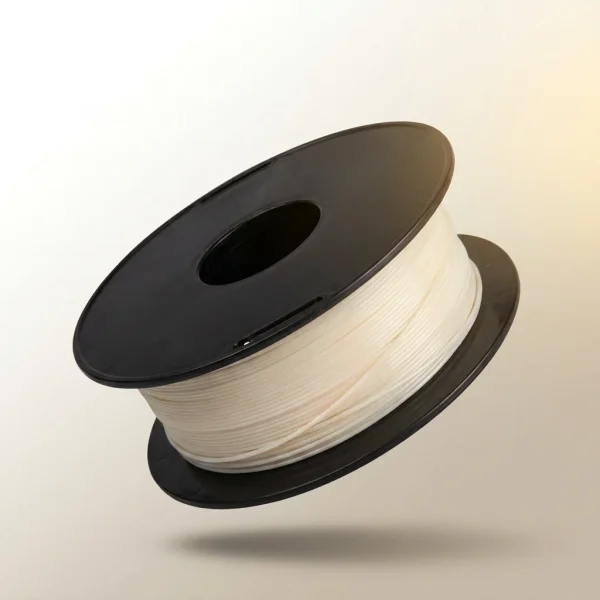
Print radiofrequency parts directly — no debinding, no sintering. A dielectric filament with permittivity 7.5 and low loss, so antennas, lenses and metasurfaces come off the printer ready to test.
- ✔ Permittivity 7.5 · loss tangent 0.001 · HDT up to 110 °C
- ✔ No debinding, no sintering — prints as a technical polymer, parts up to 80 cm
- ✔ Genuine Zetamix by Nanoe · 500 g spool, vacuum packed · 1.75 mm
In stock
· Ships from California · 10–20 business days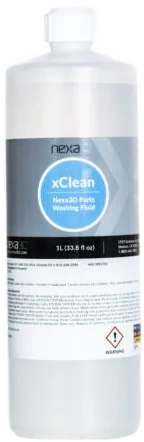
Currently not in stock. Leave a request and we will confirm availability, price and lead time.
Nexa3D xCLEAN parts-washing solvent — 3x IPA's saturation limit, no HazMat shipping, clears photopolymer resin residue in about 5 minutes.- ✓ 3x IPA's saturation limit — fewer bath changeovers
- ✓ Not a Dangerous Good at this size — ships without HazMat freight
- ✓ available on request (not in stock)
Out of stock
· Not in stock — available on request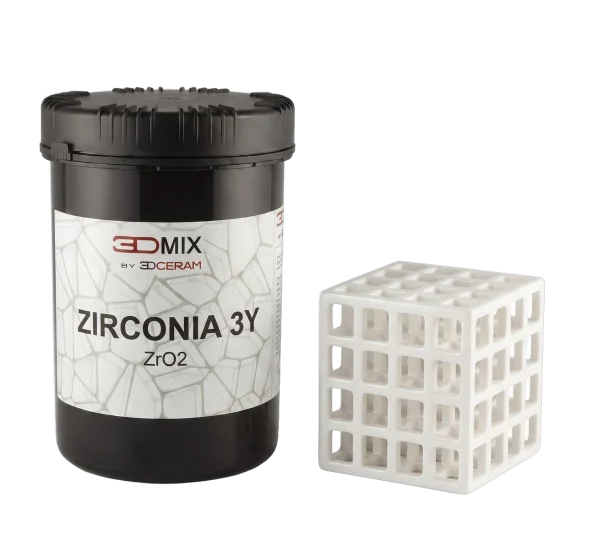
Print exceptionally tough 3Y zirconia (ZrO₂) parts on 3DCeram's Ceramaker laser-SLA platform, then debind and sinter to a dense, biocompatible oxide ceramic.
- ✓ 950 MPa 4-point bending strength at >99.5% density — the strongest single oxide in the range
- ✓ Colourable, biocompatible, sub-0.5 µm grain — jewellery, dental and precision parts
- ✓ Ceramic SLA paste for the 3DCeram Ceramaker platform — quote-based, mutual NDA before spec review
In stock
· In stock — ships in 1–2 business days. Custom ceramic formulations and larger batches: 2–4 weeks, configured to order.Common questions
Don't see yours? Email [email protected] — NDA standard, typical reply within 4 hours.
Which 3D printers is Nexa3D xGPP-Translucent compatible with?
What colour and pack size does xGPP-Translucent come in?
How are xGPP-Translucent parts washed and post-cured?
What is xGPP-Translucent best used for?
How should xGPP-Translucent be stored and handled?
Does xGPP-Translucent carry any certifications, and does it absorb water?
Can we test xGPP-Translucent before committing to volume?
Place your order, or talk to an engineer first
Order Nexa3D xGPP-Translucent Resin – Performance Prototyping & Flow-Model Photopolymer for NXE 400 | 5 kg direct, or talk to materials engineer