Tailored Warranty And Support
Financing Available Today
3D Lab ultrasonic atomizers  ·  US distributor with factory-trained service engineers  · 
3D Lab × Additive Plus · Field-proven in the US since 2018

Make metal powder
yourself — from wire,
rod, or scrap.

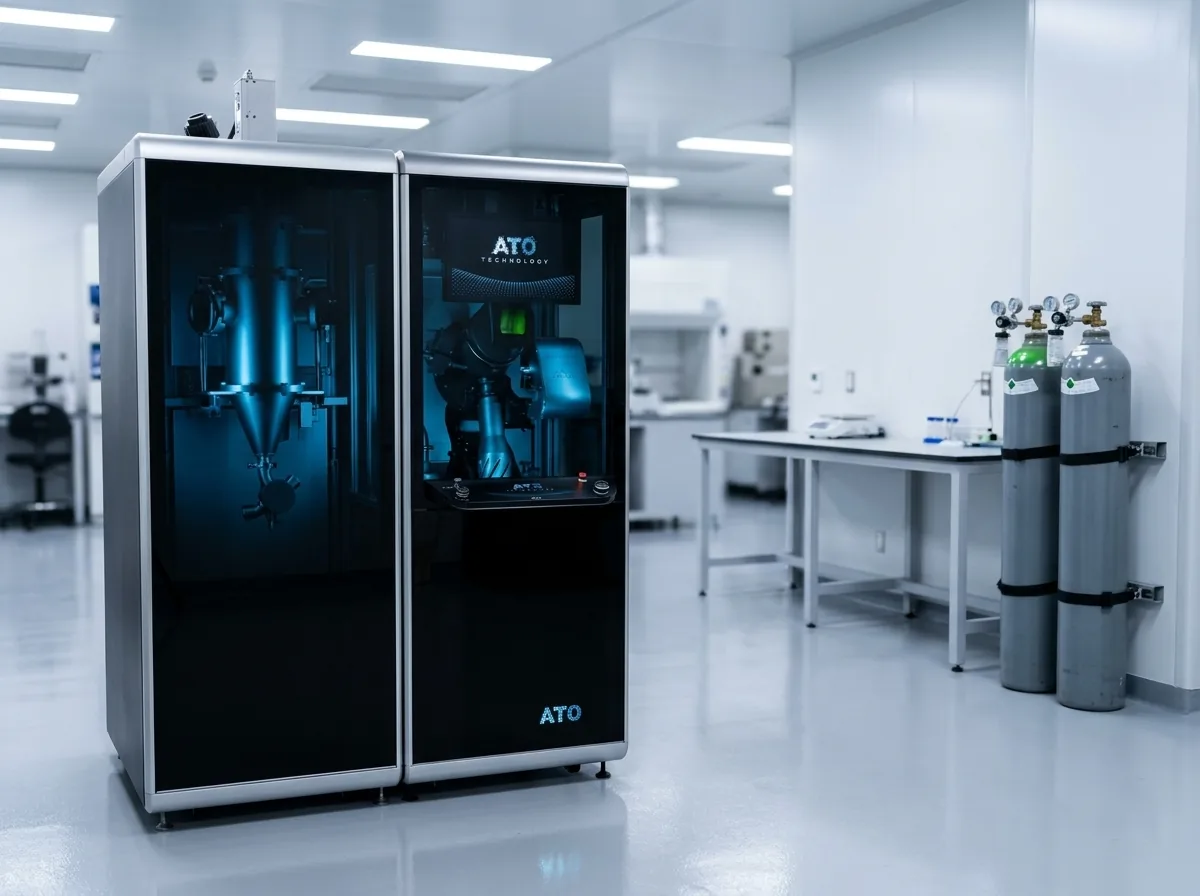
ATO ultrasonic atomizers let R&D teams qualify and screen new alloys in-house — turning a commercial wire spool, a cast rod, or your own machining scrap into spherical powder with a controllable particle size, the same day.

See the technology
✓ Factory-trained US service engineers ✓ Live demos in Irvine, CA ✓ Free standard-material sample
★ Working in gold, platinum or silver? See ATO Noble →
From 1 g
Minimum batch — you set it by how much feedstock you load
Same day
From feedstock to first characterized powder batch
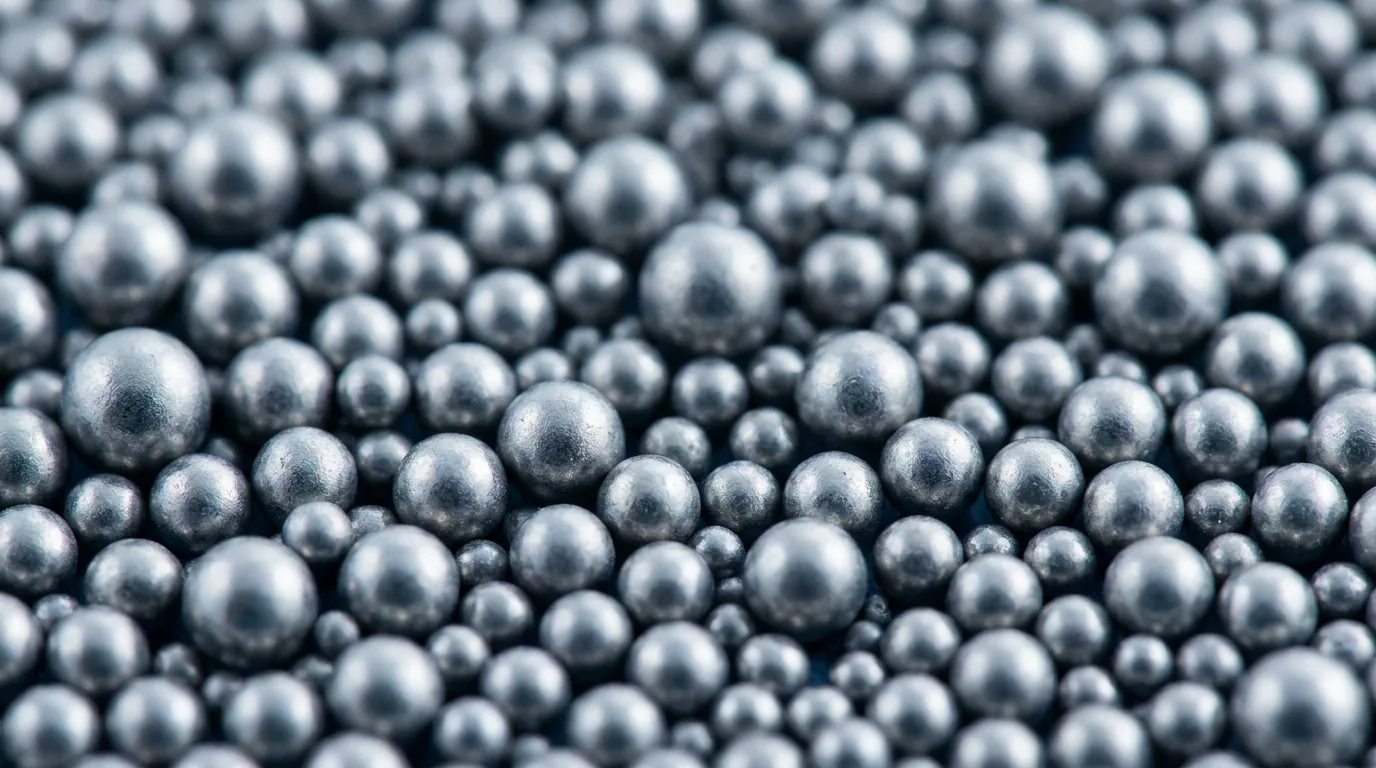
20–120 µm
Spherical output — PSD is controllable, not fixed
Real run — molten metal shed into spherical powder. No render. Watch on YouTube →
Since 2018Field-proven in the US — the longest record in the category
15+US research institutions with active installations
150+Alloys atomized across the lab and customer sites
1 business dayResponse from a factory-trained US engineer
Deployed at US research institutions, national labs & manufacturers
LLNL
National Lab
Livermore, California
UCI
Joint Demo Lab
Irvine, California
SUNY
University
New York
Navajo Tech
University
Crownpoint, New Mexico
Cooksongold
Precious metals
Birmingham, UK
ProTech
Industrial AM
United States
Compliance WBENC Certified·AS9100-aligned·ISO 13485-aligned·ITAR-aware·NADCAP·NDA on every project
Why in-house

Screen a new composition this week — not next quarter

The ATO enables rapid in-house qualification and screening of compositions.

  • ✕No weeks of lead time — atomize the same day
  • ✕No kilogram minimums — a screening batch is grams
  • ✕No IP exposure to an external supplier — your formulation stays in the lab
6–12weeks
Typical supplier lead time for a custom alloy batch
ATO produces the same batch the same day.
5–25 kgmin order
Minimum order most suppliers will accept
Sub-kilogram orders are rarely quoted at all.
100%in-house
Composition and process data stay yours
No specification sheet leaves the building, and costly scrap feeds straight back in.
Technology

Wire, rod, or scrap in. Spherical powder out.

One sealed argon chamber, four steps, no high-pressure gas and no industrial cell.

Cutaway of the atomization chamber — melt to spherical powder in one sealed argon volume.
01
Feed
Commercial wire, a cast rod, or clean machining scrap enters the sealed chamber under argon.
02
Melt
A TIG, plasma, or induction module liquefies the tip of the feedstock — you pick the module to suit the alloy.
03
Atomize
The melt flows onto an ultrasonically driven sonotrode. Standing waves on its surface shed the liquid into uniform droplets — no gas jet involved.
04
Solidify & collect
Droplets freeze in flight under argon into spherical particles and drop into a sealed collection container.
US-patented technology
3D Lab holds the US patent on ultrasonic atomization for AM powders — the core of the system.
Switch alloys the same day
No cross-contamination between runs — move from Ti-6Al-4V to Inconel 625 in a single session.
Closed-loop on scrap
Chips, turnings, sprues, and failed prints feed straight back in — near-zero waste on costly alloys.
20–120 µmControllable PSD
ArInert atmosphere
<15 minAtmosphere prep
Up to several kg/hrRate depends on the alloy and melt module
~1.07×1.54×2.0 mATO Lab footprint
Systems

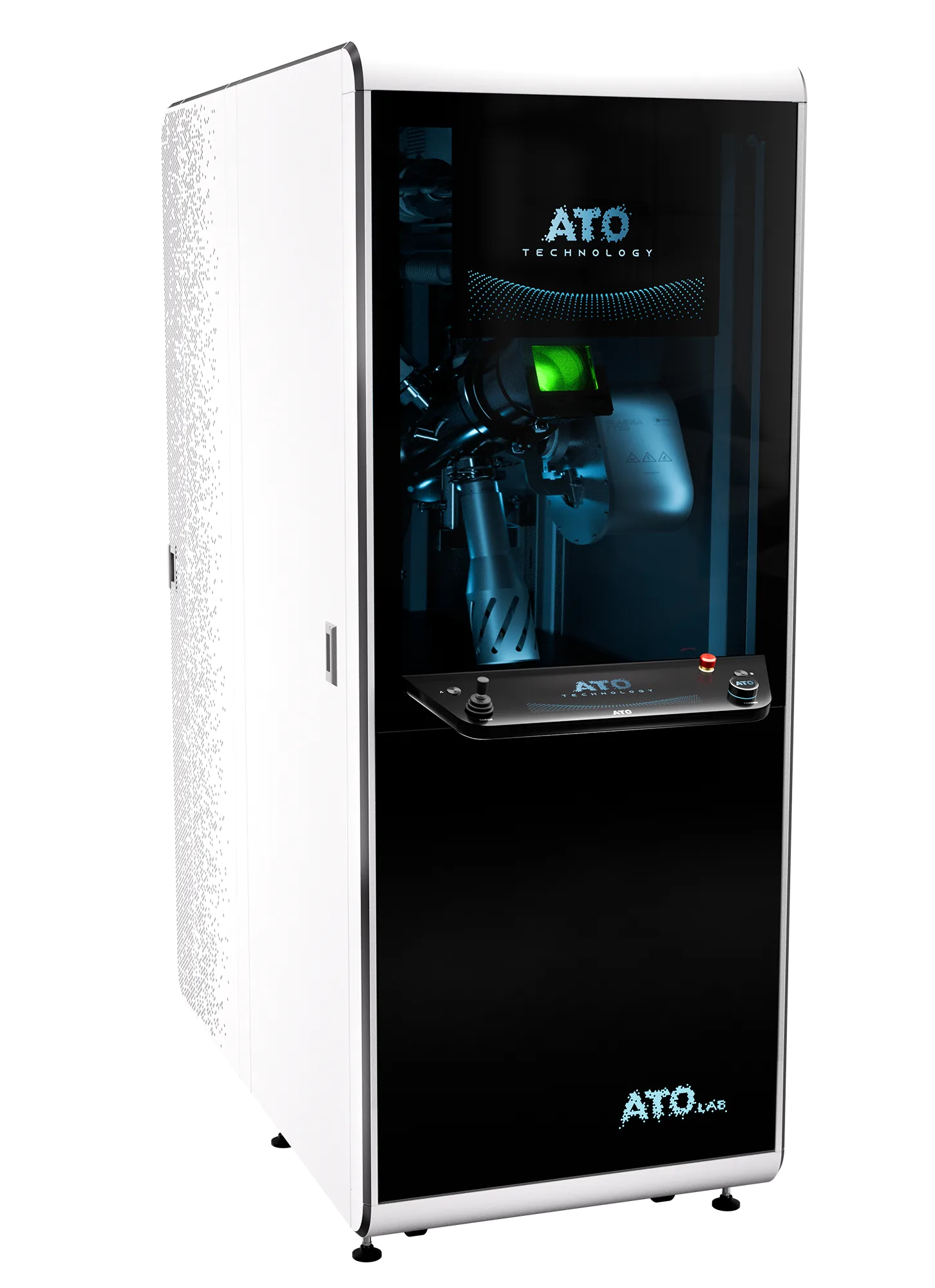
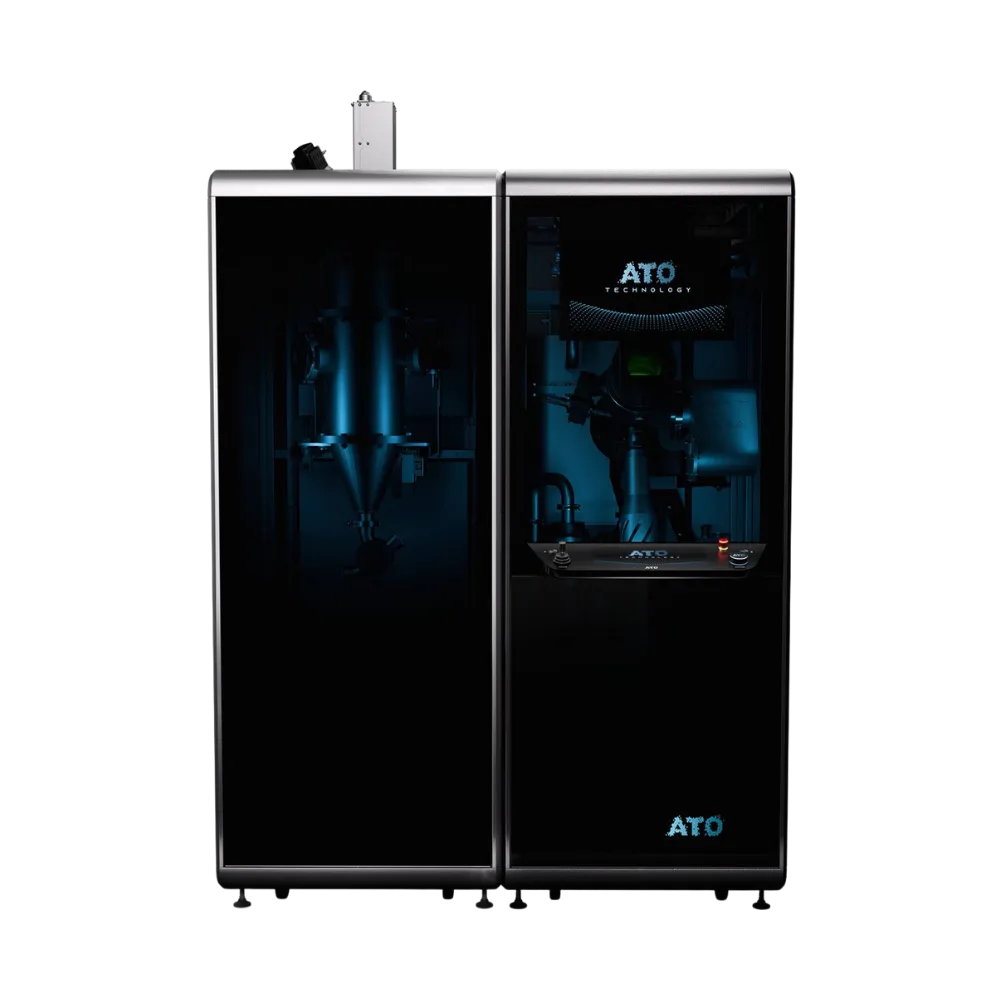
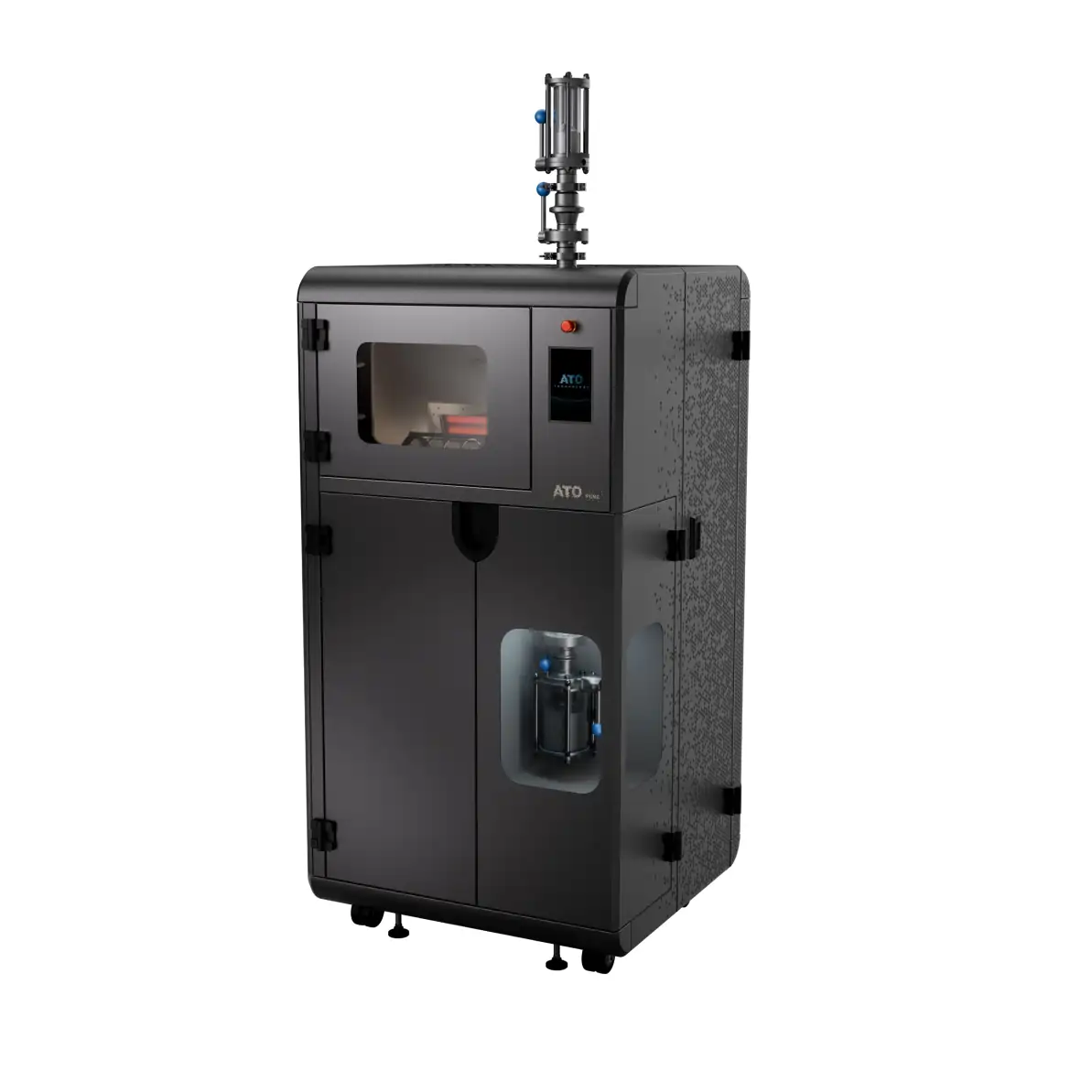
The ATO family

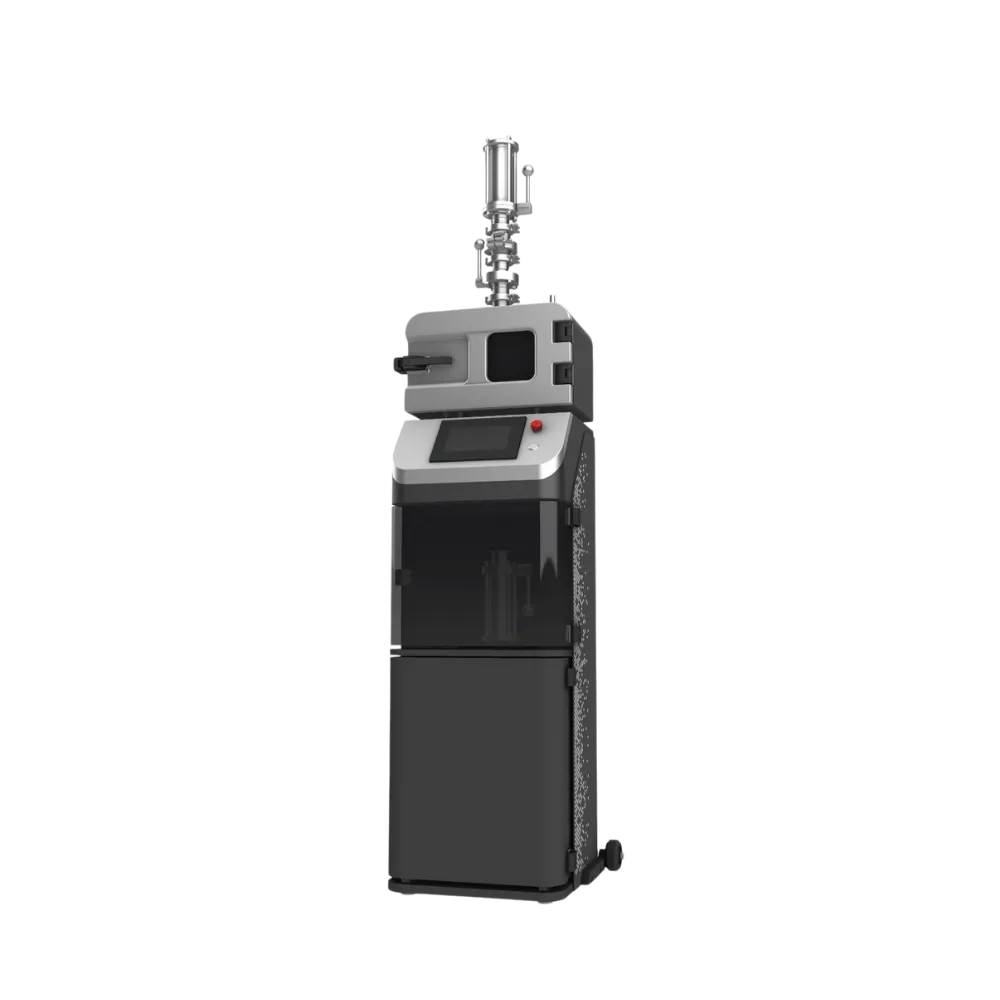
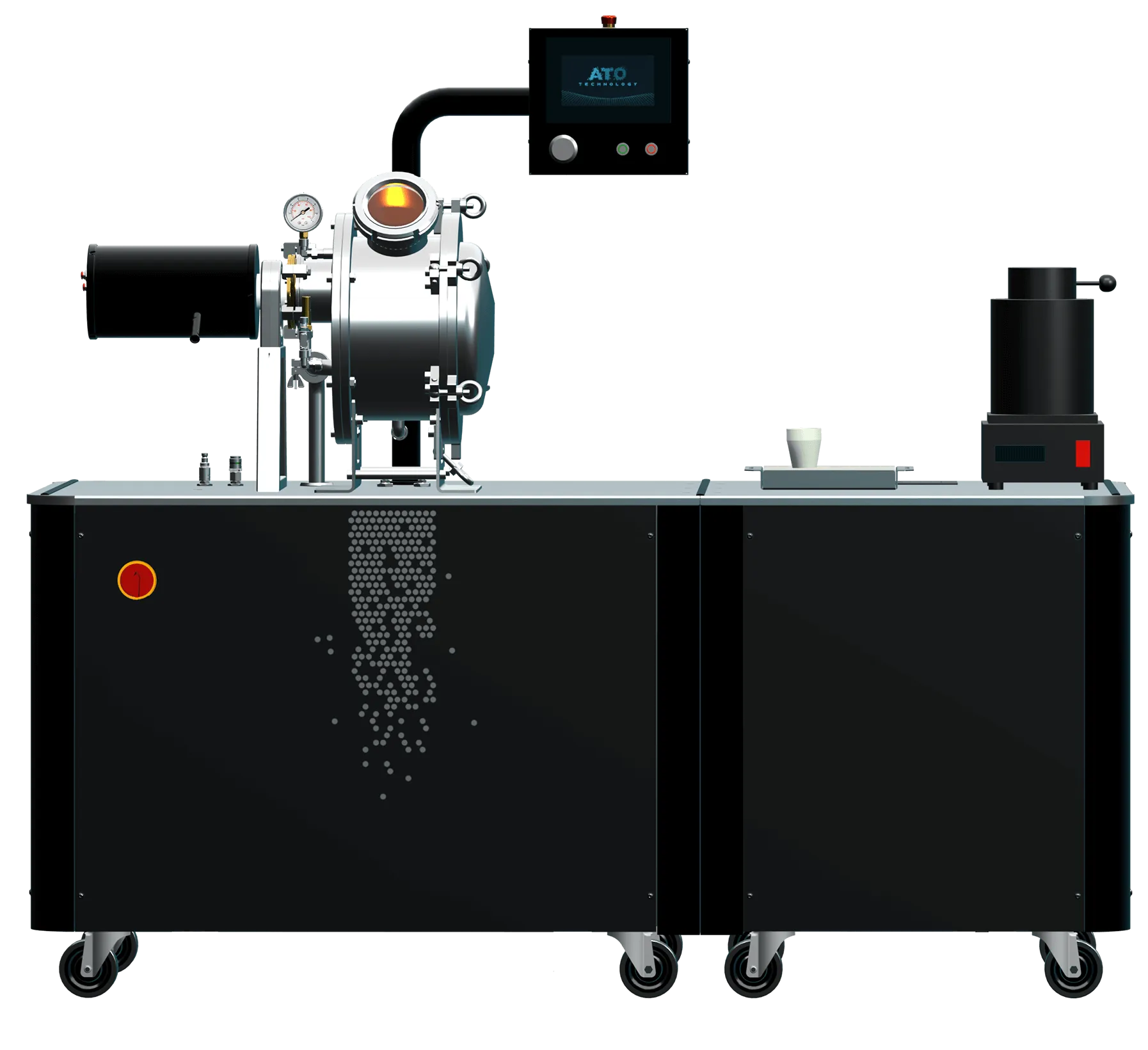
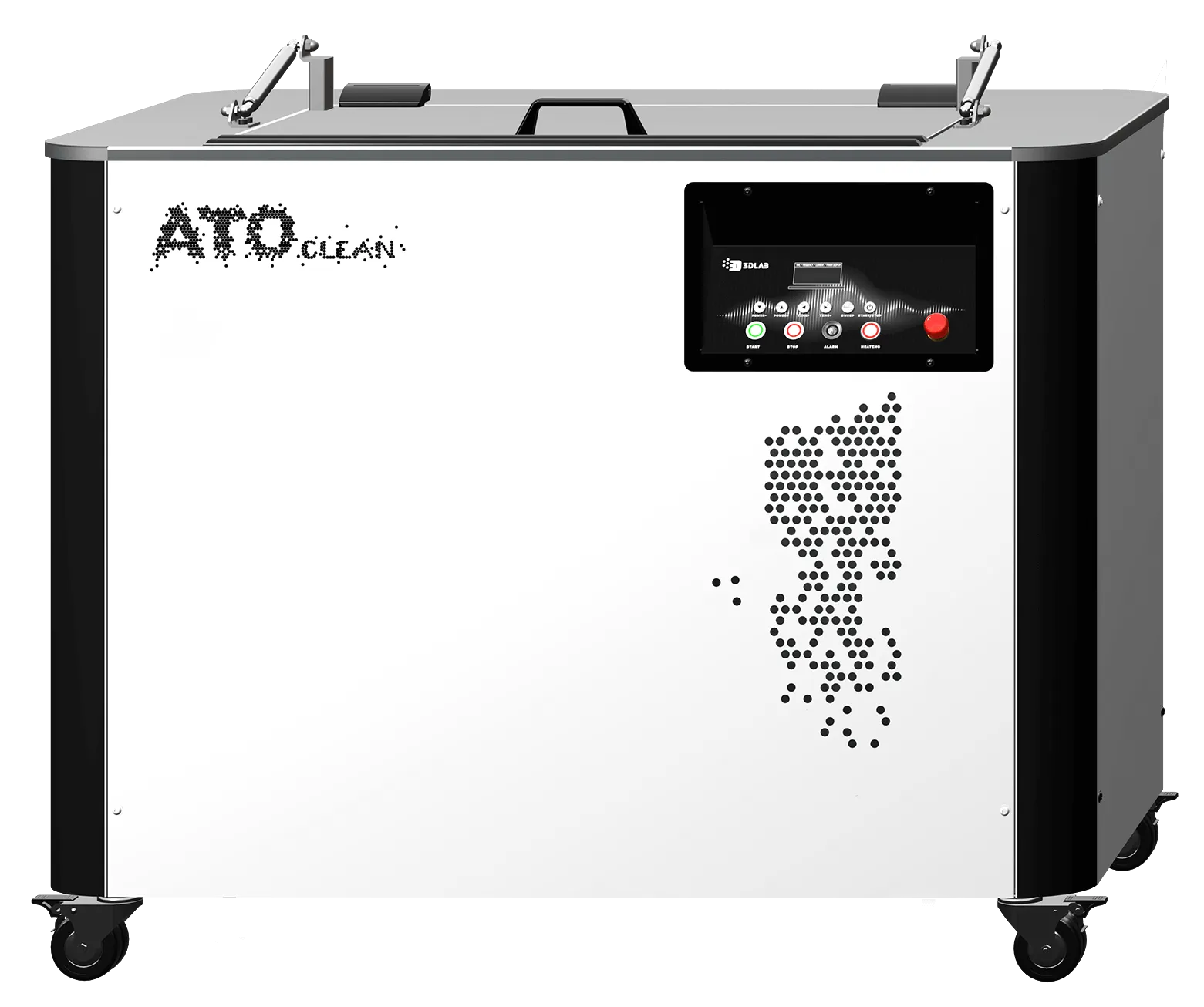
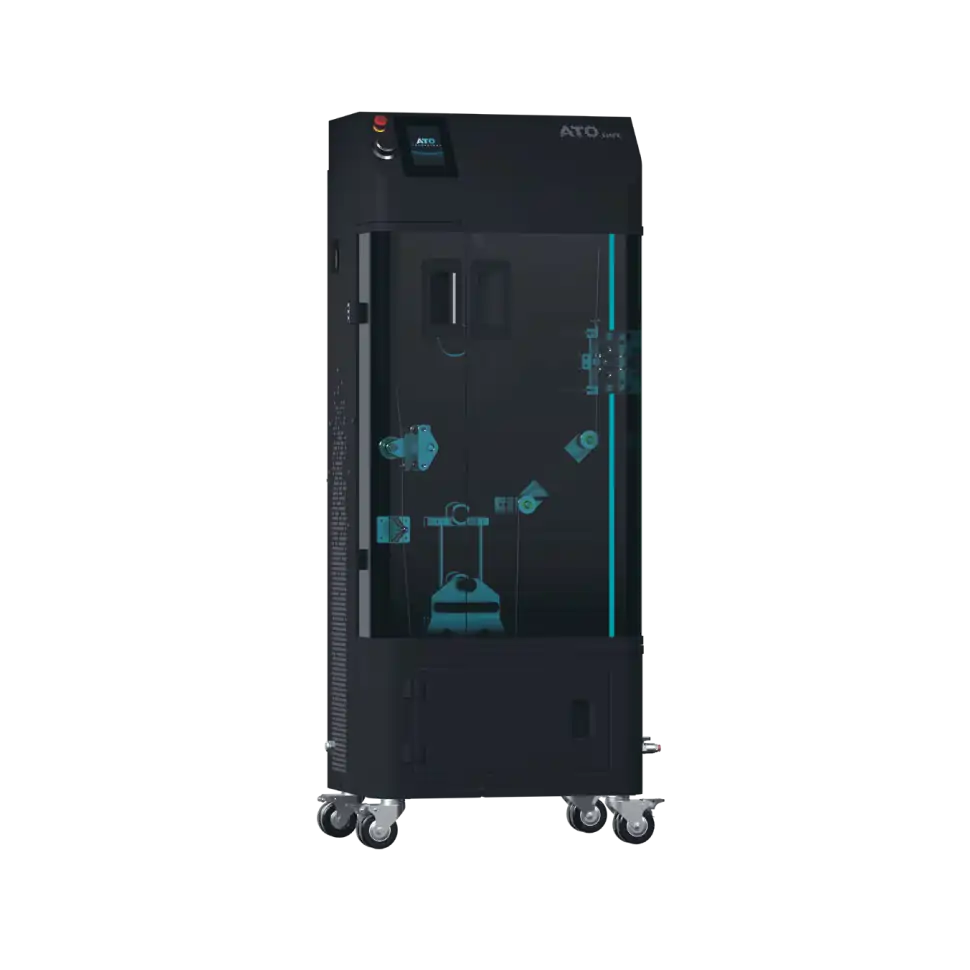
Three atomizers from 3D Lab, each handling wire, rod, and scrap. Every system ships with engineering review, US installation, and local service — sold and serviced by Additive Plus.

Modules, peripherals & accessories
Every ATO product is sold and serviced by Additive Plus · click any card for full specs and lead time
★ Real footage — not renders

See the actual process

Real runs filmed at 3D Lab — molten metal breaking into thousands of spherical droplets. Judge it for yourself.

More on the 3D Lab channel →
★ Batch size is yours to set

From one gram to several kilograms — in a single hour.

1 g → several kg
Atomized in one hour
  • You set the batch by how much feedstock you load — there is no minimum charge to make a run worthwhile.
  • The rate scales with the alloy and the melt module — an easily-melted alloy runs faster than a refractory one.
  • Gas atomization spends material and time on setup, purge, and cooldown below roughly 5 kg. It is built for volume, not exploration.
  • The ultrasonic process runs the same from one gram upward — which turns "we'd like to try that alloy" into "we ran it this morning."
1 g – 100 g
Explore
Screen a new composition before you commit feedstock. Map the parameter space without burning material — exactly where academic and early-stage R&D lives.
100 g – 1 kg
Develop
Enough powder to print real test coupons and characterize mechanical properties while you iterate on frequency, power, and melt parameters.
1 kg – 100 kg+
Produce
Move from validation to regular batches. An induction melt module carries the throughput while holding the same tight, repeatable particle size.
ATO Induction Melting System paired with an atomizer in a working additive-manufacturing lab
Induction Melting System (IMS)

The fastest, cleanest way to run copper and aluminium

A swappable melt module that heats the charge inductively instead of with an arc — so light elements don't burn off and the powder composition matches the charge you put in. It also lets you melt your own custom charge and atomize it in one continuous workflow, instead of waiting weeks for a mill to cast a special rod.

Highest rateInduction feeds the melt continuously — the fastest atomization in the family
Cleanest chemistryMinimal vaporization of low-melting-point elements
Best forCopper & copper alloys, aluminium, bronze, brass, NiTi, Al-Sc
Honest limitReaches ~1700 °C — sonotrode-bound; above that the TIG / plasma melt takes over
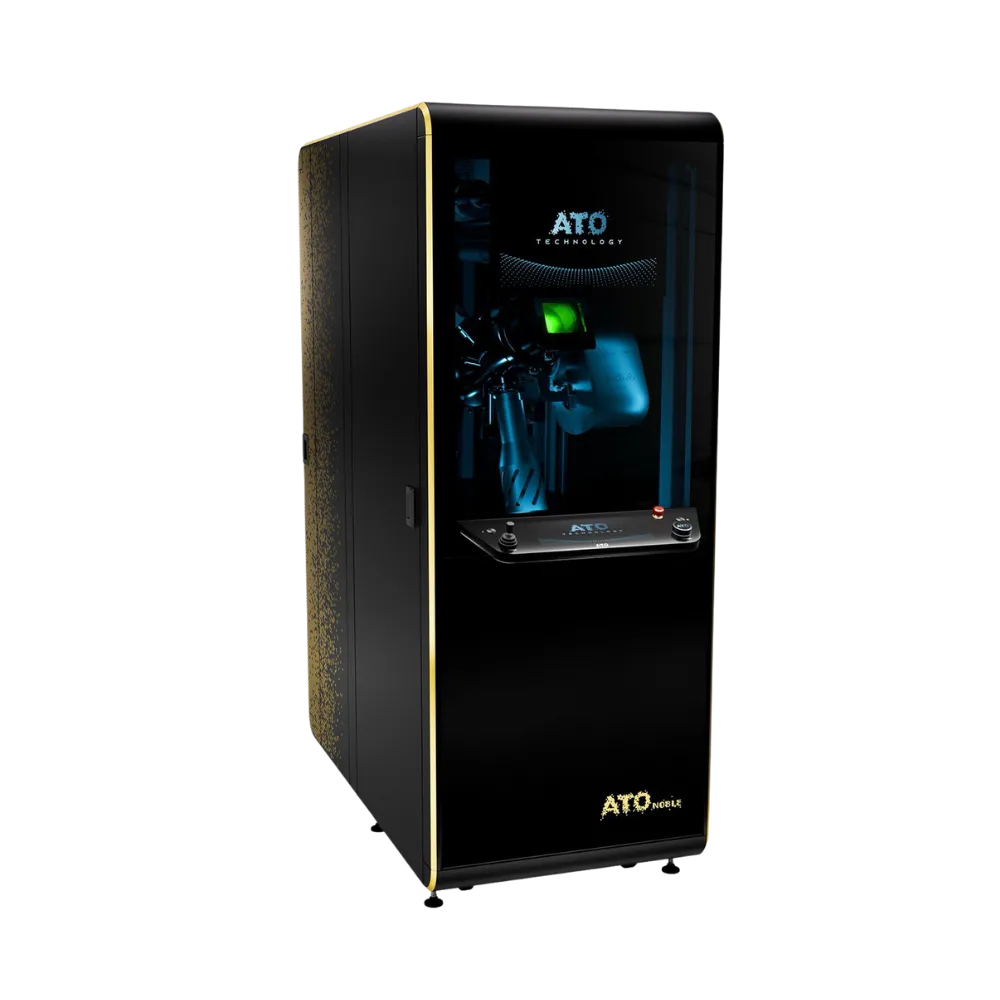
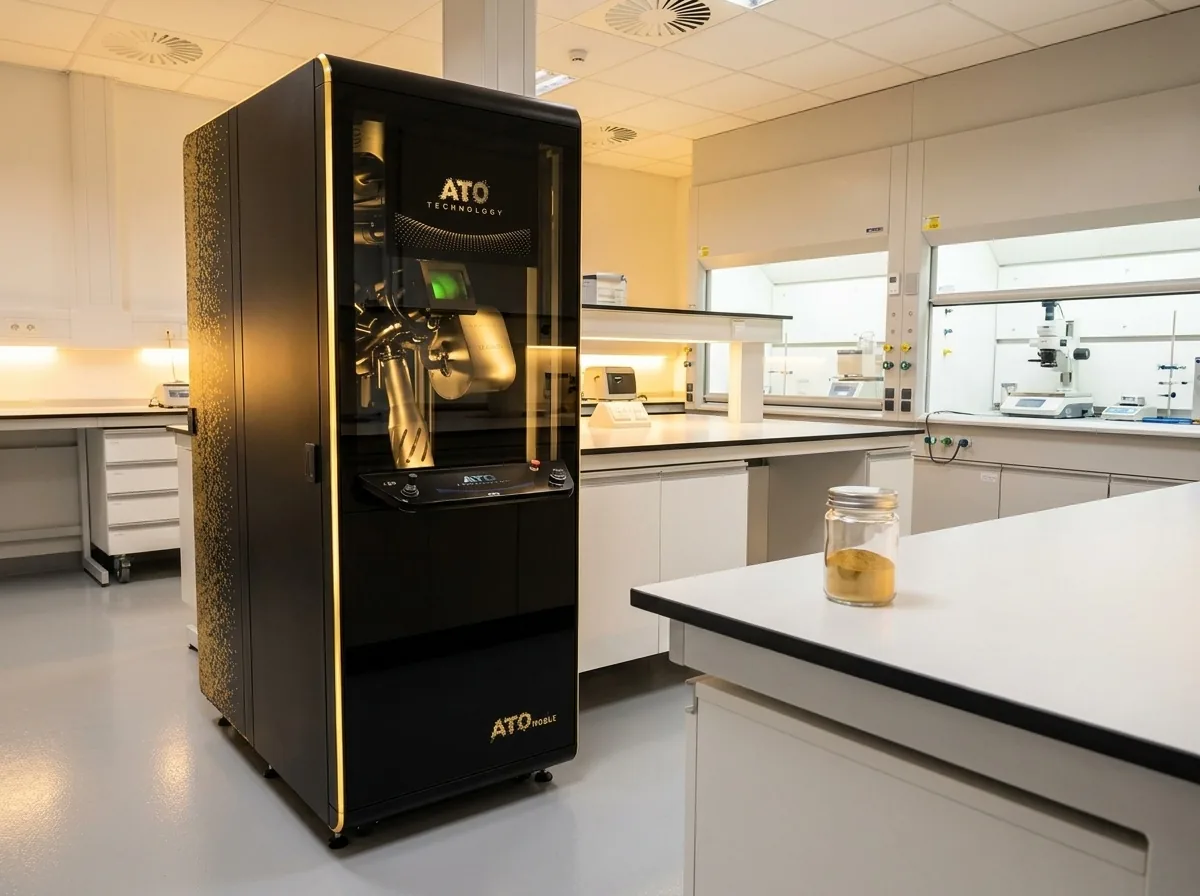
★ ATO Noble · Precious metals

Gold, platinum, silver — atomized in-house, with under 1% loss.

At today's gold prices, every percent of material loss is real money.

  • <1% material loss — Zero Loss Technology: a closed gas loop and dedicated filtration recover the precious metal
  • Chemistry preserved — full karat integrity for certification (9 / 14 / 18 ct, Au 99.99%)
  • Au · Ag · Pt · Pd · Ir and custom noble alloys, spherical 20–120 µm for LPBF on M080 / M100
  • Plasma-arc melt plus ultrasonic atomization, in one sealed system
  • Validated in production by Cooksongold (UK) — jewelry, dental, and electronics
ATO Noble precious-metals ultrasonic atomizer with gold and silver ingots and a dish of gold powder
Materials

Any alloy that melts — with deep proof behind the ones that matter

Alloy-agnostic technology, validated where it counts: 150+ alloys atomized in the lab. These carry documented validation — and the highlighted ones have downloadable material reports.

Inconel 625 / 718Report ↓ Ti-6Al-4V · CP-TiReport ↓
316L · 17-4 PH steelValidated
Aluminum · Al-ScValidated
Copper · CuCrZr (IMS)Validated
Cobalt-chrome (CoCr)Validated
Tool steels (H13, M300)Validated
Au · Ag · Pt · PdATO Noble
Refractory · W·Ta·Nb·MoBy trial
Spherical ultrasonic-atomized Inconel 625 nickel-superalloy powder, close up Inconel 625 · spherical morphology
Sample material report

Inconel 625 — ultrasonic atomized

Particle size (D50)~45 µm
PSD window15–53 µm, tunable
Sphericity> 0.95
Qualified forLPBF · DED · BJ
Download the report (PDF) ↓
Free powder sample

Hold the powder before you decide

Request a free batch of a standard material — atomized on the ATO and shipped with a material report in the box.

316LTi-6Al-4VInconel 625AluminumHAYNES® 282®
R&D Bundle · ATO Lab + CamSizer X2 + AO Metal

Build your own metal powder-to-part lab

A lab atomizer, a particle analyzer, and our own open LPBF printer — powder to part without leaving the building. Available as a bundle or individually, engineered to work together.

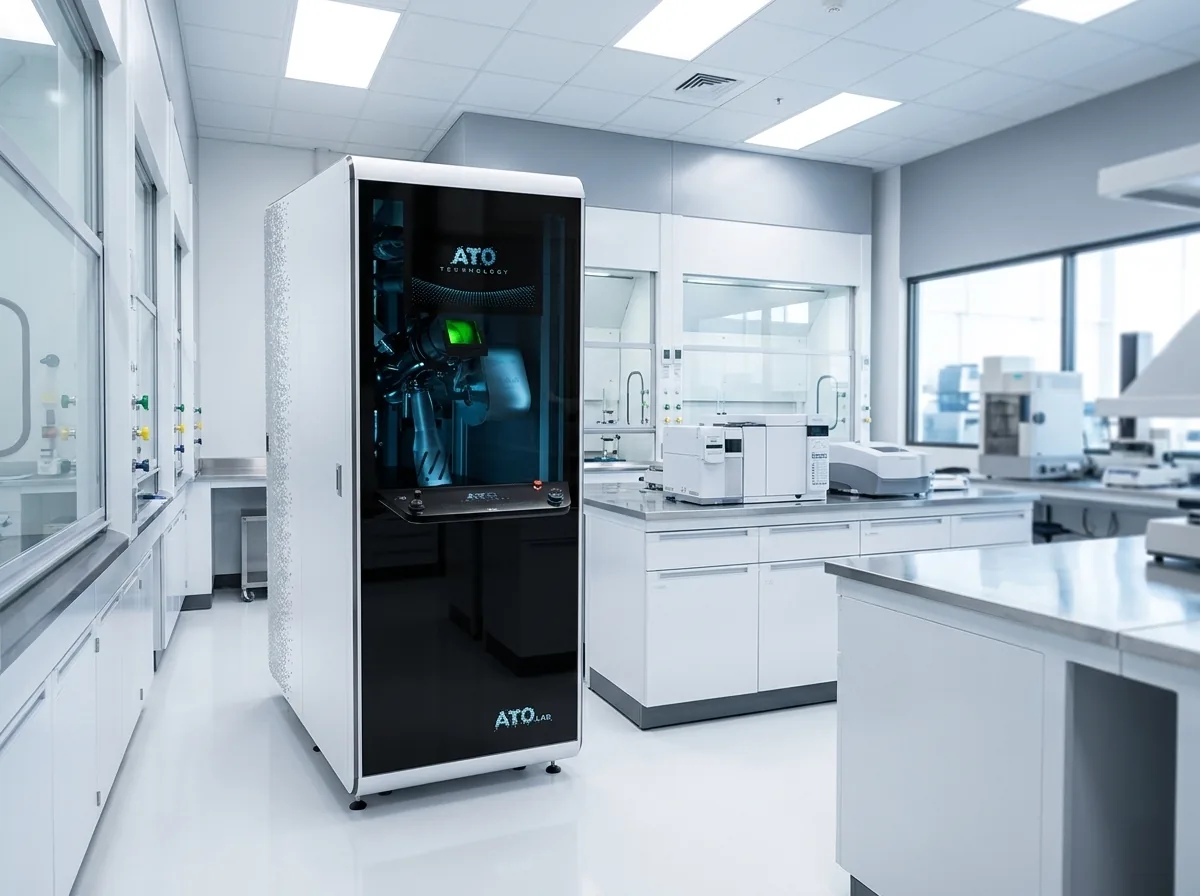
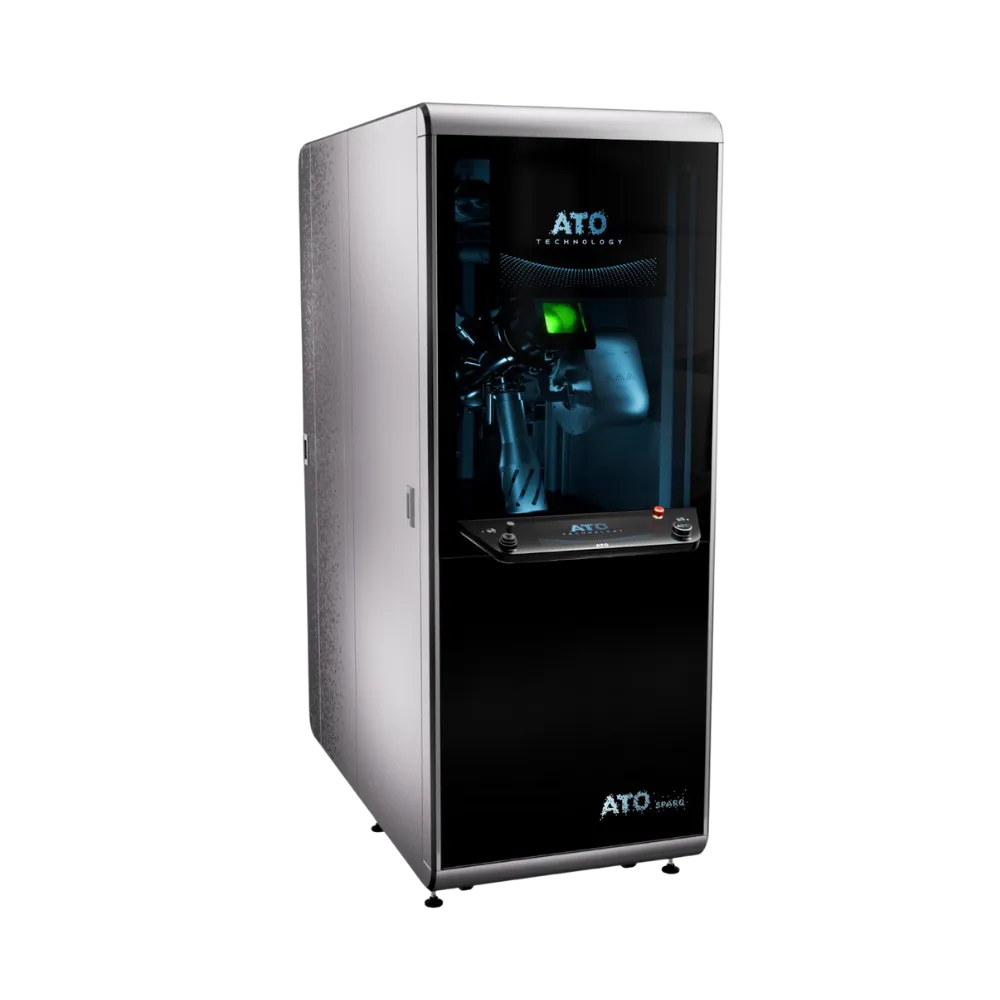
ATO Lab ultrasonic atomizer running in a research laboratory
01 · Produce
ATO Lab
Make the powder
In-house atomizer for reactive, refractory, and specialty alloys.
  • Ultrasonic + TIG / plasma / induction
  • PSD 20–120 µm · spherical, high-flow
  • Reactive & refractory alloys · near-zero waste
  • Open parameters · sealed argon ecosystem
3D Lab · US-patented
View ATO Lab →
→
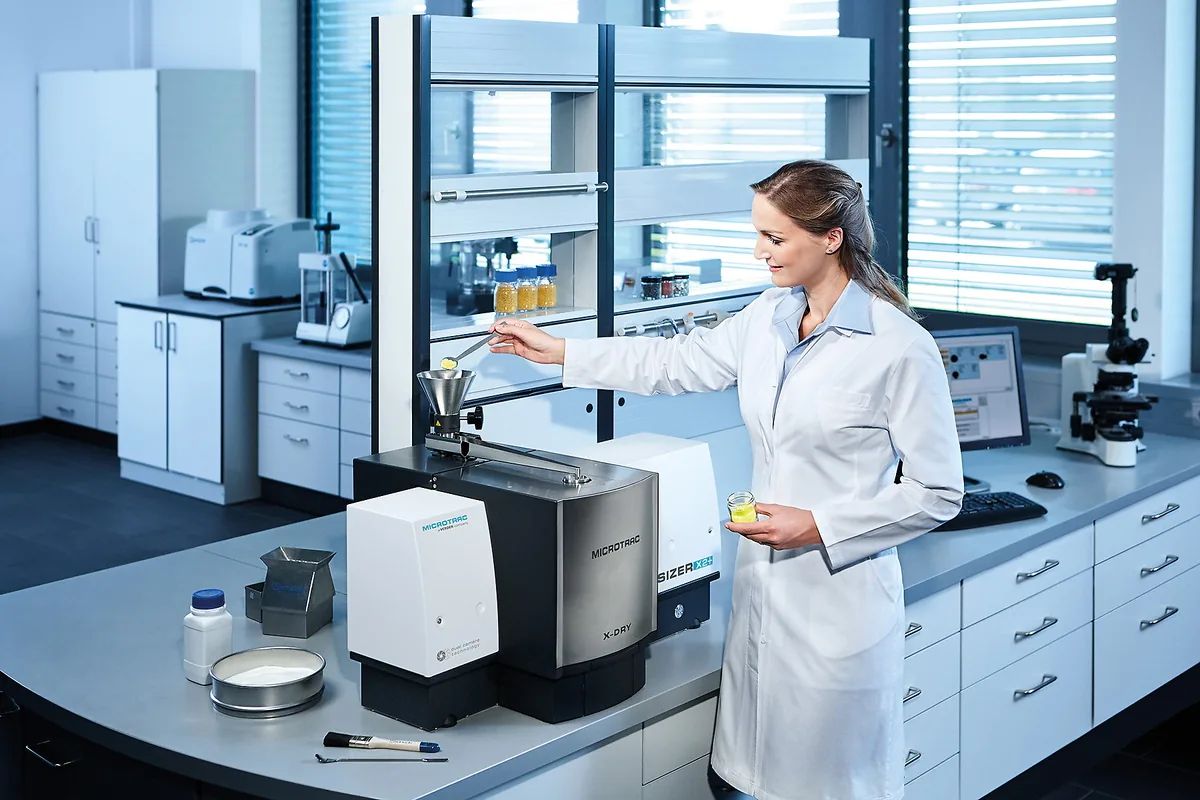
CamSizer X2 particle-size and shape analyzer in operation in a materials lab
02 · Analyze
CamSizer X2
Qualify the batch
Shape and size analyzer — qualify powder before it reaches the printer.
  • Particle size 0.8 µm – 8 mm
  • Dynamic Image Analysis (ISO 13322-2)
  • D10 / D50 / D90, sphericity, aspect ratio
  • Results in minutes
Made in Germany
→
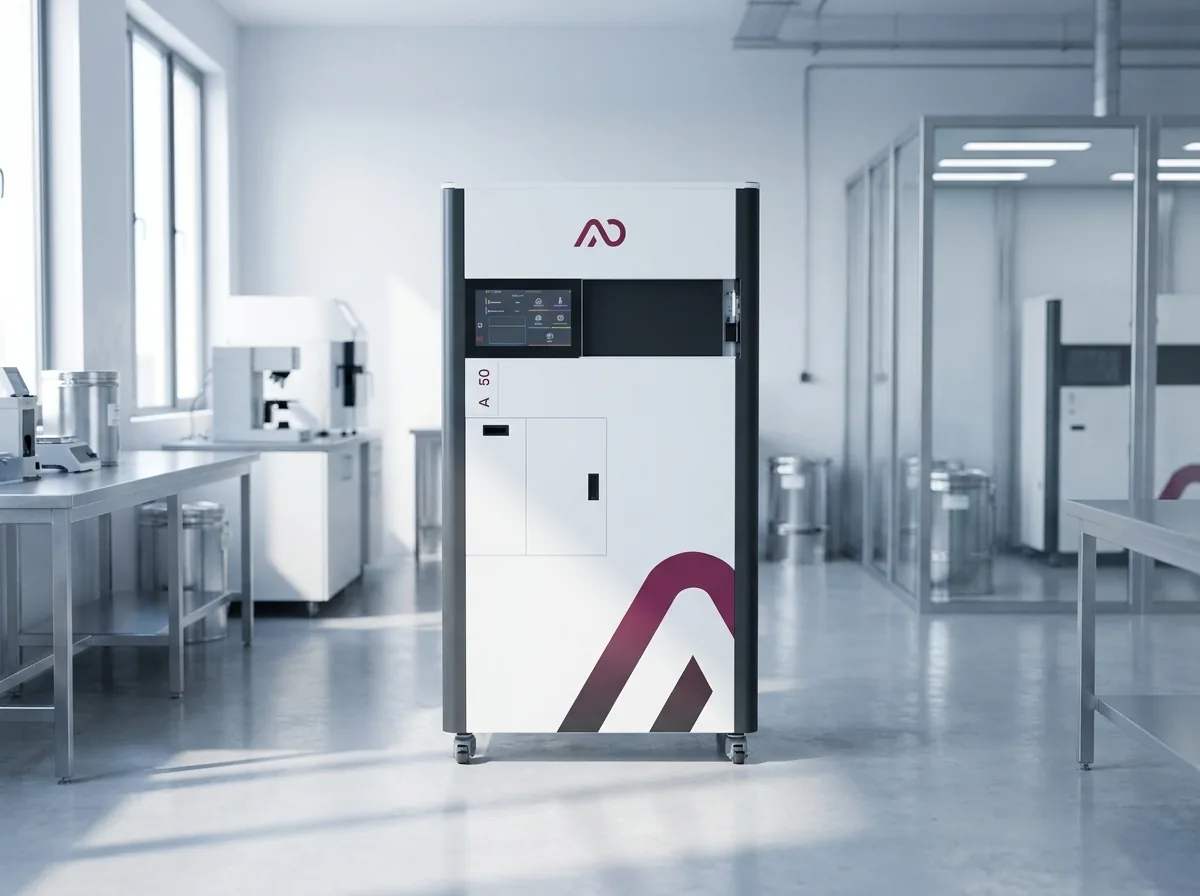
AO Metal A50 LPBF metal 3D printer in an additive-manufacturing lab
03 · Print
AO Metal A50
Print the part
High-performance, open-parameter LPBF printer for your own powder.
  • Build volume Ø50 × 100 mm
  • 300 W IR laser (500 / 1000 W optional)
  • Unique 250 W blue laser (450 nm)
  • Plate heating to 250 °C (900 °C optional)
Made in the USA
View AO Metal A50 →
UniversitiesTeaching metal AM & powder development
R&D labsExperimenting with new metal alloys
Engineering programsHands-on training in additive workflows
Materials teamsDeveloping, analyzing & printing powders
R&D Bundle includes
✓ ATO Lab
✓ CamSizer X2
✓ AO Metal A50
✓ US install (2–3 days)
✓ Training
✓ 1-yr US support
Available as a bundle or individually · grant-friendly · NDA before any specs are shared
View the R&D bundle →
Comparison

Where ultrasonic atomization wins

Against gas atomization and against buying powder outright — judged on the things that actually matter for R&D: particle quality, alloy flexibility, and the cost of running a closed loop.

Capability ATO Ultrasonic Gas atomization Buy from a supplier
Particle size distributionTight & controllableBroad; needs sievingSupplier's spec
SphericityHighly sphericalHighVaries by lot
Alloy controlFull — you set the compositionLimited; crucible-boundSupplier decides
High-temp / refractory alloysYes — TIG / plasma meltHard — crucible limitsIf offered
Copper & aluminiumYes — induction melt, highest rateYesIf offered
Gas consumptionLow — closed loopHigh-pressure gas, ongoingn/a
Minimum batchFrom 1 gramKilogramsOften 5–25 kg
Lead timeSame dayDays to weeks6–12 weeks
Feedstock typesWire, rod, scrapWire / rodn/a
IP & formulationStays in-houseIn-houseExposed
Lab footprintFits a lab bayLarge industrial celln/a

Gas atomization is the right tool for tonnes of a settled alloy. For grams-to-kilograms of many alloys — including high-temperature systems a ceramic crucible struggles with — ultrasonic atomization is built for the job. We'll model the total cost of ownership against your specific volume and material on a discovery call rather than quote a headline price here.

Installation

What you need to get started

ATO is built for a standard lab — no heavy industrial infrastructure. Here's the full checklist; most installations are running within 2–3 days of delivery.

✓
Floor space~1.0 × 0.8 m
Fits a standard lab bay; bench or floor mount. No dedicated room required — the exact footprint is confirmed at engineering review.
✓
Power3-phase, 20–30 kW
Standard 3-phase lab power — most university materials labs already have it. Confirmed at engineering review.
✓
Inert gasArgon, continuous
A standard argon cylinder or building supply. We provide the consumption spec; typical lab supply is sufficient.
✓
VentilationStandard lab exhaust
Exhaust directed out of the workspace via a fume hood or local exhaust. No special HVAC.
✓
Operator1 trained person
~30-minute setup per run after training. Two training sessions are included; no metallurgy background required.
✓
FeedstockWire · rod · scrap
Commercial wire, cast rod or billet, or clean machining scrap. We can help source feedstock if needed.
Order to first batch: 12–16 weeks lead time, then a 2–3 day install. Your first powder batch is produced during commissioning, before our engineers leave.
Download checklist (PDF) ↓
Research & publications

Built on real research. Validated in serious labs.

50+
Peer-reviewed publications citing ATO atomization research
15+
US research institutions with active installations
2018
First US installation — the longest field record in the category
150+
Alloys atomized across the lab and customer sites
Active installations include
LLNL — Lawrence Livermore National Laboratory
Texas A&M · Virginia Tech · Caltech · UC Berkeley · Georgia Tech · Penn State
SUNY · Navajo Technical University
Cooksongold — precious-metal manufacturing
ProTech — industrial AM production

ATO is not a prototype — it's the established tool for US researchers who need reliable, repeatable, small-batch powder without the infrastructure of gas atomization.

The ultrasonic atomization technology has been cited across materials science, additive manufacturing, and powder metallurgy journals. A granted US patent plus field deployment at national labs and top universities make it the reference platform in its category.

We share publication lists, application notes, and customer data for specific alloy systems on request — before any purchase decision.

Ultrasonic atomization of Ti-6Al-4V: powder morphology, PSD, and LPBF processability
Journal of Materials Processing Technology · 2023
Closed-loop scrap recycle via ultrasonic atomization for Inconel 625 powder
Additive Manufacturing · 2024
Lab-scale powder production for multi-alloy AM research programs
Powder Technology · 2022
Case studies

Real labs. Real results.

Field-deployed across US research universities, national labs, and manufacturers since 2018.

National Lab · California
"It's not a prototype — it's production infrastructure our research programs depend on daily, across multiple alloy systems."
Active installation · multiple alloys in production
ProTech · Industrial AM
"We ran a trial with our own scrap, got the PSD data we needed, and ordered the full system the same quarter. The trial removed all the risk."
Scrap trial → full system order
Cooksongold · UK
"Under 1% material loss at gold pricing gives ATO Noble the fastest payback of any system we evaluated. Zero Loss was the deciding factor."
ATO Noble · jewelry & dental
★ US-based service

Local support — not a flight to Poland

Service engineers in the USBased in Los Angeles, CA — same time zone, same week.
Installation included2–3 days on-site, with operator training.
Demo lab in Irvine, CASee a live run before you buy — bring your own wire.
1 business-day responsePhone, video, or on-site as needed.
Two ways to start — no commitment

See it run. Atomize your own material. Then decide.

You don't have to take our word for it. Our US-based application engineers will run your alloy in front of you — or atomize the feedstock you send and hand back the data. Most teams who do this place an order within the same quarter.

Live demo · Irvine, California

Watch a live atomization run

Come to our demo lab in Irvine, California. Bring your own wire, rod, or scrap and watch it become powder — with PSD results in the room. An application engineer answers technical and commercial questions on the spot.

Free test atomization

Send us your material

Ship your wire, rod, or scrap. Our engineers atomize it and return a full PSD analysis and material report within a week — real data on your own alloy, before any purchase decision.

Backed by qualified application engineers based in the US — the same engineer who configures your system answers your support calls.

Get started

Book a discovery call or demo

Tell us your alloy and volume. A factory-trained US engineer replies within one business day — no call center, no overseas queue.

1
Send the formTwo minutes. NDA available before any specifications are shared.
2
Get a tailored reply in 1 business dayA configuration recommendation plus a TCO model for your volume and material.
3
See it for yourselfBook a live demo in Irvine, CA, or send material for a free test atomization.
✓ NDA on every project✓ Grant documentation✓ No commitment
Prefer to talk now?
+1 (747) 800-4854 [email protected] Factory-trained service engineers in Los Angeles, CA

Request a call or demo

We respond within 1 business day

ATO

Confidential. NDA available before any technical discussion.

FAQ

Common questions

How small a batch can ATO realistically run?+
A single gram of feedstock produces a meaningful batch — the practical lower limit is geometric (you need enough material to form and feed), not a mass minimum. That's the fundamental difference from gas atomization, which needs kilograms to be economical. Many labs run 1–5 gram screening sessions before committing to a larger batch.
Can ATO process scrap, chips, and machining waste?+
Yes — it's one of the most valuable capabilities. Wire and rod are standard inputs, but clean scrap, turnings, chips, and failed prints can all be atomized. For costly alloys like titanium or Inconel, closing the loop on scrap changes the economics. The main requirement is that scrap be clean and free of contaminants; we'll review your specific profile on a discovery call.
Can ATO handle my specific alloy?+
It depends on the melt module, so we match the module to your alloy. The TIG and plasma melts cover Ti, stainless, Ni, Inconel, and high-temperature and refractory systems. The Induction Melting System (IMS) covers copper, aluminium, and other lower-melting alloys up to roughly 1700 °C — at the highest atomization rate in the family and with the cleanest chemistry, and it lets you melt a custom charge and atomize it in one workflow. ATO Noble covers Au, Ag, Pt, Pd, and Ir with under 1% loss. For exotic or proprietary alloys we run a trial first: if it melts into wire, rod, or a charge, we can usually atomize it — and we'll tell you honestly if we can't.
What's the rate of atomization, and how much powder per run?+
Two separate things, and they're often confused. Batch size is your choice — you set it by how much feedstock you load, and there is no minimum that makes a run worthwhile. Rate reaches several kilograms per hour and depends on the alloy and the melt module: an easily-melted alloy runs faster than a refractory one, and induction melting gives the highest rate of all because it feeds the melt continuously. We'll give you a realistic rate for your specific alloy on the call.
How is ATO different from other lab atomizers?+
Three things, all operational: maturity, control, and support. ATO has been deployed in the US since 2018 — the longest field record in the category — and 3D Lab holds the US patent on ultrasonic atomization for AM powders. The particle size is genuinely controllable rather than fixed, and the swappable melt modules mean one platform covers everything from copper to refractory systems. And because Additive Plus services it from Los Angeles, you get local installation, training, and support instead of a transatlantic queue. The best comparison is a live demo in Irvine — bring your wire and see your own result.
What do installation and training involve?+
A standard install is 2–3 days on-site with operator training included, and your first powder batch is produced during commissioning. Additive Plus provides US-based service from Los Angeles — no waiting on engineers from Poland, no time-zone gaps. Ongoing support is by phone, video, or on-site visit, and annual maintenance visits are available and recommended.
Can we trial it before committing?+
Two ways. A trial run: ship us your wire, rod, or scrap, and you get a full PSD analysis report within a week. Or a live demo in Irvine, California: come watch a run, ideally on your own material. Most trial customers convert to a full system within the same quarter.
Is financing or grant support available?+
Yes. We work with equipment-financing partners for qualified organizations, and universities and national labs frequently fund ATO through capital-equipment grants. We provide documentation for NSF, DOD, and institutional applications — if you're in the planning phase, reach out early and we'll support it with specs, pricing letters, and reference contacts.

Make your first batch — this quarter.

Book a discovery call or ship us a trial sample. No commitment required.

Email us directly