
PETG filament is the material most engineers reach for once PLA stops being enough. It prints almost as easily as PLA but survives real use like ABS — strong, slightly flexible, water- and chemical-resistant, and dimensionally stable. That combination makes it the default choice for functional parts that have to work rather than just look good. This guide covers what PETG is, how it compares, how to print it well, and where it fits.
What is PETG filament
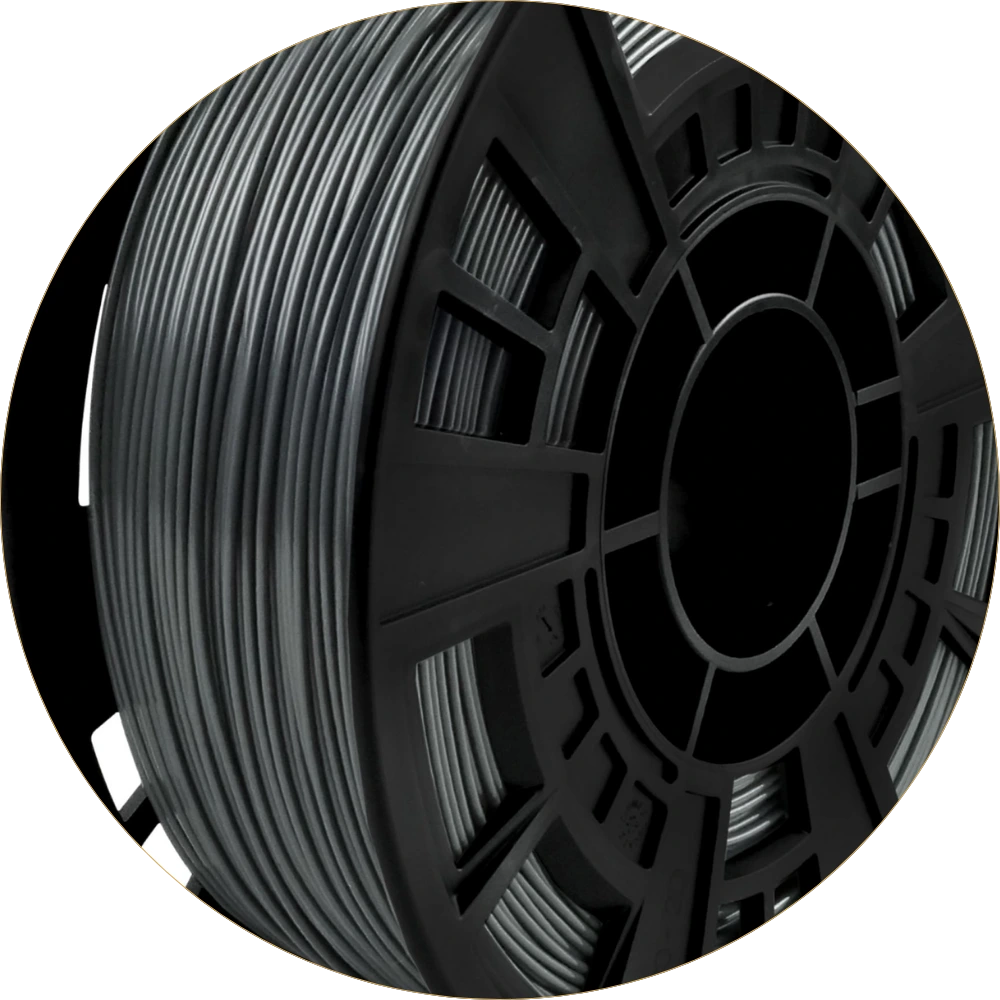
PETG is polyethylene terephthalate with added glycol (the “G”), the same base polymer as drink bottles, modified to print cleanly. It gives you good tensile strength with some impact toughness, resistance to water and many chemicals, and low shrinkage — so parts hold their dimensions and rarely warp off the bed. It also handles moderate heat better than PLA. In short, it is the everyday engineering filament: not the strongest or the most heat-resistant, but the best all-round balance.
PETG vs PLA vs ABS
| Filament | Strength / toughness | Heat resistance | Printability | Best for |
|---|---|---|---|---|
| PLA | Rigid, brittle | Low (~55 °C) | Easiest | Prototypes, aesthetic parts |
| PETG | Strong, slightly flexible | ~70–80 °C | Easy | Functional parts, brackets, outdoor |
| ABS | Tough, impact-resistant | ~90–100 °C | Harder (warps, fumes) | Enclosures, higher-temp parts |
How to print PETG well
PETG is forgiving but has a few habits to manage:
- Temperature. Print hotter than PLA, typically 230–250 °C, with a heated bed around 70–85 °C.
- Stringing. PETG loves to string and ooze. Tune retraction and drop travel speed, and dry the spool — PETG absorbs some moisture.
- Bed adhesion. It sticks too well to some surfaces; use a release agent or a textured plate so parts pop off without damage.
- Cooling. Use less part cooling than PLA; too much fan weakens layer bonding.
Any FFF printer handles PETG — no special hardware needed unless you move to a filled grade.
Grades: standard, glass-filled and carbon-filled
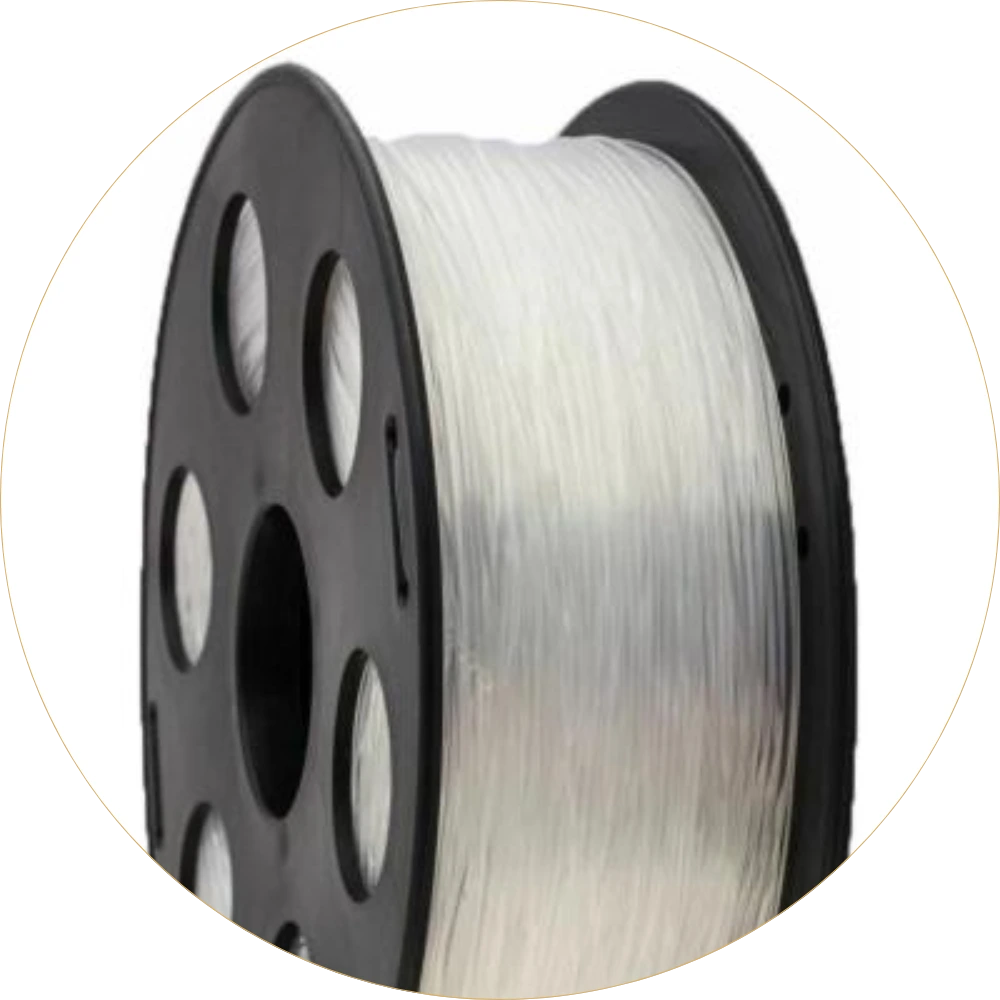
Standard PETG covers most work. For stiffer, more dimensionally stable parts, glass-filled PETG adds rigidity. For maximum stiffness and heat stability, carbon-fibre PETG (PET-CF) reinforces the base with chopped carbon fibre — note that filled grades are abrasive and need a hardened nozzle, as covered in our guide to carbon fibre filament.
Where PETG belongs
- Functional brackets and fixtures that take handling and load.
- Outdoor and moisture-exposed parts — PETG resists water and UV better than PLA.
- Enclosures and housings where some flex is an advantage over brittle PLA.
- Mechanical parts — clips, mounts and guards that must not shatter.
Choosing across materials? See our filament range and the guide to what additive manufacturing is.
Frequently asked questions
What is PETG filament?
A 3D printing filament made from glycol-modified PET. It is strong, slightly flexible, water- and chemical-resistant and low-warping, sitting between easy PLA and tough ABS as the everyday engineering filament.
Is PETG stronger than PLA?
Yes. PETG has more impact toughness and flexibility than PLA and resists water, chemicals and heat better, while printing almost as easily. PLA is more rigid but brittle.
How do you print PETG without stringing?
Print at 230-250 C with a bed around 70-85 C, tune retraction, slow travel moves, dry the spool, and use less part cooling than PLA to keep layers well bonded.
What is glass-filled or carbon-filled PETG?
PETG reinforced with glass or chopped carbon fibre for extra stiffness and dimensional stability. Filled grades are abrasive and need a hardened nozzle.
Have a question or a project? Let’s talk.
Tell us what you need — a real applications engineer replies within 24 hours. NDA standard, no sales script.