
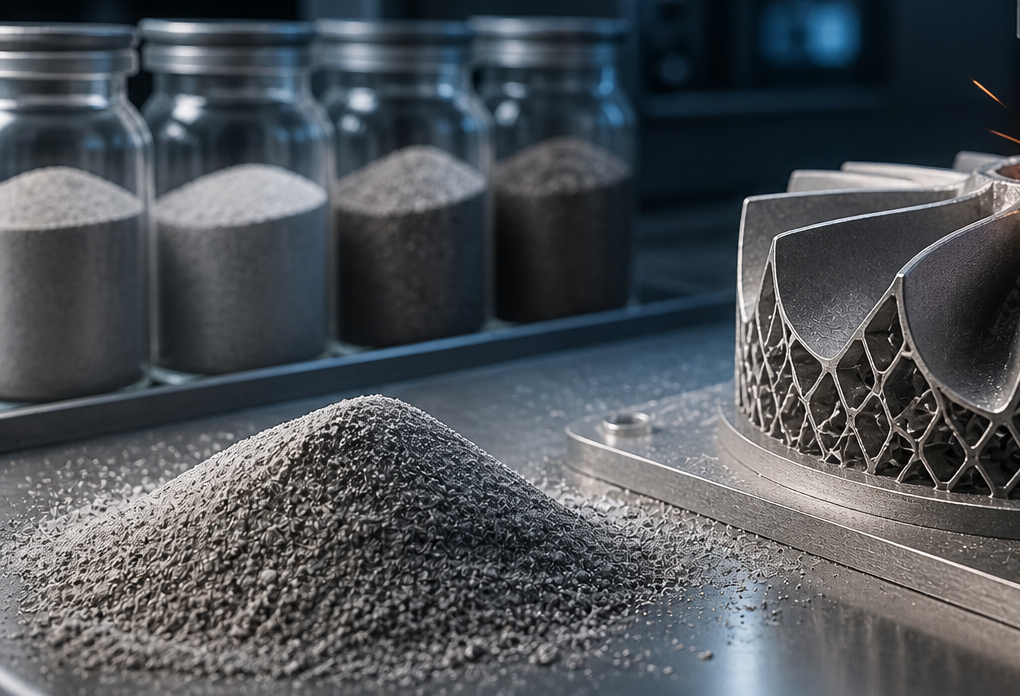
Additive metal printing with powder builds functional metal parts layer by layer from fine metal powders, instead of cutting or machining them from a solid block. It lets engineers design for performance rather than for the limits of a mill or lathe: complex internal channels, lattice structures, and consolidated assemblies that traditional methods cannot reach. Aerospace, medical, automotive, and industrial producers use it to make components that are lighter, stronger, and produced with less material waste.
This guide covers what the process is, the main technologies (LPBF, EBM, DED), how a build works step by step, the alloys that matter, why powder quality drives results, cost factors, common defects, and where the field is heading. If you are sourcing material, start with the metal powders category or the metal-powder buyer guide.
What is additive metal printing with powder?
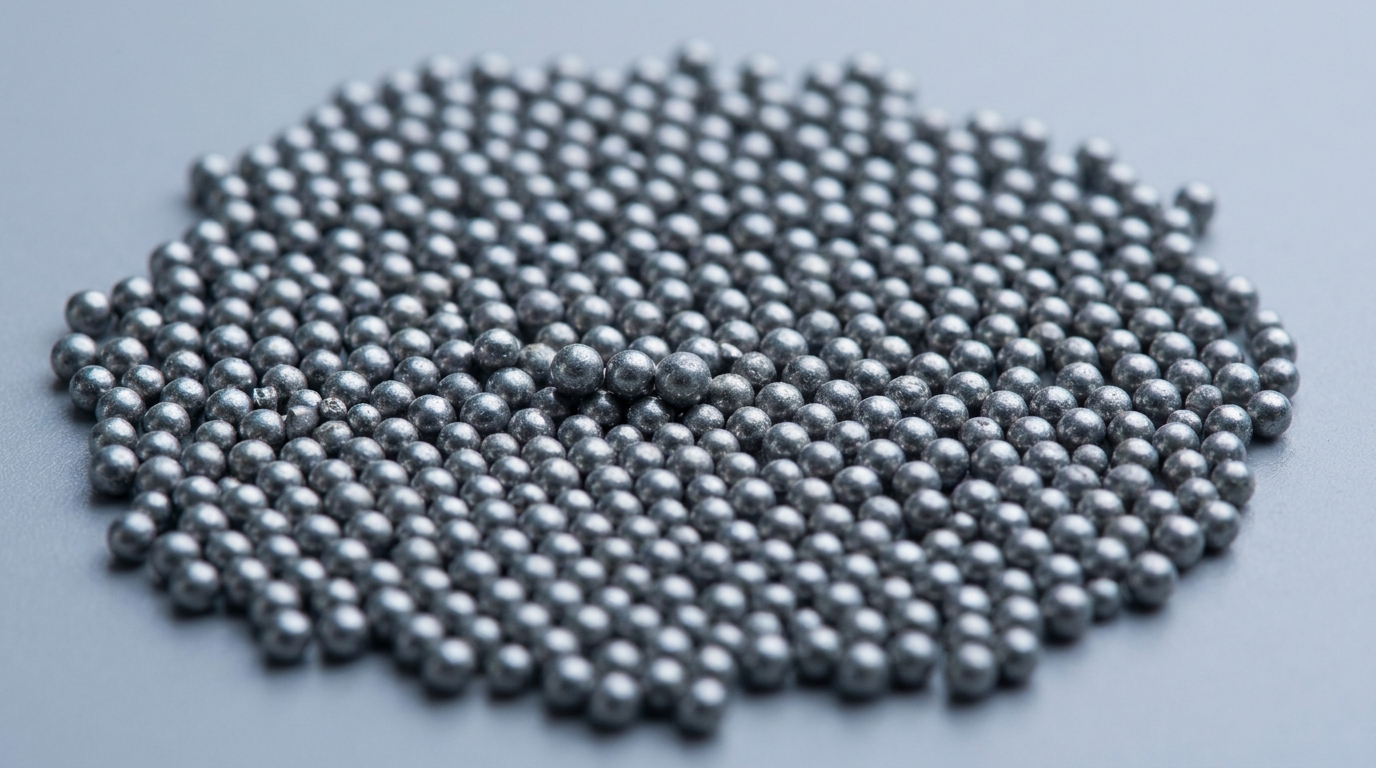
Additive metal printing with powder is a form of metal additive manufacturing in which a part is grown from thin layers of fine metal powder rather than removed from stock. A precise energy source — a laser or an electron beam — selectively melts and fuses powder according to a digital 3D model. Each layer is spread, fused, and solidified before the next one is added, gradually building a fully dense, functional part.
Because material is added only where the design needs it, the process removes the manufacturability constraints that shape conventional parts. Engineers can specify internal cooling channels, hollow lightweight sections, topology-optimized geometry, and multiple components merged into a single printed piece. That reduces part counts, assembly steps, and potential failure points.
What the process delivers
- Complex geometry — internal channels, lattices, and consolidated assemblies that are impractical or impossible to machine.
- Lightweight structures — material placed only where load requires it, cutting weight without cutting strength. That matters wherever every gram counts, such as aviation and motorsport.
- High mechanical performance — near fully dense parts with high tensile strength, fatigue resistance, thermal stability, and, depending on the alloy, strong corrosion resistance.
Main technologies used in metal powder 3D printing
LPBF (Laser Powder Bed Fusion)
LPBF is the most widely used metal AM technology. A high-powered laser selectively melts thin layers of powder on a build plate. It gives high precision and detail, works across a wide material range (stainless steel, titanium, nickel alloys, aluminum), and produces a good surface finish relative to other metal AM methods. LPBF is common in aerospace components, medical implants, and precision engineering.
EBM (Electron Beam Melting)
EBM uses a high-energy electron beam instead of a laser and works in a vacuum. It runs at higher build temperatures, which reduces internal stress, and suits titanium and other high-performance alloys. The vacuum environment lowers contamination risk and improves material purity, making EBM a fit for aerospace and biomedical parts.
DED (Directed Energy Deposition)
DED feeds powder directly into a melt pool created by a laser, electron beam, or plasma arc. It deposits at high rates, handles larger components, and can add material to existing parts. That makes it well suited to repair, tooling restoration, and heavy-industry components rather than fine detail work.
How metal powder 3D printing works
The workflow converts a digital model into a metal component through a tightly controlled sequence. Each stage affects whether the final part meets industrial performance standards.
1. 3D model design (CAD)
The build starts from a detailed CAD model that acts as the blueprint. Engineers design around functional requirements — strength, weight, thermal resistance, durability — instead of machining limits. Topology optimization removes unnecessary material while preserving structural integrity, producing parts that are light and strong. The finished model is sliced into thin cross-sectional layers that tell the machine exactly where to fuse material.
2. Powder spreading
A recoater distributes a thin, uniform layer of powder across the build platform. Layer quality depends on it: the powder needs good flowability and a uniform particle size for smooth, even distribution. Layer thickness is controlled in microns. Any inconsistency here shows up as a defect later.
3. Selective melting (laser or electron beam)
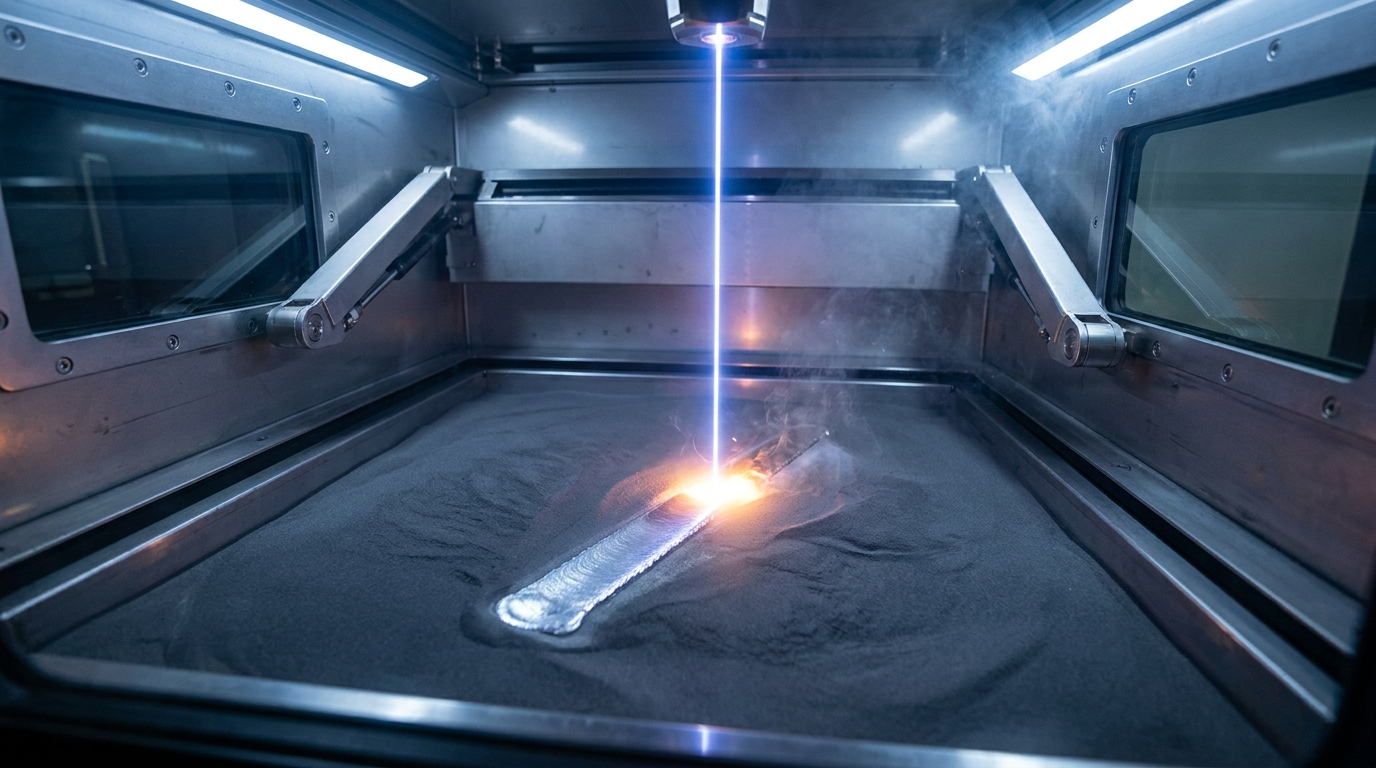
A laser or electron beam melts the powder according to the sliced data. In LPBF, the laser scans the powder bed and melts only the design regions; the melt solidifies rapidly into a precise layer. In EBM, an electron beam does the same in a vacuum at higher temperature, reducing internal stress. Energy input is controlled to melt fully without porosity or cracking. Surrounding loose powder supports the structure during the build.
4. Layer-by-layer building
After a layer solidifies, the platform lowers, a fresh layer of powder is spread, and the cycle repeats — often hundreds or thousands of times — until the part is complete. This incremental method is what enables hollow channels, lattices, and integrated assemblies. Parts that would traditionally be assembled from several pieces can be printed as one, cutting weight, assembly time, and failure points.
5. Post-processing (heat treatment, finishing)
The finished part is removed from the build chamber for post-processing. Heat treatment relieves internal stresses from rapid heating and cooling and improves strength, hardness, and fatigue resistance. Support structures — needed to stabilize overhangs during the build — are then removed. Surface finishing such as machining, polishing, or blasting improves surface quality and dimensional accuracy. In aerospace and medical work, Hot Isostatic Pressing (HIP) may be added to close internal porosity and raise material density.
Metal powders that dominate additive manufacturing
Powders are the foundation of a successful build. A handful of alloys account for most industrial work because they solve real engineering problems in aerospace, medical, automotive, and energy.
Nickel-based alloys (IN718, IN625)
Nickel superalloys hold their strength, oxidation resistance, and structural integrity under extreme heat and stress. IN718 (Inconel 718) offers high mechanical strength, fatigue resistance, and creep performance, which suits aerospace engine components, turbines, and energy systems. IN625 (Inconel 625) adds strong corrosion resistance and weldability and is used in marine, chemical processing, and oil and gas. Both are compatible with LPBF, EBM, and DED.
Stainless steel (316L, 17-4PH, 304)
Stainless steels are the most widely used metal AM materials, balancing strength, corrosion resistance, affordability, and ease of processing. 316L is versatile and corrosion-resistant, suiting medical devices, food-grade parts, and general industrial components — see the stainless steel alloy explainer for how the grades differ. 17-4PH is a precipitation-hardening alloy that reaches high strength and hardness after heat treatment, used in aerospace, tooling, and wear-resistant mechanical parts. 304 is chosen where corrosion resistance and cost matter most. Stainless steels are often the first material companies try when adopting metal AM.
Titanium (Ti64)
Ti-6Al-4V (Ti64) has an exceptional strength-to-weight ratio, which makes it central where weight reduction cannot compromise strength. It is biocompatible, so it suits orthopedic and dental implants, and it handles high-stress structural parts in aerospace. Titanium powders cost more, but the performance often justifies it in critical applications.
Aluminum (AlSi10Mg)
AlSi10Mg is lightweight, conducts heat well, and offers solid mechanical performance. It is popular in automotive and aerospace, where lower weight improves efficiency, and in heat exchangers and other parts that need to dissipate heat. It is the pick when weight, performance, and cost have to balance.
Cobalt chrome
Cobalt chrome (CoCrMo) is a high-performance alloy with strong hardness, corrosion resistance, and biocompatibility. It is valued for dental restorations, orthopedic implants, and high-wear industrial components where parts must hold strength and resist wear over time.
Choosing among these is one of the most important decisions in metal AM. Browse the full range in the metal powders category.
Applications of metal 3D printing
Aerospace and aviation
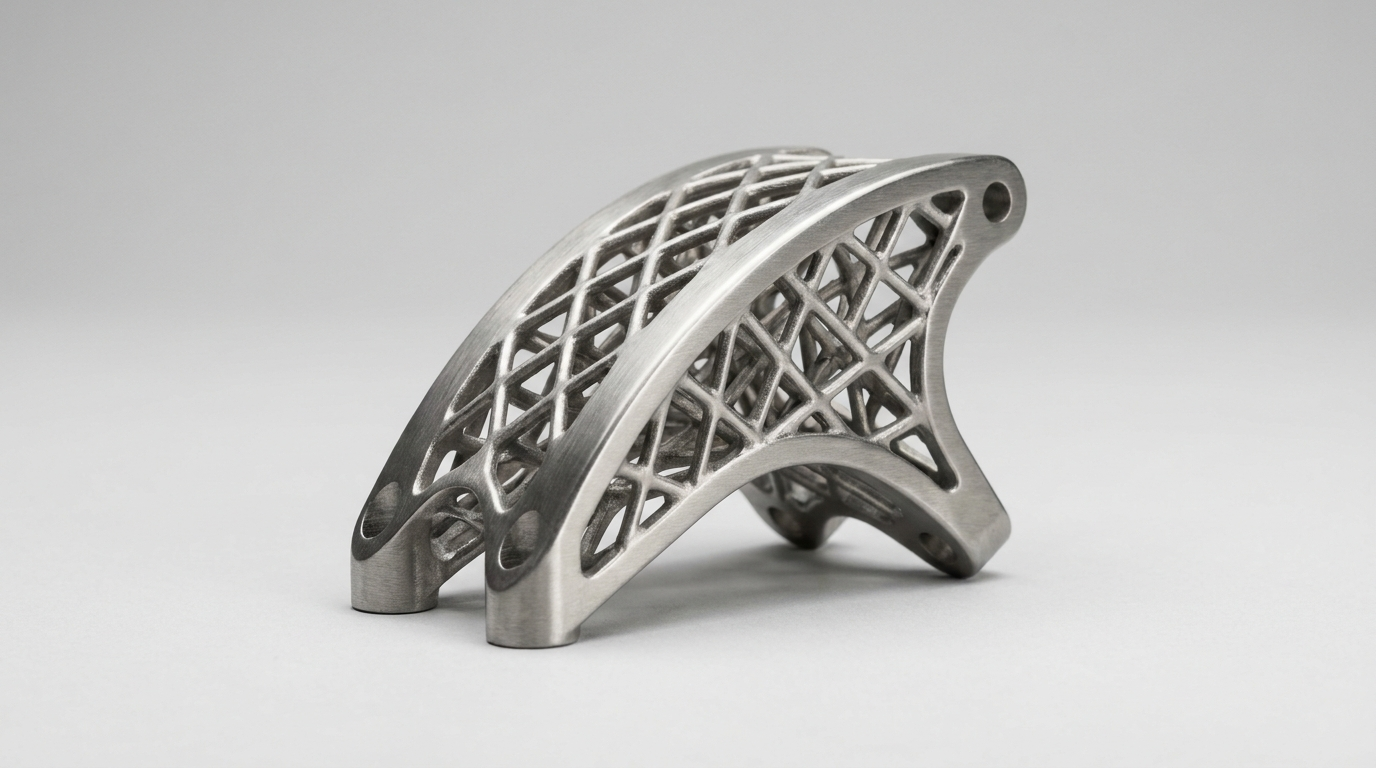
Aerospace was among the earliest and most advanced adopters. Additive manufacturing produces lightweight parts that withstand high temperature and mechanical stress — turbine blades and engine components, heat exchangers and fuel nozzles, and lightweight structural brackets. Nickel superalloys and titanium dominate here. Reducing weight and consolidating assemblies improves fuel efficiency and system performance.
Medical and dental
Metal AM enables patient-specific parts and faster production of complex geometry — orthopedic implants (hip, knee, spinal), dental crowns and bridges, and surgical instruments and guides. Materials must be biocompatible, corrosion-resistant, and durable, so cobalt chrome and titanium are common. The customization improves patient outcomes and can shorten surgery and recovery.
Automotive
Automotive uses metal AM for both prototyping and end-use parts, especially where weight reduction and performance matter: lightweight structural components, performance engine parts, and tooling and jigs. Aluminum and stainless steel are common for their strength-to-weight and cost balance. The technology also speeds design iteration.
Industrial manufacturing
General manufacturing uses metal AM for tooling, fixtures, and spare parts where conventional methods are too slow or costly — custom jigs and fixtures, injection mold tooling, on-demand spares, and repair components. Durable materials such as 316L stainless steel are typical. This reduces downtime, cuts inventory, and supports flexible production. For an overview of routes to a finished part, see where to get metal parts 3D printed.
Why powder quality is critical
Powder quality is one of the biggest factors in whether a build succeeds. Even on an advanced machine, poor powder causes defects, inconsistent builds, and reduced mechanical performance. Powder characteristics directly affect part density and strength, surface finish and post-processing load, mechanical properties such as tensile strength and fatigue resistance, and printing stability.
- Particle size distribution (PSD) — a consistent size range gives even spreading and predictable melting.
- Flowability — good flow gives smooth recoating and uniform layers.
- Chemical purity — impurities degrade material properties and part performance.
- Spherical morphology — spherical particles improve packing density and layer consistency.
Reliable results depend on certified, consistent material. If you need to confirm what is on hand and lead times, see buying metal 3D printing powder in stock.
Powder production technology
Behind every quality part is a precisely engineered powder. Atomization technologies produce powders with the particle shape, size, and purity that additive manufacturing needs. Advanced atomizers give consistent, highly spherical particles for better flow and packing, high-purity output that reduces contamination, and the control to develop and test custom alloys — which matters most in R&D and for teams producing specialized materials in house. See the range of metal powder atomizers for in-house and small-batch production.
Cost factors in metal additive manufacturing
Understanding cost structure helps with investment decisions. Several factors drive the total:
- Material type — titanium and nickel alloys cost more than stainless steel or aluminum because of complex processing and high-performance properties.
- Machine type — LPBF, EBM, and DED carry different equipment and operating costs.
- Powder reuse rate — efficient reuse strategies meaningfully lower material cost.
- Post-processing — heat treatment, machining, and finishing add to the total.
Despite these costs, metal AM often delivers higher overall value by reducing material waste, minimizing assembly, and shortening time to market.
Common challenges in metal powder printing
Metal powder printing has technical challenges that have to be managed for consistent, high-quality results.
Porosity
Porosity is tiny voids or air pockets inside a part that weaken it. It usually comes from improper melting, inconsistent powder quality, or wrong process parameters, and it reduces strength, fatigue resistance, density, and durability — a risk in high-stress applications. High-quality, consistent powder and controlled composition help minimize it.
Powder contamination
Contamination happens when foreign particles, moisture, or oxidized material mix into the powder. Common sources are degraded reused powder, poor storage, and cross-material contamination. The result is defects, poor surface finish, and inconsistent builds. Certified material from trusted suppliers keeps purity and reliability up.
Thermal stress cracking
Rapid heating and cooling create internal stresses that can crack or distort a part if unmanaged. It is more common in high-performance alloys such as titanium and nickel. Optimizing build parameters, using proper supports, and applying post-process heat treatment reduce the risk.
Support removal complexity
Supports stabilize overhangs and complex geometry during the build, but removing them can be slow and can affect surface quality. Internal supports are hard to reach, delicate features can be damaged, and post-processing time rises. Materials with good machinability, such as 316L stainless steel, make support removal easier.
Future trends in metal additive manufacturing
- AI-driven powder optimization — analyzing and tuning powder characteristics and process parameters improves consistency and repeatability, speeds material development, and cuts trial and error.
- Hybrid manufacturing — combining additive with CNC machining in one workflow prints near-net-shape parts and finishes critical surfaces, bridging additive flexibility and subtractive precision.
- Multi-material printing — printing several materials in one build opens the door to functionally graded materials and integrated multi-property components. It is still developing but promising for advanced applications.
- Sustainable powder recycling — improving reuse rates, reducing waste, and developing cleaner production methods are becoming central concerns.
- On-demand localized production — decentralized production near the point of need lowers shipping and inventory and shortens lead times, which is valuable for spare parts, maintenance, and remote operations.
Choosing the right metal powder
Material choice drives printability, performance, cost, and long-term reliability. Weigh four factors:
- Application requirements — high-temperature environments point to nickel alloys; lightweight parts favor aluminum or titanium.
- Mechanical properties — match strength, hardness, fatigue resistance, and thermal performance to the part. 17-4PH stainless steel, for example, suits high-strength industrial components.
- Corrosion resistance — for exposure to moisture, chemicals, or extreme conditions, stainless steels and nickel alloys are usually preferred.
- Printer compatibility — confirm the material suits your system (LPBF, EBM, or DED) before committing.
To match material to your equipment and application, browse the metal powders category or start from the metal-powder buyer guide.
Getting started with Additive Plus
Scaling metal additive manufacturing takes the right materials, reliable equipment, and technical support — for prototypes, end-use parts, or new-alloy work.
- Certified metal powders — a portfolio engineered for consistent particle size distribution, purity, and flowability, optimized for LPBF, EBM, and DED, spanning stainless steels, nickel alloys, titanium, aluminum, and cobalt chrome.
- Atomization systems — for R&D and in-house production, atomizers give control over powder characteristics, spherical particle production, high-purity output, and custom alloy development.
- Industrial-grade solutions — support from small-scale prototyping to full production, built for precision, repeatability, and efficiency.
- Technical consultation — help with material selection, process optimization, equipment recommendations, and production strategy.
Explore the metal powders category to find the right material for your application.
Frequently asked questions
What is additive metal printing with powder?
It is a manufacturing process where metal parts are built layer by layer from fine metal powders fused by a laser or electron beam, rather than machined from solid stock.
How does metal powder 3D printing work?
A recoater spreads a thin layer of powder, an energy source selectively melts it to the sliced design, the platform lowers, and the cycle repeats until the part is complete. Post-processing then relieves stress and finishes the part.
What is the difference between LPBF, EBM, and DED?
LPBF melts powder on a bed with a laser for high precision. EBM uses an electron beam in a vacuum at higher temperature, reducing internal stress. DED feeds powder into a melt pool for high deposition rates, larger parts, and repair.
What materials are commonly used in metal 3D printing?
Stainless steel (316L, 17-4PH, 304), titanium (Ti64), aluminum (AlSi10Mg), nickel alloys (IN718, IN625), and cobalt chrome are the most common.
Why is metal powder quality important?
Powder characteristics — particle size distribution, flowability, chemical purity, and spherical morphology — directly affect part density, strength, surface finish, and build consistency.
Can metal powder be reused?
Yes, but it must be sieved and monitored for contamination and degradation. It should be stored in a dry, sealed, controlled environment to prevent oxidation and moisture absorption.
What causes porosity, and how is it reduced?
Porosity comes from improper melting, low-quality powder, or incorrect process settings. It is reduced with high-quality powder, optimized parameters, and proper post-processing.
What is post-processing in metal 3D printing?
It covers steps after the build — heat treatment to relieve stress and improve mechanical properties, support removal, and surface finishing such as machining, polishing, or blasting. Hot Isostatic Pressing may be added to close internal porosity.
What are the main challenges in metal 3D printing?
Porosity, powder contamination, thermal stress cracking, and support removal complexity are the most common, and each is managed through material quality, parameter control, and post-processing.
What is the future of metal additive manufacturing?
Key directions include AI-driven powder and process optimization, hybrid additive-plus-machining systems, multi-material printing, sustainable powder recycling, and on-demand localized production.
Have a question or a project? Let’s talk.
Tell us what you need — a real applications engineer replies within 24 hours. NDA standard, no sales script.