
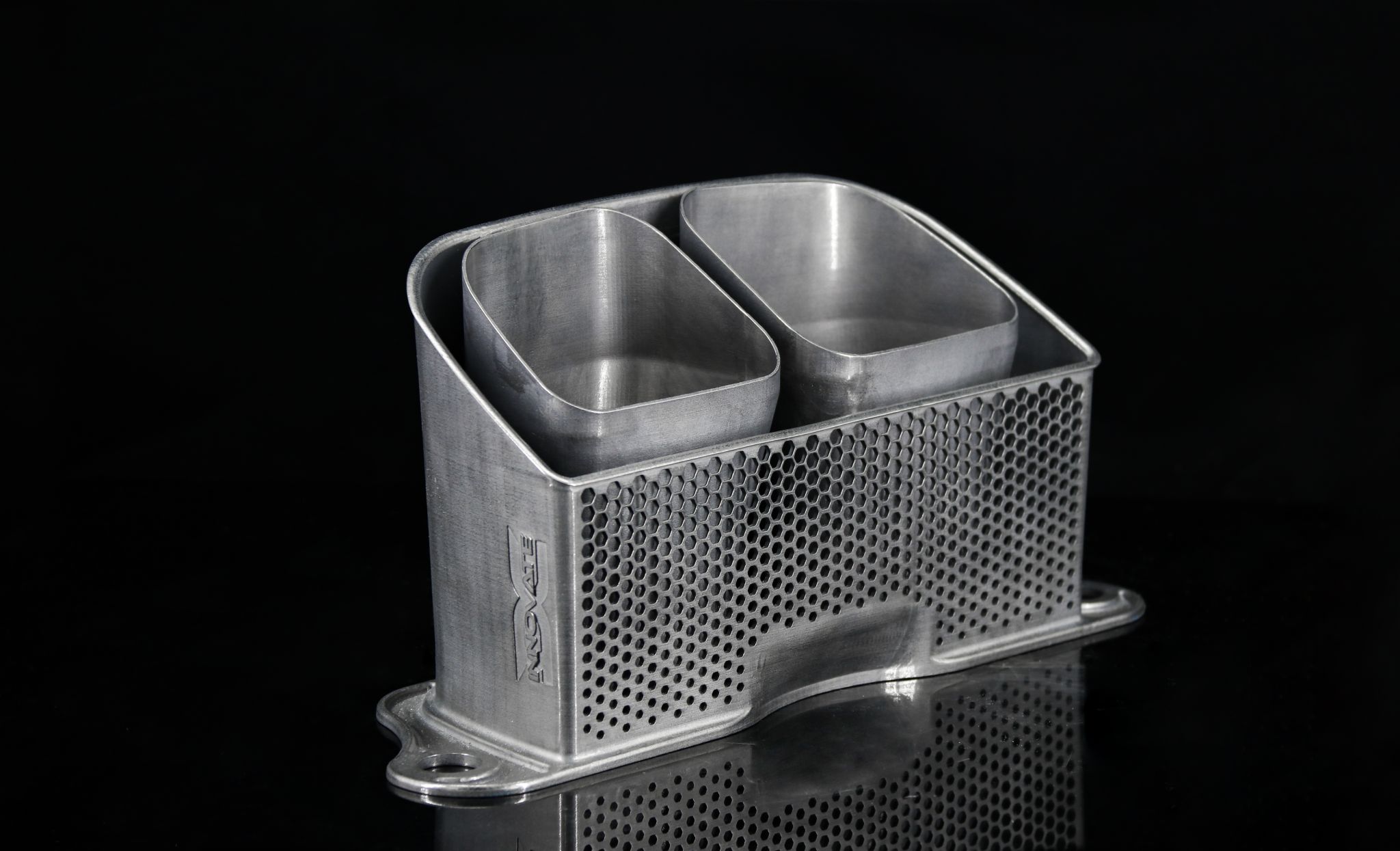
1. Introduction
Metal 3D printing has evolved significantly over the past decade, shifting from a niche prototyping technology into a fully integrated manufacturing solution used across high-performance industries. What was once limited to experimental parts and design validation is now actively used for end-use production in sectors where precision, reliability, and material performance are critical.
Industries such as aerospace, automotive, energy, and medical manufacturing are increasingly adopting metal additive manufacturing to solve challenges that traditional processes struggle with. These include reducing component weight without sacrificing strength, producing highly customized geometries, and shortening development cycles from months to days. In many cases, metal 3D printing is not just an alternative—it is enabling entirely new design approaches that were previously impossible with subtractive or casting methods.
One of the key reasons behind this shift is the ability of metal 3D printing to unlock design freedom. Engineers are no longer constrained by the limitations of tool access or mold-based production. Instead, complex internal channels, lattice structures, and topology-optimized designs can be produced directly from digital files, often resulting in improved performance and material efficiency.
When compared to traditional manufacturing methods such as CNC machining or casting, metal 3D printing offers several clear advantages:
- Ability to produce highly complex geometries that would be difficult or impossible to machine or cast, including internal cooling channels and lightweight lattice structures
- Reduced lead times, since parts can move directly from CAD design to physical production without the need for tooling or molds
- Cost-efficient customization and low-volume production, making it especially attractive for prototypes, spare parts, and specialized components where traditional tooling costs are prohibitive
At the same time, the technology landscape has matured. A wide range of industrial-grade systems, materials, and service models are now available, making metal 3D printing more accessible to both large manufacturers and smaller engineering teams. As adoption continues to grow, businesses can choose between multiple sourcing options—such as service bureaus, in-house production, online platforms, or long-term manufacturing partners—depending on their budget, production scale, certification requirements, and technical complexity.
2. What Is Metal 3D Printing?
Metal 3D printing, also known as metal additive manufacturing, is a digital fabrication process where metal components are created layer by layer directly from a 3D CAD model. Unlike traditional subtractive manufacturing methods—where material is removed from a solid block—additive manufacturing builds parts from the ground up using fine metal powders or, in some systems, metal wire.
This layer-by-layer approach enables a high degree of design freedom and material efficiency. Complex internal features, lightweight structures, and highly optimized geometries can be produced without the need for specialized tooling or multiple machining steps. As a result, metal 3D printing has become a key enabling technology for advanced engineering applications where performance and precision are critical.
At a high level, the process typically involves the following stages:
- A digital 3D model is designed using CAD software
- The model is sliced into thin horizontal layers
- The printer builds the part layer by layer using heat energy or binding agents
- Post-processing steps such as heat treatment, support removal, and surface finishing are applied
Key Technologies in Metal 3D Printing
Different metal 3D printing technologies are used depending on part requirements, material type, production volume, and cost considerations.
LPBF (Laser Powder Bed Fusion)
Laser Powder Bed Fusion is one of the most widely used metal 3D printing technologies in industrial production.
In this process, a high-powered laser selectively melts fine layers of metal powder spread across a build platform. Each layer is fused to the previous one, gradually forming a solid part.
Key characteristics:
- Extremely high precision and fine feature resolution
- Excellent mechanical properties comparable to wrought materials
- Suitable for complex geometries and functional end-use parts
- Requires controlled environment (often inert gas like argon or nitrogen)
LPBF is commonly used in aerospace, automotive, and medical industries where part performance and accuracy are essential.
DMLS (Direct Metal Laser Sintering)
DMLS is closely related to LPBF and is often used interchangeably in industrial contexts, though it traditionally refers to sintering rather than full melting.
The process uses a laser to fuse metal powder particles layer by layer, creating durable and functional components.
Key characteristics:
- Strong, functional metal parts suitable for end-use applications
- High design flexibility for complex geometries
- Widely adopted in industrial manufacturing environments
- Compatible with a broad range of metal alloys
DMLS is particularly effective for producing small to medium-sized components with complex internal structures.
EBM (Electron Beam Melting)
Electron Beam Melting uses a focused electron beam instead of a laser to melt metal powder. The process takes place in a vacuum environment, which reduces contamination and oxidation.
Key characteristics:
- Operates at higher build temperatures, reducing internal stresses
- Ideal for reactive materials like titanium alloys
- Excellent for aerospace and biomedical applications
- Typically faster for certain large titanium components
EBM is especially valued for producing high-performance titanium parts used in demanding environments such as implants and aircraft structures.
Binder Jetting
Binder Jetting is a different approach compared to laser- or beam-based systems. Instead of melting the powder during printing, a liquid binding agent is selectively deposited to hold metal powder particles together. The printed part is then sintered in a furnace to achieve final density.
Key characteristics:
- High production speed and scalability
- Cost-effective for medium to large batch production
- No need for support structures during printing
- Final properties achieved after sintering and infiltration steps
Binder jetting is increasingly used for industrial-scale production where cost efficiency and throughput are more important than ultra-high precision.
Common Materials Used in Metal 3D Printing
A wide range of engineering-grade metals are used in additive manufacturing, each selected based on mechanical, thermal, and chemical performance requirements:
- Stainless steel – widely used for industrial tools, functional prototypes, and corrosion-resistant components
- Titanium alloys (e.g., Ti6Al4V) – known for high strength-to-weight ratio, commonly used in aerospace and medical implants
- Aluminum alloys – lightweight materials ideal for automotive and aerospace applications
- Nickel-based superalloys – designed for extreme environments with high temperatures, such as turbine engines
3. Industrial Manufacturing Options for Metal 3D Printing
3.1 Service Bureaus (On-Demand Manufacturing)
Service providers handle the entire production workflow—from design optimization to printing and post-processing.
Advantages:
- No need for upfront equipment investment
- Access to industrial-grade machines and expertise
- Easily scalable production capacity
Best for:
- Prototyping
- Low-volume production
- Complex, one-off parts
3.2 In-House Metal 3D Printing
Companies invest in their own metal 3D printers and build internal manufacturing capabilities.
Benefits:
- Full control over production
- Faster iteration and product development cycles
- Long-term cost efficiency for high-volume production
Challenges:
- High initial capital investment
- Skilled operators and engineers required
- Maintenance, safety, and facility requirements
3.3 Online 3D Printing Platforms
These platforms allow users to upload CAD files, receive instant quotes, and order parts from global manufacturing networks.
Pros:
- Fast and convenient ordering process
- Easy comparison of materials and pricing
- Wide supplier access
Cons:
- Limited engineering support
- Less control over production quality and workflow
3.4 Contract Manufacturing & Production Partners
Long-term manufacturing partners specialize in consistent production for industrial applications.
Ideal for:
- Serial production
- Aerospace, automotive, and medical compliance requirements
Benefits:
- Stable quality and repeatability
- Engineering collaboration and process optimization
- Supply chain reliability
3.5 Research Institutions & Innovation Labs
Universities and R&D labs provide access to experimental metal 3D printing systems and material research capabilities.
Best for:
- Advanced material development
- Experimental or early-stage research projects
Limitations:
- Not focused on scalable production
- Limited commercial availability
4. Key Factors When Choosing a Metal 3D Printing Provider
Selecting the right metal 3D printing provider is a critical decision that directly affects part quality, performance, cost efficiency, and production reliability. Because capabilities can vary significantly between service providers, it’s important to evaluate both technical capacity and manufacturing support before committing to a partner.
Material range and compatibility
One of the first factors to consider is the provider’s material portfolio. Different applications require different mechanical properties, and not all providers support the same alloys or material grades.
A strong provider should offer a wide range of industrial metals such as stainless steel, titanium, aluminum, and nickel-based superalloys. Equally important is whether they can support specialized or certified materials required for aerospace, medical, or energy applications.
Material expertise also matters—providers should be able to recommend the most suitable alloy based on strength, corrosion resistance, thermal performance, and cost requirements.
Printing technology and build volume
The available printing technologies determine what types of parts can be manufactured and at what level of precision. Technologies like LPBF, DMLS, EBM, or binder jetting each have different strengths in terms of accuracy, surface quality, and production speed.
Build volume is equally important, especially for larger components or batch production. A limited build chamber may restrict part size or require splitting designs into multiple sections, which can increase post-processing effort and cost.
A capable provider should clearly specify machine types, maximum build dimensions, and tolerances to ensure compatibility with your design requirements.
Surface finish and post-processing capabilities
Metal 3D printed parts rarely come out of the printer in final usable form. Post-processing plays a major role in achieving the required mechanical and aesthetic properties.
Key post-processing services include:
- Support removal and part cleaning
- Heat treatment for stress relief and improved mechanical strength
- CNC machining for tight tolerances
- Surface finishing (polishing, blasting, coating)
Providers with in-house post-processing capabilities typically offer faster turnaround times and better quality control compared to those outsourcing finishing steps.
Industry certifications (ISO, aerospace, medical)
For critical applications, certifications are essential indicators of quality and compliance. Industries such as aerospace, healthcare, and automotive often require strict adherence to international standards.
Common certifications include:
- ISO 9001 (quality management systems)
- ISO 13485 (medical device manufacturing)
- AS9100 (aerospace quality standards)
Certified providers are more likely to follow controlled production processes, maintain traceability of materials, and ensure consistent part quality across batches.
Lead time and production scalability
Lead time is a key factor, especially for companies working in fast-moving product development cycles. A reliable provider should be able to deliver both prototypes and production parts within predictable timelines.
Scalability is equally important. As demand grows, the provider should be capable of increasing production volume without compromising quality or delivery schedules. This is particularly important for businesses transitioning from prototyping to full-scale manufacturing.
Overall cost structure
Cost evaluation should go beyond the initial quotation per part. A complete cost structure includes material usage, machine time, post-processing, labor, and potential design optimization services.
It’s also important to consider:
- Setup and engineering fees
- Volume-based pricing discounts
- Hidden costs such as rework or post-processing upgrades
In many cases, the lowest per-part price does not necessarily result in the best overall value. A provider that offers design optimization and reduces material usage or build time can significantly lower total project costs.
5. Cost Comparison: Outsourcing vs In-House
One of the most important strategic decisions in metal additive manufacturing is whether to outsource production to a service provider or invest in in-house metal 3D printing capabilities. Both approaches can be cost-effective, but their financial logic differs significantly depending on production volume, part complexity, and long-term manufacturing goals.
Outsourcing
Outsourcing metal 3D printing to a service bureau or manufacturing partner is often the most accessible entry point for companies adopting additive manufacturing.
Lower upfront cost
One of the biggest advantages is that there is no need for capital investment in expensive industrial equipment. High-performance metal 3D printers, post-processing systems, and facility upgrades can require substantial budgets, often running into hundreds of thousands or even millions of dollars. Outsourcing eliminates this barrier.
Pay per part or project
Instead of fixed infrastructure costs, companies pay only for what they produce. This makes cost structures more predictable for prototyping, design validation, and occasional production runs.
Ideal for flexible or low-volume production
Outsourcing is particularly efficient when demand is variable or production volumes are relatively low. It allows companies to scale production up or down without financial risk tied to equipment utilization.
However, outsourcing also introduces variable pricing per part, which may become less cost-efficient at higher production volumes.
In-house production
In-house metal 3D printing involves purchasing equipment and building internal manufacturing capabilities within a company’s own facility.
High initial investment
Setting up an in-house metal additive manufacturing system requires significant capital expenditure. This includes not only the printer itself but also auxiliary systems such as powder handling, inert gas systems, post-processing equipment, and facility modifications for safety and compliance.
Lower cost per part at scale
While initial investment is high, the cost per part decreases significantly as production volume increases. Once the system is fully utilized, in-house manufacturing can become more economical than outsourcing, especially for repeat or standardized production.
Better ROI for continuous production
Companies with consistent production needs benefit most from in-house systems. Over time, the return on investment improves as machine utilization increases and dependency on external suppliers decreases.
In addition, in-house production provides full control over scheduling, design iterations, and intellectual property.
Additional hidden costs to consider
Beyond the obvious financial comparison, both approaches include additional costs that can significantly impact the total cost of ownership or production:
- Machine maintenance
Industrial metal 3D printers require regular maintenance, calibration, and occasional repairs. Downtime can also impact production schedules. - Operator training
Skilled personnel are essential for operating machines, preparing build files, and managing post-processing workflows. Training costs and expertise development should be factored into long-term planning. - Powder and material handling systems
Metal powders require controlled environments for safe handling, storage, and recycling. This includes sieving systems, inert gas storage, and contamination control measures. - Facility and safety compliance
Metal additive manufacturing involves strict safety requirements due to fine metal powders and high-energy laser or electron beam systems. Facilities may require ventilation systems, fire suppression upgrades, and compliance with industrial safety regulations.
6. Industries Using Metal 3D Printing Services
Metal additive manufacturing is now a proven production method across multiple industries, particularly where performance, customization, and design complexity are critical.
Aerospace
The aerospace industry was one of the earliest adopters of metal 3D printing and continues to lead in its implementation.
Key applications include:
- Lightweight structural components
- Fuel nozzles and engine parts
- Heat exchangers and internal ducting systems
By using lattice structures and topology optimization, manufacturers can significantly reduce weight while maintaining strength—leading to improved fuel efficiency and lower operational costs. Metal 3D printing also enables part consolidation, reducing assembly complexity and potential failure points.
Automotive
In automotive manufacturing, metal 3D printing is widely used for both prototyping and performance-driven components.
Typical use cases:
- Functional prototypes for rapid design validation
- Custom performance parts for motorsports
- Tooling, jigs, and fixtures for production lines
The ability to quickly iterate designs allows engineers to accelerate product development cycles, while low-volume production capabilities support specialized or high-performance vehicles.
Medical & Dental
The medical field benefits significantly from the customization capabilities of metal 3D printing.
Common applications:
- Patient-specific implants (e.g., orthopedic and cranial implants)
- Dental frameworks and prosthetics
- Surgical instruments and guides
Technologies like titanium 3D printing enable biocompatible, lightweight, and highly precise implants tailored to individual patients, improving outcomes and recovery times.
Energy
The energy sector relies on durable components that can withstand extreme environments, making metal additive manufacturing a strong fit.
Key applications:
- Heat-resistant turbine components
- Complex piping and flow systems
- Replacement parts for legacy equipment
Metal 3D printing also plays a role in reducing downtime by enabling on-demand production of spare parts that may no longer be readily available through traditional supply chains.
Industrial Manufacturing
Across general manufacturing, metal 3D printing is increasingly used to improve efficiency and flexibility.
Typical applications:
- Custom tooling and molds
- Spare parts and replacement components
- Low-volume production of specialized parts
Manufacturers benefit from reduced lead times, digital inventory (printing parts on demand), and the ability to quickly adapt to changing production needs.
7. When to Choose Metal 3D Printing Over Traditional Methods
While traditional manufacturing methods like CNC machining, casting, and forging remain essential, metal 3D printing offers clear advantages in specific scenarios.
Complex internal geometries
Metal 3D printing excels at producing intricate internal features such as cooling channels, lattice structures, and hollow sections that are difficult or impossible to achieve with conventional methods.
Lightweight but strong structures
For industries like aerospace and automotive, reducing weight without compromising strength is critical. Additive manufacturing enables topology optimization and material distribution exactly where it’s needed, improving performance while minimizing material usage.
Rapid prototyping
When speed is a priority, metal 3D printing significantly reduces the time from design to physical part. Without the need for tooling or molds, engineers can iterate designs quickly and efficiently.
Low to medium production volumes
Traditional manufacturing often requires expensive tooling, which is only cost-effective at high volumes. Metal 3D printing eliminates this need, making it ideal for:
- Small batch production
- Bridge manufacturing
- Spare parts
Customization and personalization
Additive manufacturing enables cost-effective customization at scale. Each part can be slightly or entirely different without increasing production complexity, making it ideal for medical, aerospace, and specialized industrial applications.
8. How to Get Started
Implementing metal 3D printing into your workflow requires a structured approach to ensure the best technical and economic outcomes.
Define your part requirements
Start by clearly identifying:
- Mechanical performance requirements (strength, load, fatigue)
- Environmental conditions (temperature, corrosion, wear)
- Functional requirements (tolerances, surface finish, assembly needs)
A well-defined application helps determine the right material and process.
Select the appropriate material and technology
Based on your requirements, choose the most suitable metal alloy and printing technology. For example:
- Stainless steel for durability and corrosion resistance
- Titanium for lightweight, high-performance applications
- Nickel alloys for high-temperature environments
Similarly, select the right process (e.g., LPBF, EBM, binder jetting) depending on precision, cost, and production volume.
Choose a reliable manufacturing partner or service
Selecting the right partner is critical. Look for providers that offer:
- Engineering support and design optimization
- Proven experience in your industry
- Advanced equipment and post-processing capabilities
- Relevant certifications and quality control processes
A strong partner will not only manufacture parts but also help optimize designs for additive manufacturing.
Request a quote and review design optimization
Before production begins:
- Submit your CAD files for evaluation
- Request a detailed quote and lead time
- Review design recommendations to improve manufacturability and reduce costs
Design for Additive Manufacturing (DfAM) can significantly enhance part performance while minimizing material usage and production time.
9. Additive Plus Metal 3D Printing Services
When looking for a reliable industrial partner, Additive Plus offers a comprehensive solution for high-quality metal 3D printing, from prototyping to end-use production.
End-to-End Metal Manufacturing
Additive Plus provides full-service support, including:
- 3D modeling and file preparation
- Material selection guidance
- Printing, post-processing, and finishing
This makes it a strong option for companies that need both engineering expertise and production capabilities in one place.
Advanced Metal 3D Printing Technology
The company specializes in LPBF (Laser Powder Bed Fusion) / DMLS, a leading industrial technology for producing fully dense, high-performance metal parts. This process uses a high-powered laser to fuse metal powder layer by layer, enabling:
- Complex geometries and internal structures
- Tight tolerances (up to ±0.05 mm)
- Strong, durable, production-ready parts
Wide Range of Metal Materials
Additive Plus supports a variety of engineering-grade materials, including:
- Stainless steel
- Titanium
- Aluminum
- Nickel superalloys
These materials are suitable for demanding industries such as aerospace, automotive, and medical manufacturing.
Industrial-Grade Quality & Post-Processing
Beyond printing, Additive Plus offers:
- Heat treatment for improved mechanical properties
- Polishing and sandblasting for surface finish
- Coatings and custom post-processing options
This ensures parts meet both functional and aesthetic requirements.
Fast Turnaround & Scalable Production
With production starting from as fast as 1 business day, Additive Plus enables rapid iteration and quick delivery for urgent projects.
Their services are ideal for:
- Rapid prototyping
- Small-batch manufacturing
- Custom industrial components
Why Choose Additive Plus
- Industrial-grade precision and reliability
- Full technology suite (metal, polymer, ceramic) in one place
- Expert file review before printing
- Flexible production from single parts to small series
10. Conclusion
Metal 3D printing has established itself as a transformative force in modern manufacturing, offering businesses new ways to design, produce, and optimize high-performance components. As the technology continues to mature, companies are no longer limited to a single approach—there is now a wide range of sourcing options available, each suited to different production needs and business goals.
From on-demand service bureaus and online platforms to in-house production systems and long-term contract manufacturing partners, organizations can choose the model that best aligns with their budget, production volume, and level of technical expertise. Research institutions and innovation labs also play an important role in pushing the boundaries of what’s possible, particularly in material development and experimental applications. This diversity of options makes metal additive manufacturing more accessible and adaptable than ever before.
However, the success of any metal 3D printing project ultimately depends on selecting the right manufacturing partner. Beyond equipment and materials, a reliable provider brings engineering expertise, design optimization capabilities, quality assurance processes, and industry-specific knowledge. The ability to guide a project from concept to final part—while ensuring consistency, performance, and cost efficiency—can make a significant difference in overall outcomes. Choosing a partner that understands both the technology and the application is essential for minimizing risk and maximizing value.
Looking ahead, the future of industrial metal 3D printing is highly promising. Continued advancements in machine technology, material science, and automation are driving improvements in speed, scalability, and cost efficiency. As more industries adopt additive manufacturing for end-use production, we can expect greater standardization, expanded material options, and deeper integration into global supply chains.
In particular, trends such as digital inventories, on-demand manufacturing, and localized production are reshaping how companies think about supply chains and inventory management. Instead of storing physical parts, businesses can maintain digital files and produce components as needed—reducing waste, lead times, and logistical complexity.
Ultimately, metal 3D printing is not just a new manufacturing method—it is a strategic capability that enables innovation, agility, and competitive advantage. Companies that effectively leverage the right sourcing approach and partner expertise will be well-positioned to lead in the next generation of industrial manufacturing.
Frequently asked questions
What is the best way to get metal parts 3D printed?
The best way to get metal parts 3D printed is to work with a professional service provider such as Additive Plus, as they offer industrial equipment, engineering support, and post-processing without requiring upfront investment.
How much does metal 3D printing cost?
The cost of metal 3D printing depends on factors such as material type, part size, complexity, and post-processing requirements, with prices ranging from a few hundred dollars for simple parts to several thousand for complex industrial components.
What metals can be used in 3D printing?
Metal 3D printing commonly uses materials such as stainless steel, titanium alloys, aluminum alloys, and nickel-based superalloys, each selected based on the required mechanical and thermal properties.
Is metal 3D printing suitable for production or only prototyping?
Metal 3D printing is suitable for both prototyping and end-use production, and it is widely used across industries for functional parts, custom components, and low- to medium-volume manufacturing.
How long does it take to 3D print metal parts?
The time required to 3D print metal parts typically ranges from a few days for simple prototypes to one or two weeks for more complex or production-ready components, depending on size and post-processing needs.
What file format do I need to submit for metal 3D printing?
The most commonly accepted file formats for metal 3D printing are STL, STEP, and IGES, with STEP files often preferred for higher accuracy and engineering detail.
Do metal 3D printed parts require post-processing?
Metal 3D printed parts require post-processing steps such as support removal, heat treatment, machining, and surface finishing to achieve the desired mechanical properties and surface quality.
How strong are metal 3D printed parts?
Metal 3D printed parts can achieve strength comparable to traditionally manufactured components, especially when produced using technologies like LPBF or DMLS.
When should I choose metal 3D printing over CNC machining?
Metal 3D printing should be chosen over CNC machining when parts require complex geometries, lightweight structures, rapid iteration, or customization at low to medium volumes.
Can I scale from prototyping to production with the same provider?
Many metal 3D printing providers support scaling from prototyping to production, allowing companies to maintain consistency and streamline their manufacturing process as demand grows.
Where can I 3D print metal parts near me?
You can 3D print metal parts through local or global service providers, and many companies choose experienced providers like Additive Plus that offer remote ordering, fast delivery, and full engineering support regardless of location.
Is metal 3D printing expensive compared to traditional manufacturing?
Metal 3D printing can be more expensive per part than traditional methods for high-volume production, but it is often more cost-effective for complex designs, low volumes, and parts that would otherwise require expensive tooling.
What industries benefit the most from metal 3D printing?
Industries such as aerospace, automotive, medical, energy, and industrial manufacturing benefit the most from metal 3D printing due to their need for high-performance, customized, and complex components.
What are the limitations of metal 3D printing?
Metal 3D printing has limitations such as higher costs for large-scale production, the need for post-processing, size constraints based on build volume, and the requirement for specialized expertise.
Can metal 3D printing replace traditional manufacturing?
Metal 3D printing is not a complete replacement for traditional manufacturing but rather a complementary technology that is best used for specific applications like complex parts, customization, and low-volume production.
What is the difference between LPBF and binder jetting?
LPBF uses a laser to fully melt metal powder and produce dense, high-strength parts, while binder jetting uses a binding agent followed by sintering, making it faster and more cost-effective for larger production volumes but typically with slightly different material properties.
Do I need design experience to use metal 3D printing services?
You do not need advanced design experience to use metal 3D printing services, as many providers offer design support and optimization to ensure your part is suitable for additive manufacturing.
How accurate is metal 3D printing?
Metal 3D printing can achieve high accuracy, often within ±0.05 mm depending on the technology and part geometry, especially when combined with post-processing such as CNC machining.
What is DfAM (Design for Additive Manufacturing)?
Design for Additive Manufacturing (DfAM) is an approach to designing parts specifically for 3D printing, focusing on optimizing geometry, reducing material usage, and improving performance.
Is metal 3D printing environmentally friendly?
Metal 3D printing can be more environmentally friendly than traditional manufacturing because it reduces material waste, enables lightweight designs, and supports on-demand production, which minimizes excess inventory.
Have a question or a project? Let’s talk.
Tell us what you need — a real applications engineer replies within 24 hours. NDA on request, no sales script.