
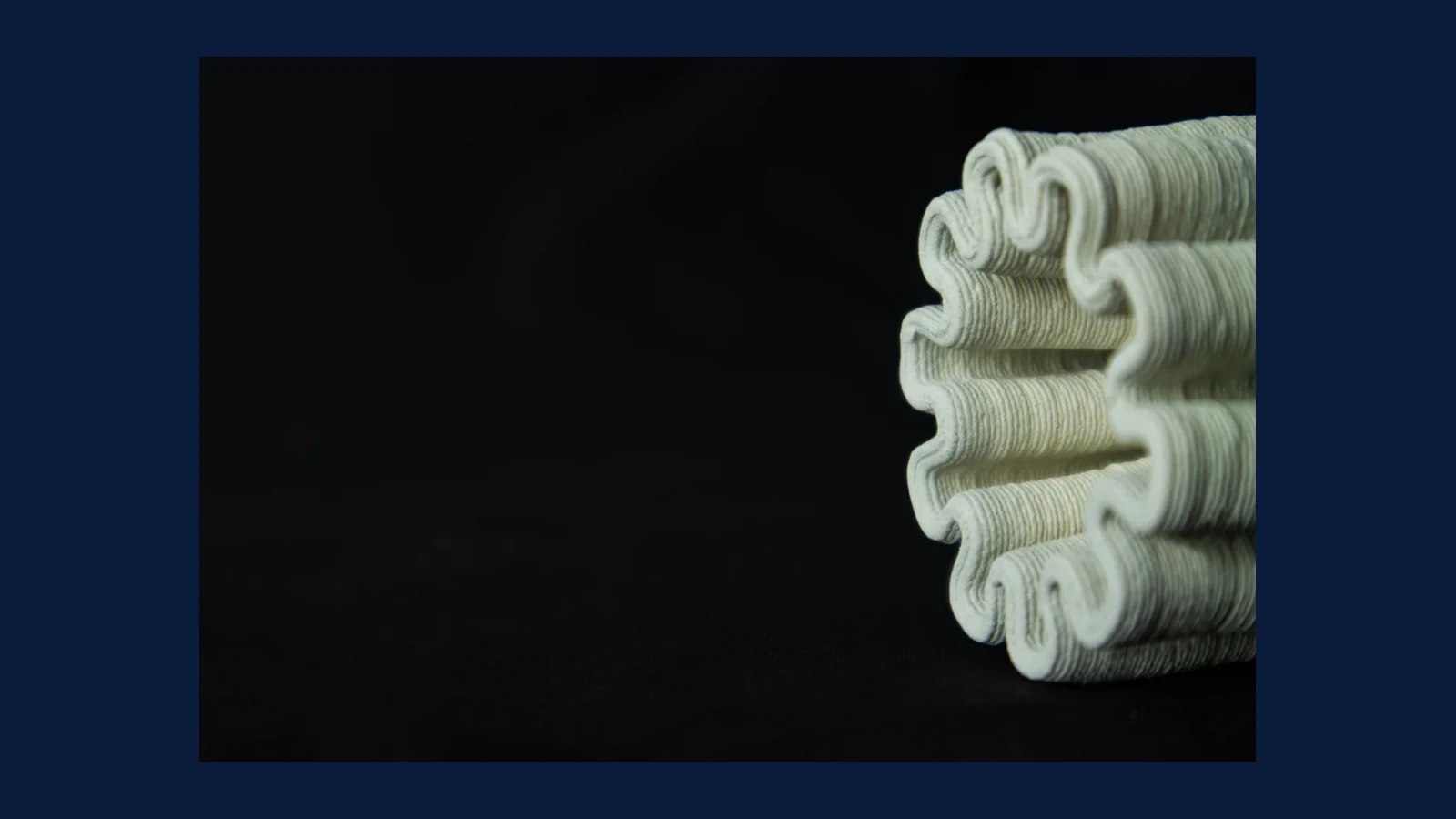
The most useful direct ink writing applications are the ones that hard tooling makes slow or expensive: a silicone seal with a cross-section no mold can pull, a ceramic insulator with internal channels, a composite layup mold in a run of ten. Direct Ink Writing (DIW) — also called robocasting or paste extrusion — builds parts by pushing a semi-liquid paste through a nozzle, bead by bead, on an open-parameter machine. Because the “ink” is whatever paste you load, one DIW 3D printer covers silicones, technical ceramics, two-component polyurethanes, conductive pastes and photopolymers.
This guide walks through ten real, documented uses — the material behind each, the industry that buys it, and why DIW wins there.
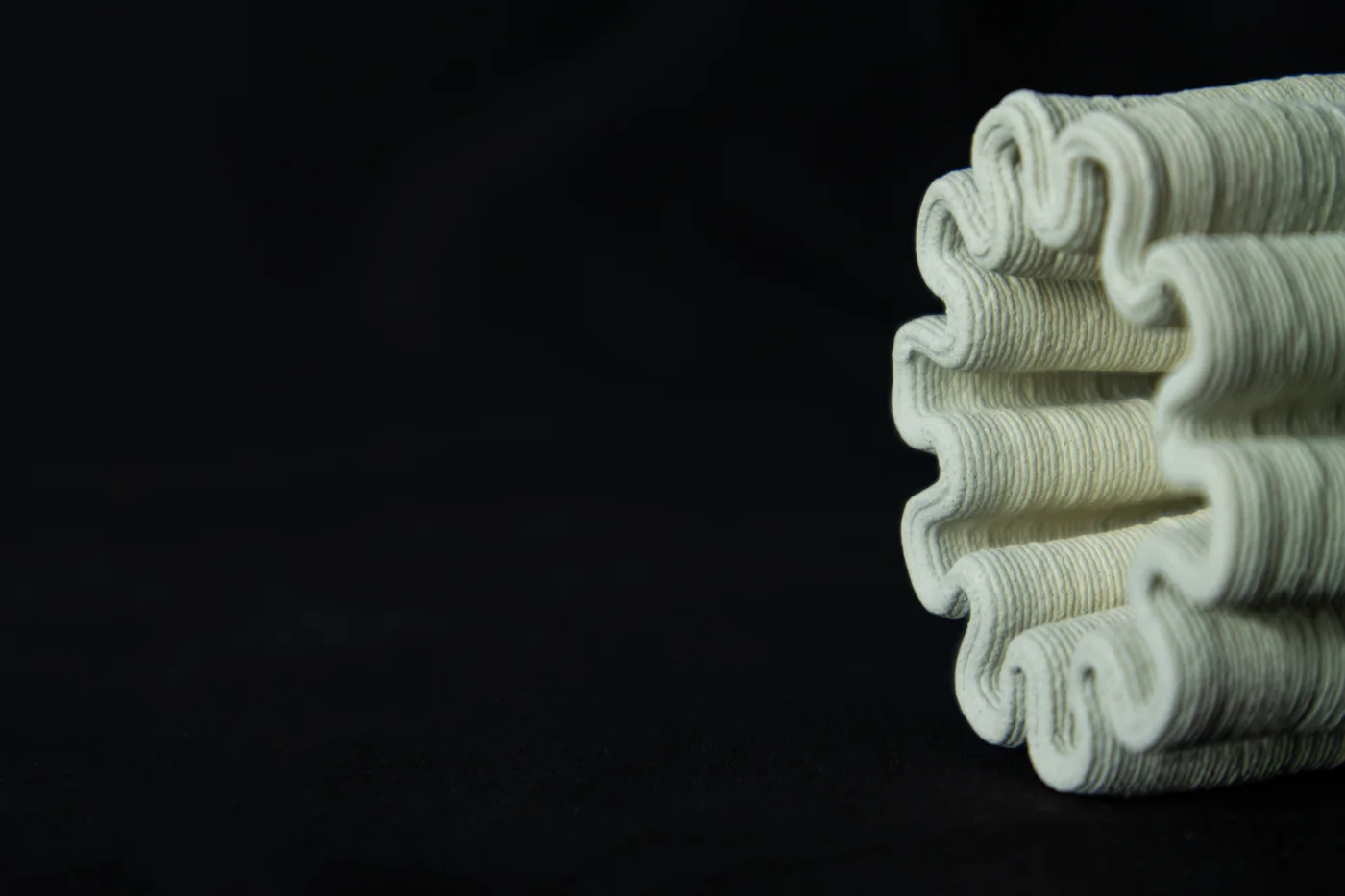
Direct ink writing applications at a glance
The table maps each use to its material family and the reason DIW earns the job — usually geometry a mold cannot make, or a series too small to justify one.
| Application | Material | Industry | Why DIW |
|---|---|---|---|
| O-rings, gaskets & seals | Silicone | Automotive, aerospace, medical | Custom cross-sections with no mold |
| Soft grippers & suction cups | Silicone | Robotics, production lines | Compliant, one-piece geometries |
| Technical ceramics | Al₂O₃, ZrO₂, SiC, YSZ | Energy, industrial | Complex shapes, graded porosity |
| Electrical insulators | Alumina paste | Electrical, power | No hard tooling for small series |
| Composite layup molds | Ceramic / filled paste | Tooling & manufacturing | Kills the mold-tooling cost |
| Welding sleeves & electrode shields | Ceramic paste | Welding, manufacturing | Customized ceramic bodies on demand |
| Fuel-cell & electrolyser sealing | Ceramic / glass paste | Hydrogen energy | Waste-free custom seals for stacks |
| Battery & energy-storage structures | Functional pastes | Energy storage, R&D | Geometries that raise cell capacity |
| Flexible electronics | Conductive pastes | Electronics, R&D | Direct-write traces on substrates |
| Proprietary-material R&D | Any paste, gel or resin | Universities, labs | Open parameters for proof-of-concept |
How direct ink writing works
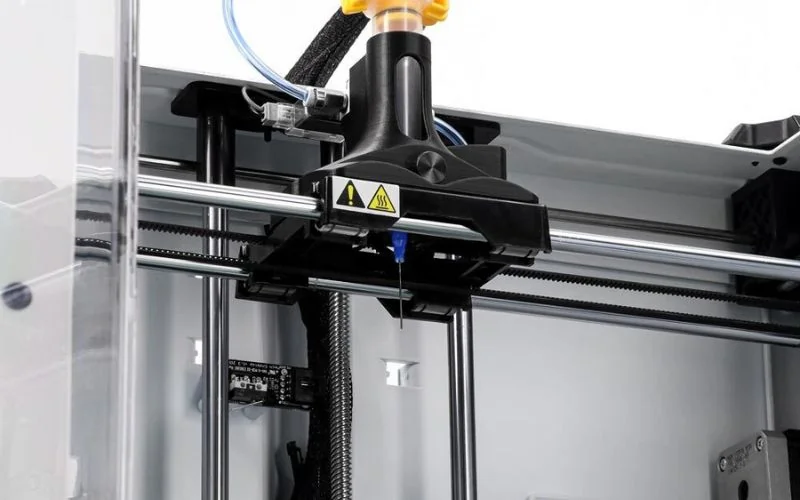
A DIW printer is a motion system plus a pneumatic or piston dispenser. Paste sits in a syringe barrel; regulated air pressure — typically up to 4 bar, higher on industrial heads — pushes it through a fine tip while the head traces the layer. There is no melt pool and no laser; the paste holds its shape after deposition because it is shear-thinning, and it is set afterwards by drying, UV or IR curing, or (for ceramics) a debind-and-sinter step. That single idea — extrude a shaped bead, then fix it — is what lets one machine print rubber-soft silicone one day and a stiff alumina insulator the next.
Silicone DIW applications
1. Custom O-rings, gaskets and seals. Printable silicone lets you make a sealing element with a cross-section a mold cannot pull, in a batch of one, with no tooling wait. Additive Plus has documented this route in detail for the automotive, aerospace and medical sectors, where a sanitary-grade seal has to stay flexible despite the layered structure — see the full case on custom O-rings, gaskets and seals. The ink runs 20–80 Shore A, so one material spans soft cushions to firm gaskets.
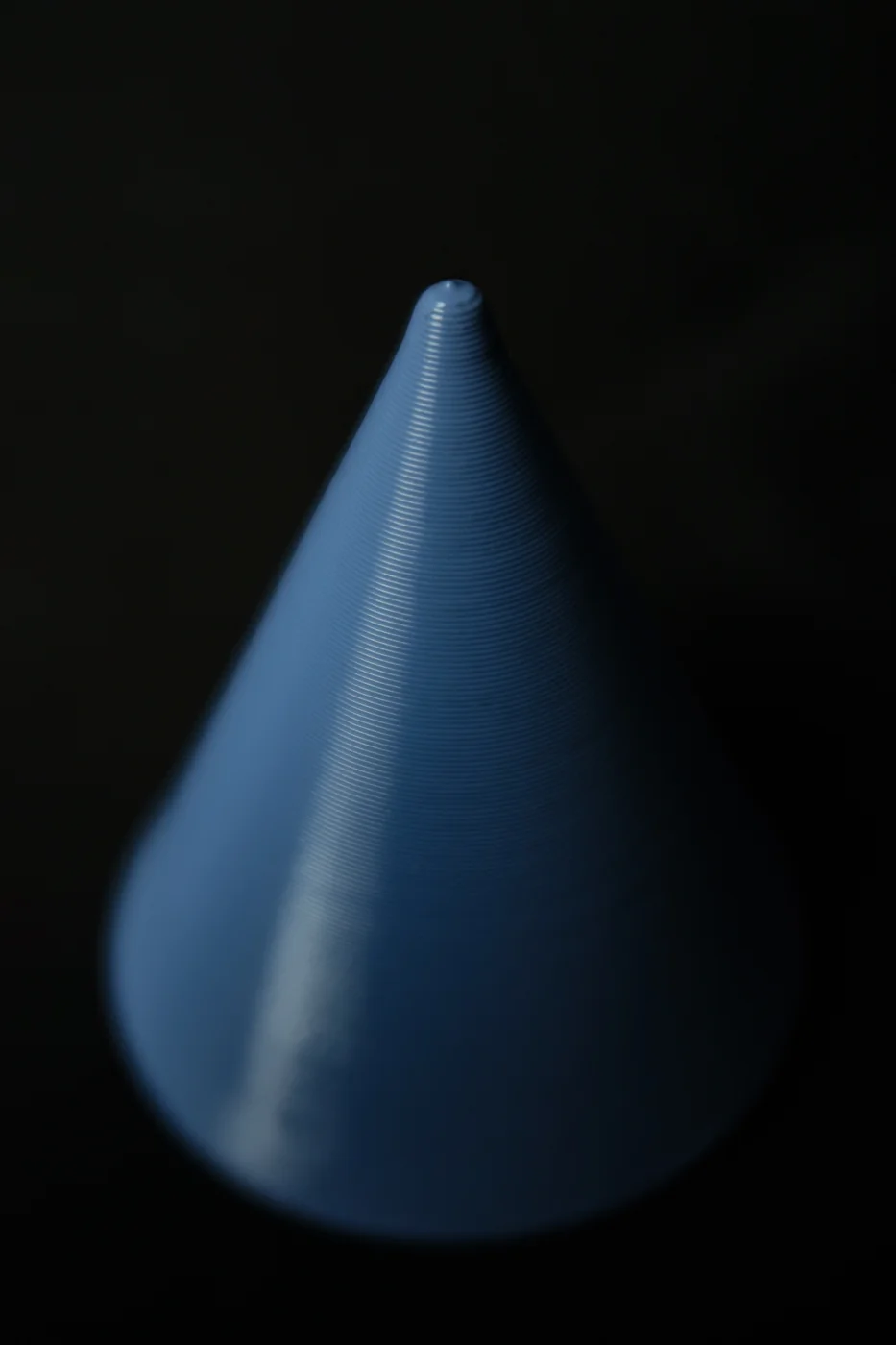
2. Soft grippers and suction cups. The same silicone opens up soft robotics: compliant grippers, manipulators and suction cups printed as one piece, with internal chambers that a two-part mold could not release. Production lines use these to handle delicate or irregular parts, and research groups use them to iterate gripper geometry in hours instead of tooling weeks.
Ceramic DIW applications
Ceramic paste — alumina (Al₂O₃), zirconia (ZrO₂), silicon carbide (SiC) or yttria-stabilised zirconia (YSZ) — is where DIW does its heaviest industrial work. After printing, parts are debound and sintered to full density.
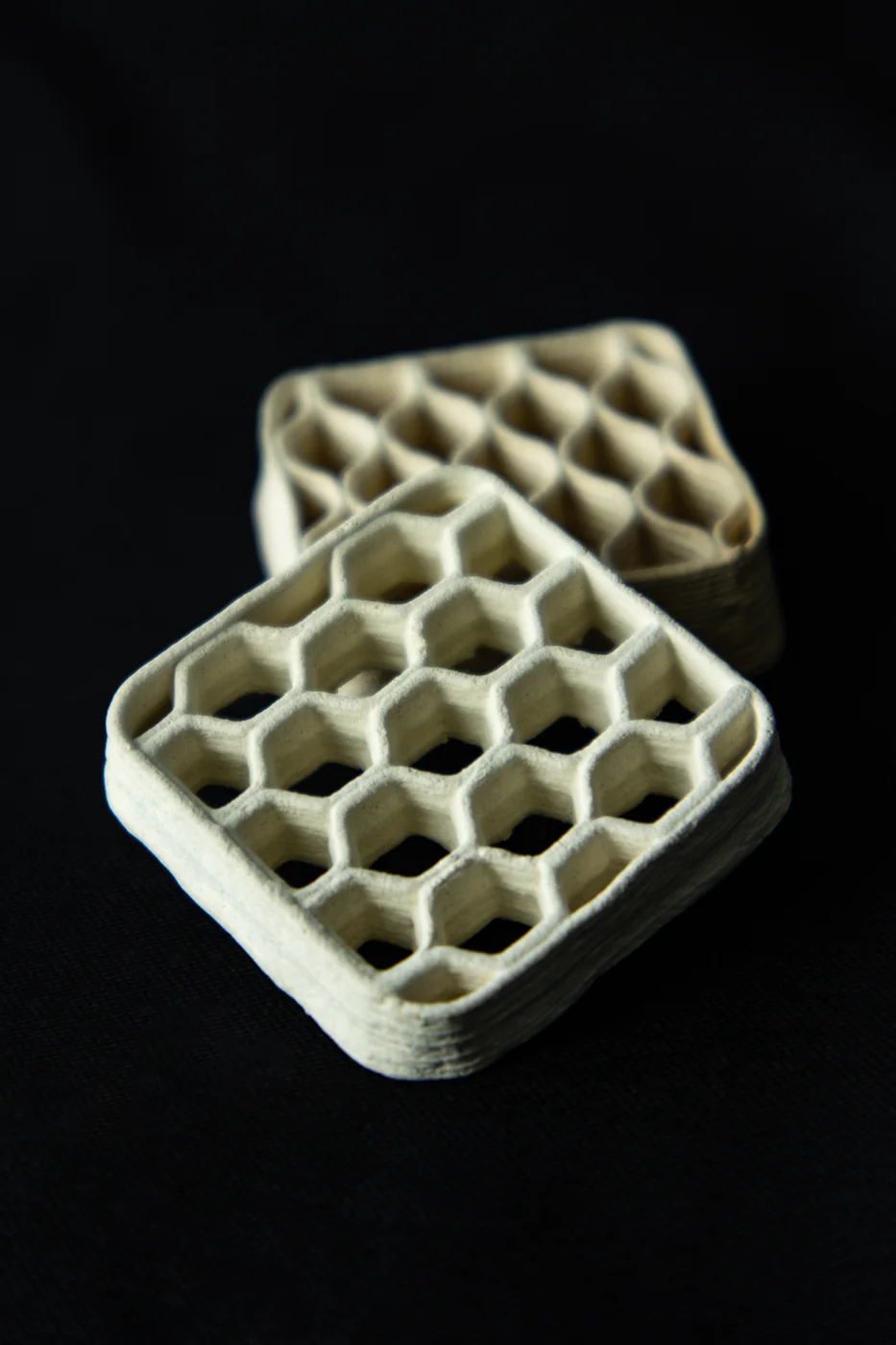
3. Technical ceramics. Heat-resistant, insulating, chemically stable parts — lattices, filters and heat-exchanger bodies with internal channels and graded porosity. These are exactly the shapes that pressing and casting struggle with, and the type of ceramic AM covered more broadly in our guide to ceramics for 3D printing.
4. Electrical insulators. Ceramic insulator blocks are a textbook DIW fit. In a Sygnis cost study on insulator production, hard tooling (molds and dies) drops out of the bill entirely, so for small and medium series the total per-part cost lands below traditional pressing — while complex geometries and tailored porosity become available for free. Traditional methods still win on very large runs; DIW wins on customization and low volume.
5. Welding sleeves and electrode shields. Ceramic sleeves and electrode shields protect welding hardware. The same study shows tooling costs of tens of thousands (one-time) collapsing to a few units per element with DIW, which makes customized ceramic bodies practical for the small, application-specific batches welding shops actually need.
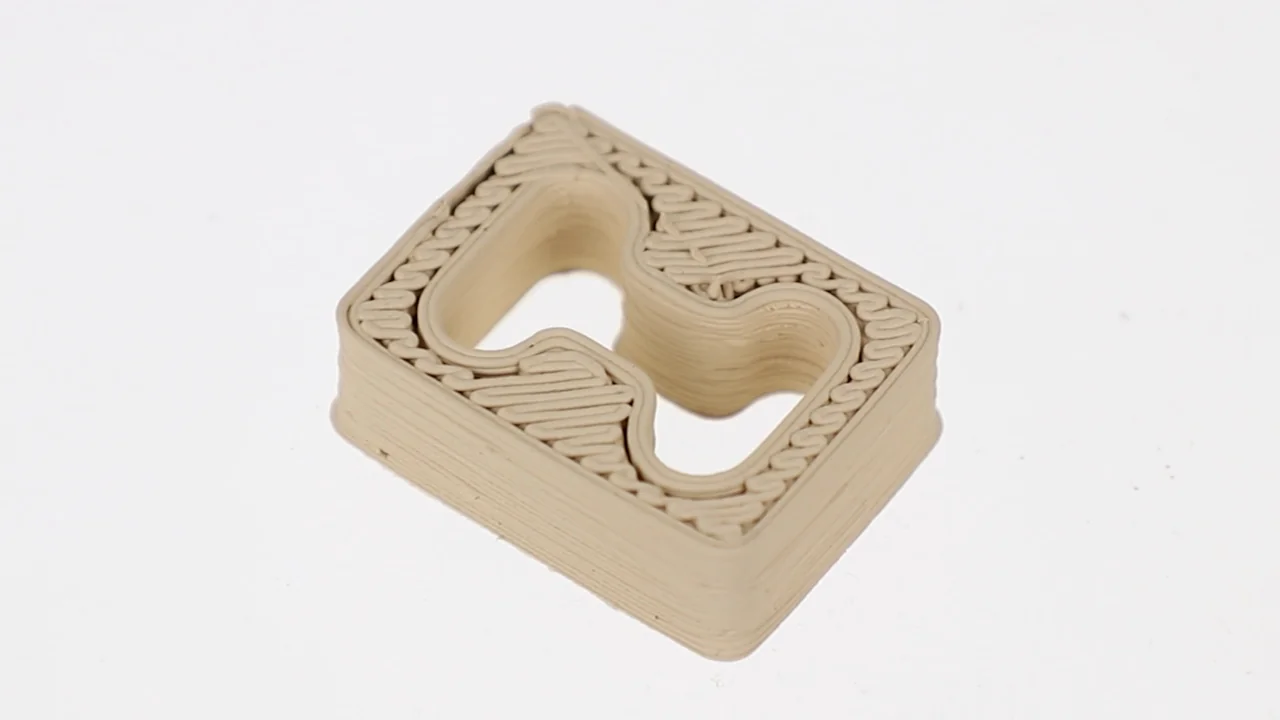
6. Fuel-cell and electrolyser sealing. One of the most demanding documented uses: sealing elements for the stacks of solid-oxide cells that generate hydrogen. In the HydroGEN project, the Institute of Power Engineering (IEn) produced stack seals for reversible solid-oxide cells (SOFC/SOEC) on dedicated DIW machines built by Sygnis — a low-cost, waste-free method for parts that must survive high-temperature cycling. It is a clean example of DIW moving from the lab into an energy installation.
Multi-material and R&D applications
7. Composite layup molds. DIW prints the mold, not just the part. A Sygnis tooling study on composite molds shows a one-time tooling bill of roughly 15,000–25,000 zł replaced by a few units of currency per mold — with internal and external geometries, tailored porosity and anisotropic thermal behaviour that machined tools cannot match. For short-run composite tooling, that changes the economics.
8. Battery and energy-storage structures. On a hybrid paste machine such as the Sygnis Sygpast, DIW builds spatial geometries that raise cell capacity and multi-cell packs with proper sub-insulators between sections. This is active research territory — Sygnis is part of the CePT II consortium and its Cell Prototyping Laboratory — but it points at where paste AM is heading in energy storage.
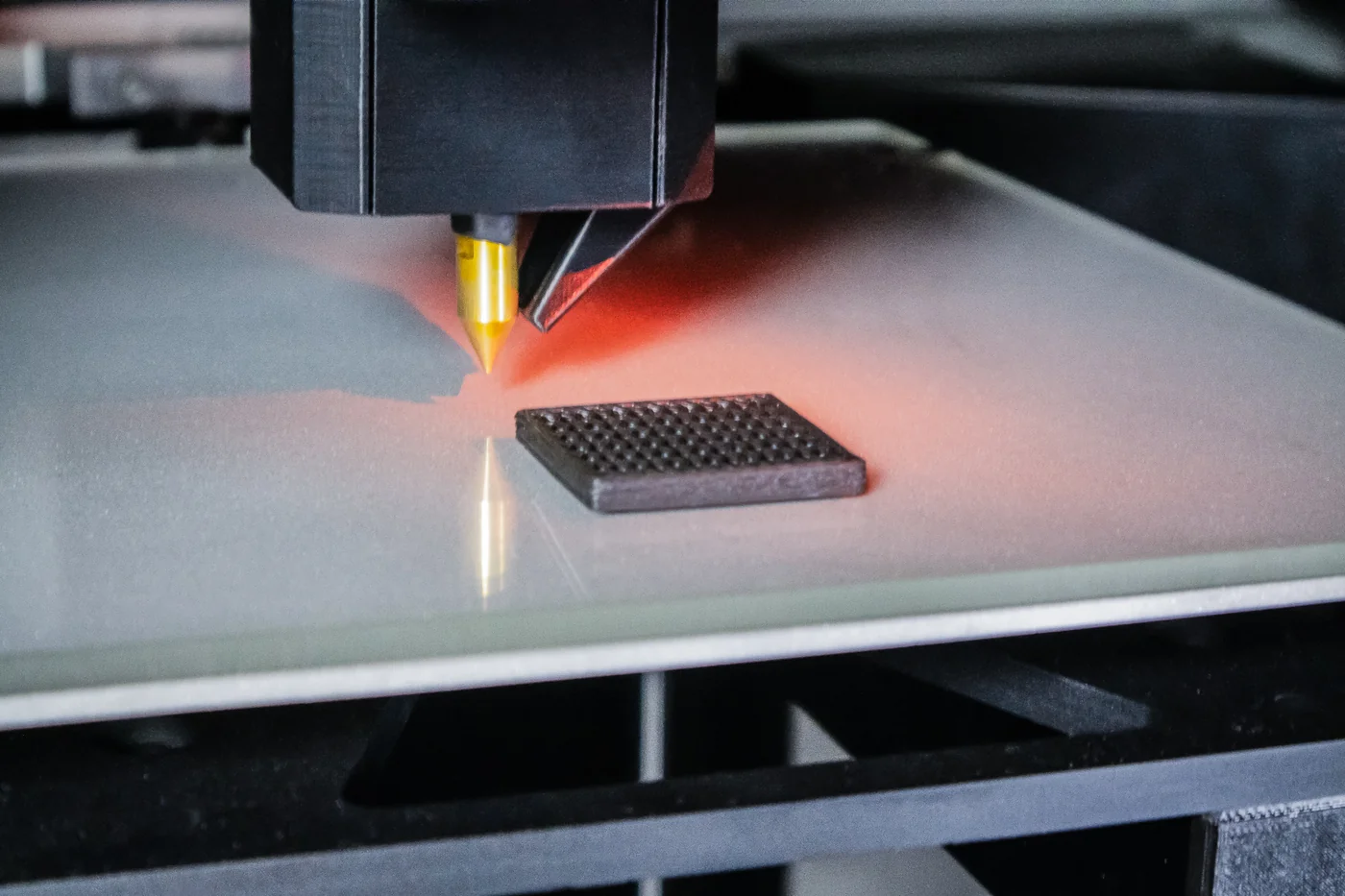
9. Flexible electronics and conductive pastes. Because the ink is arbitrary, DIW writes conductive pastes directly onto substrates — traces, contacts and functional patterns for flexible electronics and sensors. It is a common starting point for teams working where a printed circuit has to bend.
10. Proprietary-material R&D. The broadest use is also the reason labs buy DIW first: open-parameter machines let a research group load its own paste, gel or resin and test how it behaves in a real geometry. DIW is the gateway for proof-of-concept and for prototyping proprietary materials before any of the applications above are locked in.
When DIW beats molding and machining
Key takeaway. DIW wins when hard tooling is the bottleneck — complex geometry, custom cross-sections, or small-to-medium series. Traditional pressing, casting and machining still win on very large, standardized runs.
| Factor | Traditional (mold/machine) | DIW / paste AM |
|---|---|---|
| Hard tooling cost | High, one-time (molds, dies) | None |
| Geometric complexity | Limited, mostly simple shapes | High — internal channels, lattices, graded porosity |
| Design changes | Slow, re-tool required | Edit the file, reprint |
| Material range | Standard formulations | Custom pastes and admixtures |
| Best production volume | Large series | Small-to-medium series, one-offs |
| Lead time on new parts | Longer | Rapid prototyping |
The DIW printers and materials behind these parts
Two machines cover the range above. The Sygnis F-NIS 23151 is a desktop DIW platform — a 230×150×150 mm heated glass bed and pneumatic extrusion to 4 bar — built for proof-of-concept and single-paste work in labs and R&D. The Sygnis Sygpast is the hybrid step up: two-component paste heads, thermoplastic support in the same run, and mid-print UV (365/405 nm) and IR curing for industrial ceramics, 2K polyurethanes and energy work. Both feed from the same material shelf — ceramic paste in Al₂O₃, ZrO₂, SiC and YSZ, and printable silicone at 20–80 Shore A.
Sourcing DIW through Additive Plus
Direct ink writing is not a one-material technology — it is a way to turn almost any engineered paste into a functional part, and the ten applications here are the ones already earning their place in industry. If you are scoping a seal, an insulator, a composite mold or a research build, the right starting point is matching the material and series size to the machine.
Printers: Sygnis F-NIS 23151 · Sygnis Sygpast · All DIW 3D printers
Materials: Ceramic paste (DIW) · Printable silicone (DIW)
Frequently asked questions
What is Direct Ink Writing (DIW)?
Direct Ink Writing (DIW), also called robocasting or paste extrusion, is an additive manufacturing method that builds parts by pushing a semi-liquid paste through a fine nozzle bead by bead. There is no melt pool or laser: the shear-thinning paste holds its shape after deposition and is set afterwards by drying, UV/IR curing, or debinding and sintering for ceramics.
What materials can you print with Direct Ink Writing?
DIW prints almost any engineered paste: single-component silicones (roughly 20-80 Shore A), technical ceramics such as alumina (Al2O3), zirconia (ZrO2), silicon carbide (SiC) and YSZ, two-component polyurethanes, conductive pastes for electronics, and photo-curable resins. Because the ink is arbitrary, one open-parameter machine covers rubber-soft to fully rigid parts.
What are the main industrial applications of DIW?
The most common are custom silicone O-rings, gaskets and seals; soft-robotic grippers; technical ceramics like insulators, filters and heat-exchanger bodies; composite layup molds; welding sleeves; fuel-cell and electrolyser stack seals; battery structures; flexible-electronics traces; and proprietary-material R&D. DIW wins wherever hard tooling is the bottleneck.
When is DIW cheaper than molding or machining?
DIW is cheaper for complex geometries, custom cross-sections and small-to-medium series, because it eliminates hard tooling (molds and dies) entirely. In vendor cost studies on ceramic insulators and composite molds, a one-time tooling bill of tens of thousands drops to a few units per part. Traditional pressing and casting still win on very large, standardized runs.
Have a question or a project? Let’s talk.
Tell us what you need — a real applications engineer replies within 24 hours. NDA standard, no sales script.