
Rapid prototyping services exist to answer one question fast: does the part work? Instead of waiting weeks for tooling to hold a physical version of a design, a 3D printing service turns a CAD file into a real part in days, so an engineering team can test, fail, fix and re-test on a loop that used to take months. This guide covers what rapid prototyping delivers, which process fits which part, and how to get one back quickly.
What rapid prototyping actually buys you
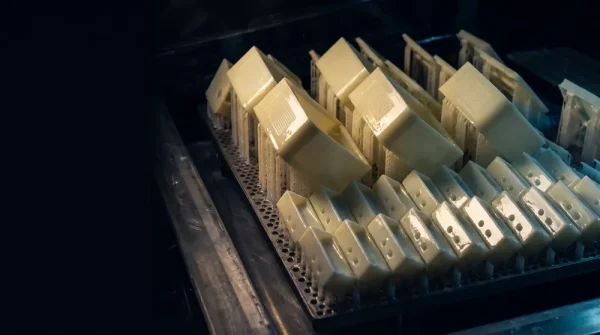
A functional prototype fresh off the build platform — from file to part in a day.
The value is the iteration loop, not the single part. Print a design in the morning, test it that afternoon, change it, and print version two overnight. Each cycle costs tens of dollars in material instead of thousands in tooling, and it compresses a development timeline from months to a week or two. Catching a fit or function problem on a printed part — before it is locked into a mould or a machined batch — is where rapid prototyping pays for itself many times over.
Which process fits your prototype
The right technology depends on what the prototype has to prove:
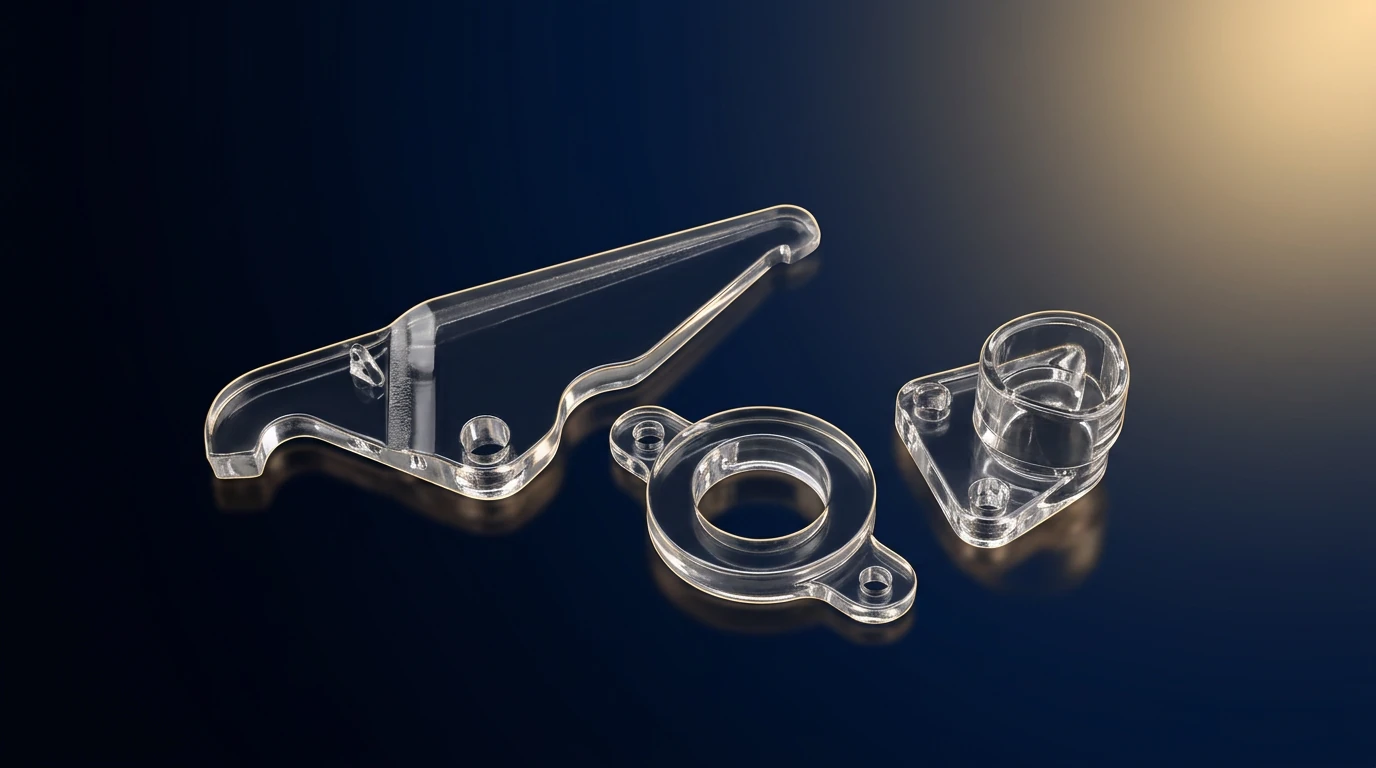
- SLA / DLP resin — the finest detail and smoothest surface. Best for appearance models, fit checks, and anything that will be photographed or cast.
- SLS nylon — tough, functional plastic parts with no support structures, so complex geometry prints freely. Best for snap-fits, living hinges and parts that must survive testing.
- FDM — the cheapest and fastest for basic form and fit, in a wide range of engineering plastics.
- Metal LPBF — when the prototype has to be the real material, in titanium, aluminium or steel.
SLA vs SLS: the common choice
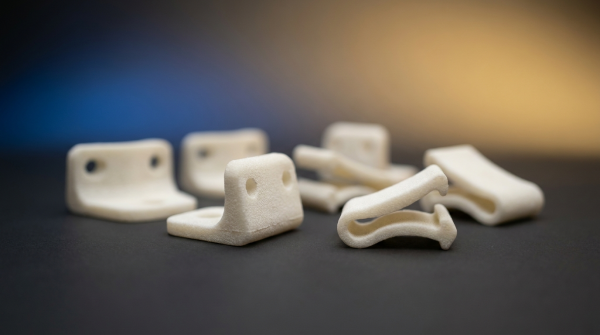
Most engineering prototypes are one or the other: a smooth resin model to check form and fit, or a tough nylon part to prove function. Many programs use both across the same project — a resin appearance model early, an SLS functional part before committing to production.
From prototype to production
Rapid prototyping does not always stop at prototypes. The same printers that make the first article can bridge into low-volume production runs, so a team can ship real parts while tooling is still being decided — or skip tooling entirely for parts that stay low-volume. That continuity, from first test part to production, is the advantage of an additive service over a traditional prototype shop.
How to get a prototype back fast
Give the service a CAD file (a STEP file, not a drawing), the material or the properties the part must show, and the quantity. Say what the prototype has to prove — appearance, fit, or function — and the process follows. Our 3D printing services cover SLA, SLS, FDM and metal; new to the choice? Start with what additive manufacturing is, or if the part is metal, the metal 3D printing service.
Frequently asked questions
What are rapid prototyping services?
Services that turn a CAD file into a physical part in days using 3D printing, so a design can be tested and iterated quickly instead of waiting weeks for tooling.
Which 3D printing process is best for prototyping?
SLA or DLP resin for the finest detail and smooth surfaces, SLS nylon for tough functional parts with no supports, FDM for cheap form-and-fit checks, and metal LPBF when the prototype must be the real material.
What is the difference between SLA and SLS for prototypes?
SLA gives fine detail and a smooth surface, ideal for appearance and fit models. SLS gives tough, functional nylon parts you can load and stress-test. Many projects use both.
How fast is rapid prototyping?
A first part is often ready in one to two days: a few hours of print time plus setup. With iterations, a refined prototype typically takes under a week, versus weeks for tooling.
Have a question or a project? Let’s talk.
Tell us what you need — a real applications engineer replies within 24 hours. NDA on request, no sales script.