
In stock
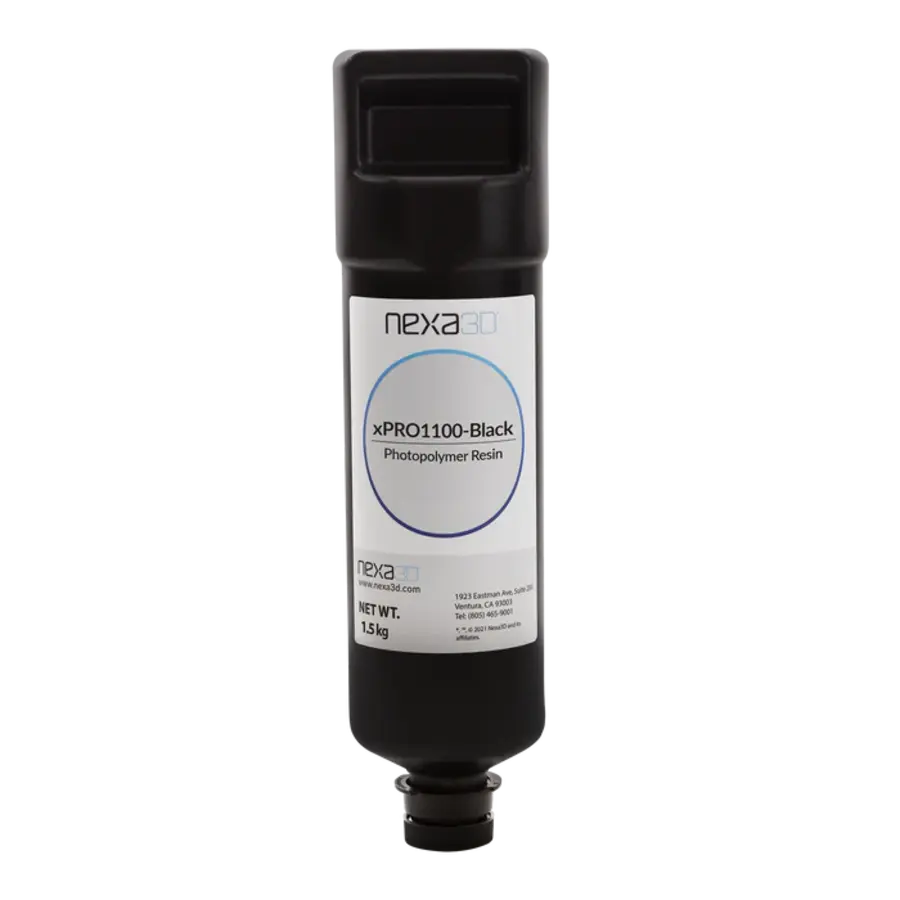
- 1.5 kg bottle of xPRO1100 Black, ready to pour into the vat
- LSPc profile and thermal post-cure schedule matched to your XiP, XiP Pro or NXE 400Pro
Nexa3D xPRO1100 Black Rigid Engineering Resin for XiP – High Heat Resistance | 1.5 kg
Rigid high-temperature polyurethane engineering resin for the Nexa3D XiP family — parts that behave like injection-moulded thermoplastic.
- ✓ 71 MPa tensile, ~3000 MPa modulus, 84 Shore D — stiff and dimensionally stable
- ✓ HDT up to 112 °C and 141 °C Tg; steam-sterilizable at 134 °C
- ✓ 1.5 kg bottle for XiP / XiP Pro / NXE 400Pro · ships in 1–2 business days
$240
What your process engineer actually checks
Stiffness and heat in one material
71 MPa tensile strength with a Young's modulus near 3000 MPa and 84 Shore D, combined with heat deflection up to 112 °C and a 141 °C glass transition. Most rigid resins give you one or the other — xPRO1100 holds both, which is why it stands in for injection-moulded engineering thermoplastic.
The bake is part of the spec
UV post-cure alone leaves heat deflection at roughly 61 °C at 1.82 MPa. Adding the optional 2-hour thermal treatment at 100 °C lifts it to 93 °C. If your part sees heat, that step is not optional — we supply the full schedule so your results match the data sheet.
A materials engineer on the line
Send us the service temperature and load case and we will tell you whether xPRO1100 clears it or whether you need the flame-retardant or higher-HDT grade. Sub-4h reply, NDA standard.
Nexa3D xPRO1100 Black is a rigid, high-temperature polyurethane engineering resin — the Nexa3D-branded version of BASF Forward AM’s Ultracur3D RG 1100 B. It prints stiff, dimensionally stable parts that behave like injection-moulded thermoplastic: 71 MPa tensile strength, 84 Shore D, and heat deflection up to 112 °C once thermally post-cured.
Why engineers choose xPRO1100 Black
The engineering grade in the Nexa3D range — stiff, hot and stable, for parts that have to work.
Injection-moulding-like stiffness
71 MPa ultimate tensile strength, ~3000 MPa Young’s modulus and 125 MPa flexural stress — parts behave like moulded engineering thermoplastic, not like a prototype resin.
Real heat resistance
Heat deflection up to 112 °C at 0.45 MPa and a 141 °C glass transition. An optional 2-hour bake at 100 °C is what unlocks the top of that range.
Stable and sterilizable
Water absorption of just 0.14 % over 24 hours, and the material passes ISO 10993-5 cytotoxicity and survives steam sterilization at 134 °C.
Low viscosity, easy running
280 cP at 25 °C — one of the easier engineering resins to pour, level and clean down between material changes on the XiP.
How you run it
The thermal post-cure is optional — but it is the difference between 69 °C and 93 °C heat deflection.
Run xPRO1100 Black on the Nexa3D XiP, XiP Pro or NXE 400Pro. Shake well, pour, and let the surface go bubble-free before starting the build.
Wash
Wash in xClean, then IPA — no more than 2 minutes in xClean and 5 minutes in IPA, so edges and fine features stay sharp.
UV cure, then bake
UV post-cure to reach spec. Then optionally ramp to 100 °C, hold 2 hours and cool — this raises heat deflection at 1.82 MPa from about 61 °C to 93 °C.
Technical specifications
| Property | Value | Method |
|---|---|---|
| Ultimate tensile strength | 71–72 MPa | ASTM D638 |
| Young’s modulus | 2940–3010 MPa | ASTM D638 |
| Elongation at break | 4.0–4.7 % | ASTM D638 |
| Flexural stress | 125 MPa | ASTM D790 |
| Flexural modulus | 2790 MPa | ASTM D790 |
| HDT at 0.45 MPa | 97–112 °C | ASTM D648 |
| HDT at 1.82 MPa | 69–93 °C | ASTM D648 |
| Glass transition (Tg) | 141 °C | ASTM D4065 (DMA) |
| Izod impact (notched) | 21 J/m | ASTM D256 |
| Charpy impact (notched) | 1.11 kJ/m² | ISO 179-1 |
| Hardness | 84 Shore D | ASTM D2240 |
| Water absorption (24 h) | 0.14 % | ASTM D570 |
| Flammability | HB at 1.5 mm | UL 94 |
| Viscosity | 280 cP at 25 °C · 190 cP at 30 °C | ASTM D7867 |
| Density (liquid / solid) | 1.11 / 1.2 g/cm³ | — |
Figures from the Nexa3D xPRO1100-Black technical data sheet (2024 v5), measured on UV-cured specimens with the additional 2-hour thermal treatment at 100 °C. Ranges reflect the different post-processing routes given in the data sheet.
Typical applications
Parts that need stiffness, heat tolerance and dimensional stability together.
Not sure xPRO1100 is the right grade?
The XiP platform runs a full ladder of resins — pick on duty cycle and budget, not on colour.
Flame-retardantxPRO9400-FRCompare resin →
Higher HDTCubic Ink Rigid 2000 VPCompare resin →
Why source xPRO1100 through Additive Plus
- Genuine Nexa3D-supplied xPRO1100 Black — the BASF Forward AM Ultracur3D RG 1100 B formulation — with the matching LSPc profile.
- Materials engineers who run these resins in-house and can advise on the thermal post-cure schedule.
- US inventory, ships in 1–2 business days; volume and purchase-order pricing on request.
- The whole XiP chain in one place: resin, printer, post-processing and spares.
| Brand | Nexa3D |
| Weight | 1.5 kg |
| Printing Materials | Resins |
| Platform | XiP |
| Technology | LSPc, DLP |
| Resin Type | High-temp, Rigid |
| Application | Engineering, Manufacturing |
Send us an STL and the temperature your part has to survive. We will print it in xPRO1100 on a Nexa3D XiP in California, run the full thermal post-cure, and ship you the part to test on your own bench.
Other products teams run alongside Nexa3D xPRO1100 Black Rigid Engineering Resin for XiP – High Heat Resistance | 1.5 kg
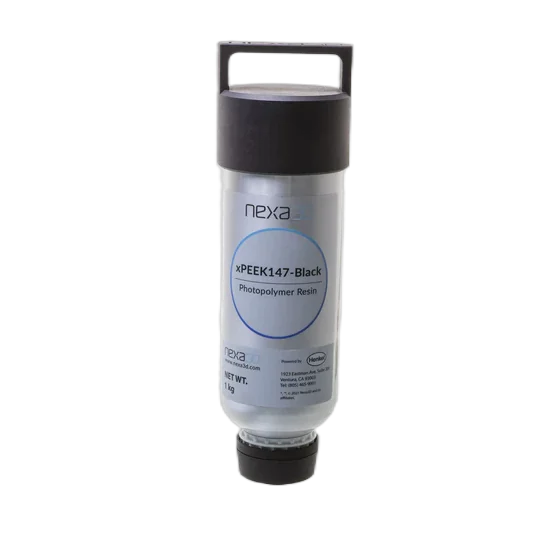
xPEEK147 Black brings PEEK-range stiffness and high-temperature performance to the Nexa3D XiP and XiP Pro — supplied in a 1.5 kg smart cartridge, with heat deflection up to 230°C after a thermal post-cure.
- ✓ Heat deflection up to 230°C (0.45 MPa) after the 170°C bake
- ✓ PEEK-range stiffness — 3220 MPa modulus, Shore D 94
- ✓ 1.5 kg smart cartridge for XiP / XiP Pro (405 nm LSPc)
- ✓ Currently on backorder — lead time confirmed before you commit
Made to order
· On backorder — we confirm the current lead time before you commit. The 5 kg format is in stock if you need material sooner.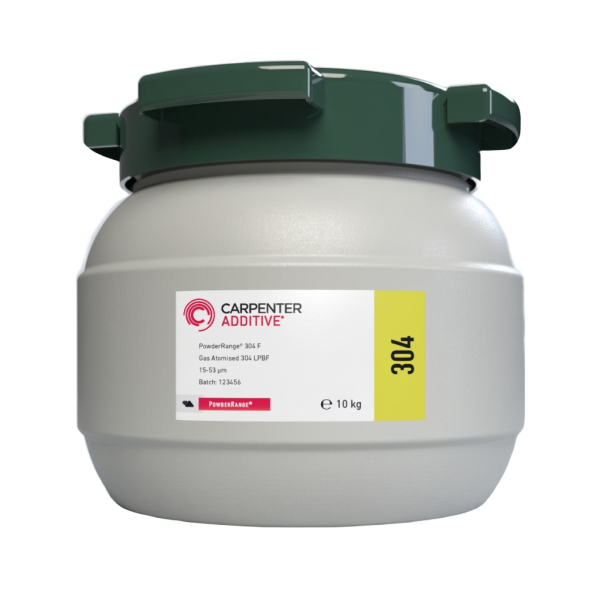
Versatile. Weldable. Cost-effective. Genuine Carpenter PowderRange® 304 / 304L austenitic stainless steel for LPBF & EBM metal 3D printing.
- ✓ Gas-atomized, low-oxygen — COA on request
- ✓ Sold in small, workable volumes — no large mill minimums
- ✓ In US stock — ready to ship
In stock
· In US stock · ready to ship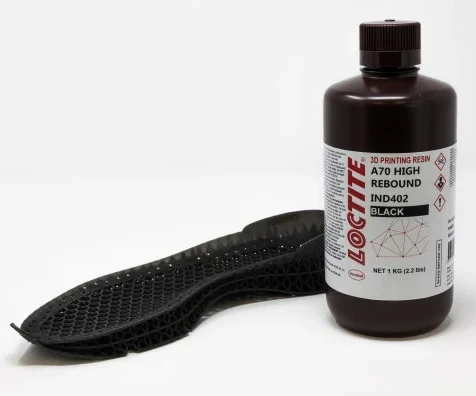
Black elastomer: Fast-print gaskets/seals with low shrinkage. High energy return, no post-cure.
Availability: confirmed at order. Supplier stock for this line varies — we verify availability and lead time on every order before processing, and offer an equivalent or a full refund if an item cannot be supplied. Cubic Ink equivalents →
Made to order
· Available to order — we confirm the lead time by email within one business day of your order.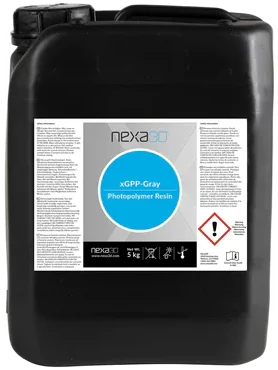
General Purpose Photopolymer (GPP) for high-throughput, high-accuracy production and prototyping on the Nexa3D NXE 400 and NXE 400 Pro. BASF-formulated for injection-mould-quality surface finish, low shrinkage and fast print speed, with 30 MPa ultimate tensile strength, 2100 MPa tensile modulus, 84 D Shore hardness and a 93 °C glass transition. The gray finish shows draft lines, parting seams and surface defects that clear resins hide. Supplied to order in 5 kg (12 lb) jerricans.
Made to order
· Contact for lead time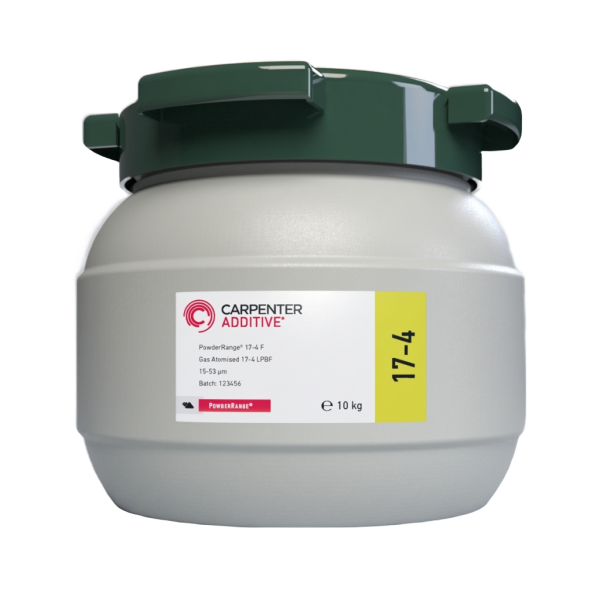
High strength. Heat-treatable. Production-ready. Genuine Carpenter PowderRange® 17-4PH precipitation-hardening stainless steel for LPBF metal 3D printing.
- ✓ Vacuum-melted, nitrogen gas-atomized — COA on request
- ✓ Sold in small, workable volumes — no large mill minimums
- ✓ On backorder — ship date confirmed when you order
On backorder: the next Carpenter lot is expected in late November — we confirm the ship date when you order.
Available to order
· Lead time on request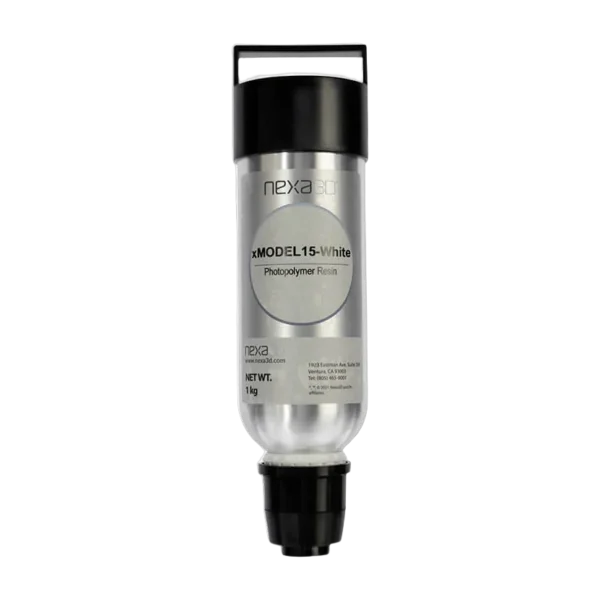
In stock
· 2 Business Days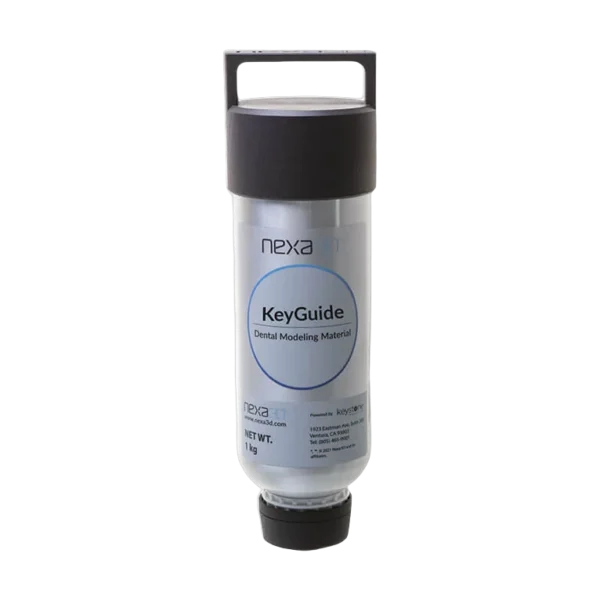
Stiff. Clear. Autoclavable. KeyGuide prints accurate surgical and pilot-drill guides on Nexa3D NXE-series LSPc printers — Class I biocompatible, with a 2400 MPa flexural modulus that keeps the guide from flexing under drilling load so the osteotomy follows the plan. Translucent for full intra-oral visibility, and steam-sterilizable before surgery.
1 kg bottle, validated print and post-cure profile included.
In stock
· In stock — ships in 1–2 business days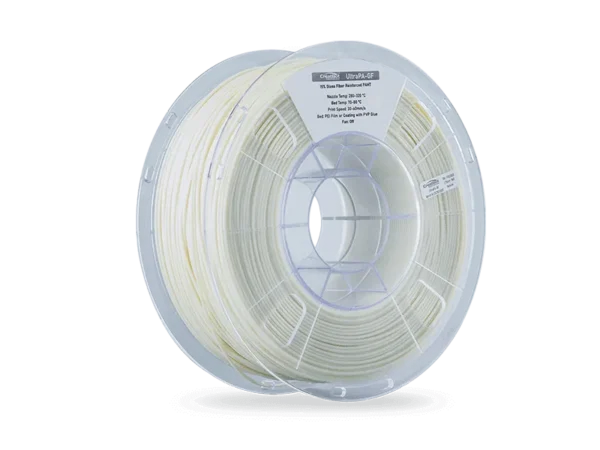
Glass-fiber-reinforced high-temperature nylon filament for FDM 3D printing — high strength (88 MPa tensile) and stiffness with a heat-deflection temperature up to 135°C, tougher and less brittle than carbon-fiber grades, for demanding functional parts.
- ✓ ±0.02mm diameter tolerance — consistent extrusion, low jam risk
- ✓ Validated CreatBot F430 print profile + datasheet included
- ✓ In stock, ships in 1–2 business days
In stock
Common questions
Don't see yours? Email [email protected] — NDA standard, typical reply within 4 hours.
What is xPRO1100 Black actually for — is it an injection-molding resin?
Which Nexa3D printers is xPRO1100 Black compatible with?
What post-processing does xPRO1100 need, and is the thermal bake necessary?
How hot can xPRO1100 parts actually run in service?
How does xPRO1100 compare with PRO9499 White and xPRO9400-FR?
Is xPRO1100 biocompatible or sterilizable?
How should xPRO1100 be stored and handled?
Place your order, or talk to an engineer first
Order Nexa3D xPRO1100 Black Rigid Engineering Resin for XiP – High Heat Resistance | 1.5 kg direct, or talk to materials engineer