
In stock
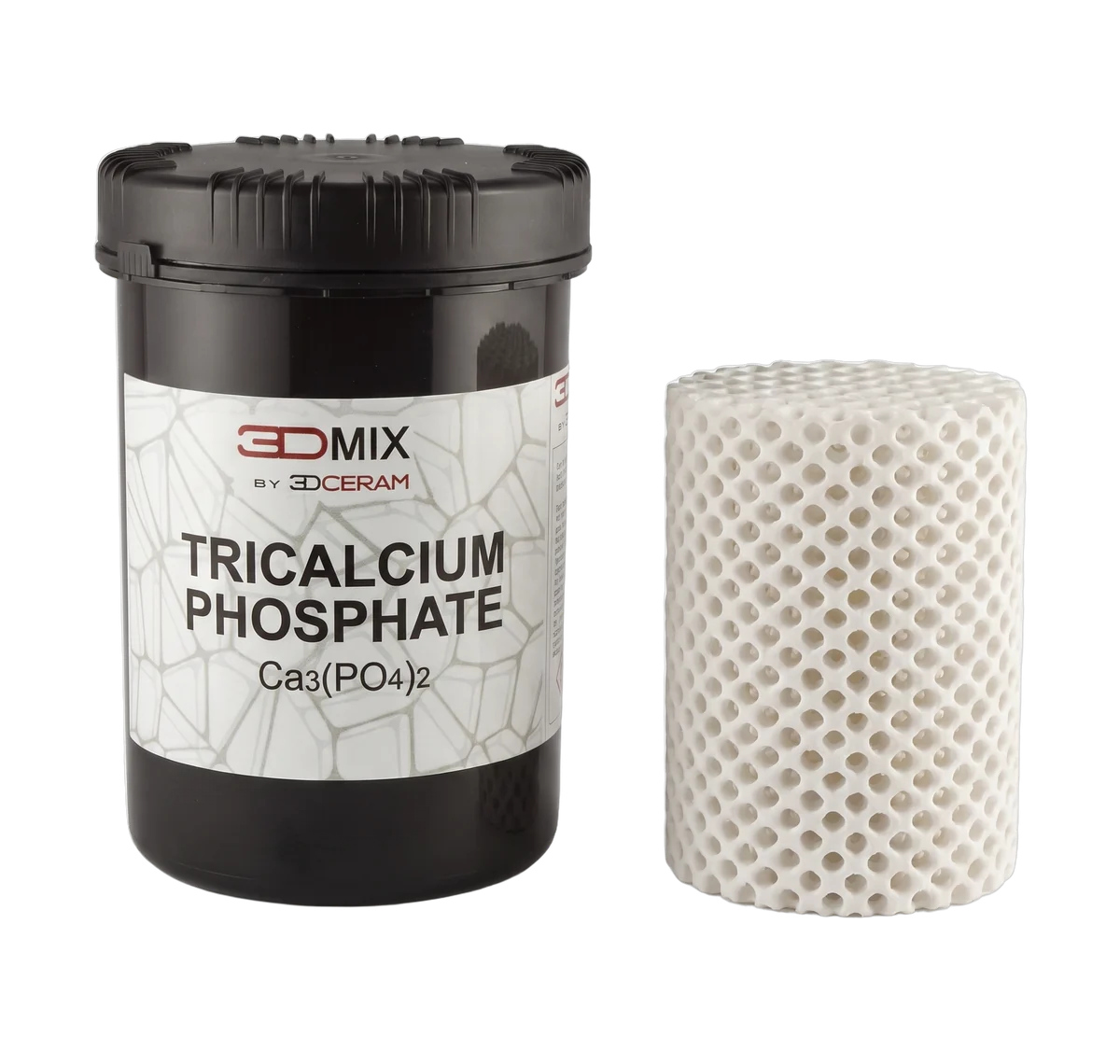
- Solids loading + debind/sinter guidance in every order
- Mutual NDA before any file or spec review
Tricalcium Phosphate 3D Printing Paste
Print bioresorbable tricalcium phosphate (TCP) scaffolds on 3DCeram's Ceramaker laser-SLA platform, then debind and sinter to a clean, resorbable bioceramic.
- ✓ Bioresorbable — gradually replaced by natural bone; Ca/P ratio 1.503, no calcium pyrophosphate
- ✓ Print porous, patient-specific scaffolds for bone regeneration and spinal implants
- ✓ Ceramic SLA paste for the 3DCeram Ceramaker platform — quote-based, mutual NDA before spec review
What your regulatory engineer actually checks
Purity and phase data
Ca/P ratio 1.503, hydroxyapatite content held to 0–5% and no calcium pyrophosphate — the composition data a resorbable implant material must be qualified against. We ship the datasheet.
The full ceramic workflow
Every order ships with the debinding and sintering parameters. Shrinkage is compensated in build prep so patient-specific scaffold geometries land on dimension.
A materials engineer on the line
Bioceramic purity, resorption behaviour and qualification are unforgiving. Talk to an engineer who runs this paste — sub-4h reply, NDA on request.
Tricalcium Phosphate 3D Printing Paste is a 3DCeram tricalcium phosphate (TCP) paste for the Ceramaker laser-SLA platform — a bioresorbable calcium-phosphate ceramic that is gradually replaced by natural bone.
Why engineers choose this paste
A resorbable bioceramic for implants that are meant to be replaced by the patient’s own bone.
Bioresorbable
Gradually dissolves and is replaced by natural bone — ideal for temporary scaffolds and bone regeneration.
Biocompatible
Calcium-phosphate composition close to bone mineral, with controlled Ca/P ratio of 1.503.
Patient-specific geometry
Print porous, patient-matched scaffolds that support bone in-growth.
Controlled phase purity
No calcium pyrophosphate, hydroxyapatite content held between 0–5%.
Print → debind → sinter
Ceramic stereolithography on the 3DCeram Ceramaker platform. The green part is larger than the finished part — shrinkage is compensated in build preparation.
Laser SLA print
The ceramic-loaded paste is cured layer-by-layer on a 3DCeram Ceramaker laser-SLA machine into a green part.
Debinding
The organic binder is removed in a controlled thermal cycle, leaving a fragile ceramic-only brown part.
Sintering
Sintered to ~81% dense TCP (2.47 g/cc, ~2.8 µm grain) with a controlled Ca/P ratio and phase purity.
Typical applications
Resorbable bone-substitute and spinal implants.
Tricalcium Phosphate — physical & biomedical properties
Representative post-sinter values from the 3DCeram material datasheet. Final numbers depend on part geometry and your qualified sinter cycle.
| Property | Value |
|---|---|
| Densification rate | 80.7% |
| Density | 2.47 g/cm³ |
| Grain size after sintering | 2.8 µm |
| Ca/P ratio | 1.503 |
| Hydroxyapatite content | 0 – 5% |
| Calcium pyrophosphate | None detected |
| Brand | 3DCeram |
| Country of origin | France |
| Printing Materials | Ceramic Pastes |
| Technology | CERAMIC SLA |
| Material | Tricalcium Phosphate (TCP) |
| Application | Composite Tooling, Dental, Engineering, Jigs & Fixtures, Manufacturing, Medical |
We formulate and qualify. Custom variants on request.
Need a specific ceramic chemistry, solids loading, or a tuned binder for your process? Our materials team formulates and verifies rheology and sinter behavior before you commit. Typical lead 3–4 weeks.
Complete the workflow
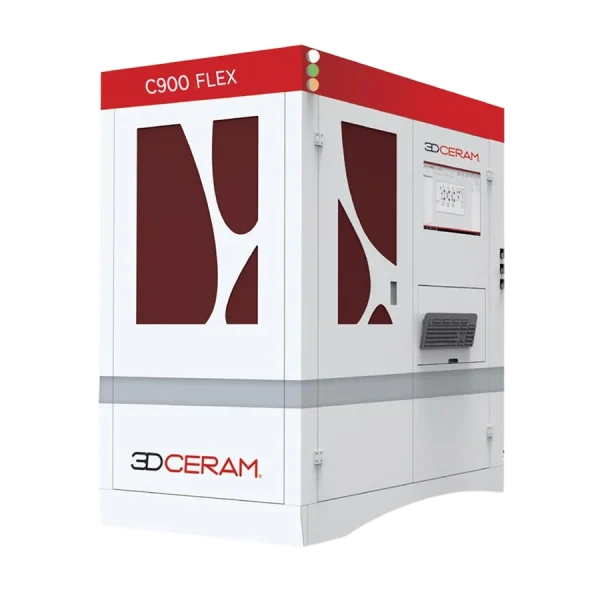
- ✓ 11+ ceramic materials — Al₂O₃, ZrO₂, Si₃N₄, TCP, HA, AlN, cordierite and more
- ✓ Top-down SLA — support-free complex internal geometries in dense ceramic
- ✓ SAM option — 100 mL minimum batch for R&D economy with expensive compositions
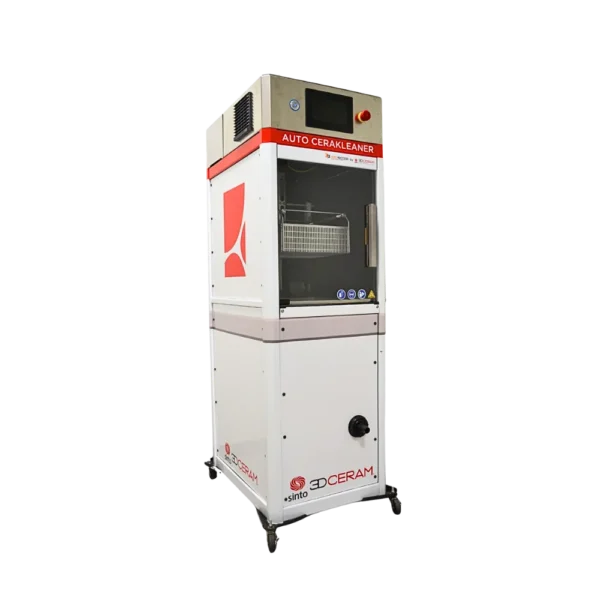
Automated cleaning system that removes excess ceramic paste from freshly printed green parts, leaving them ready to debind — replacing slow, hands-on solvent cleaning in the ceramic AM workflow.
- ✓ Gentle, low-mechanical-stress cleaning of fragile green parts
- ✓ Batch time cut dramatically vs manual (e.g. 60 min → 5 min on 70 alumina parts)
- ✓ Solvent longevity + recycling · no manual solvent contact
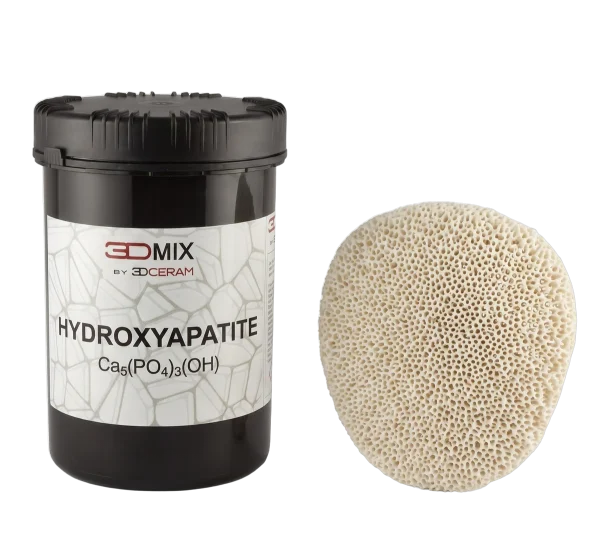
Print bioactive hydroxyapatite bone-substitute parts on the 3DCeram Ceramaker & M.A.T. ceramic-SLA platforms, then debind and sinter to a clean calcium-phosphate bioceramic.
- ✓ Bioactive calcium phosphate — composition close to bone, crystallinity >95%, heavy metals <30 ppm
- ✓ Print porous, patient-specific implant geometries not possible by machining
- ✓ 55 vol% ceramic load · 405 nm photoinitiator · 250 mL bottle
Other products teams run alongside Tricalcium Phosphate 3D Printing Paste
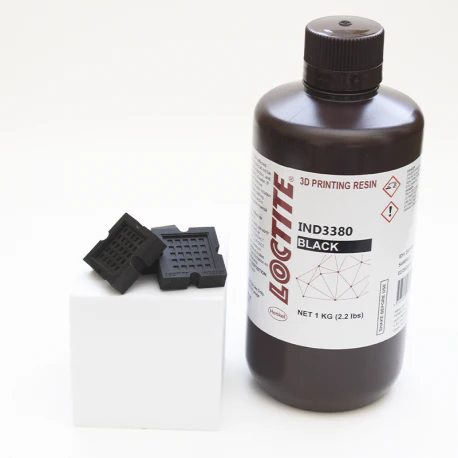
ESD-safe black resin (HDT190°C): Precision tooling for electronics. Electrostatic dissipation.
Availability: confirmed at order. Supplier stock for this line varies — we verify availability and lead time on every order before processing, and offer an equivalent or a full refund if an item cannot be supplied. Cubic Ink equivalents →
Made to order
· Ships in about 2 weeks — final date confirmed after you order
High-rebound black elastomer: no post-cure! Perfect for midsoles, soft inserts & lattices.
Availability: confirmed at order. Supplier stock for this line varies — we verify availability and lead time on every order before processing, and offer an equivalent or a full refund if an item cannot be supplied. Cubic Ink equivalents →
Made to order
· Ships in about 2 weeks — final date confirmed after you order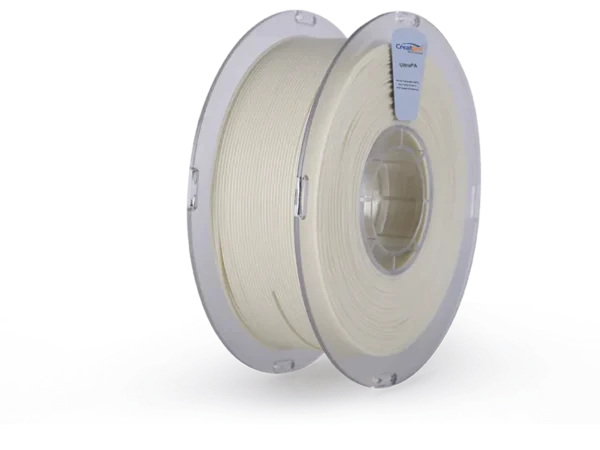
High-temperature nylon (PA) filament for FDM 3D printing — tough, wear- and chemical-resistant, with 133 MPa flexural strength and heat tolerance well beyond ABS, for functional gears, brackets, and end-use engineering parts.
- ✓ ±0.02mm diameter tolerance — consistent extrusion, low jam risk
- ✓ Validated CreatBot F430 print profile + datasheet included
- ✓ In stock, ships in 1–2 business days
In stock
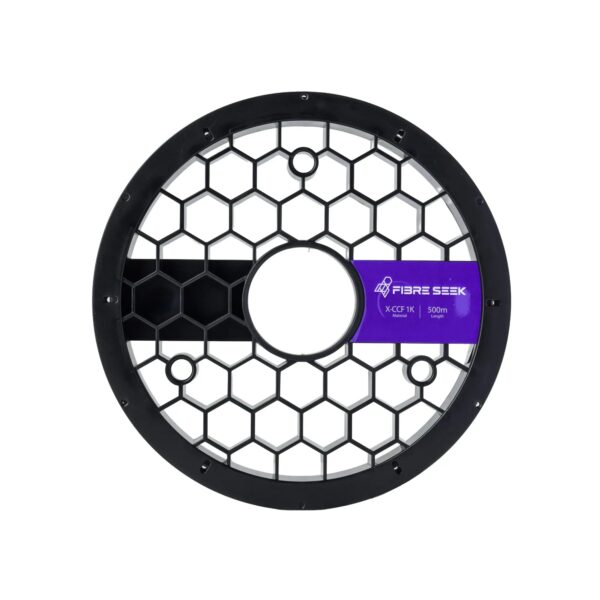
- 1K continuous carbon fiber engineered for FibreSeeker 3 co-extrusion
- ~60% fiber volume fraction, tensile strength up to 900 MPa
- Continuous load paths for strong, lightweight structural parts
In stock
· In stock · ships from the US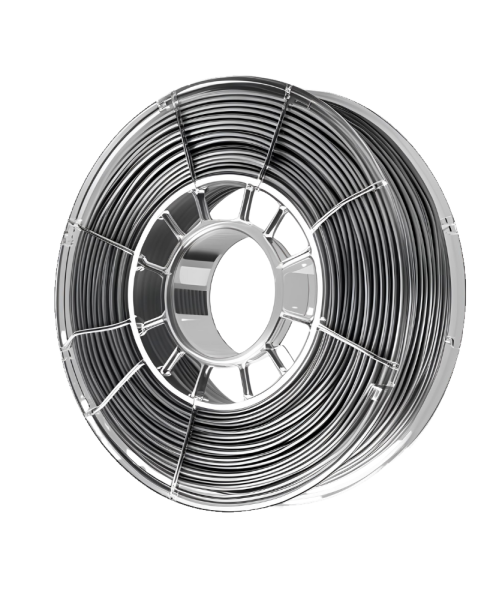
- ✔ Rp0.2 149 MPa, Rm 485 MPa and 158 GPa modulus after sintering — tested to ASTM E8/E8M
- ✔ Debind and sinter parameters plus the full datasheet included with every spool
- ✔ 1.75mm bound-metal feedstock for the 3DCeram M.A.T. FFF head — mutual NDA before any spec review
In stock
· In stock — ships in 1–2 business days. Custom alloy or ceramic feedstock: 3–4 weeks, configured to order.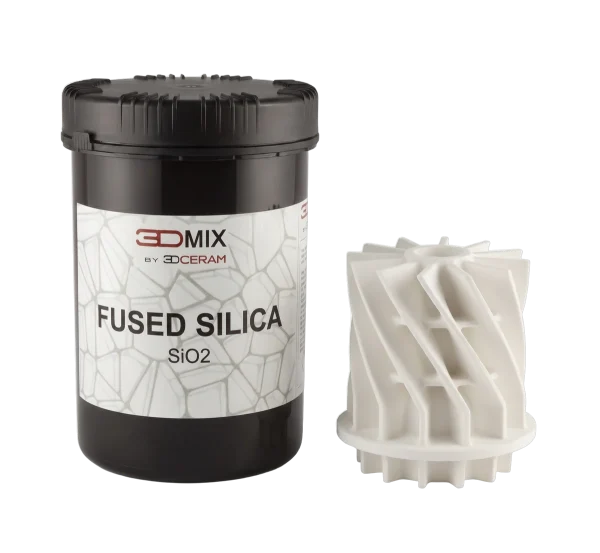
Print leachable fused-silica investment-casting cores on 3DCeram's Ceramaker laser-SLA platform for complex internal casting geometries.
- ✓ 40% porosity, excellent leachability — cleanly removed after casting
- ✓ Very low expansion (0.07% max dilatation to 1500 °C) holds core dimension through the pour
- ✓ Ceramic SLA paste for the 3DCeram Ceramaker platform — quote-based, mutual NDA before spec review
In stock
· In stock — ships in 1–2 business days. Custom ceramic formulations and larger batches: 2–4 weeks, configured to order.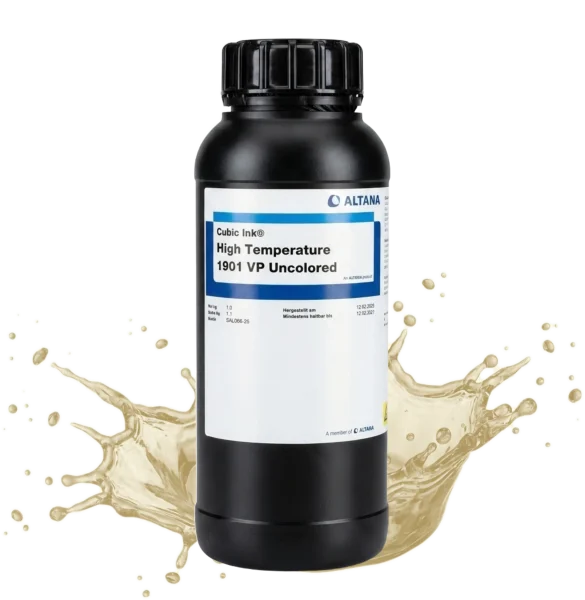
Easy-to-print DLP/LCD/mSLA resin with an HDT-B of 272 °C, superior chemical resistance and — unlike most high-temp resins — real toughness instead of brittleness.
- ✓ HDT-B 272 °C · Tg > 300 °C — holds geometry under sustained heat
- ✓ Tough, not brittle — drill, grind and machine without shattering
- ✓ Superior chemical resistance · cytotoxicity passed (ISO 10993)
- ✓ A similar alternative to Loctite IND147 for the same high-temp applications
Made to order
· Ships in 5–10 business days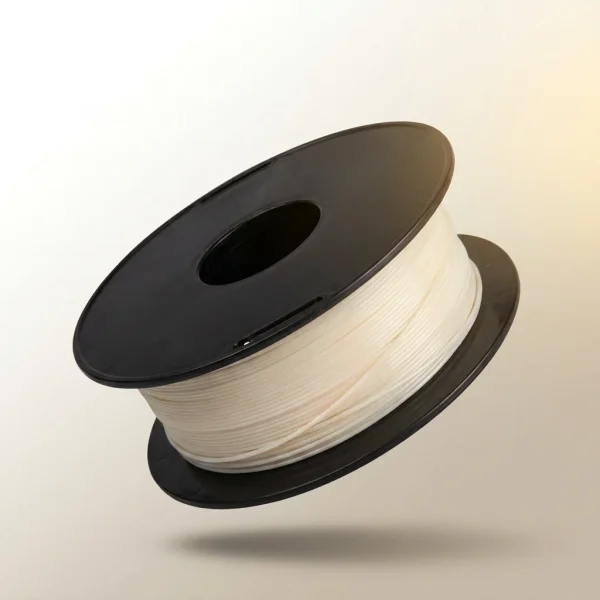
Print radiofrequency parts directly — no debinding, no sintering. A dielectric filament with permittivity 10 and low loss, so antennas, lenses and metasurfaces come off the printer ready to test.
- ✔ Permittivity 10 · loss tangent 0.001 · HDT up to 110 °C
- ✔ No debinding, no sintering — prints as a technical polymer, parts up to 80 cm
- ✔ Genuine Zetamix by Nanoe · 500 g spool, vacuum packed · 1.75 mm
In stock
· Ships from California · 10–20 business daysWhat our customers say
“Harry and team were professional, effective communicators as we set up the order, then they executed quickly and produced an amazing product for us at a very competitive price. Am looking forward to our next print w Additive Plus!”
“Great 3D printing service and the resin parts look super smooth and clean. Really happy with how everything turned out!”
“Harry was very professional and helped me out with my 3D printing needs and explained what options I have in terms of filaments such as PEEK. Highly recommended.”
“I needed a 3D enclosure printed urgently in a specific time period, they did great!”
Common questions
Don't see yours? Email [email protected] — NDA on request, typical reply within 4 hours.
What is Tricalcium Phosphate and why use it?
How does TCP differ from hydroxyapatite?
How is the material qualified for biomedical use?
Can I print porous or patient-specific scaffolds?
Why does the printed part shrink during processing?
Which printer runs this paste, and can I trial it?
Place your order, or talk to an engineer first
Order Tricalcium Phosphate 3D Printing Paste direct, or talk to materials engineer