
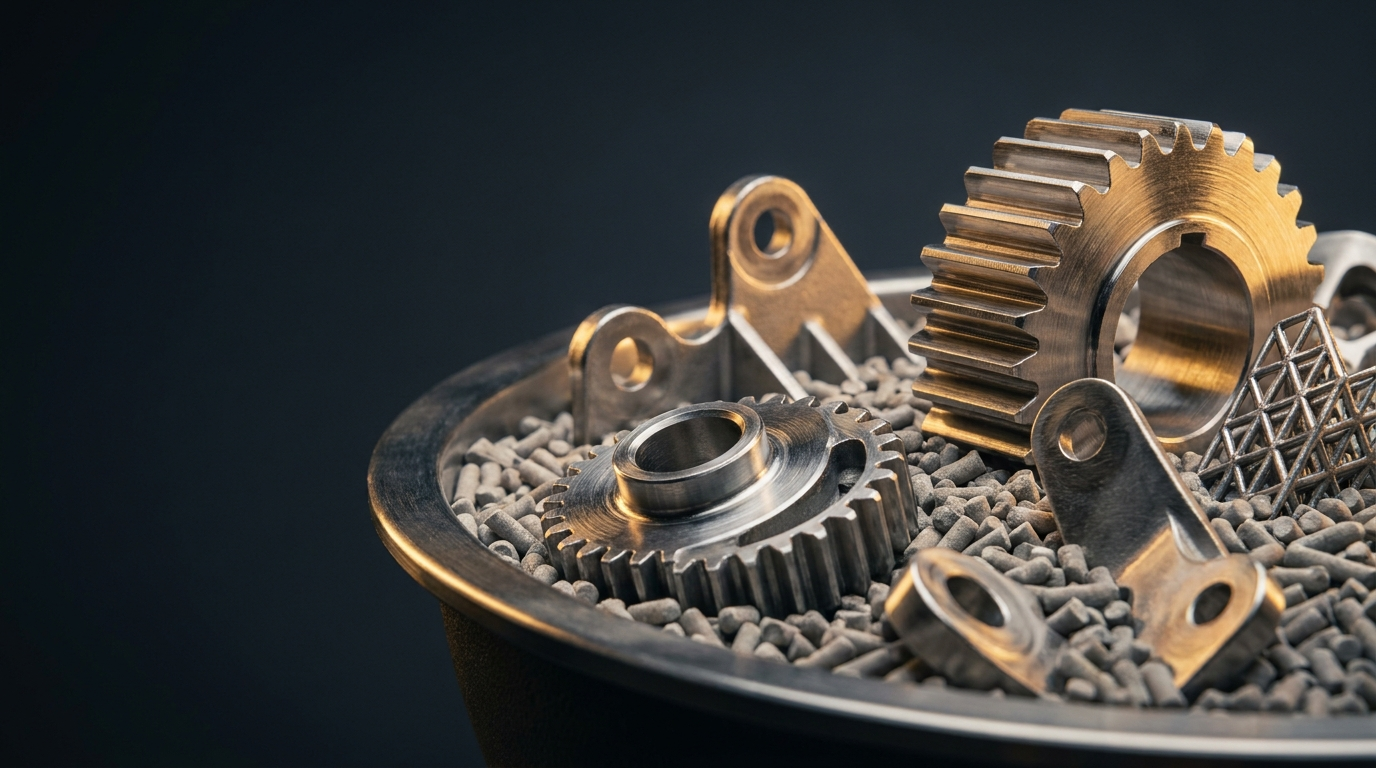
A practical, engineering-level guide to vibratory finishing for additive manufacturing — how the process works, the surface results it delivers on metal and polymer parts, and how to bring it in-house.
Vibratory finishing is a mass-finishing process that smooths, deburrs and cleans parts by vibrating them together with abrasive or polishing media in a bowl or trough. For additive manufacturing, it solves a specific, expensive problem: 3D-printed parts come off the build plate with rough as-built surfaces, sharp edges and support witness marks, and cleaning that up by hand is slow, inconsistent and — done manually — can account for up to half of a finished part’s cost. Vibratory finishing moves that step off the bench into a monitored, repeatable cycle that scales.
This guide covers what the process is, why AM parts need it, the surface results you can expect (with real roughness numbers), how vibratory finishing compares to other methods, and how to choose a system for your volume.
What is vibratory finishing?
Vibratory finishing is a form of mass finishing. Parts are loaded into a processing bowl or trough together with finishing media (small abrasive or polishing shapes) and a liquid compound. A drive vibrates the bowl at high frequency, which makes the whole mass of media and parts circulate. As the media slides and rubs across every surface, it removes peaks, breaks edges and refines the finish — evenly, on all faces at once, including internal features that are hard to reach by hand.
Because the action is driven by media-on-part contact rather than a fixed tool, vibratory finishing treats complex additive geometries the way they were designed: all over, at the same time, without fixturing each part. That is exactly what makes it a natural fit for 3D printing, where parts are often organic, consolidated and impossible to reach with a deburring tool.
Why 3D-printed parts need finishing
Every additive process leaves a signature on the surface that downstream steps have to remove:
- Metal LPBF (DMLS/SLM): partially melted powder and a stair-stepped, layered texture, typically Ra 8–15 µm as-built. Edges are sharp and support contact points leave witness marks.
- Polymer PBF (SLS/MJF): a matte, porous, powdery surface that traps residual powder and reads inconsistently across a batch.
- Resin (SLA/DLP): support nibs and cured-resin ridges that need to be knocked down before a part looks or functions as intended.
Left as-built, those surfaces hurt fatigue life, sealing, coating adhesion, fit-up and cosmetics. The traditional fix is manual: files, abrasive pads, hand tumbling. It works on one part, but it does not scale and it is not reproducible — two operators, or the same operator on two days, produce two different results.
How the vibratory finishing process works
- Load. Parts, media and compound go into the processing bowl. The media-to-part ratio, media type and compound are chosen for the material and the target finish.
- Process. The drive vibrates the bowl at high frequency. The media circulates and abrades the surfaces — a coarser media and shorter cycle for deburring, a finer media and longer cycle for smoothing and polishing.
- Separate. Parts are separated from the media (by screen, or automatically in an integrated system) and the process water is settled or treated.
- Dry & inspect. Parts are dried and checked to a surface-roughness or edge-break spec.
Media and compound — the part of the recipe that decides the result
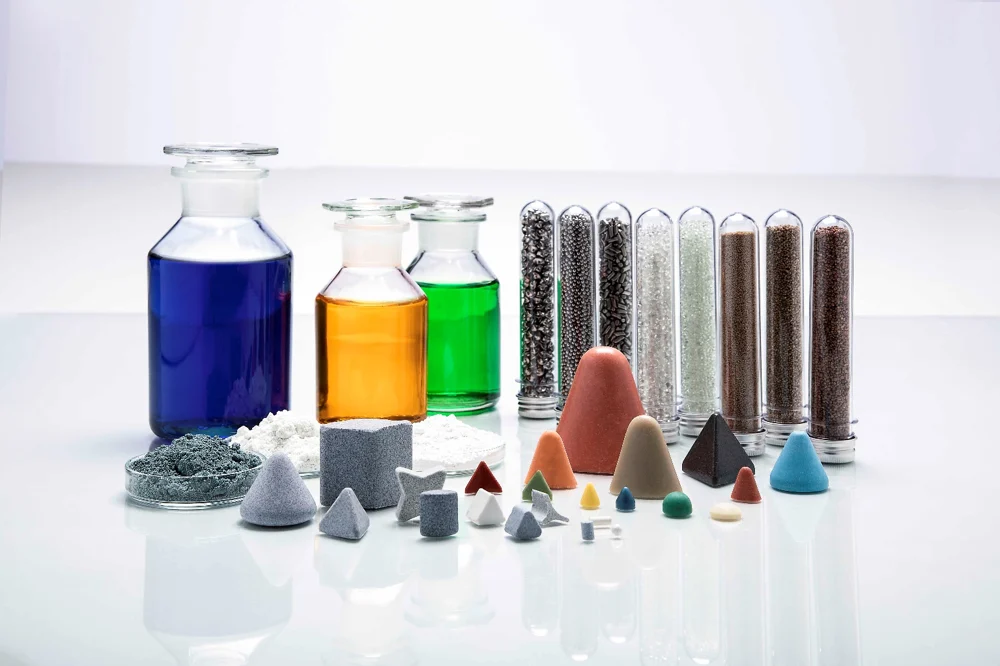
The media does the work, and matching it to the job is what separates a rough deburr from a mirror polish. Ceramic media cuts fast and suits metal deburring; plastic media is gentler for pre-polish and delicate features; porcelain and dry organic media carry the final polish. The compound keeps the process clean, controls foam and pH, and protects the parts from staining. As a brand of the Rösler Group, AM Solutions backs its machines with a range of 15,000+ media and compounds developed in-house — which matters, because the consumables, not just the machine, determine the finish you can hit.
What results can you expect?
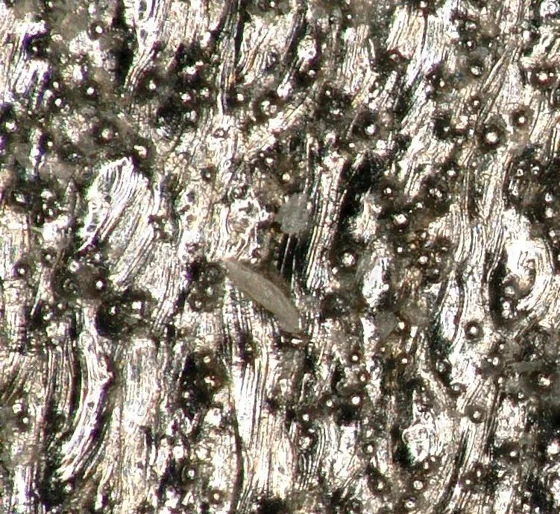
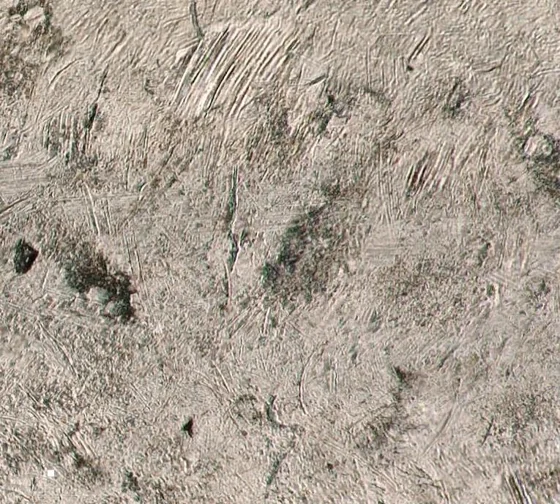
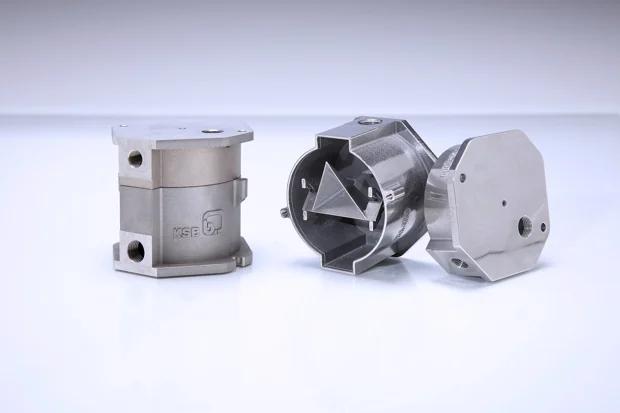
On a representative 316L stainless steel AM part, vibratory mass finishing takes the as-built surface from Ra 9.5 µm to Ra 0.7 µm — a smooth, uniform finish produced across a full batch in a single setup. The exact numbers depend on material, geometry, media and cycle time, but the direction and repeatability hold across materials:
| Goal | Typical media / cycle | Typical outcome |
|---|---|---|
| Deburring & edge break | Ceramic, short cycle | Consistent edge radius, burr-free |
| Grinding / smoothing | Ceramic → plastic, medium cycle | Layer lines knocked down, even matte |
| Polishing | Plastic → porcelain, long cycle | Low Ra, semi-gloss to gloss |
| Cleaning / matting | Fine media + compound | Powder removed, uniform cosmetic finish |
The point is not a single hero number — it is that every part in the batch comes out the same, to a documented spec, without an operator hand-working each one.
Vibratory finishing vs other post-processing methods
- Vibratory vs rotary/barrel tumbling: both are mass-finishing. Vibratory bowls run gentler and give better access to delicate features and internal surfaces, and they are easier to load and unload — a practical advantage for AM parts that are often intricate.
- Vibratory vs blasting: blasting cleans, depowders and mattes quickly, but it does not deburr edges or lower Ra the way media finishing does. The two are complementary — blast to clean, then finish to smooth and deburr.
- Vibratory vs hand finishing: hand work can hit a target on one part; it cannot deliver the same result across a batch, and it does not scale. Vibratory finishing trades operator time for a repeatable cycle.
Metal vs polymer parts
The same machine handles both, with a different recipe. Metal LPBF parts (316L, 17-4PH, titanium, aluminium) take ceramic media and a compound tuned to cut and then refine. Polymer PBF parts (PA12, PA11, TPU, glass-filled nylons) take gentler plastic or organic media that smooths and cleans without rounding functional features. Setting the media, compound and cycle per material is what keeps results consistent.
Bringing vibratory finishing in-house
You do not need a full finishing line to start. AM Solutions — the post-processing brand of the Rösler Group — scales from an entry machine to a compact production cell:
- AM Solutions M1 Basic — an entry-level vibratory finishing system. A high-frequency processing bowl automates deburring, smoothing and cleaning of small metal and plastic parts, at the lowest cost of entry in the range. The right first step to move finishing off the bench.
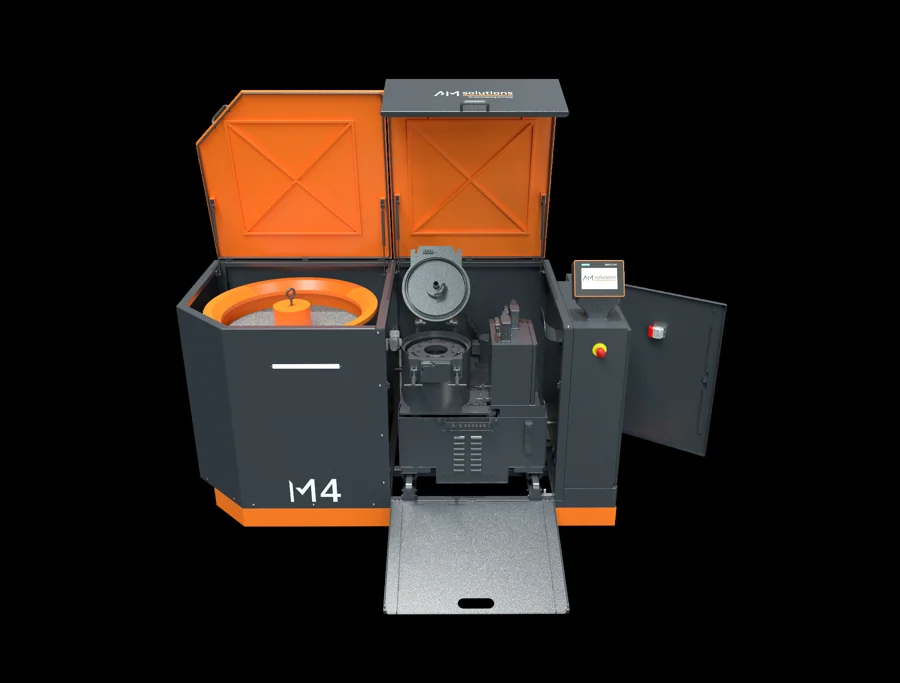
- AM Solutions M4 — a mobile 2-in-1 system that combines vibratory mass finishing with closed-loop process-water treatment. It runs smoothing, grinding, polishing, deburring, matting and cleaning on parts up to ~Ø185 mm and batches to ~23 L, with no fresh-water or drain connection and under 69 dB(A). This is the 316L Ra 9.5 → 0.7 µm machine shown above.
Where finishing fits in the AM workflow
Vibratory finishing is one step in a chain. A typical metal or polymer part is printed, then depowdered or de-supported, cleaned, and finally mass-finished to its surface spec. It pairs naturally with the rest of the post-processing line: automated support and resin removal (C1) and IPA-free cleaning of large SLA parts (C1 Max) handle the steps before finishing.
Not printing in-house yet? Additive Plus also runs the printing. Our SLS 3D printing service, SLA 3D printing service and full range of additive manufacturing services deliver parts already post-processed to spec — so you can see the finish before you invest in equipment.
Frequently asked questions
What is vibratory finishing?
Vibratory finishing is a mass-finishing process that smooths, deburrs and cleans parts by vibrating them together with abrasive or polishing media and a liquid compound in a bowl or trough. The circulating media abrades every surface at once, making it well suited to complex 3D-printed geometries.
Does vibratory finishing work on both metal and plastic 3D-printed parts?
Yes. The same machine handles metal LPBF parts and polymer SLS or MJF parts using different media and compound recipes — ceramic media for metal, gentler plastic or organic media for polymers.
How much can vibratory finishing improve surface roughness?
On a representative 316L stainless steel AM part, mass finishing takes the as-built surface from about Ra 9.5 microns down to Ra 0.7 microns. Actual results depend on material, geometry, media and cycle time, but the improvement is significant and repeatable across a batch.
What is the difference between vibratory finishing and tumbling?
Both are mass-finishing processes. Rotary or barrel tumbling rolls parts in a rotating drum; vibratory finishing vibrates a bowl at high frequency. Vibratory systems generally run gentler, reach delicate and internal features better and are easier to load and unload — an advantage for intricate additive parts.
Can vibratory finishing remove support marks and burrs?
It removes burrs and knocks down support witness marks and layer lines, and it breaks sharp edges to a consistent radius. Large support structures are usually removed first, for example with an automated support-removal system, then vibratory finishing refines the surface.
How do I start without a full finishing line?
An entry-level system such as the AM Solutions M1 Basic automates finishing of small metal and plastic parts at a low cost of entry. As volume grows, a 2-in-1 system like the M4 adds capacity and closed-loop water treatment. Or send us a batch and we will finish a sample set for you first.
Have a question or a project? Let’s talk.
Tell us what you need — a real applications engineer replies within 24 hours. NDA standard, no sales script.