
Made to order
- Installation & calibration setup with the certified calibration sphere
- a true-density measurement on your own powder
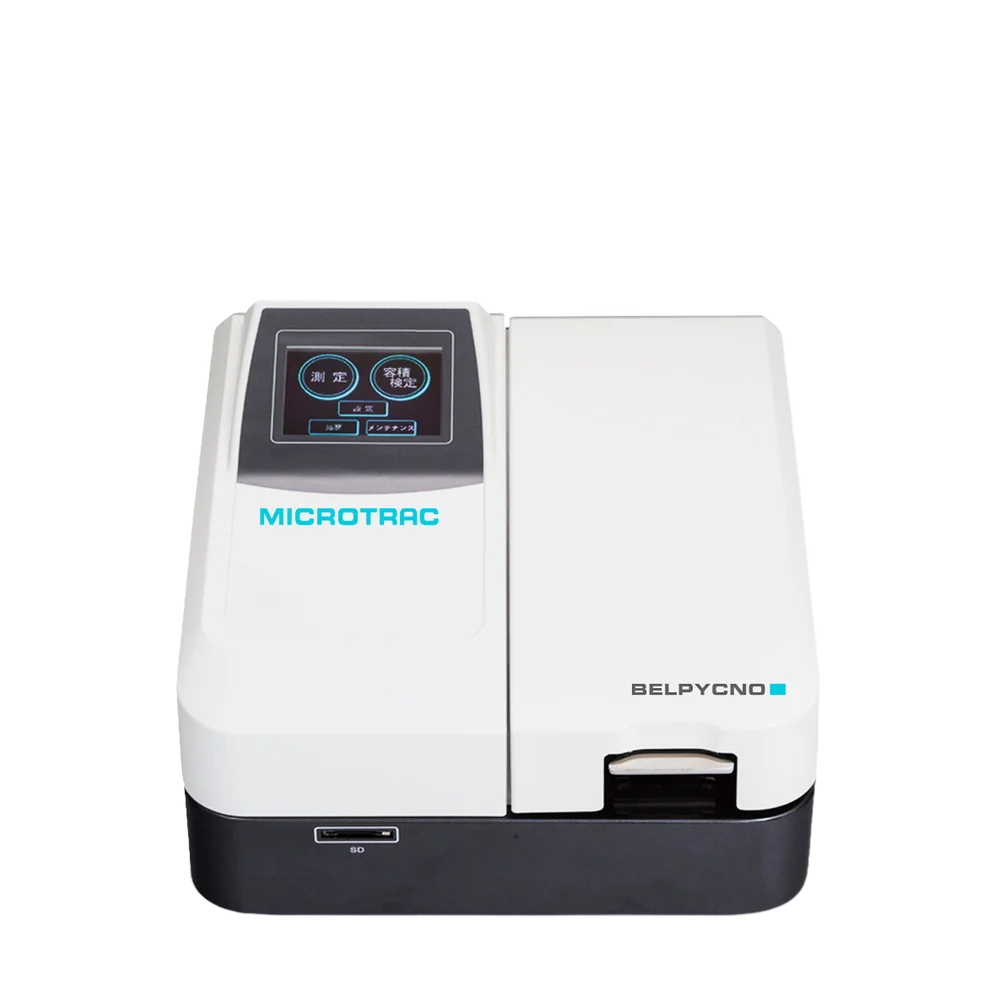
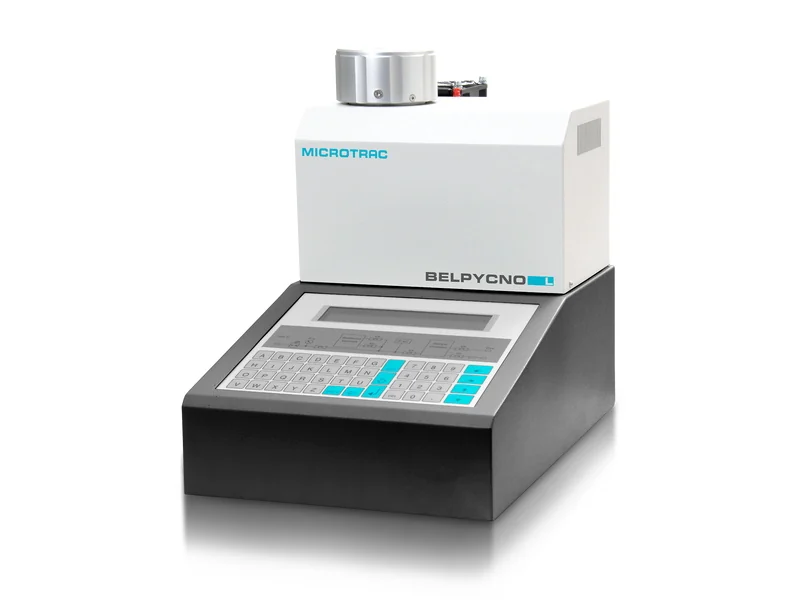
Microtrac BELPYCNO Gas Pycnometer for True Density
True (skeletal) density of powders and porous solids by gas displacement — helium or nitrogen, 10, 3.5 and 1 cm³ sample cells.
- Accuracy 0.03% of full scale + 0.03% of reading · repeatability 0.02%
- Benchtop, 8 kg · the reference value for porosity calculations
- Installation and on-site training included · free test analysis of your sample
- Configured to order · lead time from 4 weeks
What your QC lab actually checks
Density you can certify
True density to 0.03% with automatic sphere calibration — the traceable figure your CoA, porosity calculation and lot release depend on, not a rough estimate.
A materials engineer on the line
Cell size, gas choice and purge-cycle setup from engineers who run powder density and porosity analysis in-house at Additive Plus.
- BELPYCNO benchtop gas pycnometer
- Sample cells: 10, 3.5 and 1 cm³
- Measuring gas: helium, or nitrogen or another inert gas
- Thermostatic bath (option)
- Installation and on-site operator training — included in every quotation
What the BELPYCNO is
The BELPYCNO is a benchtop gas pycnometer from Microtrac. It measures the volume of a solid sample by gas displacement: gas is let into the cell that holds the sample, and the pressure change shows how much of the cell volume the solid occupies. Helium reaches into very fine open pores, so the volume it measures is the skeletal volume of the solid. Divided into the sample mass from your balance, that volume gives true (skeletal) density — the density of the material itself, without the space between and inside the particles that bulk density includes.
Specifications
| Measuring principle | Gas displacement pycnometry |
| Result | True (skeletal) density and volume |
| Measuring gas | Helium, nitrogen or another inert gas |
| Sample cells | 10 · 3.5 · 1 cm³ |
| Accuracy | 0.03% of full scale + 0.03% of reading |
| Repeatability | 0.02% of full scale |
| Measuring pressure | 145 kPa (gauge); pretreatment purge 0–145 kPa |
| Temperature range | 15–35 °C; 15–50 °C with the optional water bath |
| Calibration | automatic, with a calibration sphere |
| Interfaces | RS232C for printer and balance; 1/8″ Swagelok gas connection |
| Dimensions (W × H × D) | 270 × 170 × 300 mm (10.6 × 6.7 × 11.8 in) |
| Power | AC 100–120 V / 200–240 V, 200 W, 50/60 Hz |
| Weight | 8 kg (18 lb) |
| Certification | CE |
| Installation and training | on site, included in every quotation |
| Lead time | from 4 weeks, depending on configuration |
Datasheet: the full manufacturer specification comes with the formal quotation.
What it tells you about a powder or a porous solid
True density is the reference number that other density and porosity figures are calculated from:
| True (skeletal) density | mass divided by the volume the gas cannot enter |
| Porosity | combined with bulk or envelope density from another method: porosity = 1 − bulk density ÷ true density |
| Closed pores | pores the gas cannot reach count as solid, so a density below the material’s theoretical value points to closed porosity |
Which gas, which cell and how much sample suit your material is something the free test analysis settles before you order.
Where the BELPYCNO stops — and what to take instead
The BELPYCNO measures the volume of the solid, not the pores themselves. For pore size distribution and pore volume by mercury intrusion, take the BELPORE. For specific surface area (BET) and micro- and mesopores by gas adsorption, look at the BELSORP MINI X or the BELSORP MAX X. It does not measure bulk or tap density, and pores that are closed to the gas are counted as part of the solid.
In pictures
Availability, payment and delivery
Why buy it through Additive Plus
What usually stops people — and the honest answer
Ready when you are
| Brand | Microtrac |
| Technology | Gas displacement pycnometry (true / skeletal density) |
| Certification | CE |
| Weight | 18 lb / 8 kg |
Send us a representative sample. The test measurement in Microtrac's US application lab is free, and we go through the results with you.
Other products teams run alongside Microtrac BELPYCNO Gas Pycnometer for True Density
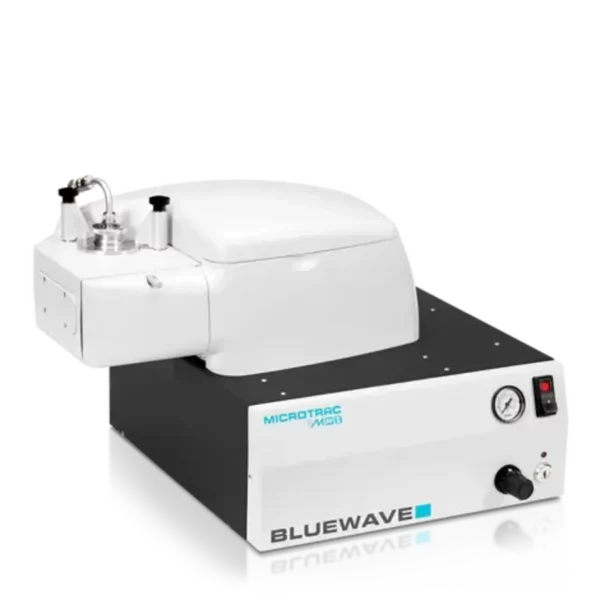
Laser diffraction particle size from 0.01 to 2800 µm, optimized below 1 µm — one red and two blue lasers, wet or dry, in about 10 to 30 seconds.
- Modified Mie for irregular and reflecting particles such as metal powders
- Complies with or exceeds ISO 13320-1; FDA 21 CFR Part 11 data security
- Installation and on-site training included · free test measurement
- Configured to order · lead time from 4 weeks
Made to order
· Lead time from 4 weeks · installation included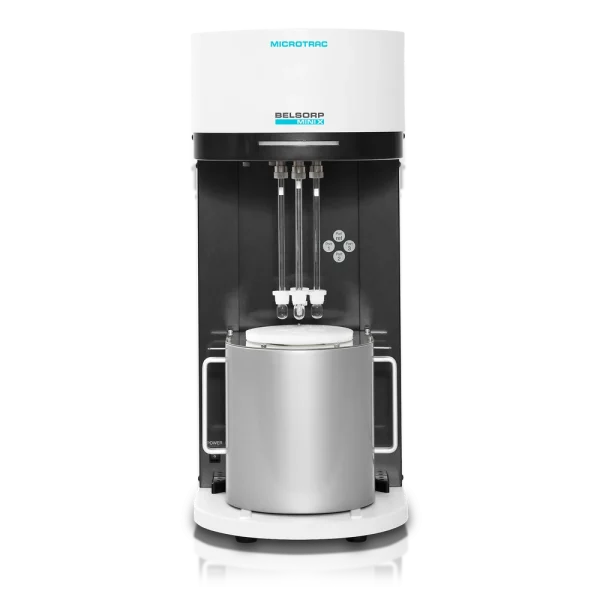
Compact BET surface area and pore size analyzer — up to four samples at once, from 0.01 m²/g with nitrogen, pores 0.7 to 500 nm.
- Each port with its own transducer, helium-free AFSM™2 measurement
- Quick BET: three-point BET of several samples in about 15 minutes
- Installation and on-site training included · free test analysis of your sample
- Configured to order · lead time from 4 weeks
Made to order
· Lead time from 4 weeks · installation included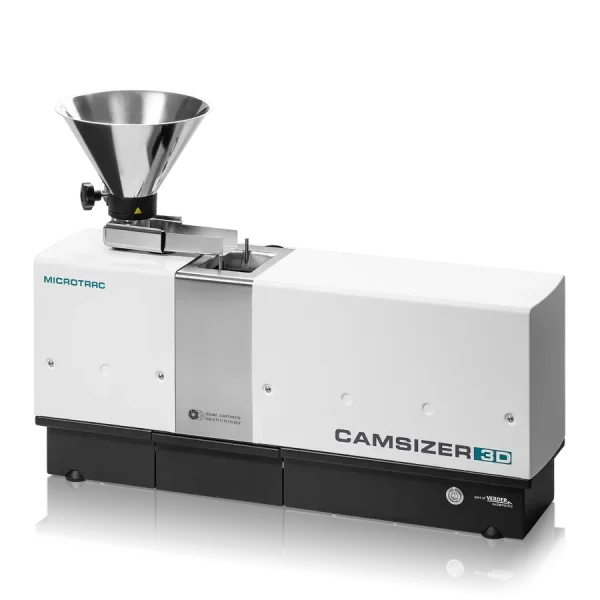
True three-dimensional particle size and shape from 20 µm to 30 mm — up to 30 images of every particle give its length, width and thickness in two to five minutes.
- Patented particle tracking with 9 MP ZOOM and 5 MP BASIC cameras, up to 250 images per second
- 2D mode with results compatible with sieve analysis; Autosampler for unattended runs
- Installation and on-site training included · free test measurement
- Configured to order · lead time from 4 weeks
Made to order
· Lead time from 4 weeks · installation included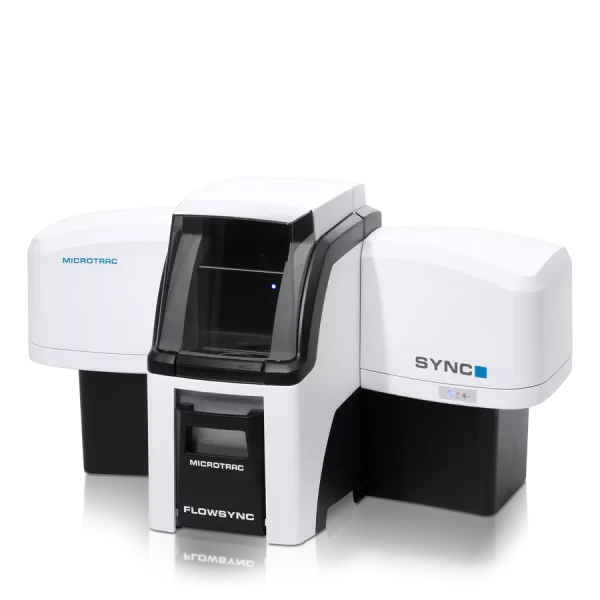
Laser diffraction and dynamic image analysis on the same sample, in the same cell, at the same time — size from 0.01 to 4000 µm and more than 30 shape parameters in a typical 10 to 30 seconds.
- Oversize, sphericity and satellites in metal AM powder, alongside the ISO 13320 size distribution
- FLOWSYNC wet and TURBOSYNC dry modules, changed in less than 15 seconds
- Installation and on-site training included · free test measurement
- Configured to order · lead time from 4 weeks
Made to order
· Lead time from 4 weeks · installation included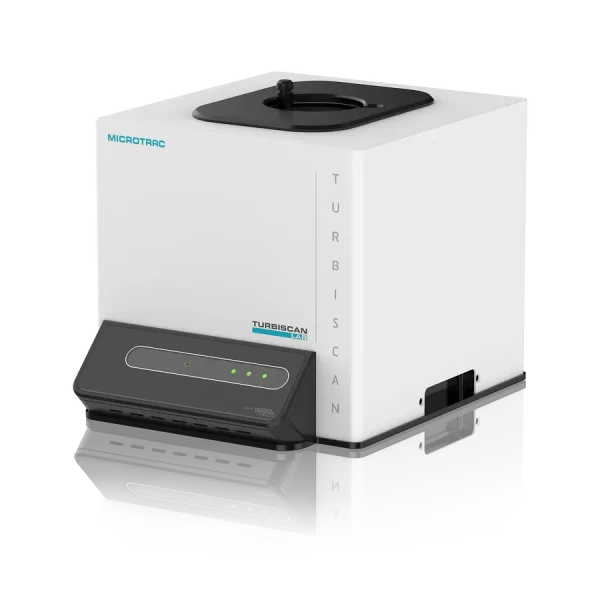
Physical stability of emulsions, suspensions and foams measured on the native sample — up to 1,000× faster than visual observation, 0.0001–95 % v/v, no dilution.
- Sedimentation, creaming, flocculation and coalescence detected and quantified
- One-click Turbiscan Stability Index · room temperature to 60 °C
- Installation and on-site training included · free test analysis of your sample
- Configured to order · lead time from 4 weeks
Made to order
· Lead time from 4 weeks · installation included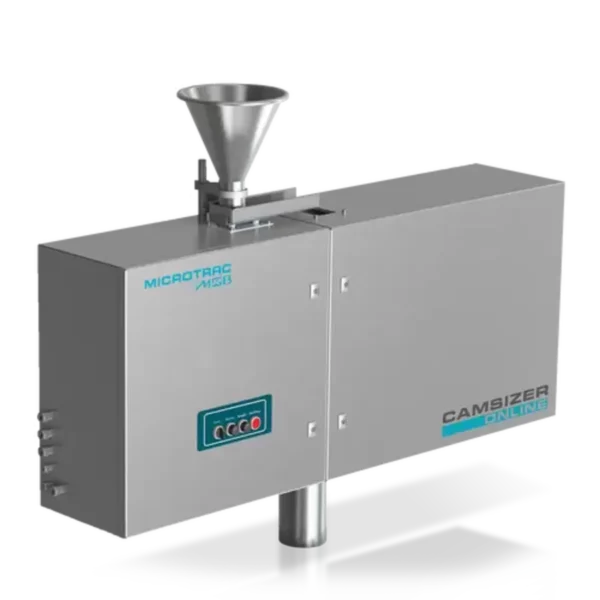
Particle size and 3D shape measured in your process line, not in the lab — 30 µm to 30 mm, with a result every 5 to 10 minutes in the control room.
- More than 35 3D size and shape parameters, built for correlation with sieving
- IP66 stainless steel enclosure, self-cleaning, unattended SOP operation
- Installation and on-site training included · free test measurement
- Configured to order · lead time from 4 weeks
Made to order
· Lead time from 4 weeks · installation included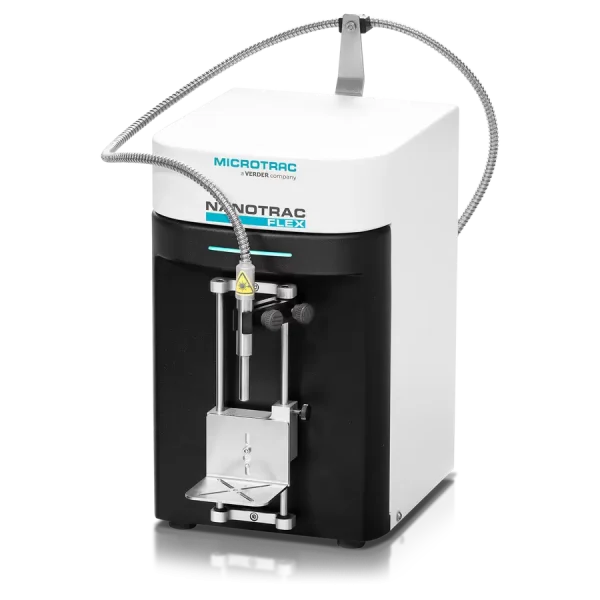
Nanoparticle size from 0.3 nm to 10 µm with a dip-in DLS probe — any vessel, from one drop, up to 40 % concentration, at line or in line.
- Size, concentration and molecular weight in one measurement
- FlowGuard for stirred and flowing liquids · no cuvettes
- Installation and on-site training included · free test measurement
- Configured to order · lead time from 4 weeks
Made to order
· Lead time from 4 weeks · installation included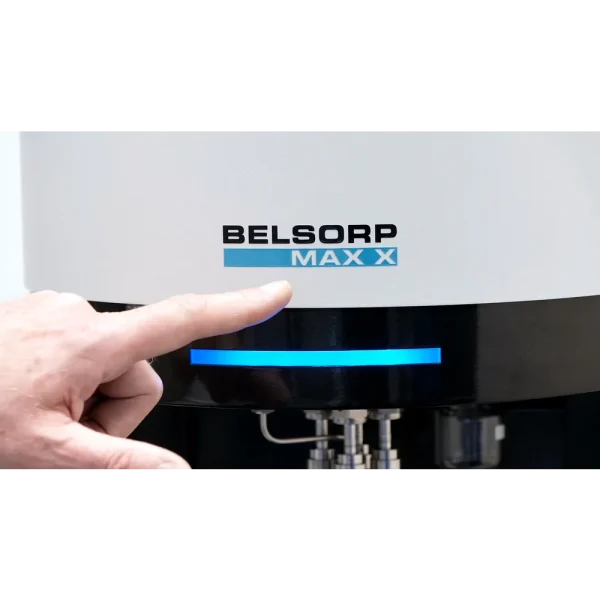
BET surface area and pore size from 0.35 to 500 nm on up to four samples at once — gas and vapor isotherms from P/P₀ = 10⁻⁸.
- Surface area from 0.01 m²/g with N₂, from 0.0005 m²/g with krypton
- Micropore to macropore analysis: BET, BJH, HK, SF, NLDFT / GCMC
- Installation and on-site training included · free test analysis of your sample
- Configured to order · lead time from 4 weeks
Made to order
· Lead time from 4 weeks · installation includedCommon questions
Don't see yours? Email [email protected] — NDA standard, typical reply within 4 hours.
What does the BELPYCNO measure — true density or bulk density?
How accurate and repeatable is the BELPYCNO?
Which gases can it use — does it have to be helium?
What sample cells are available?
Does the sample need preparation?
How is true density used to calculate porosity?
How much does a BELPYCNO cost?
Can I test my sample before buying?
What is the lead time, and who installs the BELPYCNO?
Place your order, or talk to an engineer first
Order Microtrac BELPYCNO Gas Pycnometer for True Density direct, or talk to materials engineer