
Made to order
- Installation & safety setup mercury-handling and PoreInspect onboarding
- an intrusion measurement on your own sample
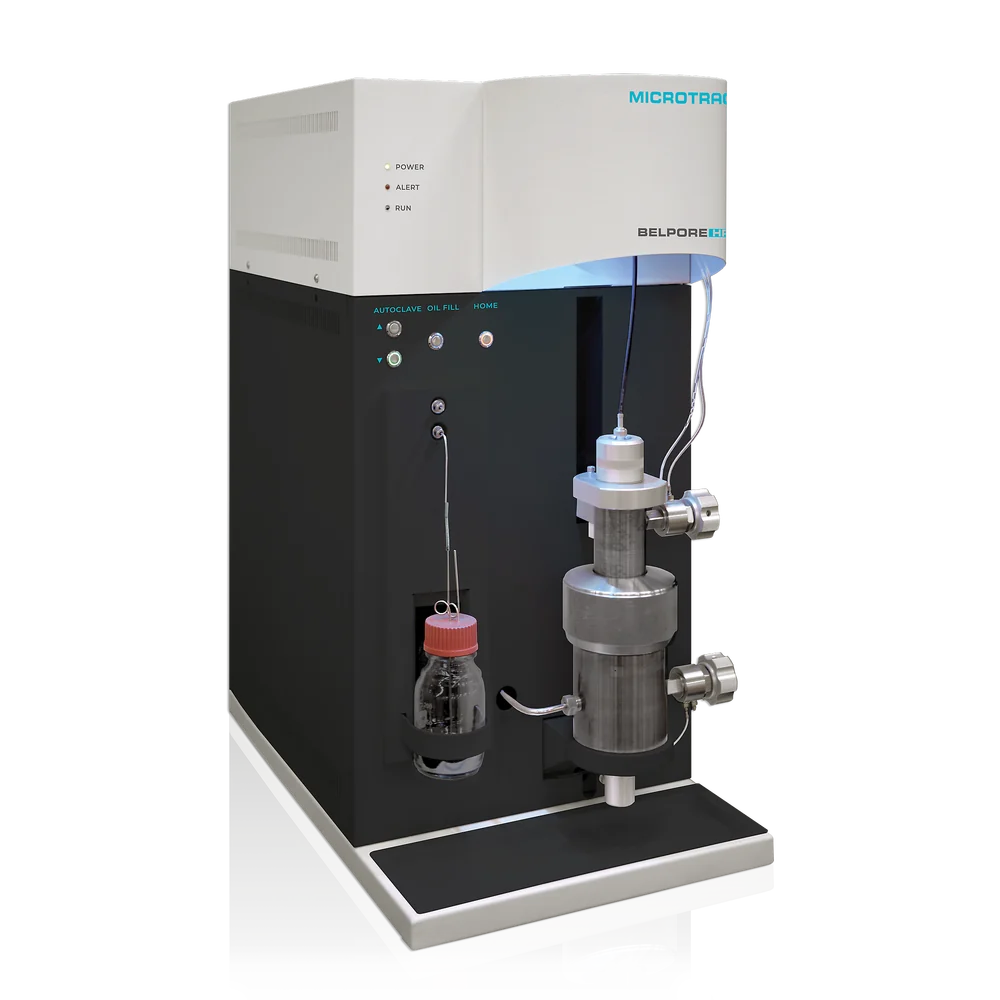
Microtrac BELPORE Mercury Porosimeter
Pore size distribution and pore volume by mercury intrusion — 3.6 nm to 180 µm, to 1 mm with the Ultra-Macropore Set, up to 414 MPa and 20,000 measuring points.
- LP plus MP or HP · PoreInspect runs up to four from one PC
- No gas connection or liquid nitrogen · moist samples on the LP
- Installation and on-site training included · free test analysis of your sample
- Configured to order · lead time from 4 weeks
What your porosity lab actually checks
Full pore range, one technique
From 3.6 nm to 180 µm in a single mercury-intrusion workflow — with fractal, tortuosity and permeability from the same data. The pore structure your process and models rely on, not two partial datasets.
A materials engineer on the line
Pressure stage, dilatometer and contact-angle setup from engineers who run porosity analysis in-house at Additive Plus.
- BELPORE LP — degassing, mercury filling and low-pressure porosimetry, vacuum up to 450 kPa
- BELPORE MP (to 228 MPa) or BELPORE HP (to 414 MPa) for high-pressure porosimetry — runs together with the LP, not on its own
- Dilatometers: standard, professional and ultra-macropore (UMP)
- Ultra-Macropore Set for the LP — pores up to 1 mm
- Porosimeter calibration set and mercury cleaning set
- PoreInspect software — up to 4 instruments from one PC over LAN
- Installation and on-site operator training — included in every quotation
What the BELPORE is
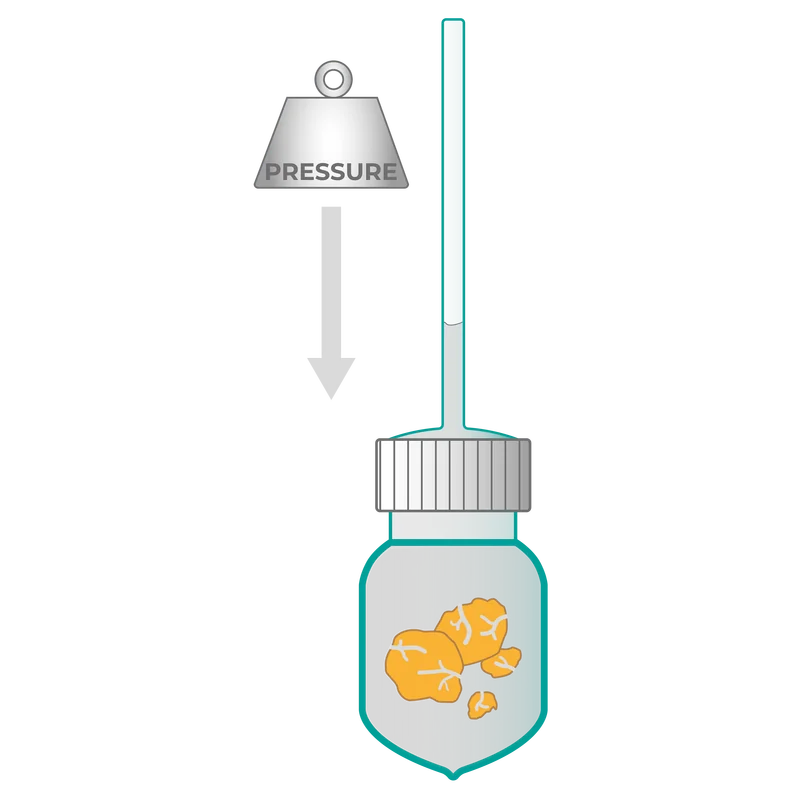
The BELPORE is a series of mercury porosimeters from Microtrac. Mercury does not wet the sample, so it enters a pore only under pressure, and the narrower the pore, the higher the pressure it takes. The instrument raises the pressure step by step and records how much mercury goes into the sample; the Washburn equation turns each pressure into a pore diameter. The series has three instruments. The LP degasses the sample, fills the dilatometer with mercury and measures the large pores at low pressure. The MP and HP take over for high-pressure porosimetry and reach the small pores. They do not run on their own: every sample passes through the LP first, so a BELPORE is configured as LP + MP — for larger sample volumes such as concrete or mortar — or LP + HP, for the full range from over 1 mm down to 3.6 nm. From the intrusion curve the BELPORE reports pore size distribution, pore volume, specific surface area, porosity, density and particle size distribution.
Specifications
| Measuring principle | Mercury intrusion porosimetry (Washburn equation) |
| Pressure range | LP vacuum up to 450 kPa · MP 0.1–228 MPa · HP 0.1–414 MPa |
| Pore diameter | LP 180–3.25 µm (UMP 1,000–3.8 µm) · MP 15–0.0065 µm · HP 15–0.0036 µm |
| Particle size diameter | LP 330–15 µm (UMP 3,000–15 µm) · MP 40–0.015 µm · HP 40–0.01 µm |
| Pressure resolution | LP 0.001 kPa to 0.1 kPa, 0.01 kPa from 0.1 to 450 kPa · MP and HP 0.001 MPa to 100 MPa, 0.01 MPa above |
| Pressure detection accuracy | better than 0.1% F.S. |
| Max. detectable volume | LP and MP 0.5–2 cm³ · HP 0.5 cm³ |
| Volume detection accuracy | better than 1% F.S. |
| Measuring points | 10,000 intrusion + 10,000 extrusion |
| Software | PoreInspect · up to 4 instruments over LAN from one PC |
| Dimensions (W × D × H) | 40 × 67 × 80 cm, each instrument |
| Weight | LP 55 kg (121 lb) · MP and HP 68 kg (150 lb) |
| Certification | CE |
| Installation and training | on site, included in every quotation |
| Lead time | from 4 weeks, depending on configuration |
Download: BELPORE datasheet (PDF)
Which dilatometer for which sample
Three dilatometer types cover all measuring tasks. They stand vertically in the instrument for safe handling.
| Type | Capillary · volume · max. solid sample (d × h) · fits |
| Standard | 3 mm · 15 cm³ · 12 × 46 mm · LP, MP, HP 6 mm · 35 cm³ · 25 × 25 mm · LP, MP |
| Professional | 3 mm · 8 cm³ · 11 × 35 mm · LP, MP, HP — screw cap and integrated opening aid |
| Ultra-macropore (UMP) | 6 mm · 50 cm³ · 25 × 25 mm · LP |
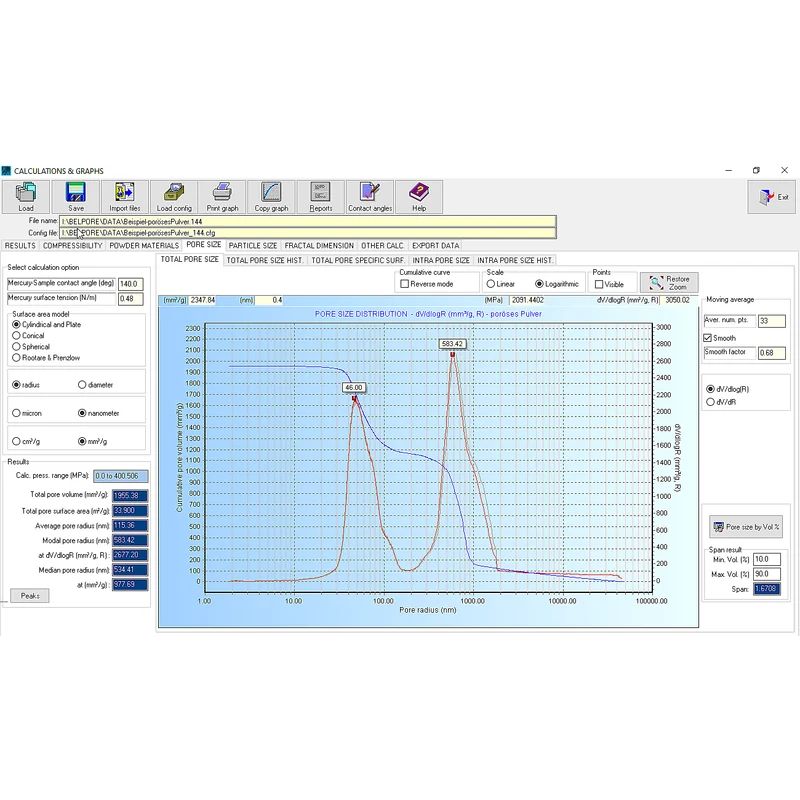
All three take powders and solids. PoreInspect corrects for the blank value and checks and corrects for sample compressibility, then offers pore models, fractal dimension, tortuosity and permeability. The raw data stays stored.
Three instruments, one pore range
Pressure build-up is controlled by P.A.S.C.A.L. — Pressurization by Automatic Speed-up and Continuous Adjustment Logic — which follows the real pore system. That shortens measuring time while keeping equilibrium conditions. Filling is fully automatic and vertical under constant high vacuum, and the mercury cleaning set lets you reuse the mercury.
Where the BELPORE stops — and what to take instead
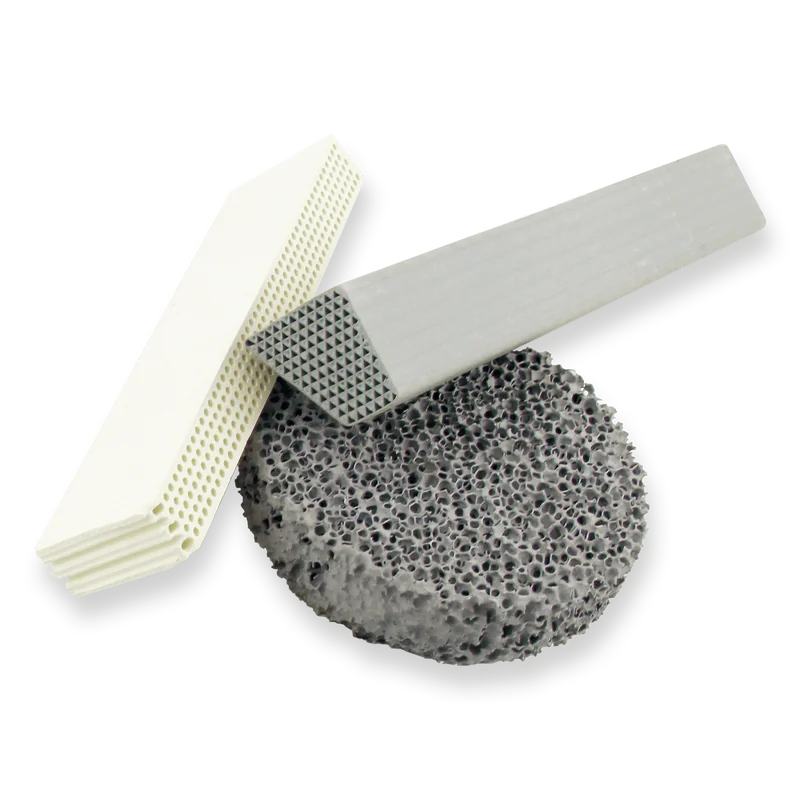
Mercury intrusion measures pores that are open to the surface, from 3.6 nm up. For micropores and the smallest mesopores, and for BET surface area by gas adsorption, look at the BELSORP MINI X or the BELSORP MAX X. For true (skeletal) density by gas displacement there is the BELPYCNO. And the BELPORE works with elemental mercury: your lab has to handle, store and dispose of it under its own EHS rules.
In pictures
Availability, payment and delivery
Why buy it through Additive Plus
What usually stops people — and the honest answer
Ready when you are
| Brand | Microtrac |
| Technology | Mercury intrusion porosimetry |
| Certification | CE |
| Weight | 121–150 lb / 55–68 kg |
Send us a representative sample. The test measurement in Microtrac's US application lab is free, and we go through the results with you.
Other products teams run alongside Microtrac BELPORE Mercury Porosimeter
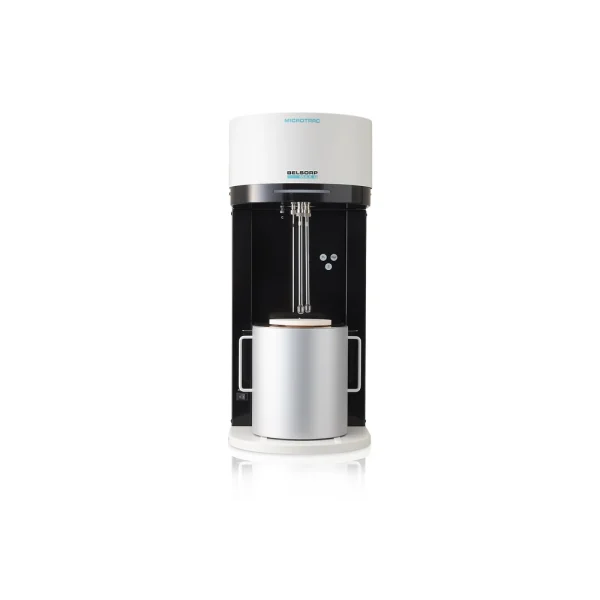
Micropore-capable BET surface area and pore size analyzer — isotherms from P/P₀ = 10⁻⁸, pores 0.35 to 500 nm, krypton down to 0.0005 m²/g.
- One measurement port with dedicated p₀ and free-space ports, AFSM™ accuracy
- BET, BJH, HK, SF and NLDFT / GCMC analysis in BELMASTER 7
- Installation and on-site training included · free test analysis of your sample
- Configured to order · lead time from 4 weeks
Made to order
· Lead time from 4 weeks · installation included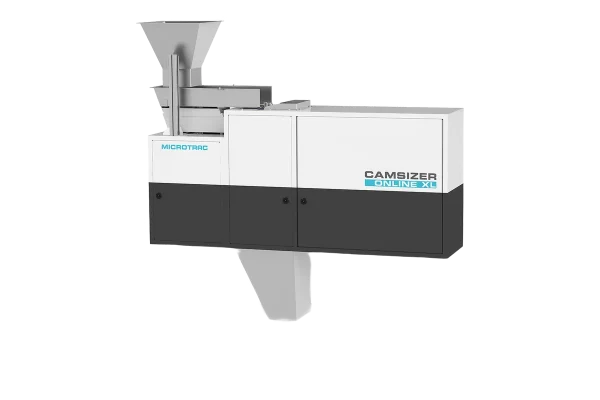
Particle size and shape of coarse bulk material measured on the line — 160 µm to 135 mm, 100 images per second, results in the control room.
- 32 morphological parameters including 3D, measured without contact
- Enclosed optics, explosion proof, works with your sample delivery
- Installation and on-site training included · free test measurement
- Configured to order · lead time from 4 weeks
Made to order
· Lead time from 4 weeks · installation included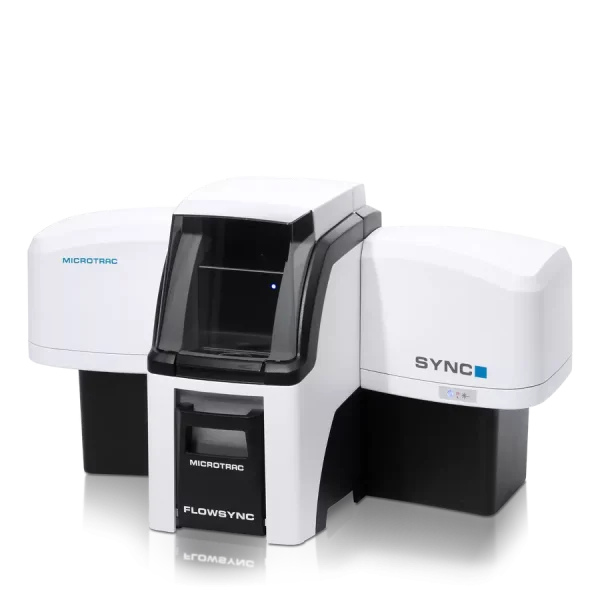
Laser diffraction and dynamic image analysis on the same sample, in the same cell, at the same time — size from 0.01 to 4000 µm and more than 30 shape parameters in a typical 10 to 30 seconds.
- Oversize, sphericity and satellites in metal AM powder, alongside the ISO 13320 size distribution
- FLOWSYNC wet and TURBOSYNC dry modules, changed in less than 15 seconds
- Installation and on-site training included · free test measurement
- Configured to order · lead time from 4 weeks
Made to order
· Lead time from 4 weeks · installation included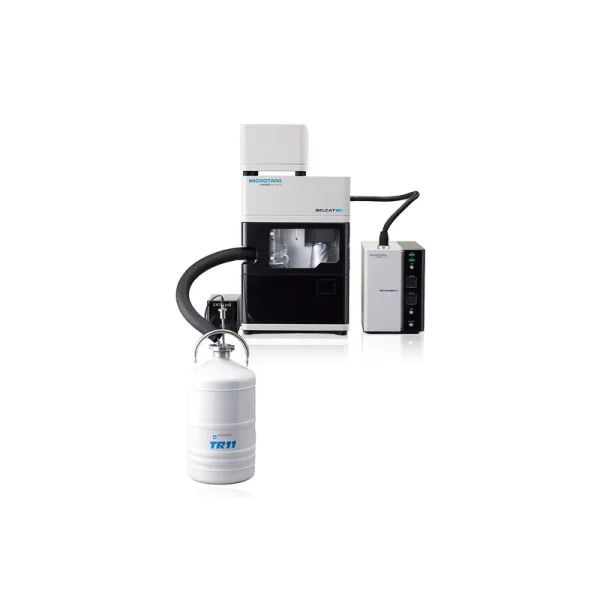
An add-on mass spectrometer for the BELCAT II that tells you which gases evolve in TPD, TPR and breakthrough runs — m/z 1 to 200, up to 16 mass numbers followed at once.
- Faraday cup or SEM detector, resolution M/ΔM ≥ 2M
- Heated hose up to 200 °C for vapors, including ammonia
- Installation and on-site training included · free test analysis of your sample
- Configured to order · lead time from 4 weeks
Made to order
· Lead time from 4 weeks · installation included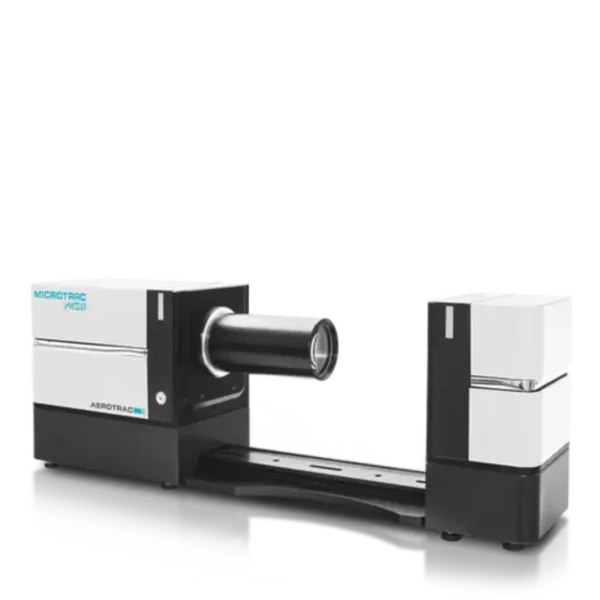
Droplet and particle size of sprays, mists and airborne powders by laser diffraction — 0.5 to 2000 µm, measured as the spray forms at intervals from 0.02 ms.
- D50, SMD and density index over time · multiple scattering correction standard
- F100, F300 and F600 lenses · fixing jigs · batch cell for slurry
- Installation and on-site training included · free test measurement
- Configured to order · lead time from 4 weeks
Made to order
· Lead time from 4 weeks · installation included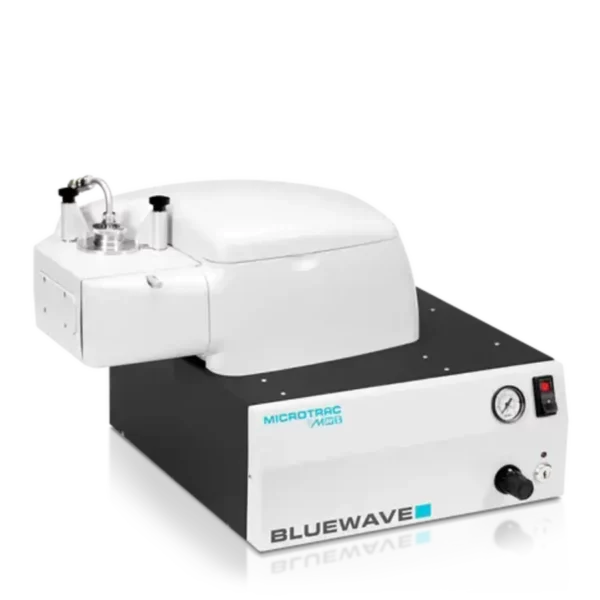
Laser diffraction particle size from 0.01 to 2800 µm, optimized below 1 µm — one red and two blue lasers, wet or dry, in about 10 to 30 seconds.
- Modified Mie for irregular and reflecting particles such as metal powders
- Complies with or exceeds ISO 13320-1; FDA 21 CFR Part 11 data security
- Installation and on-site training included · free test measurement
- Configured to order · lead time from 4 weeks
Made to order
· Lead time from 4 weeks · installation included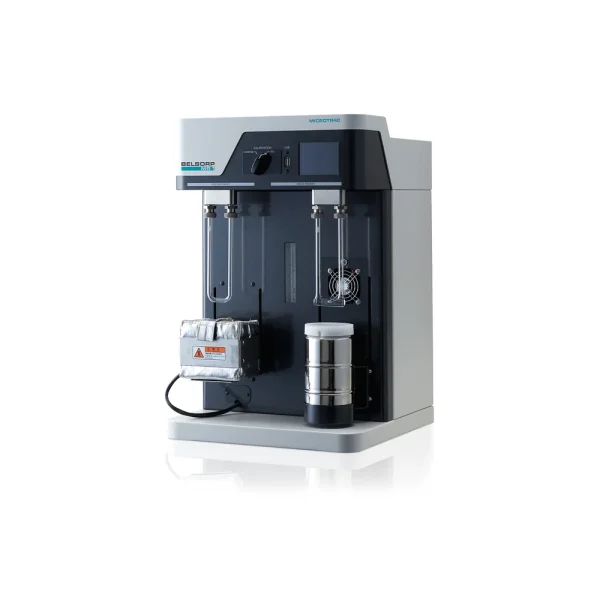
Single-point BET surface area in about 15 minutes — dynamic flow method, from 0.01 m²/g, repeatability within ±1.0 %.
- Pretreatment up to 400 °C at the same time as the measurement
- Touch panel, automatic Dewar, results to USB without manual calculation
- Installation and on-site training included · free test analysis of your sample
- Configured to order · lead time from 4 weeks
Made to order
· Lead time from 4 weeks · installation included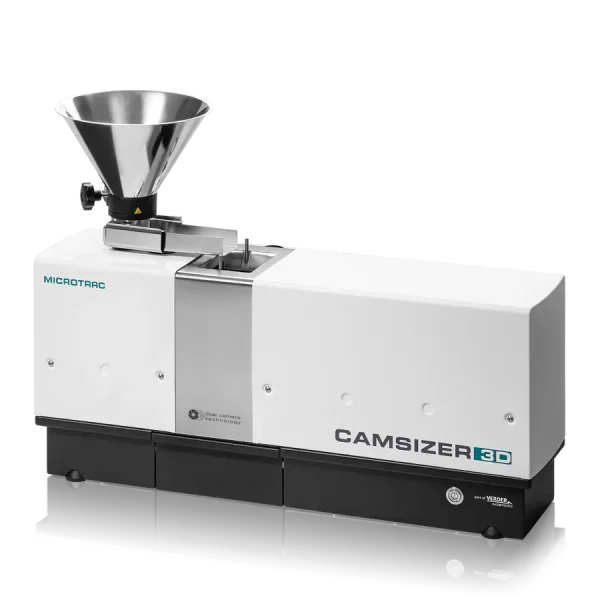
True three-dimensional particle size and shape from 20 µm to 30 mm — up to 30 images of every particle give its length, width and thickness in two to five minutes.
- Patented particle tracking with 9 MP ZOOM and 5 MP BASIC cameras, up to 250 images per second
- 2D mode with results compatible with sieve analysis; Autosampler for unattended runs
- Installation and on-site training included · free test measurement
- Configured to order · lead time from 4 weeks
Made to order
· Lead time from 4 weeks · installation includedWhat our customers say
“Harry and team were professional, effective communicators as we set up the order, then they executed quickly and produced an amazing product for us at a very competitive price. Am looking forward to our next print w Additive Plus!”
“Great 3D printing service and the resin parts look super smooth and clean. Really happy with how everything turned out!”
“Harry was very professional and helped me out with my 3D printing needs and explained what options I have in terms of filaments such as PEEK. Highly recommended.”
“I needed a 3D enclosure printed urgently in a specific time period, they did great!”
Common questions
Don't see yours? Email [email protected] — NDA on request, typical reply within 4 hours.
What pore size range does the BELPORE cover?
How does mercury porosimetry differ from gas adsorption?
How accurate and detailed are the results?
What does PoreInspect provide beyond pore size?
What sample cells (dilatometers) are available?
What about mercury safety and handling?
Can the BELPORE measure moist samples?
How much does a BELPORE cost?
Can I test my sample before buying?
What is the lead time, and who installs the BELPORE?
Place your order, or talk to an engineer first
Order Microtrac BELPORE Mercury Porosimeter direct, or talk to materials engineer