
Made to order
- Installation & training on-site setup, gas panel and BELCAT onboarding
- NH₃-TPD or H₂ pulse on your own catalyst
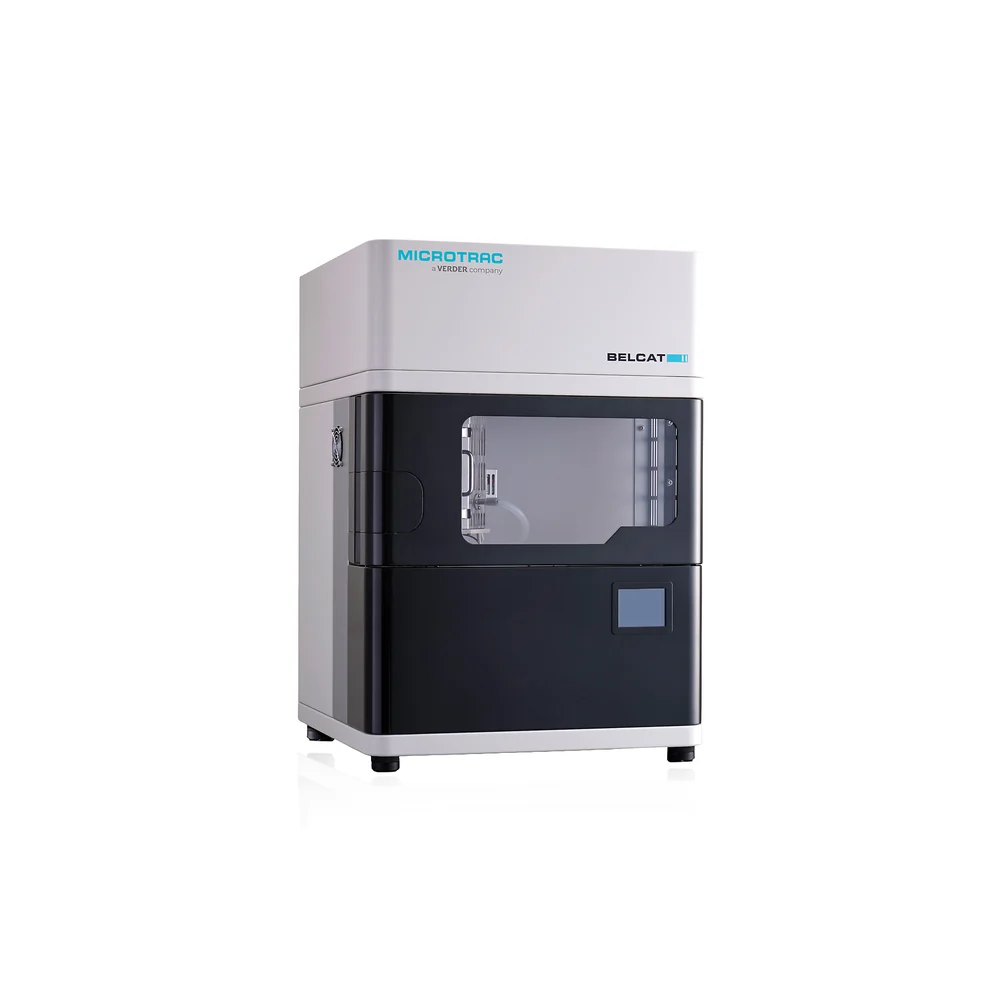
Microtrac BELCAT II Chemisorption Catalyst Analyzer
Acid sites, reducibility, coke and metal dispersion of a solid catalyst on one automatic instrument — TPD, TPR, TPO and pulse chemisorption from −120 to 1200 °C.
- Eight gas ports, mixtures blended inside the instrument
- Breakthrough curves and BET; BELMASS II option to identify the gases
- Installation and on-site training included · free test analysis of your catalyst
- Configured to order · lead time from 4 weeks
What your catalysis lab actually checks
Species, not just peaks
Pair the BELCAT II with the BELMASS II and every TPD or TPR peak comes with a mass spectrum — you see which gas desorbed, not only how much. Acidity, reducibility and metal dispersion by the methods your process and publications cite.
An applications engineer on the line
Method development for TPD, TPR, TPO and pulse chemisorption from engineers who run catalyst and adsorption analysis in-house at Additive Plus.
- BELCAT II base unit — 4-element thermal conductivity detector, split furnace to 1200 °C, eight gas ports including two corrosion-resistant lines
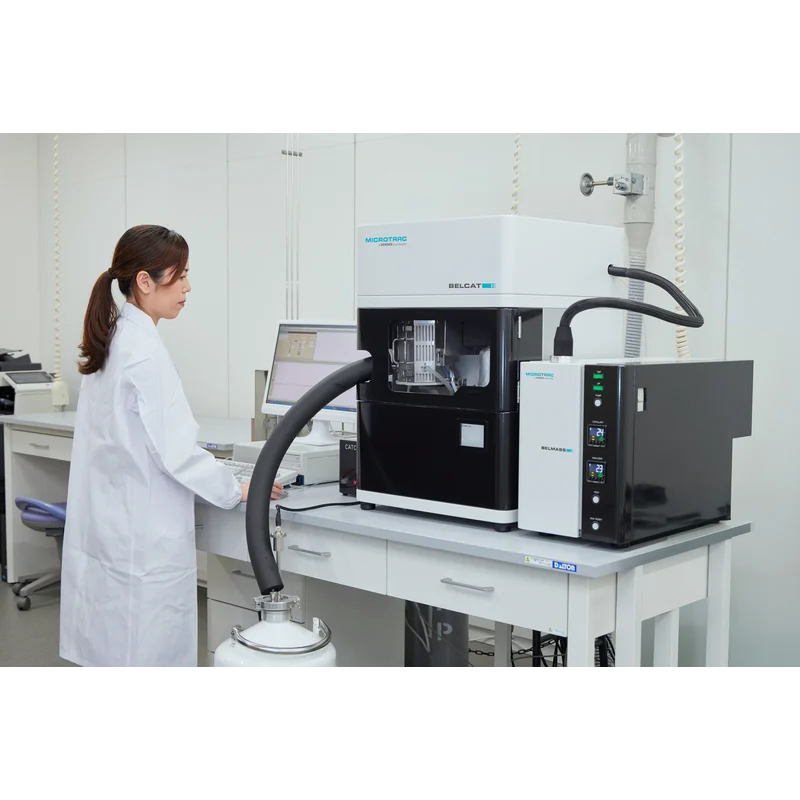
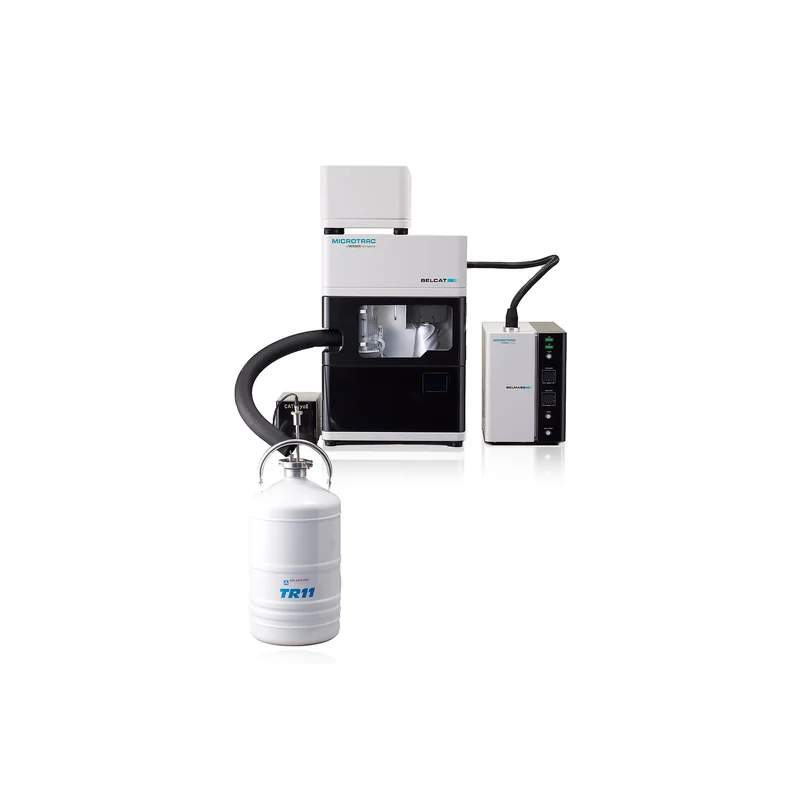
- CATCryo II low-temperature furnace — sample temperature controlled from −120 °C with a liquid-nitrogen spray
- Vapor dosing unit for H2O, methanol, ethanol, toluene, benzene and other vapors
- External gas mixing unit for three or more gases, corrosive gases supported
- BELMASS II quadrupole mass spectrometer for evolved-gas analysis
- AIRGUARD for samples that must not touch air; CO2 and CO2/H2O probes for breakthrough curves
- Installation and on-site operator training — included in every quotation
What the BELCAT II is
The BELCAT II is a fully automatic catalyst analyzer from Microtrac that works by the dynamic flow method. Gas flows through the sample cell while a compact split furnace runs a temperature program, and a thermal conductivity detector records how much gas the catalyst takes up or releases. From this the instrument reports acid and base sites, reducibility, oxidation behavior and coke, metal dispersion, BET surface area and, from breakthrough curves, the capacity of an adsorbent. Up to eight gases are connected at once and blended inside the instrument for pretreatment, analysis, pulses and calibration, so premixed cylinders are not needed. A sequential mode runs a series of measurements in a defined order without the operator.
Specifications
| Measurement method | Dynamic flow method |
| Methods | TPD, TPR, TPO, TPX, TPSR, pulse chemisorption, BET, breakthrough curves |
| Detector | Semi-diffusion type 4-element thermal conductivity detector (TCD) |
| Measurement / pretreatment ports | 1 |
| Usable gases | He, Ar, N2, O2, H2, CO, CO2, NH3, N2O, NO and others |
| Gas port connections | 8 in total · 3 carrier lines · 8 mix and pretreatment/pulse lines, 2 of them corrosion-resistant |
| Mass flow controllers (F.S.) | carrier 100 sccm · mix 30 sccm · pretreatment/pulse 100 sccm |
| Maximum temperature | 1200 °C (1100 °C for regular use) |
| Heating rate | 110 °C/min (50–500 °C) · 80 °C/min (50–1000 °C) |
| Cooling | 400 → 50 °C in 30 min · 800 → 30 °C in 10 min with cryo cooling |
| CATCryo II (option) | down to −120 °C · LN2 spray + heater · 10 L LN2 reservoir |
| Vapor injection (option) | H2O, CH3OH, C2H5OH, toluene, benzene and others · 100 cc Pyrex bubbler, 3–100 °C |
| Gas supply | measurement gas 0.1 MPa (gauge) · compressed air 0.45–0.55 MPa (gauge), 1/8″ Swagelok |
| Power supply | single-phase AC 110 / 220 V |
| Dimensions (W × H × D) | 500 × 750 × 500 mm (19.7 × 29.5 × 19.7 in) |
| Weight | 80 kg (176 lb) |
| CE certified | yes |
| Installation and training | on site, included in every quotation |
| Lead time | from 4 weeks, depending on configuration |
Download: BELCAT II datasheet (PDF)
What it tells you about a catalyst
Each method answers a different question about the active surface:
| NH3-TPD | amount and strength of acid sites on solid acid catalysts |
| CO2-TPD | basic sites on solid base catalysts |
| H2-TPR | reducibility and the interaction of metal oxides with their support |
| TPO | oxidation states and coke deposition |
| CO or H2 pulses | metal dispersion, metal surface area and average metal particle size |
| Breakthrough curve | adsorption capacity of an adsorbent, for example for CO2 capture |
Examples from the Microtrac datasheet: an MFI zeolite gave 0.835 mmol/g of desorbed NH3 with a peak at 440 °C; a Pt/Al2O3 catalyst measured with CO pulses gave 22.7 % metal dispersion, 1.13 m²/g metal surface area and a 4.99 nm metal particle size; a CO2 breakthrough run gave 3.18 mmol/g adsorbed.
After each TPD or TPR run the software calibrates the detector automatically, using the instrument’s own mass flow controllers to generate several gas concentrations, and waveform deconvolution separates overlapping peaks.
Three families of measurement
Sequential mode combines pretreatment, thermochemical methods and catalyst testing steps in one workflow, and the vapor dosing unit, the external gas mixing unit and the cryogenic option can be added later in the field.
Where the BELCAT II stops — and what to take instead
The BELCAT II has one measurement and pretreatment port, so it works on one sample at a time; sequential mode automates a series of steps, not parallel samples. Its thermal conductivity detector tells you how much gas is released or consumed, not which gas — for that, add the BELMASS II mass spectrometer. Below room temperature you need the CATCryo II option, and 1100 °C is the limit for regular use. BET on the BELCAT II is a flow measurement of surface area; for full adsorption isotherms and pore size distribution, look at the BELSORP MAX X or the BELSORP MINI X.
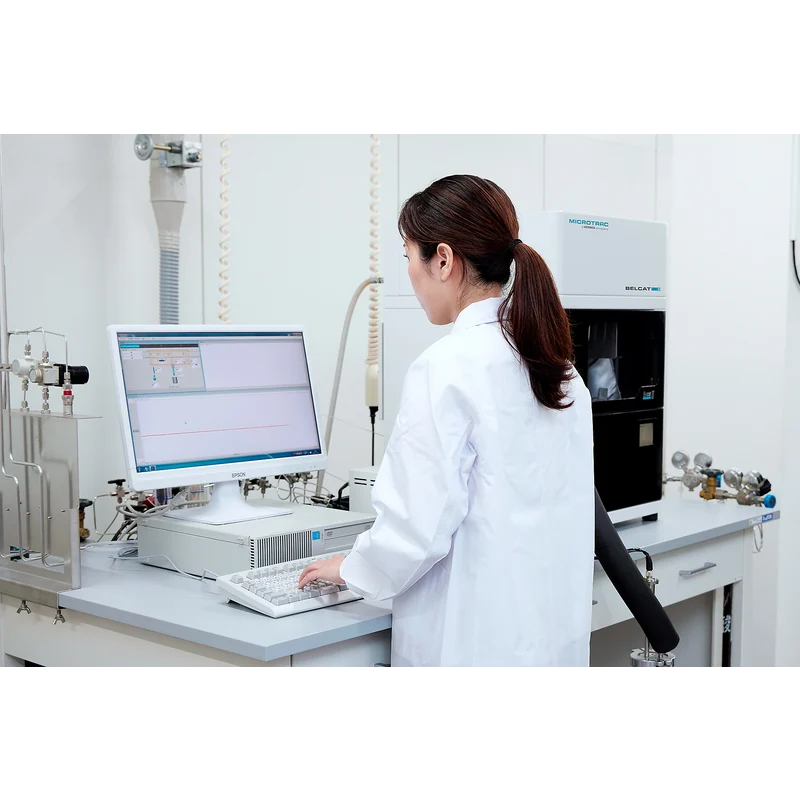
In pictures
Availability, payment and delivery
Why buy it through Additive Plus
What usually stops people — and the honest answer
Ready when you are
| Brand | Microtrac |
| Technology | Chemisorption / temperature-programmed analysis (TPD/TPR/TPO) |
| Certification | CE |
| Weight | 176 lb / 80 kg |
Product videos
Send us a representative sample. The test measurement in Microtrac's US application lab is free, and we go through the results with you.
Other products teams run alongside Microtrac BELCAT II Chemisorption Catalyst Analyzer
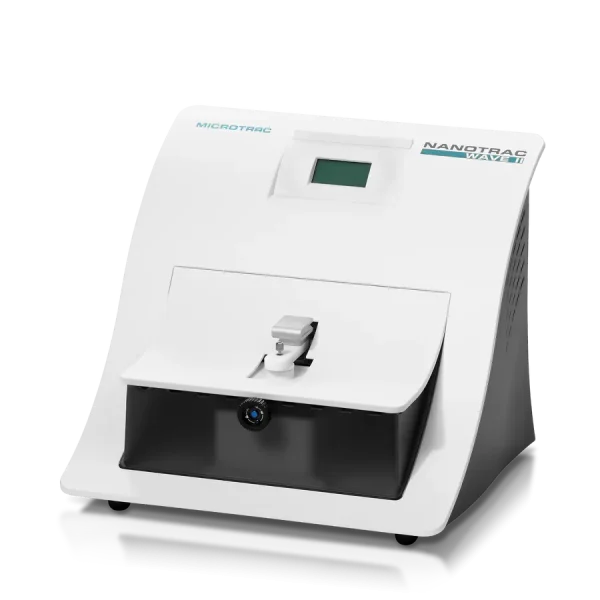
Nanoparticle size, zeta potential, molecular weight and concentration in one benchtop DLS instrument — 0.3 nm to 10 µm, ±200 mV, up to 40 % concentration.
- 180° backscatter with Laser Amplified Detection — no fitting model to choose
- pH titration for zeta vs. pH · FDA 21 CFR Part 11 compliant
- Installation and on-site training included · free test measurement
- Configured to order · lead time from 4 weeks
Made to order
· Lead time from 4 weeks · installation included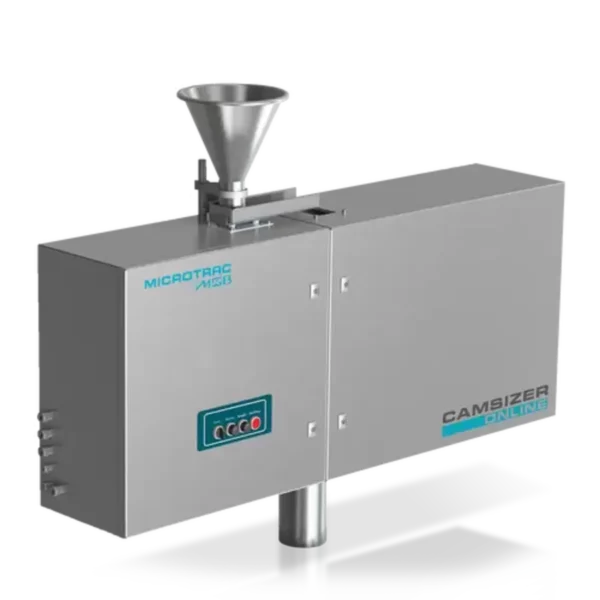
Particle size and 3D shape measured in your process line, not in the lab — 30 µm to 30 mm, with a result every 5 to 10 minutes in the control room.
- More than 35 3D size and shape parameters, built for correlation with sieving
- IP66 stainless steel enclosure, self-cleaning, unattended SOP operation
- Installation and on-site training included · free test measurement
- Configured to order · lead time from 4 weeks
Made to order
· Lead time from 4 weeks · installation included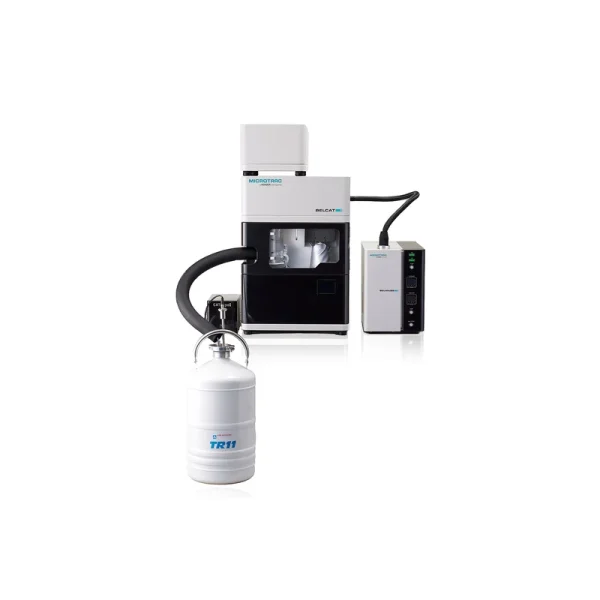
An add-on mass spectrometer for the BELCAT II that tells you which gases evolve in TPD, TPR and breakthrough runs — m/z 1 to 200, up to 16 mass numbers followed at once.
- Faraday cup or SEM detector, resolution M/ΔM ≥ 2M
- Heated hose up to 200 °C for vapors, including ammonia
- Installation and on-site training included · free test analysis of your sample
- Configured to order · lead time from 4 weeks
Made to order
· Lead time from 4 weeks · installation included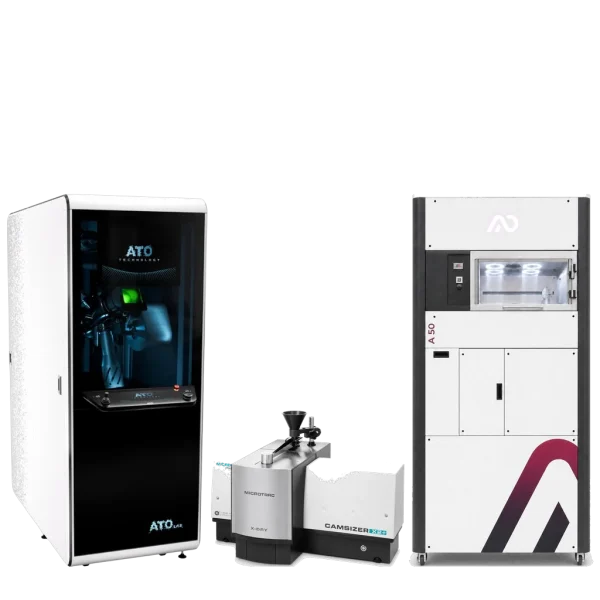
Atomize your own alloy, measure the powder and print it — the ATO Lab, the Microtrac CAMSIZER X2+ and the AO Metal A50 as one materials-development cell from one supplier.
- ATO Lab: 20–120 µm spherical powder, oxygen below 10 ppm
- CAMSIZER X2+: size and shape from 0.9 µm to 8 mm in 1–3 minutes
- A50: Ø50 × 100 mm LPBF, every laser parameter open
- Installation and training included · 8–14 weeks · 12-month warranty
Made to order
· Lead time 8–14 weeks · installation included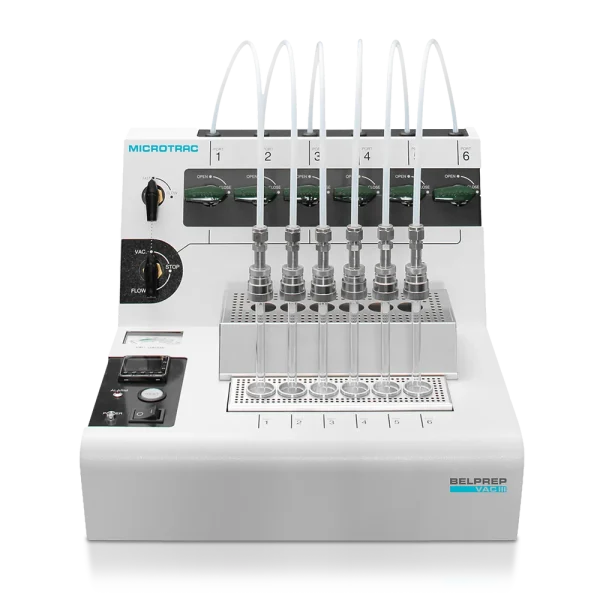
Vacuum degasser for BELSORP gas adsorption analyzers — prepares 3 or 6 samples at up to 430 or 450 °C while the analyzer measures.
- Vacuum / heat degassing, flow / heat under inert gas as an option
- Add-on for BELSORP MINI X, MAX G and MAX X analyzers
- Installation and on-site training included · free test analysis of your sample
- Configured to order · lead time from 4 weeks
Made to order
· Lead time from 4 weeks · installation included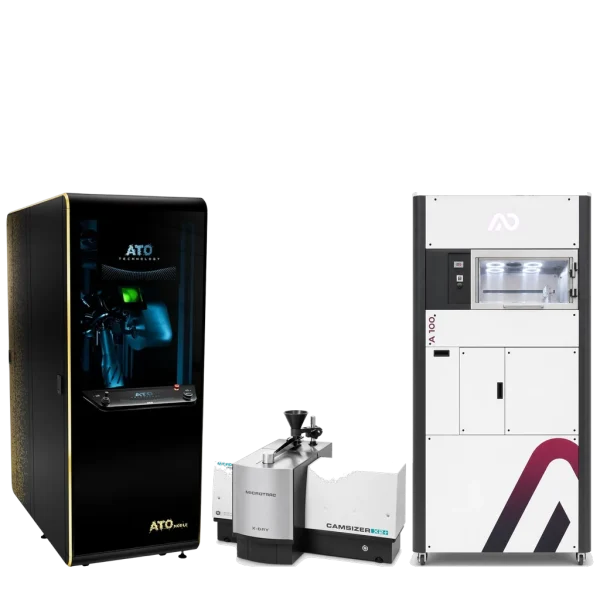
Make your own gold, silver and platinum powder, measure it and print it — the ATO Noble, the Microtrac CAMSIZER X2+ and the AO Metal A100 as one precious-metal cell from one supplier.
- ATO Noble: Au 9 ct to 99.99%, Ag, Pt, Pd, Ir with Zero Loss recovery
- CAMSIZER X2+: size and shape from 0.9 µm to 8 mm in 1–3 minutes
- A100: Ø100 × 100 mm LPBF, optional blue laser for gold and silver
- Installation and training included · 8–14 weeks · 12-month warranty
Made to order
· Lead time 8–14 weeks · installation included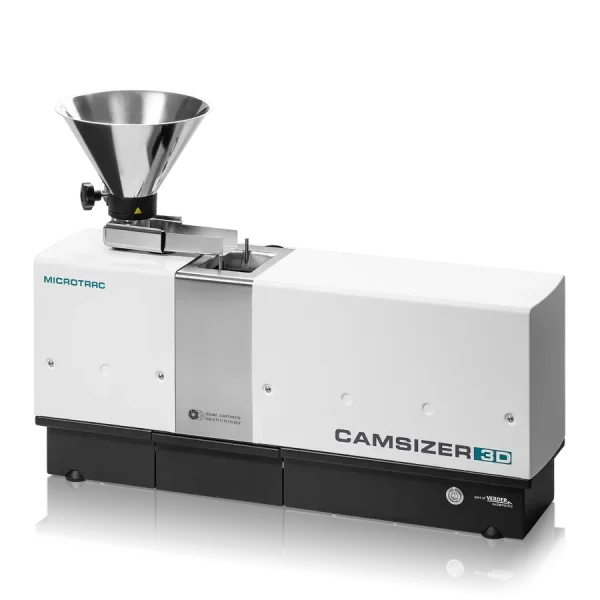
True three-dimensional particle size and shape from 20 µm to 30 mm — up to 30 images of every particle give its length, width and thickness in two to five minutes.
- Patented particle tracking with 9 MP ZOOM and 5 MP BASIC cameras, up to 250 images per second
- 2D mode with results compatible with sieve analysis; Autosampler for unattended runs
- Installation and on-site training included · free test measurement
- Configured to order · lead time from 4 weeks
Made to order
· Lead time from 4 weeks · installation included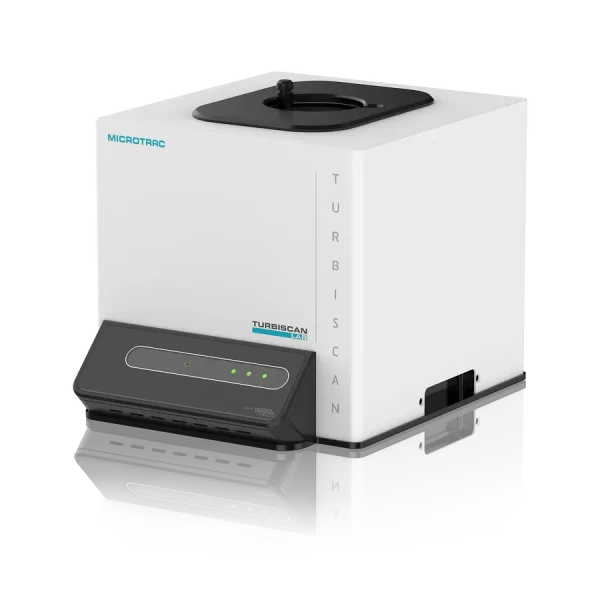
Physical stability of emulsions, suspensions and foams measured on the native sample — up to 1,000× faster than visual observation, 0.0001–95 % v/v, no dilution.
- Sedimentation, creaming, flocculation and coalescence detected and quantified
- One-click Turbiscan Stability Index · room temperature to 60 °C
- Installation and on-site training included · free test analysis of your sample
- Configured to order · lead time from 4 weeks
Made to order
· Lead time from 4 weeks · installation includedWhat our customers say
“Harry and team were professional, effective communicators as we set up the order, then they executed quickly and produced an amazing product for us at a very competitive price. Am looking forward to our next print w Additive Plus!”
“Great 3D printing service and the resin parts look super smooth and clean. Really happy with how everything turned out!”
“Harry was very professional and helped me out with my 3D printing needs and explained what options I have in terms of filaments such as PEEK. Highly recommended.”
“I needed a 3D enclosure printed urgently in a specific time period, they did great!”
Common questions
Don't see yours? Email [email protected] — NDA on request, typical reply within 4 hours.
Which analysis methods does the BELCAT II support?
What temperature range and heating rates does it reach?
How does the BELMASS II mass spectrometer add to the BELCAT II?
What detector does it use?
Which gases and samples can it handle?
Can it measure breakthrough curves for adsorbents?
Can it measure metal dispersion of a supported precious-metal catalyst?
How much does a BELCAT II cost?
Can I test my catalyst before buying?
What is the lead time, and what comes with the BELCAT II?
Place your order, or talk to an engineer first
Order Microtrac BELCAT II Chemisorption Catalyst Analyzer direct, or talk to materials engineer