
Made to order
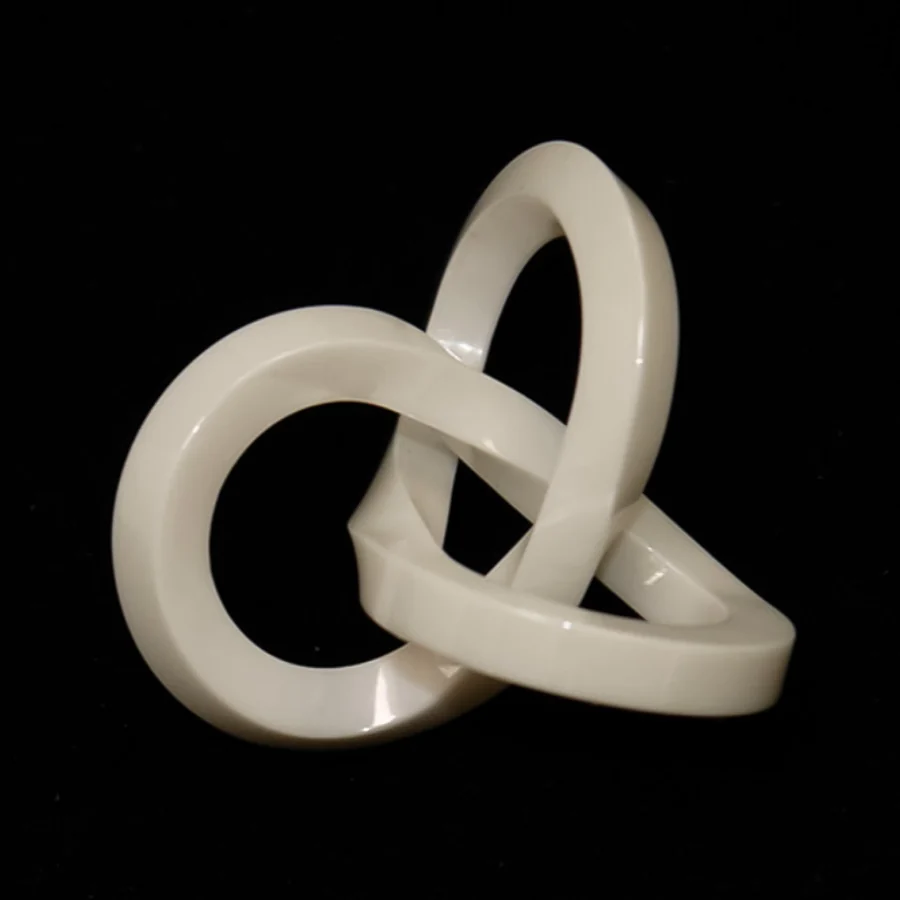
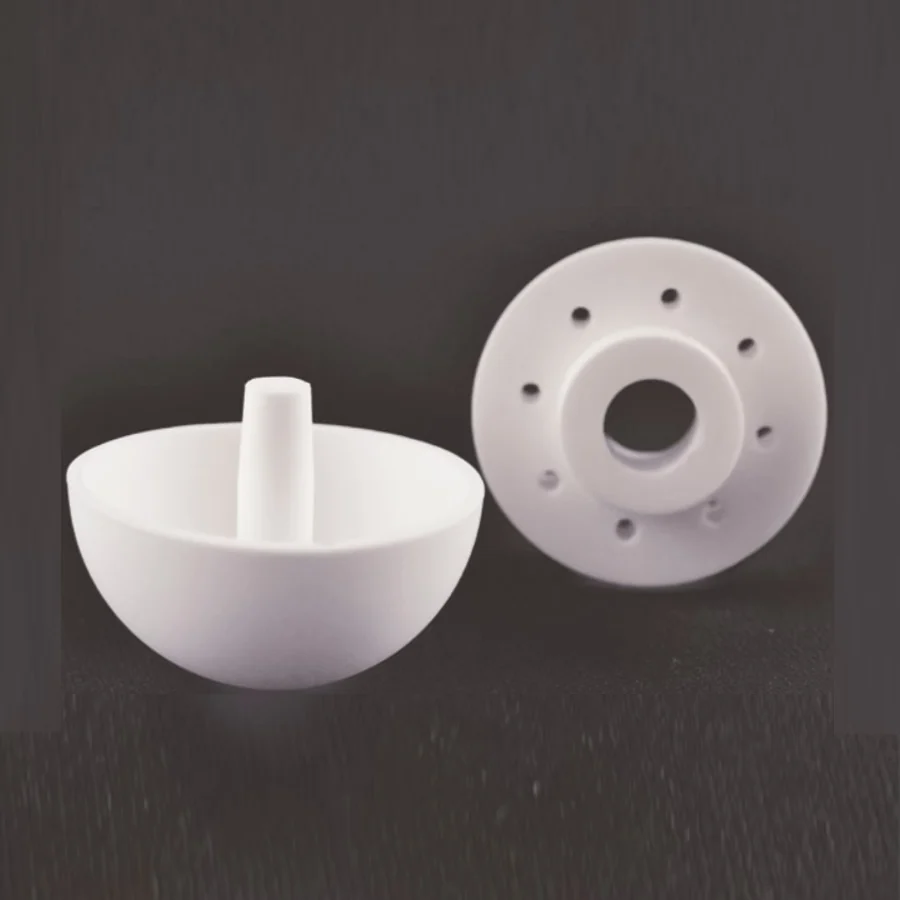
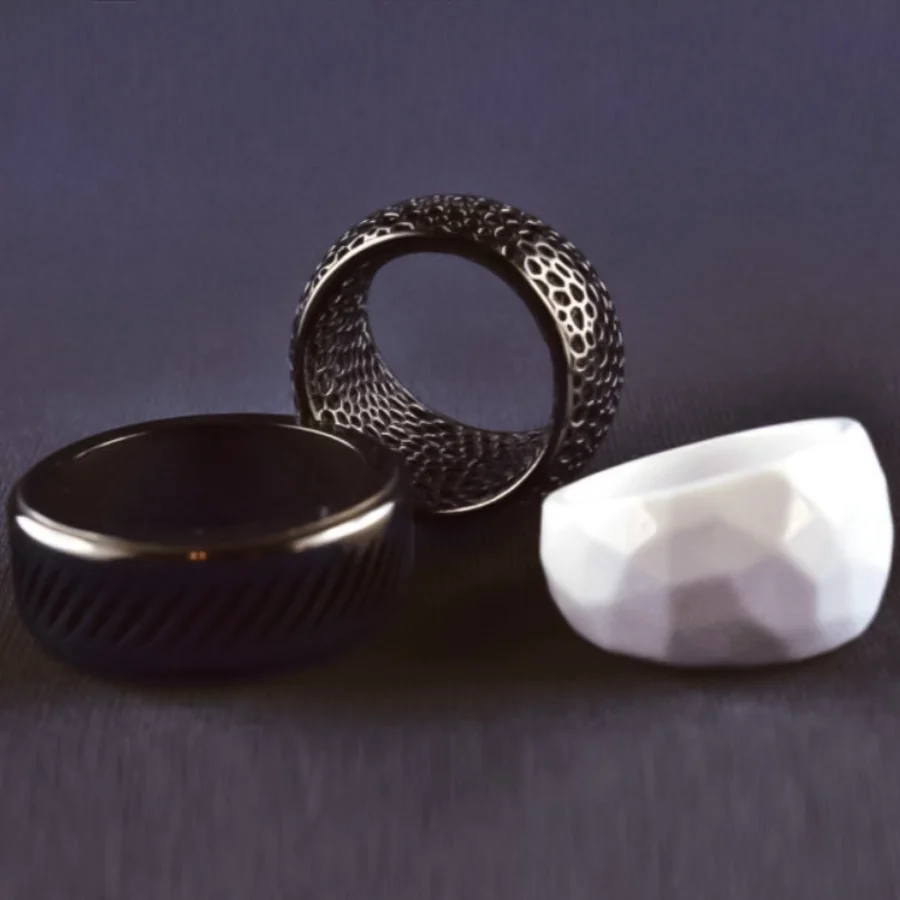
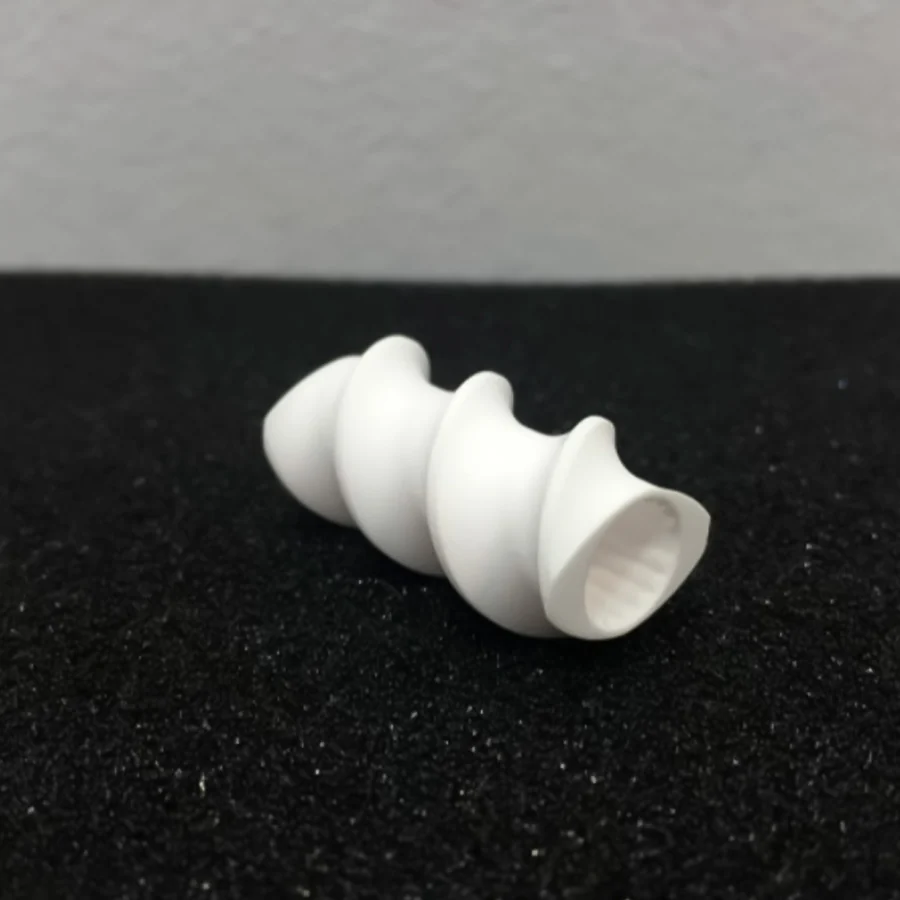
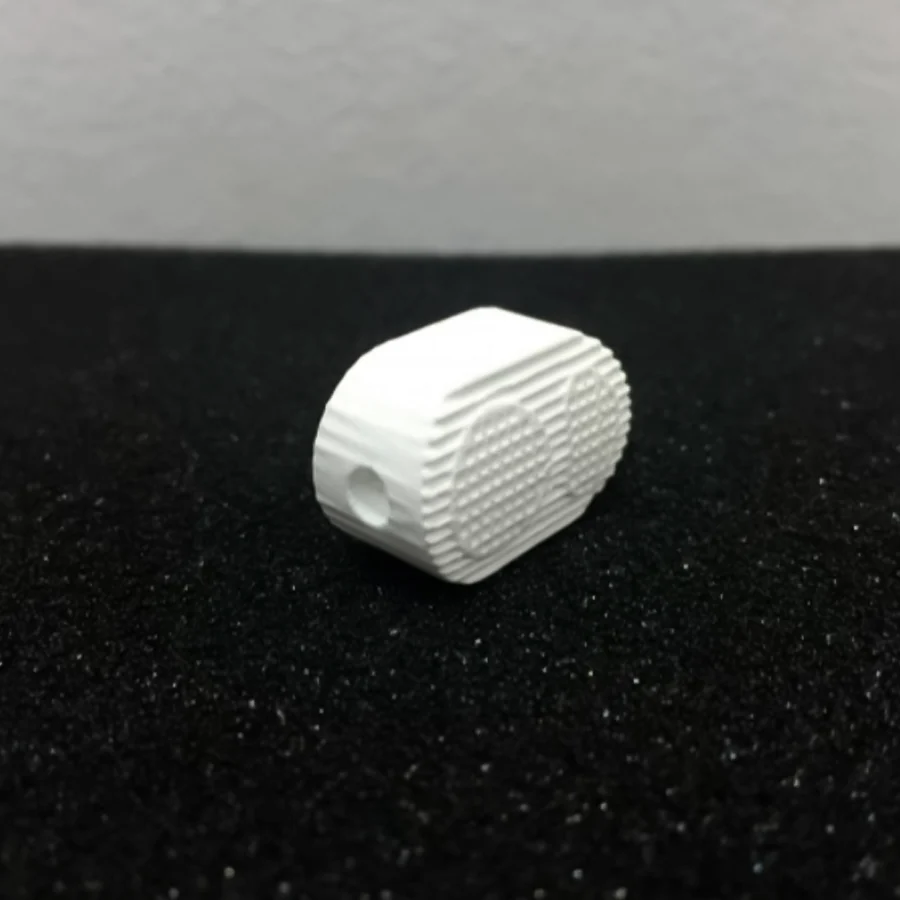
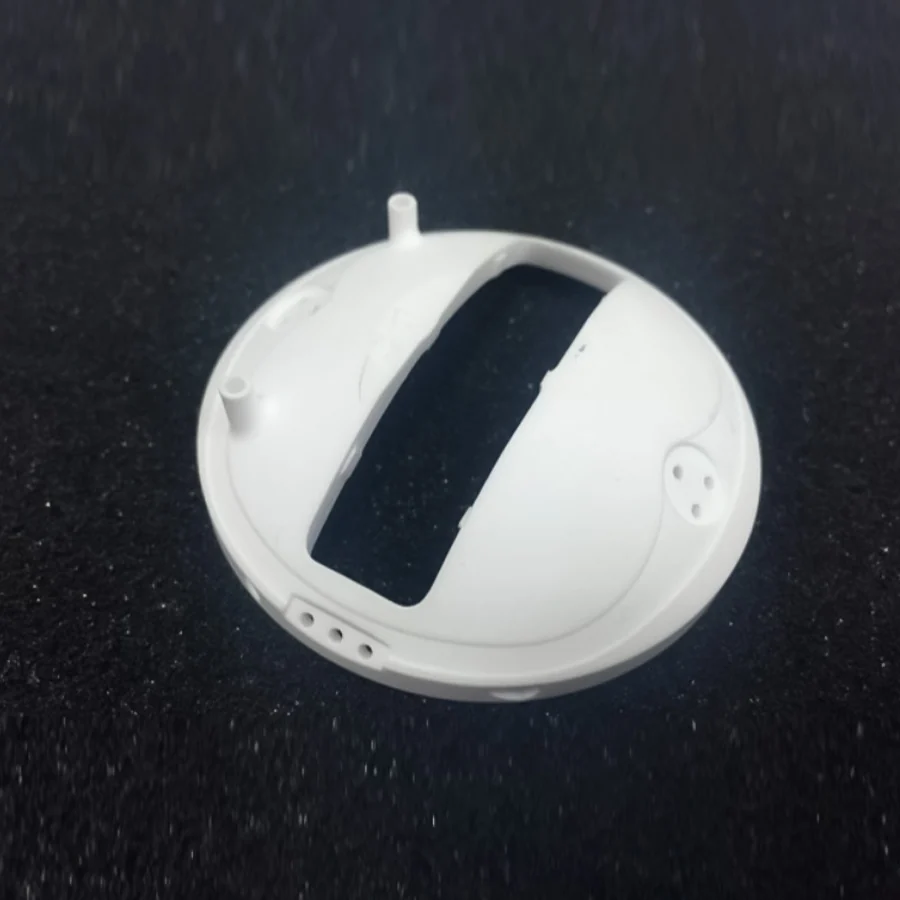
- Install & training commissioning and operator onboarding in California
- Production package validated debind/sinter cycles and shrinkage compensation
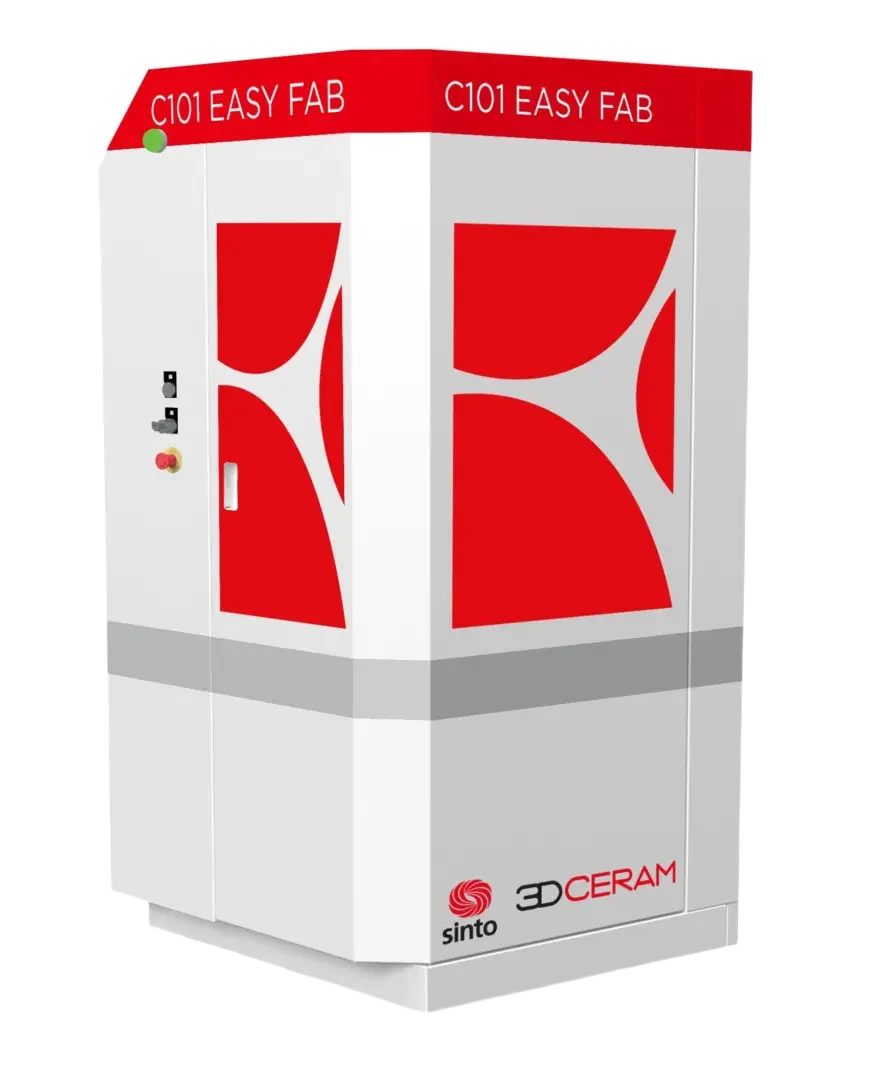
3DCeram C101 EASY FAB Ceramic SLA 3D Printer – Small-Series Ceramic Production | 100×100×150 mm
Compact ceramic SLA printer for small-series production of technical-ceramic parts — a 3.9×3.9×5.9 in / 100×100×150 mm build that starts a print from as little as 60 mL of ceramic. A peristaltic pump and pressurized tank hold a stable slurry flow for repeatable parts, and the same process scales up to 3DCeram production systems. Full print → debind → sinter workflow supported by Additive Plus.
- Built for small series — repeatable ceramic parts, not one-off prototypes.
- Print from 60 mL — 10 mL with SAM option · change ceramic in ~20 min.
- Lead time: configured to order — install, training & scale-up support from California.
What your production engineer actually checks
Repeatable parts, not lucky prints
A peristaltic pump and pressurized tank hold the slurry flow rate constant, and the granite frame keeps the optics and platform stable. That is what makes the C101 EASY FAB a production machine rather than a prototyping one — the same part, batch after batch.
A ceramics engineer on the line
Shrinkage maps for your ceramic, validated debind/sinter parameter sets, and a paid sample run before you commit. Sub-4h reply, NDA standard, from a team that runs ceramic AM.
The 3DCeram C101 EASY FAB is a compact ceramic SLA printer built for small-series production of technical-ceramic parts — a 3.9 × 3.9 × 5.9 in / 100 × 100 × 150 mm platform that starts a print from as little as 60 mL of ceramic. It shares the C101 EASY hardware with the EASY LAB but is set up for repeatable fabrication: a peristaltic pump and pressurized tank hold a stable slurry flow, and a granite frame keeps the process steady run after run. Additive Plus supports the full print → debind → sinter workflow around it.
Why production teams choose the C101 EASY FAB
A production-ready ceramic SLA platform in a compact, plug-and-play footprint.
Built for small-series production
The C101 EASY FAB moves you from single prototypes to repeatable small runs — same 405 nm laser process, tuned for consistent parts batch after batch on a compact granite-framed platform.
Print from 60 mL of ceramic
Start a build with just 60 mL of paste — or 10 mL with the Small-Amount-of-Material (SAM) option. Precious technical ceramics go further per production run.
Stable slurry, stable parts
A peristaltic pump and pressurized tank keep the slurry flow rate constant, so layer-to-layer deposition stays even — the foundation of repeatable ceramic production, not lucky one-offs.
A clear scale-up path
The C101 shares its ceramic SLA process with 3DCeram’s larger systems — so a part qualified here moves up to the C1000 FLEXMATIC or C3601 ULTIMATE for higher volume without re-qualifying.
Print → debind → sinter: the full ceramic workflow
A printed ceramic is a “green” part, not a finished one. The C101 is step one of three — and Additive Plus supports all three.
Print the green part
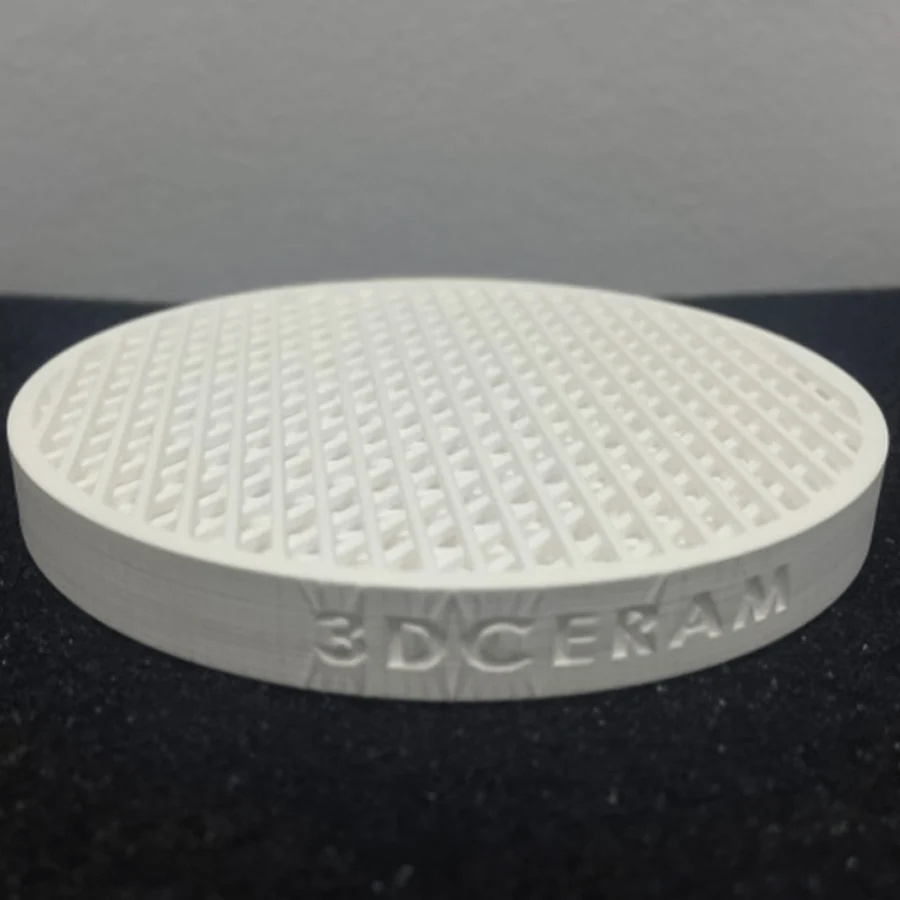
The UV laser cures ceramic-loaded paste layer by layer, 0.020–0.125 mm at a time, into a dense green body on the 100 × 100 × 150 mm platform.
Debind
The green part is cleaned of unpolymerised paste and thermally debound to remove the organic binder — in air or nitrogen — leaving a fragile all-ceramic body.
Sinter to full density
Sintering fuses the ceramic to near-full density. The part shrinks roughly 15–20% linearly, so shrinkage is compensated in CAD up front. We share validated cycles per material.
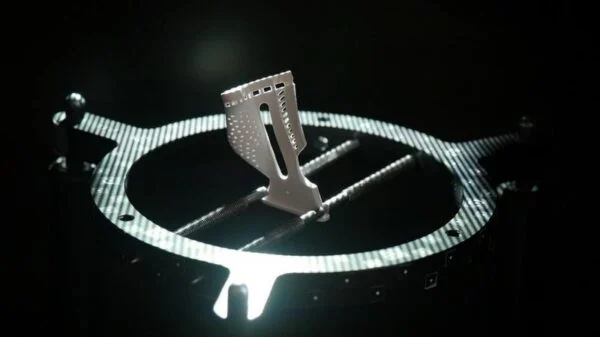
Materials & compatible ceramics
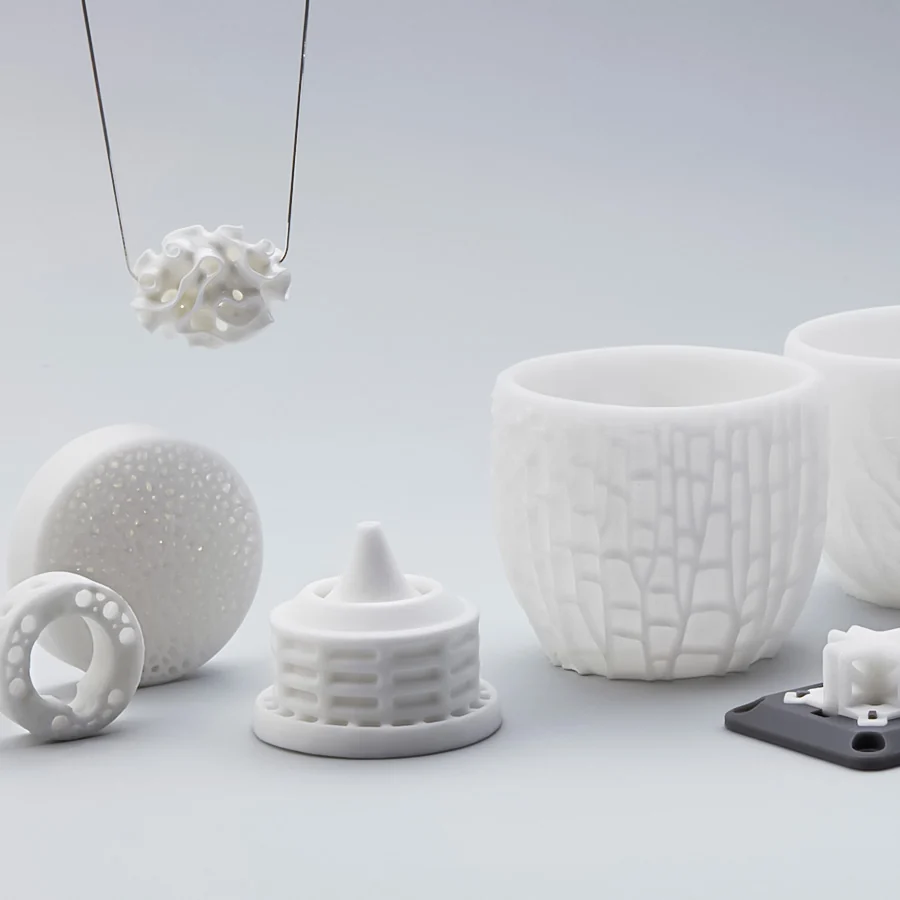
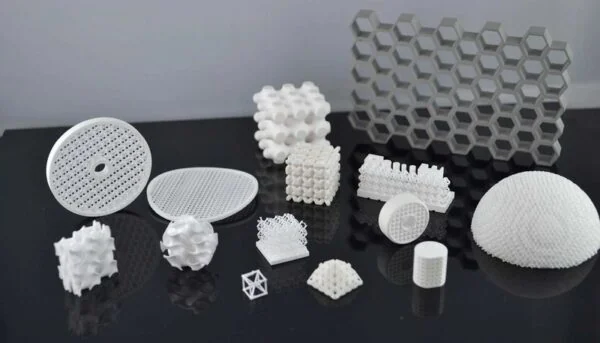
The C101 EASY FAB runs 3DCeram’s technical-ceramic pastes across oxide and non-oxide families. Each ceramic targets a different property set — mechanical, thermal, electrical or biomedical. Additive Plus helps match the ceramic to your part and shares the matching debind/sinter schedule so your production output lands on spec.
| Ceramic | Key properties | Typical parts |
|---|---|---|
| Alumina (Al₂O₃) | High hardness, wear & corrosion resistance, electrical insulation, high service temperature | Wear parts, insulators, industrial components |
| Zirconia (ZrO₂) & 8Y | High strength & toughness; 8Y adds ionic conductivity & heat insulation | Medical & dental, solid-oxide fuel cells |
| Silicon nitride (Si₃N₄) | Excellent thermal-shock & wear resistance, low density, low thermal expansion | Bearings, high-temperature structural parts |
| Aluminium nitride (AlN) | High thermal conductivity with electrical insulation, good mechanical strength | Electronics, thermal-management substrates |
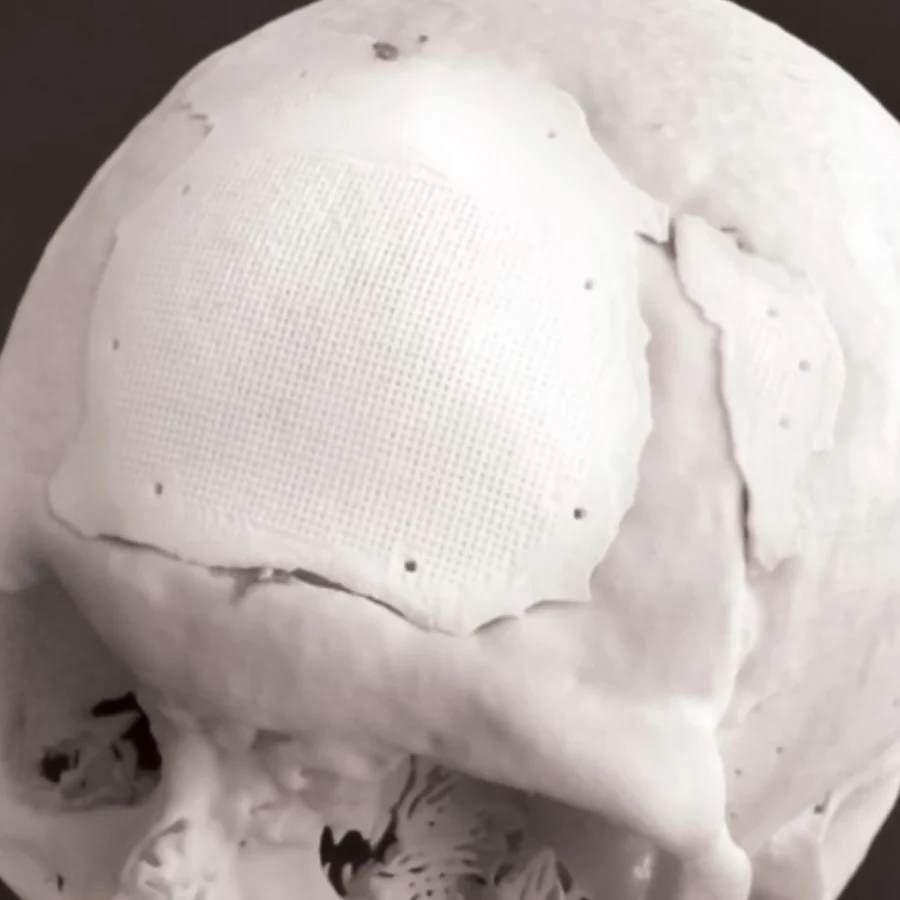
| Hydroxyapatite (HA) / TCP | Bioactive, resorbable, biocompatible | Bone substitutes, cranial & maxillofacial implants |
| Cordierite & silica-based | Low thermal expansion, thermal-shock resistant, low dielectric loss | Refractory & thermal components |
Need a ceramic that isn’t listed? 3DCeram qualifies new formulations on request — ask our engineer.
Key specifications
| Technology | Top-down laser stereolithography (ceramic SLA) |
| Build platform (L×W×H) | 3.9 × 3.9 × 5.9 in / 100 × 100 × 150 mm |
| Laser | UV, 405 nm · ~60 µm spot · ~300 mW |
| Layer thickness (Z) | 0.0008–0.0049 in / 0.020–0.125 mm |
| Minimum ceramic to start | 60 mL · 10 mL with SAM option |
| Slurry feed | Peristaltic pump + pressurized tank — stable flow rate |
| Material changeover | ~20 min same ceramic · ~40 min different slurry |
| Hybrid option | Available |
| Machine dimensions (L×W×H) | 40.2 × 39.6 × 77.8 in / 1020 × 1005 × 1976 mm |
| Weight | 1,323 lb / 600 kg |
| Utilities | 220–240 VAC, 50 Hz · dry compressed air 6 bar · 20–25 °C, 50% RH |
| Control / warranty | Web dashboard · 12-month warranty |
See the Specifications tab for the full manufacturer data set.
Typical applications
Where a compact ceramic production platform earns its place.
Where the C101 EASY FAB fits — and what’s next to it
Develop on the LAB, produce on the FAB, then scale to 3DCeram’s larger systems.
Why source the C101 EASY FAB through Additive Plus
- Full workflow, one partner. Printer, ceramic materials, debinding and sintering — we support the whole production chain, not just the machine.
- Production & DfAM support. Shrinkage compensation, validated debind/sinter cycles and repeatable-part guidance — from engineers who run ceramic AM.
- A clear scale-up path. Start small on the C101 EASY FAB, then move to a larger 3DCeram system as volume grows — without re-qualifying the part.
- US-based install, training & service. Commissioning and operator training handled from California, in your timezone.
- <24h response. 200+ qualified systems delivered across 23 countries.
| Brand | 3DCeram |
| Country of origin | France |
| Weight | 1323 lb / 600 kg |
| Printing Materials | Ceramic Pastes |
| Technology | CERAMIC SLA |
| Dimensions | 40.2×39.6×77.8 in / 1020×1005×1976 mm |
| Build Volume | 3.9×3.9×5.9 in / 100×100×150 mm |
| Layer thickness | 0.0008–0.0049 in / 0.020–0.125 mm |
| Light source | UV Laser |
| UV Wavelength | 405 nm |
| Laser spot diameter | ~60 µm |
| Electrical requirements | 220–240 VAC / 50Hz |
| Optimum indoor operation temperature | 20–25 °C / 68–77 °F |
| Relative humidity | 50% |
| Compressed air | 6 bar dry |
| Hybrid option | Available |
| Client Operating System | Web Dashboard |
| Warranty | 12 months |
| Material | Silicon Nitride, Zirconia, Alumina, Aluminium Nitride, Cordierite, Hydroxyapatite, Tricalcium Phosphate |
Product videos
Send us your part and target ceramic — we print, debind and sinter a paid sample so you can validate density, accuracy and surface on your own geometry before committing to a system.
Other products teams run alongside 3DCeram C101 EASY FAB Ceramic SLA 3D Printer – Small-Series Ceramic Production | 100×100×150 mm
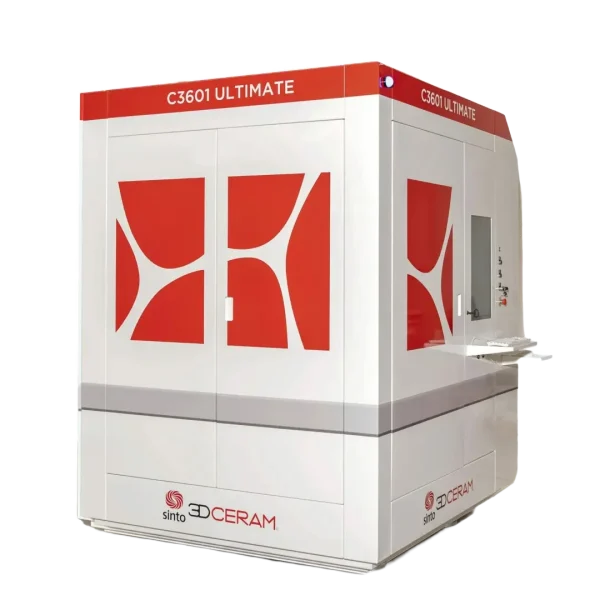
Quad-laser SLA ceramic 3D printer for serial production — a 600×600×300 mm build envelope, four 405 nm UV lasers, and an open architecture that runs any qualified ceramic paste.
- ✓ Largest plate in the 3DCeram line — 600×600×300 mm (23.6×23.6×11.8 in)
- ✓ Support-free top-down SLA · surface roughness under 2 µm
- ✓ Lead time: configured to order — full print → debind → sinter workflow supported
Made to order
· Built to order — contact us for the current lead time and installation schedule.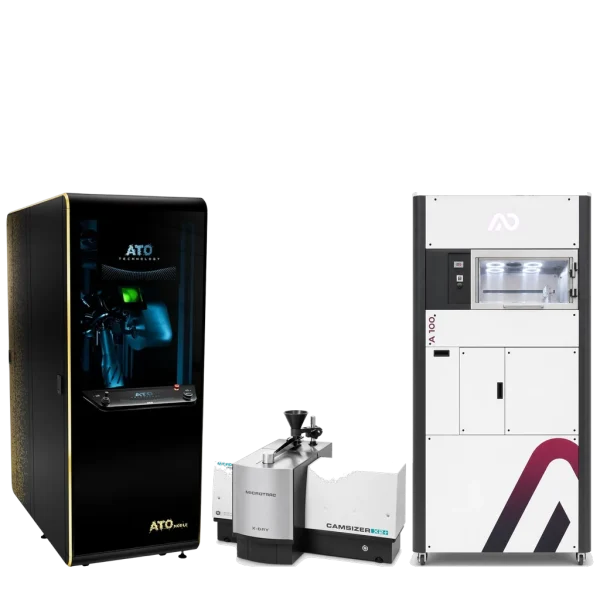
Make your own gold and silver powder, measure it, and print it — one closed loop from one supplier. The ATO Noble atomises gold, silver, platinum and palladium under argon with Zero Loss recovery, so karat and chemistry survive the process. The CAMSIZER X2+ measures particle size and shape. The AO Metal A100 prints with every laser parameter open. Configured to order; lead time on request. Installation and commissioning in the USA: facility and gas planning, start-up and operator training by our US service team.
Made to order
· Lead time on request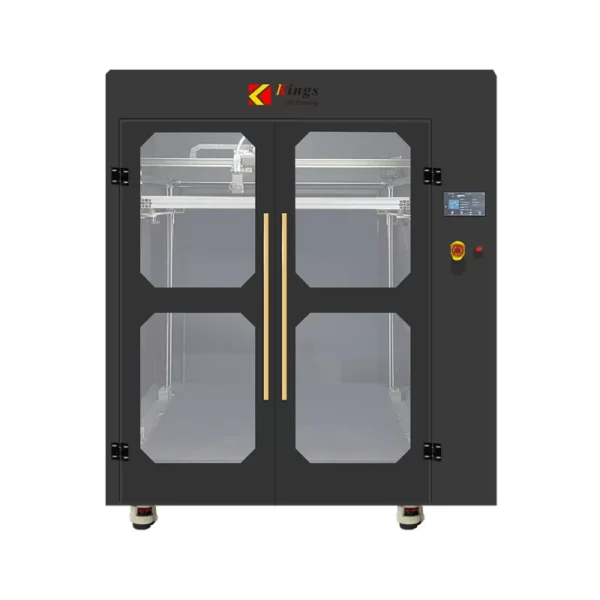
Industrial large-format FFF 3D printer — 39×39×39 in / 1000×1000×1000 mm fully enclosed build, BMG dual-gear direct-drive extruder up to ~320°C, 110°C heated bed. Runs PLA, ABS, PETG, TPU, PA nylon, and PA12-CF carbon-fiber from 1.75 mm filament. Priced by configuration.
- ✓ 39×39×39 in / 1 m³ fully enclosed build — one-piece large prototypes and tooling
- ✓ BMG direct-drive to ~320°C + 110°C heated bed — engineering and carbon-fiber filaments
- ✓ Lead time: 2–3 months — configured to order, installed and trained on-site
Made to order
· 2–3 months. Need it sooner? Talk to a specialist.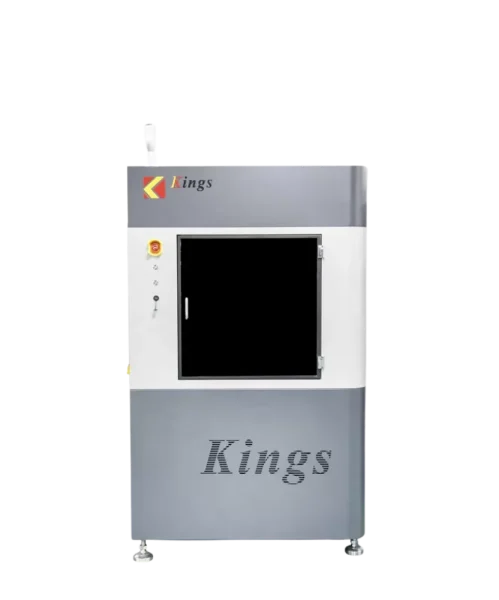
Compact industrial SLA. Marble frame. Vacuum recoating. A high-performance platform for footwear lasts, dental models, engineering prototypes and patterns — without stitching or Z-seam artifacts.
- ✓ 24×24×16 in / 600×600×400 mm build chamber — nests a full tray of lasts or arches per run
- ✓ Solid-state 355 nm Nd:YVO4 laser · 0.075–0.8 mm variable beam · 15.0 m/s max scan
- ✓ Full-marble machine frame — thermal stability for ±0.1 mm part accuracy
- ✓ Lead time: 2–3 months — on-site install, calibration & operator training included
Made to order
· 2–3 months from order placement. Need it sooner? Talk to a specialist.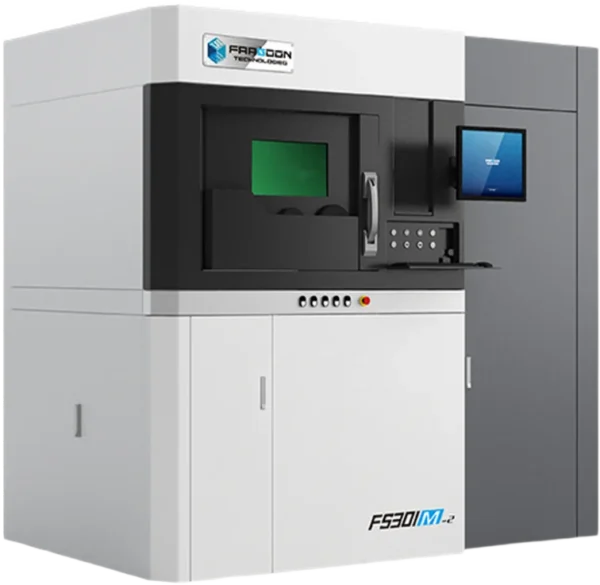
The Farsoon FS301M is a metal LPBF 3D printer with a 12.0×12.0×16.1 in / 305×305×410 mm build envelope, running one or two 500 W lasers, each covering the full build area.
- ✓ 12.0×12.0×16.1 in — build cylinder
- ✓ 12.0×12.0×16.1 in / 305×305×410 mm build envelope
- ✓ Open platform — full access to process parameters, qualify your own alloy
- ✓ Lead time: built to order — confirmed at quote
Installation and commissioning in the USA: facility and gas planning, start-up and operator training by our US service team.
Made to order
· Built to order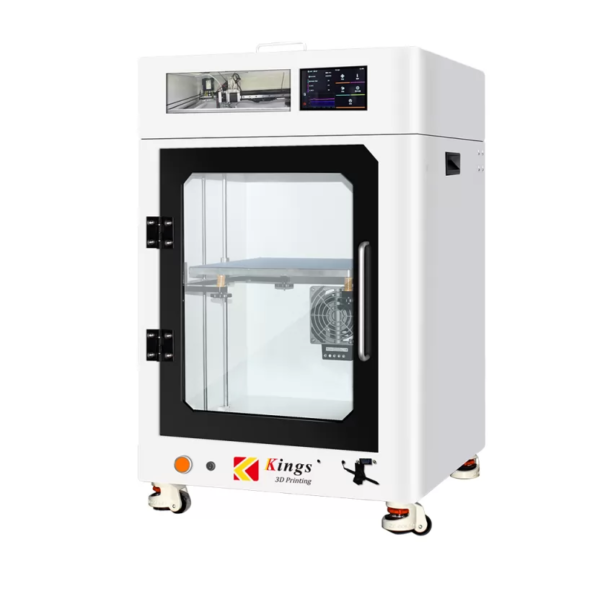
Industrial FFF. Klipper high-speed. Closed-loop servos. Built for functional prototypes, jigs, fixtures and small production runs in standard engineering filaments — with the repeatability hobby machines can't hold.
- ✓ 11.81×11.81×15.75 in / 300×300×400 mm build volume — industrial linear guides on XY
- ✓ Klipper high-speed to 350 mm/s · 70 W Volcano hot end · heated bed to 120 °C
- ✓ Open 1.75 mm ecosystem — PLA, ABS, PETG, TPU from any supplier · BMG dual-drive
- ✓ Ships configured & tested — onboarding and demo units available
Made to order
· 2–3 months. Need it sooner? Talk to a specialist.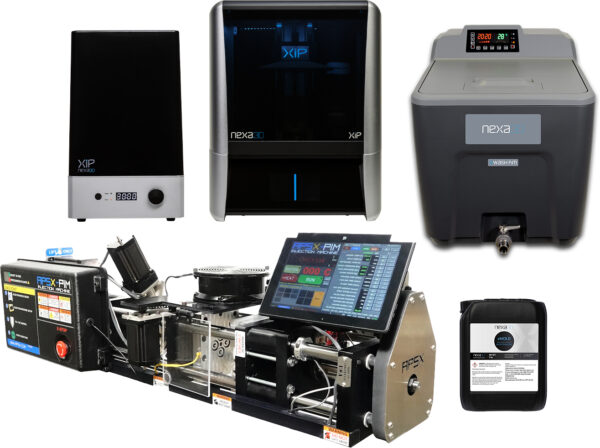
A desktop package to run Freeform Injection Molding: print a dissolvable mold in xMOLD resin on the Nexa3D XiP, inject real production material into it, then dissolve the mold away — end-use parts from a printed tool, at a fraction of hard-tooling cost.
- ✓ Print the mold, mold the part, dissolve the mold — ~2 days CAD-to-part
- ✓ Inject thermoplastics, TPE, LSR silicone, MIM metal, CIM ceramic
- ✓ Package: XiP printer + xMOLD resin + xWASH FiM · priced by configuration
In stock
· Configured and quoted to your setup (incl. injection press). Install and training included; lead time confirmed at quote.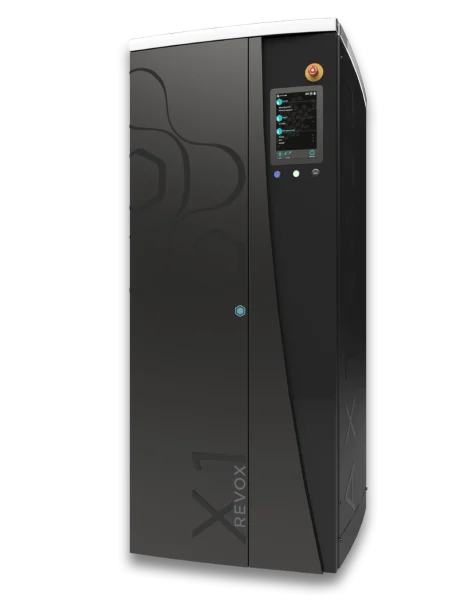
The Axtra3D Revox X1 is a production-grade 4K DLP resin 3D printer — the same chassis and TruLayer separation as the flagship Lumia X1, at an entry price point for teams that can work within DLP part quality on a 9.8×5.5×19.5 in / 249×140×495 mm build volume.
- ✔ Production 4K DLP at 405 nm — 65 µm XY resolution
- ✔ TruLayer separation runs large cross-sections and filled, viscous resins
- ✔ Open or closed 405 nm material configurations
- ✔ Lead time: configured to order — request a quote for delivery & installation
Made to order
· Lead time: configured to order — request a quote for delivery and installation.Common questions
Don't see yours? Email [email protected] — NDA standard, typical reply within 4 hours.
What is the difference between the C101 EASY FAB and the C101 EASY LAB?
What post-processing is required after printing on the C101 EASY FAB?
How repeatable are parts from one production run to the next?
How little ceramic can I start a production run with?
How quickly can I switch between ceramics between production runs?
What happens when my volume outgrows the C101 EASY FAB?
What is the build volume, layer thickness and laser specification?
What is the linear shrinkage after sintering, and can you print a paid sample first?
Place your order, or talk to an engineer first
Order 3DCeram C101 EASY FAB Ceramic SLA 3D Printer – Small-Series Ceramic Production | 100×100×150 mm direct, or talk to materials engineer