
Made to order
- Installation, commissioning and operator training included with every system
- Eidos Manufacturing suite — Builder slicing and Nexus process monitoring
Caracol Vipra AM Robotic WAAM Metal 3D Printer – Turnkey 9-Axis Cell | 8.2×6.6×6.6 ft / 2.5×2.0×2.0 m
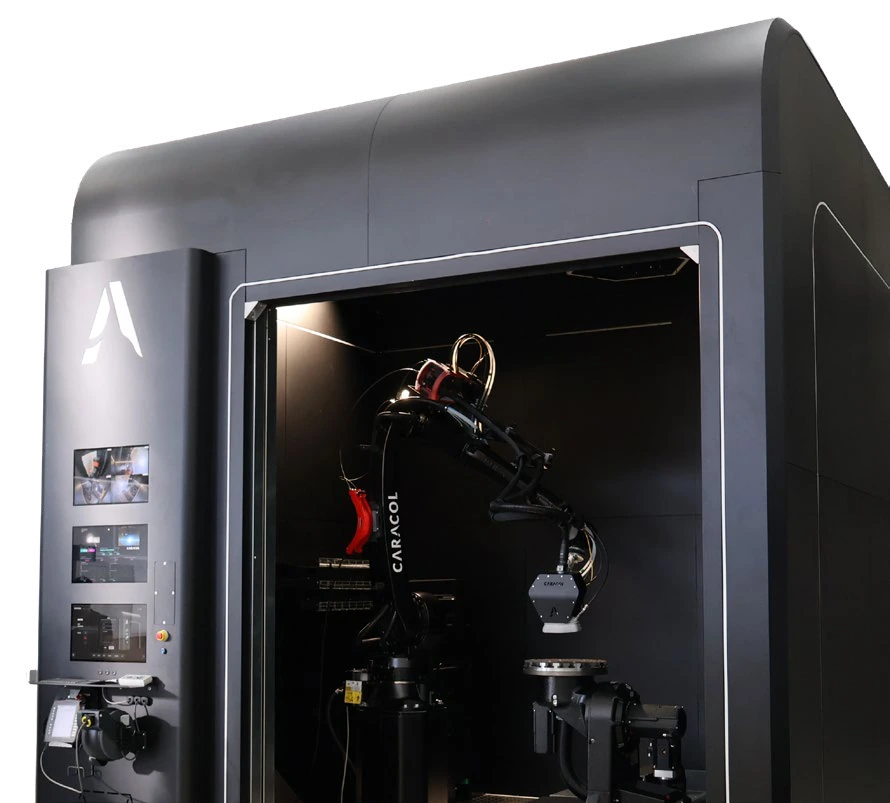
Vipra AM is Caracol’s turnkey robotic WAAM platform for metal production parts — a 9-axis cell running CMT (Cold Metal Transfer) deposition at up to 13.2 lb/h / 6.0 kg/h inside an 8.2 × 6.6 × 6.6 ft / 2.5 × 2.0 × 2.0 m envelope, across 11 qualified alloys from ER70S-6 steel to Inconel 625. CE marked. Priced by configuration.
- ✓ 9-axis architecture — robot, external manipulator and linear track, 1,650 lb / 750 kg positioner payload
- ✓ Closed-loop monitoring — pyrometer, layer geometry and gas flow correct parameters in-build
- ✓ Lead time: approx. 16 weeks — configured to order
What your process engineer actually checks
Nine axes, not six
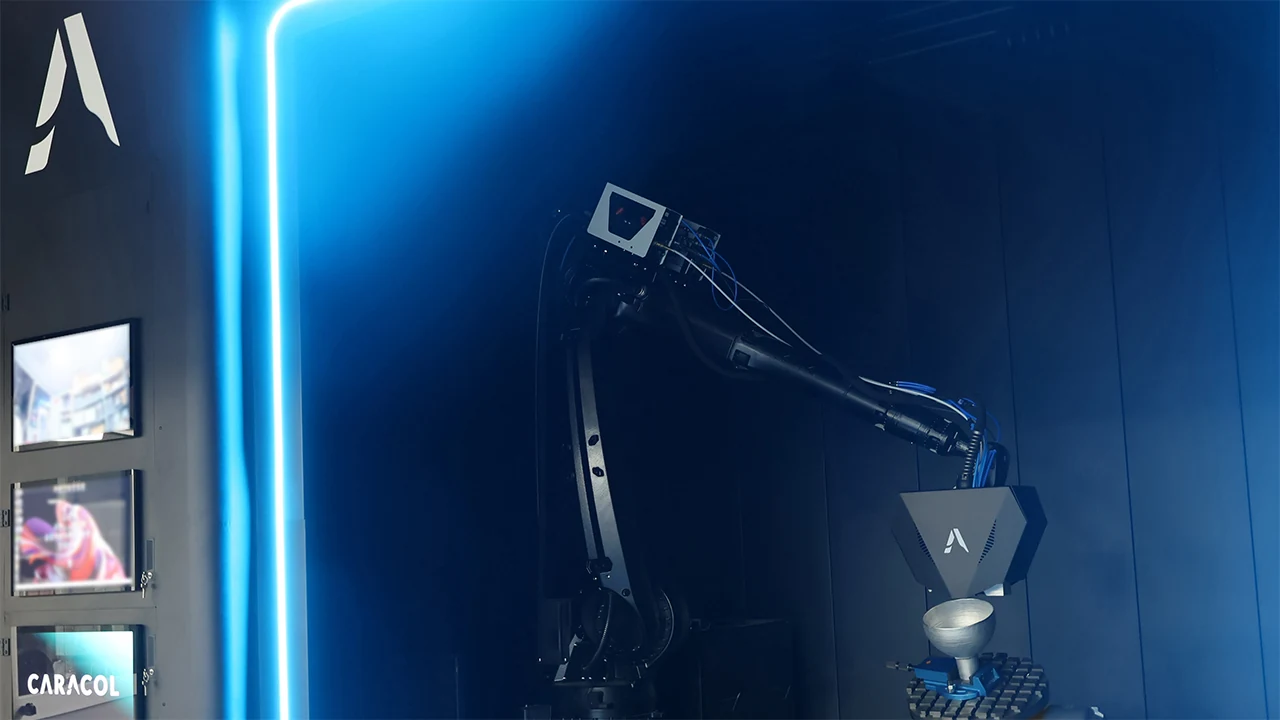
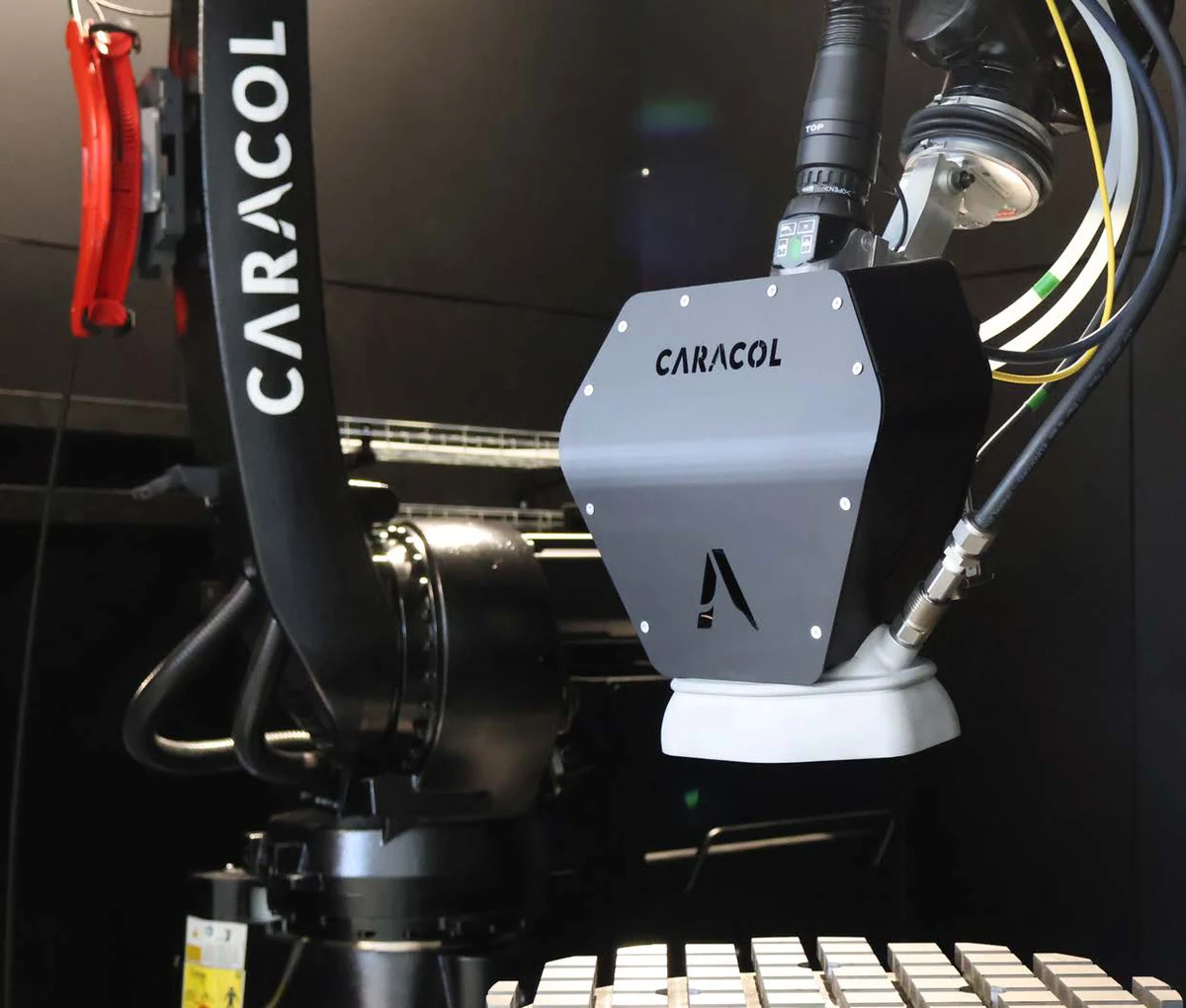
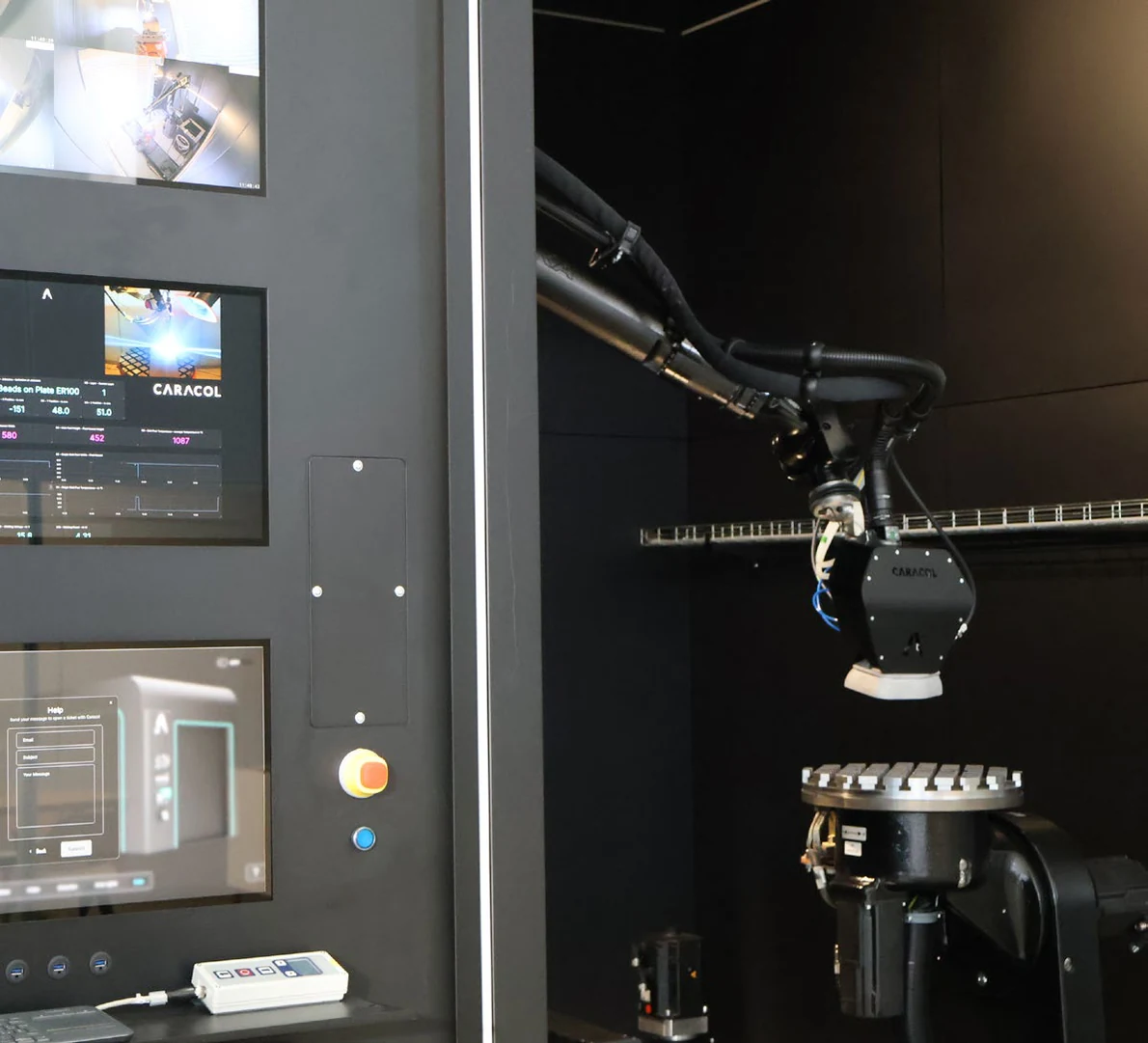
Vipra AM runs a high-payload industrial robot on a 9-axis architecture — one axis beyond most WAAM platforms — with an external manipulator and a linear track as the ninth axis. Wider kinematic range means more accurate torch positioning across complex geometries, and loading and unloading happen inside the cell without fork lifts.
Closed-loop process control, logged per build
A pyrometer, a layer geometry sensor and a gas flow monitor feed an automation loop that adjusts parameters in real time to hold the thermal window. Eidos Nexus correlates that data with robot position into a live digital twin, so every build leaves a production record. Thermal camera, profilometer and 3D scanner add on demand.
An applications engineer on the line
Send the part, the alloy and the annual volume — we will tell you whether Vipra AM pays back on it, which configuration fits your facility, and what installation actually requires. We run metal AM ourselves at AO Metal, so the answer comes from production experience. Sub-4h reply, NDA on request.
Vipra AM is Caracol’s turnkey robotic WAAM platform for metal parts: a 9-axis cell that deposits steels, stainless steels, aluminium, nickel and copper alloys at up to 6 kg/h inside a 8.2 × 6.6 × 6.6 ft / 2.5 × 2.0 × 2.0 m envelope, with closed-loop process monitoring built in.
Why engineers choose Vipra AM
Four things a process engineer checks before a WAAM cell enters the shop floor.
Nine axes, not six
Robot, external manipulator and a linear track as the ninth axis. The extra axis widens the kinematic range and torch angle, so overhangs and organic geometries that fixed-axis WAAM platforms refuse stay printable.
CMT keeps heat input low
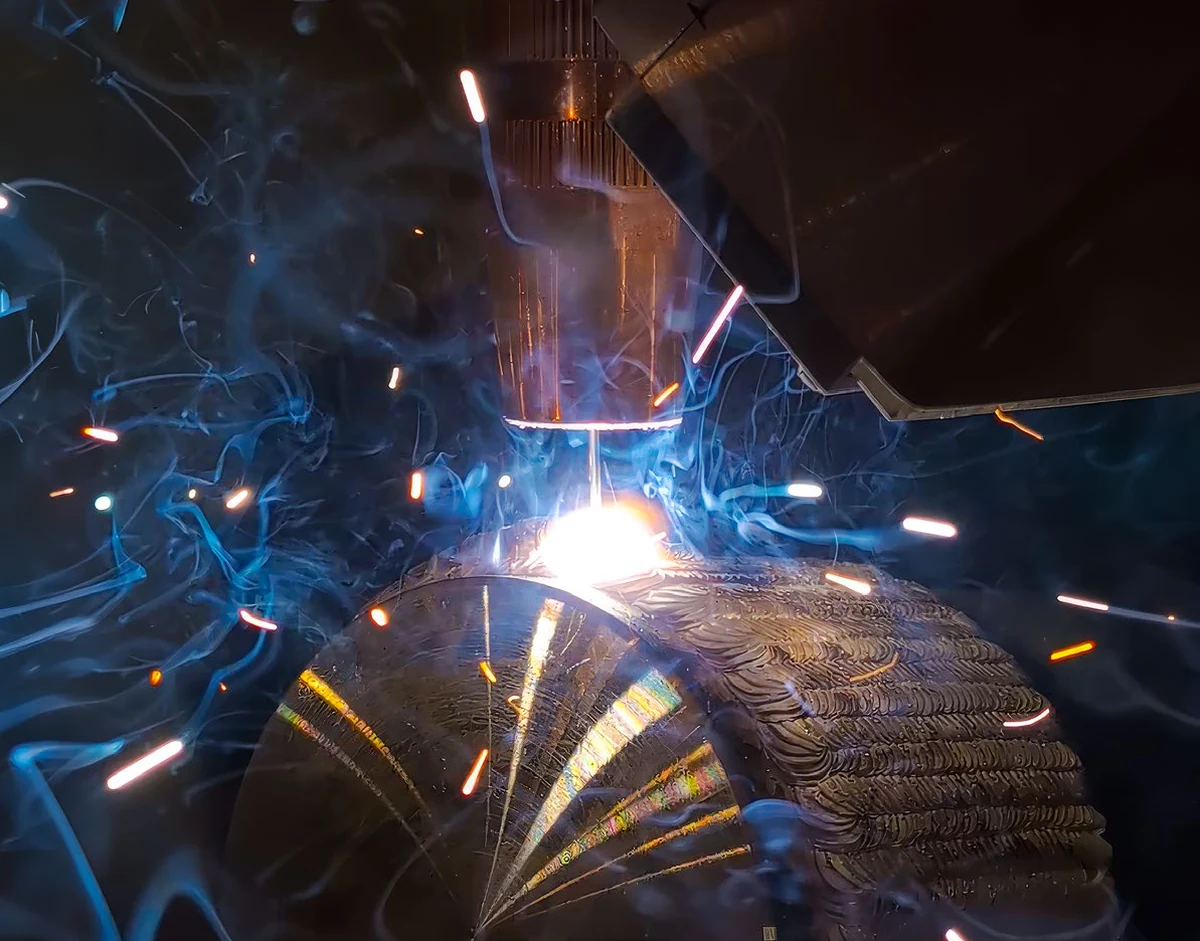
Cold Metal Transfer feeds wire intermittently through a synchronized short-circuiting arc. Lower heat input means less distortion and less spatter than conventional arc deposition, with material integrity preserved through tall builds.
Closed-loop, not open-loop
Pyrometer, layer-geometry sensor and gas-flow monitor feed an automation loop that corrects parameters in-build to hold the thermal window. Thermal camera, profilometer and 3D scanner add on demand.
A cell, not a component
Enclosure, fume extraction, wire storage, surveillance, interlocks, HMI and the Eidos software suite ship as one commissioned system. Loading and unloading run on the internal track — no fork lift inside the cell.
What Is Vipra AM: Turnkey Robotic WAAM for Large Metal Parts
Vipra AM is a wire arc additive manufacturing machine built as a complete production cell rather than a welding head bolted to a robot. The Vipra XP configuration runs CMT (Cold Metal Transfer) deposition on a 9-axis robotic architecture inside a fully enclosed, CE-marked cell; the Vipra XP – Studio configuration is the same deposition platform supplied without the enclosure, monitoring dashboard and sensor suite, for teams that already have a compliant robotic cell and process infrastructure.
The target part is large, structural and metal: near-net-shape components printed in hours instead of cast in weeks. Caracol reports up to 95% lead-time reduction and buy-to-fly ratios up to 90% against conventional casting, forging and machine-from-billet routes.
Deposition & Process Performance
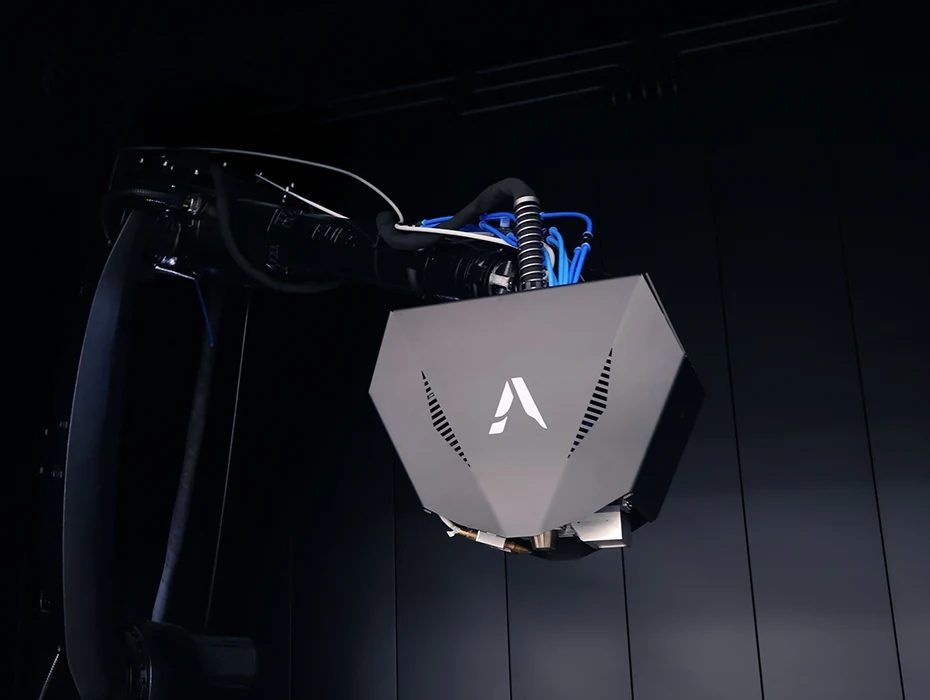
Vipra AM deposits with a CMT power source: the wire is fed intermittently through a synchronized short-circuiting arc, which keeps heat input low, limits distortion on tall builds and produces clean beads with minimal spatter. Deposition rate is measured through a standardized qualification procedure printing SS316; real parts run a little below the ceiling because geometry and thermal management set the pace. Layer height is set by the bead, not by a recoater, so Vipra AM is a near-net-shape process and functional surfaces are CNC finished afterwards. Full machine data is in the Specifications tab.
Vipra XP vs Vipra XP – Studio: What Actually Differs
Both configurations run the same deposition platform. Build volume, deposition rate, layer height, positioner payload, wire diameter and feed speed, shielding gas, power draw and CE marking are identical on both — those sit in the Specifications tab. The table below lists only what changes between them.
| What differs | Vipra XP | Vipra XP – Studio |
|---|---|---|
| Enclosure | Enclosed cell, 13.8 × 16.7 × 14.1 ft / 4.2 × 5.1 × 4.3 m footprint | None — you supply a compliant cell |
| Fume extractor, wire feedstock storage, internal and external LED, surveillance camera, HMI and PC, safety interlock architecture | Included | Not included |
| Process monitoring | Caracol Nexus monitoring dashboard | Not included |
| Pyrometer sensor | Yes | No |
| Profilometer sensor | Optional | No |
| Deposition head dimensions | 16.9 × 10.2 × 11.8 in / 430 × 260 × 300 mm | 14.7 × 9.3 × 3.9 in / 400 × 235 × 100 mm |
| Head weight | 33 lb / 15 kg | 15.5 lb / 7 kg |
Source: Caracol Vipra AM technical data, brochure version VIPRA AM-2606. Configuration is confirmed at quote.
How the system reaches your floor
Vipra AM is configured to order — approx. 16 weeks from purchase order, subject to slot availability.
Application review
Send part geometry, alloy and volumes. Our applications engineers confirm what belongs on WAAM, what belongs on LPBF or machining, and which configuration — XP or XP Studio — matches your infrastructure.
Configure, install, train
Cell layout, sensor package, power and gas supply, extraction and safety architecture are specified against your facility. Installation, commissioning and operator training are included with the system.
Qualify and produce
Caracol’s Material Lab runs investigation, testing, characterization and qualification on each alloy before it enters production. Parameter sets, after-sales support and remote diagnostics follow the machine.
Qualified Material Portfolio
Vipra AM is an open platform, and the qualified wire portfolio is grouped by what the part has to survive. Custom alloys go through the Material Lab qualification route before production use.
- Versatile and cost-effective — ER70S-6 steel, ER100S-G steel, 316L stainless, 17-4 PH stainless, 410 NiMo stainless
- Thermal stability — Invar 36 iron-nickel (low CTE tooling, cryogenic tanks), Inconel 625 nickel superalloy (cryogenic to 900 °C service)
- Lightweight and high strength — Al2319, Al6061, Al7075 aluminium alloys
- Thermal conductivity and harsh environments — CuAl8Ni6 aluminium-nickel-bronze
Multi-material builds are supported: a single component can carry Inconel 625 where corrosion and thermal stress demand it and ER70S steel everywhere else, which keeps superalloy cost confined to the zones that need it.
Process Monitoring & Software
The Eidos Manufacturing suite ships with the platform. Eidos Builder handles slicing and toolpath generation with planar, revolved and radial strategies, robotic simulation before the build, and all production parameters in one workspace. Eidos Nexus correlates sensor data with robot position in real time to produce a live digital twin, giving operators machine-performance visibility, consistent quality tracking and per-build production records. Nexus is being extended with closed-loop process control developed together with Fraunhofer IAPT.
Typical applications
Where a 2.5-metre WAAM envelope and near-net-shape economics pay back.
Production Cases and What They Cost in Hours
Figures below are Caracol’s published production results on Vipra AM. Customer names are withheld; the numbers are the vendor’s.
| Part | Alloy | Size / mass | Print time | Result |
|---|---|---|---|---|
| Sampling valve body (oil & gas) | 316L | 8.7 × 12.2 × 8.7 in / 220 × 310 × 220 mm · 45 lb / 20.5 kg | 7.5 h | File to finished part in under 48 h against approx. 60 days by casting |
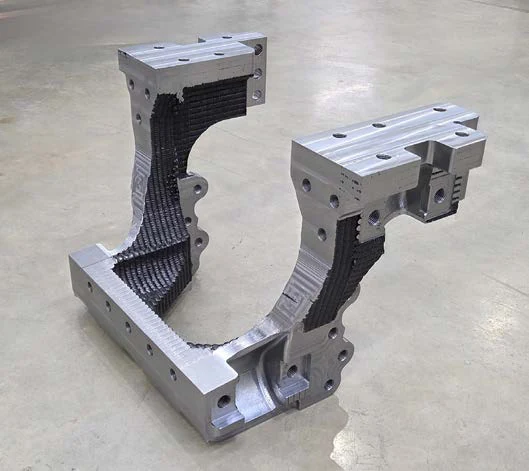
| Suspension and differential carrier | ER100S-G | 21.3 × 19.7 × 19.7 in / 540 × 500 × 500 mm · 243 lb / 110 kg | approx. 60 h | Replaced casting and forging; up to 50% shorter lead time, no tooling cost |
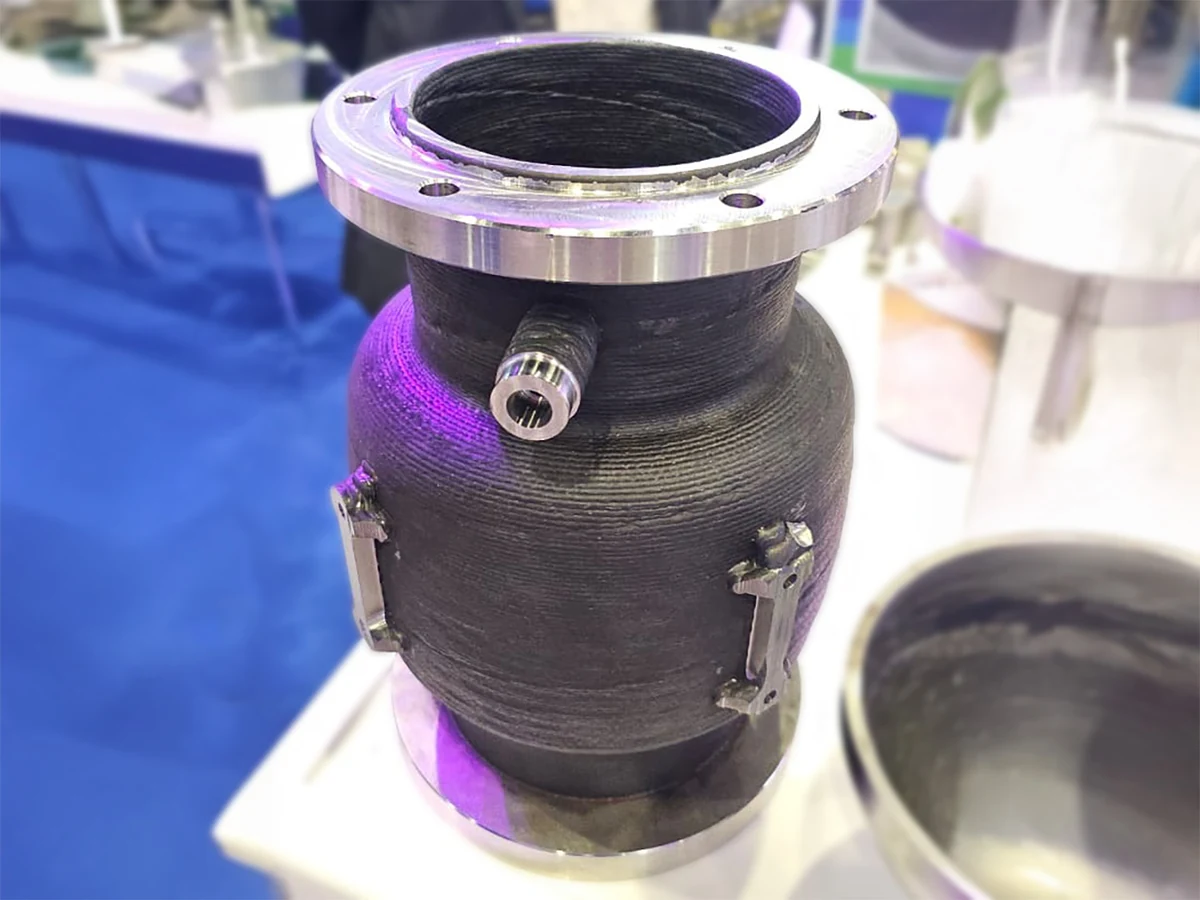
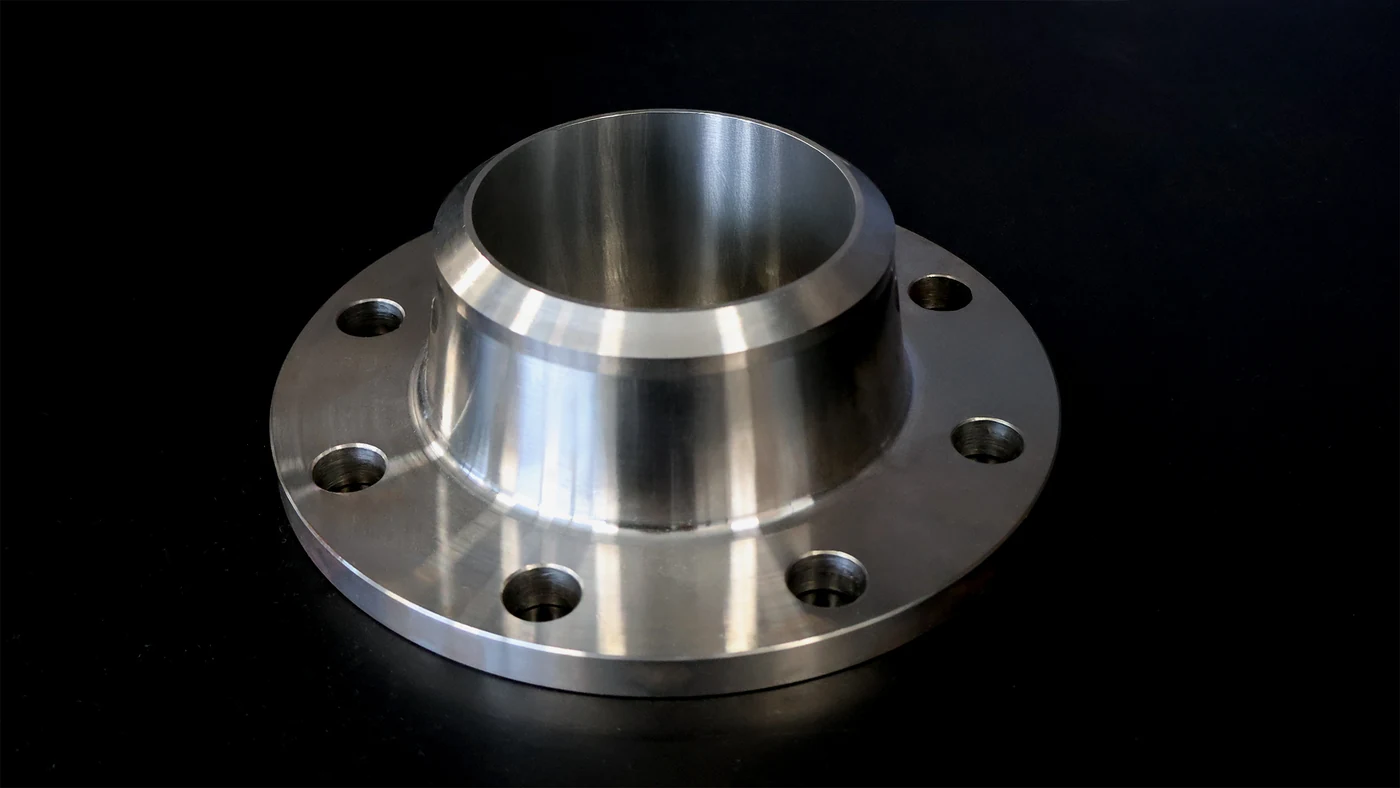
| Multi-material neck flange | Inconel 625 + ER70S | 10.6 × 10.6 × 4.3 in / 270 × 270 × 110 mm · 31 lb / 14 kg | 3 h at 5 kg/h | Superalloy placed only where corrosion and thermal stress demand it |
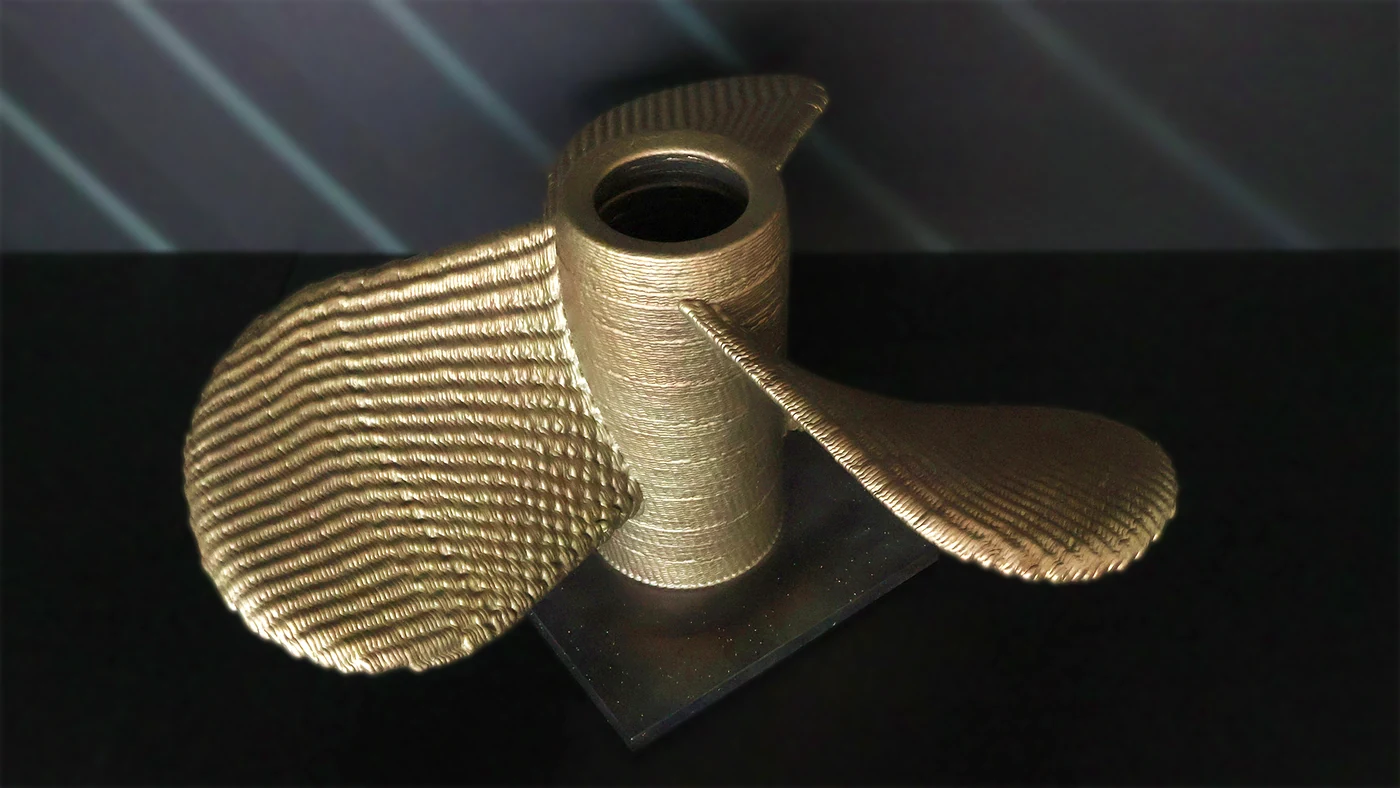
| Marine propeller | CuAl8Ni6 | 29.5 × 29.5 × 10.6 in / 750 × 750 × 270 mm · 99 lb / 45 kg | 10.5 h at 4.6 kg/h | Custom blade geometry, CNC finished, no mold |
| Aerospace spar tool for carbon-fibre lamination | 316L | Full-size tool | 30 h at 3.7 kg/h | Final tool weight cut by 50% against traditional manufacturing |
| Autoclave stringer cure mold | Invar 36 | 22.8 × 23.6 × 9.1 in / 580 × 600 × 230 mm · 154 lb / 70 kg | 14 h at 5 kg/h | Holds tolerance over repeated thermal cycles without warping |
| Pressurized tank for CubeSat carrier satellite | Al2319 | Monolithic, single-piece build | — | No assembly, weight-optimized geometry, lower launch mass |
Not sure WAAM is the right process for your part?
Three platforms we support that solve neighbouring problems.
Alloy development firstInssTek MX-LabView printer →
Same robot, polymer partsCaracol Heron AM HFView printer →
Why Source Vipra AM Through Additive Plus
- US-based sales, application engineering and after-sales coordination — one contact from part review to production
- Installation, commissioning and operator training included with every system
- Metal AM run in-house at AO Metal, so process questions are answered by people who print metal daily
- Material qualification support: the Vipra platform is open, and new wire goes through a defined qualification route
- Leasing and financing available for capital equipment · sub-24h response · 200+ AM systems delivered across 23 countries
| Brand | Caracol |
| Technology | WAAM |
| Printing Materials | Metal Wire |
| Build Volume | approx. 8.2 × 6.6 × 6.6 ft / 2500 × 2000 × 2000 mm |
| Layer thickness | 0.04–0.10 in / 1.0–2.5 mm |
| Material | 17-4 PH, 316L, 410 NiMo, Al2319, Al6061, Al7075, CuAl8Ni6, ER100S-G, ER70S-6, Inconel 625, Invar 36 |
| Configurations | Vipra XP (enclosed turnkey cell), Vipra XP – Studio (open platform, no enclosure) |
| Process technology | Wire Arc Additive Manufacturing (WAAM) |
| Power source | CMT — Cold Metal Transfer |
| Max deposition rate | approx. 13.2 lb/h / 6.0 kg/h (measured printing SS316) |
| Robotic architecture | 9 axes — industrial robot + external manipulator + linear track |
| Positioner payload | 1,650 lb / 750 kg |
| Operational gas | Argon and argon mixtures |
| Wire diameter | 0.03–0.06 in / 0.8–1.6 mm |
| Wire feed speed | 39–590 ipm / 1.0–15.0 m/min |
| Deposition head | Vipra XP: 16.9 × 10.2 × 11.8 in / 430 × 260 × 300 mm, 33 lb / 15 kg, Vipra XP – Studio: 14.7 × 9.3 × 3.9 in / 400 × 235 × 100 mm, 15.5 lb / 7 kg |
| Process monitoring | Caracol Nexus monitoring dashboard (Vipra XP) |
| Sensors | Pyrometer + layer geometry + gas flow (core); thermal welding camera, profilometer, 3D scanner on demand |
| Anti-collision system | Integrated |
| Software | Eidos Manufacturing Suite — Eidos Builder (slicing) + Eidos Nexus (monitoring) |
| Dimensions | Enclosure footprint (Vipra XP): 13.8 × 16.7 × 14.1 ft / 4200 × 5100 × 4300 mm |
| Power Consumption | 35 kW max |
| Max supply current | <63 A |
| Certification | CE marked |
Product videos
Not every part pays back on wire arc. Send a part list with alloys, sizes and annual volumes — our engineers will mark which ones Vipra AM shortens and which are better left on casting, machining or LPBF, and put rough numbers against them.
Complete the workflow
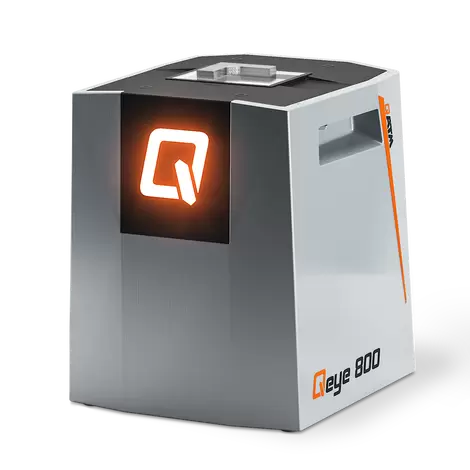
Compact optical analyzer and inverse macroscope for standard-compliant weld-seam inspection and macro analysis — 8.5 MP 4K camera, 35× combined zoom and Intelligent Area Illumination.
- ✔ 8.5 MP 4K camera · 20× optical / 35× combined zoom
- ✔ Field of view 80×60 mm to 2.3×1.7 mm · IAI LED illumination
- ✔ DIN EN ISO 5817 weld reports · Qpix Control2 (shared with hardness testers)
- ✔ Lead time: configured to order — request current timeline
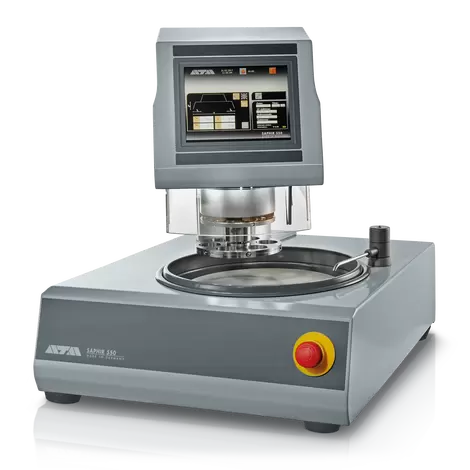
The QATM SAPHIR 550 with the motor-driven RUBIN 520 head is a single-wheel metallographic grinder-polisher — it prepares 1–6 mounted samples at once with single or central force and automatic material-removal measurement, for deformation-free surfaces ready for hardness testing and microscopy.
- ✔ Ø 200–300 mm working wheel · single force 5–100 N or central 20–400 N
- ✔ Automatic material-removal measurement to 0.01 mm · touch-screen stored methods
- ✔ Lead time: 4–8 weeks — configured to order · install & training included

Fully automated macro and universal hardness tester in three force classes — 250, 750 and 3000 kgf — running Vickers, Brinell and Rockwell from 0.3 up to 3000 kgf, with a motorized XY stage, full-table sample-image camera and automatic test-head height for unmanned cycles.
- ✓ Three macro methods on one automated frame, conformant to ISO 6506 / 6507 / 6508
- ✓ Qpix Control2 software, XLED Brinell lenses and DAkkS-certified indenters
- ✓ Install, calibration and operator training included · lead time 6–10 weeks, configured to order
Other products teams run alongside Caracol Vipra AM Robotic WAAM Metal 3D Printer – Turnkey 9-Axis Cell | 8.2×6.6×6.6 ft / 2.5×2.0×2.0 m
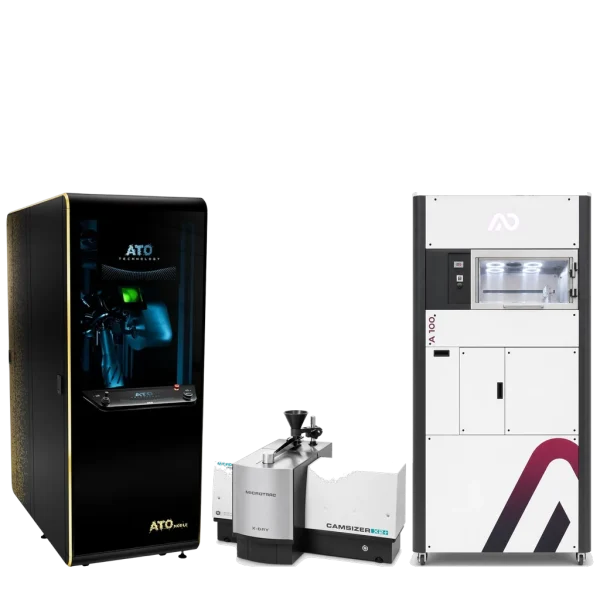
Make your own gold, silver and platinum powder, measure it and print it — the ATO Noble, the Microtrac CAMSIZER X2+ and the AO Metal A100 as one precious-metal cell from one supplier.
- ATO Noble: Au 9 ct to 99.99%, Ag, Pt, Pd, Ir with Zero Loss recovery
- CAMSIZER X2+: size and shape from 0.9 µm to 8 mm in 1–3 minutes
- A100: Ø100 × 100 mm LPBF, optional blue laser for gold and silver
- Installation and training included · 8–14 weeks · 12-month warranty
Made to order
· Lead time 8–14 weeks · installation included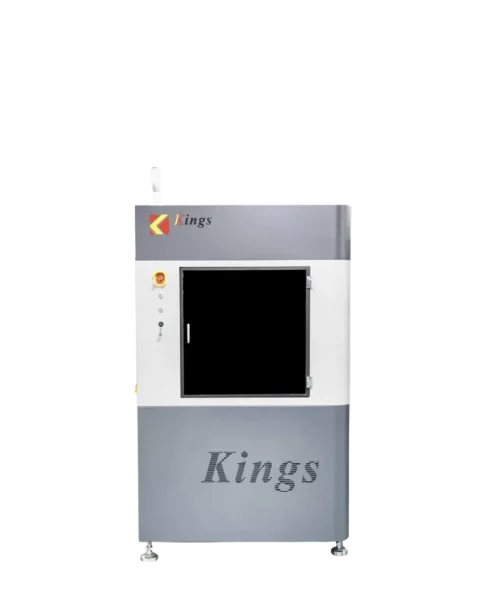
Large-format industrial SLA. Marble frame. Vacuum recoating. Built for shoe molds, automotive patterns, dental models, and architectural forms — without stitching or Z-seam artifacts.
- ✓ 450 × 450 × 350 mm build chamber — fits a standard shoe last or full fascia panel in one run
- ✓ Solid-state 355 nm Nd:YVO4 laser · 0.08–0.8 mm variable beam · 15.0 m/s max scan
- ✓ Full-marble machine frame (720 kg) — thermal stability for ±0.1 mm part accuracy
- ✓ Lead time: 8–10 weeks — on-site install, calibration & operator training included
Made to order
· Ships in 8–10 weeks from order placement. Need it sooner? Talk to a specialist.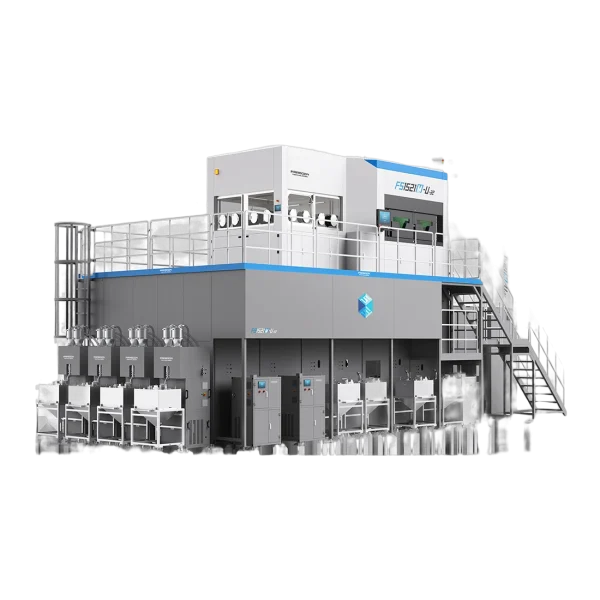
The Farsoon FS1521M is a metre-scale LPBF metal 3D printer for serial production — a 1530 × 1530 mm platform with 16 × 500 W fiber lasers as standard, scaling to as many as 32 lasers and an 1650 mm Z-height (3,862 L) on the FS1521M-U.
- ✓ Metre-scale 1530 × 1530 mm platform · up to 32 × 500 W fiber lasers
- ✓ Titanium, nickel superalloy, stainless and aluminium alloys
- ✓ Lead time: configured to order — US install, training and support
Made to order
· Request a build slot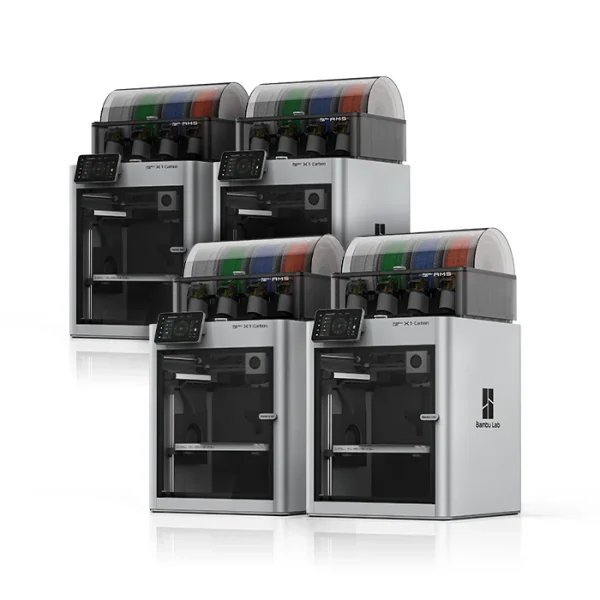
Expert on-site installation and hands-on operator training for your Bambu Lab printer, delivered by Additive Plus. Choose the session length that fits your team.
In stock
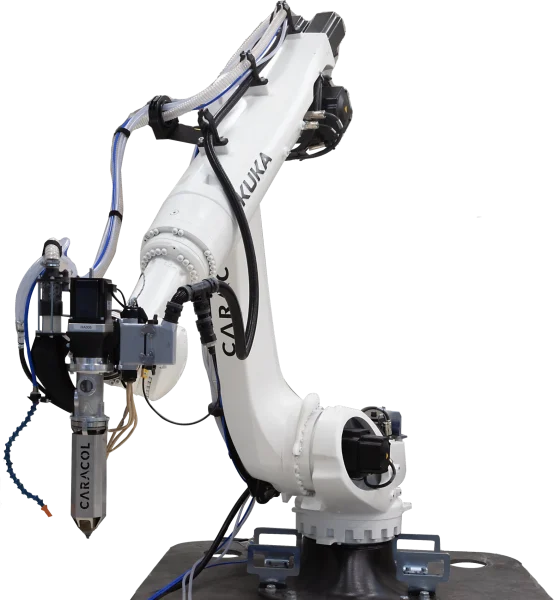
Heron AM configured with the High Flow (HF) extruder head — Caracol's 6-axis robotic large-format additive platform. 30 kg/h through 5–14 mm nozzles at up to 450°C, pellet-fed with optional hybrid CNC milling. EN9100 and ISO 9001 certified. Priced by configuration.
- ✓ 6-axis robotic LFAM — freeform geometries up to 15 m, beyond any gantry
- ✓ High Flow head: 30 kg/h, 5–14 mm, 450°C — highest throughput, largest parts
- ✓ EN9100 + ISO 9001 certified · lead time confirmed at quote
Made to order
· Lead time confirmed per configuration at quote. Talk to a specialist for a schedule.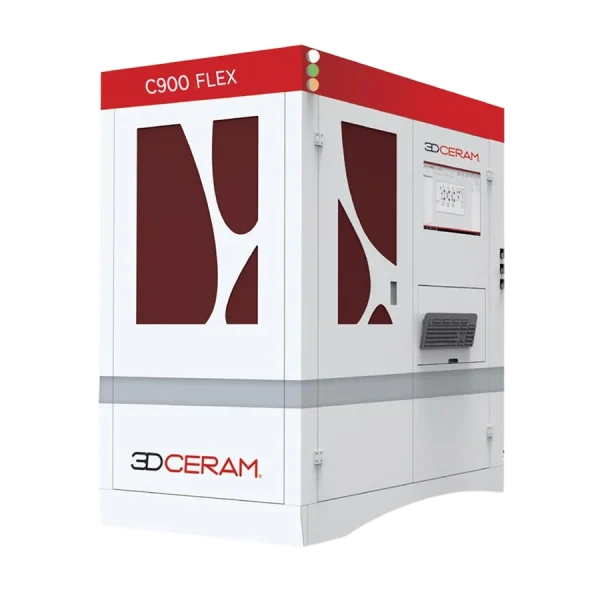
- ✓ 11+ ceramic materials — Al₂O₃, ZrO₂, Si₃N₄, TCP, HA, AlN, cordierite and more
- ✓ Top-down SLA — support-free complex internal geometries in dense ceramic
- ✓ SAM option — 100 mL minimum batch for R&D economy with expensive compositions
Made to order
· Configured to order — contact for lead time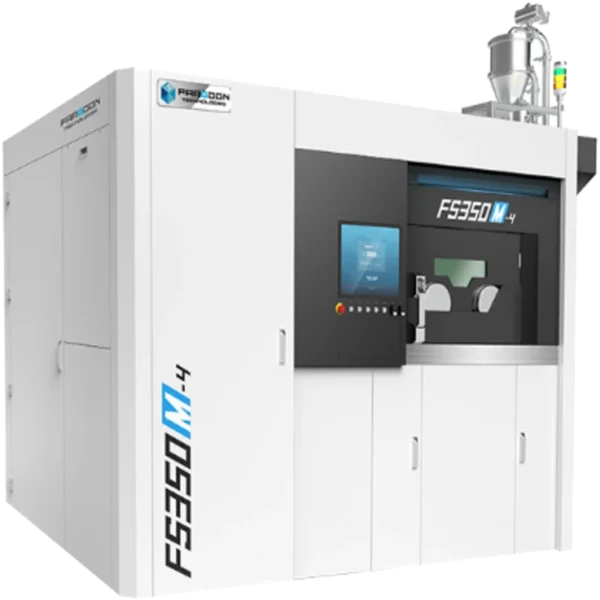
The Farsoon FS350M is a multi-laser LPBF metal 3D printer for medium- to high-volume series production, supplied in 4×500 W, 4×1000 W or 6×500 W laser configurations on the same 17.1×14.1×15.7 in / 433×358×400 mm build cylinder.
- ✓ Three laser configurations — we supply and support all three
- ✓ 17.1×14.1×15.7 in / 433×358×400 mm build on a 65 sq ft / 6 m² class footprint
- ✓ Open platform — full access to process parameters, qualify your own alloy
- ✓ Lead time: built to order — confirmed at quote
Installation and commissioning in the USA: facility and gas planning, start-up and operator training by our US service team.
Made to order
· Built to order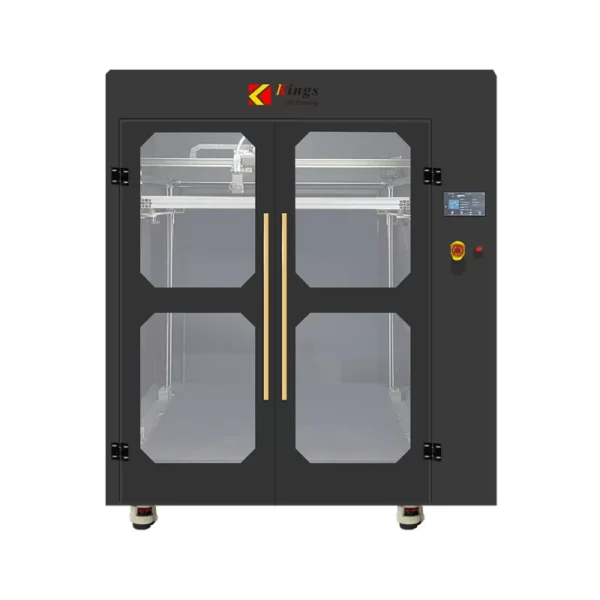
Industrial large-format FFF 3D printer — 39×39×39 in / 1000×1000×1000 mm fully enclosed build, BMG dual-gear direct-drive extruder up to ~320°C, 110°C heated bed. Runs PLA, ABS, PETG, TPU, PA nylon, and PA12-CF carbon-fiber from 1.75 mm filament. Priced by configuration.
- ✓ 39×39×39 in / 1 m³ fully enclosed build — one-piece large prototypes and tooling
- ✓ BMG direct-drive to ~320°C + 110°C heated bed — engineering and carbon-fiber filaments
- ✓ Lead time: 8–10 weeks — configured to order, installed and trained on-site
Made to order
· Ships in 8–10 weeks from order placement. Need it sooner? Talk to a specialist.What our customers say
“Harry and team were professional, effective communicators as we set up the order, then they executed quickly and produced an amazing product for us at a very competitive price. Am looking forward to our next print w Additive Plus!”
“Great 3D printing service and the resin parts look super smooth and clean. Really happy with how everything turned out!”
“Harry was very professional and helped me out with my 3D printing needs and explained what options I have in terms of filaments such as PEEK. Highly recommended.”
“I needed a 3D enclosure printed urgently in a specific time period, they did great!”
Common questions
Don't see yours? Email [email protected] — NDA on request, typical reply within 4 hours.
What is the build volume of the Caracol Vipra AM, and how large a metal part can it produce?
What deposition rate does Vipra AM achieve, and how long does a real part take?
Which alloys are qualified for Vipra AM, and can we run our own wire?
What is the difference between Vipra XP and Vipra XP – Studio?
How does WAAM on Vipra AM compare with laser powder bed fusion for metal parts?
What post-processing do Vipra AM parts need?
What infrastructure does a Vipra AM cell require — power, gas, floor space and extraction?
What is the lead time for a Vipra AM system, and what is included?
Place your order, or talk to an engineer first
Order Caracol Vipra AM Robotic WAAM Metal 3D Printer – Turnkey 9-Axis Cell | 8.2×6.6×6.6 ft / 2.5×2.0×2.0 m direct, or talk to materials engineer