
Made to order
QATM Qness 10 / 60 A+ Micro Hardness Tester – Vickers/Knoop/Brinell/Rockwell | 20 gf–62.5 kgf
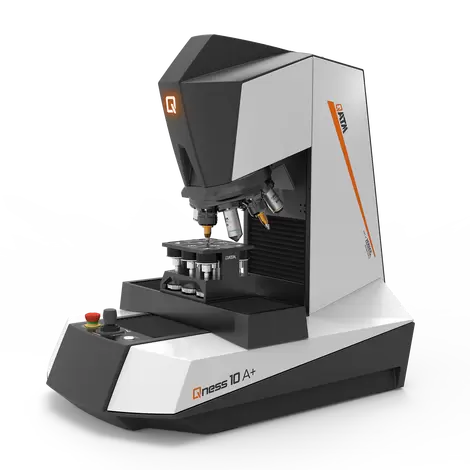
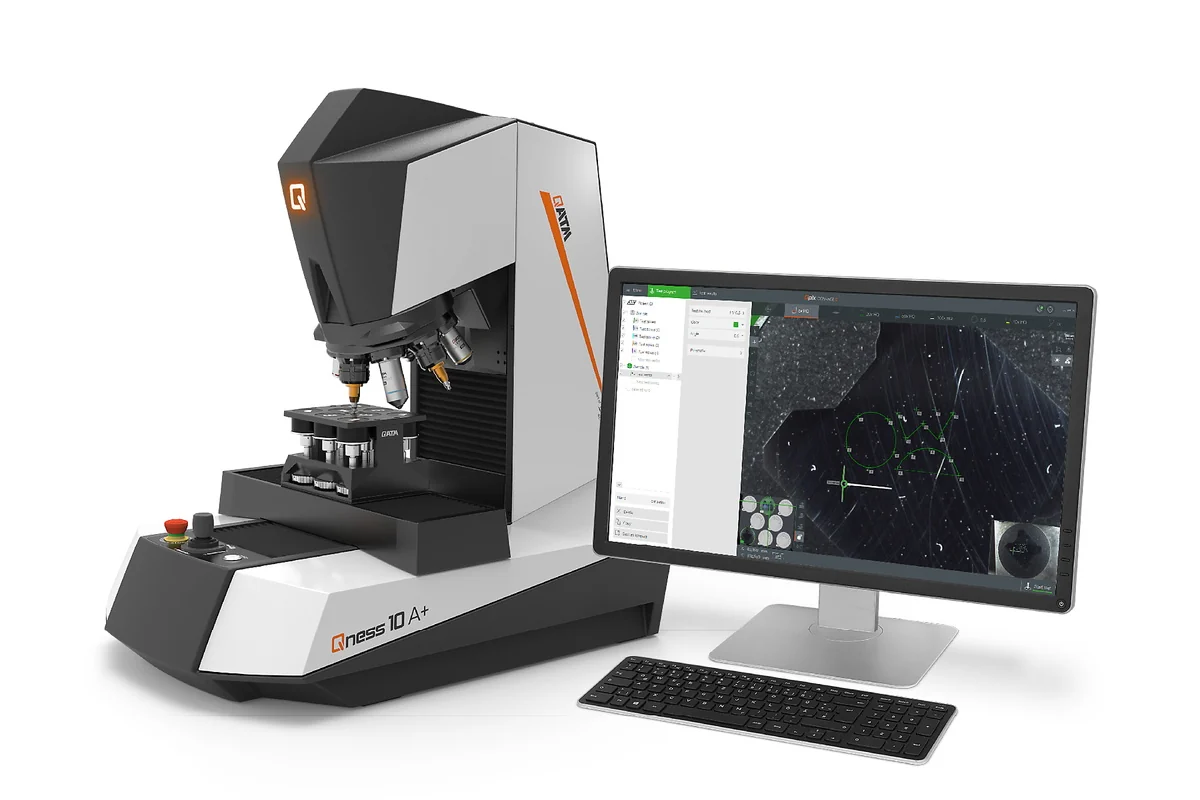
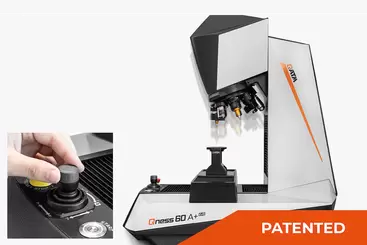
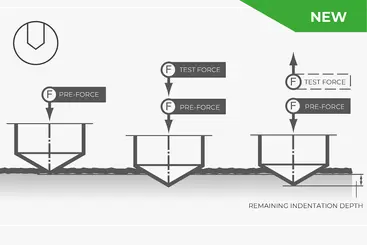
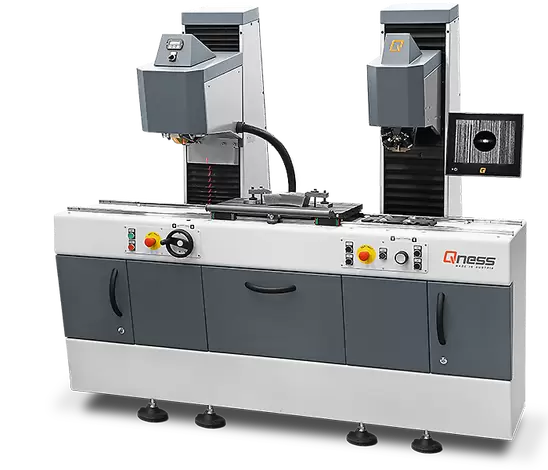
The QATM Qness 10 / 60 A+ is a fully automated micro hardness tester that runs Vickers, Knoop, Brinell and optional Rockwell across two force classes — 20 gf – 10 kgf on the Qness 10 A+ and 0.25 gf – 62.5 kgf on the Qness 60 A+ — pairing electronic force application with microscope-grade optics and incremental-scale positioning on all three axes.
Why metrology labs choose the Qness 10 / 60 A+
Four hardness methods, microscope-grade imaging and certifiable positioning on one automated frame.
Wide force range, two classes
From 20 gf on the Qness 10 A+ down to 0.25 gf and up to 62.5 kgf on the Qness 60 A+ under electronic force application — micro Vickers through low-macro Brinell on one frame, with no test weights to hang or swap.
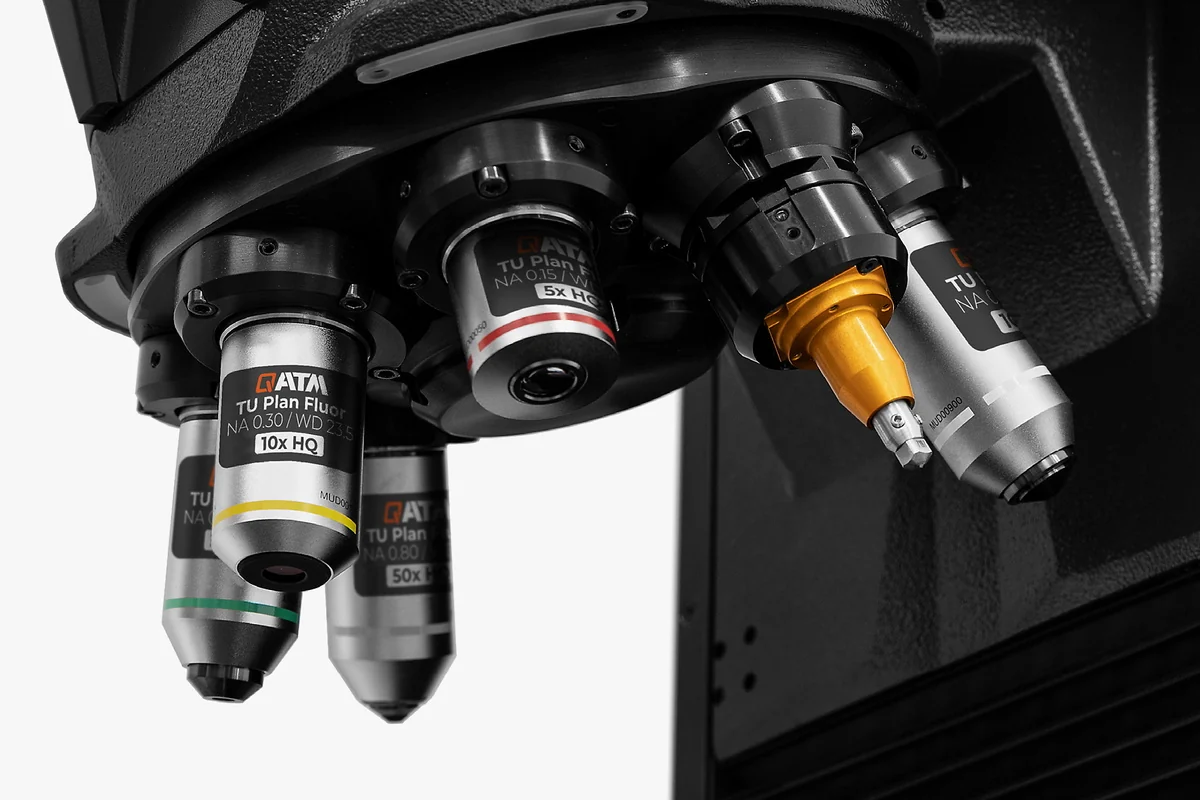
Four methods, one turret
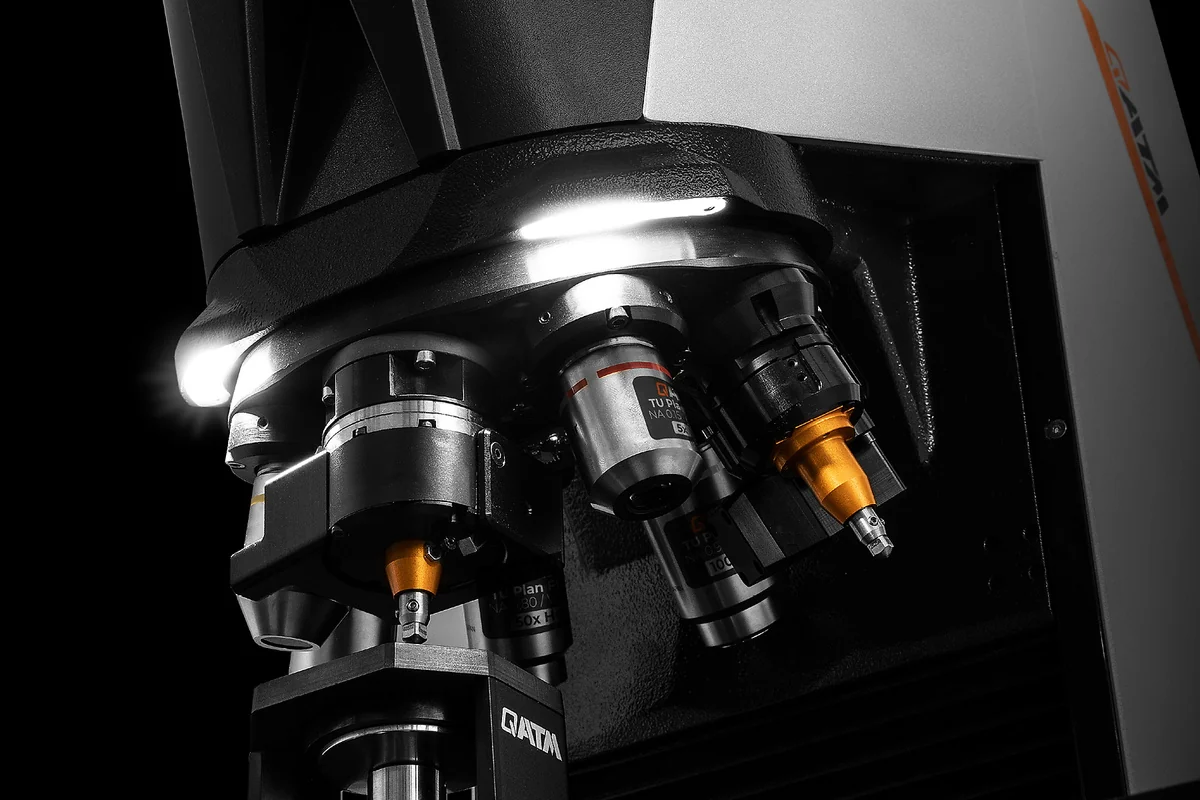
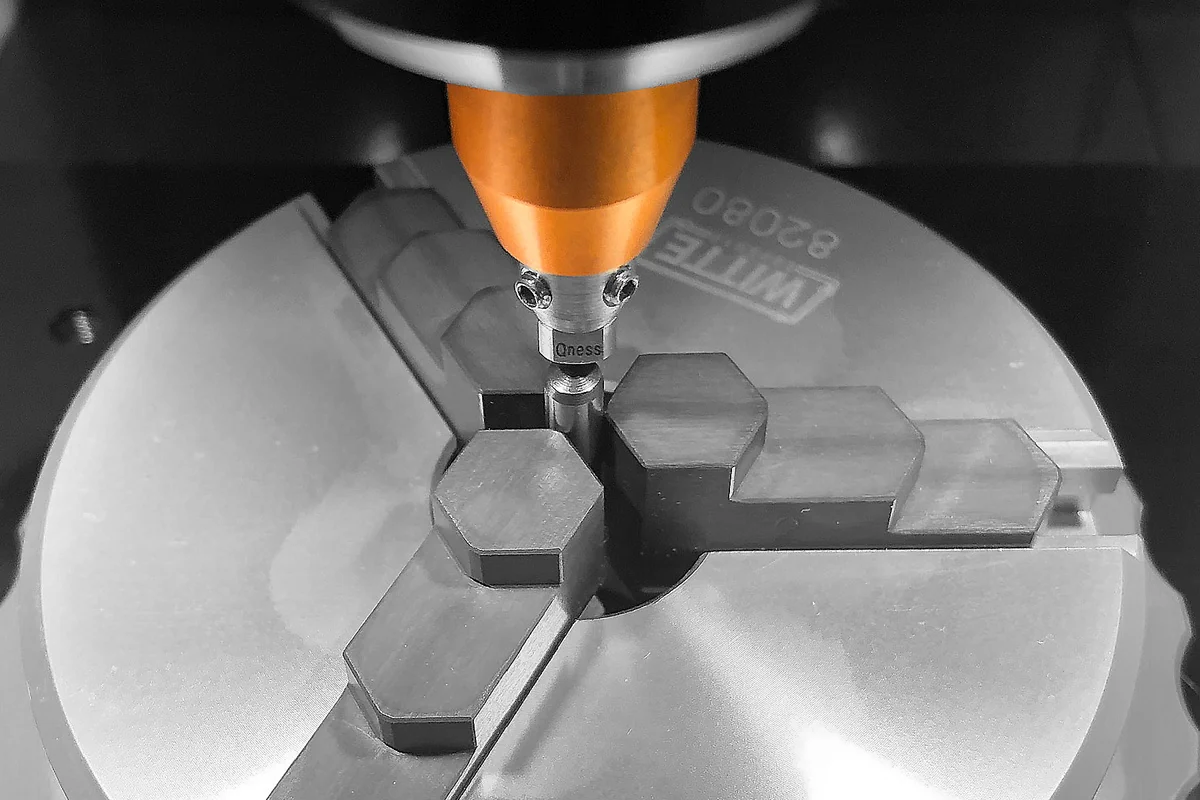
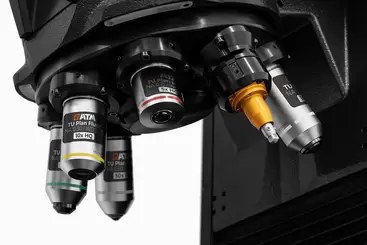
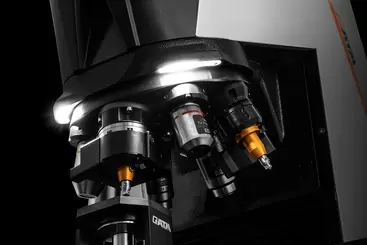
Vickers, Knoop, Brinell and optional Rockwell from an 8-position motorized turret (up to 3 test modules + 7 lenses). Modular test heads plug in to retrofit Brinell, Knoop or Rockwell after delivery.
Positioning you can certify
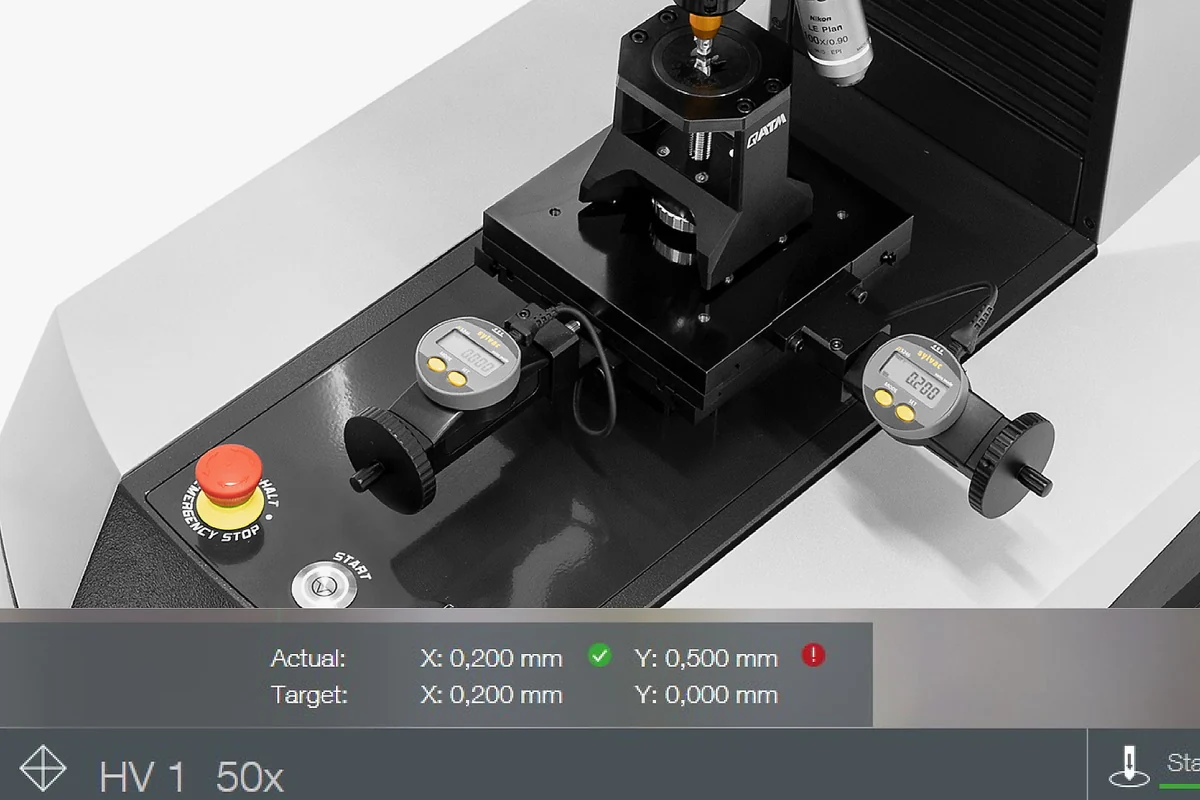
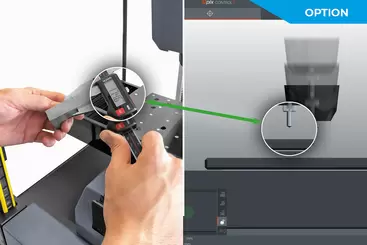
Incremental glass scales on all three axes: table position to ±2 µm, axes and turret to 4 µm. Two Z-axes split fast 30 mm/s approach from high-resolution focusing.
Microscope-grade optics
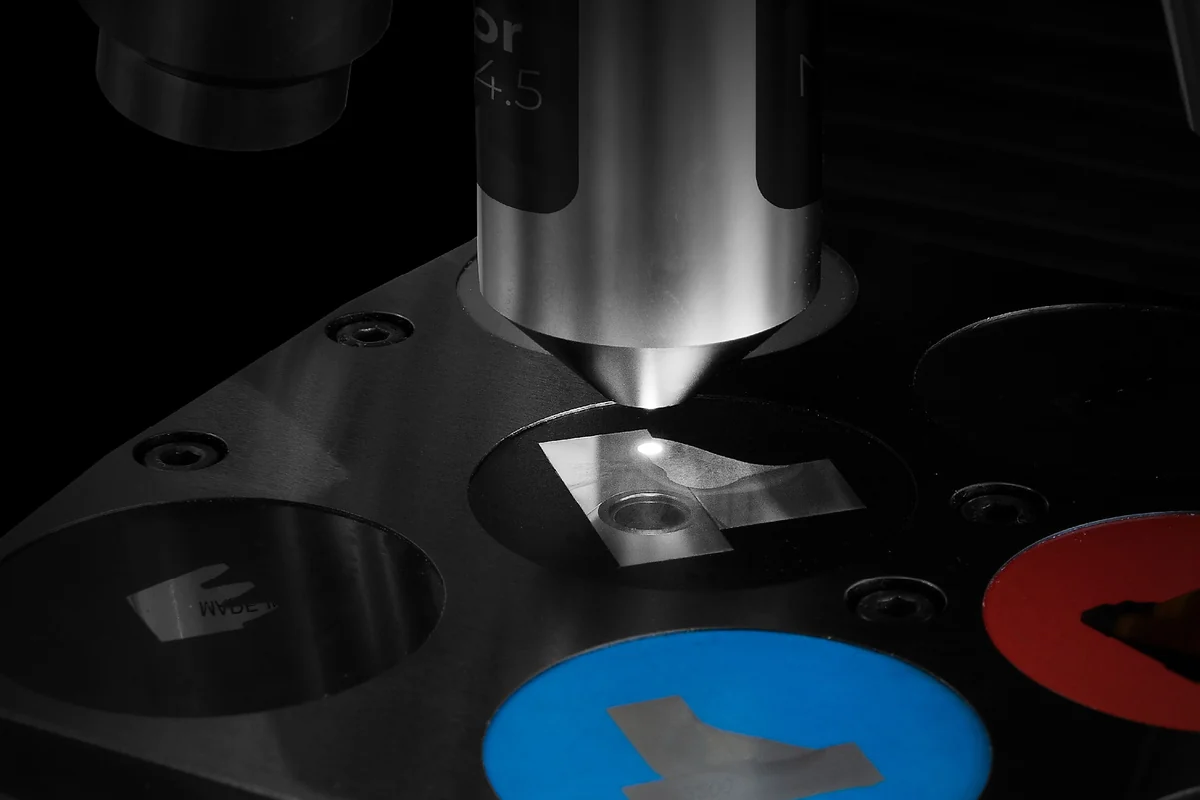
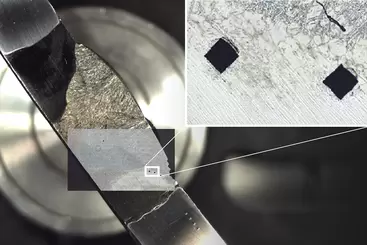
In-house XLED lenses (2×–100×) with Koehler illumination and a motorized aperture. Meets the ISO 6507 optical “test system” definition; HRI stitches full weld-seam overviews.
How Additive Plus delivers it
Configured to your standards, installed and calibrated on-site, supported by engineers who run metallography daily.
Configure to your lab
We spec the turret load-out — Vickers, Knoop, Brinell and Rockwell modules, lens set, sample holders and Qpix Control2 license — around the parts and standards you test.
Install & train on-site
Factory-trained engineers install the system, verify calibration against certified reference blocks per ISO 6507 / ASTM E384, and train your operators on Qpix Control2.
Validated & supported
You leave with a tester that reproduces reference blocks in spec, DAkkS-traceable indenters in the box, and method support with a sub-24h engineer response.
Where the Qness 10 / 60 A+ earns its place
Automated hardness and imaging for QC labs, metallography and AM materials work.
Specifications
The Qness 10 / 60 A+ combines a 20 gf – 62.5 kgf test force span across two classes, an 8-position motorized turret, incremental-scale positioning (±2 µm table), a 5 Mpixel USB 3.0 camera and Qpix Control2 software. See the full specification table in the Specifications tab below for lens options, travel paths, table sizes, interfaces and power supply.
Not sure the Qness 10 / 60 A+ is the right frame?
Compare it with the other Qness testers we supply.
Why source the Qness 10 / 60 A+ through Additive Plus
- Standards-first setup — calibrated to ISO 6507 / ISO 6506 / ISO 6508 and ASTM E384 / E18 / E10, with DAkkS-traceable indenters.
- Factory-trained install, calibration and operator training included with every system.
- Method development and application support from a team that runs metallography and AM materials work in-house.
- Tailored service and calibration plans; sub-24h engineer response across 23 countries.
| Brand | QATM |
| Test force range | Qness 10 A+: 20 gf - 10 kgf (0.196 - 98.07 N) Qness 60 A+: 0.25 gf - 62.5 kgf (0.00245 - 612.92 N) |
| Test method | Vickers, Knoop, Brinell, Rockwell (option) |
| Test sequence | Fully automated / electronic force application |
| Z-axis | Dynamic, automated (CAS-Technic) |
| Z-axis travelling distance | 150 mm (5.91“); Option: 260 mm (10,2“) |
| Throat depth | 170 mm (6.69“) |
| Tool positions | 8-fold motorized tool changer max. 3 hardness testing modules, max. 7 lenses |
| Camera system | 5 Mpixel - CMOS color, USB3.0 |
| Optical system | Upright microscope with Koehler lighting |
| Aperture diaphragm | motorized |
| Lenses | XLED 2x, 2.5x, 5x, 10x, 20x, 50x, 100x |
| Lens types | Standard (Achromat) and High Quality (Semi-apochromat) for hardness testing and microscopy XLED for optimised Brinell hardness testing |
| Field of view (acc. to equipment) | 0.074x0.055 mm (100x) to 2.80x2.10 mm (XLED 2) |
| Test anvil / XY cross slide | Automatic cross slide |
| Table size | 150 x 120 mm (5.91 x 4.72“); Option 300 x 120 mm (11.8 x 4.72“) |
| Traverse path at cross slide | X 150, Y 150 mm (5.91 x 5.91“); Option: X 300 x Y 150 mm (11.8 x 5.91“) |
| Control elements | Emergency stop, Start button, Joystick Z-axis |
| Software | Qpix Control2 "M" |
| Max. workpiece weight | 50 kg (110 lbs) |
| Weight of basic device | 60 kg (132.3 lbs) |
| Included basic equipment | Indenter Vickers ASTM + DAkkS; Lens 5x, 20x, 50x |
| Interfaces | 1 x USB 3.0 |
| Power supply | 100 – 240 V ~1/N/PE, 45-65 Hz |
Product videos
Other products teams run alongside QATM Qness 10 / 60 A+ Micro Hardness Tester – Vickers/Knoop/Brinell/Rockwell | 20 gf–62.5 kgf
An automated QATM hardness testing plant with integrated test-point preparation — a milling unit machines a clean test surface, then the QNESS 750 universal unit runs a standardized Vickers, Brinell or Rockwell test in one cycle.
- ✓ Integrated milling prep — machines scaled/forged surfaces to a defined test point
- ✓ Universal testing (Vickers / Brinell / Rockwell) up to 750 kgf
- ✓ Prepare, indent and record automatically with QPIX data management
- ✓ Lead time: 4–8 months — engineered and built to order
Made to order
· Lead time: 4–8 months — engineered and built to order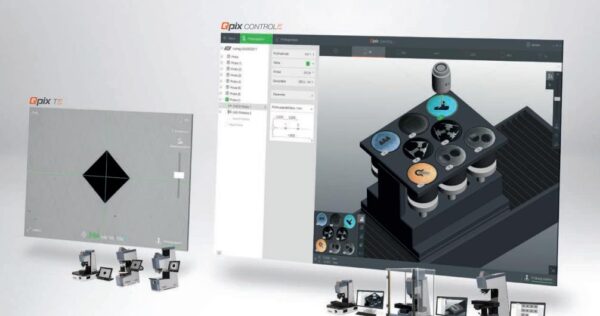
Advanced PC software for QATM Qness hardness testers — machine control, automated indentation evaluation and audit-ready reporting, with CHD/SHD/NHD case-depth analysis, weld and HAZ mapping, edge recognition and panorama imaging.
- ✓ Automated case-hardening-depth and weld evaluation, standard-referenced (ISO 6507 / 6506 / 6508)
- ✓ Edge recognition, template and test-block management, Qness Calibration Manager
- ✓ Licensed, installed and set up with your Qness system — configured to order
Made to order
· Licensed with your Qness system — request configuration and lead time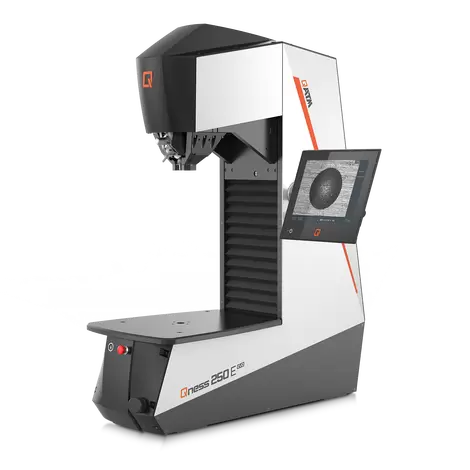
Economical universal macro hardness tester — Vickers, Brinell, Rockwell and Knoop across three force classes (250, 750 and 3000 kgf), from 0.3 up to 3000 kgf under electronic force control, with motorized dynamic height adjustment and XLED optics.
- ✓ Four macro methods on one universal frame, conformant to ISO 6506 / 6507 / 6508
- ✓ Qpix T2 software (Qpix Control2 M optional), XLED Brinell lenses and DAkkS-certified indenters
- ✓ Install, calibration and operator training included · lead time 6–10 weeks, configured to order
Made to order
· Lead time: 6–10 weeks — configured to order
The connectivity platform that links your Verder Scientific lab instruments — ELTRA elemental analyzers, QATM hardness testers and Microtrac particle analyzers — to one app for remote monitoring, backup, software updates and diagnostics.
- ✓ Real-time monitoring and control from any mobile device or PC, with event notifications
- ✓ Central backup and restore, remote service diagnostics and one-click software updates
- ✓ Security-first — you decide what data each instrument shares; open XML, plug-ins and cloud
Made to order
· Configured with your instruments — request setup and lead time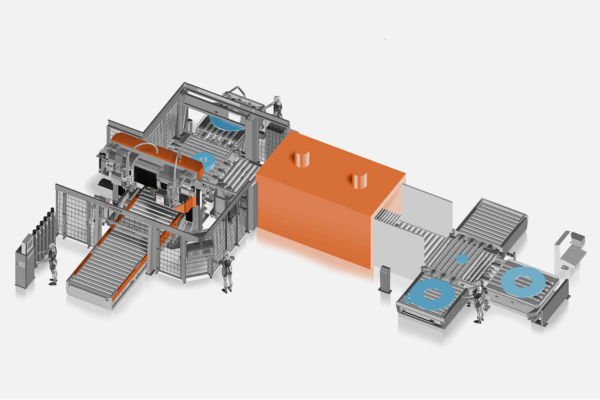
The QATM hardness testing portal is a family of portal- and gantry-based automated hardness testing systems — fixed or moveable — bringing Brinell, Vickers and Rockwell testing to large, heavy parts such as rings, wheels, tyres and pipes, with automatic test-point preparation.
- ✓ Fixed or moveable portal — the tester travels to the part
- ✓ Rings Ø 600–1400 mm, workpieces up to 3 × 3 × 12 m
- ✓ Automatic test-point prep, portal feeding, optional mix-up test & marking
- ✓ Lead time: 4–8 months — engineered and built to order
Made to order
· Lead time: 4–8 months — engineered and built to order
Fully automated macro and universal hardness tester in three force classes — 250, 750 and 3000 kgf — running Vickers, Brinell and Rockwell from 0.3 up to 3000 kgf, with a motorized XY stage, full-table sample-image camera and automatic test-head height for unmanned cycles.
- ✓ Three macro methods on one automated frame, conformant to ISO 6506 / 6507 / 6508
- ✓ Qpix Control2 software, XLED Brinell lenses and DAkkS-certified indenters
- ✓ Install, calibration and operator training included · lead time 6–10 weeks, configured to order
Made to order
· Lead time: 6–10 weeks — configured to order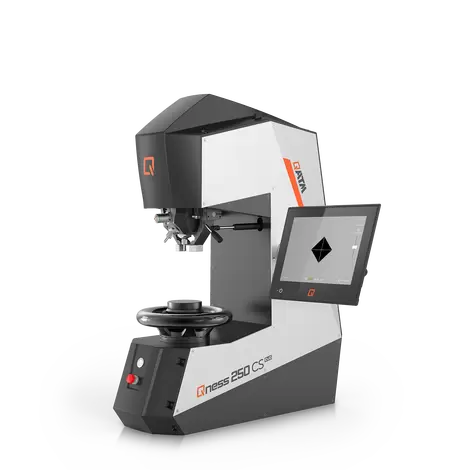
C-shaped-frame macro and universal hardness tester in three force classes — 250, 750 and 3000 kgf — running Vickers, Brinell, Knoop and Rockwell from 0.3 up to 3000 kgf with fully automatic electronic force control and short cycle times.
- ✓ Four macro methods on one C-frame, conformant to ISO 6506 / 6507 / 6508
- ✓ Qpix T2 software (Qpix Control2 M optional), XLED Brinell lenses and DAkkS-certified indenters
- ✓ Install, calibration and operator training included · lead time 6–10 weeks, configured to order
Made to order
· Lead time: 6–10 weeks — configured to order
Automatic C-frame universal hardness tester — Rockwell, Vickers and Brinell from 1–250 kgf, with a motorized three-axis stage, direct HEIDENHAIN depth gauge and 5-megapixel sample-image camera. Configured, installed and calibrated by Additive Plus.
Made to order
· Lead time: 6–10 weeks — configured to orderCommon questions
Don't see yours? Email [email protected] — NDA standard, typical reply within 4 hours.
Which hardness methods and scales does the Qness 10 / 60 A+ run?
How is the Qness 10 / 60 A+ calibrated and traceable?
What is the difference between the Qness 10 and Qness 60 force classes?
How does the A+ configuration compare with the Qness 10 / 60 M?
Can the Qness 10 / 60 A+ automate case-hardening depth and weld-seam mapping?
What is the lead time, and is installation included?
Is the Qness 10 / 60 A+ suitable for additively manufactured and powder-metallurgy samples?
Place your order, or talk to an engineer first
Order QATM Qness 10 / 60 A+ Micro Hardness Tester – Vickers/Knoop/Brinell/Rockwell | 20 gf–62.5 kgf direct, or talk to materials engineer