
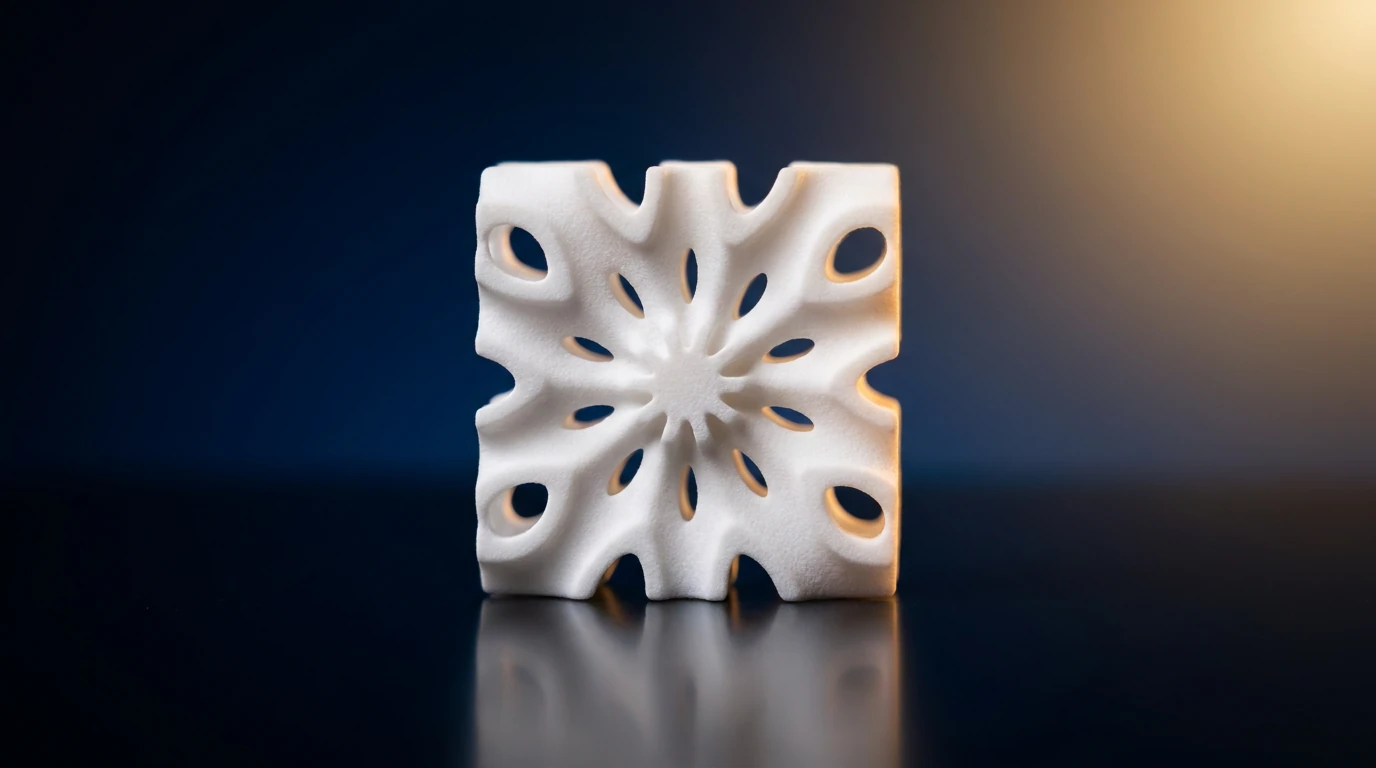
Ceramic 3D printing builds dense technical ceramics — alumina, zirconia, silicon carbide — layer by layer, in geometries no green-machining or pressing can reach. It is how a satellite antenna, a jet-engine core, or a dental crown gets a shape that is impossible to mould and too brittle to machine after firing. The parts come out as full technical ceramics: hard, heat-resistant, electrically insulating, chemically inert. This guide covers the ceramic 3D printing materials, how the stereolithography process works, and where printed ceramics earn their place.
How ceramic 3D printing works
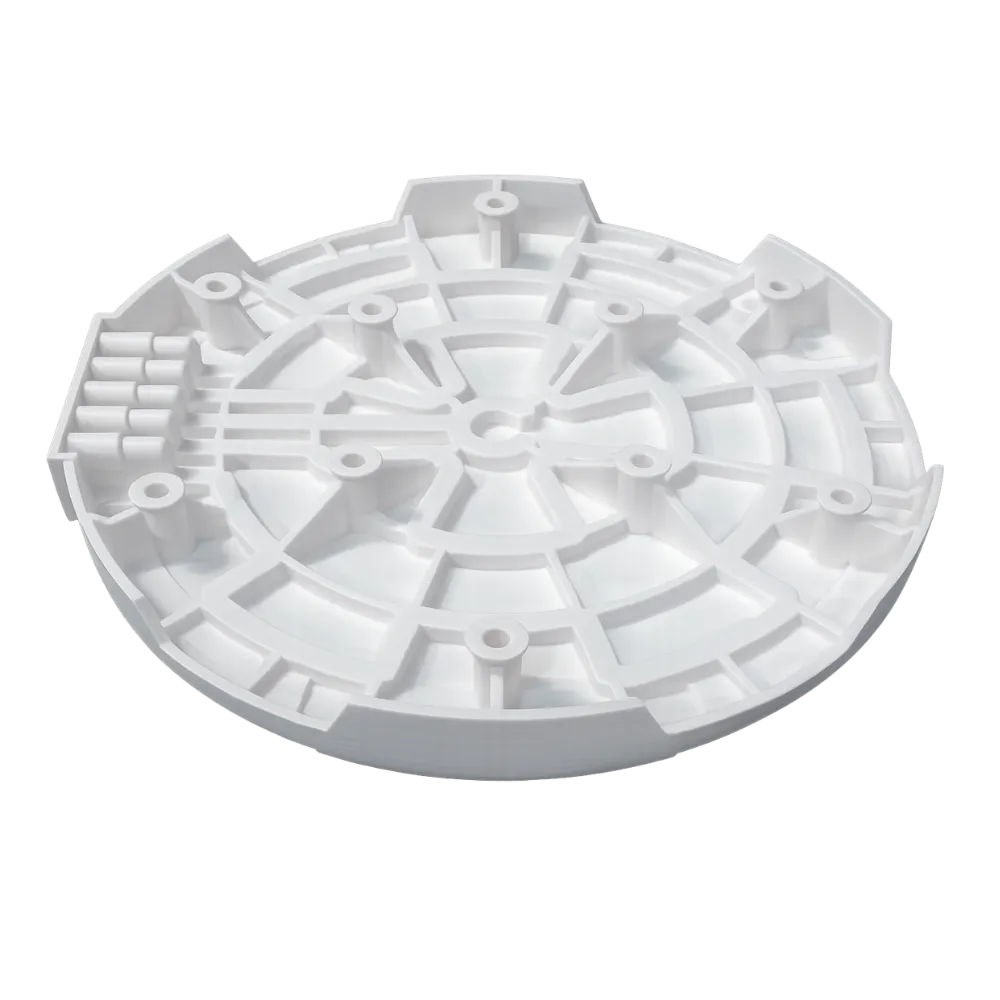
The dominant process is ceramic stereolithography. A UV-curable slurry, heavily loaded with fine ceramic powder, is cured layer by layer by a laser or projector to form a green part — the shape, held together by a polymer binder. That green part is not yet ceramic. It goes through two thermal steps:
- Debinding — a slow, controlled burn-out that removes the polymer binder without cracking the fragile part.
- Sintering — a high-temperature firing that fuses the ceramic particles into a dense solid, typically with 15–25% linear shrinkage.
Ceramic 3D printing materials
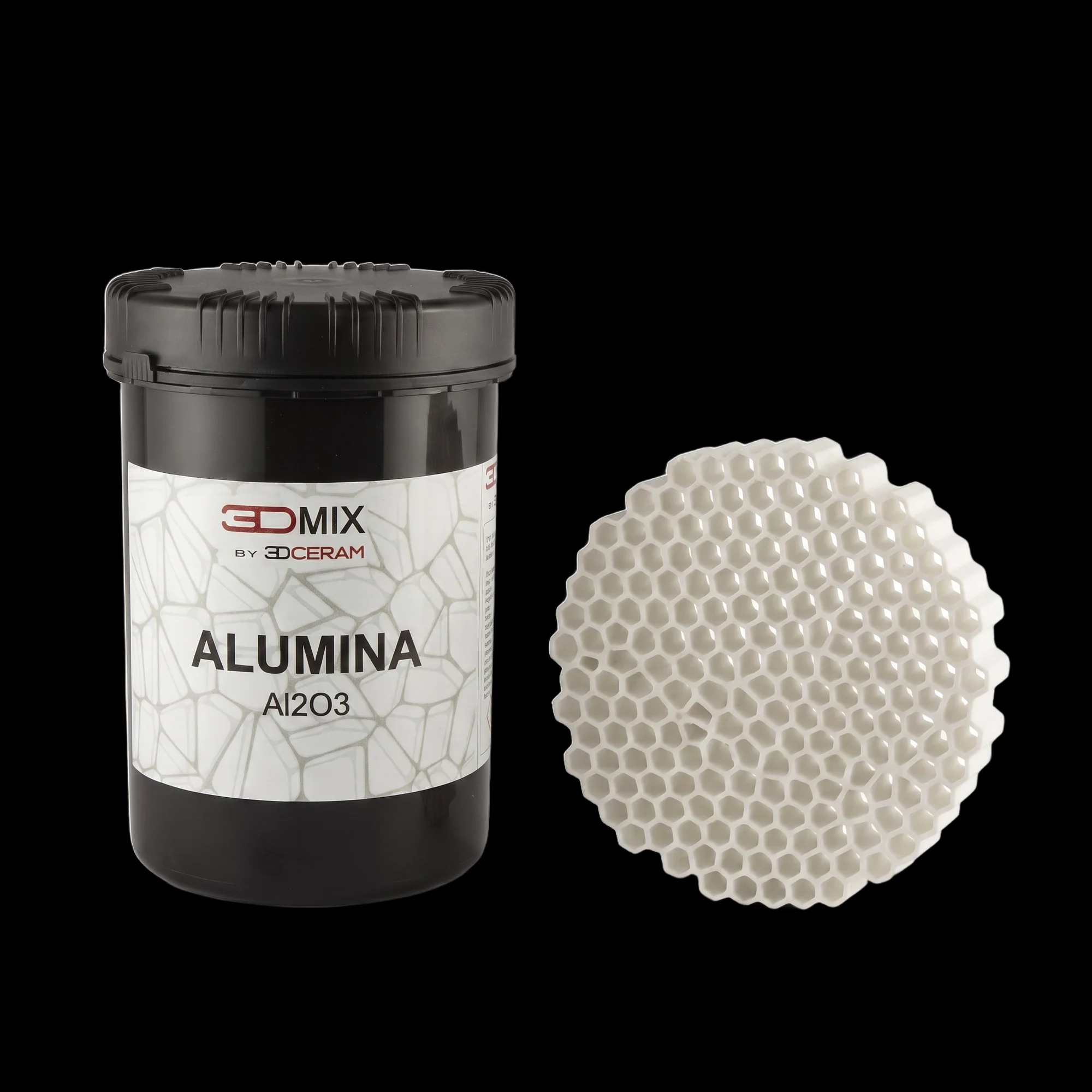
The ceramic decides everything downstream. A capable line stocks the technical grades as printable pastes:
| Ceramic | Why it is used | Typical parts |
|---|---|---|
| Alumina (Al₂O₃) | Hard, wear-resistant, electrically insulating | Wear parts, electronic substrates, medical tools |
| Zirconia (3Y / 8Y) | 3Y: very high toughness; 8Y: ionic conductivity | Dental, medical, fuel cells, cutting tools |
| Alumina-toughened zirconia (ATZ) | Balances hardness and toughness | Structural and medical components |
| Silicon carbide (SiC) | Extreme hardness and thermal stability | Optics, high-temperature and semiconductor parts |
| Aluminium nitride (AlN) | High thermal conductivity, electrically insulating | Power-electronics heat spreaders |
| Cordierite | Very low thermal expansion | Thermal-shock and kiln components |
For bone-contact work, bioactive grades such as hydroxyapatite and tricalcium phosphate print scaffolds the body can integrate.
Why print ceramics instead of metal or polymer
Ceramics fill roles nothing else can. They hold their strength and shape past 1,000 °C where metals soften; they resist wear and chemical attack that would destroy a polymer; and they are electrically insulating yet, in grades like AlN, thermally conductive — a combination metals cannot offer. The catch has always been shaping them: ceramics are too hard and brittle to machine once fired, and complex internal features are impossible to press. Additive removes that barrier by building the shape before firing, when the part is still workable.
Where printed ceramics go to work

- Aerospace and space — investment-casting cores for turbine blades, RF radomes, and dimensionally stable mirror supports and telescope structures.
- Medical and dental — zirconia crowns and frameworks, surgical tools, and bioceramic bone scaffolds.
- Electronics and energy — AlN heat spreaders, insulating substrates, fuel-cell parts and furnace elements.
- Optics and defense — laser and optical components, and radomes that must pass radiofrequency cleanly.
The hard parts
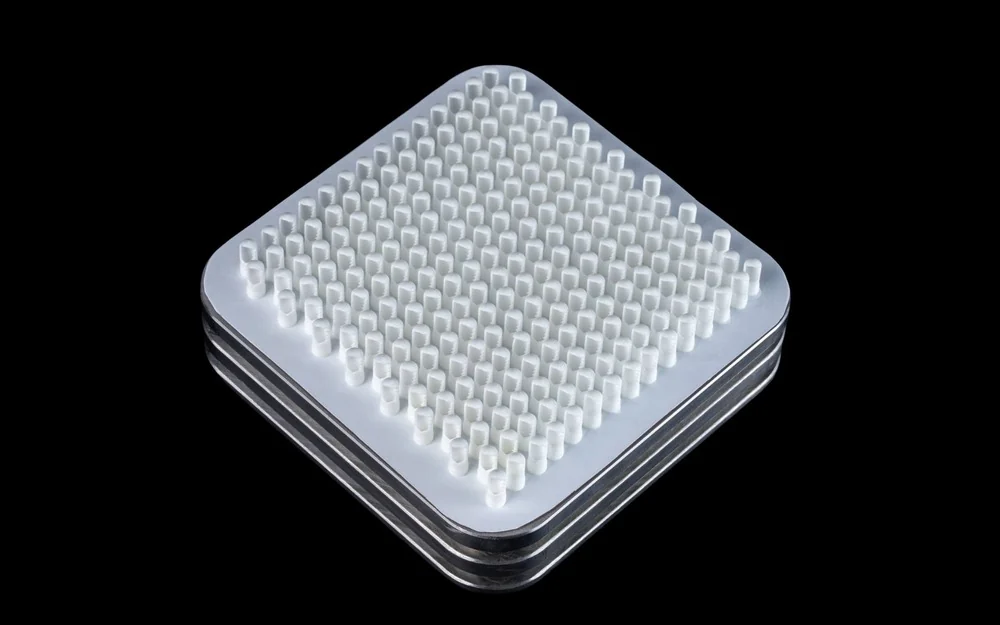
Ceramic additive is unforgiving in three places, and a good process plans for all of them:
- Debinding cracks — burn the binder out too fast and the green part fractures. The cycle is slow and material-specific.
- Sintering distortion — uneven shrinkage warps the part. Uniform wall thickness and validated shrinkage factors keep it true.
- Design limits — very thick sections and trapped volumes are hard to debind cleanly; ceramics reward even walls and vented internal features.
The printers
Ceramic systems scale from a lab bench to a serial line. Entry machines suit R&D and small runs; larger platforms run production volumes with automated handling. Browse the range in our ceramic 3D printers category, or see the full 3DCeram lineup from lab bench to serial production.
Getting started with ceramic 3D printing
Start from the ceramic, not the geometry: the grade sets the properties, the firing cycle and half the design rules. Then design for even walls and predictable shrinkage, and plan debinding and sintering into the schedule from the start. Tell us the part, the ceramic and the environment it has to survive, and we will point you to the right material and printer.
Related guides: Aerospace AM cases · Metal 3D printing service
Related reading: How ceramic 3D printing builds the impossible · Ceramic parts for cars, space and beyond · Ceramic 3D printers · Silicon carbide 3D printing · 3DCeram
Frequently asked questions
What is ceramic 3D printing?
Building dense technical ceramics such as alumina, zirconia and silicon carbide layer by layer, usually by ceramic stereolithography: a ceramic-loaded slurry is cured into a green part, then debinded and sintered into a full technical ceramic.
What ceramics can be 3D printed?
Alumina, zirconia (3Y and 8Y), alumina-toughened zirconia, silicon carbide, aluminium nitride and cordierite, plus bioceramics such as hydroxyapatite and tricalcium phosphate.
How strong are 3D-printed ceramics?
After sintering they are full-density technical ceramics with the hardness, heat and wear resistance of conventionally formed ceramics. The process shapes the part; it does not weaken the material.
Why 3D print ceramics instead of machining them?
Fired ceramics are too hard and brittle to machine, and complex internal shapes cannot be pressed. Printing builds the geometry in the workable green state, before firing.
Have a question or a project? Let’s talk.
Tell us what you need — a real applications engineer replies within 24 hours. NDA on request, no sales script.