
In stock
- Solids loading + debind/sinter guidance in every order
- Mutual NDA before any file or spec review
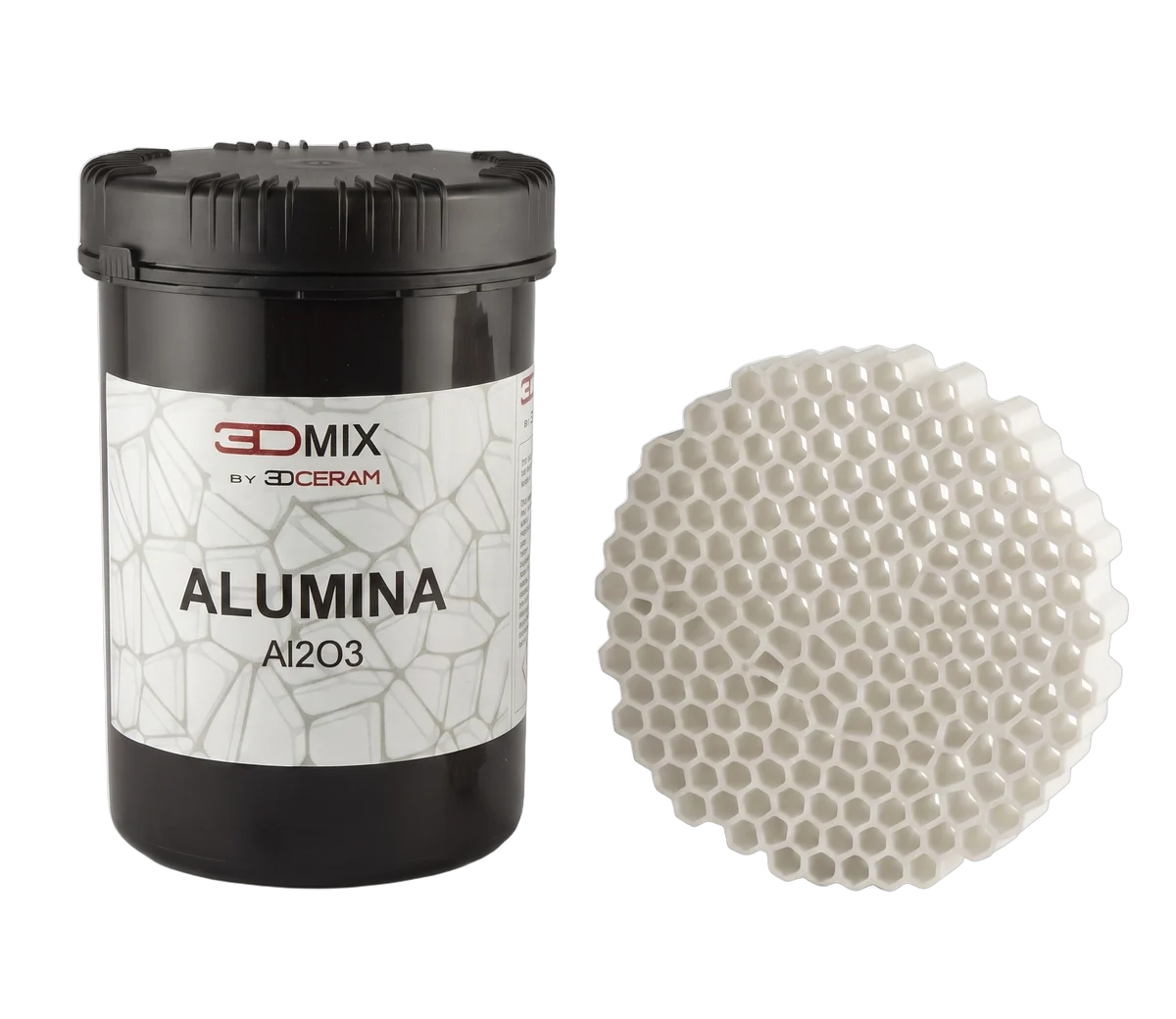
Alumina 3D Printing Paste
Print dense alumina (Al₂O₃) parts on 3DCeram's Ceramaker laser-SLA platform, then debind and sinter to a hard, electrically insulating technical ceramic.
- ✓ 397 MPa 4-point bending strength at >3.9 g/cc, 16.4 GPa Vickers hardness after sintering
- ✓ Debind and sinter parameters plus the full datasheet included with every order
- ✓ Ceramic SLA paste for the 3DCeram Ceramaker platform — quote-based, mutual NDA before spec review
What your process engineer actually checks
Measured mechanical data
397 MPa 4-point bending strength at >3.9 g/cc density, 300 GPa modulus and 16.4 GPa Vickers hardness — datasheet numbers you can qualify against, not a vendor estimate.
The full ceramic workflow
Every order ships with the debinding and sintering parameters. Alumina is solid-state sintered, and shrinkage is compensated in build prep so the first part lands on dimension.
A materials engineer on the line
Solids loading, rheology, shrinkage and cracking are where ceramic AM fails. Talk to an engineer who runs this paste — sub-4h reply, NDA on request.
Alumina 3D Printing Paste is a 3DCeram alumina (Al₂O₃) paste for the Ceramaker laser-SLA platform — you print a green part, then debind and sinter it to a dense, hard, electrically insulating oxide ceramic.
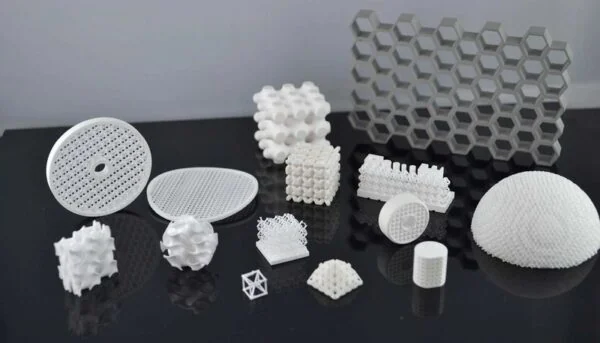
Why engineers choose this paste
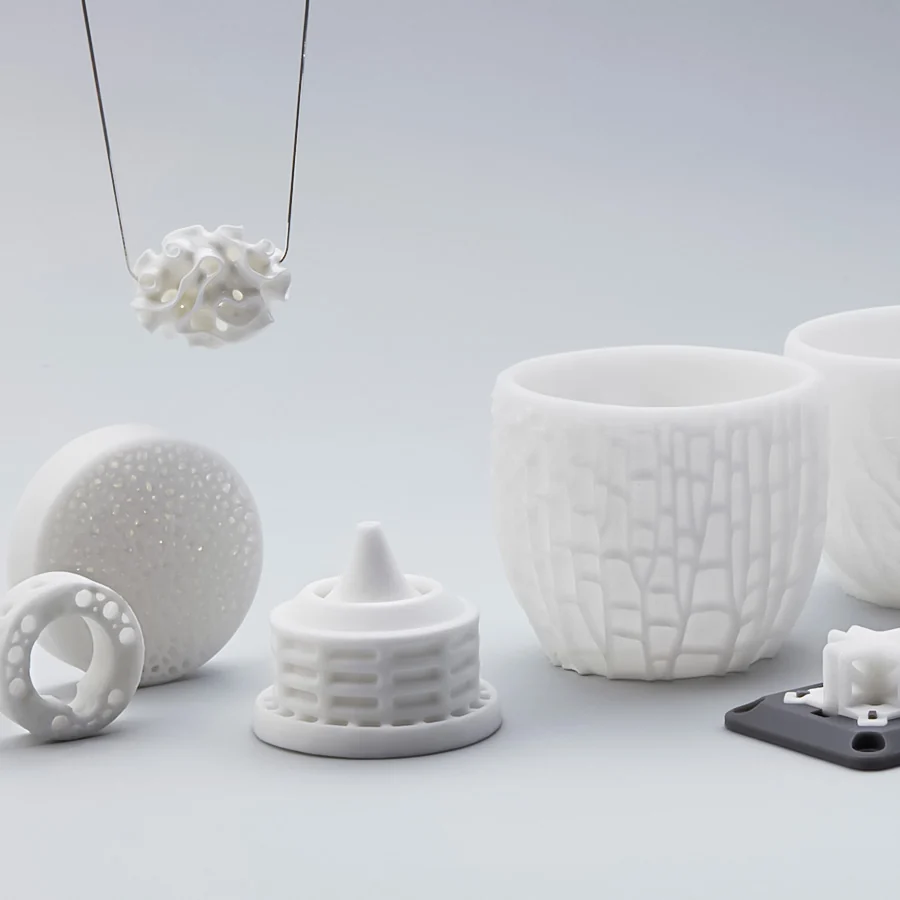
A workhorse technical oxide: hard, wear-resistant and a proven electrical insulator at temperature.
397 MPa bending strength
4-point flexural strength at >3.9 g/cc density after sintering — a dependable structural oxide.
High electrical resistivity
Insulates at temperature with 23.3 W/m·K thermal conductivity — the standard choice for electronic and telecom parts.
16.4 GPa Vickers hardness
High hardness and good wear resistance for jigs, guides and abrasion-exposed components.
Chemically inert
Resists most acids, bases and molten media — suited to lab and process-hardware duty.
Print → debind → sinter
Ceramic stereolithography on the 3DCeram Ceramaker platform. The green part is larger than the finished part — shrinkage is compensated in build preparation.
Laser SLA print
The ceramic-loaded paste is cured layer-by-layer on a 3DCeram Ceramaker laser-SLA machine into a green part.
Debinding
The organic binder is removed in a controlled thermal cycle, leaving a fragile ceramic-only brown part.
Sintering
Solid-state sintered to dense alumina (>3.9 g/cc), ~2.2 µm grain size and 300 GPa modulus.
Typical applications
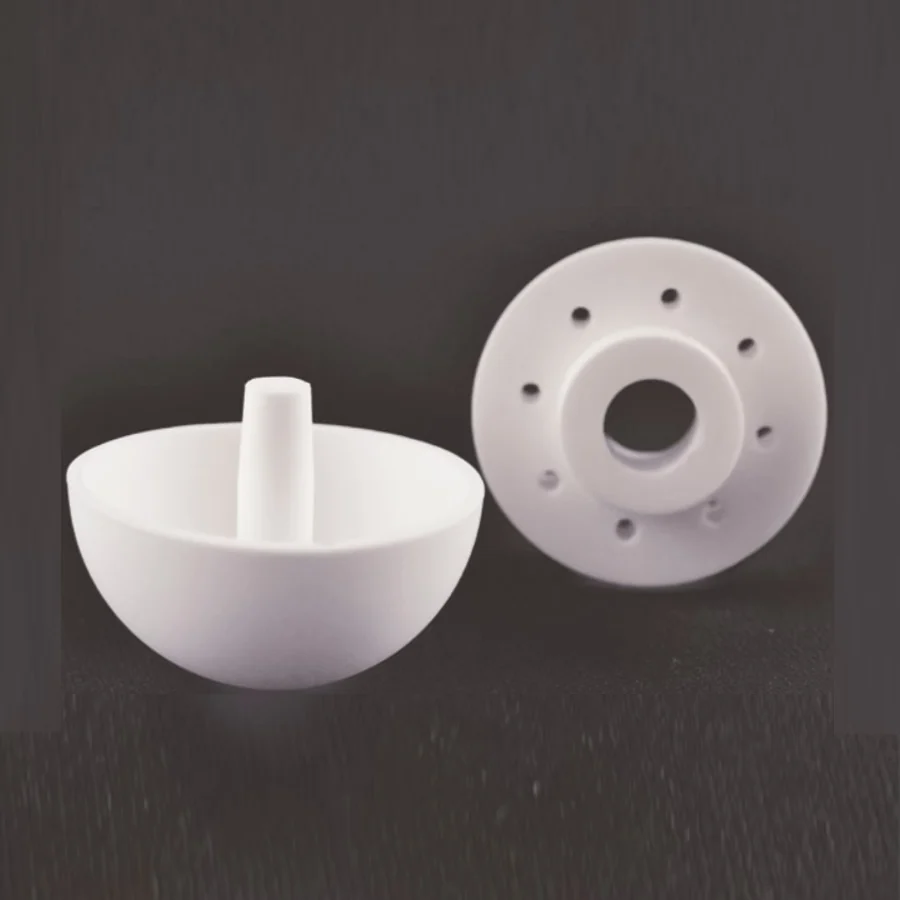
Where hardness, insulation and chemical inertness matter more than toughness.
Alumina — physical & mechanical properties
Representative post-sinter values from the 3DCeram material datasheet. Final numbers depend on part geometry and your qualified sinter cycle.
| Property | Value |
|---|---|
| Density | >3.9 g/cm³ |
| Grain size after sintering | 2.2 µm |
| 4-pt bending strength | 397 MPa |
| Weibull modulus | 14.9 |
| Young’s modulus (theoretical) | 300 GPa |
| Vickers hardness | 16.4 GPa |
| Fracture toughness | 4 MPa·m¹ᐟ² |
| Thermal conductivity (RT) | 23.3 W/m·K |
| CTE (20 °C) | 4.98 ×10⁻⁶ K⁻¹ |
| Brand | 3DCeram |
| Country of origin | France |
| Printing Materials | Ceramic Pastes |
| Technology | CERAMIC SLA |
| Material | Alumina (Al2O3) |
| Application | Composite Tooling, Engineering, Jigs & Fixtures, Manufacturing |
We formulate and qualify. Custom variants on request.
Need a specific ceramic chemistry, solids loading, or a tuned binder for your process? Our materials team formulates and verifies rheology and sinter behavior before you commit. Typical lead 3–4 weeks.
Complete the workflow
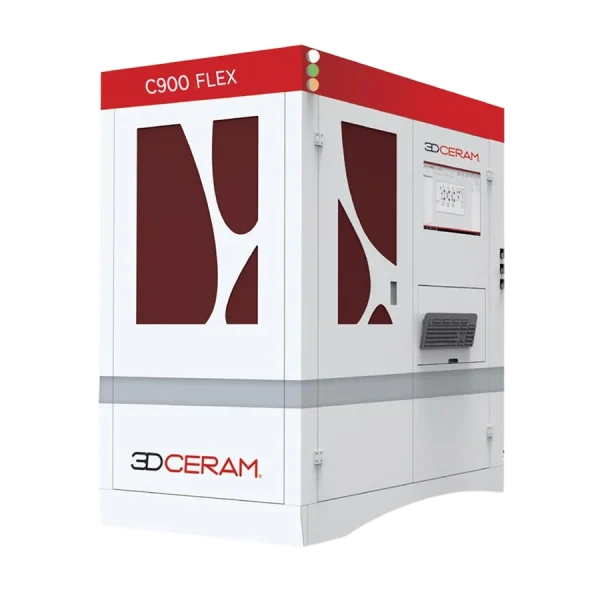
- ✓ 11+ ceramic materials — Al₂O₃, ZrO₂, Si₃N₄, TCP, HA, AlN, cordierite and more
- ✓ Top-down SLA — support-free complex internal geometries in dense ceramic
- ✓ SAM option — 100 mL minimum batch for R&D economy with expensive compositions
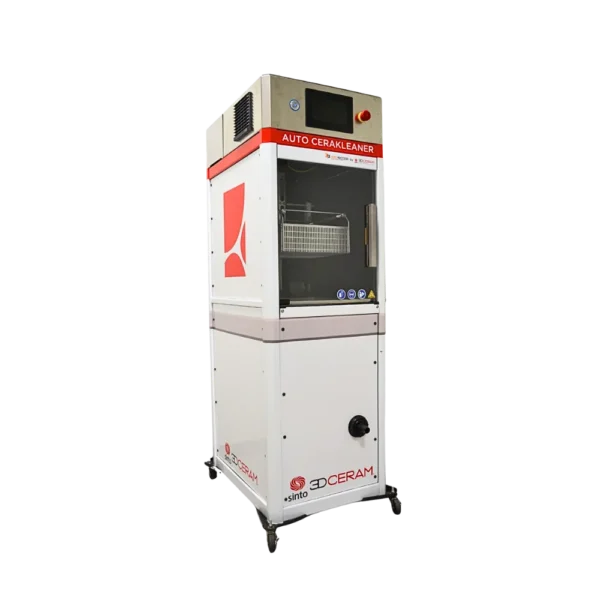
Automated cleaning system that removes excess ceramic paste from freshly printed green parts, leaving them ready to debind — replacing slow, hands-on solvent cleaning in the ceramic AM workflow.
- ✓ Gentle, low-mechanical-stress cleaning of fragile green parts
- ✓ Batch time cut dramatically vs manual (e.g. 60 min → 5 min on 70 alumina parts)
- ✓ Solvent longevity + recycling · no manual solvent contact
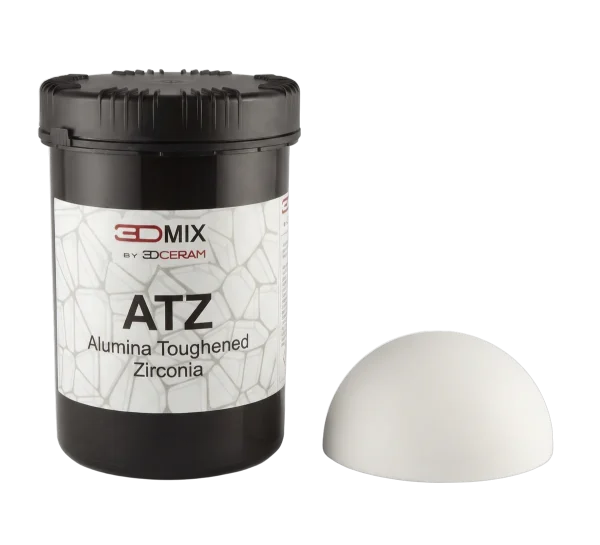
Print the strongest oxide in the range — alumina-toughened zirconia — on 3DCeram's Ceramaker laser-SLA platform, then debind and sinter to a dense biocompatible ceramic.
- ✓ 1094 MPa 4-point bending strength at >5.2 g/cc — highest of the 3DCeram oxides
- ✓ Biocompatible and thermal-shock resistant — implants, dental and high-load wear parts
- ✓ Ceramic SLA paste for the 3DCeram Ceramaker platform — quote-based, mutual NDA before spec review
Other products teams run alongside Alumina 3D Printing Paste
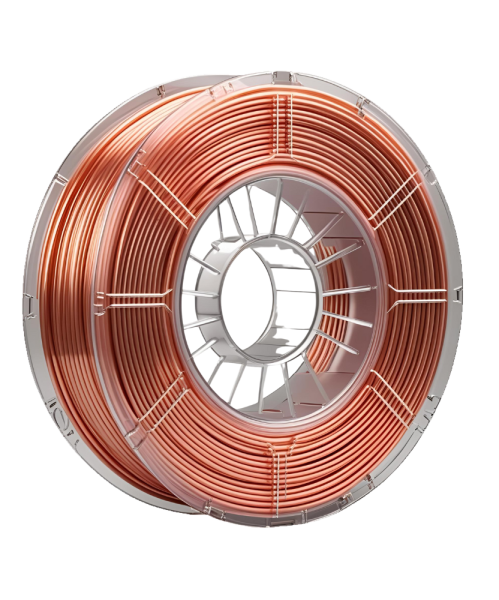
- ✔ 228 W/m-K thermal conductivity, 8.4 g/cc density and 118 GPa modulus after sintering
- ✔ Debind and sinter parameters plus the full datasheet included with every spool
- ✔ 1.75mm bound-metal feedstock for the 3DCeram M.A.T. FFF head — mutual NDA before any spec review
In stock
· In stock — ships in 1–2 business days. Custom alloy or ceramic feedstock: 3–4 weeks, configured to order.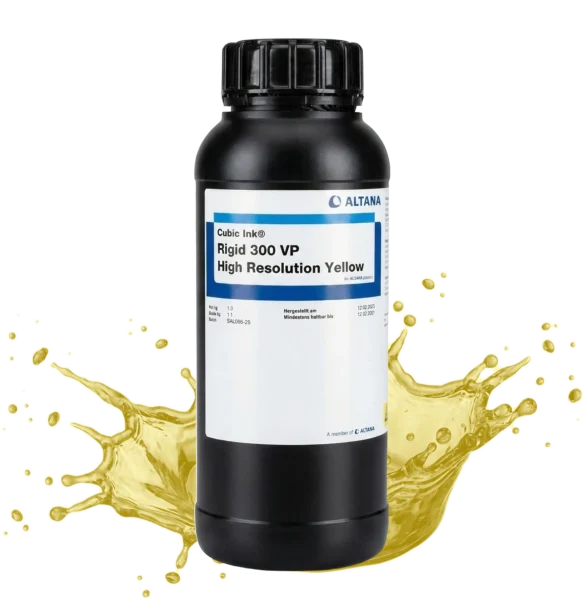
Rigid resin engineered for outstanding printing resolution — ultra-thin layers and crisp XY detail at high print speed, with low water uptake for dimensional stability in fluids.
- ✓ Ultra-thin layers & crisp XY resolution — fine-detail precision parts
- ✓ 37 MPa tensile · 1900 MPa modulus · 8% elongation — rigid yet not brittle
- ✓ Very low water uptake (0.3%) & strong chemical resistance
- ✓ Fast printing thanks to high reactivity
Made to order
· Ships in 5–10 business days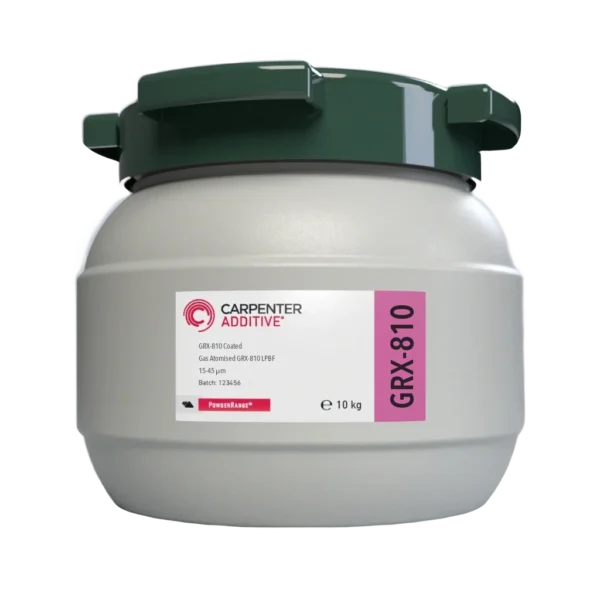
NASA-developed. Oxide dispersion strengthened. Oxidation-resistant to 2400°F. Genuine Carpenter Additive GRX-810 Coated nickel-cobalt-chromium powder for LPBF metal 3D printing.
- ✓ About 2× the strength of 718 and 625 at 2000°F (NASA data)
- ✓ COA on request (15–45 µm, 10 kg)
- ✓ In US stock — ready to ship
In stock
· In US stock · ready to ship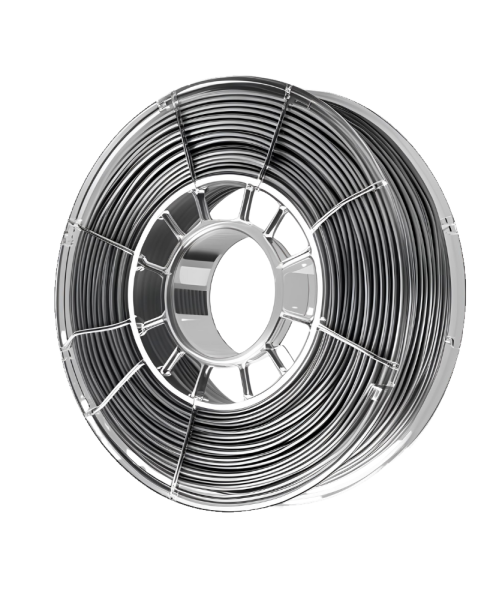
- ✔ Rp0.2 149 MPa, Rm 485 MPa and 158 GPa modulus after sintering — tested to ASTM E8/E8M
- ✔ Debind and sinter parameters plus the full datasheet included with every spool
- ✔ 1.75mm bound-metal feedstock for the 3DCeram M.A.T. FFF head — mutual NDA before any spec review
In stock
· In stock — ships in 1–2 business days. Custom alloy or ceramic feedstock: 3–4 weeks, configured to order.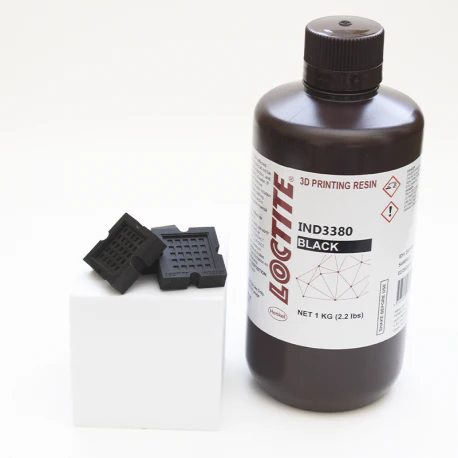
ESD-safe black resin (HDT190°C): Precision tooling for electronics. Electrostatic dissipation.
Availability: confirmed at order. Supplier stock for this line varies — we verify availability and lead time on every order before processing, and offer an equivalent or a full refund if an item cannot be supplied. Cubic Ink equivalents →
Made to order
· Ships in about 2 weeks — final date confirmed after you order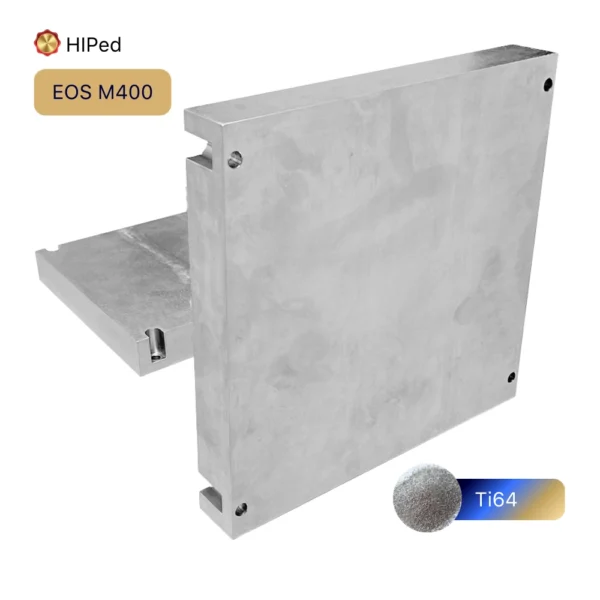
Made to order
· 6-8 weeks
Print your own silicone — the Sygnis F-NIS 23151 and Sygpast are open DIW platforms for one- and two-component silicones you formulate or buy.
- One-component, moisture-curing and UV-curing silicones on the F-NIS
- UV 365/405 nm, 60 °C heated cartridge, cooled platform or two heads by version
- Two-component silicones and supported soft parts on the Sygpast
- K2 silicone in the box for calibration · you source the production material
In stock
· Free DIW guide · not sold as a material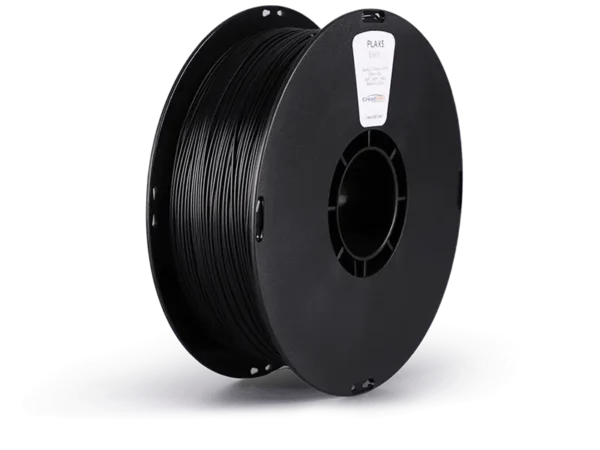
PLA filament for FDM 3D printing — high stiffness (97 MPa flexural strength), a fine, paintable surface finish, and the widest, most forgiving process window of any CreatBot filament, for concept models, display parts, and low-stress prototypes.
- ✓ ±0.02mm diameter tolerance — consistent extrusion, low jam risk
- ✓ Validated CreatBot F430 print profile + datasheet included
- ✓ In stock, ships in 1–2 business days
In stock
What our customers say
“Harry and team were professional, effective communicators as we set up the order, then they executed quickly and produced an amazing product for us at a very competitive price. Am looking forward to our next print w Additive Plus!”
“Great 3D printing service and the resin parts look super smooth and clean. Really happy with how everything turned out!”
“Harry was very professional and helped me out with my 3D printing needs and explained what options I have in terms of filaments such as PEEK. Highly recommended.”
“I needed a 3D enclosure printed urgently in a specific time period, they did great!”
Common questions
Don't see yours? Email [email protected] — NDA on request, typical reply within 4 hours.
What is Alumina paste and how does it produce a ceramic part?
Why does the printed part come out larger than my CAD model?
What makes alumina the right choice versus zirconia?
Is alumina electrically insulating at high temperature?
Which printer runs this paste?
Can I order a sample or a small batch before committing?
Place your order, or talk to an engineer first
Order Alumina 3D Printing Paste direct, or talk to materials engineer