
Made to order
- Install & training commissioning and operator onboarding in California
- Multi-material package material-set guidance and debind/co-sinter cycles
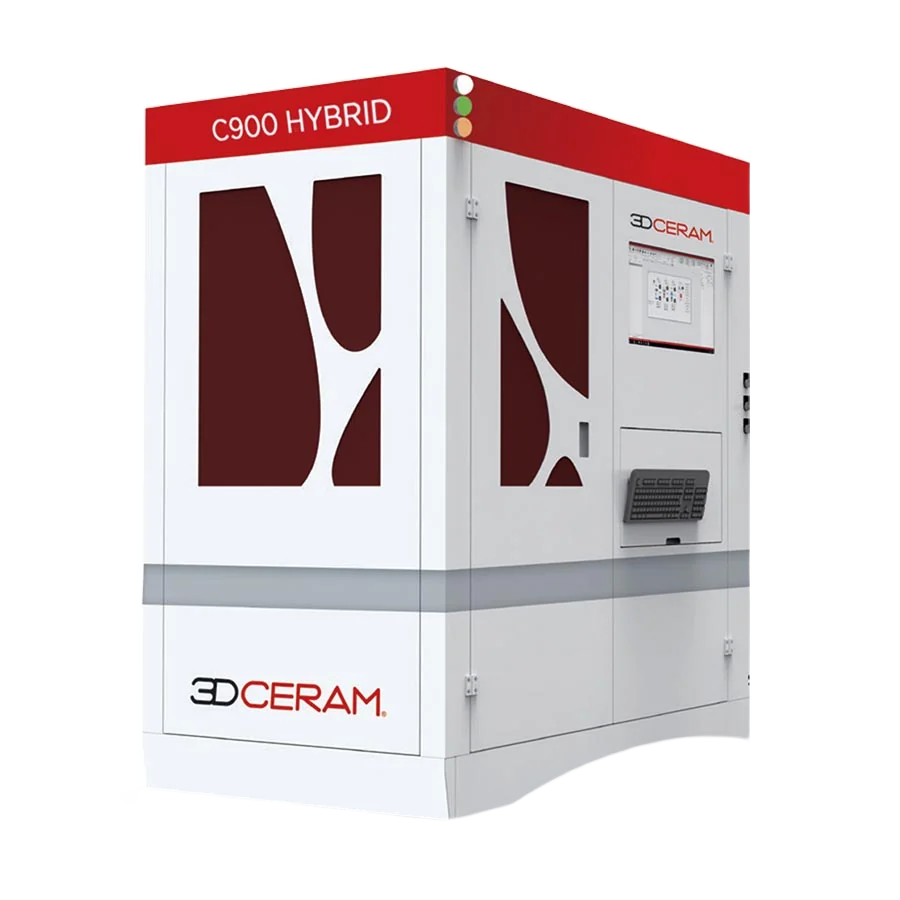
3DCeram C900 HYBRID Multi-Material Ceramic SLA 3D Printer – Up to 4 Materials | 300×300×100 mm
Production-scale multi-material ceramic SLA system: alongside the base ceramic it deposits up to three additional materials in one part, via dispensers from needle valve to micro-distribution, all in CPS 2.0. On an 11.8×11.8×3.9 in / 300×300×100 mm platform with a fine 35 µm UV laser. Full print → debind → co-sinter workflow supported by Additive Plus.
- Up to 4 materials in one part — base ceramic + 3 dispensed materials.
- Fine 35 µm UV laser — 355 nm, detail across the 300×300 mm platform.
- Lead time: configured to order — material-set & co-sinter support from California.
What your process engineer actually checks
Up to four materials in one part
Beyond the base ceramic, the C900 HYBRID deposits up to three additional materials through configurable dispensers, all driven from CPS 2.0. That multi-material capability on a 300 mm platform is what makes functionally graded and multi-property production parts possible.
A ceramics engineer on the line
Material-set feasibility, shrinkage matching across the materials, and debind/co-sinter parameter sets — plus a paid sample before you commit. Sub-4h reply, NDA on request, from a team that runs ceramic AM.
The 3DCeram C900 HYBRID is a production-scale multi-material ceramic SLA system: alongside the primary ceramic it can deposit up to three additional materials in the same part, through dispensers ranging from needle valves to micro-distribution — all driven from CPS 2.0 software. On an 11.8 × 11.8 × 3.9 in / 300 × 300 × 100 mm platform with a fine 35 µm UV laser, it builds functionally graded and multi-material ceramic parts at production scale. Additive Plus supports the full print → debind → co-sinter workflow.
Why production teams choose the C900 HYBRID
Multi-material ceramic AM on a 300 mm platform — with a laser fine enough for real detail.
Up to four materials in one part
The base ceramic plus up to three additional dispensed materials build functionally graded, multi-property parts a single-material process can’t make.
Flexible dispensing, one software
Additional materials go down through dispensers from needle valve to micro-distribution — up to three systems — all integrated directly in CPS 2.0.
Fine 35 µm UV laser
A 355 nm UV laser with a ~35 µm spot resolves finer detail than coarser ceramic systems, across the full 300 × 300 mm platform.
Production-ready workflow
Pairs with 3DCeram post-processing — Ceracleaner, nitrogen kiln and sintering furnace — for a complete multi-material production chain.
Print → debind → co-sinter: the multi-material workflow
A printed part is a “green” body, not a finished one — and with several materials, co-firing is critical. Additive Plus supports all three steps.
Print the green part
The UV laser cures the base ceramic while dispensers add up to three materials, 0.010–0.125 mm per layer, into a multi-material green body on the 300 × 300 × 100 mm platform.
Debind
The green part is cleaned (Ceracleaner) and thermally debound to remove the organic binder — nitrogen kiln where needed — leaving a fragile multi-material body.
Co-sinter to density
The sintering furnace fuses the materials to near-full density. Matching shrinkage between them is the key challenge — we help characterise and compensate it.
Materials & compatible ceramics
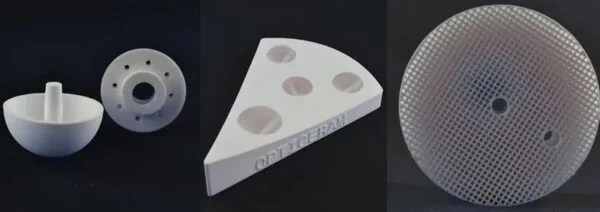
The C900 HYBRID runs 3DCeram’s technical-ceramic pastes and combines the base ceramic with up to three additional materials. Each ceramic family targets a different property set. Additive Plus helps select a compatible material set and shares the matching debind/co-sinter schedule.
| Ceramic | Key properties | Typical parts |
|---|---|---|
| Alumina (Al₂O₃) | High hardness, wear & corrosion resistance, electrical insulation | Wear parts, insulators, industrial components |
| Zirconia (ZrO₂), 8Y & ATZ | High strength & toughness; 8Y ionic conductivity; ATZ alumina-toughened | Medical & dental, fuel cells, structural |
| Silicon nitride (Si₃N₄) | Thermal-shock & wear resistance, low density, low expansion | Bearings, high-temperature structural parts |
| Aluminium nitride (AlN) | High thermal conductivity with electrical insulation | Electronics, thermal-management substrates |
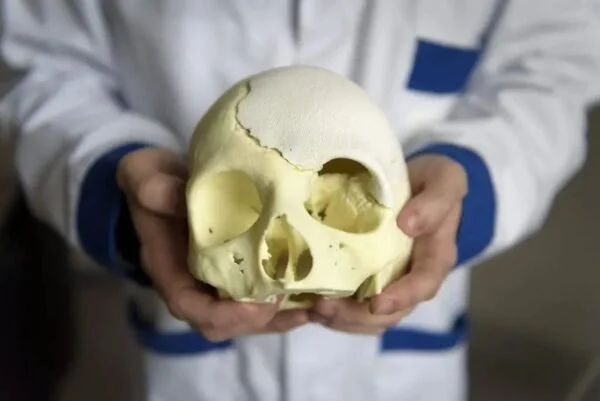
| Hydroxyapatite (HA) / TCP | Bioactive, resorbable, biocompatible | Bone substitutes, cranial & maxillofacial implants |
| Fused silica & cordierite | Low thermal expansion, thermal-shock resistant, low dielectric loss | Investment-casting cores, refractory parts |
Planning a specific material set? That’s exactly what the HYBRID is for — ask our engineer.
Key specifications
| Technology | Multi-material top-down laser stereolithography (ceramic SLA) |
| Hybrid capability | Base ceramic + up to 3 additional materials · needle-valve to micro-distribution dispensers · CPS 2.0 |
| Build platform (L×W×H) | 11.8 × 11.8 × 3.9 in / 300 × 300 × 100 mm |
| Laser | UV, 355 nm · ~35 µm spot |
| Layer thickness (Z) | 0.0004–0.0049 in / 0.010–0.125 mm |
| Optional equipment | Ceracleaner · nitrogen kiln · sintering furnace |
| Machine dimensions (L×W×H) | 41.7 × 88.6 × 80.3 in / 1060 × 2250 × 2040 mm |
| Weight | 3,197 lb / 1,450 kg |
| Utilities | 220–240 VAC, 50 Hz · 2 kW · dry compressed air 6 bar · 20–25 °C, 50% RH |
| Control / warranty | Web dashboard · 12-month warranty |
See the Specifications tab for the full manufacturer data set.
Typical applications
Where combining several materials in one part changes what’s possible.
Not sure the C900 HYBRID is the right 3DCeram system?
Compare it with the rest of the 3DCeram range we carry.
Why source the C900 HYBRID through Additive Plus
- Full workflow, one partner. Printer, ceramic materials, cleaning, debinding and co-sintering — we support the whole multi-material chain.
- Material-set & DfAM support. Compatible material selection, shrinkage matching and co-sinter cycles — from engineers who run ceramic AM.
- Paid sample before you commit. Send your concept; we print a multi-material sample so you validate feasibility before buying a system.
- US-based install, training & service. Commissioning and operator training handled from California, in your timezone.
- <24h response. 200+ qualified systems delivered across 23 countries.
| Country of origin | France |
| Brand | 3DCeram |
| Weight | 3197 lb / 1450 kg |
| Dimensions | 41.7×88.6×80.3 in / 1060×2250×2040 mm |
| Build Volume | 11.8×11.8×3.9 in / 300×300×100 mm |
| Layer thickness | 0.0004–0.0049 in / 0.010–0.125 mm |
| Light source | UV Laser |
| UV Wavelength | 355 nm |
| Laser spot diameter | ~35 µm |
| Electrical requirements | 220–240 VAC / 50Hz |
| Power Consumption | 2 kW |
| Optimum indoor operation temperature | 20–25 °C / 68–77 °F |
| Relative humidity | 50% |
| Compressed air | 6 bar dry |
| Hybrid option | Up to 3 additional materials |
| Additional equipment | Ceracleaner, Nitrogen kiln, Sintering furnace |
| Client Operating System | Web Dashboard / CPS 2.0 |
| Warranty | 12 months |
| Technology | Multi-material Ceramic SLA |
| Printing Materials | Ceramic Pastes |
| Material | ATZ, Silicon Nitride, Zirconia, Alumina, Aluminium Nitride, Cordierite, Fused Silica, Hydroxyapatite, Tricalcium Phosphate, Zirconia 8Y |
Product videos
3DCeram develops and qualifies ceramics and material combinations on request — typically in 2–4 weeks. Tell us the materials you want to combine.
Other products teams run alongside 3DCeram C900 HYBRID Multi-Material Ceramic SLA 3D Printer – Up to 4 Materials | 300×300×100 mm
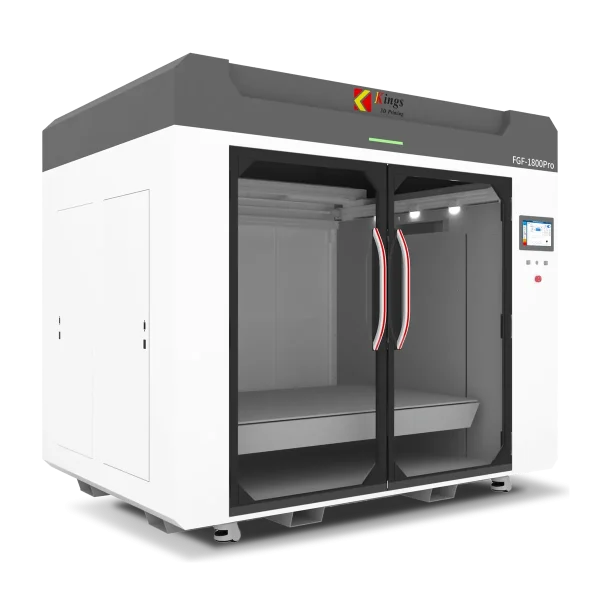
Large-format pellet extrusion 3D printer — 71×47×43 in / 1800×1200×1100 mm enclosed build, raw polymer granules, 1–8 mm nozzle selection, up to 15 kg/h. Optional 450°C high-temp nozzle for PEI+CF and engineering compounds. Material cost 5–10× lower than equivalent filament.
- ✓ Pellet feedstock — 5–10× lower material cost vs. filament at the same polymer
- ✓ 71×47×43 in / 1.8×1.2×1.1 m enclosed build — ~6× the FGF800, runs on single-phase 220 V
- ✓ Lead time: 8–10 weeks — configured to order, installed and trained on-site
Made to order
· Ships in 8–10 weeks from order placement. Need it sooner? Talk to a specialist.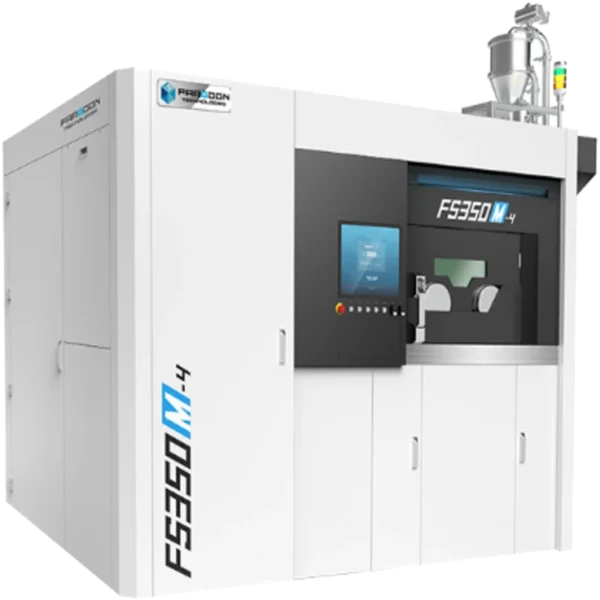
The Farsoon FS350M is a multi-laser LPBF metal 3D printer for medium- to high-volume series production, supplied in 4×500 W, 4×1000 W or 6×500 W laser configurations on the same 17.1×14.1×15.7 in / 433×358×400 mm build cylinder.
- ✓ Three laser configurations — we supply and support all three
- ✓ 17.1×14.1×15.7 in / 433×358×400 mm build on a 65 sq ft / 6 m² class footprint
- ✓ Open platform — full access to process parameters, qualify your own alloy
- ✓ Lead time: built to order — confirmed at quote
Installation and commissioning in the USA: facility and gas planning, start-up and operator training by our US service team.
Made to order
· Built to order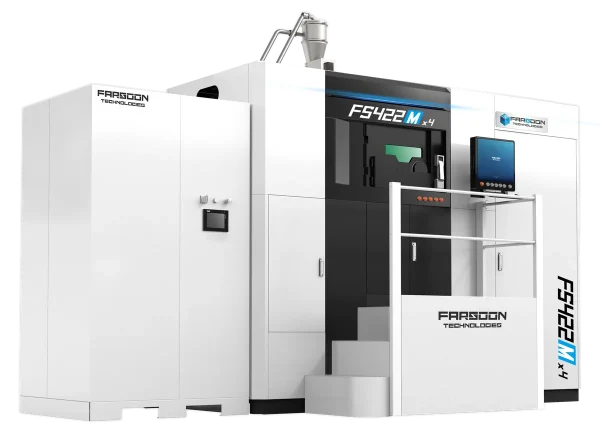
The Farsoon FS422M CAMS is a metal LPBF 3D printer with a 16.7×16.7×16.5 in / 425×425×420 mm build envelope, running a single 500 W laser or quad 500 W lasers.
- ✓ 150 cm³/h — volume build rate
- ✓ 16.7×16.7×16.5 in / 425×425×420 mm build envelope
- ✓ Open platform — full access to process parameters, qualify your own alloy
- ✓ Lead time: built to order — confirmed at quote
Installation and commissioning in the USA: facility and gas planning, start-up and operator training by our US service team.
Made to order
· Built to order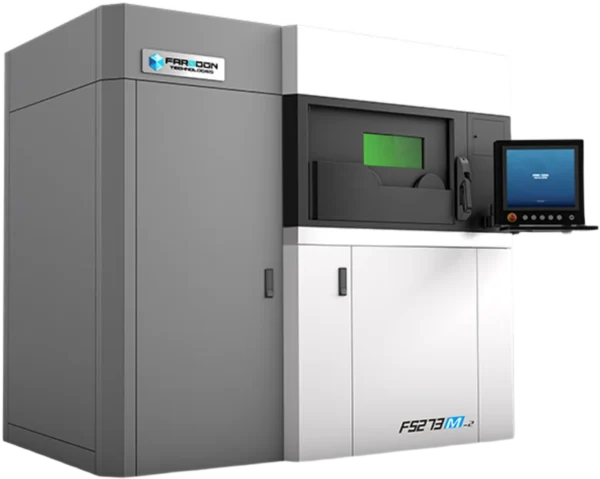
The Farsoon FS273M is a metal LPBF 3D printer with a 10.8×10.8×14.0 in / 275×275×355 mm build envelope, running one or two 500 W lasers (FS273M / FS273M-2).
- ✓ 10.8×10.8×14.0 in — build envelope
- ✓ 10.8×10.8×14.0 in / 275×275×355 mm build envelope
- ✓ Open platform — full access to process parameters, qualify your own alloy
- ✓ Lead time: built to order — confirmed at quote
Installation and commissioning in the USA: facility and gas planning, start-up and operator training by our US service team.
Made to order
· Built to order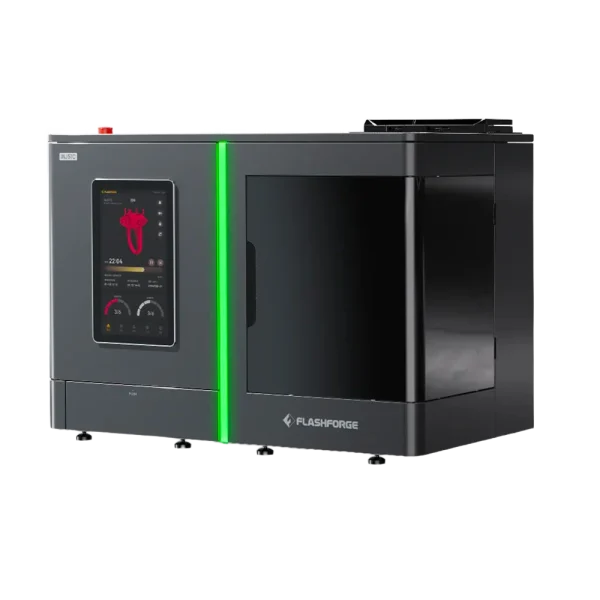
- MJP wax jetting — red model wax plus soluble white support, straight to burnout
- 9.25 × 5.43 × 3.94 in / 235 × 138 × 100 mm build area · up to 3 kg wax per month
- Lead time: configured to order — install, training and a tailored service plan included
Made to order
· Lead time: 4–6 weeks — configured to order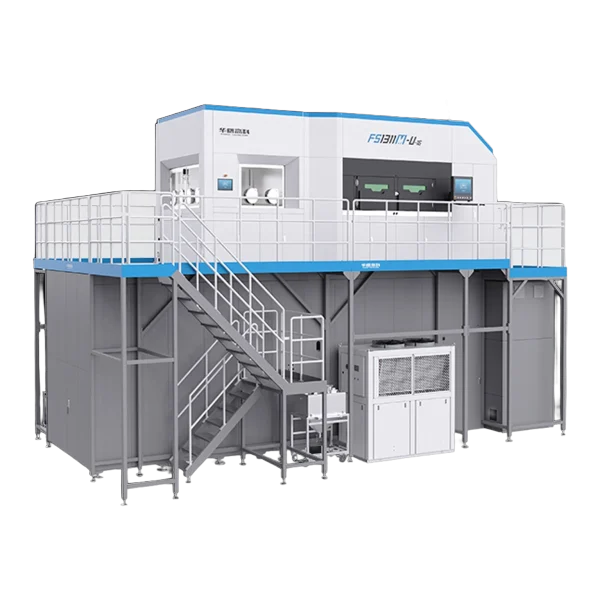
The Farsoon FS1311M-U is a large-format LPBF metal 3D printer for high-throughput production — a 1310 × 1310 × 1650 mm build with sixteen 500 W or 1000 W fiber lasers, reaching up to 1,440 cm³/h in Ti-6Al-4V.
- ✓ 1310 × 1310 × 1650 mm build · 16 × 500/1000 W fiber lasers
- ✓ Up to 1,440 cm³/h in Ti-6Al-4V · titanium & nickel superalloys
- ✓ Lead time: configured to order — US install, training and support
Made to order
· Request a build slot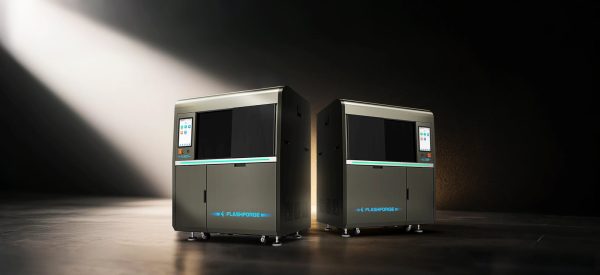
- ✓ Three synchronized piezoelectric printheads — up to 12 kg of wax patterns per month, 24/7
- ✓ Red casting wax + hands-free dissolvable support wax — ±0.04 mm / 20 mm dimensional accuracy
- ✓ Lead time: 4–6 weeks — configured to order
Made to order
· Lead time: 4–6 weeks — configured to order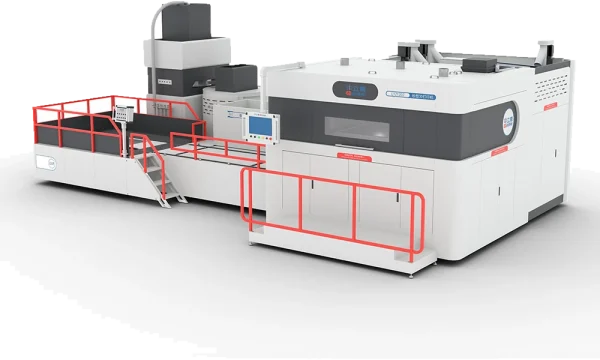
- ✔ 1.25×1.2×0.7 m build box — wide molds and cores in one piece
- ✔ Plus: 108–180 L/h at ~13 s/layer · High-Speed: 108–180 L/h at ~15 s/layer
- ✔ Nitrogen-free furan or inorganic binder; onboard AC, sand recovery & mixer
- ✔ Lead time: configured to order — request a quote for delivery & installation
Made to order
· Lead time: configured to order — request a quote for delivery and installation.What our customers say
“Harry and team were professional, effective communicators as we set up the order, then they executed quickly and produced an amazing product for us at a very competitive price. Am looking forward to our next print w Additive Plus!”
“Great 3D printing service and the resin parts look super smooth and clean. Really happy with how everything turned out!”
“Harry was very professional and helped me out with my 3D printing needs and explained what options I have in terms of filaments such as PEEK. Highly recommended.”
“I needed a 3D enclosure printed urgently in a specific time period, they did great!”
Common questions
Don't see yours? Email [email protected] — NDA on request, typical reply within 4 hours.
What does "HYBRID" mean on the C900 HYBRID?
How many materials can the C900 HYBRID combine, and how are they deposited?
What post-processing is required after printing on the C900 HYBRID?
How do you manage shrinkage across multiple materials?
What is the build volume and laser detail?
Which ceramics does the C900 HYBRID support?
What is the linear shrinkage after sintering?
Can Additive Plus print a paid multi-material sample before I buy?
Place your order, or talk to an engineer first
Order 3DCeram C900 HYBRID Multi-Material Ceramic SLA 3D Printer – Up to 4 Materials | 300×300×100 mm direct, or talk to materials engineer