
In stock
- Solids loading + debind/sinter guidance in every order
- Mutual NDA before any file or spec review
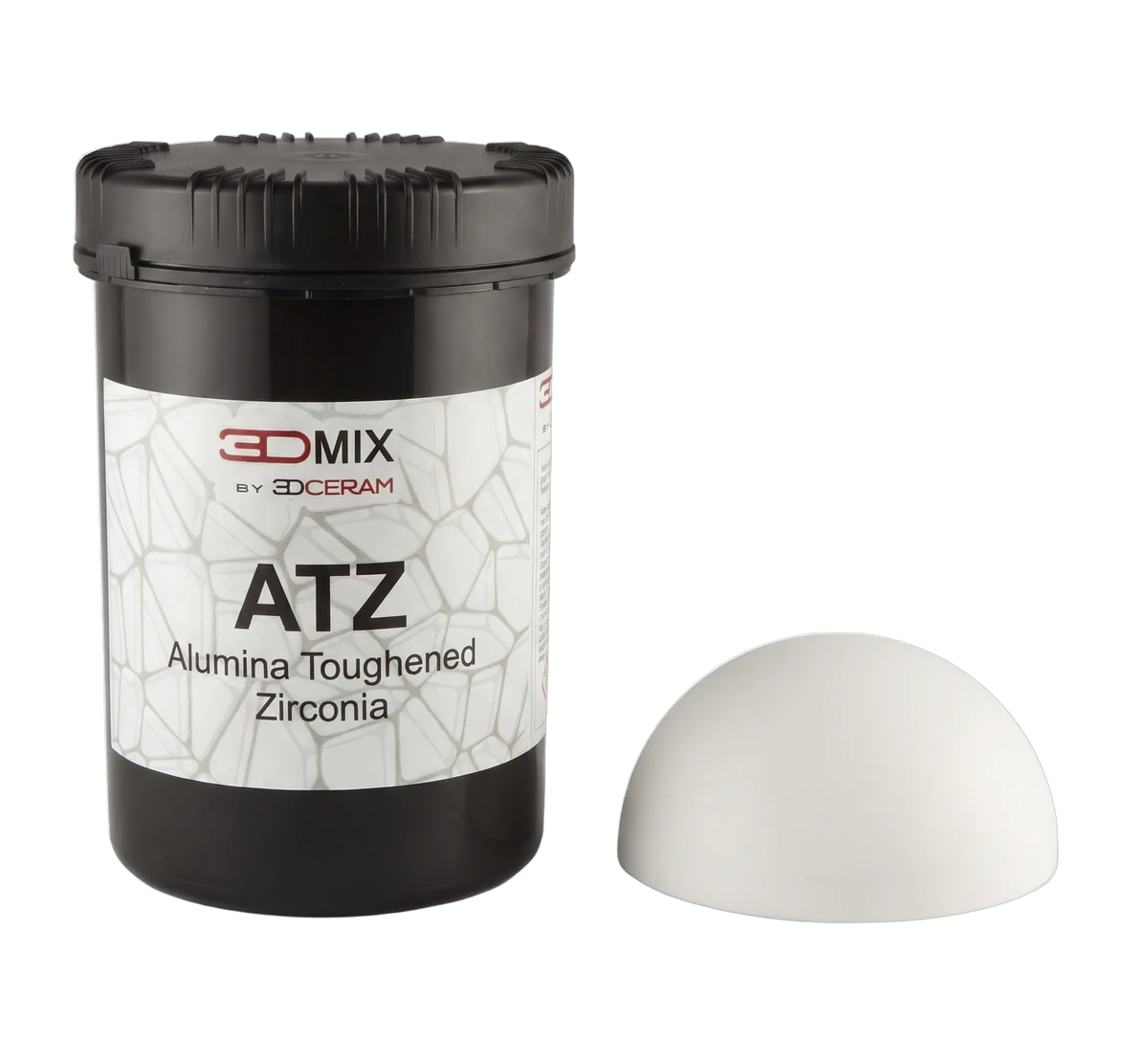
Alumina Toughened Zirconia 3D Printing Paste
Print the strongest oxide in the range — alumina-toughened zirconia — on 3DCeram's Ceramaker laser-SLA platform, then debind and sinter to a dense biocompatible ceramic.
- ✓ 1094 MPa 4-point bending strength at >5.2 g/cc — highest of the 3DCeram oxides
- ✓ Biocompatible and thermal-shock resistant — implants, dental and high-load wear parts
- ✓ Ceramic SLA paste for the 3DCeram Ceramaker platform — quote-based, mutual NDA before spec review
What your process engineer actually checks
Measured mechanical data
1094 MPa 4-point bending strength at >5.2 g/cc and sub-0.5 µm grain — the highest-strength oxide in the 3DCeram range, backed by datasheet numbers rather than a vendor estimate.
The full ceramic workflow
Every order ships with the debinding and sintering parameters. ATZ is solid-state sintered to >99% density, and shrinkage is compensated in build prep so the first part lands on dimension.
A materials engineer on the line
Solids loading, rheology, shrinkage and cracking are where ceramic AM fails. Talk to an engineer who runs this paste — sub-4h reply, NDA on request.
Alumina Toughened Zirconia 3D Printing Paste is a 3DCeram alumina-toughened zirconia paste for the Ceramaker laser-SLA platform — an 80% zirconia / 20% alumina blend that pairs high strength with biocompatibility and thermal-shock resistance.
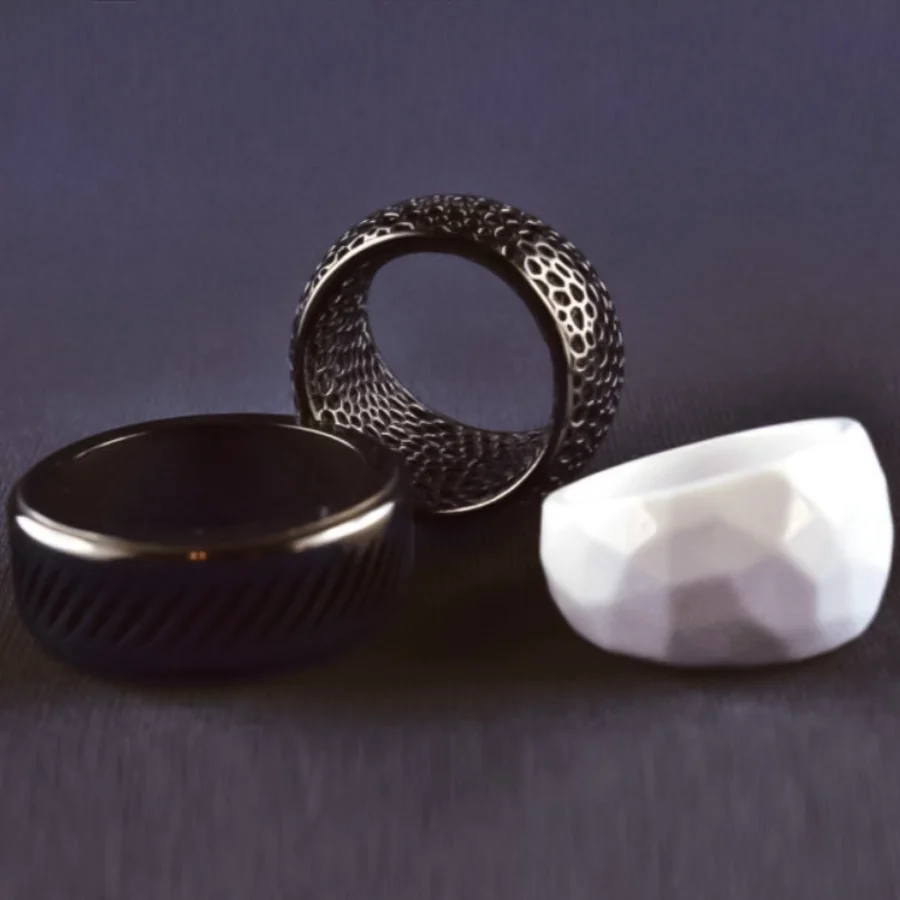
Why engineers choose this paste
A composite oxide tuned for the highest bending strength in the range with biomedical-grade compatibility.
1094 MPa bending strength
The highest 4-point flexural strength of the 3DCeram oxides — zirconia toughness reinforced by alumina hardness.
Biocompatible
Used in implants and dental parts where wear resistance and body compatibility both matter.
Thermal-shock resistant
Withstands rapid temperature change better than single-phase oxides.
220 GPa modulus
High stiffness and hardness at >5.2 g/cc density and sub-0.5 µm grain.
Print → debind → sinter
Ceramic stereolithography on the 3DCeram Ceramaker platform. The green part is larger than the finished part — shrinkage is compensated in build preparation.
Laser SLA print
The ceramic-loaded paste is cured layer-by-layer on a 3DCeram Ceramaker laser-SLA machine into a green part.
Debinding
The organic binder is removed in a controlled thermal cycle, leaving a fragile ceramic-only brown part.
Sintering
Solid-state sintered to >99% dense ATZ (>5.2 g/cc), sub-0.5 µm grain and 1094 MPa bending strength.
Typical applications
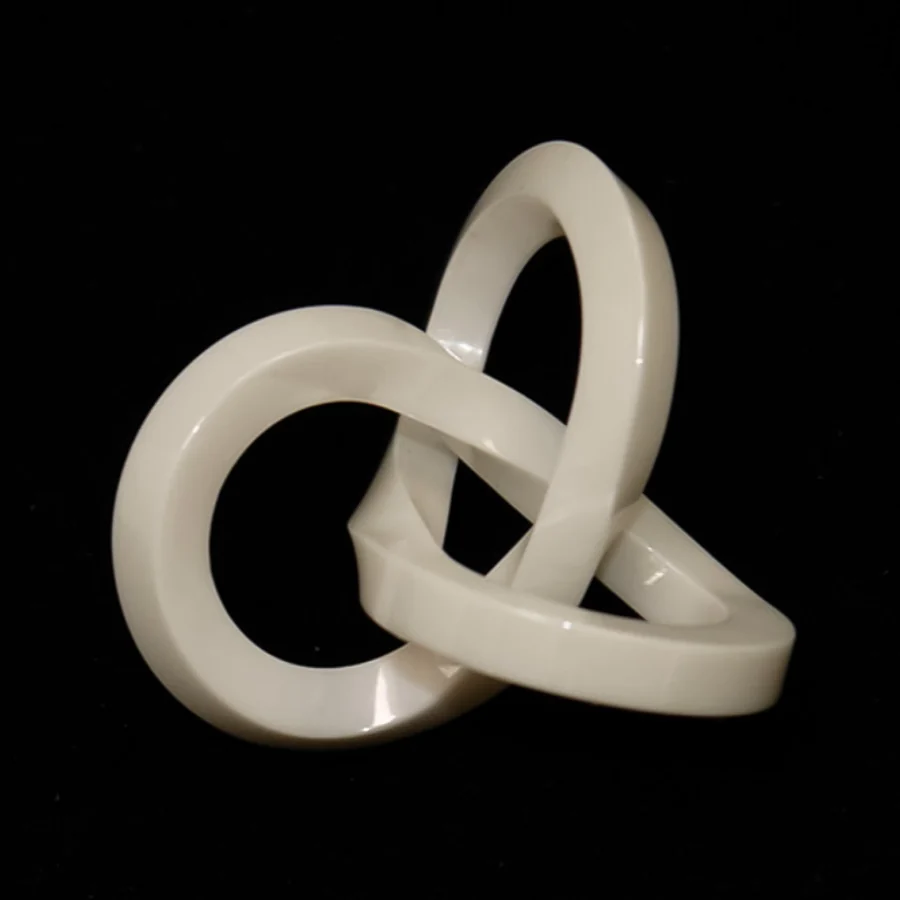
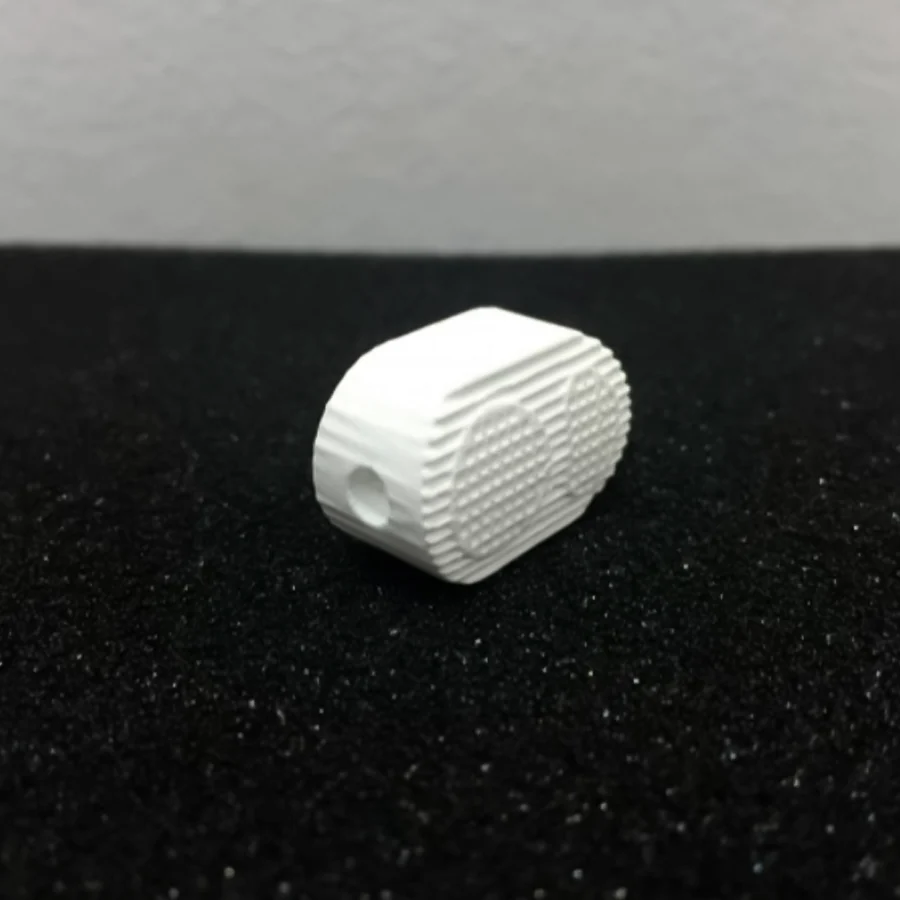
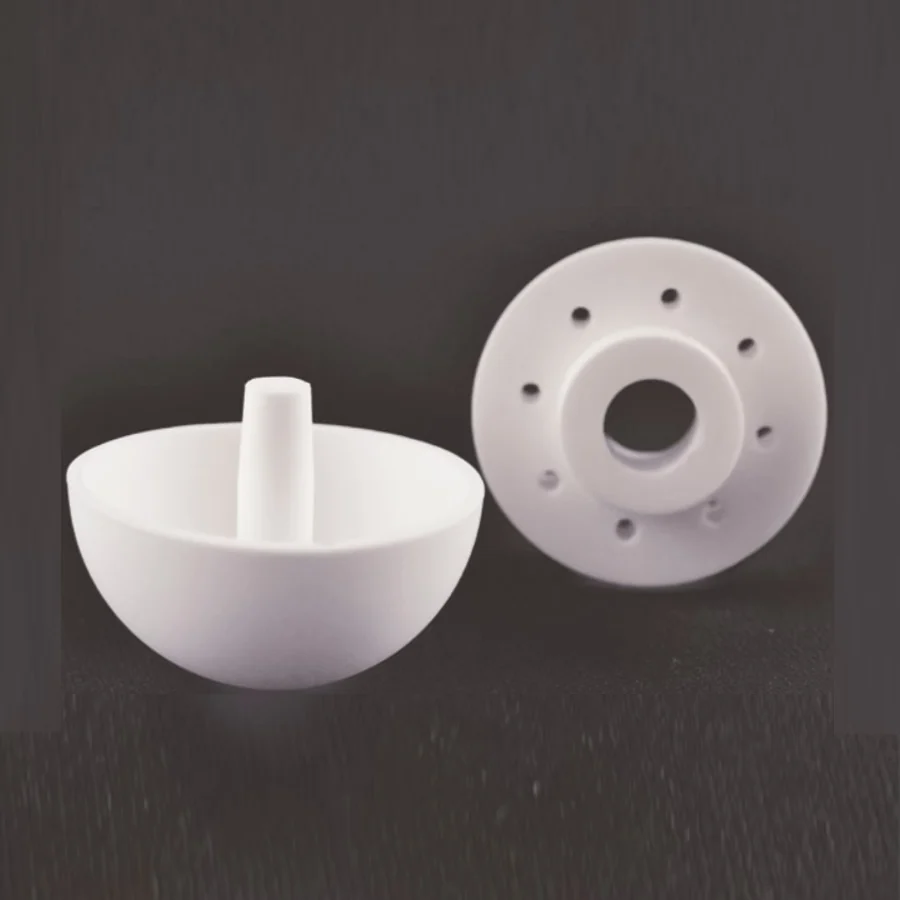
High-load and biomedical parts that need both strength and durability.
ATZ — physical & mechanical properties
Representative post-sinter values from the 3DCeram material datasheet. Final numbers depend on part geometry and your qualified sinter cycle.
| Property | Value |
|---|---|
| Composition | 80% ZrO₂ / 20% Al₂O₃ |
| Densification rate | >99% |
| Density | >5.2 g/cm³ |
| Grain size after sintering | <0.5 µm |
| 4-pt bending strength | 1094 MPa |
| Weibull modulus | 5.8 |
| Young’s modulus (theoretical) | 220 GPa |
| Thermal conductivity (RT) | 5.4 W/m·K |
| CTE (20 °C) | 7.94 ×10⁻⁶ K⁻¹ |
| Brand | 3DCeram |
| Country of origin | France |
| Printing Materials | Ceramic Pastes |
| Technology | CERAMIC SLA |
| Material | ATZ (Al2O3/ZrO2) |
| Application | Composite Tooling, Engineering, Jigs & Fixtures, Manufacturing |
We formulate and qualify. Custom variants on request.
Need a specific ceramic chemistry, solids loading, or a tuned binder for your process? Our materials team formulates and verifies rheology and sinter behavior before you commit. Typical lead 3–4 weeks.
Complete the workflow
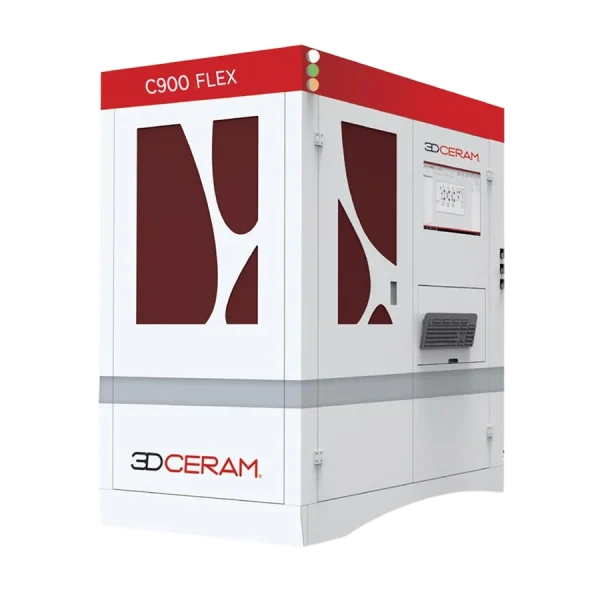
- ✓ 11+ ceramic materials — Al₂O₃, ZrO₂, Si₃N₄, TCP, HA, AlN, cordierite and more
- ✓ Top-down SLA — support-free complex internal geometries in dense ceramic
- ✓ SAM option — 100 mL minimum batch for R&D economy with expensive compositions
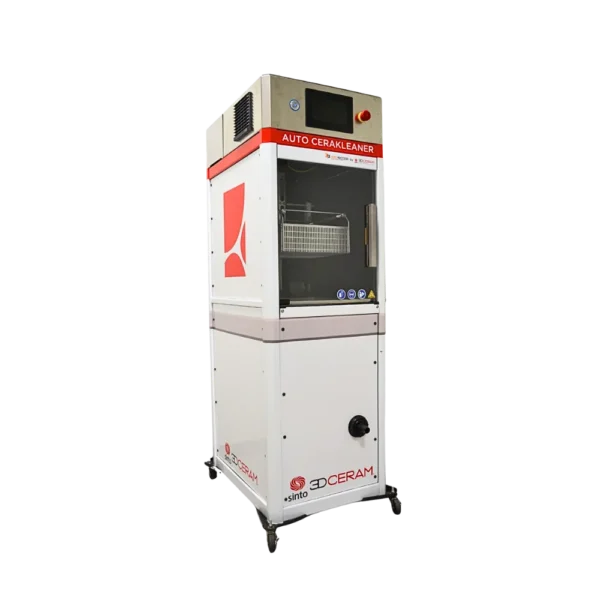
Automated cleaning system that removes excess ceramic paste from freshly printed green parts, leaving them ready to debind — replacing slow, hands-on solvent cleaning in the ceramic AM workflow.
- ✓ Gentle, low-mechanical-stress cleaning of fragile green parts
- ✓ Batch time cut dramatically vs manual (e.g. 60 min → 5 min on 70 alumina parts)
- ✓ Solvent longevity + recycling · no manual solvent contact
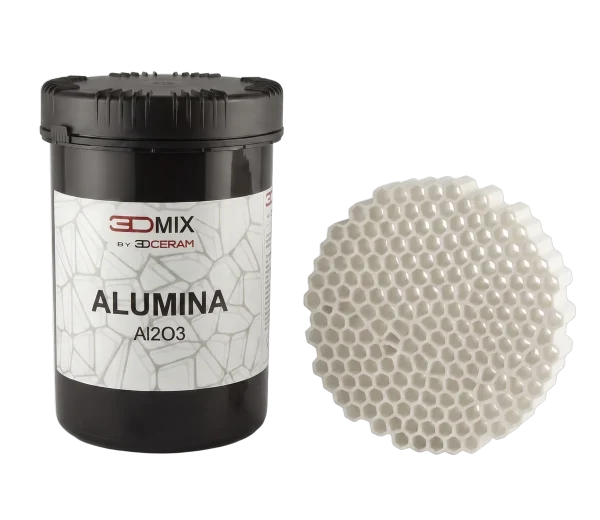
Print dense alumina (Al₂O₃) parts on 3DCeram's Ceramaker laser-SLA platform, then debind and sinter to a hard, electrically insulating technical ceramic.
- ✓ 397 MPa 4-point bending strength at >3.9 g/cc, 16.4 GPa Vickers hardness after sintering
- ✓ Debind and sinter parameters plus the full datasheet included with every order
- ✓ Ceramic SLA paste for the 3DCeram Ceramaker platform — quote-based, mutual NDA before spec review
Other products teams run alongside Alumina Toughened Zirconia 3D Printing Paste

Chemical-resistant HDPE pellets qualified for large-format additive manufacturing (LFAM) — low-moisture, low-friction big parts and wet-environment tooling at pellet cost.
- ✓ Broad chemical resistance and very low moisture uptake — built for tanks and marine
- ✓ Ships sealed with a lot datasheet + drying, adhesion, and cooling parameters
- ✓ Lead time: 1–2 business days from L.A. stock — volume & PO on request
In stock
· 1–2 Business Days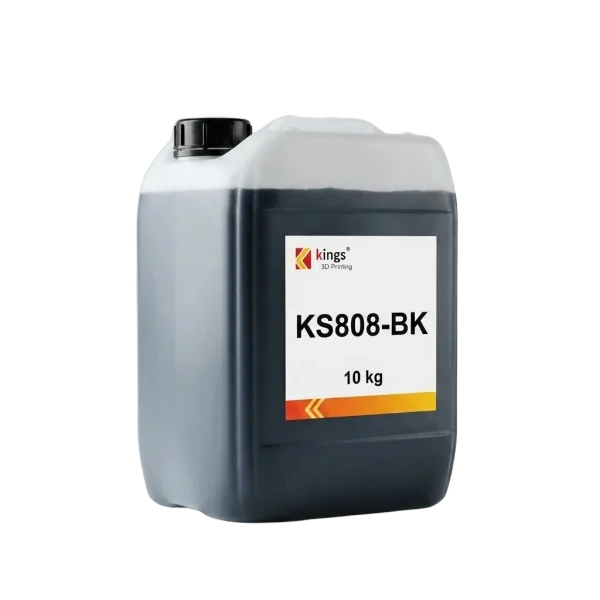
In stock
· In stock — ships in 1–2 business days from our Los Angeles warehouse.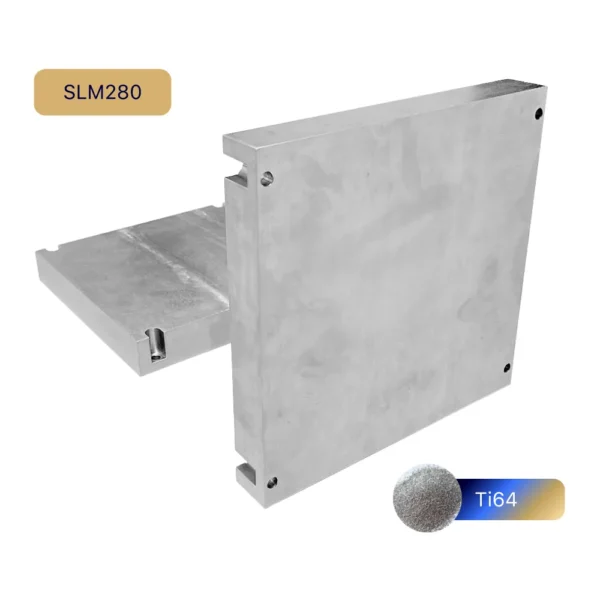
Made to order
· Express 2–3 wks · Standard 6–8 wks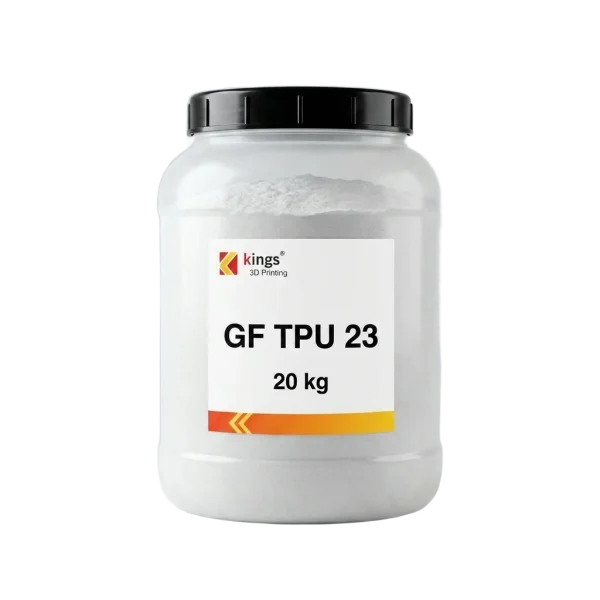
In stock
· In stock — ships in 1–2 business days from our Los Angeles warehouse.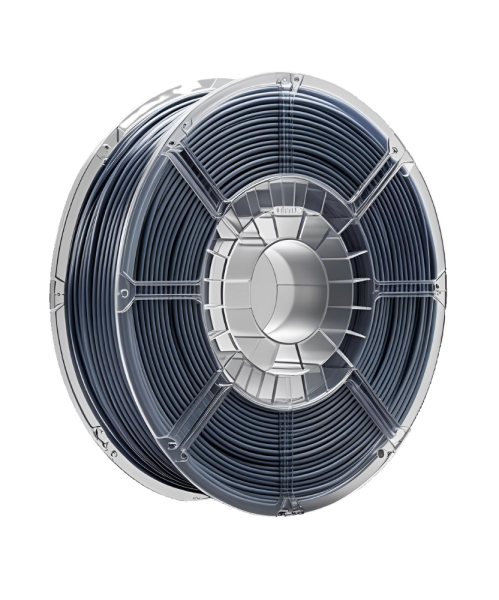
- ✓ ESA/ESTEC-verified: 423 MPa flexural strength, 82 W/m-K thermal conductivity
- ✓ Solid-state sintered to 2100°C — dense, chemically inert, no powder bed
- ✓ Qualified for the 3DCeram M.A.T. platform — quote-based pricing, request a quote
In stock
· Contact for lead time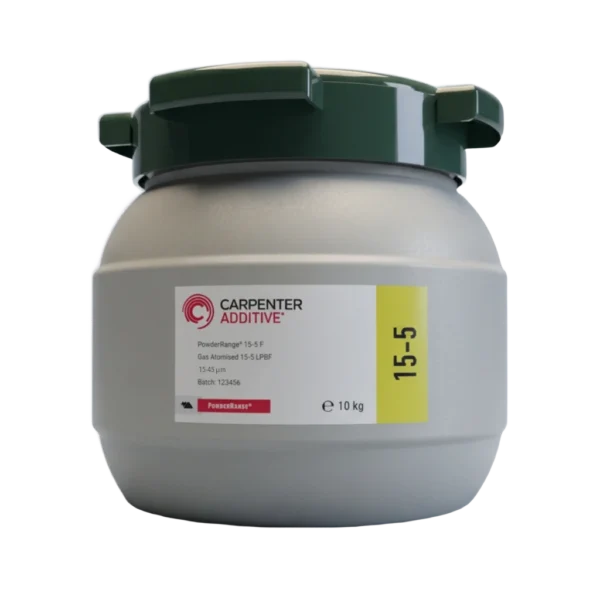
High strength. Cleaner properties. Heat-treatable. Genuine Carpenter PowderRange® 15-5 (15-5PH) precipitation-hardening stainless steel for LPBF metal 3D printing.
- ✓ Gas-atomized, low-oxygen — COA on request
- ✓ Sold in small, workable volumes — no large mill minimums
- ✓ In US stock — ready to ship
In stock
· In US stock · ready to ship
Structural PA6 nylon pellets qualified for large-format additive manufacturing (LFAM) — high strength, wear resistance, and glass-fiber grades for load-bearing tooling at pellet cost.
- ✓ High strength and wear resistance — glass-fiber grades for structural loads
- ✓ Ships dry with a lot datasheet + a strict drying and extrusion schedule
- ✓ Lead time: 1–2 business days from L.A. stock — volume & PO on request
In stock
· 1–2 Business Days
In stock
· In stock — ships in 1–2 business days from our Los Angeles warehouse.What our customers say
“Harry and team were professional, effective communicators as we set up the order, then they executed quickly and produced an amazing product for us at a very competitive price. Am looking forward to our next print w Additive Plus!”
“Great 3D printing service and the resin parts look super smooth and clean. Really happy with how everything turned out!”
“Harry was very professional and helped me out with my 3D printing needs and explained what options I have in terms of filaments such as PEEK. Highly recommended.”
“I needed a 3D enclosure printed urgently in a specific time period, they did great!”
Common questions
Don't see yours? Email [email protected] — NDA on request, typical reply within 4 hours.
What is ATZ and why blend alumina with zirconia?
How does ATZ compare with plain 3Y zirconia?
Why does the printed part shrink during processing?
Is ATZ suitable for medical implants?
Which printer runs this paste?
Can I order a sample before a production run?
Place your order, or talk to an engineer first
Order Alumina Toughened Zirconia 3D Printing Paste direct, or talk to materials engineer