
In stock
- Installation & training on-site setup, gas connection and operator onboarding
- Method + calibration induction and resistance SOPs set up on your samples
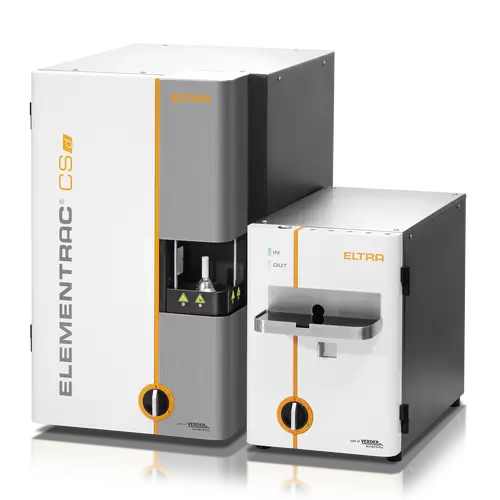
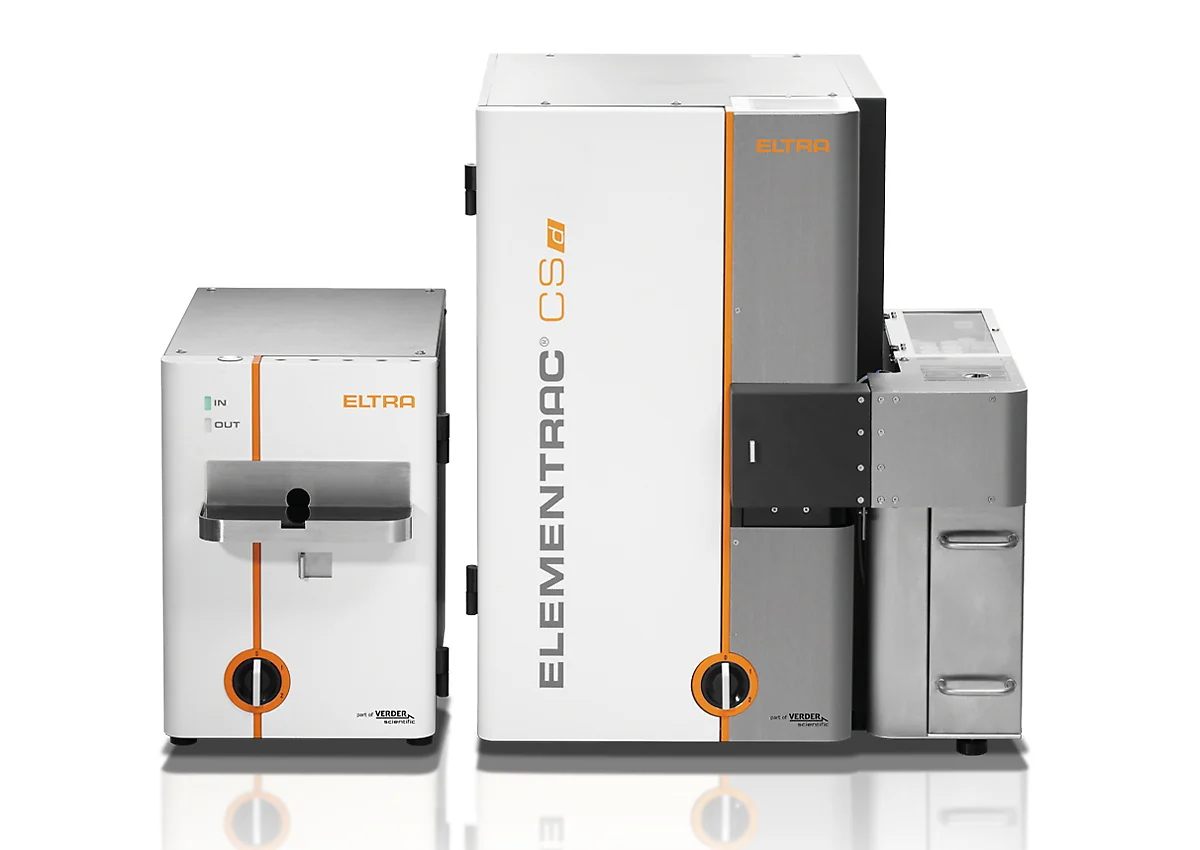
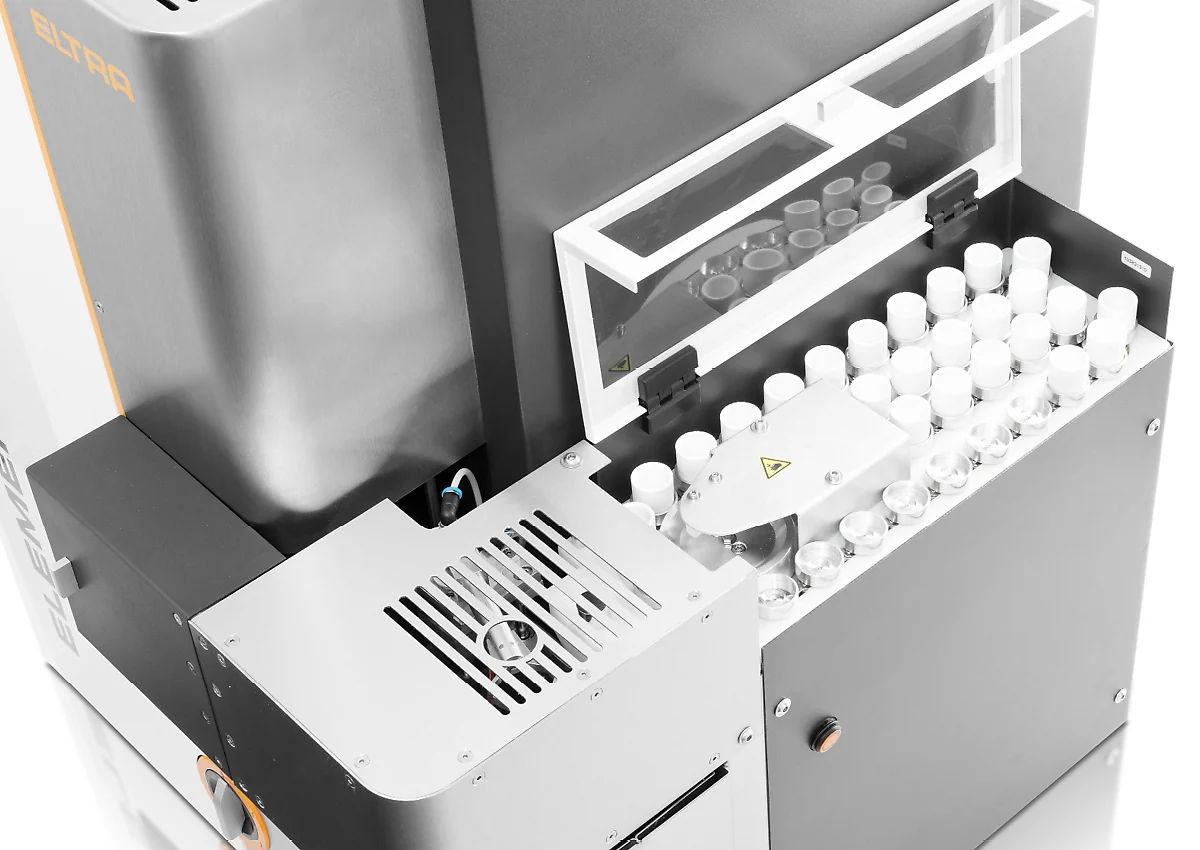
ELTRA ELEMENTRAC CS-d Dual-Furnace Carbon/Sulfur Analyzer – Induction + Resistance | ppm–100%
Dual-furnace analyzer that combines an induction furnace (above 2,000 °C) and a resistance furnace (to 1,550 °C) in one instrument — carbon and sulfur in both inorganic and organic samples, from ppm to 100 %, with up to four gold infrared cells.
- ✔ ELTRA Dual Furnace (EDF) · induction + resistance · organic & inorganic C/S
- ✔ ppm to 100 % · up to 4 independent IR cells · gold IR path
- ✔ Intelligent lance · low-blank port · 36/130 autoloader · TIC · halogen trap
- ✔ Lead time: configured to order — request current timeline
What your QC lab actually checks
Two furnaces cover every sample
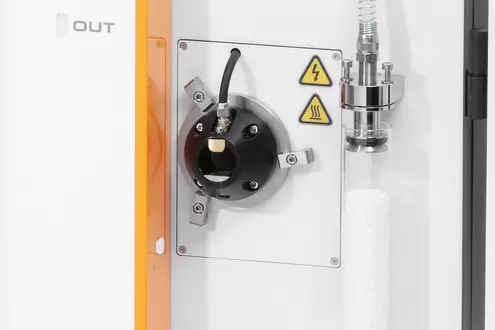
ELTRA Dual Furnace (EDF) Technology combines an induction furnace above 2,000 °C for metals, cast iron and ceramics with a resistance furnace to 1,550 °C for coal, coke and soil — so one instrument covers carbon and sulfur in both inorganic and organic samples from ppm to 100 %. Intelligent lance management, a low-blank sample port and up to four gold infrared cells keep results reliable across the whole range.
An applications engineer on the line
IR-cell configuration, induction and resistance calibrations, autoloader and TIC/halogen options from engineers who run metal additive manufacturing in-house (AO Metal). Sub-4h reply, NDA on request.
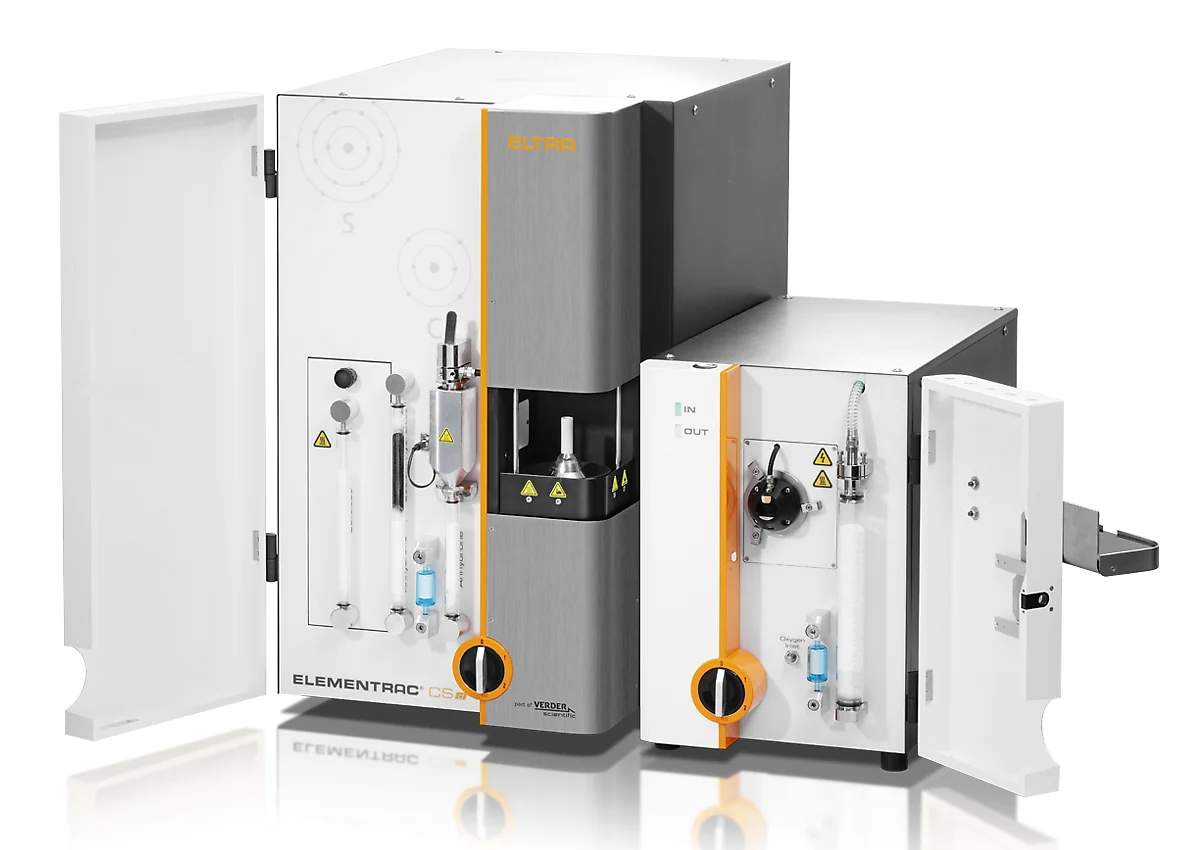
The ELTRA ELEMENTRAC CS-d combines an induction furnace (above 2,000 °C) and a resistance furnace (up to 1,550 °C) in one instrument — ELTRA’s Dual Furnace (EDF) Technology. It determines carbon and sulfur in both inorganic samples (steel, cast iron, ceramics) and organic samples (coal, coke, soil) from the ppm range up to 100 %, using up to four independent infrared cells with gold IR paths. Intelligent lance management and a low-blank resistance sample port give complete combustion and reliable low-level results.
Why high-throughput labs choose the CS-d
One analyzer for organic and inorganic carbon and sulfur — from ppm to 100 %.
Two furnaces, one instrument
ELTRA Dual Furnace (EDF) Technology combines an induction furnace above 2,000 °C for metals and a resistance furnace to 1,550 °C for organics — full flexibility from a single analyzer.
Organic + inorganic, ppm to 100 %
The latest detector technology gives a wide carbon and sulfur range from ppm to 100 % in both furnaces, with up to four independent infrared cells and gold cuvettes as standard.
Intelligent lance + low-blank port
Intelligent lance and combustion management ensure complete combustion of powders without sample loss; a low-blank resistance sample port enables reliable analysis of low-carbon samples.
Autoloader, TIC & halogen trap
Options include a 36- or 130-position autoloader, an HTF-540 pre-heating furnace, a halogen trap for high halogen levels and a TIC module for total inorganic carbon.
How Additive Plus supports it
A configured, installed dual-furnace analyzer with methods dialed in on your samples.
Configure to your samples
We spec the IR-cell configuration, autoloader, pre-heating furnace and TIC/halogen options to your organic and inorganic matrices before it ships.
Install & train
Factory-trained engineers install the analyzer, connect oxygen, air and the PC/balance, and train your team on both furnace methods.
Method & QC support
We help build the SOPs — induction and resistance calibrations, blank control and repeatable carbon/sulfur baselines.
What the CS-d measures
Full technical specifications are in the Specifications tab. Key measurement capability:
| Parameter | ELEMENTRAC CS-d |
|---|---|
| Measured elements | Carbon, sulfur (inorganic and organic samples) |
| Measuring range | ppm range to 100 % (both furnaces) |
| Principle | Dual furnace — induction > 2,000 °C + resistance to 1,550 °C — with solid-state IR |
| Detection | 1–4 infrared cells · gold IR path |
| Analysis time | Induction ~40–50 s · resistance ~60–120 s |
| Requirements | Oxygen 99.5 % · compressed air · PC, monitor, 0.0001 g balance |
Typical sample materials
Carbon and sulfur across metals, minerals and organic matrices.
Not sure the CS-d is the right analyzer?
Compare with single-furnace ELEMENTRAC combustion analyzers.
Organics / resistance onlyELEMENTRAC CS-rView analyzer →
Adds hydrogenELEMENTRAC CHS-rView analyzer →
Why source the CS-d through Additive Plus
- Authorized channel for ELTRA / Verder Scientific lab equipment — sales, installation, training and service in one place.
- Configured to your samples — IR cells, autoloader, pre-heating furnace and TIC/halogen options specified before shipping.
- Method development on your samples — induction and resistance calibrations, blank control and repeatable SOPs.
- <24h response from engineers who run metal additive manufacturing in-house (AO Metal). NDA on request.
| Brand | ELTRA |
| Model | ELEMENTRAC CS‑d |
| Measured elements | carbon, sulfur |
| Samples | inorganic, organic |
| Furnace alignment | horizontal (resistance furnace) and vertical (induction furnace) |
| Sample carrier | ceramic boats / crucibles |
| Field of application | agriculture, chemistry / plastics, coal / power plant, construction materials, engineering / electronics, environment / recycling, geology / mining, glass / ceramics, medicine / pharmaceuticals, steel / metallurgy |
| Furnace | induction furnace, above 2,000 °C resistance furnace (ceramic tube), adjustable up to 1,550 °C (steps of 1 °C) |
| Detection method | solid state infrared absorption |
| Number of IR cells | 1 - 4 |
| Material of IR path | gold |
| Typical analysis time | induction furnace 40 - 50 s resistance furnace 60 - 120 s |
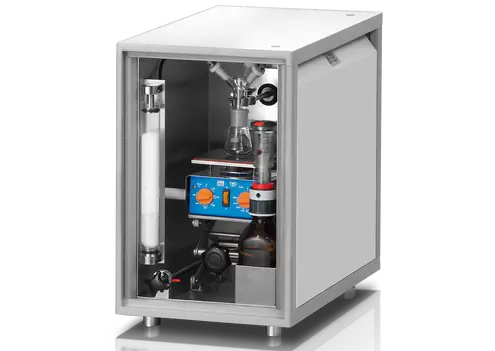
| Chemicals required | magnesium perchlorate, platinized silica (alternatively copper oxide), sodium hydroxide |
| Gas required | compressed air (4 - 6 bar / 60 - 90 psi) oxygen 99.5 % pure (2 - 4 bar / 30 - 60 psi) |
| Power requirements induction furnace | 230 V, 50/60 Hz, 16 A fuse |
| Power requirements resistance furnace | 230 V, 50/60 Hz, 20 A fuse |
| Dimensions (W x H x D) | 890 x 840 x 790 mm / 35.04 x 33.07 x 31.1 in |
| Weight | ~ 200 kg |
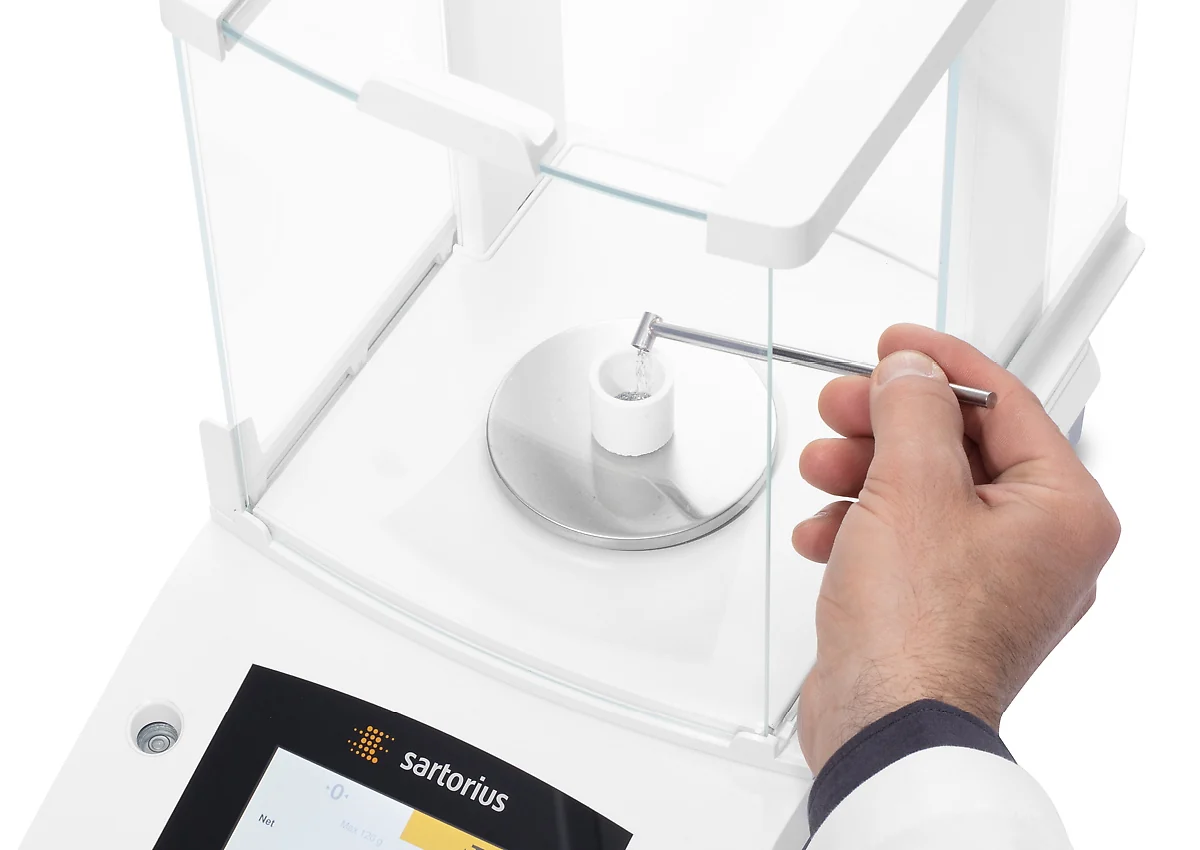
| Required equipment | PC, monitor, balance (resolution 0.0001g) |
| Optional accessories | Autoloader for 36 crucibles, HTF-540 pre-heating furnace, autoloader for 130 crucibles, carrier gas purification, halogen trap |
Product videos
Other products teams run alongside ELTRA ELEMENTRAC CS-d Dual-Furnace Carbon/Sulfur Analyzer – Induction + Resistance | ppm–100%

Resistance-furnace analyzer for fast, simultaneous carbon, hydrogen and sulfur in organic matrices — combustion up to 1,550 °C with a heated H₂O infrared cell for hydrogen and solid-gold IR cells over 20 ppm to 100 %.
- ✔ Simultaneous C / H / S · 20 ppm–100 % · high sample weights
- ✔ Resistance furnace to 1,550 °C · heated H₂O IR cell · up to 3 solid-gold IR cells
- ✔ Low-blank sample port · dual-furnace option · TIC module (DIN EN 15936)
- ✔ Lead time: configured to order — request current timeline
In stock
· Lead time: configured to order — request current timeline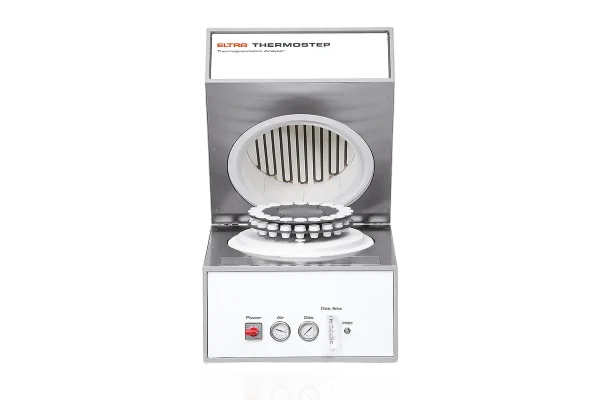
Automated thermogravimetric analyzer that combines a programmable furnace with an integrated balance — measures moisture, ash and volatiles in up to 19 samples per run, 50–1,000 °C.
- ✔ 19 samples + 1 reference · 500 mg–5 g · moisture/ash/volatiles in one run
- ✔ Ceramic furnace 50–1,000 °C · N₂/O₂/air per stage · crucible-lid handling
- ✔ Encapsulated balance 0.1 mg · ASTM D 7582 compliant
- ✔ Lead time: configured to order — request current timeline
Made to order
· Lead time: configured to order — request current timeline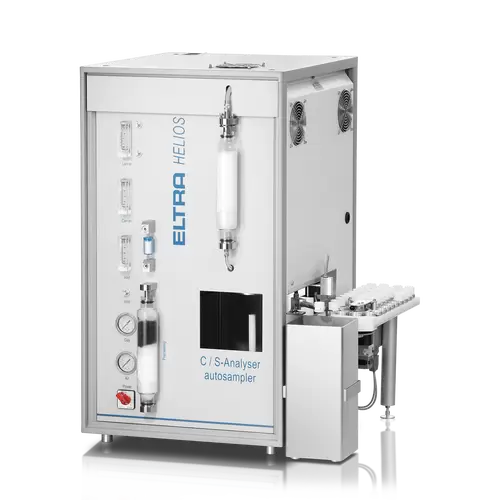
Combustion analyzer for the simultaneous determination of carbon and sulfur — the sample is burned in a resistance furnace up to 1,550 °C and measured by up to four infrared cells, covering 0.005–100 % in 60–120 seconds.
- ✔ C / S + TOC / TIC · 0.005–100 % · single or multi-element
- ✔ Resistance furnace to 1,550 °C (1 °C steps) · up to 4 IR cells · gold IR path
- ✔ 50–500 mg samples · optional 36/130-position autoloader (acid-resistant)
- ✔ Lead time: configured to order — request current timeline
In stock
· Lead time: configured to order — request current timeline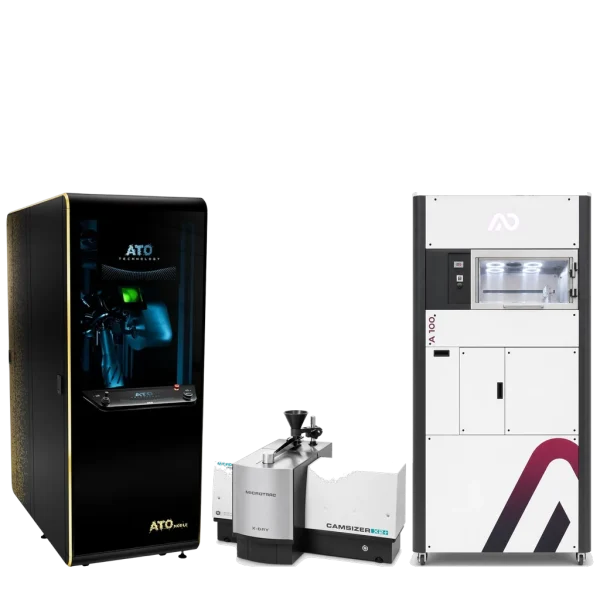
Make your own gold, silver and platinum powder, measure it and print it — the ATO Noble, the Microtrac CAMSIZER X2+ and the AO Metal A100 as one precious-metal cell from one supplier.
- ATO Noble: Au 9 ct to 99.99%, Ag, Pt, Pd, Ir with Zero Loss recovery
- CAMSIZER X2+: size and shape from 0.9 µm to 8 mm in 1–3 minutes
- A100: Ø100 × 100 mm LPBF, optional blue laser for gold and silver
- Installation and training included · 8–14 weeks · 12-month warranty
Made to order
· Lead time 8–14 weeks · installation included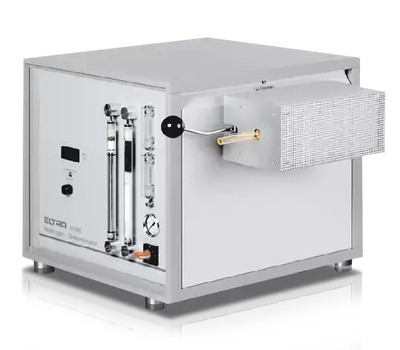
Analyzer for hydrogen in metals by hot extraction — the solid sample drops into a tilting furnace at 900–1,000 °C, and a nitrogen carrier sweeps the diffused hydrogen into a high-capacity thermal conductivity cell in 3–15 minutes.
- ✔ Residual / diffusible hydrogen · hot extraction · precise at low levels
- ✔ Tilting furnace 900–1,000 °C · high-capacity thermal conductivity cell
- ✔ Solid samples up to ø13×60 mm / 10 g · minimal prep
- ✔ Lead time: configured to order — request current timeline
In stock
· Lead time: configured to order — request current timeline
Analyzer for the simultaneous determination of carbon dioxide and water — the sample in a quartz boat is heated in a resistance furnace up to 1,000 °C, and released CO₂ (from carbonates) and water are measured by infrared cells in 2–3 minutes.
- ✔ CO₂ + H₂O simultaneously · minimal sample prep
- ✔ Resistance furnace to 1,000 °C (1 °C steps) · 1–2 IR cells · gold IR path
- ✔ Nitrogen carrier · no halogen trap · single/multipoint calibration
- ✔ Lead time: configured to order — request current timeline
In stock
· Lead time: configured to order — request current timeline
Automated Dumas analyzer for nitrogen / protein and carbon — reliable results in under three minutes with interleave processing, over 70× faster than Kjeldahl, on any solid or liquid matrix.
- ✔ Dumas nitrogen / protein + carbon · validated by AOAC, ISO, DIN, AOCS, OIV
- ✔ < 3 min · interleave analysis · TCD (N) + NDIR (C)
- ✔ Integrated PC + touchscreen · FDA 21 CFR Part 11 · CN-r or N-r
- ✔ Lead time: configured to order — request current timeline
In stock
· Lead time: configured to order — request current timeline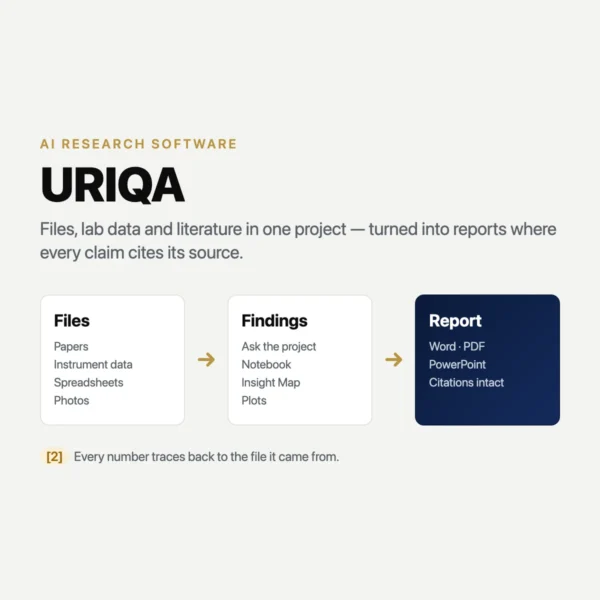

URIQA is an AI research workspace for R&D, testing and QC labs: lab data, instrument exports and papers in one project, turned into reports where every claim cites its source.
- Free plan, no credit card — every AI feature included
- Research $199/yr · Professional $499/yr · Enterprise for institutions
- Word, PDF and PowerPoint exports with citations intact
Start free on URIQA Talk to our applications team
Built by materials scientists, for R&D, testing and QC labs. Our applications team will introduce you to the URIQA team.
In stock
What our customers say
“Harry and team were professional, effective communicators as we set up the order, then they executed quickly and produced an amazing product for us at a very competitive price. Am looking forward to our next print w Additive Plus!”
“Great 3D printing service and the resin parts look super smooth and clean. Really happy with how everything turned out!”
“Harry was very professional and helped me out with my 3D printing needs and explained what options I have in terms of filaments such as PEEK. Highly recommended.”
“I needed a 3D enclosure printed urgently in a specific time period, they did great!”
Common questions
Don't see yours? Email [email protected] — NDA on request, typical reply within 4 hours.
What makes the ELTRA ELEMENTRAC CS-d different?
How does the measurement work in each furnace?
What is the measuring range and IR configuration?
How does the CS-d handle difficult powder samples?
What options and automation are available?
What does the CS-d need to run?
What is the lead time, and can Additive Plus set it up?
Place your order, or talk to an engineer first
Order ELTRA ELEMENTRAC CS-d Dual-Furnace Carbon/Sulfur Analyzer – Induction + Resistance | ppm–100% direct, or talk to materials engineer