
Made to order
- US installation commissioning and operator training included
- Validated parameters a parameter set for your first production alloy
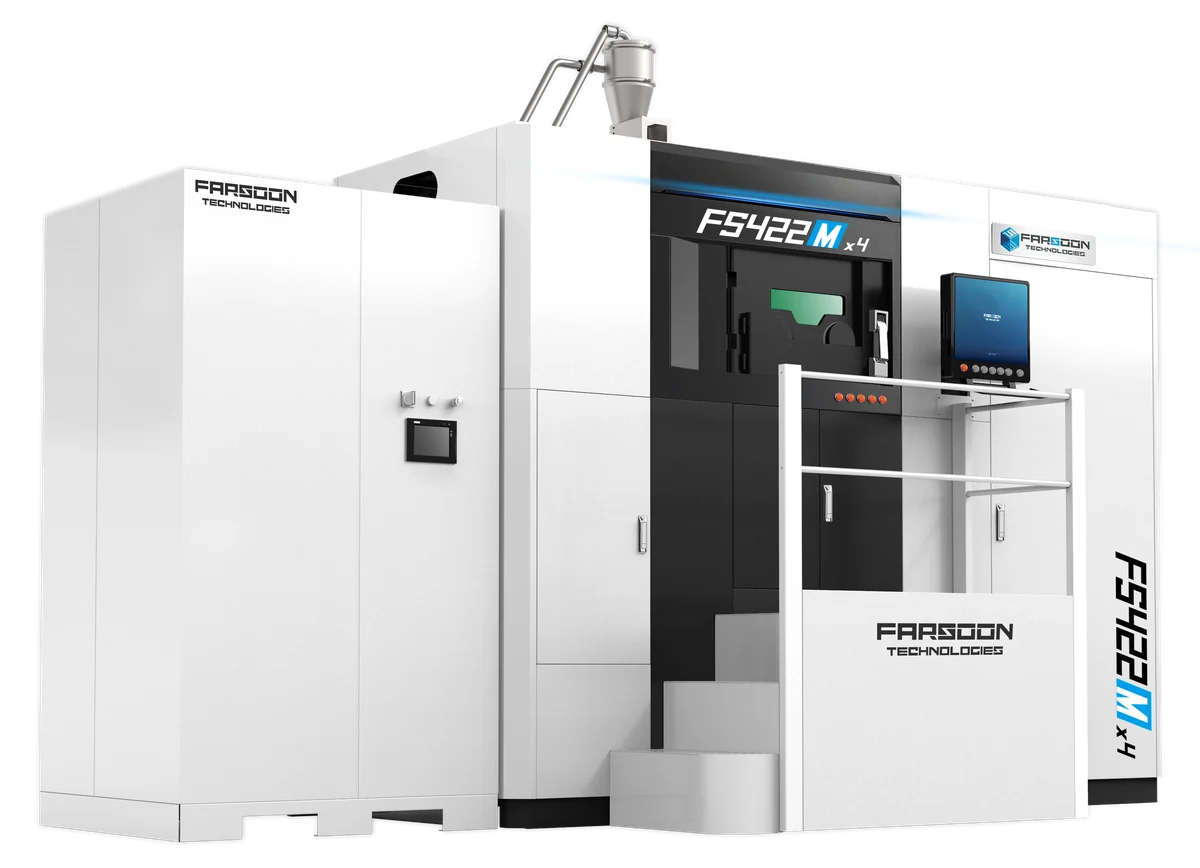
Farsoon FS422M CAMS LPBF Metal 3D Printer – Continuous Production | 16.7×16.7×16.5 in / 425×425×420 mm
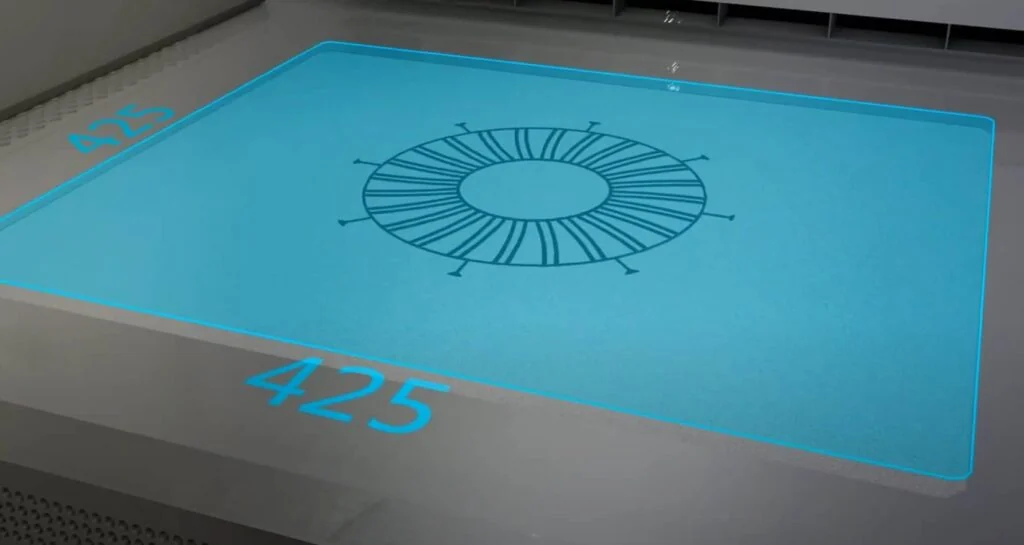
The Farsoon FS422M CAMS is a metal LPBF 3D printer with a 16.7×16.7×16.5 in / 425×425×420 mm build envelope, running a single 500 W laser or quad 500 W lasers.
- ✓ 150 cm³/h — volume build rate
- ✓ 16.7×16.7×16.5 in / 425×425×420 mm build envelope
- ✓ Open platform — full access to process parameters, qualify your own alloy
- ✓ Lead time: built to order — confirmed at quote
Installation and commissioning in the USA: facility and gas planning, start-up and operator training by our US service team.
What your process engineer actually checks
Continuous, not batch
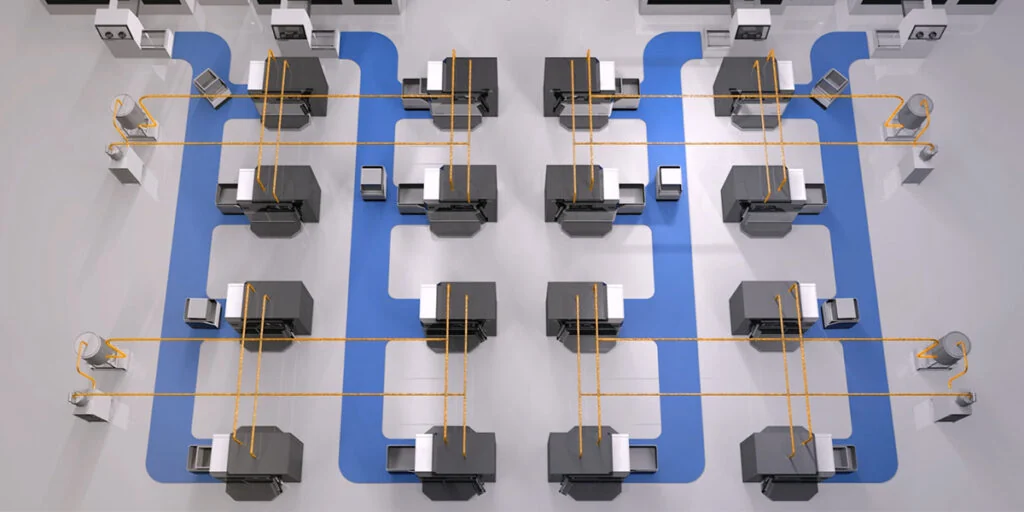
Build, breakout and sieving are separate modules with automated cylinder transport, so the laser is not idle while someone depowders the last job. Quad 500 W lasers take the volume build rate up to 150 cm³/h.
An applications engineer on the line
Not a ticket queue — engineers who run LPBF in production in-house at AO Metal. Alloy qualification, parameter development, troubleshooting. Sub-4h reply, NDA standard.
The Farsoon FS422M CAMS is the second-generation CAMS platform: build, breakout and sieving live in separate modules and the build cylinder moves between them automatically. A 16.7×16.7×16.5 in / 425×425×420 mm envelope (21.7 in tall on the FS422M-H-4) with quad 500 W lasers and a volume build rate up to 150 cm³/h.
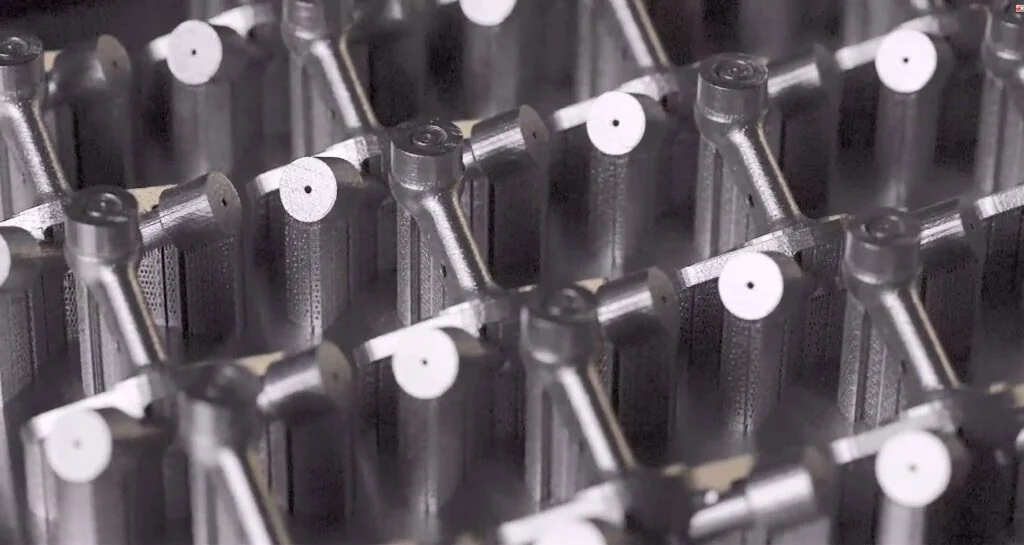
Why engineers choose the FS422M CAMS
Four things your process engineer will check first.
Continuous production, not batch
Build, breakout and powder sieving are separate stations linked by automated cylinder transport. The laser keeps running while the previous cylinder is being depowdered — that is what CAMS means in practice.
Up to 150 cm³/h volume build rate
With the quad 500 W configuration and a high-precision digital scanning system. Multi-laser calibration keeps part performance uniform where the scan fields overlap.
A permanent filter rated past 10 years
The integrated permanent filter system handles reactive materials and is rated for a service life beyond ten years, which removes a recurring consumable from the running cost.
Two build heights on one platform
425×425×420 mm on the FS422M and FS422M-4, or 425×425×550 mm on the FS422M-H-4 when the part is tall rather than wide.
How we deliver and support it
What happens between the purchase order and your first qualified part.
Scope the cell
We size the configuration against your part mix, then plan power, argon or nitrogen supply and extraction with your facilities team. Machine envelope is 138.6×87.4×106.3 in / 3520×2220×2700 mm; EUR/China: 400V±10%, 3~/N/PE, 50Hz, 32A. The US transformer ships with the machine.
Install and train in the USA
Commissioning and operator training by our US service team. First builds are run together, so your operators hand over parts rather than a checklist.
Parameters, spares, engineer
Validated parameter sets for your alloy, US-held spares, and an applications engineer who has run LPBF in production in-house at AO Metal. Sub-4h reply, NDA standard.
What the FS422M CAMS is built for
Continuous Additive Manufacturing System for Serial Metal Production. The FS422M CAMS runs a single 500 W laser or quad 500 W lasers over a 16.7×16.7×16.5 in / 425×425×420 mm build envelope. Full specifications are in the Specifications tab below.
Powder handling and workflow
Qualified materials
Farsoon lists 316L, HX, IN718, IN625, AlSi10Mg, AlMgScZr, TA15, Ti6Al4V and CuSn10, with HAYNES 230 in process development for the FS422M CAMS. Because the platform is open, a grade outside that list is a parameter development project rather than a dead end, and one we can run with you. The alloys we stock are lot-certified and held in the USA.
Typical applications
Where FS422M CAMS systems are actually running.
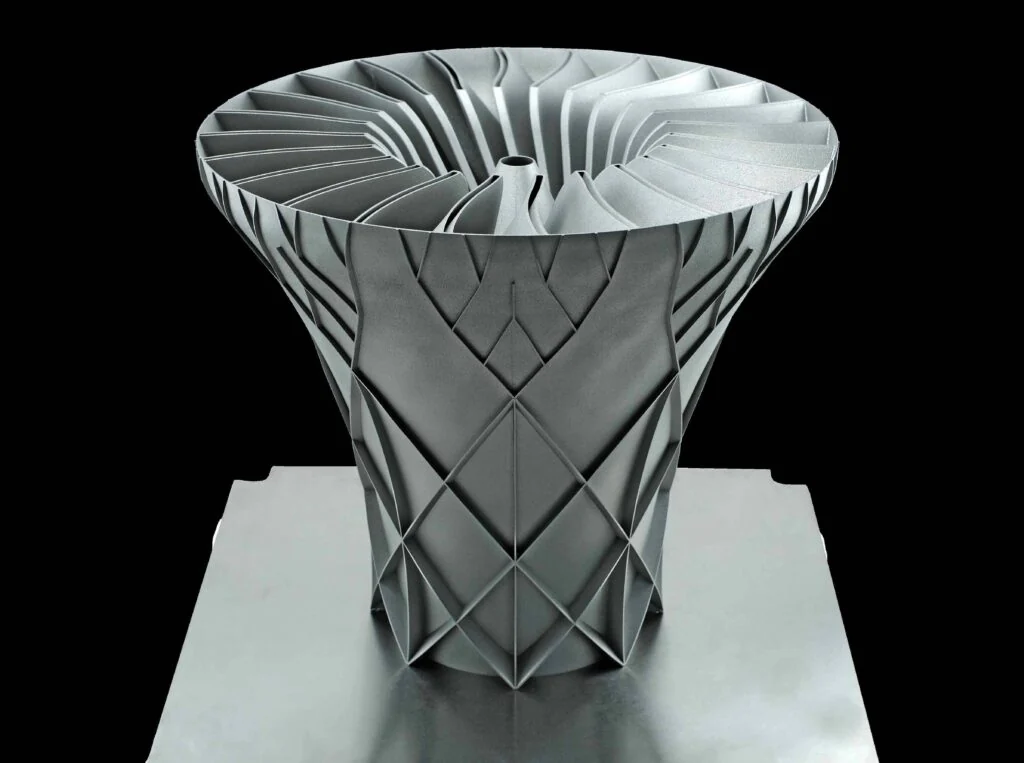
A production case, in numbers
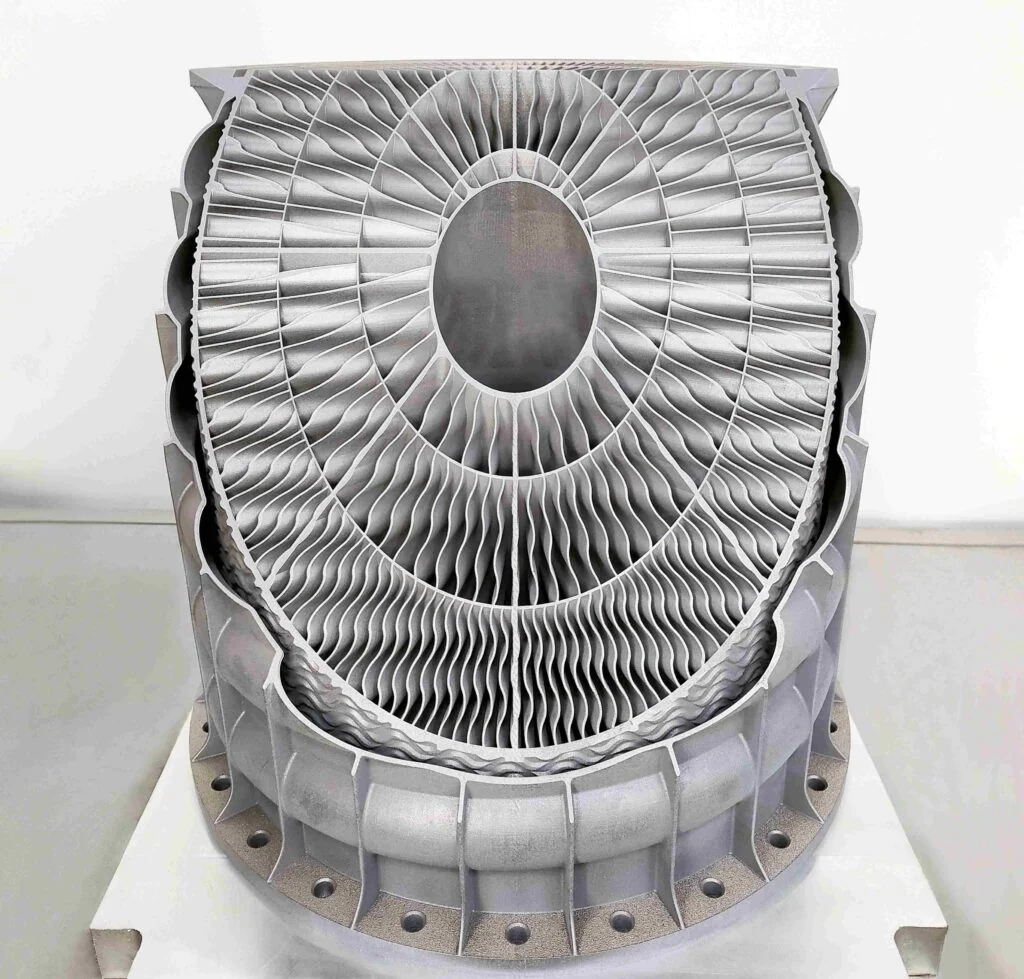
| In-line tube and shell heat exchanger | Figure |
|---|---|
| Machine | FS422M-4, quad laser |
| Material | AlSi10Mg |
| Part size | 16.2×16.2×15.0 in / 412×412×380 mm |
| Built as | One piece, no joints |
Case as published by Farsoon. The part fills almost the whole 425 mm plate.
Not sure the FS422M CAMS is the right frame size?
Three Farsoon LPBF platforms either side of it.
Much taller partsFarsoon FS621MView printer →
Long partsFarsoon FS721MView printer →
Why source the FS422M CAMS through Additive Plus
- US sales, installation, commissioning and operator training by our own service team.
- Applications engineering from a team that runs LPBF in production in-house at AO Metal — parameter development, not a ticket queue.
- Lot-certified metal powders stocked in the USA for the alloys this machine runs.
- Leasing and financing available on capital equipment.
- Print a paid benchmark part in California before you commit to a system.
- Response under 24 hours · 200+ AM systems delivered across 23 countries.
| Brand | Farsoon Technologies |
| External Dimensions (L×W×H) | 138.6×87.4×106.3 in / 3520×2220×2700 mm |
| Build Volume | 425×425×420 mm (16.7×16.7×16.5 in) |
| Net Weight | Approx. 8157 lb / 3700 kg |
| Layer thickness | 0.0008–0.0039 in / 0.02–0.1 mm |
| Scanning Speed | Max. 32.8 ft/s / 10 m/s |
| Laser Type | Quad Lasers, 4×500W, Single Laser, 1×500W |
| Scanner | F theta lenses |
| Inert Gas Protection | Argon/Nitrogen |
| Average Inert Gas Consumption in Process | 3-5 L / min |
| Operating system | 64 bit Windows 10 |
| Software | BuildStar, MakeStar® |
| Data File Format | STL |
| Key Software Features | Open machine key parameters, real-time build parameter modification, three-dimensional visualization, diagnostic functions |
| Power Supply | EUR/China: 400V±10%, 3~/N/PE, 50Hz, 32A · US: transformer supplied with the machine |
| Operating Ambient Temperature | 71.6-82.4 °F / 22-28 °C |
| Material | 316L, AlMgScZr, AlSi10Mg, CuSn10, HAYNES 230, HX, IN625, IN718, TA15, Ti-6Al-4V |
| Technology | Metal LPBF |
| Printing Materials | Metal Powders |
Send your STL and we print a paid benchmark part on a Farsoon metal LPBF system in California, with the parameter set and the cost per part written up.
Other products teams run alongside Farsoon FS422M CAMS LPBF Metal 3D Printer – Continuous Production | 16.7×16.7×16.5 in / 425×425×420 mm
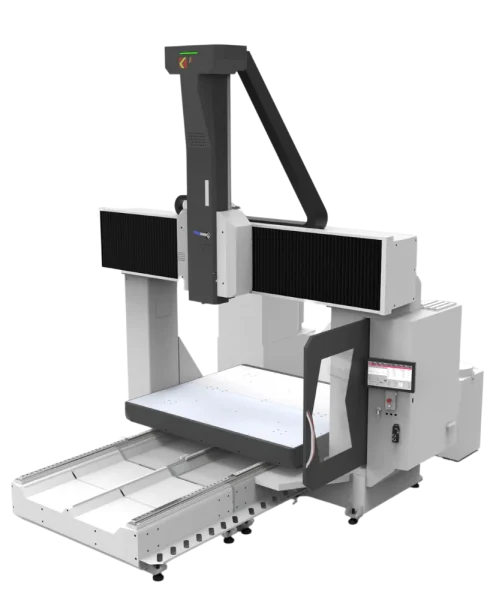
Hybrid additive + subtractive large-format pellet 3D printer — 94×79×53 in / 2400×2000×1350 mm bed, raw polymer granules, 3–16 mm nozzles, up to 30 kg/h. Optional 450°C nozzle and integrated CNC milling. Material cost 5–10× lower than filament.
- ✓ Print + mill in one cell — near-net print, then machined surfaces without a second setup
- ✓ 94×79×53 in / 2.4×2.0×1.35 m bed — up to 30 kg/h, three-phase industrial
- ✓ Lead time: 2–3 months — configured to order, installed and trained on-site
Made to order
· 2–3 months from order placement. Need it sooner? Talk to a specialist.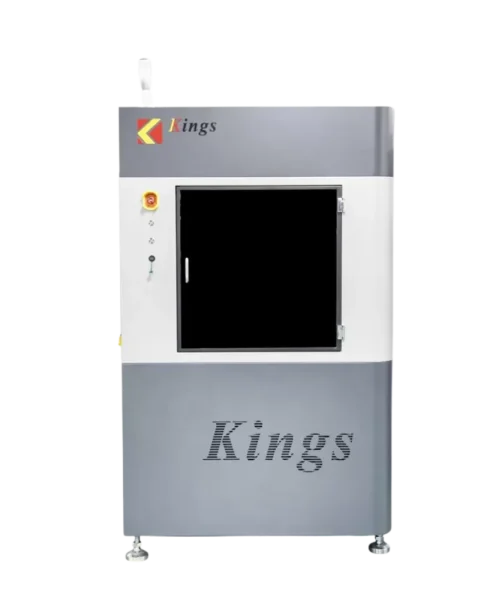
Large-format industrial SLA. Marble frame. Vacuum recoating. Built for long single-piece parts — automotive patterns, extended trim, one-piece molds — without stitching or Z-seam artifacts.
- ✓ 47×32×24 in / 1200×800×600 mm build chamber — a full-length bumper pattern in one run
- ✓ Solid-state 355 nm Nd:YVO4 laser · 0.075–0.8 mm variable beam · 15.0 m/s max scan
- ✓ Full-marble machine frame — thermal stability for ±0.1 mm part accuracy
- ✓ Lead time: 2–3 months — on-site install, calibration & operator training included
Made to order
· 2–3 months from order placement. Need it sooner? Talk to a specialist.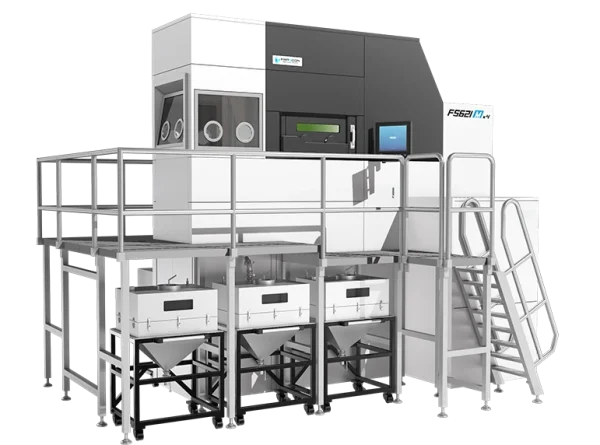
The Farsoon FS621M is a metal LPBF 3D printer with a 24.4×24.4×43.3 in / 620×620×1100 mm build envelope, running four or six lasers at 500 W or 1000 W depending on configuration.
- ✓ 4 — configurations supplied
- ✓ 24.4×24.4×43.3 in / 620×620×1100 mm build envelope
- ✓ Open platform — full access to process parameters, qualify your own alloy
- ✓ Lead time: built to order — confirmed at quote
Installation and commissioning in the USA: facility and gas planning, start-up and operator training by our US service team.
Made to order
· Built to order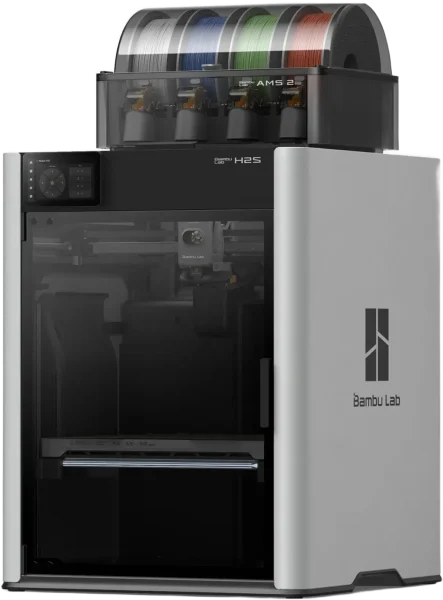
Bambu’s large-format single-nozzle — a 340 mm build for bigger parts and higher throughput, with a 350°C hotend, 65°C active-heated chamber and optional laser & cutting.
- Large 340×320×340 mm build — oversized parts in one piece
- 350°C hotend + 65°C active chamber — engineering filaments without warping
- Optional 10W laser + cutting — one machine, many jobs
- US additive experts · ships in 1–2 business days from US stock · pay over time with PayPal
- Price match against any authorized US dealer · POs, tax-exempt and EDU/GOV orders welcome
In stock
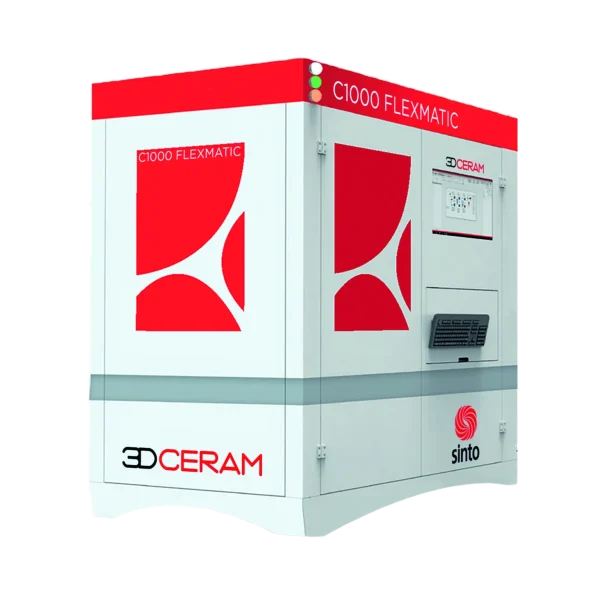
Industrial laser SLA ceramic 3D printer built for serial production — a 12.6×12.6×7.9 in / 320×320×200 mm build, one- or two-laser configuration, and CERIA process automation. Runs alumina, zirconia, silicon nitride, AlN, HA and more, with the full print → debind → sinter workflow supported by Additive Plus.
- 320×320×200 mm build — UV laser 300 mW, ~60 µm spot, one or two lasers.
- 7+ technical ceramics — alumina, zirconia, Si₃N₄, AlN, hydroxyapatite, TCP, cordierite.
- Lead time: configured to order — install, training & debind/sinter support from California.
Made to order
· Lead time: configured to order — request a build slot. Installation, training and process support included from California.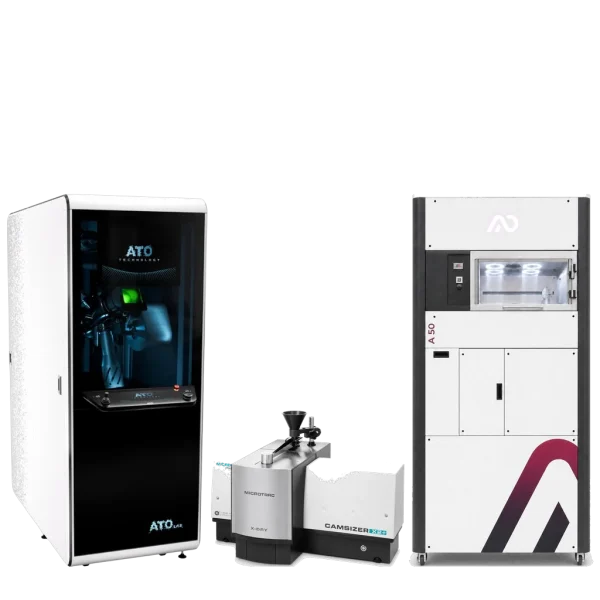
Turn a new alloy into a printed part without leaving the lab. The ATO Lab atomises your own feedstock into spherical powder, the CAMSIZER X2+ measures its size and shape, and the AO Metal A50 prints it with every laser parameter open — no cartridges, no annual licence. Configured to order; lead time on request. Installation and commissioning in the USA: facility and gas planning, start-up and operator training by our US service team.
Made to order
· Lead time on request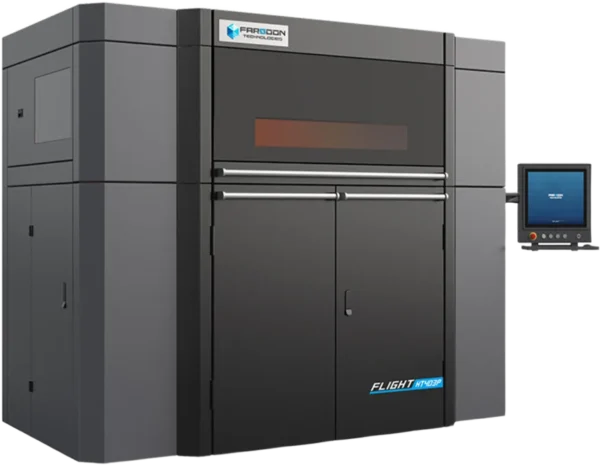
Fiber-laser SLS system: a 500 W fiber laser with dynamic optics drives build rates up to 6 L/h with a fine ~100 µm contour spot, on a 15.7×15.7×17.7 in / 400×400×450 mm build (up to 540 mm tall). Built for high-performance polymers and demanding production, with fully open parameters. Sold, installed and supported in the US by Additive Plus.
- 500 W fiber laser — up to 6 L/h, ~100 µm contour for crisp features.
- High-performance polymers — PA-F nylons, glass-bead, LUVOSINT TPU; chamber to 220 °C.
- Lead time: configured to order — US install, training & validated profiles from California.
Made to order
· Lead time: configured to order — request a build slot. US installation, training and process support included from California.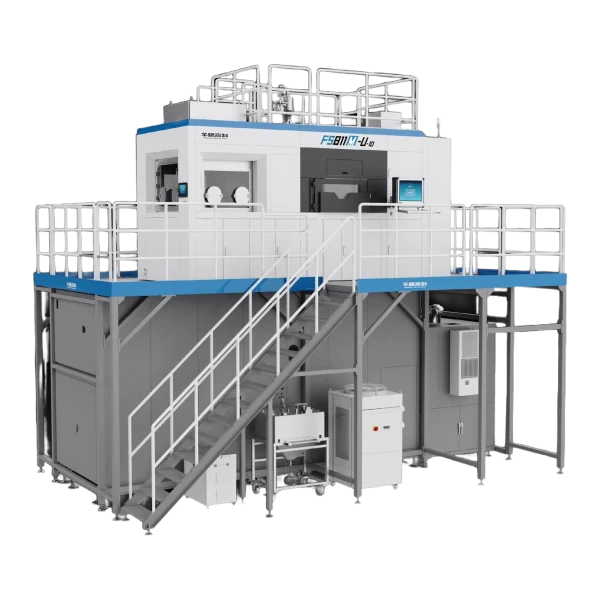
The Farsoon FS812M-U is a tall large-format LPBF metal 3D printer with a compact footprint — an 810 × 810 × 1700 mm build with eight to ten fiber lasers (500 W or 1000 W), in a frame with 41% less floor space than the prior generation.
- ✓ 810 × 810 × 1700 mm build · 8–10 fiber lasers · 41% smaller footprint
- ✓ Titanium & nickel superalloys · multi-layer gas flow field
- ✓ Lead time: configured to order — US install, training and support
Made to order
· Request a build slotCommon questions
Don't see yours? Email [email protected] — NDA standard, typical reply within 4 hours.
Which alloys are qualified for the Farsoon FS422M CAMS?
What makes the FS422M a continuous system rather than a batch machine?
Is the FS422M CAMS an open system, or are we locked to vendor parameters?
What part size does the FS422M CAMS handle, and what fits in one build?
What does installation and training in the USA involve for the FS422M CAMS?
How does the FS422M CAMS compare with the other Farsoon metal platforms?
Can we test the FS422M CAMS before committing to a purchase?
Place your order, or talk to an engineer first
Order Farsoon FS422M CAMS LPBF Metal 3D Printer – Continuous Production | 16.7×16.7×16.5 in / 425×425×420 mm direct, or talk to materials engineer