

Understanding Material Forms In 3D Printing
Or what is 3d printing material form?
Before choosing the right material, it’s essential to understand what material is used in 3D printing and how it’s delivered. Different 3D printing technologies use different material forms, each with strengths, limitations, and use cases.
Here’s a breakdown of the three most common material formats:
Filament (Used in FDM/FFF Printers)
Filament is the most familiar format. It looks like a spool of plastic wire and is fed through a heated nozzle, layer by layer. Common materials include PLA, ABS, PETG, and some metal-polymer composites. Filament is good for education, basic prototyping, and consumer products.


Liquid Resin (Used in SLA/DLP Printers)
Resin starts as a liquid and hardens when exposed to light. It’s typically used in SLA and DLP printers to produce high-detail parts. Resins are great for medical models, jewelry, or any application needing a smooth finish and tight tolerances.
Resin printers work with thermoset plastics, which are not reusable or recyclable. When handling them, safety gear and ventilation are usually required.
Powder (Used in LPBF, SLS, SLM, DMLS)
Powder is used in laser-based industrial systems, including AO Metal’s printers. These printers spread a fine layer of powder and melt it with a laser to build strong, dense parts.


Not all 3D printing materials perform the same. Choosing the right format—filament, resin, or powder—starts with understanding what’s available.
Explore All 3D Printing MaterialsThis is the material used for 3D printing in high-performance applications, especially in aerospace, medical, and product development. Standard powders include stainless steel, aluminum, titanium, copper, and Inconel.
Format Comparison Table
Format | Technologies Used | Best For | Notes |
Filament | FDM/FFF | Entry-level prototyping, teaching | Limited strength and resolution |
Resin | SLA/DLP | High-detail models, medical, dental | Requires post-curing and safety gear |
Powder | SLS, LPBF, DMLS, SLM | End-use parts, metal prototyping | Higher cost, professional use |
If you’re still figuring out what the material for 3D printing should be in your lab or business, the next sections will walk you through common materials, their properties, and how to choose the right one.
Commonly Used 3D Printing Materials (By Category)
With so many options available today, it’s natural to ask: What materials are used in 3D printing, and how do you choose the right one? This section breaks down the materials by category so you can compare their properties and practical uses.
A. Plastics (Polymers)
These are the most widely used materials in consumer and educational 3D printing. They’re affordable, easy to print, and available in various forms like filament and powder.
Material | Properties | Typical Use Cases |
PLA | Biodegradable, rigid, easy to print | Educational models, prototypes |
ABS | Durable, impact-resistant | Functional parts, enclosures |
PETG | Tough, slightly flexible, water-resistant | Containers, mechanical parts |
TPU | Flexible, wear-resistant | Grips, phone cases, and seals |
Nylon | Strong, chemically resistant | Gears, hinges, tooling |
What is the most flexible 3D printing material? TPU is widely considered the best option for flexibility while maintaining part strength.
B. Resins (Photopolymers)
Resins are best used in SLA and DLP printers for detailed, smooth-surface parts. They are typically more brittle than plastics but offer excellent surface quality and dimensional accuracy.
Material | Properties | Typical Use Cases |
Standard resin | High detail, smooth surface | Visual prototypes |
Tough resin | Stronger, impact-resistant | Functional prototypes |
Flexible resin | Rubber-like stretch and bend | Wearables, cushioning |
Castable resin | Burns out cleanly | Jewelry molds, dental parts |
Biocompatible resin | Safe for skin/mouth | Medical guides, dental trays |
What materials can be used in 3D printing for ultra-precise or biocompatible parts? Resins are often your go-to.
C. Powder-Based Polymers
Powders are used in SLS printers and are ideal for strong, functional parts. These materials are self-supporting during printing and require no external supports.
Material | Properties | Typical Use Cases |
Nylon 12 | Durable, UV-resistant | Medical tools, brackets |
Nylon 11 | Higher elasticity | Snap-fit components, enclosures |
TPU powder | Flexible, tough | Seals, wearable prototypes |
Polypropylene (PP) | Chemically resistant, ductile | Containers, medical devices |
Powder materials are widely used in R&D labs and short-run production where part performance matters.
In the next section, we’ll take a closer look at metal materials, because when your project demands strength, precision, and heat resistance, plastic won’t cut it.
Metal Materials for 3D Printing
If your parts need to be functional, heat-resistant, or load-bearing, polymers likely won’t be enough. That’s where metal 3D printing steps in. But what material does a 3D printer use when working with metal? It depends on the printer technology and the part’s application.
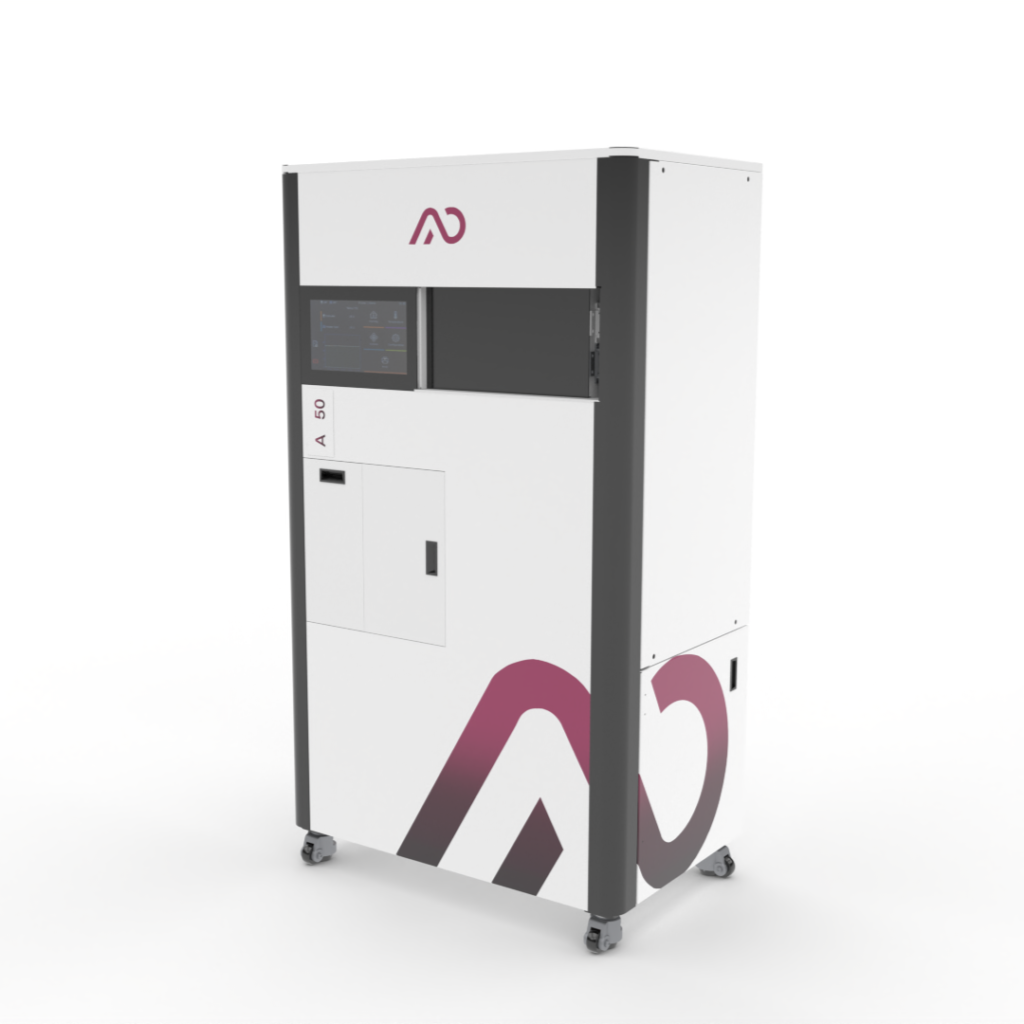
This section focuses on the powder-based metals used in laser powder bed fusion (LPBF) systems like AO Metal’s A30, A50, and A100 printers.
Popular Metal Powders Used in 3D Printing
Metal | Properties | Best For |
Stainless Steel (316L) | Corrosion-resistant, strong | Fixtures, brackets, medical tools |
Titanium (Ti6Al4V) | Lightweight, biocompatible, tough | Implants, aerospace, energy |
Inconel (IN718) | Heat- and oxidation-resistant | Turbines, exhaust systems |
Aluminum (AlSi10Mg) | Lightweight, thermally conductive | Heat exchangers, housings |
Pure Copper | Excellent thermal and electrical conductivity | Inductors, cooling systems, electronics |
These are the materials used in 3D printing when strength, precision, and durability are critical—especially in industries like aerospace, automotive, and medical device manufacturing.

AO Metal Printer Compatibility
AO Metal printers are built specifically to support challenging metals and demanding applications. Here’s a quick reference:
AO Metal Printer | Compatible Metal Materials | Ideal For |
316L, Ti6Al4V, AlSi10Mg | Compact R&D labs, education, testing | |
Adds IN718, Copper | Advanced prototyping, short-run production | |
All above + support for tungsten, tantalum, molybdenum, with optional high-temp platform | Industrial research, material development |
All systems use inert gas shielding (argon) and optional blue laser technology for reflective metals.
Caution: Metals That Are Difficult to Print
While many ask what materials can be used in 3D printing, it’s just as important to know which materials are risky or limited:
- Magnesium – Highly flammable in powder form
- Zinc – Prone to vaporization
- Tungsten – Requires specialized high-temperature build platforms.
If you’re unsure what the material used in 3D printing should be for your specific part or process, always check safety data and material specs—or talk to an expert.
Need help deciding which metal is right for your AO Metal printer? Request a free consultation or sample part to evaluate real-world performance.
Advanced And Experimental Materials
Beyond traditional plastics and metals, additive manufacturing now supports a growing list of specialized and experimental materials. If you’re wondering what materials can be used in 3D printing to achieve unique textures, flexible properties, or functional enhancements, this section is for you.
These options are beneficial for research labs, design testing, and specialized manufacturing.
Materials Worth Exploring
- Wood-Filled Filament
A PLA-based material blended with real wood fibers. Produces natural-looking prints with a wood-like finish and smell. Ideal for visual models and architectural pieces. - Carbon Fiber Composites
Filaments or powders reinforced with chopped carbon fibers offer high strength and stiffness while remaining lightweight. They are best for tooling, automotive brackets, or drone parts. - Silicone-Based Resins
True silicone is available for SLA/DLP systems. It provides excellent flexibility, softness, and tear resistance and is used in medical, wearable, and robotic applications. - Ceramic Powders
High-temperature, chemically resistant materials such as alumina or zirconia are still emerging in additive workflows but valuable in biomedical and aerospace research. - Conductive Filaments
Typically, carbon-infused PLA or ABS that allows low-voltage electrical conductivity. Great for basic circuits, sensors, or touch-enabled prototypes.
Understanding these options helps teams prepare for future needs. It’s no longer just about what materials are used in 3D printing today, but what will be viable in tomorrow’s labs and production floors.
Are you interested in testing nonstandard powders or composites with AO Metal printers? Our open-platform setup supports a wide range of custom materials. Contact us to explore your options.
Material Costs & Print Considerations
From high-detail prototypes to biocompatible applications, selecting the right resin is essential for accuracy and performance.
Explore SLA & DLP ResinsOnce you know what materials are used in 3D printing, the next question is: How much do they actually cost?
Material prices vary widely depending on the format (filament, resin, or powder), quality, and performance properties. But there’s more to consider than just the material itself—your printer type, build size, post-processing needs, and waste factor all affect real-world costs.
How Much Does 3D Printer Material Cost?
Here’s a general breakdown based on material type:
Material Type | Common Materials | Typical Cost Range (per kg) |
Filament (FDM/FFF) | PLA, ABS, PETG, TPU | $20 – $100 |
Resin (SLA/DLP) | Standard, Tough, Castable | $80 – $300 |
Powder (SLS, LPBF) | Stainless Steel, Titanium, Inconel | $200 – $600+ |
Composite Filaments | Carbon fiber, metal-filled PLA | $60 – $150 |
So, how much does 3D printing material cost for a real part? It depends on:
- Material type and grade
- Part size and infill percentage
- Printing speed and energy usage
- Post-processing steps (sintering, curing, machining)
AO Metal’s LPBF systems are designed to minimize material waste and support fast powder changeovers, making them ideal for labs and teams printing with expensive materials like copper or Inconel.
Other Print Considerations
- Part complexity: More supports or overhangs can increase material use, especially with resin and metal powders.
- Surface finish: Some materials (like PLA or Nylon) print cleanly, while others require sanding or polishing.
- Printer compatibility: Not every printer can handle every material. For example, abrasive filaments (like carbon fiber) require a hardened nozzle, while metal powders require inert gas protection.
- Strength vs. cost trade-offs: Not all strong materials are expensive, and not all expensive ones are strong. Ask yourself: how strong is 3D printed material in real use, and is the cost justified?
Want help estimating part cost or calculating break-even points for your R&D or production setup? Contact Additive Plus for a material compatibility check or sample quote.
Filament quality directly affects print strength, consistency, and surface finish—especially in educational and prototyping environments.
Browse 3D Printing FilamentsApplication-Based Material Recommendations
Not all 3D printing materials are created equal, and not every team needs the same solution. Whether you’re designing medical components or prototyping at a startup, it’s helpful to know what is the material used in 3D printing for specific use cases.
Below is a breakdown of recommended materials by application type to help you make faster, more confident decisions.
For Research & Development Labs
- Materials: Titanium (Ti6Al4V), Inconel (IN718), Stainless Steel, Nylon 12
- Why: These materials offer strength, high heat tolerance, and repeatable results. Ideal for validating functional prototypes or developing new alloys.
- Printer Fit: AO Metal A100 (for flexible alloy testing), A50 (for precise prototyping)
For Aerospace & Defense
- Materials: Inconel, Aluminum, Titanium
- Why: Lightweight, heat-resistant, and strong—suitable for turbine parts, housings, and structural components.
- Notes: Metal powders used in LPBF systems produce high-performance, isotropic parts.
For Medical & Dental Applications
- Materials: Stainless Steel, Titanium, Biocompatible Resins
- Why: Biocompatibility and corrosion resistance make these materials ideal for implants, surgical tools, and dental frameworks.
- Recommended Systems: LPBF metal for structural parts, SLA for fit-and-try guides
For Startups and Product Prototyping
- Materials: PLA, PETG, Stainless Steel (via LPBF), Carbon-Filled Nylon
- Why: Mix affordability with performance. PLA and PETG help test form, while stainless and composites validate function.
- Questions to Ask:
- Does the part need to hold up under load?
- How much does 3D printer material cost for multiple iterations?
For Educational Settings
- Materials: PLA, TPU, Aluminum (for metal-capable schools), Wood-based filaments
- Why: Safe, low-cost, and visually engaging for students learning design or material science
- Printer Fit: FDM printers for entry-level; A30 for compact, real-world metal printing
For Jewelry & Custom Design
- Materials: Castable wax, Gold/Platinum (via LPBF or investment casting), Clear resins
- Why: High-detail resolution and easy burnout make these ideal for casting or display models
- Fun Fact: Yes, what materials can be 3D printed includes gold, but usually through wax mold workflows.
Matching the right material to the right job is one of the most important parts of additive manufacturing success. If you’re still not sure what material is used for 3D printing in your specific field, our team can help.
Choosing The Right Material Starts With The Right Knowledge
Understanding what materials are used in 3D printing is more than just knowing names like PLA or titanium—it’s about knowing what will actually work for your part, your process, and your goals.
We’ve covered:
- The formats of 3D printing materials come in: filament, resin, and powder
- The most common and specialized materials across industries
- Real considerations like how much 3D printing material costs and which metals work best for your application
- What to consider when choosing a material: strength, safety, flexibility, budget, and printer compatibility
- How Additive Plus products help teams get started with industrial-grade metal printing, without unnecessary complexity or waste
Whether you’re experimenting in a lab, scaling up product development, or teaching the next generation of engineers, the material you use directly affects your outcomes. And with AO Metal, you don’t have to figure it out alone.
Have questions about what material does a 3D printer use in your workflow, or need help choosing the best one?
Contact Additive Plus for a side-by-side printer comparison, application advice, or a sample print.
Explore What’s New in 3D Printing
- Open House: Advanced 3D Printing Technologies in Action
- SLA vs FDM 3D Printer: A Comprehensive Comparison
- Types of Springs and Their Applications: A Complete Engineering Guide
- How to Choose an Industrial Vacuum for SLS and Metal Printing Workflows
- Best PLA Filament to Start With: A Beginner’s Guide to Choosing the Right Material
- Corded vs Cordless Industrial Vacuums for 3D Printing Labs: Which Is More Practical?
- Inspection and Quality Control of Carbon Fiber Monocoque for Hypercars with FreeScan Trak Pro2
- Why Industrial Vacuum Cleaners with HEPA/ULPA Filters Are Essential in 3D Printing
- Renting vs Buying Industrial Vacuums for Metal & Plastic Powder Handling: Pros & Cons
- 3D Printing vs Injection Molding: Which Manufacturing Method Is Right for You?
- Ashkhen Ovsepyan: Making Metal 3D Printing Accessible
- Powder Analysis and Manufacturing with Microtrac, ATO Lab Plus & AO Metal – July 2025
From PLA to Nylon, plastic materials remain the backbone of fast prototyping and functional testing.
Shop Plastic 3D Printing MaterialsFrequently asked questions
Can I mix materials in one 3D print?
It depends on the printer. Some multi-material FDM printers can combine materials like PLA and TPU in a single print, but most metal or resin systems are designed to work with one material per job. If multi-material capability is critical, check whether your printer supports dual extrusion or tool-changing features.
Are all materials safe to handle?
No. Some materials—like uncured resins or fine metal powders—require specific safety measures, including gloves, ventilation, and sometimes fume extraction or inert gas environments. Always review the Material Safety Data Sheet (MSDS) for any new material before use.
Do materials expire or degrade over time?
Yes. Filaments like TPU and Nylon absorb moisture from the air and degrade if not stored properly. Metal powders can oxidize, and resins may separate or cure if exposed to light. Use sealed, climate-controlled storage to extend shelf life.
How do I test if a material is right for my part?
Start with a small test print under your real-world conditions—same geometry, environment, and stresses the final part will face. Many teams also compare print performance across materials using standardized test models like tensile bars, lattice samples, or housings.
What are the environmental impacts of different materials?
Biodegradable plastics like PLA are more sustainable but not always suitable for performance parts. Metal powders can often be recycled, and advanced printers (like AO Metal systems) are designed to reduce powder waste. Check for circular-use programs or reclaim options from your material supplier.
Can I use third-party materials with AO Metal printers?
Yes. AO Metal systems are built with open-parameter access, allowing qualified users to test and print with a wide range of third-party powders. That flexibility is especially useful for R&D labs or institutions developing new alloys or working with niche applications.
What’s the difference between technical datasheets and real-world results?
Technical datasheets provide baseline properties (like tensile strength or hardness) measured in ideal lab conditions. Real-world performance often depends on how the part is printed—print orientation, post-processing, and operating environment all play a role. Always validate materials under your own use case.
Have a question or a project? Let’s talk.
Tell us what you need — a real applications engineer replies within 24 hours. NDA on request, no sales script.