
In stock
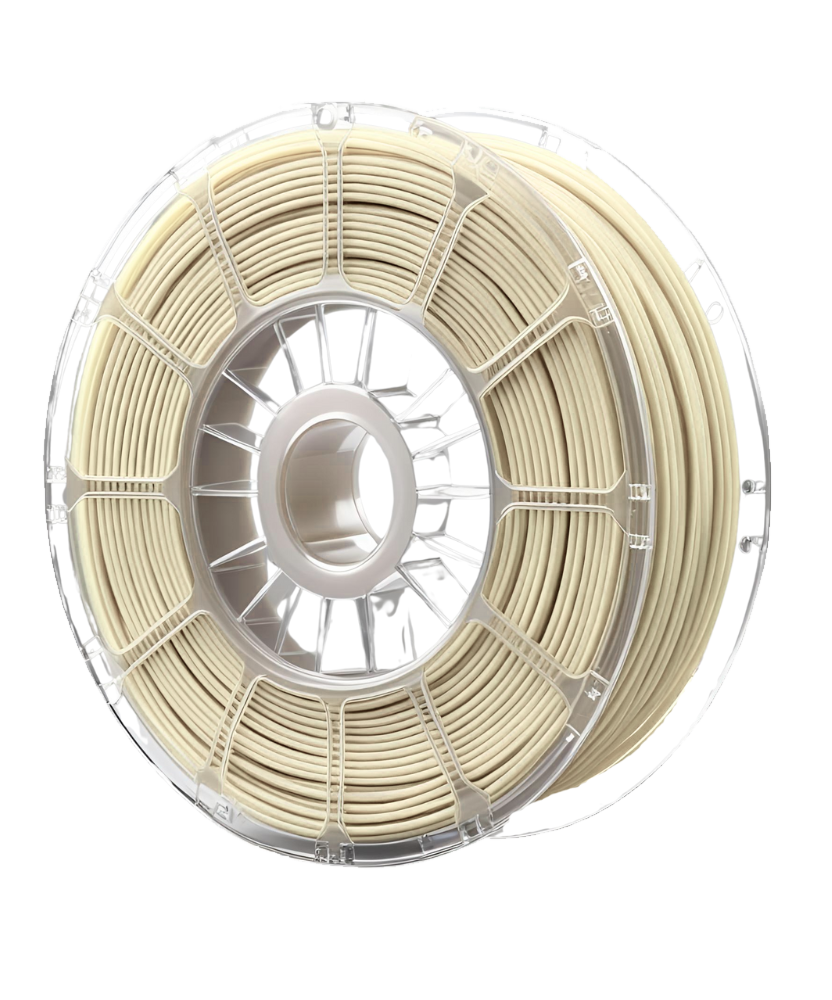
Fila-MAT Alumina 1,75mm
Print dense alumina (Al₂O₃) ceramic parts on 3DCeram's M.A.T. FFF platform, then debind and sinter to a technical-ceramic component.
- ✔ 295 MPa average flexural strength, 213 GPa elastic modulus and 3.9 g/cc after solid-state sintering at 1650°C
- ✔ Debind and sinter parameters plus the full datasheet included with every spool
- ✔ 1.75mm ceramic feedstock for the 3DCeram M.A.T. FFF head — mutual NDA before any spec review
What your process engineer actually checks
Third-party mechanical data
295 MPa average flexural strength (3-point bending, 16 samples, ±53 MPa), 213 GPa elastic modulus and 3.9 g/cc density after sintering. You qualify Fila-MAT Alumina against measured numbers, not a filament-vendor estimate.
Debind and sinter parameters included
Every spool ships with 3DCeram's datasheet and the full print, debind and solid-state-sinter cycle (1650°C) for the M.A.T. FFF head, so parts reach target density on the first build instead of after trial-and-error.
A materials engineer on the line
Shrinkage, warpage and sintering questions go to an engineer who has run bound-ceramic FFF — not a ticket queue. Sub-4h reply, mutual NDA standard before any spec review.
.tabs-section .tab-pane table{border-collapse:separate;border-spacing:0;width:100%;border:1px solid #E6E8EC;border-radius:12px;overflow:hidden;margin:18px 0;font-size:15px;line-height:1.45}.tabs-section .tab-pane table th,.tabs-section .tab-pane table td{border-bottom:1px solid #EFF1F4;border-right:1px solid #EFF1F4;padding:11px 14px;text-align:left;vertical-align:top;color:#23262B}.tabs-section .tab-pane table thead th{background:#F4F1E9;color:#1C2A3A;border-bottom:2px solid #D6B16F;font-weight:700;letter-spacing:.02em}.tabs-section .tab-pane table tbody th,.tabs-section .tab-pane table tbody td:first-child{background:#F7F8FA;font-weight:600;color:#101114}.tabs-section .tab-pane table tr td:last-child,.tabs-section .tab-pane table tr th:last-child{border-right:0}.tabs-section .tab-pane table tbody tr:last-child td{border-bottom:0}.tabs-section .tab-pane h2{border-left:3px solid #D6B16F;padding-left:12px;margin-top:30px}.tabs-section .tab-pane ul{list-style:square;padding-left:20px}.tabs-section .tab-pane ul li::marker{color:#D6B16F}.final-cta{display:none}.rev-section{display:none!important}.tabs-section .tab-pane figure{margin:24px auto;text-align:center;max-width:600px}.tabs-section .tab-pane figure img{max-width:600px;width:100%;height:auto;border-radius:14px;border:1px solid #F0EDE8}.tabs-section .tab-pane figcaption{font-size:12.5px;color:#8C877D;margin-top:7px}
.tab-pane .lead{font-size:15.5px;color:#5B5751;line-height:1.6;max-width:820px}
.tab-pane .desc-block{margin-top:32px}
.tab-pane .desc-block-head{margin-bottom:14px;max-width:780px}
.tab-pane .desc-block-head h4{font-size:17px;font-weight:800;letter-spacing:-.01em;color:#323131;margin:0 0 4px;position:relative;padding-left:14px}
.tab-pane .desc-block-head h4::before{content:””;position:absolute;left:0;top:5px;bottom:5px;width:3px;border-radius:2px;background:#D6B16F}
.tab-pane .desc-block-head .sub{font-size:13px;color:#8C877D;line-height:1.55;margin:0;padding-left:14px}
.tab-pane .tbl-note{font-size:12px;color:#8C877D;margin-top:-8px}
.tab-pane .feat-grid{display:grid;grid-template-columns:repeat(2,1fr);gap:14px 28px;margin-top:8px;padding-left:14px}
.tab-pane .feat-grid br,.tab-pane .app-chips br,.tab-pane .alt-grid br,.tab-pane .how-grid br{display:none}
.tab-pane .feat-tile{display:flex;gap:11px;align-items:flex-start}
.tab-pane .feat-tile .ft-ico{width:26px;height:26px;border-radius:6px;background:#FBF9F4;color:#5B5751;display:flex;align-items:center;justify-content:center;flex-shrink:0;margin-top:1px;border:1px solid #F0EDE8}
.tab-pane .feat-tile .ft-ico svg{width:14px;height:14px;fill:currentColor}
.tab-pane .feat-tile h5{font-size:13.5px;font-weight:700;color:#323131;margin:0 0 2px;line-height:1.3}
.tab-pane .feat-tile p{font-size:12.5px;color:#5B5751;line-height:1.5;margin:0}
.tab-pane .how-grid{display:grid;grid-template-columns:repeat(3,1fr);gap:24px;margin-top:8px;padding:22px 24px;background:linear-gradient(135deg,#070F22 0%,#0B1B3A 50%,#2D2A22 100%);border-radius:12px;position:relative;overflow:hidden;color:#fff}
.tab-pane .how-grid::before{content:””;position:absolute;top:0;left:0;right:0;height:3px;background:linear-gradient(90deg,#D6B16F 0%,#FFE2A6 50%,#D6B16F 100%)}
.tab-pane .how-step{position:relative;z-index:1}
.tab-pane .how-step .hs-n{font-family:”SF Mono”,ui-monospace,monospace;font-size:10px;font-weight:700;color:#D6B16F;letter-spacing:.1em;margin-bottom:6px;display:inline-flex;align-items:center;gap:6px;text-transform:uppercase}
.tab-pane .how-step .hs-n::before{content:””;width:14px;height:1px;background:#D6B16F}
.tab-pane .how-step h6{font-size:13.5px;font-weight:800;color:#fff;margin:0 0 4px;line-height:1.25}
.tab-pane .how-step p{font-size:12.5px;color:rgba(255,255,255,.78);line-height:1.5;margin:0}
.tab-pane .app-chips{display:grid;grid-template-columns:repeat(2,1fr);gap:9px 28px;margin-top:8px;padding-left:14px}
.tab-pane .app-chip{display:flex;align-items:center;gap:10px}
.tab-pane .app-chip .ac-ico{width:22px;height:22px;border-radius:5px;background:#FBF9F4;color:#5B5751;display:flex;align-items:center;justify-content:center;flex-shrink:0;border:1px solid #F0EDE8}
.tab-pane .app-chip .ac-ico svg{width:12px;height:12px;fill:currentColor}
.tab-pane .app-chip .ac-t{font-size:13px;color:#323131;font-weight:700}
.tab-pane .app-chip .ac-s{font-size:11.5px;color:#8C877D;font-weight:500;margin-top:1px}
.tab-pane .alt-grid{display:grid;grid-template-columns:repeat(3,1fr);gap:12px;margin-top:8px}
.tab-pane .alt-card{background:#fff;border:1px solid #EAE7E1;border-radius:10px;padding:14px 16px 13px;display:flex;flex-direction:column;gap:5px;position:relative;overflow:hidden;text-decoration:none;transition:border-color .2s,transform .2s,box-shadow .2s}
.tab-pane .alt-card::before{content:””;position:absolute;top:0;left:0;right:0;height:2px;background:#D6B16F;transform:scaleX(.15);transform-origin:left;transition:transform .3s}
.tab-pane .alt-card:hover{border-color:#D6B16F;transform:translateY(-2px);box-shadow:0 6px 16px rgba(20,16,8,.08)}
.tab-pane .alt-card:hover::before{transform:scaleX(1)}
.tab-pane .alt-card .ac-lbl{font-size:10.5px;font-weight:700;color:#8C877D;letter-spacing:.06em;text-transform:uppercase}
.tab-pane .alt-card .ac-name{font-size:15px;font-weight:800;color:#323131;line-height:1.2}
.tab-pane .alt-card .ac-meta{font-size:11.5px;color:#5B5751;line-height:1.4;margin-top:1px}
.tab-pane .alt-card .ac-cta{margin-top:8px;font-size:12px;color:#5B5751;display:inline-flex;align-items:center;gap:5px;font-weight:600;padding-top:8px;border-top:1px solid #F0EDE8}
.tab-pane .alt-card:hover .ac-cta{color:#323131}
.tab-pane .desc-close{margin-top:16px;padding:15px 20px;background:#FBF9F4;border-left:3px solid #D6B16F;border-radius:0 8px 8px 0;font-size:13.5px;color:#5B5751;line-height:1.55;max-width:820px}
.tab-pane .desc-close b{color:#323131;font-weight:700}
.tab-pane .desc-close .btn-spec{display:inline-flex;align-items:center;gap:7px;margin-top:12px;padding:10px 20px;border:0;border-radius:999px;background:linear-gradient(135deg,#FFBF00,#FF9000);color:#1C1A16;font-weight:700;font-size:13px;cursor:pointer;transition:transform .15s,box-shadow .15s}
.tab-pane .desc-close .btn-spec:hover{transform:translateY(-1px);box-shadow:0 6px 14px rgba(255,144,0,.35)}
@media(max-width:760px){.tab-pane .feat-grid,.tab-pane .app-chips,.tab-pane .alt-grid,.tab-pane .how-grid{grid-template-columns:1fr}}
Fila-MAT Alumina is 3DCeram’s ceramic FFF feedstock — 1.75mm filament loaded with alumina (Al₂O₃) for the M.A.T. multi-head extrusion printer. Print the green part on a standard FFF head, then debind and solid-state sinter at 1650°C to a dense technical-ceramic component.
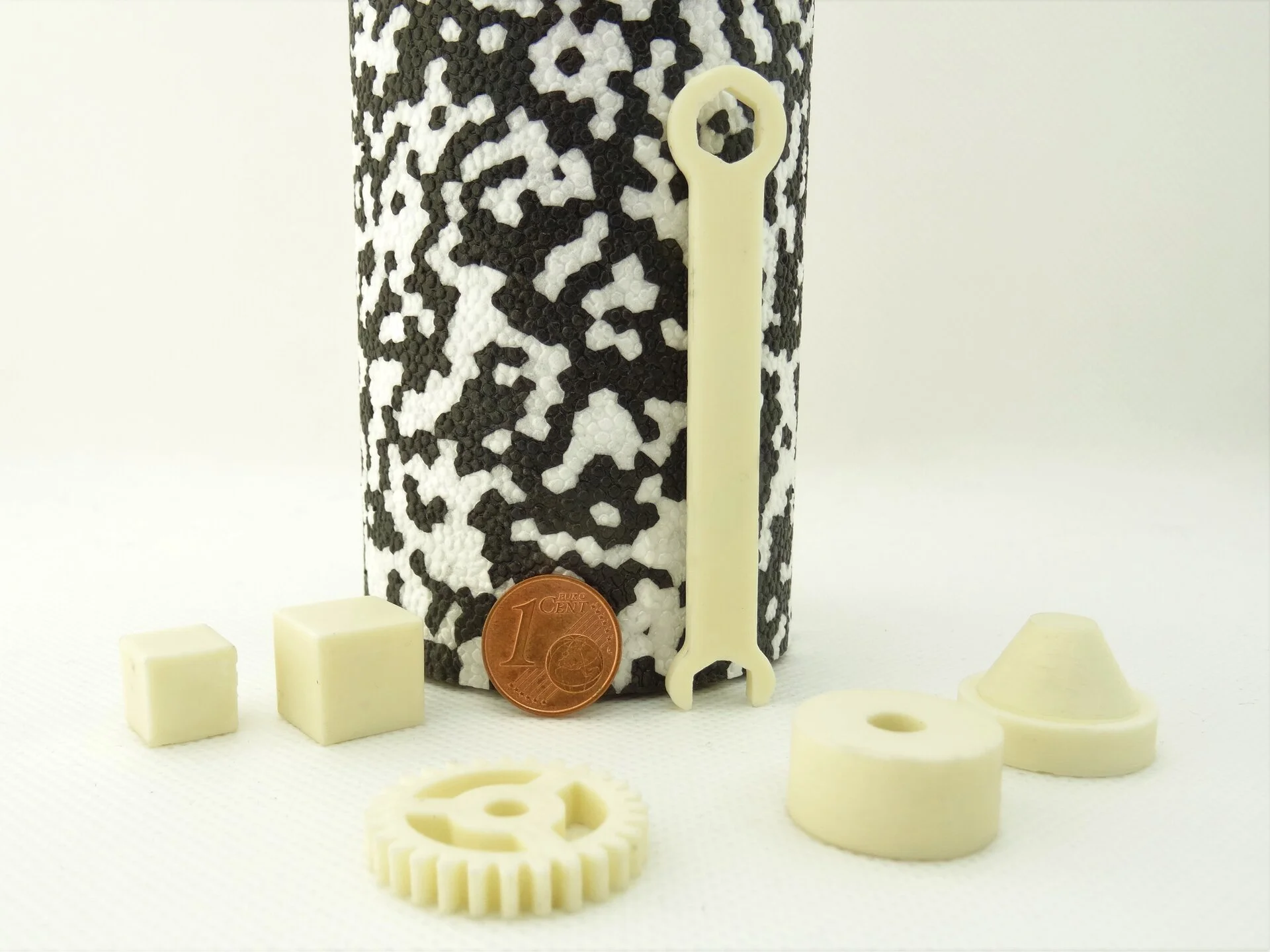
Why engineers choose Fila-MAT Alumina
Four things a process engineer checks before qualifying a ceramic feedstock.
295 MPa flexural strength
Average 3-point-bend flexural strength on sintered specimens — measured technical-ceramic performance, not a filament-vendor estimate.
213 GPa modulus, 3.9 g/cc
Stiff, dense alumina after solid-state sintering — hard, wear- and corrosion-resistant, and electrically insulating.
Tested at ESA’s ESTEC facility
Mechanical data measured with calibrated equipment at the European Space Agency’s technology centre in the Netherlands — third-party test conditions.
Debind & sinter parameters included
Every spool ships with 3DCeram’s datasheet and process parameters for the M.A.T. FFF head, so green parts reach target density predictably.
How the Fila-MAT workflow runs
Print, debind, sinter — the same three-step process behind every Fila-MAT FFF part.
Print on the M.A.T. FFF head
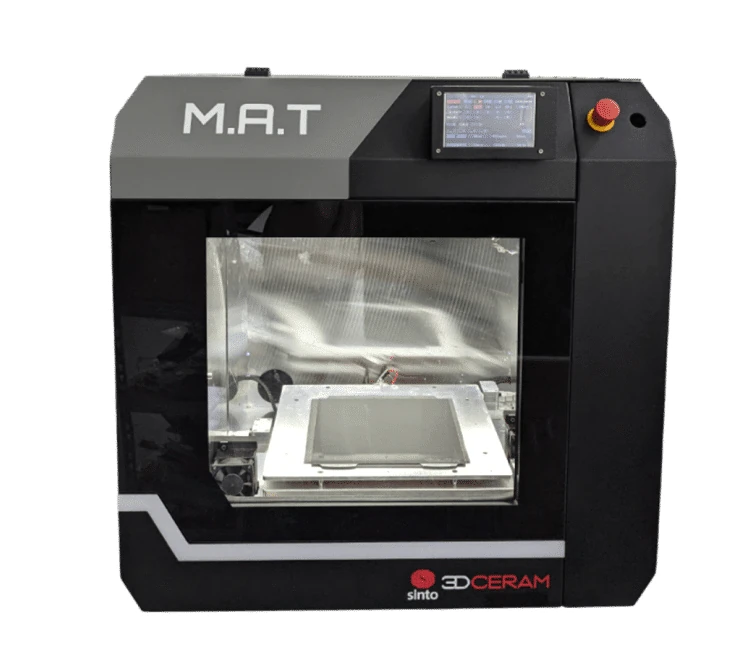
1.75mm feedstock runs on 3DCeram’s M.A.T. printer — max nozzle 270°C, max bed 110°C, with heated filament and print chambers for consistent extrusion.
Debind the binder
Binder-removal parameters ship with every spool’s datasheet, tuned for the alumina feedstock — no trial-and-error on the first batch.
Sinter to dense ceramic
Solid-state sintering at 1650°C consolidates the part to dense Al₂O₃ — hard, inert, and dimensionally stable.
Material properties (post-sinter)
| Property | Value | Standard |
|---|---|---|
| Density | 3.9 g/cc | — |
| Flexural strength (3-point bend) | 295 MPa | — |
| Elastic modulus | 213 GPa | — |
| Sintering temperature | 1650°C | solid-state |
Tested with calibrated equipment at ESA’s ESTEC technology centre, Netherlands. See the full datasheet in Downloads.
Technical specifications
- Material: Alumina (Al₂O₃) technical ceramic, FFF feedstock
- Filament diameter: 1.75mm
- Compatible platform: 3DCeram M.A.T. — FFF head, max nozzle 270°C, max bed 110°C, filament chamber ≤50°C, print chamber ≤50–60°C
- Post-processing required: thermal debind + solid-state sinter to 1650°C — parameters supplied with the datasheet on every order
Typical applications
Where teams run Fila-MAT Alumina today.
Not sure Fila-MAT Alumina is the right fit?
Three reasons teams pick a different feedstock or platform — tap the closest match.
Why source Fila-MAT through Additive Plus
- 3DCeram-qualified feedstock for the M.A.T. FFF head — matched to the machine, not a generic substitute.
- Debind and sinter parameters plus full datasheet included with every order.
- Materials engineer on the line for shrinkage, warpage, and heat-treatment questions — NDA standard.
- Custom alloy or ceramic feedstock sourced and qualified on request, typical lead 3–4 weeks.
| Brand | 3DCeram |
| Printing Materials | Ceramic Filaments |
| Technology | FFF |
| Material | Alumina (Al2O3) |
| Application | Composite Tooling, Engineering, Jigs & Fixtures, Manufacturing |
Product videos
Complete the workflow
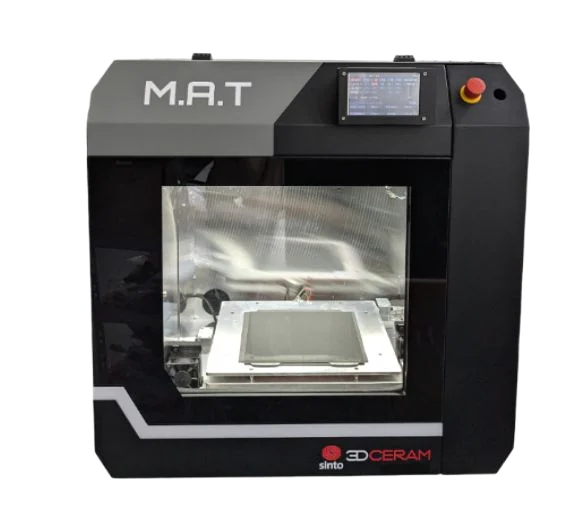
Metal & technical ceramics, printed by extrusion — even silicon carbide.
- FFF · pellet · paste + 3-axis CNC in one machine
- No laser, no loose powder — lab-safe, single-phase
- Official 3DCeram US representative · 12-mo warranty
From $63,000 · Core: FFF + CNC (add Pellet/Paste heads) · made to order, ~3-month build · leasing available
Request a quote Installation and commissioning in the USA: facility and gas planning, start-up and operator training by our US service team.
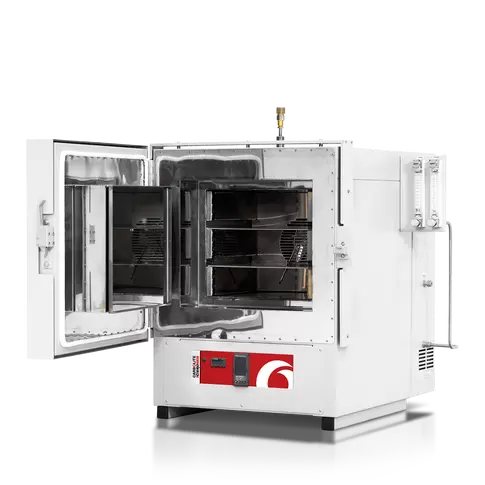
Controlled atmosphere oven for metal AM post-processing and materials research — 400–700°C max (4 grades), 28–1,000 L chambers (5 sizes), O₂ down to 50 ppm with N₂/Ar purge. Seam-welded gas-tight chamber built as an atmosphere unit from the ground up.
- ✓ O₂ down to 50 ppm — atmosphere-controlled heat treatment without vacuum-furnace cost
- ✓ 17 configurations in one family — 28 L lab to 1,000 L production, same gas architecture
- ✓ Seam-welded gas-tight chamber — purpose-built, not a retort-converted standard oven
- ✓ Configured to order — request lead time; install, training & cycle validation included
Print silicon carbide (SiC) ceramic parts on the 3DCeram M.A.T. print-debind-sinter workflow — ESA/ESTEC-tested for high-temperature, high-conductivity applications.
- ✓ ESA/ESTEC-verified: 423 MPa flexural strength, 82 W/m-K thermal conductivity
- ✓ Solid-state sintered to 2100°C — dense, chemically inert, no powder bed
- ✓ Qualified for the 3DCeram M.A.T. platform — quote-based pricing, request a quote
Other products teams run alongside Fila-MAT Alumina 1,75mm
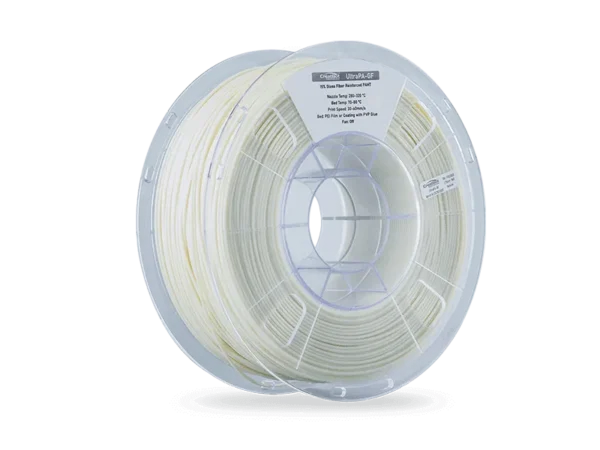
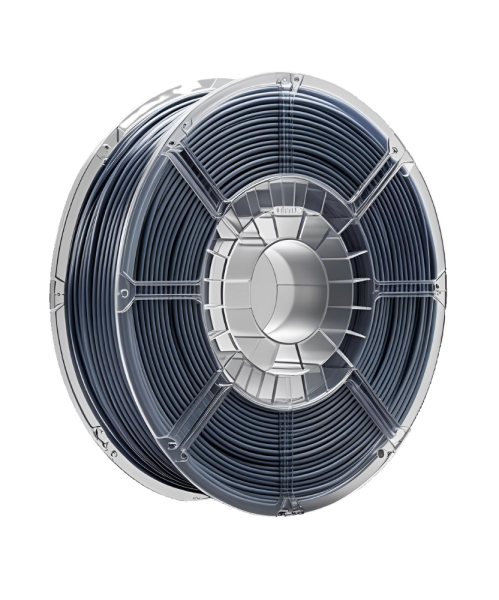
Glass-fiber-reinforced high-temperature nylon filament for FDM 3D printing — high strength (88 MPa tensile) and stiffness with a heat-deflection temperature up to 135°C, tougher and less brittle than carbon-fiber grades, for demanding functional parts.
- ✓ ±0.02mm diameter tolerance — consistent extrusion, low jam risk
- ✓ Validated CreatBot F430 print profile + datasheet included
- ✓ In stock, ships in 1–2 business days
In stock
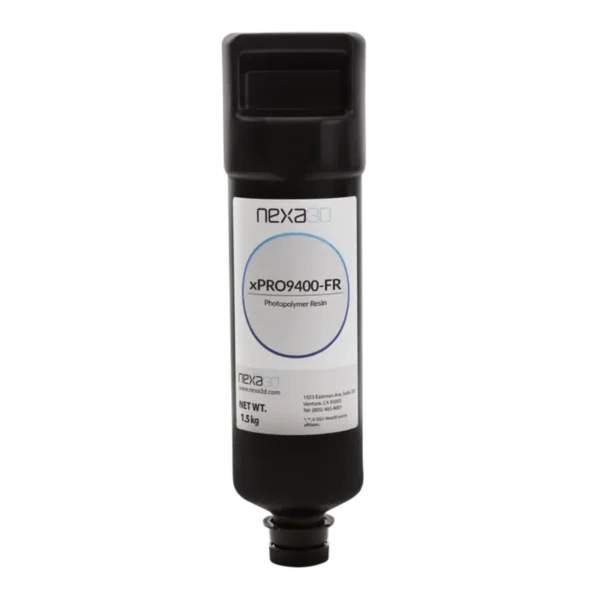
Halogen-free flame-retardant engineering resin — UL 94 V-0 at 2 mm with very high heat resistance, developed with BASF Forward AM.
- ✓ UL 94 V-0 at 2 mm (V-1 at 1.5 mm); rail DIN EN 45545-2 HL1/HL2; LOI ≥ 28
- ✓ Stiff and hot: 88 Shore D, HDT up to 250 °C @ 0.45 MPa (with 150 °C post-cure)
- ✓ 1.5 kg cartridge for Nexa3D XiP / XiP Pro (LSPc)
In stock
· 2 Business Days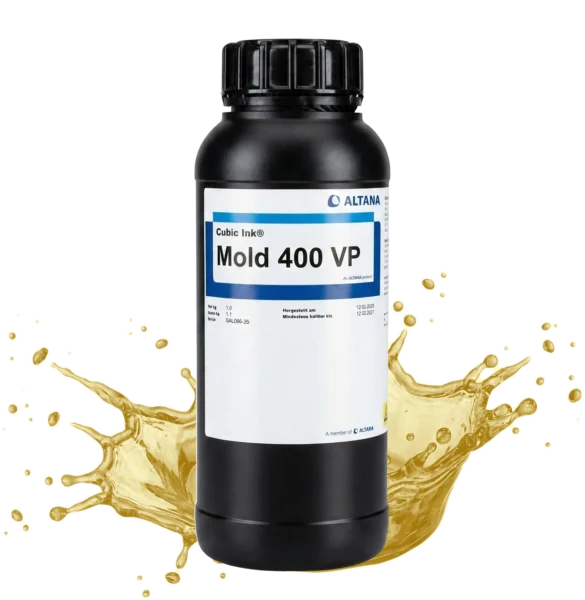
Print a mold, cast your part, dissolve the mold in water. ALTANA Cubic Ink Mold 400 VP is a water-breakable liquid photopolymer resin for Freeform Injection Molding — 3D-print a sacrificial mold on an open DLP/LCD/mSLA printer, cast or inject your production material (even PEEK, PPS or glass-filled), then break the mold away in plain water.
- ✓ Open platform — parameters for Nexa XiP, Formlabs, Asiga, Prusa, Phrozen
- ✓ Water-breakable demolding — no solvent bath
- ✓ Handles real process heat & pressure — up to 380 °C / 1200 bar
Sold in 1 kg and 5 kg bottles · invoiced per kg · in stock.
In stock
· Ships in ~2 business days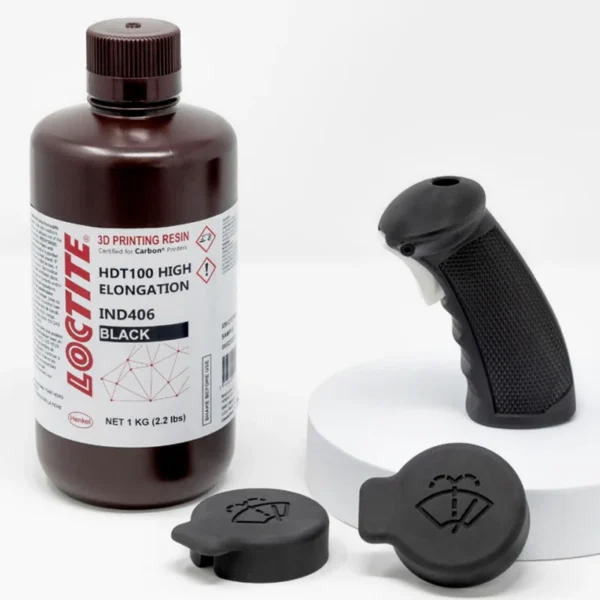
HDT100°C ABS/PP alternative: Tough end-use parts & tooling. High impact/elongation.
Availability: confirmed at order. Supplier stock for this line varies — we verify availability and lead time on every order before processing, and offer an equivalent or a full refund if an item cannot be supplied. Cubic Ink equivalents →
Made to order
· Available to order — we confirm the lead time by email within one business day of your order.
xPEEK147 is a high-temperature LSPc photopolymer in the performance range of PEEK — very high stiffness, 80 MPa tensile strength and heat deflection up to 230°C after a thermal post-cure.
- ✓ Heat deflection up to 230°C (0.45 MPa) after the 170°C bake
- ✓ PEEK-range stiffness — 3220 MPa modulus, Shore D 94
- ✓ 5 kg container for NXE 400 / 400Pro (405 nm LSPc)
- ✓ In stock — ships in 1–2 business days from US inventory
In stock
· In stock — ships in 1–2 business days from US inventory.
High-heat PC pellets qualified for large-format additive manufacturing (LFAM) — high heat deflection, high impact, and dimensional stability for big tooling at pellet cost.
- ✓ High heat deflection and high impact — holds shape where ABS and PET-G soften
- ✓ Ships sealed with a lot datasheet + high-temperature drying and extrusion parameters
- ✓ Lead time: 1–2 business days from L.A. stock — volume & PO on request
In stock
· 1–2 Business Days
- 10 kg sealed package · $75/kg · in stock
- Fine ~50 µm powder · narrow PSD · high reusability
- Materials engineer on call · setup recommendations · NDA on request
For CO₂ / infrared SLS systems · order direct below or talk to an engineer first.
In stock
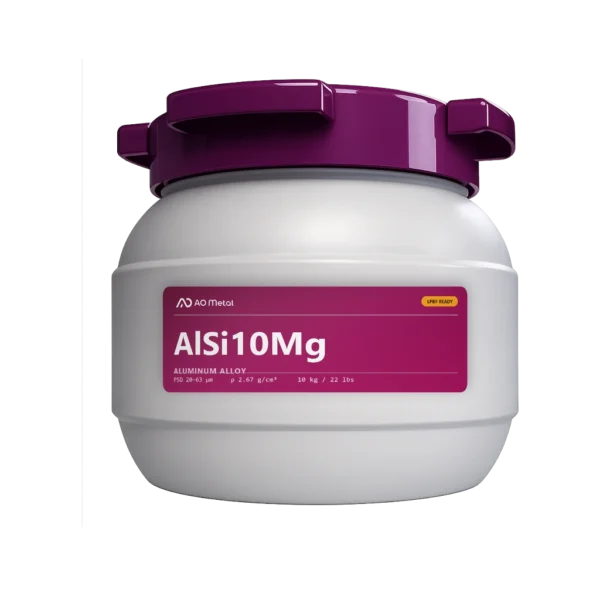
A-Powder AlSi10Mg — AO Metal’s LPBF powder line, 20–63 µm, in 10 kg containers.
- Lot certificate of analysis (COA)
Brand: A-Powder by AO Metal
Made to order
· Ship date confirmed after you orderCommon questions
Don't see yours? Email [email protected] — NDA standard, typical reply within 4 hours.
What is Fila-MAT Alumina and how does it produce ceramic parts?
Which printer is Fila-MAT Alumina compatible with?
What post-processing does Fila-MAT Alumina require?
What mechanical properties can I expect after sintering?
How much does a Fila-MAT Alumina part shrink during debinding and sintering?
What applications is Fila-MAT Alumina suited to?
Place your order, or talk to an engineer first
Order Fila-MAT Alumina 1,75mm direct, or talk to materials engineer