
In stock
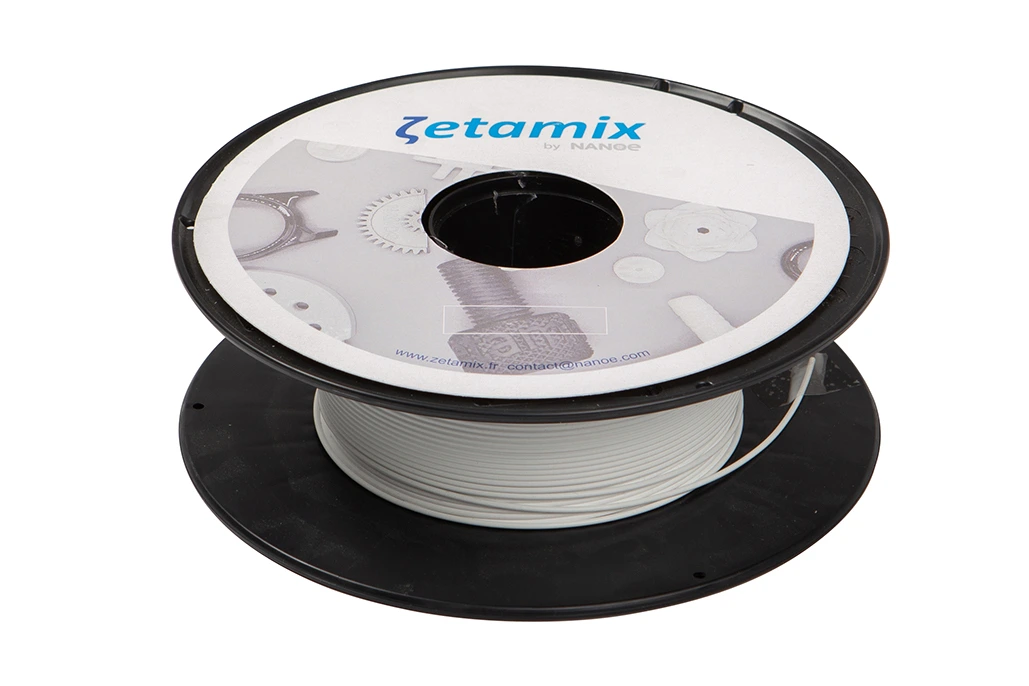
Zetamix TiO2 Filament 1,75mm
- ✔ Specialty technical ceramic produced on an everyday FFF machine
- ✔ Print → debind → sinter to dense ceramic, no powder system required
- ✔ Genuine Zetamix by Nanoe · 500 g spool · lead time 10–20 business days (depending on order queue)
$550
Zetamix TiO2 filament lets you 3D-print dense titanium-dioxide (rutile) ceramic with a very high dielectric constant on a standard FFF printer, then debind and sinter to a functional RF part — the same print → debind → sinter workflow we run in-house on our 3DCeram M.A.T. Permittivity εr = 75 (±5) at 9.4 GHz makes it a material for miniaturized microwave devices, antennas and dielectric resonators.
Why engineers choose Zetamix TiO2 filament
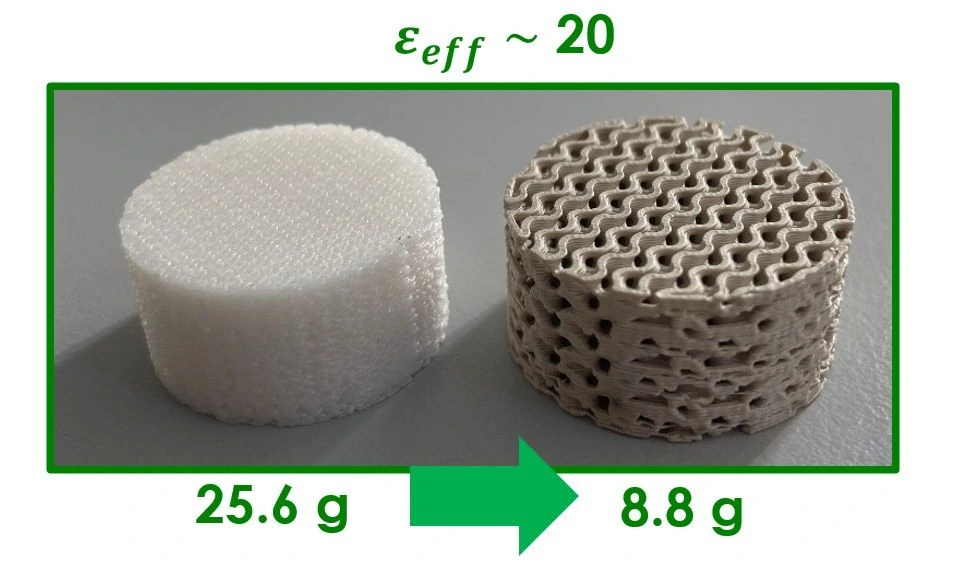
Sintered titanium dioxide (rutile) with a very high, batch-consistent dielectric constant — for RF and microwave parts.
Dielectric constant εr = 75 (±5) at 9.4 GHz lets you shrink RF components and antennas that would be far larger in low-ε materials.
Loss tangent of 1×10⁻³ to 5×10⁻³ keeps dielectric losses low at microwave frequencies.
Titanium dioxide (rutile), 81% by mass, sintered to 98–99% of theoretical density for stable, repeatable RF behaviour.
Consistent permittivity and loss from spool to spool, with ±5% dielectric stability from −50 °C to +110 °C.
TiO2 material properties after sintering
- Composition: titanium dioxide (rutile), 81% by mass
- Dielectric constant (permittivity): εr = 75 (±5) at 9.4 GHz
- Loss tangent: 1×10⁻³ to 5×10⁻³
- Dielectric stability: ±5% from −50 °C to +110 °C
- Density after sintering: 98–99% of theoretical
- Specific gravity: 2.59 g/cm³ (filament)
- Sintering: 30 °C/h to 1300 °C, 2 h hold, air atmosphere
- Scale factor: 123.4% (X/Y) & 125.7% (Z)
- Filament: 1.75 mm
Full specifications are listed in the Specifications tab. Dielectric and density values are process-dependent — final properties vary with print, debind and sinter parameters.
From spool to dense rutile ceramic part
Three stages — the same workflow we run in-house.
Design & scale
Scale the model by 123.4% (X/Y) and 125.7% (Z) for sintering shrinkage. Design for the RF geometry and target frequency you need.
Print on FFF
Print the green part on any standard FFF machine with a grooved drive gear and flexible build plate. No cooling fan; 0.5 mm retraction at 80 mm/s.
Debind & sinter
Acetone debind (6 h, 40 °C), thermal debind to 500 °C, then sinter to 1300 °C in air to a dense rutile part. No furnace? We run this for you.
Where Zetamix TiO2 is used
Engineers print TiO2 when they need a high-permittivity dielectric in a complex, miniaturized RF geometry.
See real builds in our Zetamix case studies →
No sintering furnace or debinding station? Talk to our team — we’ll help you get set up. Get in touch →
See Zetamix TiO2 in action
Watch how Zetamix ceramic and metal filaments go from spool to dense, sintered part — the same FFF print → debind → sinter workflow we run in-house.
Choose your Zetamix material
Every Zetamix filament prints on a standard FFF 3D printer — we print and validate them in-house on our 3DCeram M.A.T. system — then debind and sinter to a dense ceramic or metal part. The highlighted row is the material on this page; compare the range below:
| Material | Type | Stands out for | Best for | From |
|---|---|---|---|---|
| Alumina | Technical ceramic | Electrical insulation, ~1550°C | Insulators, high-temp tooling | $495 |
| White Zirconia | Technical ceramic | Toughness & flexural strength | Wear & structural parts | $485 |
| Black Zirconia | Technical ceramic | Zirconia strength, black finish | Aesthetic + technical parts | $550 |
| Silicon Carbide | Technical ceramic | Extreme hardness & thermal | Abrasive / high-temp parts | $550 |
| Porcelain | Ceramic (art) | Glazeable, classic finish | Art, tableware, decorative | $225 |
| 316L | Stainless steel | Corrosion resistance, ductile | Functional metal parts | $420 |
| 17-4 PH | Stainless steel | High strength, hardenable | Tooling & functional parts | $420 |
| H13 | Tool steel | Hot hardness & wear | Dies, inserts, tooling | $420 |
| TiO2 | Specialty ceramic | Very high permittivity (εr 75) | RF / microwave parts | $550 |
| Brand | Zetamix by Nanoe |
| Printing Materials | Metal Filaments |
| Technology | FFF |
| Material | Titania (TiO2) |
| Application | Composite Tooling, Engineering, Jigs & Fixtures, Manufacturing |
Other products teams run alongside Zetamix TiO2 Filament 1,75mm
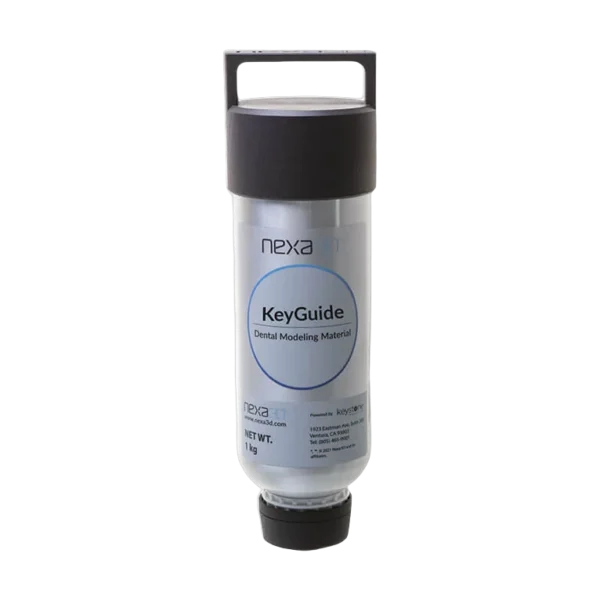
Stiff, biocompatible (Class I) resin for accurate dental and implant surgical guides.
- ✓ Rigid and durable to hold drill paths under guided surgery
- ✓ Class I biocompatible resin designed for surgical guides
- ✓ 1 kg cartridge for Nexa3D XiP and XiP Pro (LSPc)
In stock
· 2 Business Days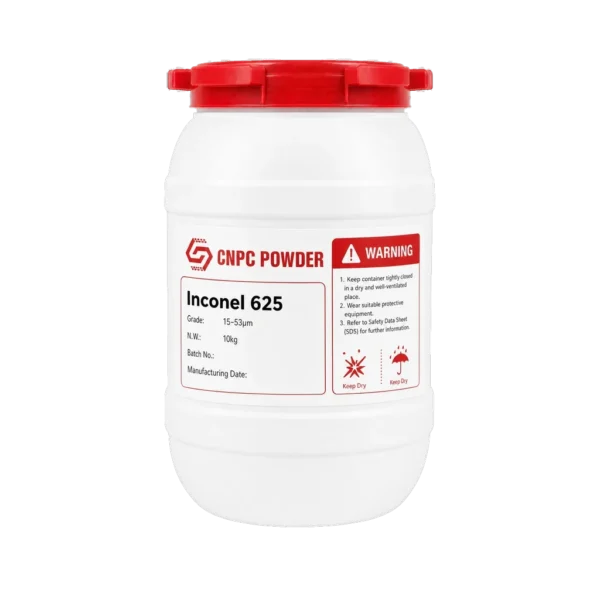
CNPC Inconel 625 powder for LPBF — made by CNPC Powder, 15–53 µm, sold in 10 kg containers.
- Certificate of analysis (COA) for the lot, on request
Manufacturer: CNPC Powder
Made to order
· Ship date confirmed after you order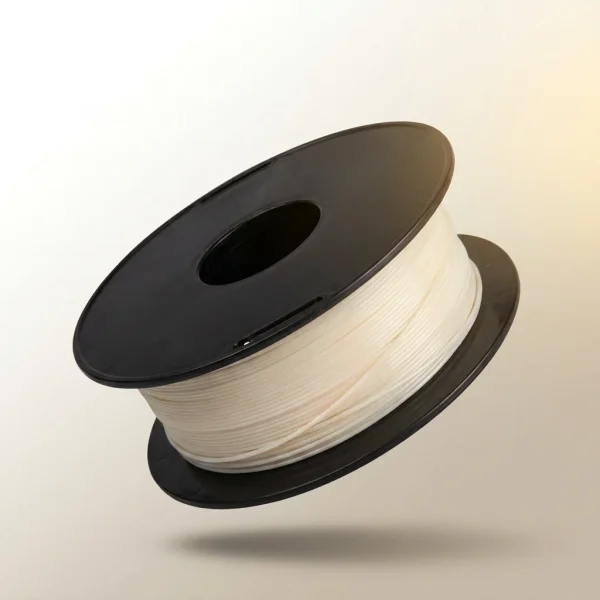
Print radiofrequency parts directly — no debinding, no sintering. A dielectric filament with permittivity 7.5 and low loss, so antennas, lenses and metasurfaces come off the printer ready to test.
- ✔ Permittivity 7.5 · loss tangent 0.001 · HDT up to 110 °C
- ✔ No debinding, no sintering — prints as a technical polymer, parts up to 80 cm
- ✔ Genuine Zetamix by Nanoe · 500 g spool, vacuum packed · 1.75 mm
In stock
· Ships from California · 10–20 business days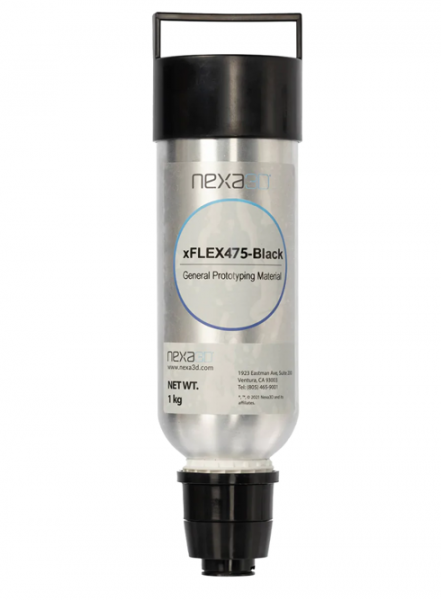
Currently not in stock. Leave a request and we will confirm availability, price and lead time.
xFLEX475-Black is a medium-soft, rubber-like elastomer — 150% elongation at failure, up to 50% energy return, solvent-resistant.
- ✓ Resilient with snap-back and tear resistance — pipes and manifolds, handles, seals, gaskets, midsoles
- ✓ 150% elongation at failure, up to 50% energy return, resistant to most solvents
- ✓ Genuine Nexa3D resin for the XiP · 1.5 kg cartridge · not in stock, available on request
Out of stock
· Not in stock — available on request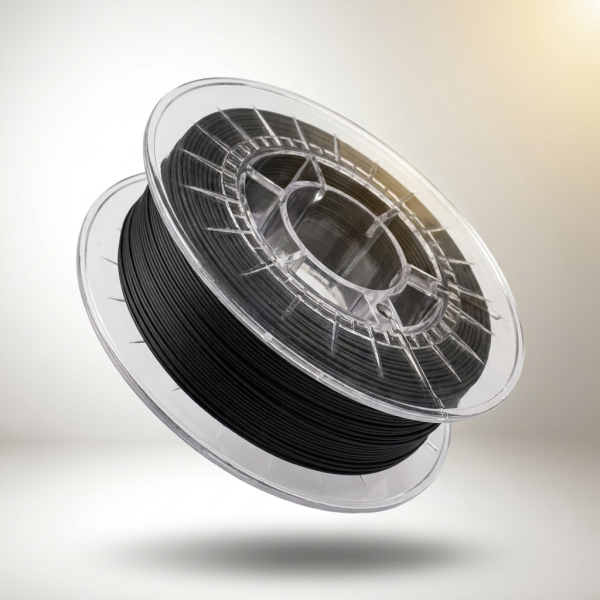
- ✔ High strength and hardness (precipitation-hardenable), good corrosion resistance
- ✔ Print → debind → sinter to dense metal — ideal for functional and tooling parts
- ✔ Genuine Zetamix by Nanoe · 500 g spool · lead time 10–20 business days (depending on order queue)
In stock
· Ships in 1–2 business days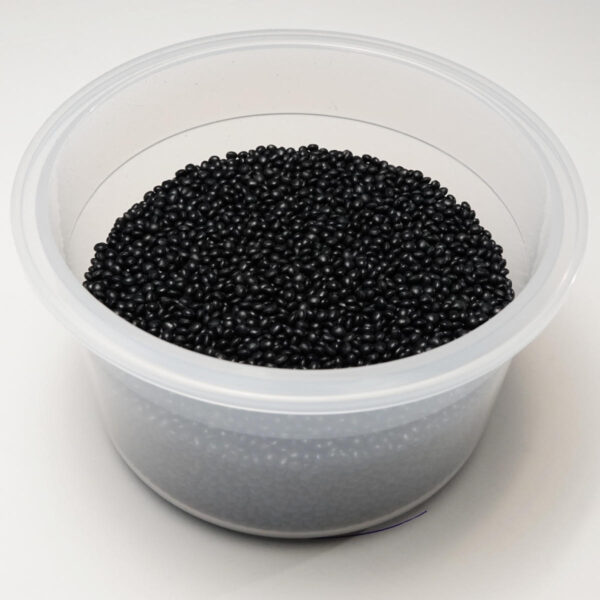
In stock
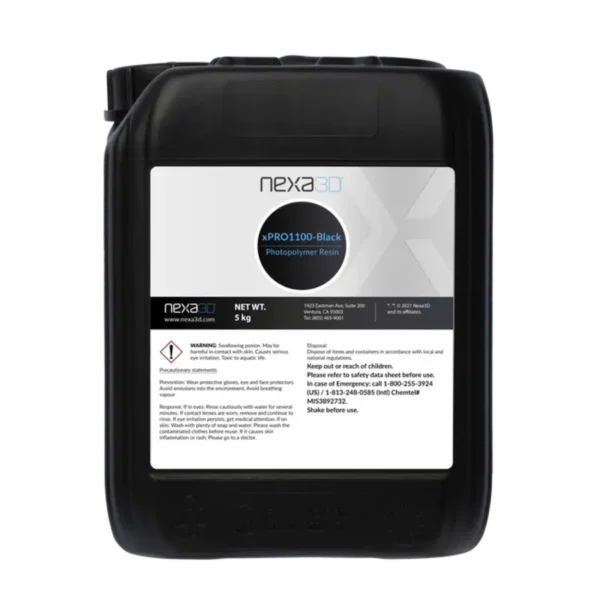
Tough, heat-resistant black photopolymer for functional prototypes and end-use engineering parts — developed with BASF Forward AM.
- ✓ Rigid: 71–73 MPa tensile, 125 MPa flexural, 84 Shore D
- ✓ Heat resistant: HDT up to 112 °C @ 0.45 MPa (with 100 °C post-cure)
- ✓ 5 kg bottle for Nexa3D NXE series printers (LSPc)
Out of stock
· Currently on backorder — contact us for the latest lead time.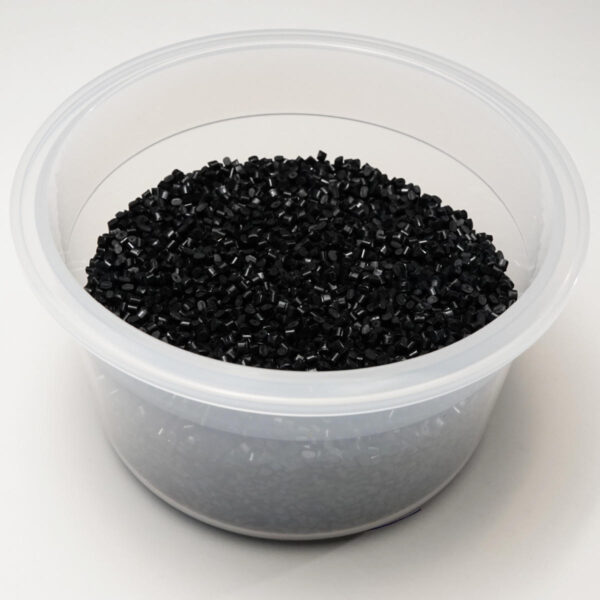
In stock
Common questions
Don't see yours? Email [email protected] — NDA standard, typical reply within 4 hours.
What makes TiO2 particularly valuable for RF applications?
How stable are the dielectric properties with temperature?
What RF applications is this material best suited for?
How does the sintering process affect dielectric properties?
What design limitations should I consider?
Can I create complex geometries with internal features?
How long does the complete process take?
What safety precautions are necessary?
What's the shelf life of the filament?
Can I achieve different permittivity values?
Place your order, or talk to an engineer first
Order Zetamix TiO2 Filament 1,75mm direct, or talk to materials engineer