
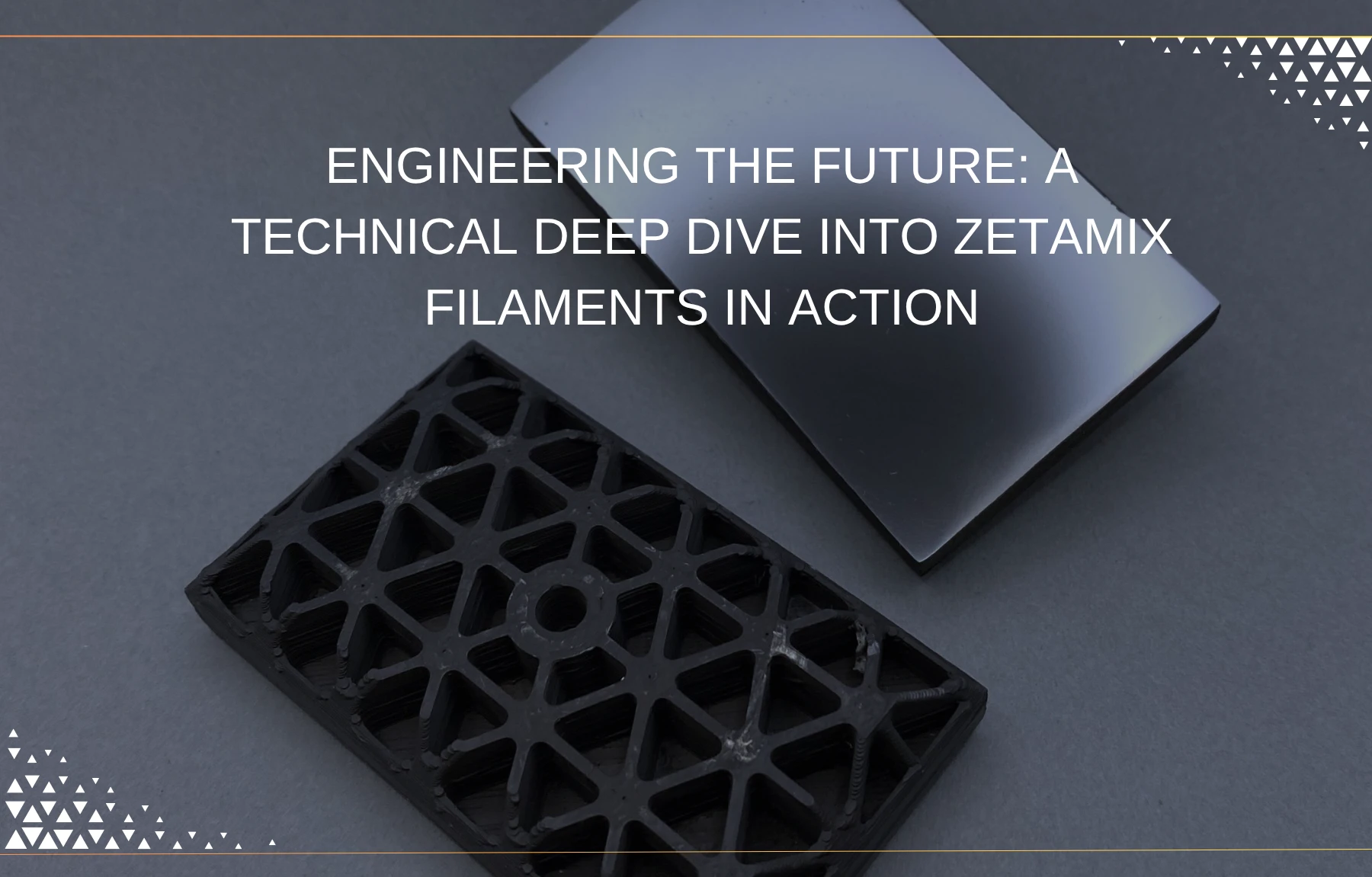
The transition from prototyping to end-use part production requires materials that don’t just mimic properties, but deliver them authentically. Zetamix filaments are engineered for this purpose. They are composite filaments—fine ceramic or metal powders (5-20 µm) suspended in a proprietary thermoplastic binder system—designed for use on standard FDM/FFF 3D printers. The magic happens in the post-processing: a meticulous debinding and sintering cycle that removes the binder and fuses the powder particles into a dense, high-performance component, achieving material properties that rival those produced by traditional manufacturing.
The following case studies dissect not just the application, but the specific material science that made each solution possible.
Case Study 1: The Zirconia Welding Shield – Where Toughness Meets Thermal Resilience

-
The Problem: A metal shield protecting ceramic electrodes during welding failed after days due to thermal and mechanical abuse.
-
The Zetamix Solution: Zetamix White Zirconia.
-
Technical Rationale: Zirconia (ZrO₂) is not just another high-temperature ceramic. Its standout property is transformation toughening, a microstructural mechanism that significantly increases its fracture toughness compared to other ceramics like alumina. This makes it exceptionally resistant to thermal shock and mechanical impact.
-
Sintering Profile: Parts are sintered at 1475°C, achieving a density of 98-99%.
-
Key Properties Post-Sintering: Bending strength of 400-1000 MPa and a Vickers hardness of 10 GPa. This combination of strength and toughness was crucial to withstand the repeated spark bombardment and physical handling that the previous metal shield could not.
-
-
The Result: The 3D printed zirconia shield provided a perfect fit and unparalleled durability, eliminating production halts and protecting high-value electrode components.
-
COMPARE
Add to cartZetamix White Zirconia Filament 1,75mm
$460
White zirconia filament: Print FDM ceramic parts → sinter into high-strength components with luxur
Zetamix White Zirconia Filament 1,75mm
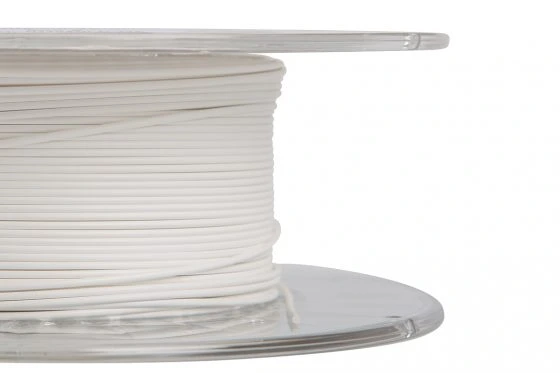
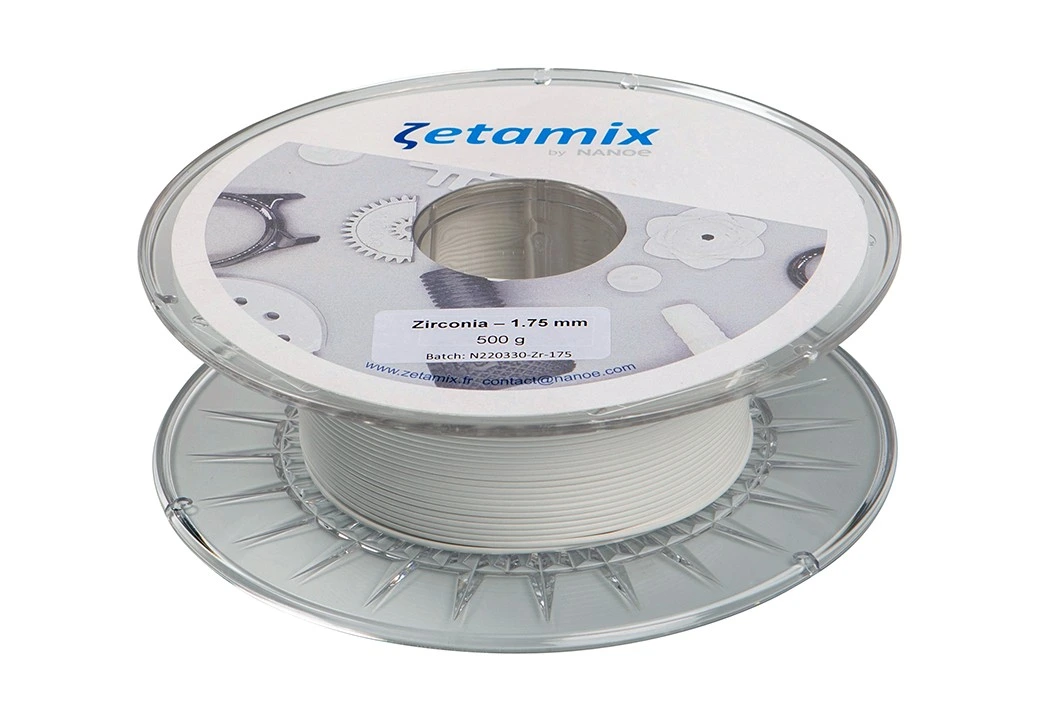
White zirconia filament: Print FDM ceramic parts → sinter into high-strength components with luxury finishes for tooling & premium goods.
SKU: Zetamix Zirconia Filament 1,75mm
Categories: Materials, Ceramic Filament, Composite Tooling, Engineering, FFF(FDM), Filaments, Jigs&Fixtures, Manufacturing
Tags: Automotive, Dental, Education, Entertainment, Healthcare, Light manufacturing, Manufacturing, Oil and Gas, PackagingDetails
Weight 1.1 lbs Dimensions 11.8 × 11.8 × 3.9 in Brand Printing Materials Ceramic Filaments
Technology FFF
Chemical symbol ZrO2 ∙ Y2O3
Sintering type Solid State Sintering
Printing temperature 180°C
Sintering Temperature 1475°C under air
Shrinkage 21.5% ±1% (x y and z)
Density 98-99%
Specific Gravity [g.cm-3 ] 3.5
Melt Flow Rate [g/10(min)] 14
Melt Volume Rate [cm3 /10(min)] 50
Moisture Absorption 24 hours [%] <0,1%
Moisture Absorption , 7 days [%] <0,3%
Shore D 45
$460
Add to cart
Case Study 2: The Alumina Lab Support – Mastering Extreme Heat and Electrical Insulation
-
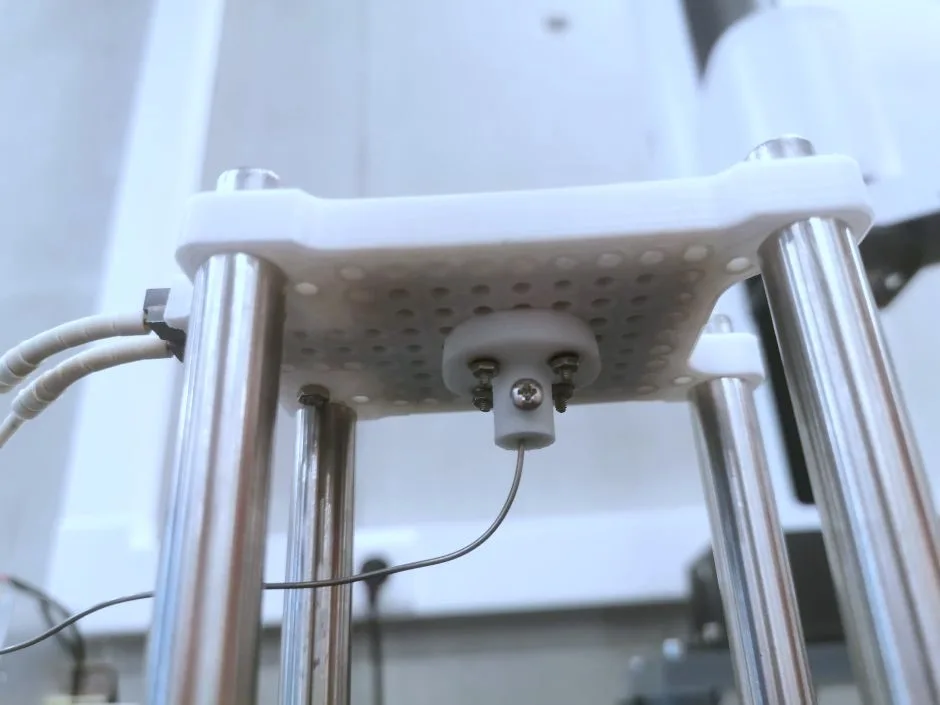
The Problem: A research lab needed a custom, multi-functional support for a 1000°C heating plate that also managed electrical wiring.
-
The Zetamix Solution: Zetamix Alumina.
-
Technical Rationale: Alumina (Al₂O₃) is a workhorse technical ceramic known for its excellent electrical insulation, high thermal stability, and good mechanical strength. Its low loss tangent (≈1×10⁻³) and dielectric constant of 9 ensure it won’t interfere with sensitive electronics, even at high temperatures.
-
Sintering Profile: Requires a high sintering temperature of 1550°C to achieve near-full density (98-99%).
-
Key Properties Post-Sintering: A high hardness of 19 GPa and a bending strength of 200-500 MPa. This ensures the support remains dimensionally stable and wear-resistant under extreme thermal cycling.
-
-
The Result: The lab could safely run high-temperature experiments with a bespoke, integrated support that provided both structural integrity and electrical isolation.
-
COMPARE
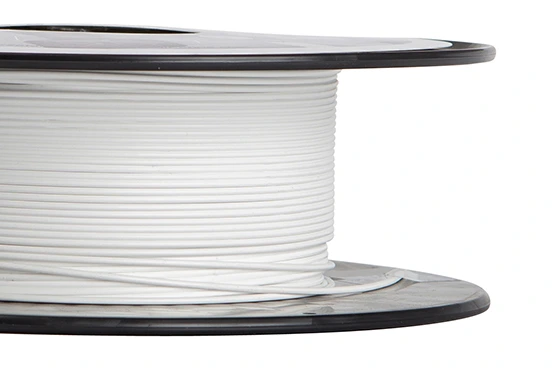
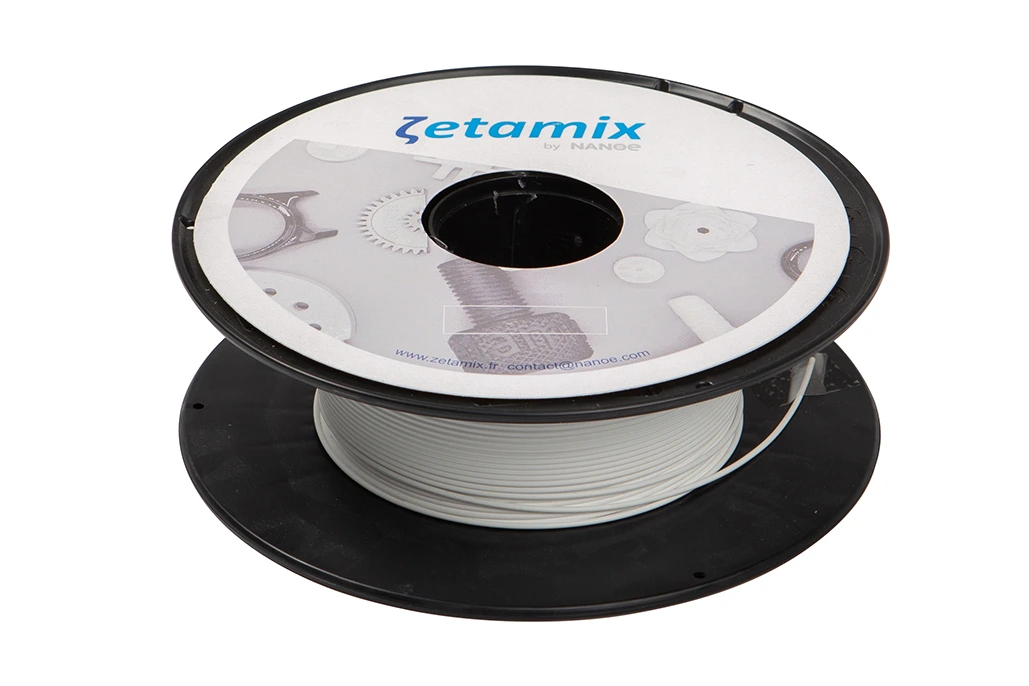
Add to cartZetamix Alumina Filament 1,75mm
$460
Alumina ceramic filament: Print FDM parts → sinter into high-temperature resistant, electrically i
Zetamix Alumina Filament 1,75mm
Alumina ceramic filament: Print FDM parts → sinter into high-temperature resistant, electrically insulating components for extreme environments.
SKU: Zetamix Alumina Filament 1,75mm
Categories: Materials, Ceramic Filament, Composite Tooling, Engineering, FFF(FDM), Filaments, Jigs&Fixtures, Manufacturing
Tags: Automotive, Dental, Education, Entertainment, Healthcare, Light manufacturing, Manufacturing, Oil and Gas, PackagingDetails
Weight 1.1 lbs Dimensions 11.8 × 11.8 × 3.9 in Brand Printing Materials Ceramic Filaments
Technology FFF
Chemical symbol Al2O3
Sintering type Solid State Sintering
Printing temperature 170-180°C
Sintering Temperature 1550°C under air
Shrinkage x,y = 20.8% ±1% / z = 23.2% ±1%
Density 98-99%
Specific Gravity [g.cm-3 ] 2.5
Melt Flow Rate [g/10(min)] 200
Melt Volume Rate [cm3 /10(min)] 80
Moisture Absorption 24 hours [%] <0,1%
Moisture Absorption , 7 days [%] <0,3%
Shore D 40
$460
Add to cart
Case Study 3: The 316L Military Bracket – Corrosion Resistance, On-Demand
-
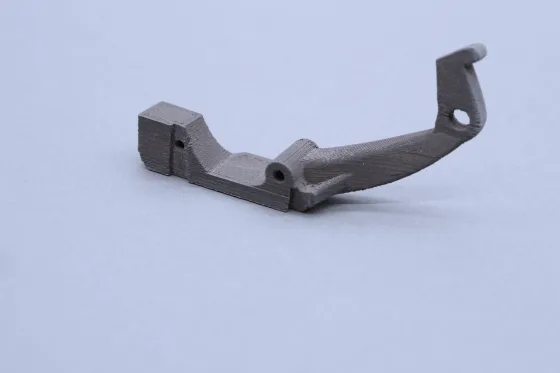
The Problem: A plastic helmet bracket for military water survival training was fragile and failed upon water impact.
-
The Zetamix Solution: Zetamix 316L Stainless Steel.
-
Technical Rationale: 316L is an austenitic stainless steel prized for its superior corrosion resistance, particularly against chlorides found in seawater. The “L” denotes low carbon, which minimizes sensitization (chromium carbide precipitation) during sintering, preserving its corrosion-resistant properties.
-
Sintering Profile: Sintered at 1350°C in an Argon/Hydrogen (97.5/2.5) atmosphere to prevent oxidation and achieve a density >90%.
-
Key Properties Post-Sintering: The final part offers the classic 316L resistance to pitting and crevice corrosion, combined with high impact strength, making it ideal for the harsh, saline environment of water landing training.
-
-
The Result: The Navy validated the production of a robust, corrosion-proof part on-demand, a critical step towards decentralizing their supply chain for essential components.
-
COMPARE
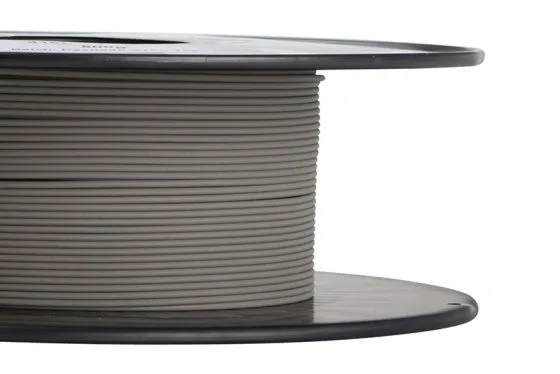
Add to cartZetamix 316L Steel Filament 1,75mm
$390
Industrial 316L stainless steel filament: Print FDM tooling → sinter into corrosion-resistant, imp
Zetamix 316L Steel Filament 1,75mm
Industrial 316L stainless steel filament: Print FDM tooling → sinter into corrosion-resistant, impact-resistant functional metal parts.
SKU: Zetamix 316L Steel Filament 1,75mm
Categories: Materials, Composite Tooling, Engineering, FFF(FDM), Filaments, Jigs&Fixtures, Manufacturing, Metal Filament
Tags: Automotive, Dental, Education, Entertainment, Healthcare, Light manufacturing, Manufacturing, Oil and Gas, PackagingDetails
Weight 1.1 lbs Dimensions 11.8 × 11.8 × 3.9 in Brand Printing Materials Metal Filaments
Technology FFF
Sintering type Solid State Sintering
Printing temperature 130°C – 160°C
Sintering Temperature 1350°C, under hydrogenated argon
Shrinkage x,y = 15.4% ±1% / z = 14.7% ±1%
Density >90 %
MFR [g/10min] (@120°C, 2.5kg, half die) 24
MVR [cm3/10(min)] 5
Moisture Absorption , 7 days [%] <0,3%
$390
Add to cart
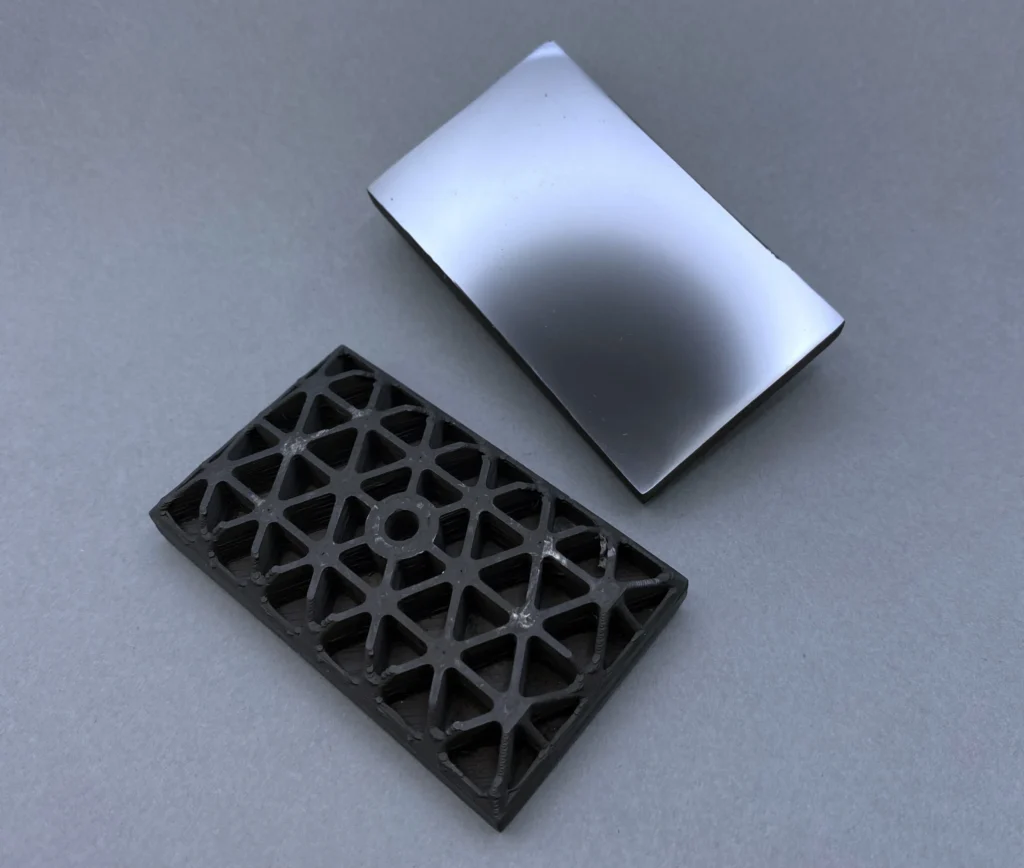
Case Study 4: The SiC Space Mirror – The Ultimate Material for Stiffness and Stability
-
The Problem: Traditional manufacturing of silicon carbide space mirrors was prohibitively expensive and slow, with limited design freedom.
-
The Zetamix Solution: Zetamix Silicon Carbide (SiC).
-
Technical Rationale: Silicon Carbide is in a class of its own for high-performance optics. Its key attributes are an exceptional specific stiffness (strength-to-weight ratio) and very high thermal conductivity. This means a SiC mirror can be incredibly lightweight and rigid, and it will rapidly dissipate heat, minimizing thermal gradients that cause optical distortion in the variable temperatures of space.
-
Sintering Profile: This is the most demanding process, requiring sintering at 2200°C under a partial argon vacuum.
-
Key Properties Post-Sintering: Achieves a remarkable hardness of 25 GPa and a bending strength of 400 MPa at 98-99% density. This allows for a stable substrate that can be polished to a nanometer-scale surface finish.
-
-
The Result: The ability to 3D print topologically optimized, lightweight SiC structures opens the door to larger, more stable, and more affordable space telescopes and satellite optics.
-
COMPARE
Add to cartZetamix Silicon Carbide Filament 1,75mm
$535
Silicon carbide filament: Print FDM parts → sinter into ultra-hard, thermal-shock resistant compon
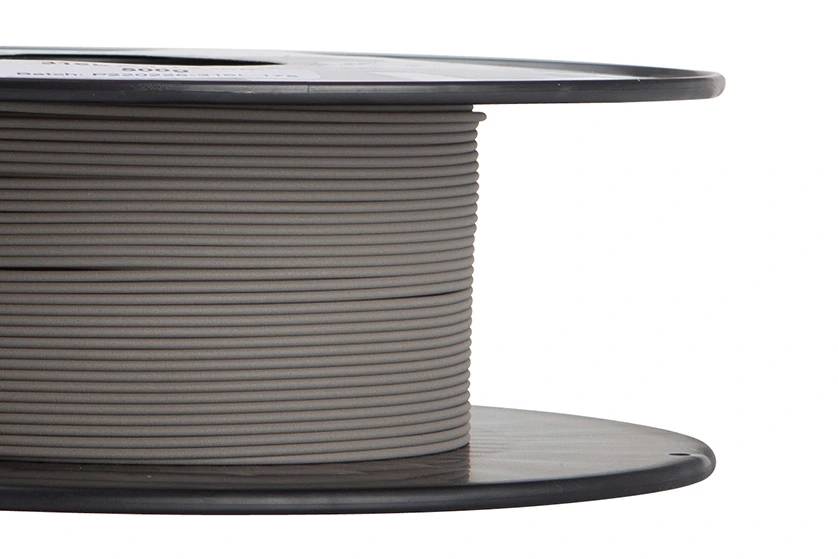
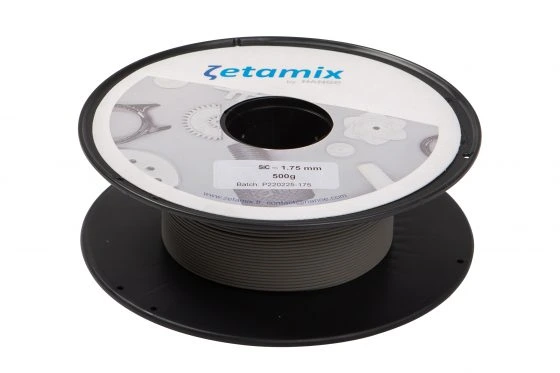
Zetamix Silicon Carbide Filament 1,75mm
Silicon carbide filament: Print FDM parts → sinter into ultra-hard, thermal-shock resistant components for extreme environments.
SKU: Zetamix Silicon Carbide Filament 1,75mm
Categories: Materials, Ceramic Filament, Composite Tooling, Engineering, FFF(FDM), Filaments, Jigs&Fixtures, Manufacturing
Tags: Automotive, Dental, Education, Entertainment, Healthcare, Light manufacturing, Manufacturing, Oil and Gas, PackagingDetails
Weight 1.1 lbs Dimensions 11.8 × 11.8 × 3.9 in Brand Printing Materials Ceramic Filaments
Technology FFF
Chemical symbol SiC
Sintering type Solid State Sintering
Printing temperature 120°C
Sintering Temperature 2200°C under partial vacuum (Ar 90 mb)
Shrinkage 16.8% ( x and y) ; 22,6% (z)
Density 98-99%
Mass fluidity index[g/10(min)] 16
Volumetric fluidity index [cm3/10(min)] 5
Moisture Absorption 24 hours [%] <0,1%
Moisture Absorption , 7 days [%] <0,3%
Shore D 56
$535
Add to cart
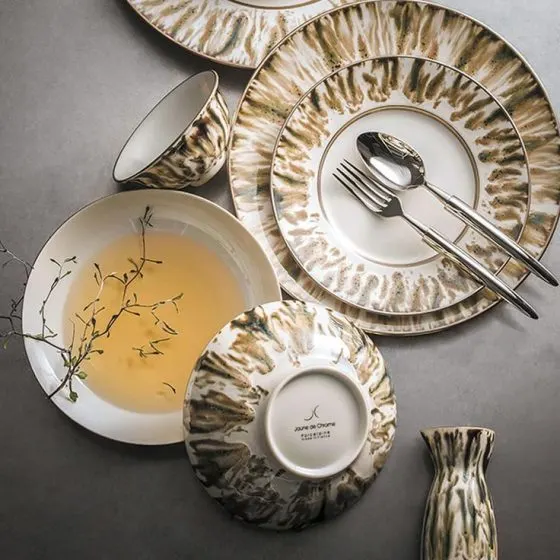
Case Study 5: The Porcelain Table Art – Where Ancient Craft Meets Digital Fabrication
-
The Problem: A luxury porcelain maker needed to produce intricate, customized designs that were impossible to cast with traditional molds.
-
The Zetamix Solution: Zetamix Porcelain.
-
Technical Rationale: This filament is composed of authentic porcelain powder (Kaolin and Quartz). After sintering, it is chemically and aesthetically identical to its traditionally crafted counterpart. It undergoes vitrification at 1250°C, where the particles fuse into a dense, glassy matrix.
-
Sintering Profile: Sintered at 1250°C in air, achieving a density of 98-99%.
-
Key Properties Post-Sintering: The final piece exhibits the timeless qualities of porcelain: high mechanical strength, exceptional hardness, and resistance to thermal shock, making it perfectly suitable for functional tableware and art pieces. It can be glazed and decorated using all traditional techniques.
-
-
The Result: The manufacturer unlocked a new realm of artistic expression and bespoke production, creating heirloom-quality pieces with digital precision and traditional beauty.
-
COMPARE
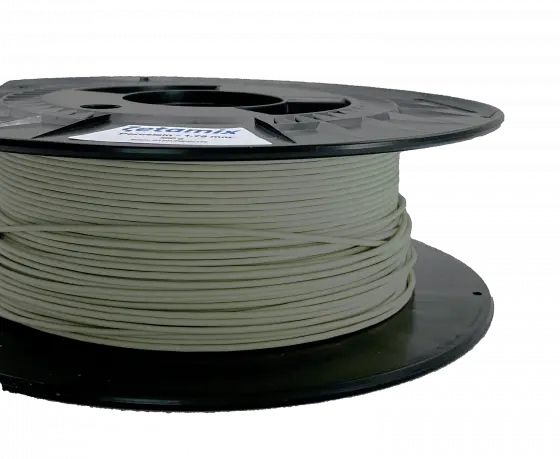
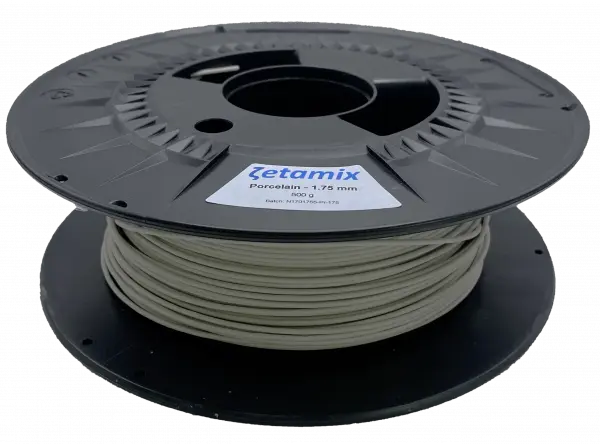
Add to cartZetamix Porcelain Filament 1,75mm
$175
Industrial porcelain filament: Print FDM prototypes → sinter into vitrified functional ceramics fo
Zetamix Porcelain Filament 1,75mm
Industrial porcelain filament: Print FDM prototypes → sinter into vitrified functional ceramics for tableware, art & technical applications.
SKU: Zetamix Porcelain Filament 1,75mm
Categories: Materials, Ceramic Filament, Composite Tooling, Engineering, FFF(FDM), Filaments, Jigs&Fixtures, Manufacturing
Tags: Automotive, Dental, Education, Entertainment, Healthcare, Light manufacturing, Manufacturing, Oil and Gas, PackagingDetails
Weight 1.1 lbs Dimensions 11.8 × 11.8 × 3.9 in Brand Printing Materials Ceramic Filaments
Technology FFF
Sintering type Solid State Sintering
Printing temperature 130°C – 160°C
Sintering Temperature 1250°C
Shrinkage 13.8% ( x and y) ; 26.4% (z)
Density 98-99%
Mass fluidity index[g/10(min)] 16
Volumetric fluidity index [cm3/10(min)] 8
Moisture Absorption 24 hours [%] <0,1%
Moisture Absorption , 7 days [%] <0,3%
Shore D 51
$175
Add to cart
Conclusion: The Zetamix Process – From Filament to Functional Part
The thread connecting these diverse success stories is the robust and repeatable Zetamix workflow:
-
Print: Using a standard FDM printer with material-specific parameters (e.g., low printing temperatures of 120-180°C to avoid binder degradation).
-
Debind: A two-stage process—first a chemical bath (often in acetone) to remove the primary binder, followed by a slow thermal cycle to remove the residual binder without damaging the “green” part.
-
Sinter: A high-temperature cycle specific to each material, which densifies the powder into a solid, high-performance component with predictable, isotropic shrinkage.
This process democratizes access to materials that were once the exclusive domain of specialists with multi-million-dollar equipment. Zetamix filaments are not a substitute for traditional materials; they are a superior method for delivering their performance in complex, customized, and on-demand applications.
By understanding the technical DNA of these filaments, engineers and designers can now specify 3D printed ceramics and metals with confidence, pushing the boundaries of what’s possible in their respective fields.
Explore all Zetamix by Nanoe filaments >>
Frequently asked questions
What exactly is the Zetamix process? How does it differ from regular 3D printing?
The Zetamix process is a form of Bound Metal Deposition (BMD) or Bound Powder Deposition. You start by 3D printing a “green part” on a standard FDM printer using a filament that contains a high loading of metal or ceramic powder in a binder. This green part is fragile. It then undergoes a two-step post-processing cycle: Debinding (where the binder is chemically and/or thermally removed) and Sintering (where the part is heated to a high temperature just below its melting point, causing the powder particles to fuse into a dense, solid object). The result is a near-fully dense part with material properties comparable to traditionally manufactured ceramics or metals.
Can I use any FDM 3D printer with Zetamix filaments?
Yes, most FDM/FFF printers are compatible. However, for optimal results, we recommend:A printer with a consistent, reliable extrusion system.Using a hardened steel nozzle to prevent abrasive wear from the powder-filled filament.A printer capable of fine control over low printing temperatures (typically 120°C – 180°C, depending on the material).
Why is sintering necessary, and what equipment do I need for it?
Sintering is what transforms the fragile, printed “green part” into a strong, dense, functional component. Without it, the part would have very poor mechanical properties. You will need a high-temperature furnace capable of reaching the specific sintering temperature of your chosen material (e.g., 1250°C for Porcelain, 1550°C for Alumina, 2200°C for SiC). The furnace must also often control the atmosphere (e.g., air for oxides, argon/hydrogen for metals) to prevent oxidation.
The case studies mention significant shrinkage. How do I account for this?
Shrinkage is a predictable and integral part of the sintering process as the powder particles densify. The shrinkage rates are consistent and provided for each material (e.g., ~21.5% for Zirconia, ~15.4% for 316L). To compensate, you must scale up your CAD model in your slicer software before printing using the provided “oversize factor.” For example, for Zirconia, you would scale the model to 127.4%.
How do I choose the right Zetamix material for my application?
The choice depends on the key property requirements:For Maximum Toughness & Strength: Zetamix Zirconia (excellent fracture toughness).For High-Temperature & Electrical Insulation: Zetamix Alumina (excellent thermal stability and insulator).For Extreme Hardness & Wear/Heat Resistance: Zetamix Silicon Carbide (SiC) (highest hardness and thermal conductivity).For Corrosion Resistance & Metal Properties: Zetamix 316L Stainless Steel (ideal for corrosive environments).For Aesthetics & Traditional Ceramic Properties: Zetamix Porcelain (authentic vitrified ceramic).
Are the final sintered parts truly 100% solid?
Sintered Zetamix parts achieve a density of 98-99% of the theoretical maximum for that material. This is comparable to many traditional manufacturing methods and is more than sufficient for the vast majority of industrial, luxury, and technical applications. The minimal, closed porosity does not significantly impact mechanical or thermal performance.
What are the main safety considerations?
Key safety points include:Printing: Use in a well-ventilated area. While the filament is not classified as dangerous, heating any material can produce fumes.Handling Powder/Sanded Parts: When sanding green parts or handling raw powder (if applicable), wear an FFP2/N95 dust mask and safety glasses to avoid inhalation.Post-Processing: Acetone for debinding requires proper handling, and high-temperature furnaces present an obvious burn hazard and must be operated according to the manufacturer’s instructions.
How strong are the final parts compared to traditionally made parts?
The mechanical properties are exceptionally close. For example:Sintered Zetamix 316L has mechanical properties and corrosion resistance comparable to cast 316L.Sintered Zetamix Zirconia and Alumina have bending strengths and hardness values that meet or exceed those of parts produced by dry pressing and sintering.The key advantage is that you achieve these properties in complex geometries that are often impossible or prohibitively expensive to create with traditional methods.
Can I create parts with internal channels or complex geometries?
Absolutely. This is one of the primary advantages of the Zetamix process. You can design and print complex internal cooling channels, lightweight lattice structures, undercuts, and other features that are unmachinable or un-moldable. The binder system supports these features during printing, and they are preserved through the sintering process.
What is the typical lead time from print to finished part?
The timeline is dominated by post-processing. While printing might take hours, the debinding and sintering cycles are slow by design to prevent defects. A complete cycle can take from 2 to 4 days, depending on the material and the size of the part. This is still drastically faster than the weeks or months often required for traditional custom ceramic or metal part fabrication.
Have a question or a project? Let’s talk.
Tell us what you need — a real applications engineer replies within 24 hours. NDA on request, no sales script.