
Made to order
- Installation & safety setup mercury-handling and PoreInspect onboarding
- Validated first run an intrusion measurement on your own sample
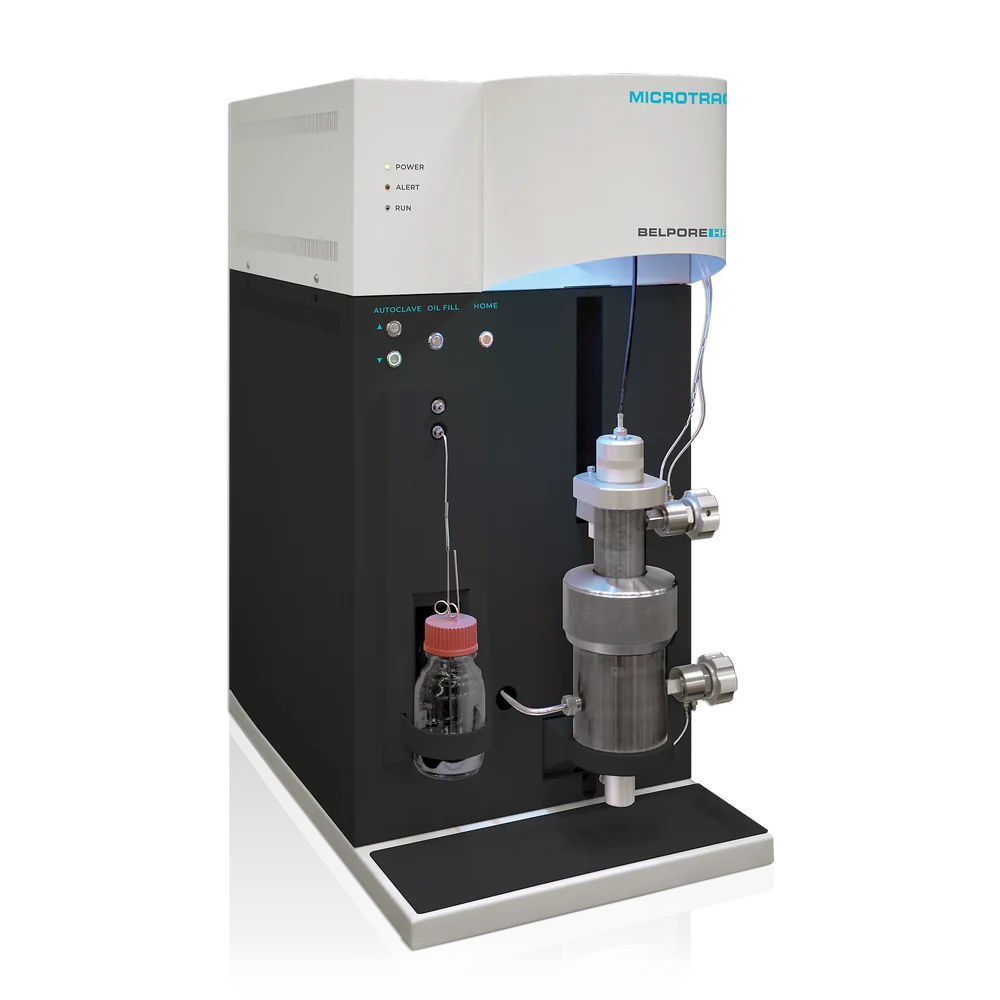
Microtrac BELPORE Mercury Porosimeter – Pore Size & Volume | 3.6 nm–180 µm, up to 414 MPa
Mercury intrusion porosimeter for pore size and pore volume from 3.6 nm to 180 µm — pressure to 414 MPa, up to 20,000 measuring points, with fractal, tortuosity and permeability analysis.
- ✔ Pore diameter 3.6 nm – 180 µm (LP / MP / HP stages)
- ✔ Pressure to 414 MPa · accuracy better than 0.1% F.S.
- ✔ Up to 20,000 intrusion / extrusion points
- ✔ Lead time: configured to order — request current timeline
What your porosity lab actually checks
Full pore range, one technique
From 3.6 nm to 180 µm in a single mercury-intrusion workflow — with fractal, tortuosity and permeability from the same data. The pore structure your process and models rely on, not two partial datasets.
A materials engineer on the line
Pressure stage, dilatometer and contact-angle setup from engineers who run porosity analysis in-house at Additive Plus. Sub-4h reply, NDA standard.
BELPORE is a mercury intrusion porosimeter for pore size and pore volume from 3.6 nm to 180 µm — pressure to 414 MPa, up to 20,000 measuring points, with fractal, tortuosity and permeability analysis.
What Is the BELPORE: Mercury Intrusion Porosimetry
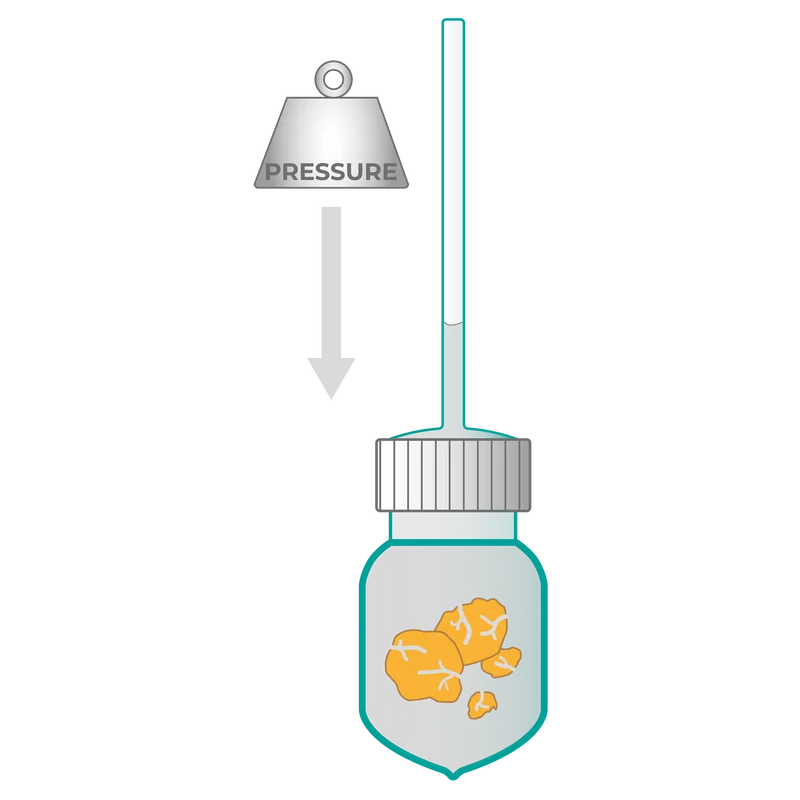
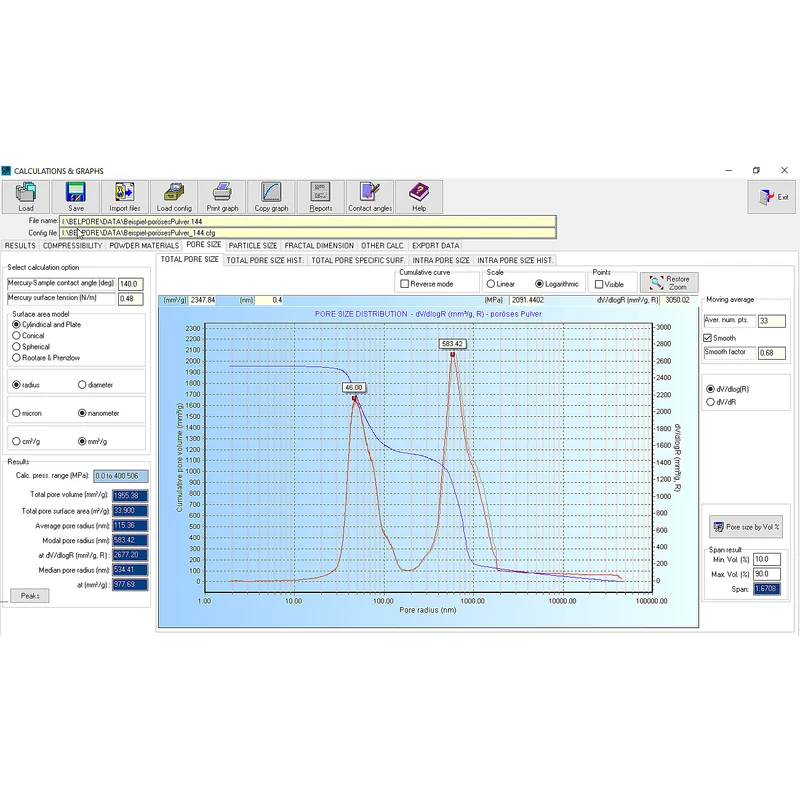
The BELPORE forces mercury into a sample under rising pressure; the intrusion volume at each pressure gives pore size distribution and total pore volume by the mercury-intrusion (ISO 15901-1) method. Low-, medium- and high-pressure stages span nanometre to macropore ranges, and PoreInspect derives pore models, fractal dimension, tortuosity and permeability. See full specifications below.
Why porosity labs choose the BELPORE
The widest single-technique pore range, plus structure and transport analysis.
Nano to macro pores
One workflow from 3.6 nm micropores through 180 µm macropores across LP, MP and HP stages — the widest single-technique pore range.
High-resolution intrusion
Up to 10,000 intrusion and 10,000 extrusion points, pressure accuracy better than 0.1% F.S. and volume better than 1% — fine pore-distribution detail.
Beyond pore size
PoreInspect derives pore models, fractal dimension, tortuosity and permeability, so one measurement supports transport and structure studies.
Multi-instrument control
Monitor up to four porosimeters over LAN from one PoreInspect workstation — scale QC throughput without four operators.
How Additive Plus delivers it
Configured to your pore range, installed with safety setup, method-supported.
Configure
We match the pressure stage (LP, MP or HP) and dilatometer type — standard, professional or ultra-macropore — to your pore range and sample.
Install & train
Installation, mercury-handling and safety setup, PoreInspect training and a validated first intrusion run on your sample.
Method support
Porosimetry method support — corrections, contact angle and fractal/permeability analysis — from a team that runs porosity work in-house.
Specifications at a Glance
Key figures below — the full set is in the Specifications tab.
| Parameter | Specification |
|---|---|
| Technique | Mercury intrusion porosimetry (ISO 15901-1 method) |
| Pore size range | 3.6 nm – 180 µm (HP / MP / LP) |
| Max pressure | 414 MPa (HP) |
| Pressure accuracy | Better than 0.1% F.S. |
| Volume accuracy | Better than 1% F.S. |
| Measuring points | Up to 20,000 |
| Dilatometers | Standard · professional · ultra-macropore |
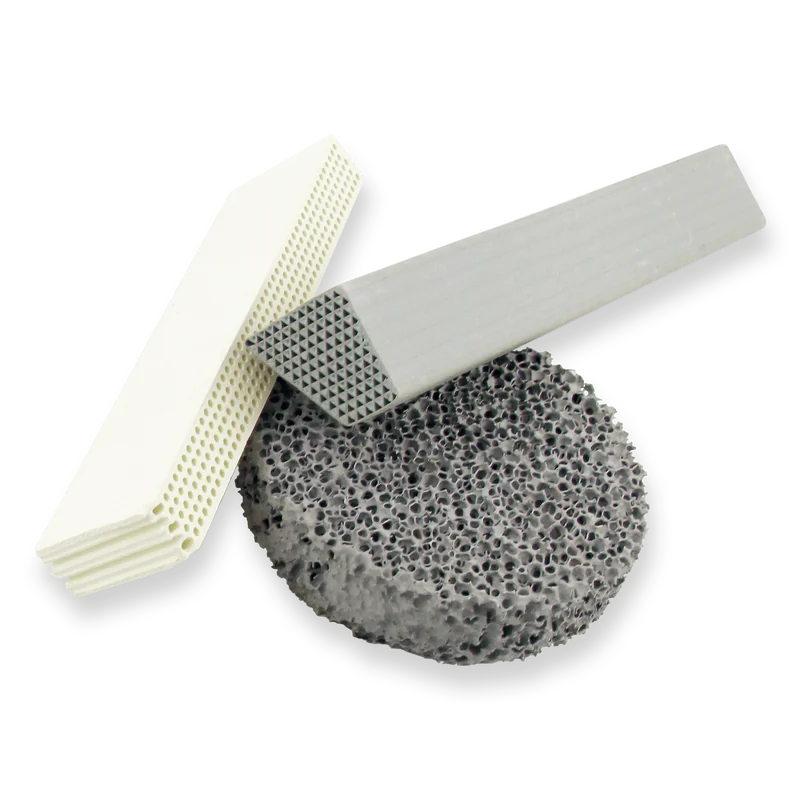
Typical applications
Where pore structure governs strength, flow and performance.
Why Source the BELPORE Through Additive Plus
- Application-matched configuration — pressure stage, dilatometer and contact angle specified to your material and pore range.
- Installation, mercury-handling and safety setup, PoreInspect training and a validated first intrusion run.
- Porosimetry method support — corrections, fractal and permeability analysis — from a team that runs porosity work in-house.
- Leasing and financing available for capital lab equipment · <24h response · systems delivered across 23 countries.
| Brand | Microtrac |
| Technology | Mercury intrusion porosimetry |
| Certification | CE |
| Weight | 121–150 lb / 55–68 kg |
Send a representative sample and we'll run a mercury-intrusion pore-size measurement on the BELPORE in our lab, then review the curve with you.
Other products teams run alongside Microtrac BELPORE Mercury Porosimeter – Pore Size & Volume | 3.6 nm–180 µm, up to 414 MPa
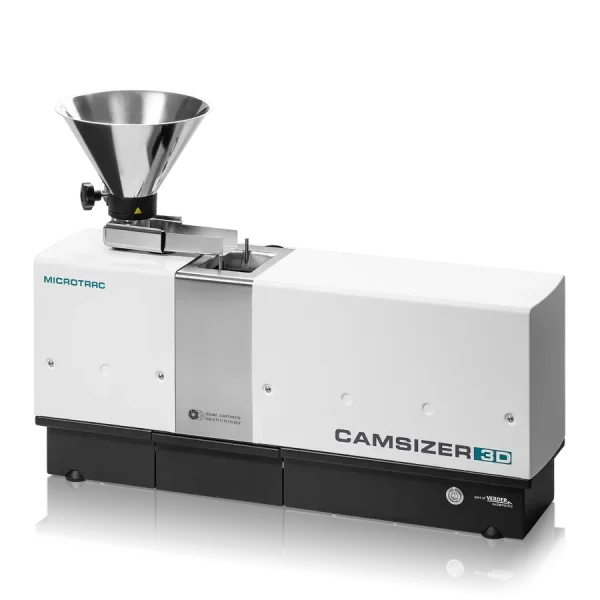
True three-dimensional dynamic image analysis — patented particle tracking captures up to 30 images of every particle, measuring real length, width and thickness from 20 µm to 30 mm.
- ✔ True 3D shape — up to 30 images per particle (length, width, thickness)
- ✔ Range 20 µm–30 mm · dual 9 MP + 5 MP cameras, 250 img/s
- ✔ Detects quality changes 2D analysis misses
- ✔ Lead time: configured to order — request current timeline
Made to order
· Lead time: configured to order — request current timeline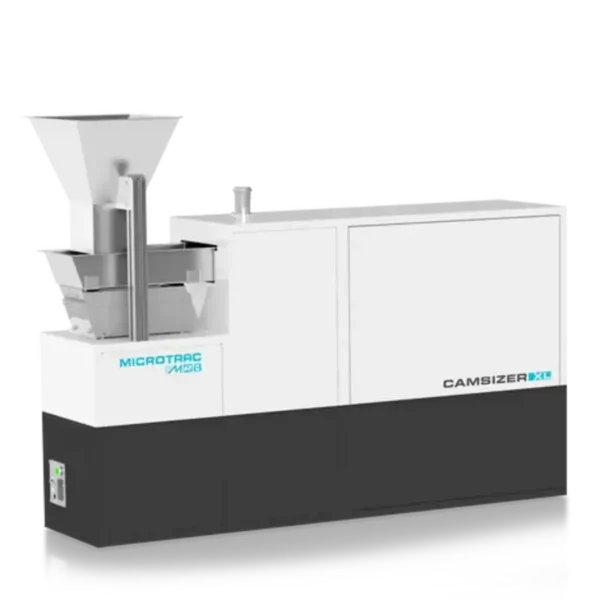
Dynamic image analysis for coarse and bulk particles — 160 µm to 135 mm, measuring size and 40+ morphology parameters on a wide free-falling stream, with sieve-comparable results.
- ✔ Coarse range 160 µm–135 mm · high-throughput free-fall
- ✔ 40+ morphology parameters (size, shape, roughness)
- ✔ Sieve-comparable · sample up to 2 kg
- ✔ Lead time: configured to order — request current timeline
Made to order
· Lead time: configured to order — request current timeline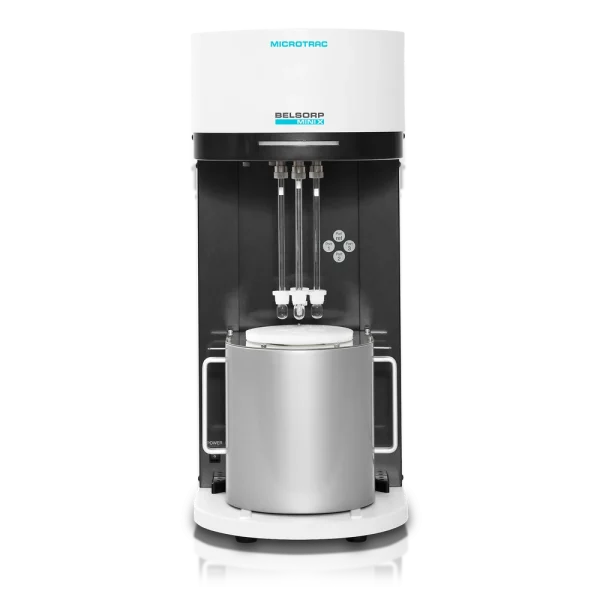
Compact volumetric gas adsorption analyzer for BET surface area and mesopore distribution — up to four samples in parallel, helium-free, from 0.01 m²/g.
- ✔ Surface area from 0.01 m²/g (N₂) — no krypton needed
- ✔ Pore size 0.7–500 nm (0.35 nm with molecular-probe option)
- ✔ Up to 4 ports, independent 133 kPa transducer per port
- ✔ Lead time: configured to order — request current timeline
Made to order
· Lead time: configured to order — request current timeline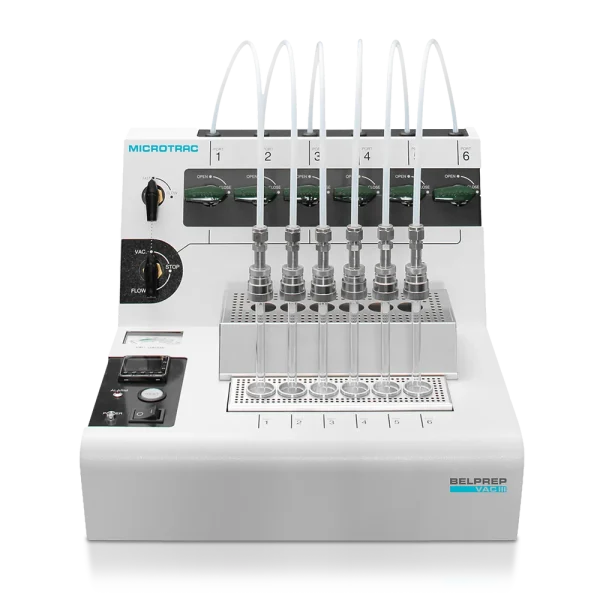
Vacuum degasser for gas adsorption sample preparation — removes moisture and contaminants by vacuum and heat on 3 or 6 ports, so your BELSORP analyzer stays free for measurement.
- ✔ 3 or 6 pretreatment ports · parallel sample prep
- ✔ Vacuum + heat degassing (optional flow + heat)
- ✔ Frees the analyzer — prep while it measures
- ✔ Lead time: configured to order — request current timeline
Made to order
· Lead time: configured to order — request current timeline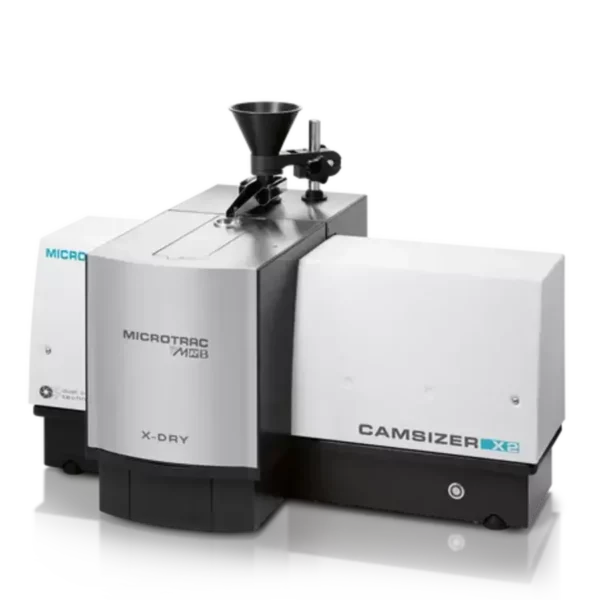
- ✔ Size + shape: sphericity, aspect ratio, symmetry (ISO 13322-2 / 9276-6)
- ✔ Range 0.9 µm–8 mm · dual >5.0 MPixel ZOOM + BASIC cameras, >420 img/s
- ✔ X-Fall gravity, X-Jet air, X-Flow wet dispersion · DIMENSIONS software
- ✔ Lead time: configured to order — request current timeline
Made to order
· Lead time: configured to order — request current timeline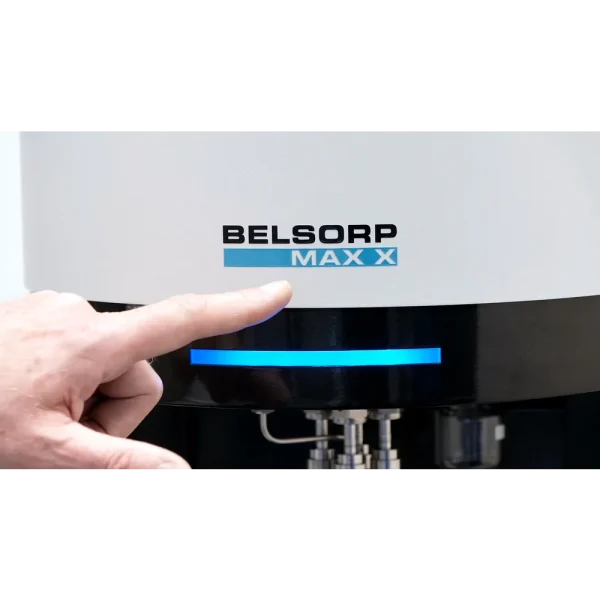
Manometric (volumetric) gas adsorption analyzer for BET specific surface area and pore size distribution — 0.35–500 nm pores, N₂ / Ar / CO₂ and organic vapors, up to four samples in parallel, referenced to ISO 9277 and ISO 15901-2.
- ✔ Surface area from 0.01 m²/g (N₂) · 0.0005 m²/g (Kr)
- ✔ Micropore to macropore: 0.35–500 nm, P/P₀ down to 10⁻⁸
- ✔ Up to 4 measurement ports · 3 gas ports expandable to 12
- ✔ Lead time: configured to order — request current timeline
Made to order
· Lead time: configured to order — request current timeline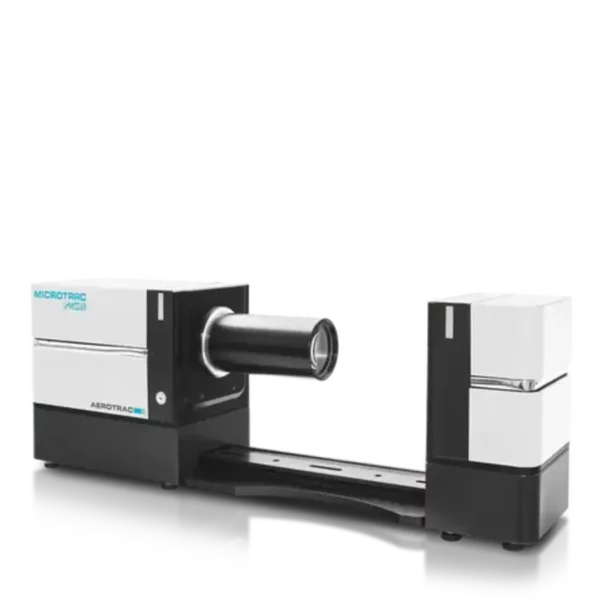
Laser-diffraction spray & droplet size analyzer — 0.5 to 2,000 µm across three lenses, capturing a spray in as little as 0.02 ms with multiple-scattering correction standard.
- ✔ Range 0.5–2,000 µm · F100 / F300 / F600 lenses · 32-segment ring detector
- ✔ Real-time spray capture from 0.02 ms · continuous mode to 600 s
- ✔ Multiple-scattering correction standard · wet, dry & auto-trigger
- ✔ Lead time: configured to order — request current timeline
Made to order
· Lead time: configured to order — request current timeline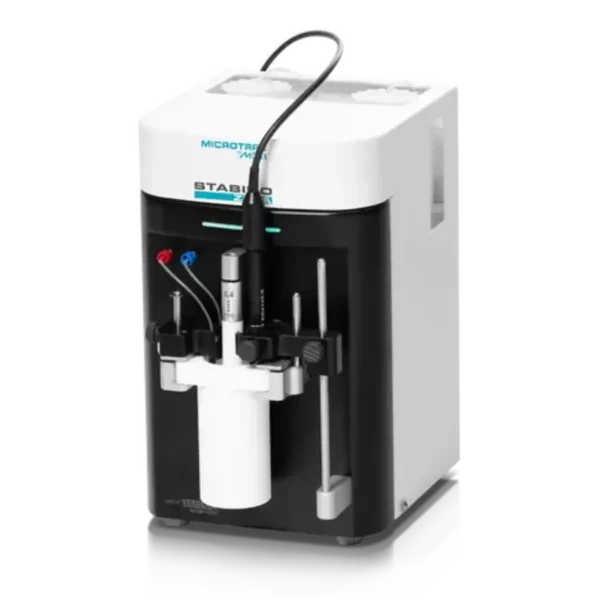
Streaming-potential zeta and particle-charge analyzer with fast titration — five parameters at once (zeta, streaming potential, conductivity, pH, temperature) for particles 0.3 nm to 300 µm at up to 40 vol%.
- ✔ Charge range ±3000 mV · 0.3 nm–300 µm · up to 40 vol%
- ✔ pH / polyelectrolyte / salt titration in 5–15 min · isoelectric point
- ✔ Add NANOTRAC FLEX probe for simultaneous particle size
- ✔ Lead time: configured to order — request current timeline
Made to order
· Lead time: configured to order — request current timelineCommon questions
Don't see yours? Email [email protected] — NDA standard, typical reply within 4 hours.
What pore size range does the BELPORE cover?
How does mercury porosimetry differ from gas adsorption?
How accurate and detailed are the results?
What analysis does PoreInspect provide beyond pore size?
What sample cells (dilatometers) are available?
What about mercury safety and handling?
What lead time and support come with the BELPORE?
Place your order, or talk to an engineer first
Order Microtrac BELPORE Mercury Porosimeter – Pore Size & Volume | 3.6 nm–180 µm, up to 414 MPa direct, or talk to materials engineer