
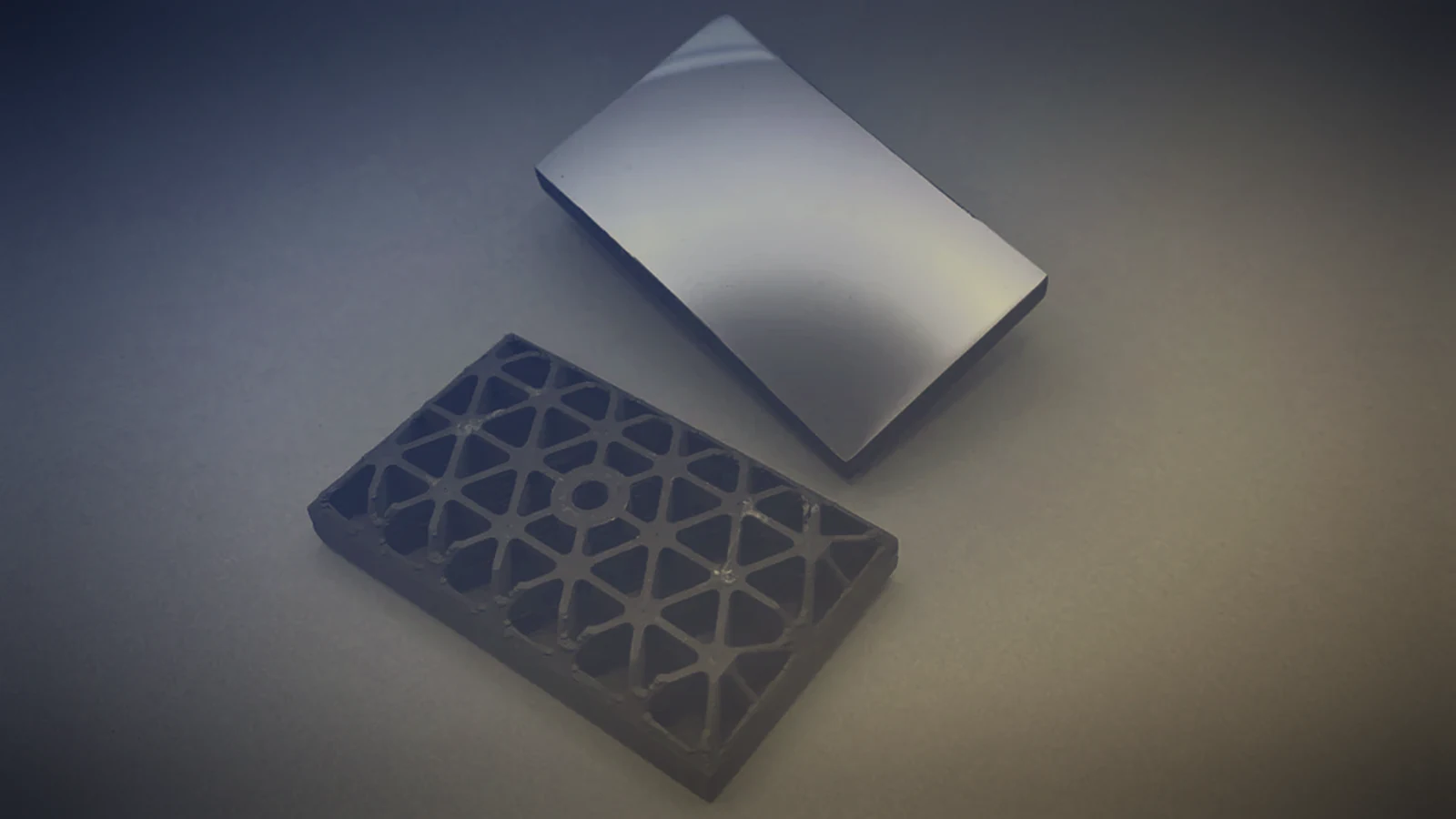
The clearest way to understand ceramic filament applications is through the parts people actually put into service, so this roundup collects 20 documented cases built on Zetamix ceramic filament (plus a few metal-filament parts). Every case runs the same route: print the part on a standard fused-filament (FFF) printer, then debind and sinter it to a dense technical ceramic or metal. The value is that a lab or a workshop reaches alumina, zirconia, silicon carbide and porcelain parts without a powder-bed machine.
The cases below are grouped by field — aerospace and energy, heavy industry and metallurgy, optics and RF, research and education, defense spares, and consumer parts. All are documented by Zetamix; each entry links to the exact filament that produced it.
Aerospace and energy: ceramic filament under heat
The hardest environments make the clearest case for printed technical ceramics — high temperature, thermal shock, and chemical attack that melt or corrode conventional tooling.
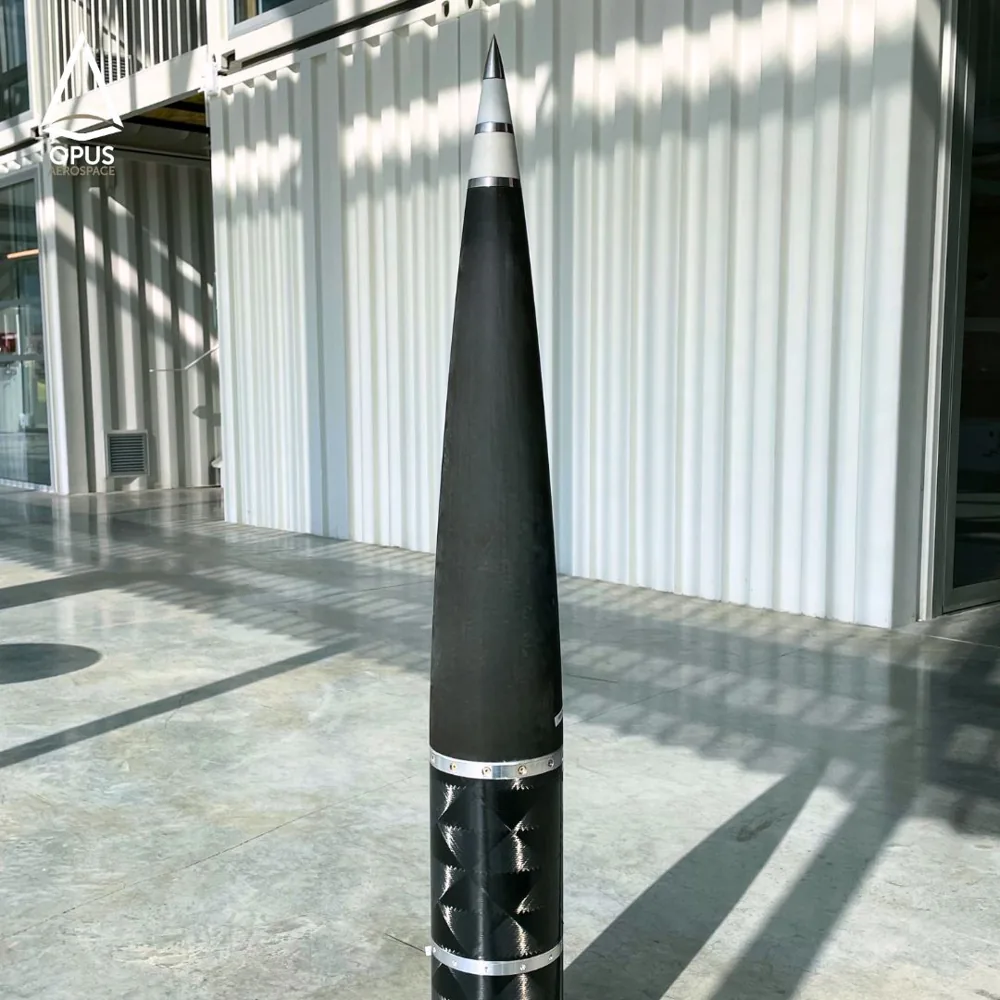
Reusable-rocket heat shield (Opus Aerospace). An alumina heat shield for the Mesange launcher, printed to cut cost and weight on hardware that has to survive re-entry heat.
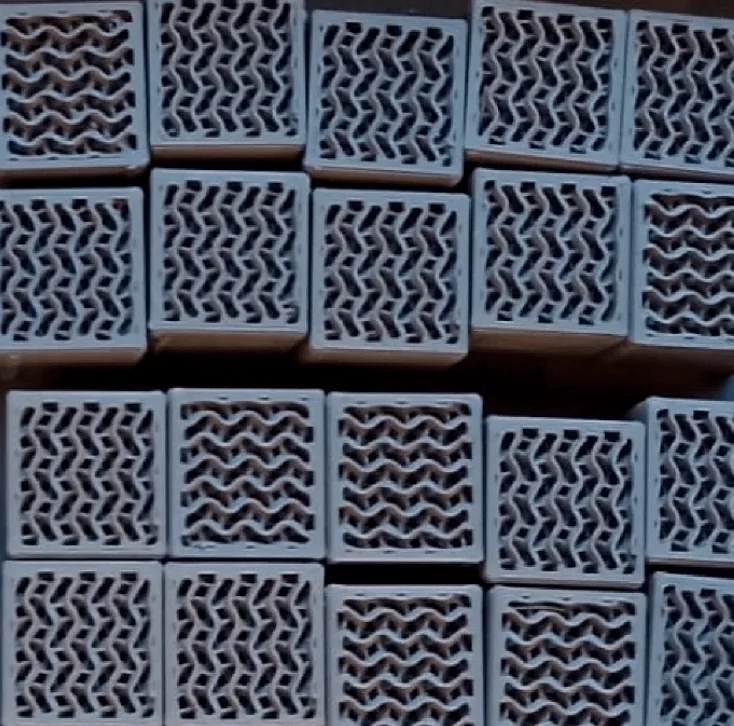
Concentrated-solar receiver (research). Black zirconia parts tested for thermal-shock resistance under a concentrated solar beam, for next-generation solar power receivers.
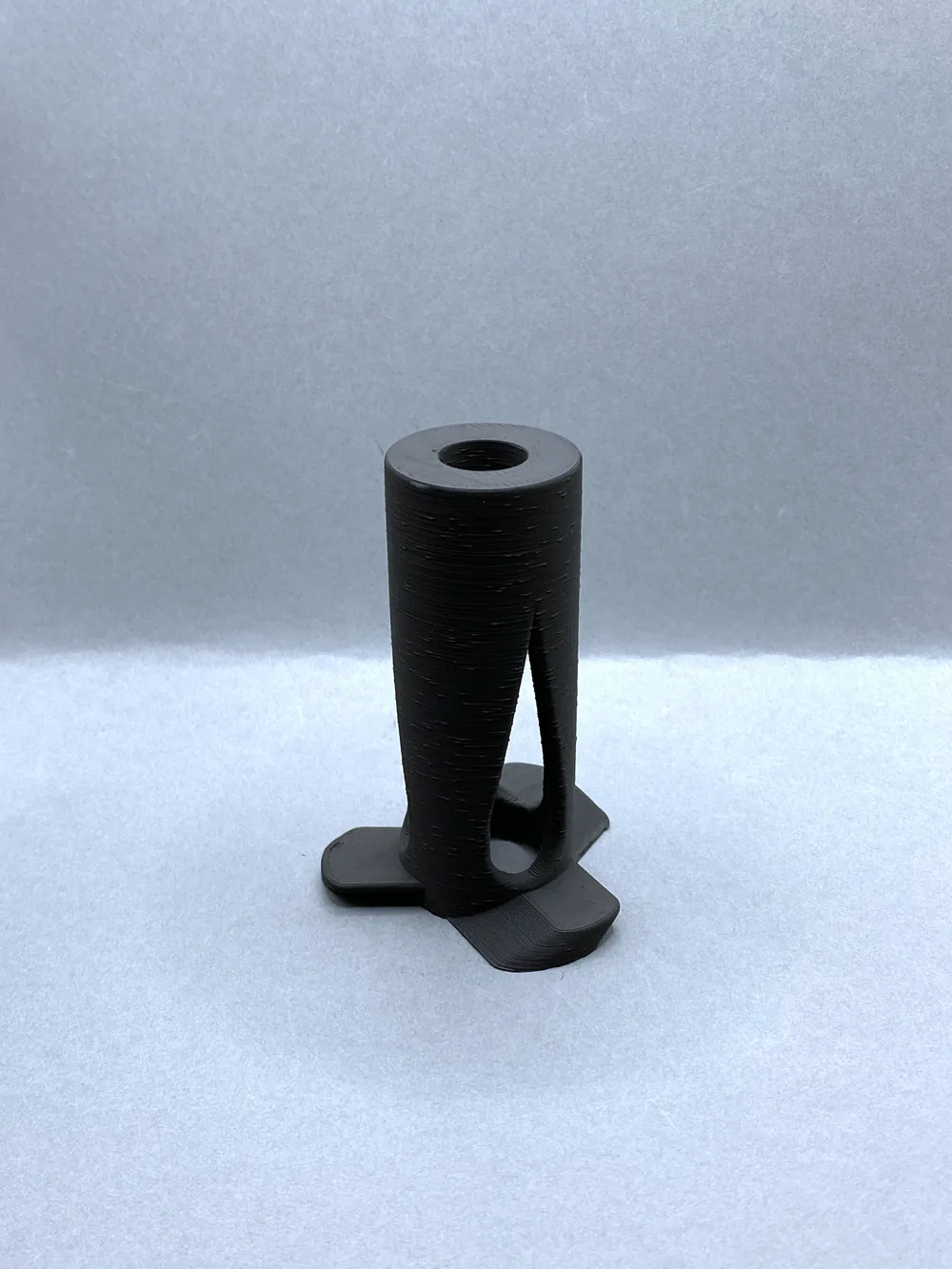
1600 °C magnet mixer (CEA). A silicon carbide mixer that resists both high temperature and chemical reaction during neodymium-magnet production at 1600 °C.
Heavy industry and metallurgy
In production plants the recurring problem is abrasion, corrosion and the cost of small-batch custom tooling — all of which suit print-on-demand ceramics and metals.
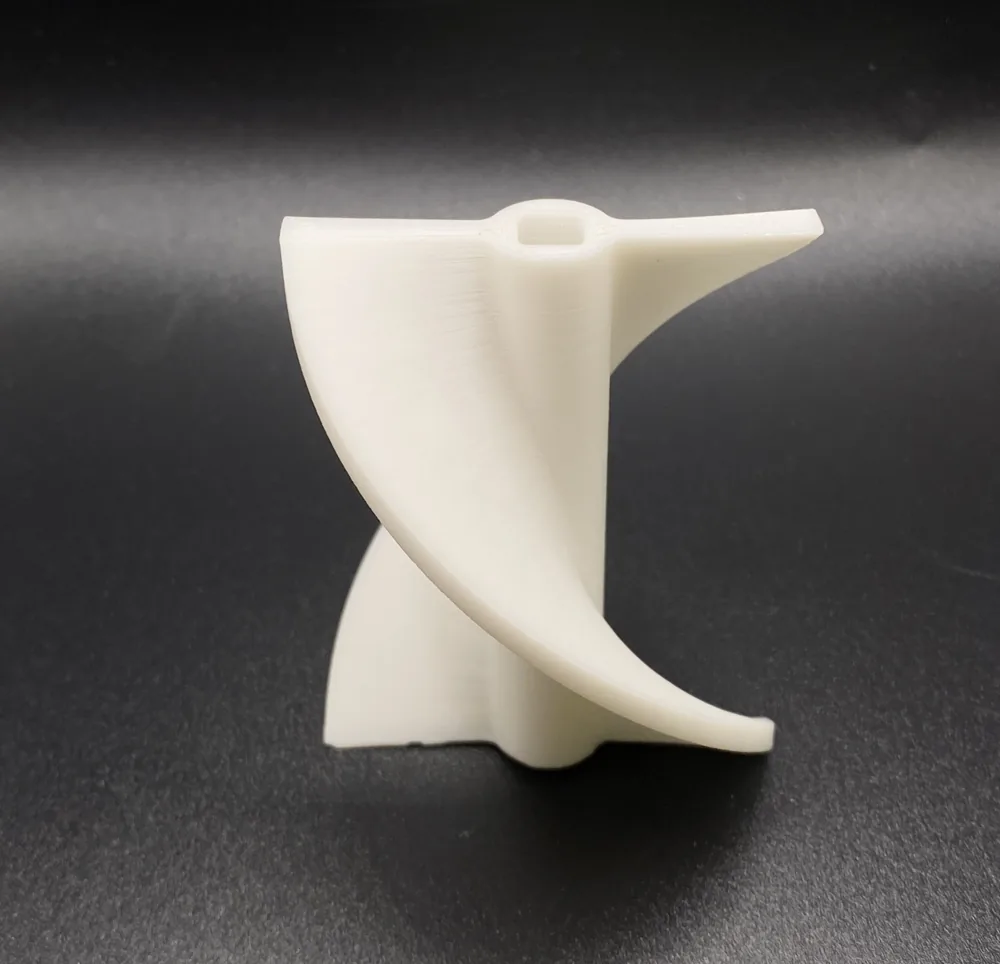
Abrasion-resistant static mixer (Holcim). Dynamic mixers could not handle abrasive cement, so an alumina static mixer was printed to replace them.
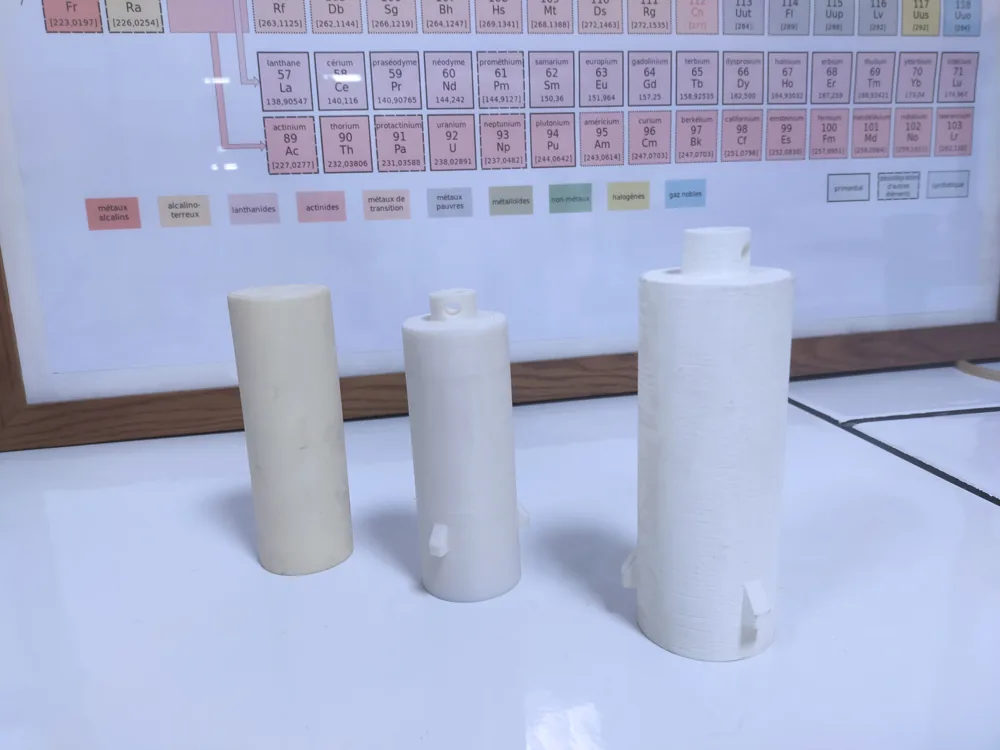
Steel-analysis crucible (Ugitech / Swiss Steel Group). Custom ceramic crucibles for quality-control analysis, made to a shape off-the-shelf labware does not offer.
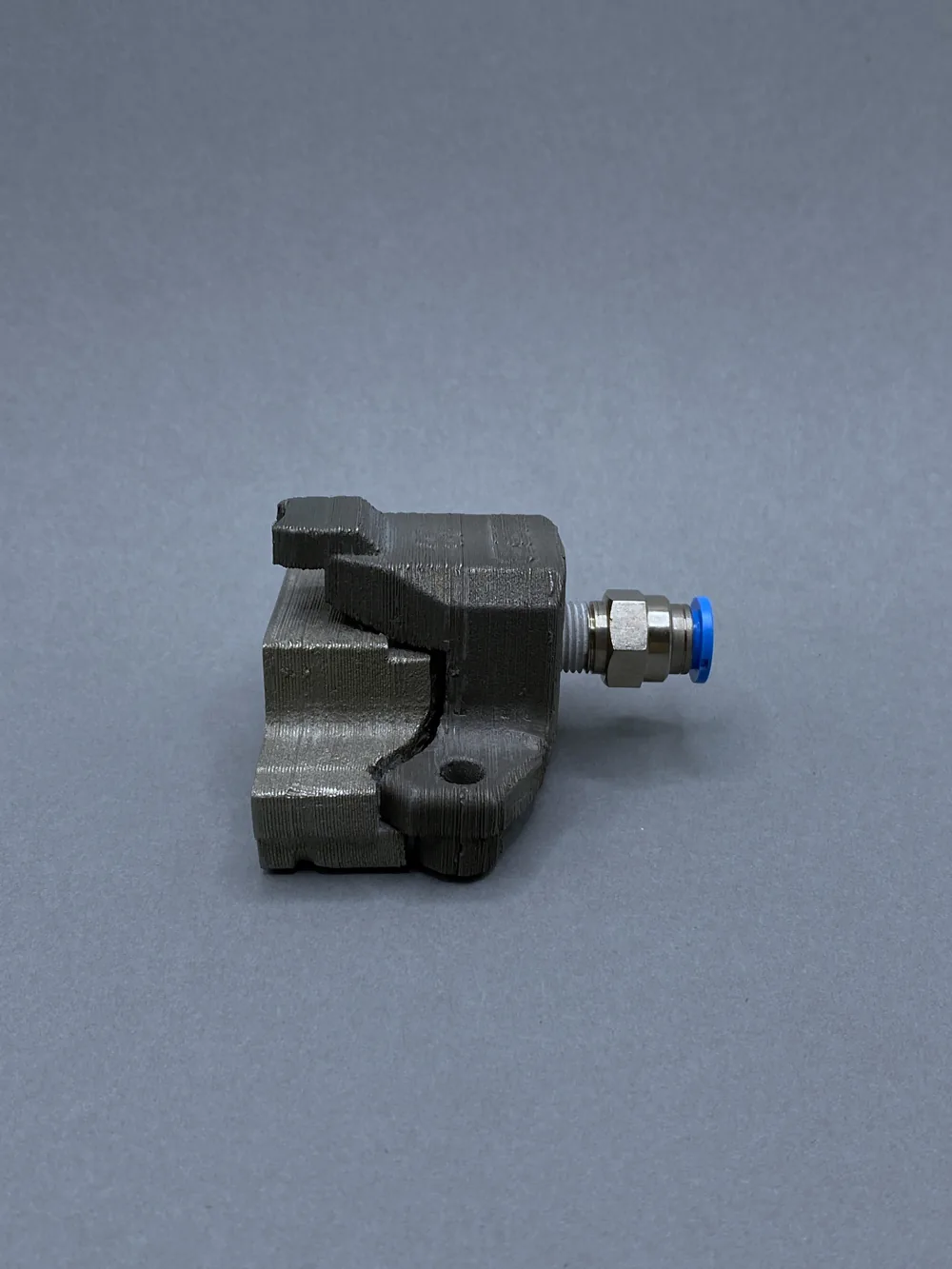
Screw-lubrication nozzle (MGB). A precision stainless-steel nozzle that positions lubrication exactly where a screw-making line needs it.
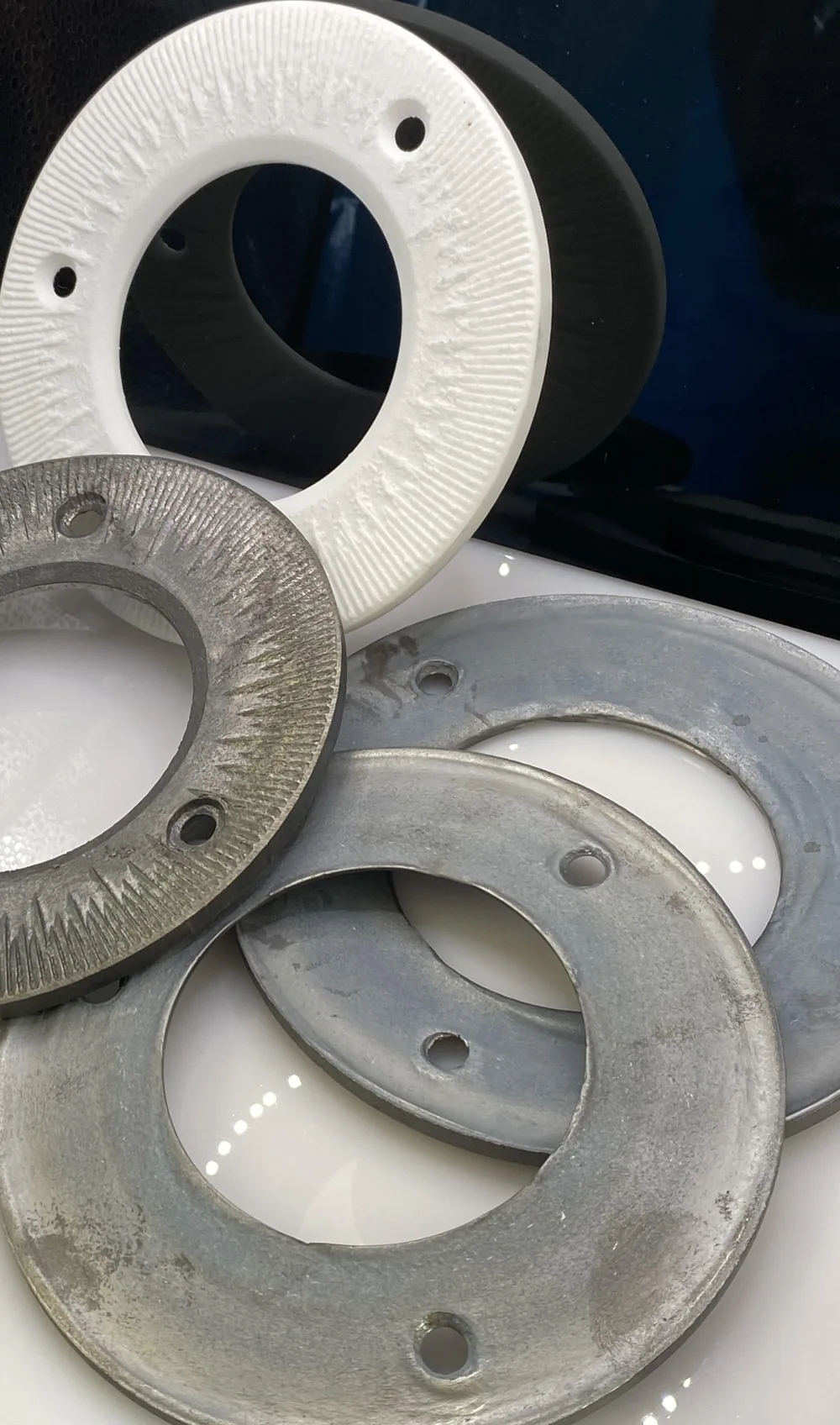
Small-series grinding discs (Mines Paris Tech). On-demand ceramic grinding discs for disc-mill technology, produced in small series without dedicated tooling.
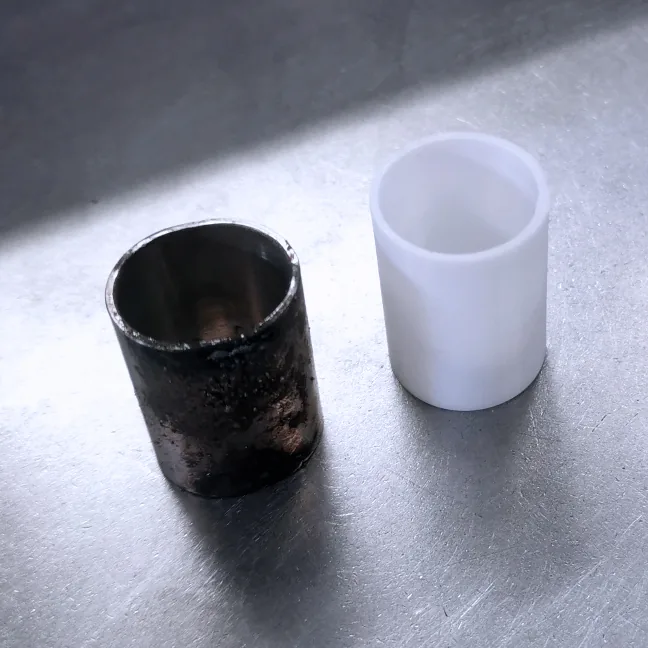
Welding shield (ceramic-electrode maker). A high-temperature ceramic welding shield that cut production steps and maintenance versus the previous tool.
Optics and RF: dielectric and structural parts
Optical mounts and radio-frequency components need shapes and dielectric properties that are hard to machine — a strong fit for printed silicon carbide and dielectric ceramics.
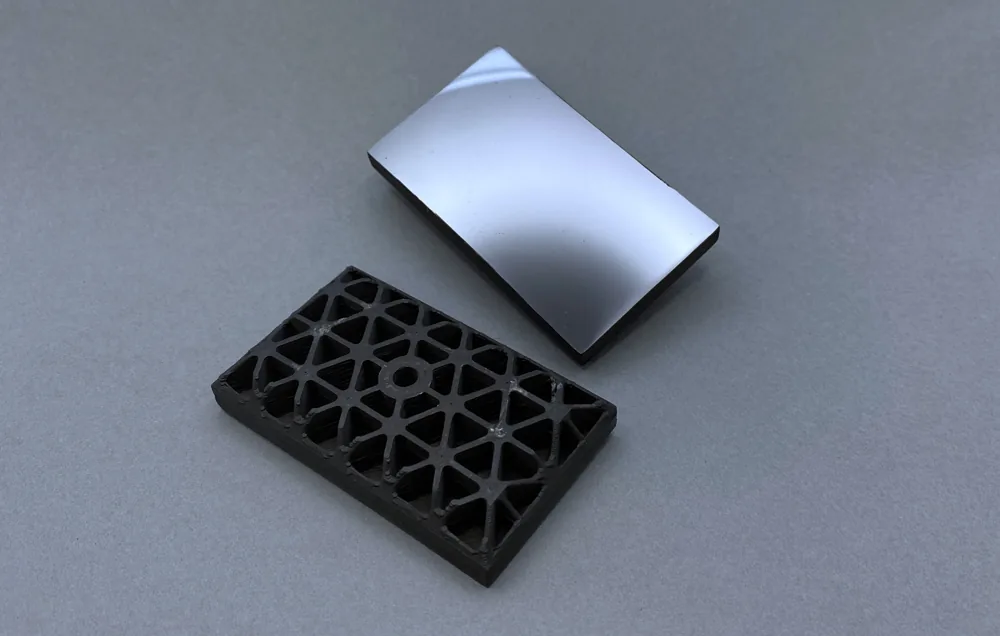
Optomechanical components (Safran Reosc). Silicon carbide parts printed for design freedom and cost reduction in high-performance optical systems.
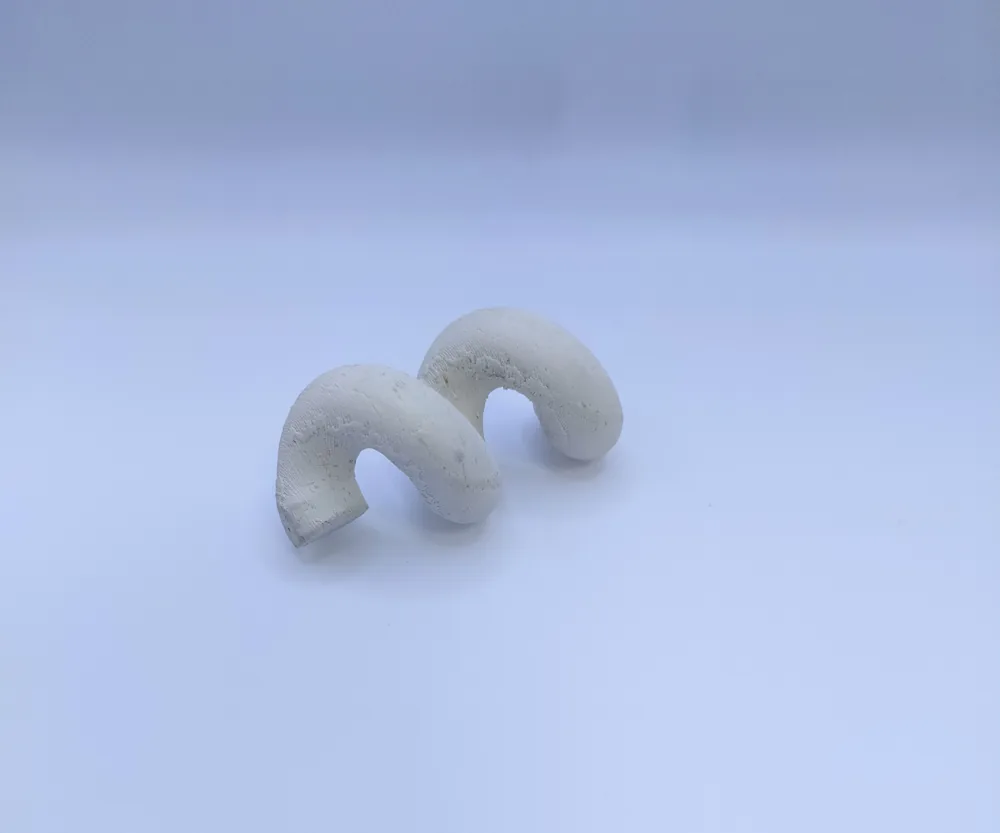
Circularly polarized helix antenna (research lab). A dielectric helix antenna built with low-cost FFF, using a dielectric ceramic filament tuned to a set permittivity.
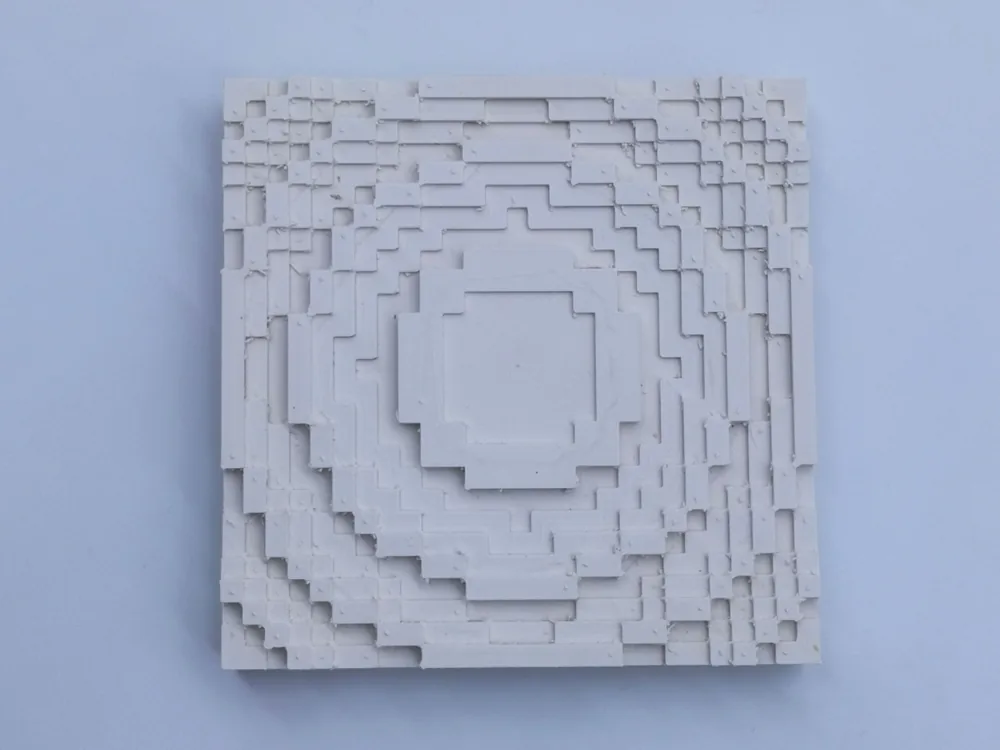
RF dielectric reflector (with LEAT). A collaborative dielectric RF reflector with tailored properties that are difficult to reach by machining.
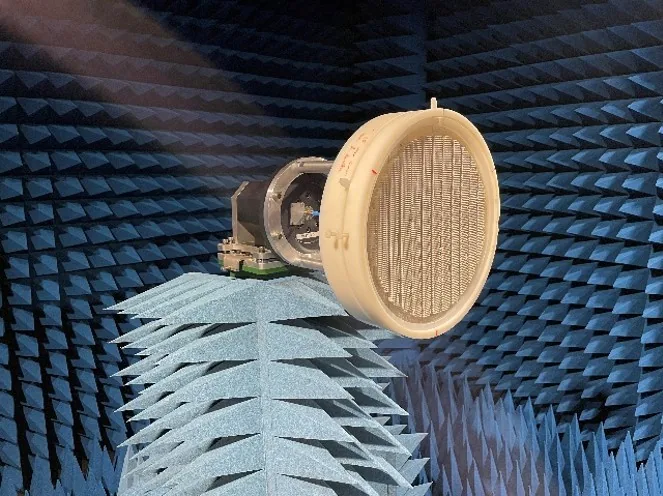
Metasurface for flat antennas. Dielectric ceramic structures developed to give flat antennas the specific permittivity they require.
Research and education
Labs and universities use the same FFF-plus-sinter route to make one-off fixtures and to teach metal and ceramic additive manufacturing on accessible hardware.
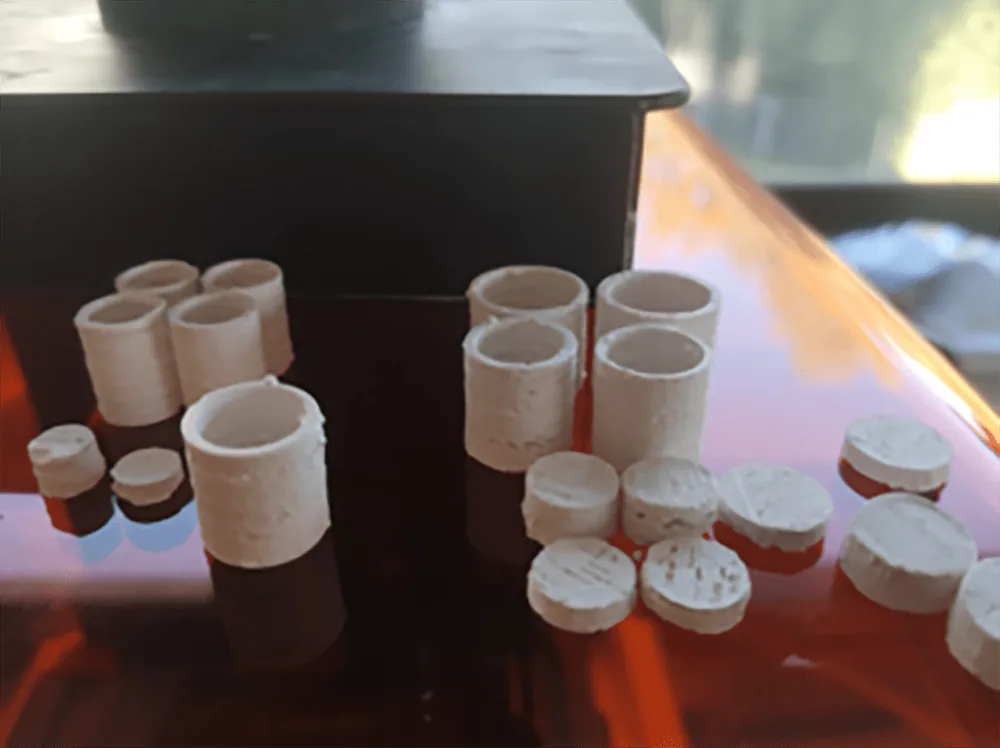
Microwave-sintering susceptors (CRISMAT). Custom zirconia susceptors for flash microwave-sintering research.
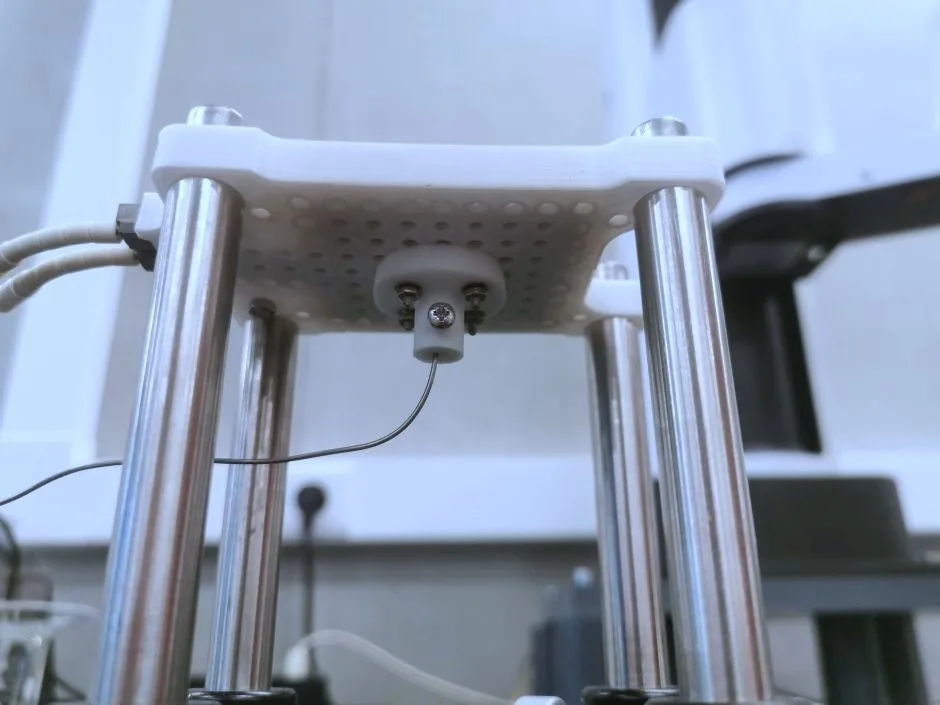
Experiment-specific fixtures (CentraleSupélec / CNRS). Tailor-made ceramic parts for an energy-and-health materials laboratory.
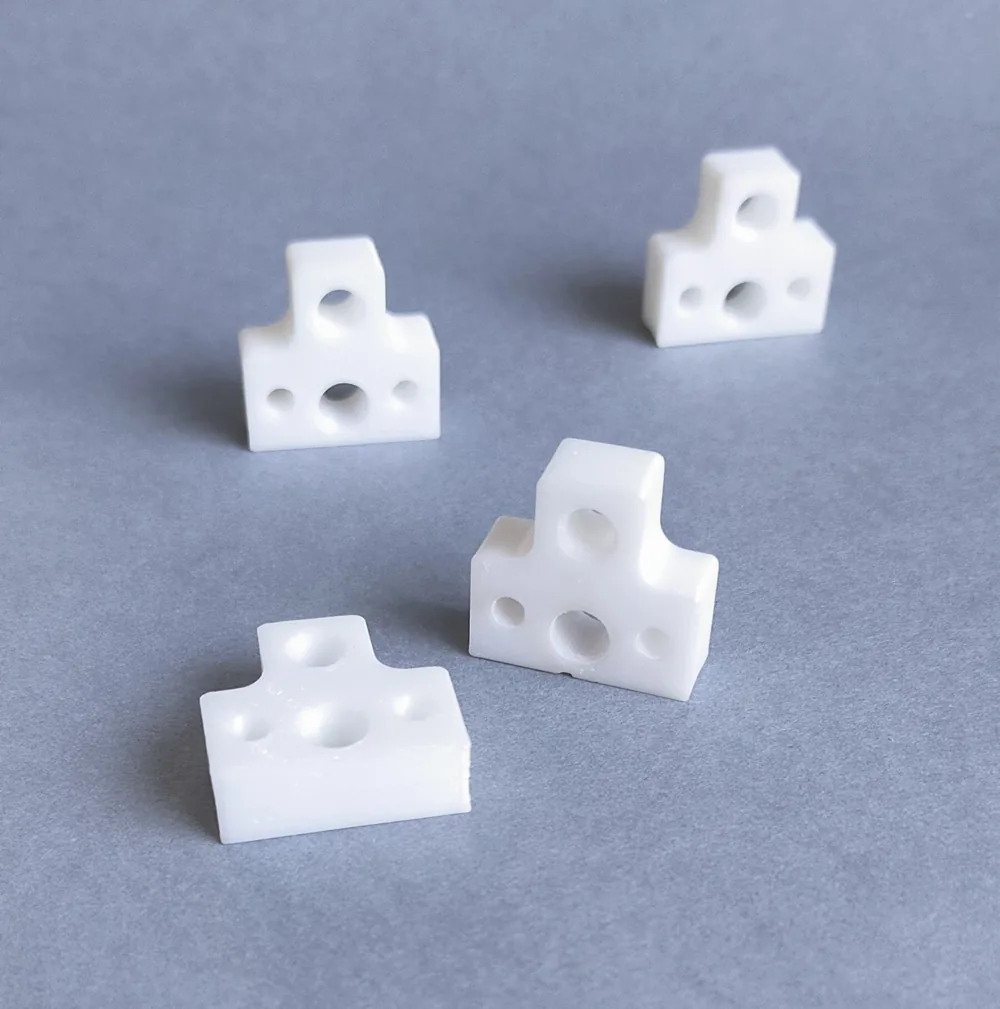
Equipment repair (LGPM). A laboratory printed a replacement part to bring a machine back into service instead of waiting on a supplier.
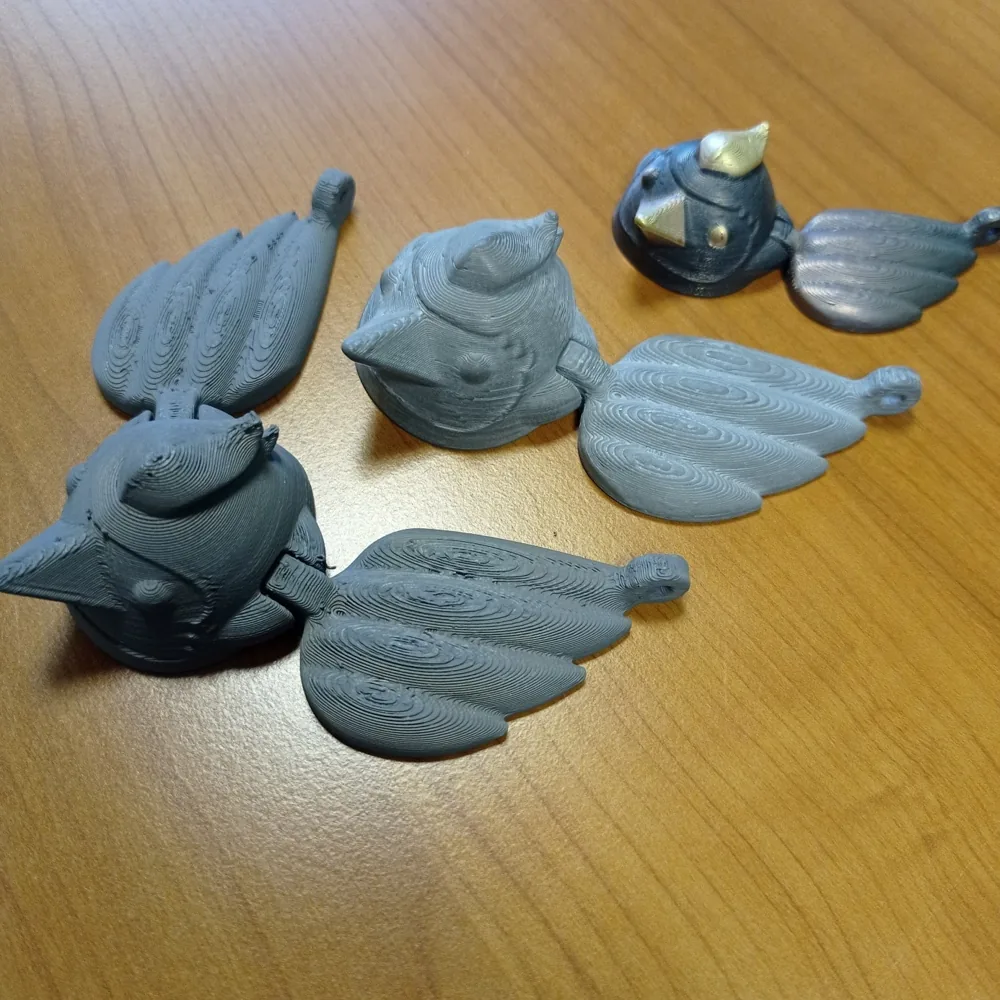
The Addibirds (CRITT Matériaux Innovation). A ceramic-injection-molding (PIM) demonstration piece from a materials-characterization platform.
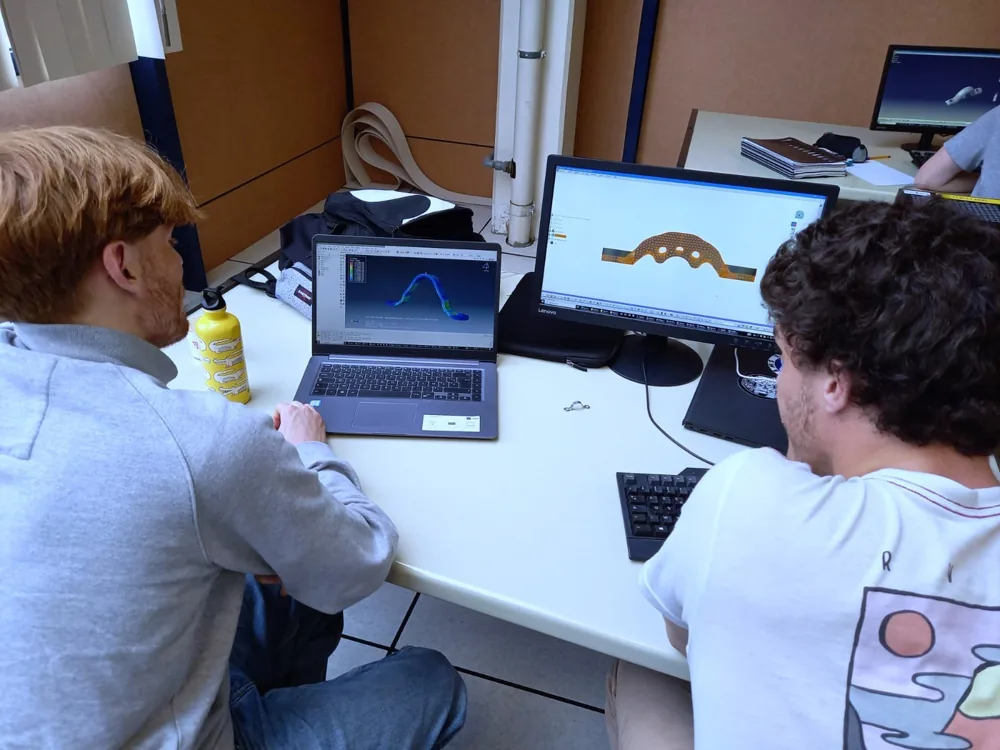
Engineering curriculum (ENSTA Bretagne). 316L stainless-steel filament used to teach metal additive manufacturing to engineering students.
Defense: spare parts on demand
When a spare is rare or slow to source, printing it on demand beats holding inventory.
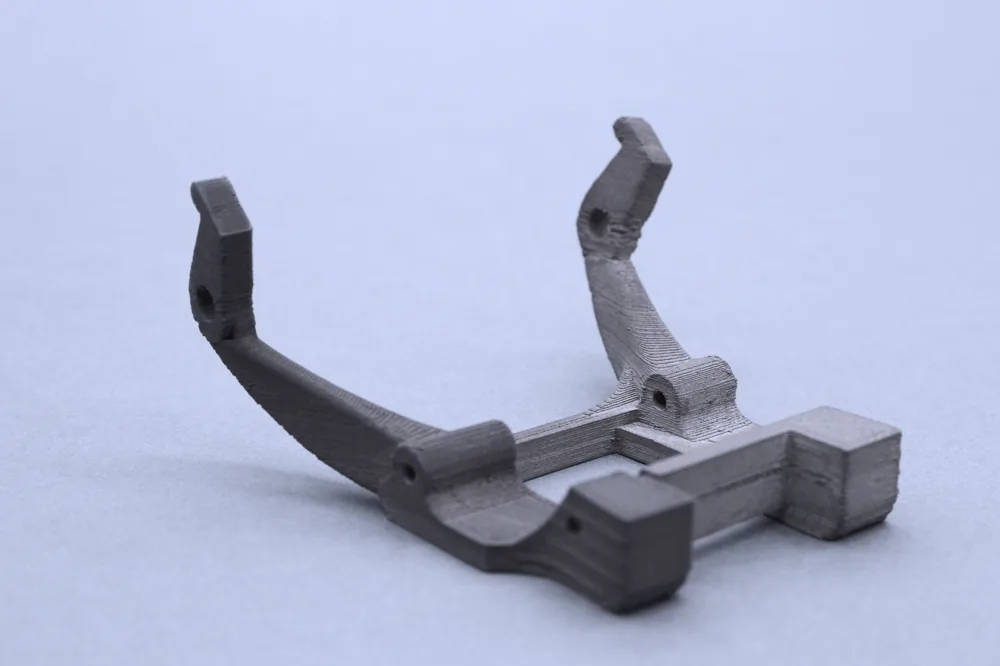
Helmet bracket (Royal Netherlands Navy). A 316L stainless-steel bracket printed on demand, so a spare is made when needed instead of held in inventory.
Consumer and decorative parts
The same fine-detail ceramics that suit industry also make durable, skin-safe consumer parts.
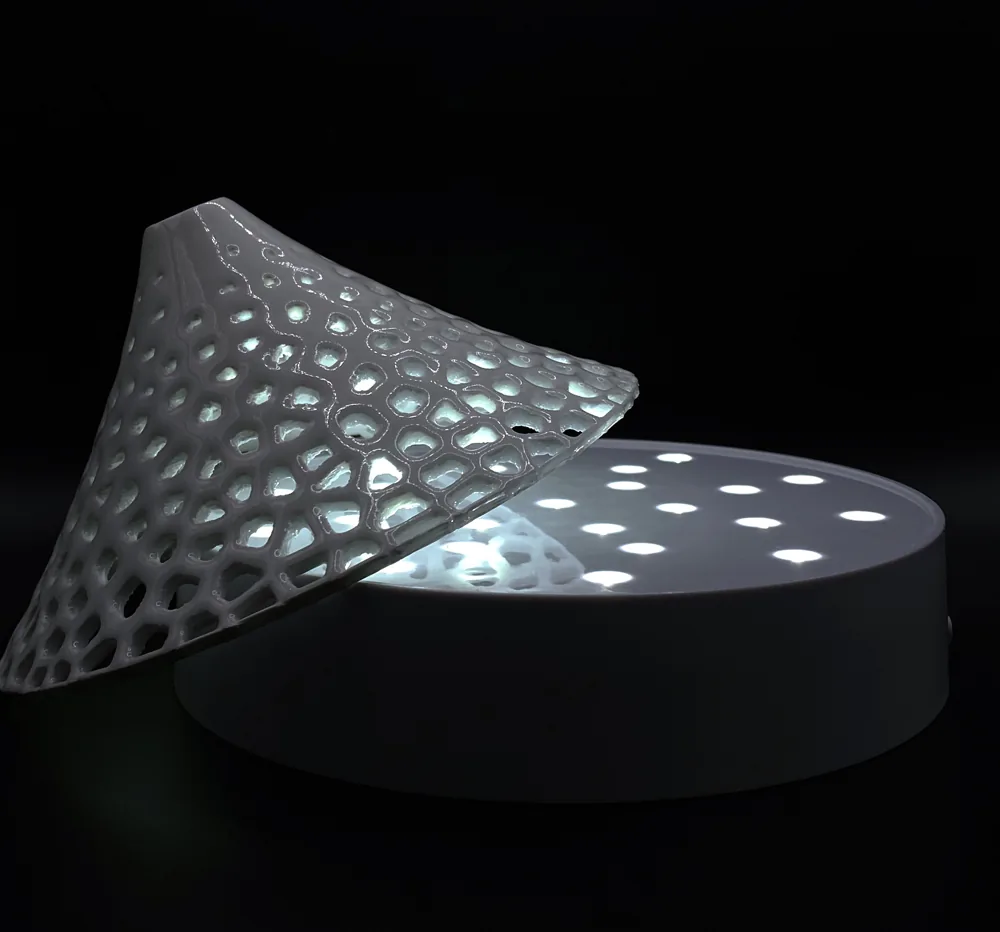
Limoges tableware (porcelain maker). A Limoges house prints porcelain tableware, joining traditional craft with additive geometry.
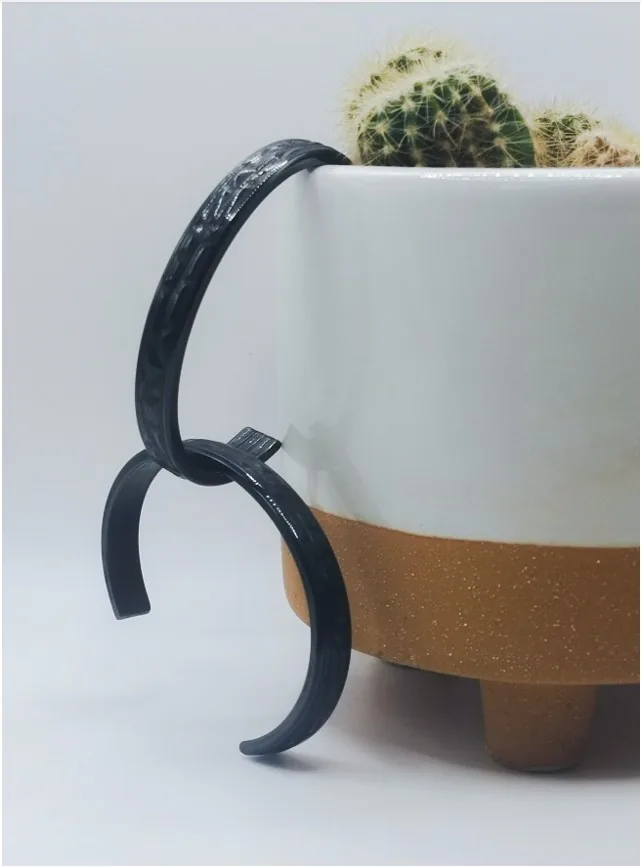
Ceramic bracelets. Zirconia jewelry, chosen for wear resistance, a hypoallergenic surface, and its finish.
What these ceramic filament applications have in common
The pattern. Every case replaces a hard-to-machine or hard-to-source part with a printed one, then reaches full material properties through debinding and sintering. The winning conditions repeat: high temperature, abrasion or chemical attack, a shape that is awkward to machine, or a batch too small to justify tooling.
The route is the same across all of them, which is why one process covers so many fields:
| Material | Where it wins | Case in this list |
|---|---|---|
| Alumina | Abrasion, electrical insulation, high temperature | Holcim mixer, Opus heat shield |
| Zirconia | Toughness, thermal shock, wear | Solar receiver, CRISMAT susceptors, bracelets |
| Silicon carbide | Extreme heat, chemical resistance, stiffness | CEA mixer, Safran Reosc optics |
| Porcelain | Fine detail, decorative and tableware parts | Limoges tableware |
| 316L stainless steel | Corrosion-resistant metal parts and spares | MGB nozzle, Navy bracket, ENSTA teaching |
Printing these parts through Additive Plus
Every part above starts as a spool and a standard FFF printer, then a debinding-and-sintering cycle. We supply the full Zetamix range — alumina, zirconia, silicon carbide, porcelain and stainless-steel filaments — together with the sintering equipment that finishes the parts. If you are matching a material to a part, the cases above are a good map of where each one earns its place. Full cases are documented on the Zetamix use-cases page.
Materials: Alumina · Zirconia · Silicon carbide · Porcelain · 316L stainless steel · All ceramic filaments
Frequently asked questions
What can you make with ceramic filament?
Ceramic filament prints functional technical-ceramic parts — alumina heat shields, zirconia susceptors, silicon carbide mixers and optical mounts, and porcelain tableware — and, in the cases here, 316L stainless-steel parts too. Each part is printed on a standard FFF printer, then debound and sintered to full density.
How does ceramic filament 3D printing work?
You print the green part on a normal fused-filament (FFF) printer, then run a debinding step to remove the polymer binder and a sintering step to densify the ceramic or metal. The part shrinks predictably during sintering, so the model is scaled up before printing to hit final dimensions.
Which ceramic filament suits high-temperature parts?
Silicon carbide handles the most aggressive heat and chemistry, alumina covers abrasion, electrical insulation and high temperature, and zirconia is chosen for toughness and thermal-shock resistance. The cases map each one: SiC for a 1600 °C mixer, alumina for a rocket heat shield, zirconia for a solar receiver.
Do I need a special printer for ceramic filament?
No — Zetamix ceramic and metal filaments run on standard 1.75 mm FFF printers fitted with a hardened, abrasion-resistant nozzle. The specialized step is the debinding-and-sintering furnace afterward, which sets the part's final density and properties.
Have a question or a project? Let’s talk.
Tell us what you need — a real applications engineer replies within 24 hours. NDA on request, no sales script.