
Made to order
- Installation & training setup and BELCONTROL/BELMASTER 7 onboarding
- a micropore or BET measurement on your sample
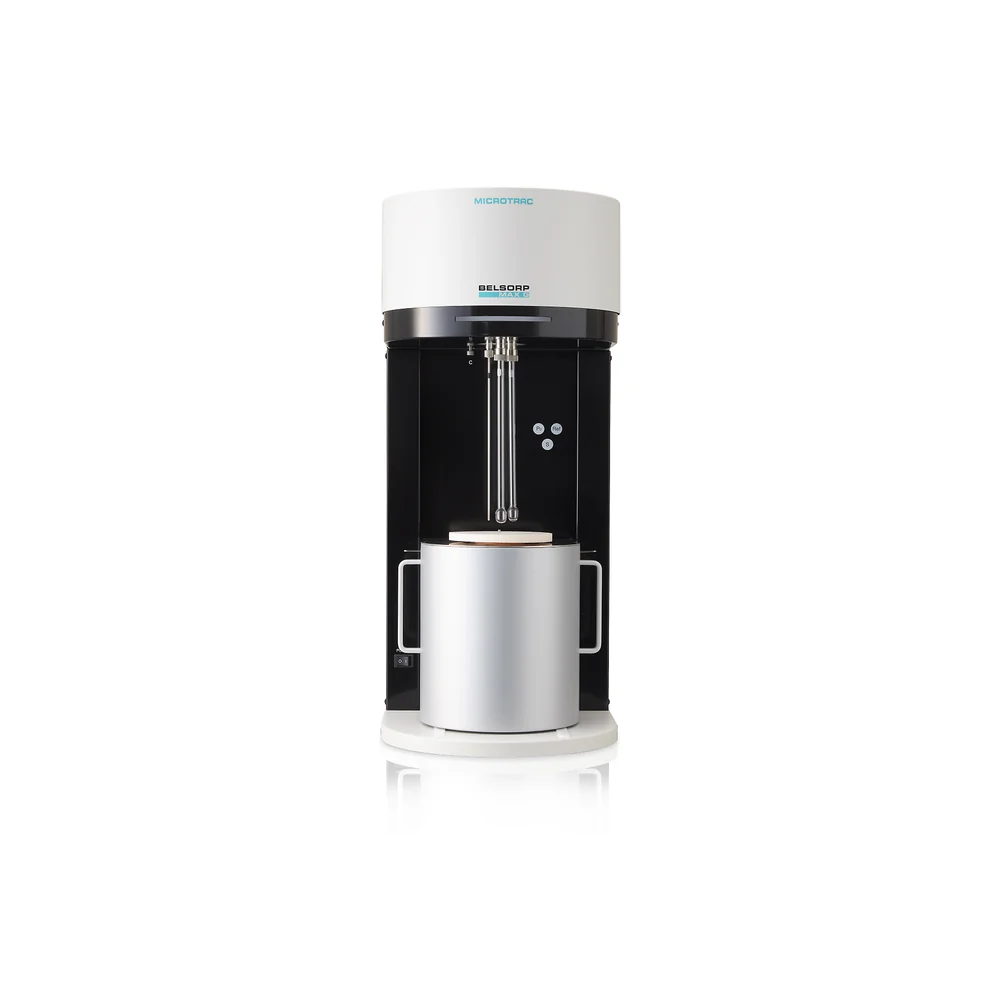
Microtrac BELSORP MAX G BET Surface Area and Micropore Analyzer
Micropore-capable BET surface area and pore size analyzer — isotherms from P/P₀ = 10⁻⁸, pores 0.35 to 500 nm, krypton down to 0.0005 m²/g.
- One measurement port with dedicated p₀ and free-space ports, AFSM™ accuracy
- BET, BJH, HK, SF and NLDFT / GCMC analysis in BELMASTER 7
- Installation and on-site training included · free test analysis of your sample
- Configured to order · lead time from 4 weeks
What your process engineer actually checks
Micropores without the floor space
Ultra-low-pressure adsorption to P/P₀ 10⁻⁸ resolves micropores in a compact 36 kg gas analyzer — MAX-class resolution for gas-only work, on a bench rather than the floor.
A materials engineer on the line
Configuration and BET, t-plot, NLDFT and GCMC method support from engineers who run surface-area and porosity analysis in-house at Additive Plus.
- BELSORP MAX G LP (0.0133 kPa transducer) or MAX G MP (0.133 kPa transducer)
- One measurement port with dedicated saturation-pressure and free-space ports; turbo molecular pump included
- 2 gas ports as standard, up to 5; gas selector for up to 4 adsorptives plus helium
- In-situ pretreatment heater (50–450 °C) and water bath (−10 to 70 °C) as options
- BELCONTROL operation and BELMASTER 7 analysis software
- Installation and on-site operator training — included in every quotation
What the BELSORP MAX G is
The BELSORP MAX G is the compact, single-sample model of Microtrac’s BELSORP MAX series. It measures gas adsorption isotherms by the volumetric method, starting from P/P0 = 10−8 and running up to atmospheric pressure, and calculates BET surface area, pore size distribution and pore volume of micro-, meso- and macroporous materials as well as non-porous ones.
It has one measurement port, one dedicated port for the saturation vapor pressure and one for free space (dead volume), each with its own pressure sensor. Three transducer ranges (1000, 10 and 1 or 0.1 Torr) and a turbo molecular pump give it micropore resolution in a benchtop frame of 36 kg. The patented AFSM™ method follows free-space changes in a reference cell, so the liquid nitrogen level no longer has to be held constant; AFSM™2 allows measurement without helium.
Specifications
| Measuring principle | Volumetric method + AFSM™ |
| Specific surface area | from 0.01 m²/g (N2) · from 0.0005 m²/g (Kr), depending on sample density |
| Pore size distribution | 0.35 – 500 nm (diameter) |
| Low-pressure isotherm | P/P0 = 10−8 (N2 at 77 K, Ar at 87 K) |
| Samples | 1 port in High Accuracy mode |
| Gas ports | 2 as standard, 5 max. |
| Adsorption gases | N2, Ar, Kr, CO2, H2, O2, CH4, NO, CO, butane and other gases |
| Pressure transducers | 133 kPa × 3 · 1.33 kPa × 1 · 0.133 kPa (MP) or 0.0133 kPa (LP) × 1 |
| Vacuum | turbo molecular pump + rotary pump; cold cathode gauge optional |
| Sample tube | approx. 1.8 cm³ standard, 5 cm³ optional |
| Dewar | 2.6 L, holding time 80 h |
| Pretreatment heater | 50 – 450 °C (option) |
| Water bath | −10 – 70 °C (option, circulator required) |
| Dimensions (W × H × D) | 320 × 740 × 465 mm (12.6 × 29.1 × 18.3 in) |
| Weight | 36 kg (79 lb), main body |
| Power | AC 100 – 240 V, 850 W, 50/60 Hz, including vacuum pump |
| Gas supply | He and adsorption gas 0.1 MPa (G), purity above 99.999 %, 1/8″ Swagelok |
| Environment | 10 – 30 °C, 20 – 80 % RH |
| Software | BELCONTROL · BELMASTER 7 |
| Standards | ISO 9277, 15901-2, 15901-3, 18852 and others · ASTM D3663-20, D6556 and others · USP 268, 846 · DIN 66134, 66135 · CE |
| Installation and training | on site, included in every quotation |
| Lead time | from 4 weeks, depending on configuration |
Download: BELSORP MAX G datasheet (PDF)
What it tells you about a porous or low-area material
The datasheet names MOFs, zeolites, carbons, catalysts, battery materials, ceramics and silica among its fields. From one isotherm the MAX G reports:
| BET surface area | per ISO 9277 by the BET or Langmuir method; Annex C (Rouquerol plot) for microporous materials |
| Micropores, 0.4 – 2 nm | HK (slit), SF (cylinder) and CY (cage) methods, plus Dubinin-Astakhov micropore volume |
| Meso- and macropores, above 2 nm | BJH, DH, CI and INNES methods from capillary condensation |
| Whole range, 0.35 – 500 nm | NLDFT and GCMC with slit, cylinder and cage kernels for carbon and metal oxide surfaces |
| Low-area samples | krypton at liquid nitrogen temperature down to 0.0005 m²/g — non-porous metallic materials, glass substrates and films that N2 and Ar cannot resolve |
| Sample forms | pellets, molded bodies, substrates and finely dispersed powders in dedicated sample tubes |
Quick BET gives a multi-point BET surface area in less than 20 minutes, and Gas Dosing Optimization uses a previous isotherm to shorten repeat measurements.
Three options to decide on
Where the MAX G stops — and what to take instead
The MAX G measures one sample at a time and is a gas instrument: the datasheet lists no vapor adsorption. If you need several samples in parallel, the BELSORP MINI X measures up to four, and the BELSORP MAX X measures up to four with micropore resolution and adds water and organic vapor isotherms. For a fast single-point BET value in QC there is the BELSORP MR 1. Pores above 500 nm need mercury porosimetry on the BELPORE. For isotherms at temperatures other than liquid nitrogen or argon, the BELCRYO X cryogenic unit connects to the MAX G; to degas several samples while the MAX G measures, add a BELPREP VAC.
In pictures
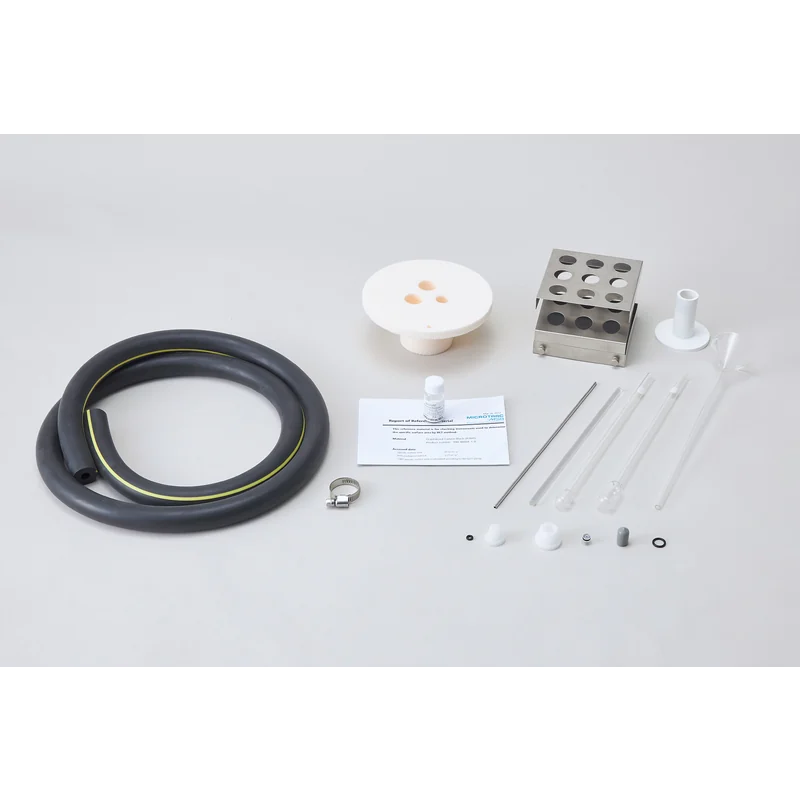
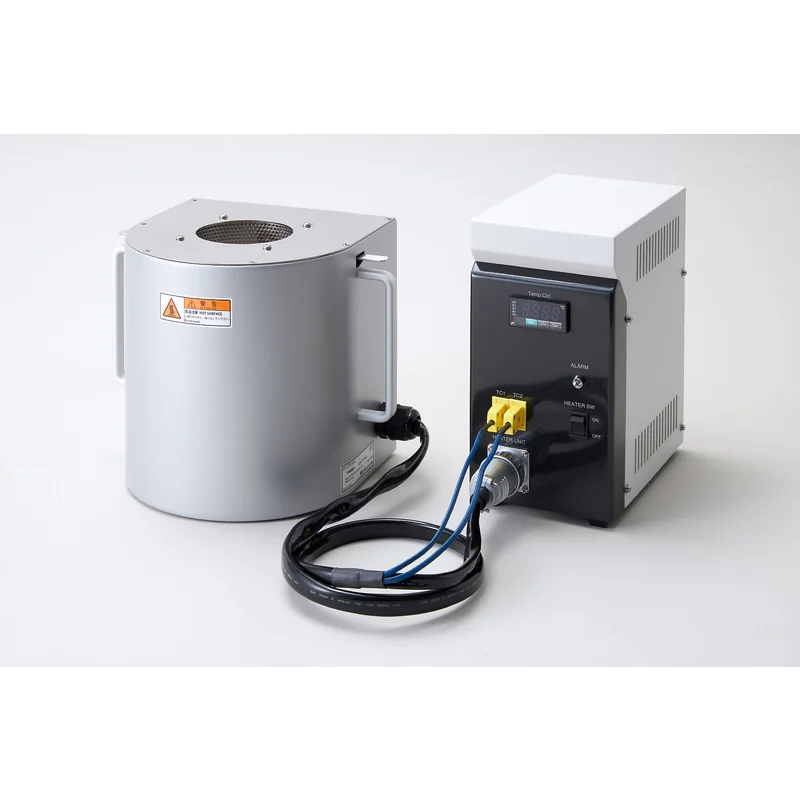
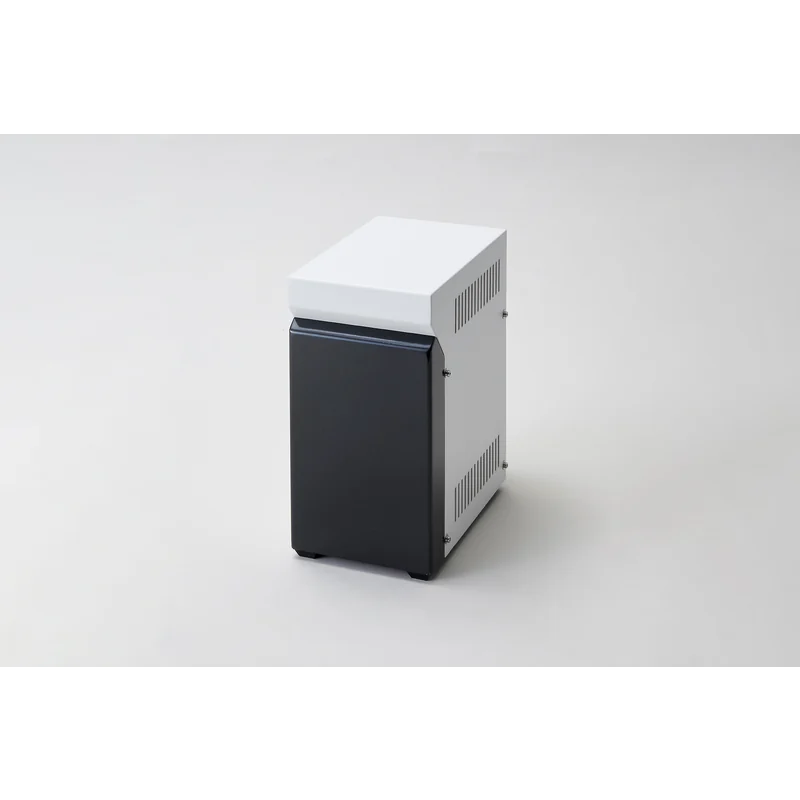
Availability, payment and delivery
Why buy it through Additive Plus
What usually stops people — and the honest answer
Ready when you are
| Brand | Microtrac |
| Technology | Gas adsorption (volumetric, BET / micropore) |
| Certification | CE |
| Weight | 79 lb / 36 kg |
Product videos
Send us a representative sample. The test measurement in Microtrac's US application lab is free, and we go through the results with you.
Other products teams run alongside Microtrac BELSORP MAX G BET Surface Area and Micropore Analyzer
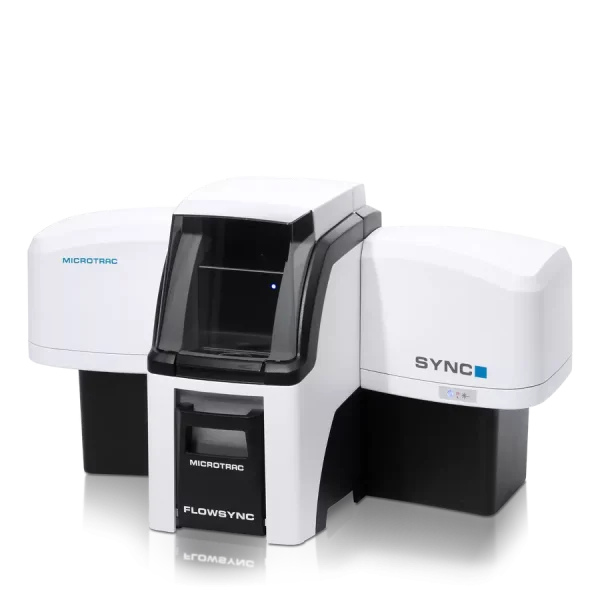
Laser diffraction and dynamic image analysis on the same sample, in the same cell, at the same time — size from 0.01 to 4000 µm and more than 30 shape parameters in a typical 10 to 30 seconds.
- Oversize, sphericity and satellites in metal AM powder, alongside the ISO 13320 size distribution
- FLOWSYNC wet and TURBOSYNC dry modules, changed in less than 15 seconds
- Installation and on-site training included · free test measurement
- Configured to order · lead time from 4 weeks
Made to order
· Lead time from 4 weeks · installation included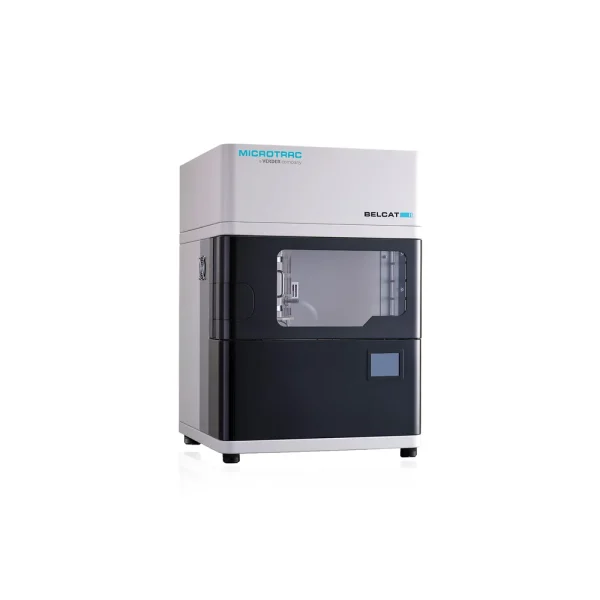
Acid sites, reducibility, coke and metal dispersion of a solid catalyst on one automatic instrument — TPD, TPR, TPO and pulse chemisorption from −120 to 1200 °C.
- Eight gas ports, mixtures blended inside the instrument
- Breakthrough curves and BET; BELMASS II option to identify the gases
- Installation and on-site training included · free test analysis of your catalyst
- Configured to order · lead time from 4 weeks
Made to order
· Lead time from 4 weeks · installation included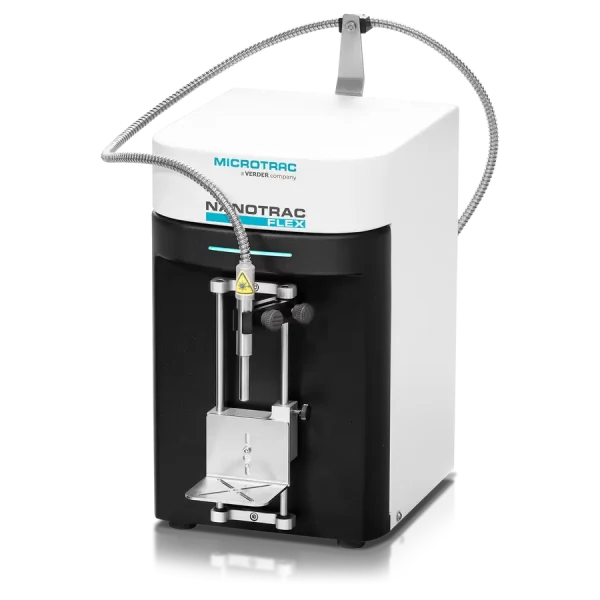
Nanoparticle size from 0.3 nm to 10 µm with a dip-in DLS probe — any vessel, from one drop, up to 40 % concentration, at line or in line.
- Size, concentration and molecular weight in one measurement
- FlowGuard for stirred and flowing liquids · no cuvettes
- Installation and on-site training included · free test measurement
- Configured to order · lead time from 4 weeks
Made to order
· Lead time from 4 weeks · installation included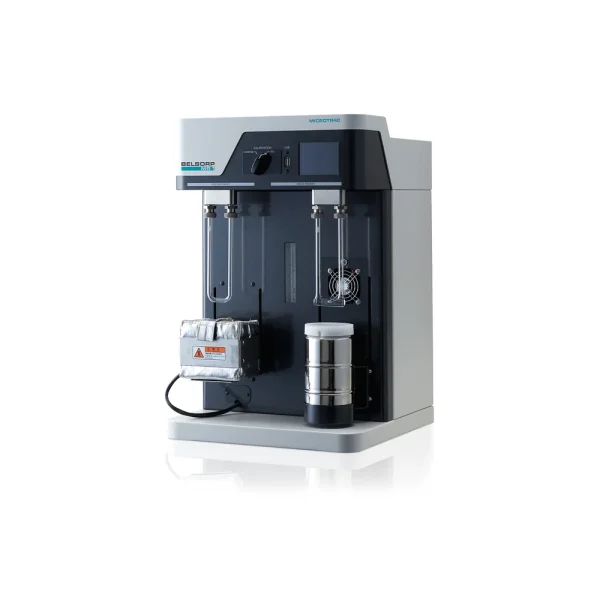
Single-point BET surface area in about 15 minutes — dynamic flow method, from 0.01 m²/g, repeatability within ±1.0 %.
- Pretreatment up to 400 °C at the same time as the measurement
- Touch panel, automatic Dewar, results to USB without manual calculation
- Installation and on-site training included · free test analysis of your sample
- Configured to order · lead time from 4 weeks
Made to order
· Lead time from 4 weeks · installation included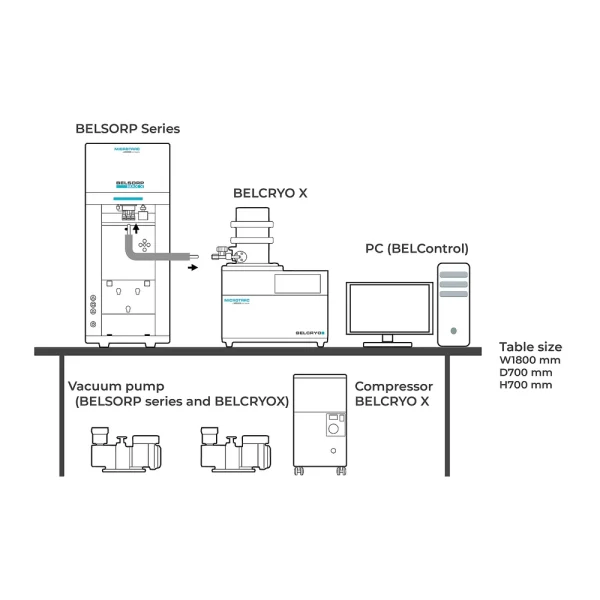
Cryogenic unit for BELSORP analyzers — adsorption isotherms at any temperature from 35 to 473 K without liquid nitrogen, stability to ±0.001 K.
- Add-on for BELSORP MAX X (incl. HP), MAX G and MINI X
- Up to 3 samples, fully automated in BELControl
- Installation and on-site training included · free test analysis of your sample
- Configured to order · lead time from 4 weeks
Made to order
· Lead time from 4 weeks · installation included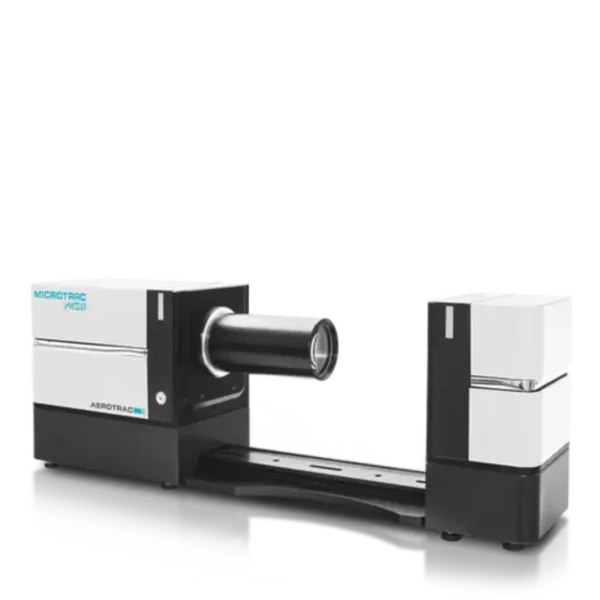
Droplet and particle size of sprays, mists and airborne powders by laser diffraction — 0.5 to 2000 µm, measured as the spray forms at intervals from 0.02 ms.
- D50, SMD and density index over time · multiple scattering correction standard
- F100, F300 and F600 lenses · fixing jigs · batch cell for slurry
- Installation and on-site training included · free test measurement
- Configured to order · lead time from 4 weeks
Made to order
· Lead time from 4 weeks · installation included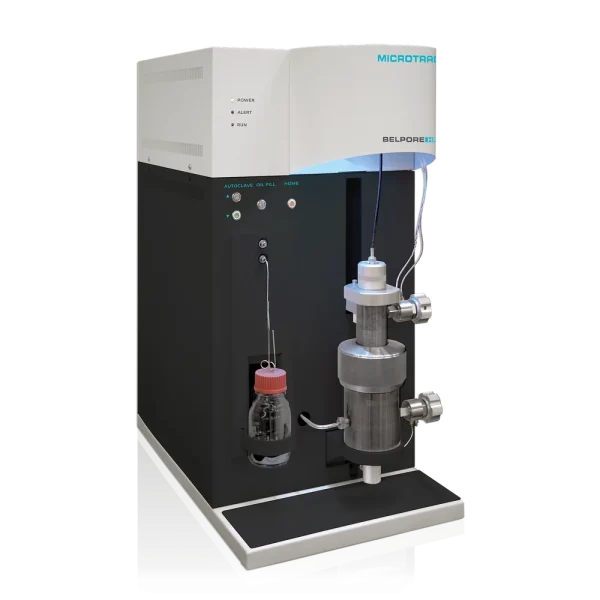
Pore size distribution and pore volume by mercury intrusion — 3.6 nm to 180 µm, to 1 mm with the Ultra-Macropore Set, up to 414 MPa and 20,000 measuring points.
- LP plus MP or HP · PoreInspect runs up to four from one PC
- No gas connection or liquid nitrogen · moist samples on the LP
- Installation and on-site training included · free test analysis of your sample
- Configured to order · lead time from 4 weeks
Made to order
· Lead time from 4 weeks · installation included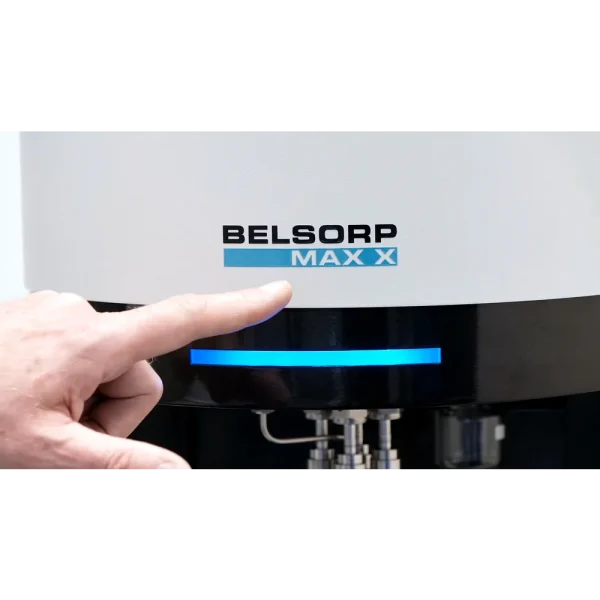
BET surface area and pore size from 0.35 to 500 nm on up to four samples at once — gas and vapor isotherms from P/P₀ = 10⁻⁸.
- Surface area from 0.01 m²/g with N₂, from 0.0005 m²/g with krypton
- Micropore to macropore analysis: BET, BJH, HK, SF, NLDFT / GCMC
- Installation and on-site training included · free test analysis of your sample
- Configured to order · lead time from 4 weeks
Made to order
· Lead time from 4 weeks · installation includedWhat our customers say
“Harry and team were professional, effective communicators as we set up the order, then they executed quickly and produced an amazing product for us at a very competitive price. Am looking forward to our next print w Additive Plus!”
“Great 3D printing service and the resin parts look super smooth and clean. Really happy with how everything turned out!”
“Harry was very professional and helped me out with my 3D printing needs and explained what options I have in terms of filaments such as PEEK. Highly recommended.”
“I needed a 3D enclosure printed urgently in a specific time period, they did great!”
Common questions
Don't see yours? Email [email protected] — NDA on request, typical reply within 4 hours.
How does the BELSORP MAX G differ from the MINI X and MAX X?
What surface area and pore size range does it measure?
When do I need krypton instead of nitrogen?
How many samples does it measure, and what are the five ports?
Is helium-free measurement possible?
How are samples degassed?
Which standards does it support?
What is the lead time and what is included?
How much does a BELSORP MAX G cost?
Can I test my sample before buying?
Place your order, or talk to an engineer first
Order Microtrac BELSORP MAX G BET Surface Area and Micropore Analyzer direct, or talk to materials engineer