
In stock

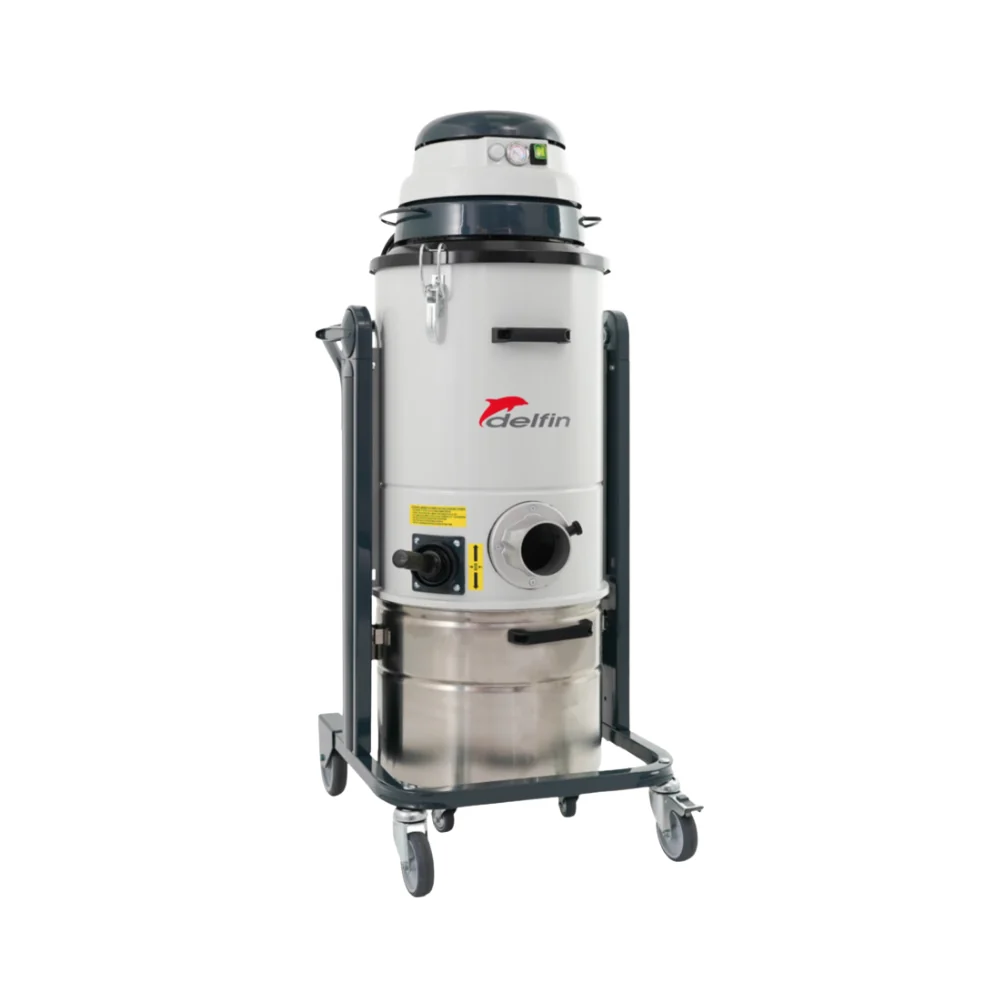
- Antistatic Class M + polypropylene 2nd stage + liquid separator
- ATEX documentation on request · hose & tools not included
Delfin Mistral 451 BL Inert Vacuum – Reactive Metal Powder for 3D Printing | Immersion Separation
Immersion-separation industrial vacuum for reactive metal powder — aluminium, titanium and similar alloys — in 3D printing and powder handling. Captures powder under liquid so it's never a dry, ignition-sensitive cloud. ATEX-rated, antistatic, single-phase.
- ✓ For reactive AM powder (Al, Ti, Mg) — the safe alternative to a dry vacuum
- ✓ Two-stage antistatic filtration + grounded construction · ATEX docs on request
- ✓ In US stock · ships in 2 business days · genuine Delfin unit
Hose and tools are not part of the standard configuration. The Delfin KT1006 accessory kit ($721) fits this 2-inch inlet: 10 ft hose, wand, floor brush and nozzle.
$11,391
What your safety officer actually checks
Wet capture for reactive metal, honestly matched
Reactive metal powder — aluminium, titanium, magnesium — is dangerous to collect dry. The Mistral 451 BL Inert uses immersion separation to capture it under a liquid bath, so it never forms a dry, airborne, ignition-sensitive cloud, backed by ATEX-rated antistatic construction. It is the unit for reactive AM alloys. If your metal is non-reactive but combustible, we route you to the dry D2 ATEX unit instead of an inert one you don't need.
An applications engineer on the line
Questions on alloy reactivity, immersion liquid, or ATEX documentation for your reactive-metal AM line? A named applications engineer answers directly — most replies under 4 hours, NDA on request. We run metal AM powder handling in our own California shop.
The Delfin Mistral 451 BL Inert is the safe way to vacuum reactive metal powder — aluminium, titanium and similar alloys — in 3D printing and powder-handling environments. Instead of collecting dry powder in a bag, it uses immersion separation: the powder is drawn in and captured under a liquid bath, so it is never left as a dry, airborne, ignition-sensitive cloud. Combined with ATEX-rated, antistatic construction, that makes it the unit for depowdering and clean-down around LPBF and DMLS printers running reactive alloys. A 1.1 kW motor, 2-inch inlet and 2-gallon liquid separator handle the job on standard single-phase power.
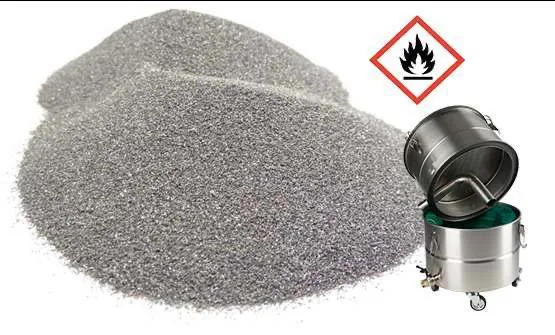
Why teams choose the Mistral 451 BL Inert
What a safety officer checks before vacuuming reactive metal powder.
Immersion separation for reactive powder
Powder is captured under a liquid bath rather than a dry bag, so aluminium and titanium fines are never left as an airborne, ignition-sensitive cloud.
ATEX-rated, antistatic build
Conductive, grounded construction and an antistatic Class M filter (IEC 60335-2-69) keep static from accumulating around reactive metal powder.
Two-stage filtration
A 22 ft² antistatic star primary filter is backed by a polypropylene second-stage filter, so fine reactive powder is captured through the full path.
Single-phase & mobile
A 1.1 kW motor on standard single-phase power, with a 2-gallon liquid separator and 1-gallon dry capacity, on casters to move to the printer. 77 dB(A).
How immersion separation works
Why reactive powder needs a wet-capture unit, not a dry ATEX vacuum.
Draw the powder in
Reactive metal powder — aluminium, titanium — is picked up through the 2-inch inlet during depowdering or clean-down.
Immerse under liquid
The powder is separated into a liquid bath rather than a dry container, so it is wetted immediately and never forms a dry cloud.
Store & dispose safely
The powder stays under liquid for safe handling and disposal, with antistatic, grounded construction throughout the path.
Technical specifications
| Specification | Mistral 451 BL Inert |
|---|---|
| Certification | ATEX – inert / immersion separation |
| Voltage | 115 V (single phase) |
| Power consumption | 1.1 kW |
| Max water lift | 90.6 in |
| Max airflow | 121.8 CFM (207 m³/h) |
| Suction inlet | 2 in |
| Liquid (oil) capacity | 2 gal |
| Dry capacity | 1 gal |
| Primary filter | Star – IEC 60335-2-69 antistatic polyester, Class M |
| Filter surface area | 22 ft² |
| 2nd-stage filter | Polypropylene |
| Cleaning system | Manual |
| Noise level (EN ISO 3744) | 77 dB(A) |
| Country of origin | Italy |
Where it fits
Reactive metal powder in additive manufacturing and the lab.
Not sure the inert Mistral is the right unit?
Combustible but non-reactive dust, a smaller ATEX unit, or high-volume pickup.
Smaller ATEXMistral 300 BL D2Compare →
High volumeDG 70Compare →
Why source through Additive Plus
- We run metal AM powder handling in our own California shop — we match the capture method to your alloy’s reactivity, not to a catalog line.
- Genuine Delfin unit with US-based support, ATEX documentation on request, and consumables (filters, liquid) in stock.
- Honest fit check — if your metal is non-reactive, we tell you and route you to the dry D2 unit instead of an inert one you don’t need.
- Ships from US inventory · sub-24h engineer response · NDA on request on every project.
| Brand | Delfin |
| Voltage | 115 V |
| Power Consumption | 1,1 kW |
| Max Water Lift | 90.6 in |
| Max Airflow | 121.8 (207) CFM (m³/h) |
| Suction Inlet | 2 in |
| Oil Capacity | 2 gal |
| Dry Capacity | 1 gal |
| Noise Level (EN ISO 3744) | 77 dB(A) |
| Primary Filter Type | Star |
| Material - Efficiency | IEC 60335-2-69 Antistatic Polyester - Class M |
| Filter Surface Area | 22 ft² |
| 2nd Stage Filter | Polypropylene |
| Cleaning system | Manual |
| Country of origin | Italy |
ATEX documentation Alloy reactivity checkHandling & disposal guidance
We supply the ATEX documentation, confirm whether your alloy needs inert capture, and advise on safe handling and disposal of reactive metal powder — just ask when you order.
Other products teams run alongside Delfin Mistral 451 BL Inert Vacuum – Reactive Metal Powder for 3D Printing | Immersion Separation

Compact ATEX-certified vacuum for combustible dust and non-reactive metal powder in tight spaces — built to the D2 standard for Zone 22, with antistatic construction and an optional HEPA filter. 1.1 kW, 2-inch inlet, 3-gallon container.
- ✓ Small-footprint ATEX unit for point-of-use metal powder & combustible dust capture
- ✓ Optional HEPA filter · antistatic Class M · reactive metals need the inert unit
- ✓ In US stock · ships in 2 business days · genuine Delfin unit · ATEX docs on request
Hose and tools are sold separately. The Delfin KT1006 accessory kit ($721) fits this 2-inch inlet: 10 ft hose, wand, floor brush and nozzle.
In stock
· 2 Business Days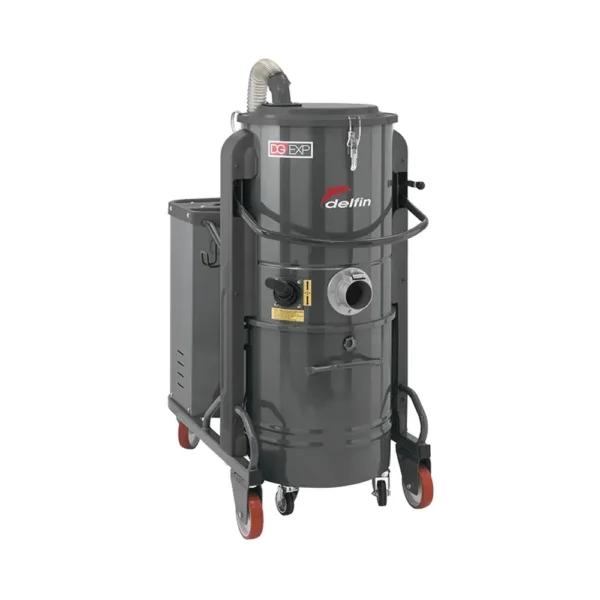
Heavy-duty three-phase industrial vacuum for large quantities of solids, dust and liquids — 8.4 HP, 353 CFM, 3-inch inlet. Handles non-reactive metal powder recovery in AM and general plant clean-down.
- ✓ 32 ft² star filter, IP55 build, heavy steel chassis for continuous duty
- ✓ Non-reactive powder only — for reactive/combustible material, ask about an inert/ATEX unit
- ✓ In US stock · ships in 2 business days · genuine Delfin unit
In stock
· 2 Business Days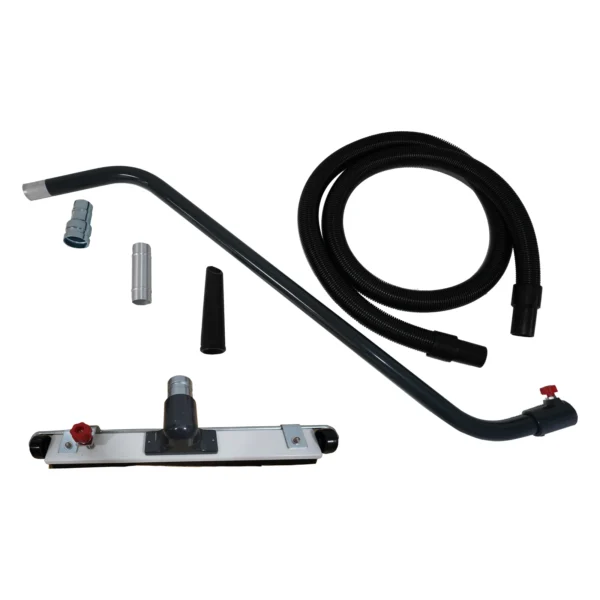
Antistatic starter kit for Delfin vacuums with a 2-inch (50 mm) inlet: hose, wand, floor brush, nozzle and connectors in one box, so the vacuum is ready to clean on day one.
- ✓ Fits the Mistral 300 BL D2 and the Mistral 451 BL Inert
- ✓ 10 ft hose · double bend wand · 16.9 in floor brush · cone nozzle · connectors
- ✓ Genuine Delfin kit · ship date confirmed by email after you order
In stock
· Ship date confirmed by email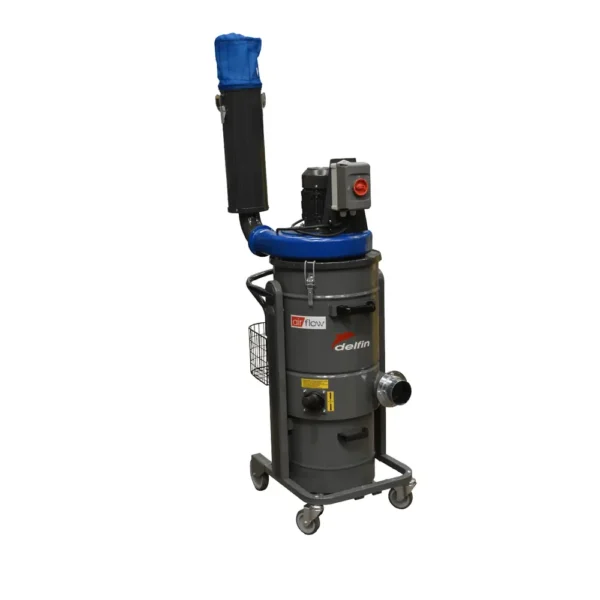
Compact mobile dust collector for airborne and suspended dust — 412 CFM through a 4-inch inlet, captured at the source before it spreads. Three-phase, IP55, on a small-footprint mobile frame.
- ✓ 22 ft² Class L star filter — source capture of non-reactive metal powder & process dust
- ✓ Move it to where the dust is generated — no long duct to a fixed collector
- ✓ In US stock · ships in 2 business days · genuine Delfin unit
In stock
· 2 Business Days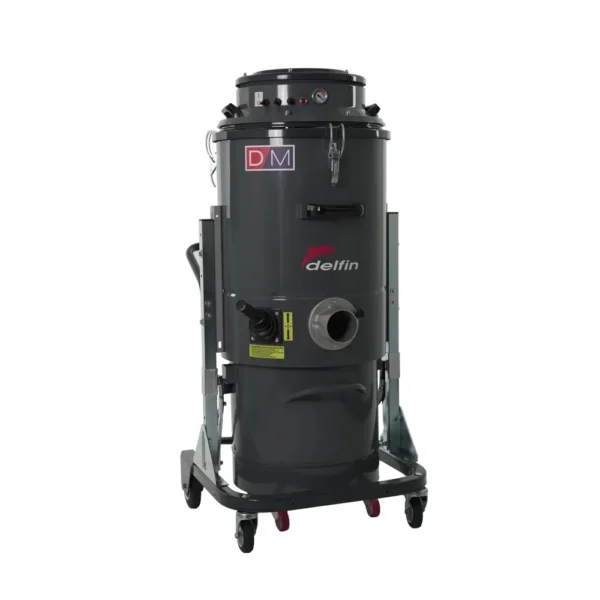
Single-phase heavy-duty wet & dry industrial vacuum — 3 HP, 283 CFM through a 3-inch inlet, 16-gallon container. Clears dry chips, settled dust, coolant and spills without a three-phase supply.
- ✓ 32 ft² Class M antistatic star filter with manual shaker — resists clogging
- ✓ Wet & dry pickup on standard single-phase power
- ✓ In US stock · ships in 2 business days · genuine Delfin unit
In stock
· 2 Business Days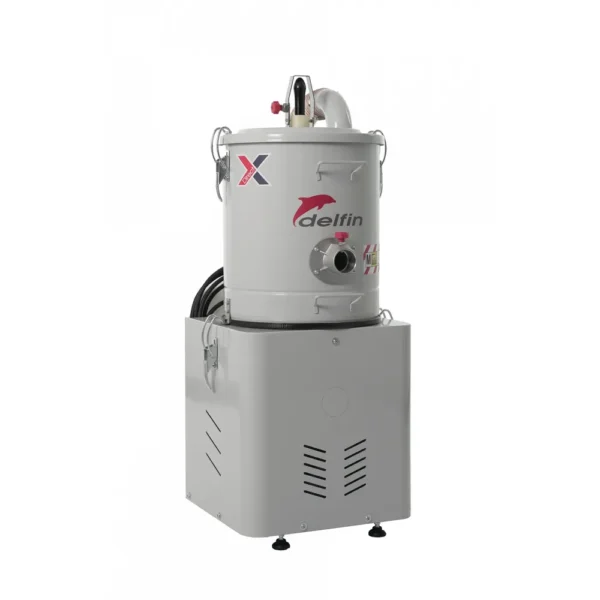
Three-phase industrial dust & chip collector for direct integration into production machines and lines — maintenance-free side-channel blower, 221 CFM, IP55, rated for continuous 24/7 duty.
- ✓ Class M antistatic star filter with external-lever shaker — no dust release
- ✓ Compact modular steel body for tight spaces on the line
- ✓ In US stock · ships in 2 business days · genuine Delfin unit
In stock
· 2 Business Days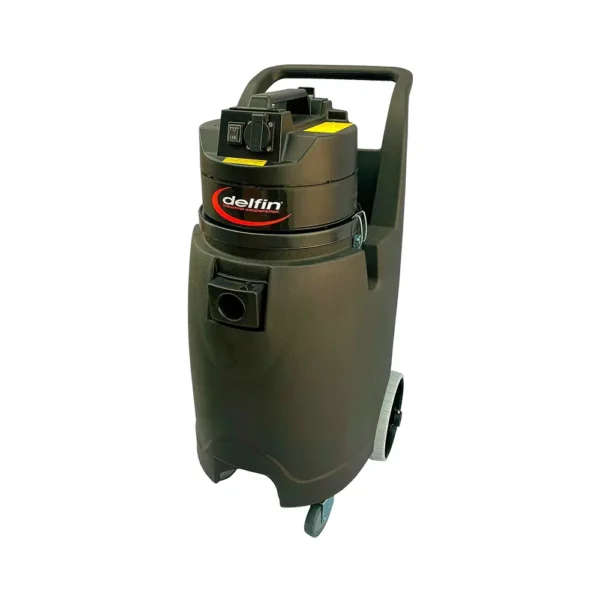
Certified-HEPA (99.97% at 0.3 µm) large-capacity industrial dry vacuum — the 20-gallon PRO HEPA for silica, mold, lead and fine hazardous housekeeping dust. 2 HP, 20-gallon tank, 50-foot cord.
- ✓ Same individually tested & certified HEPA filter as the PRO HEPA 10, twice the tank
- ✓ General-purpose HEPA — for reactive metal or bulk combustible powder, ask us about an inert unit
- ✓ In US stock · ships in 2 business days · genuine Delfin unit
In stock
· 2 Business Days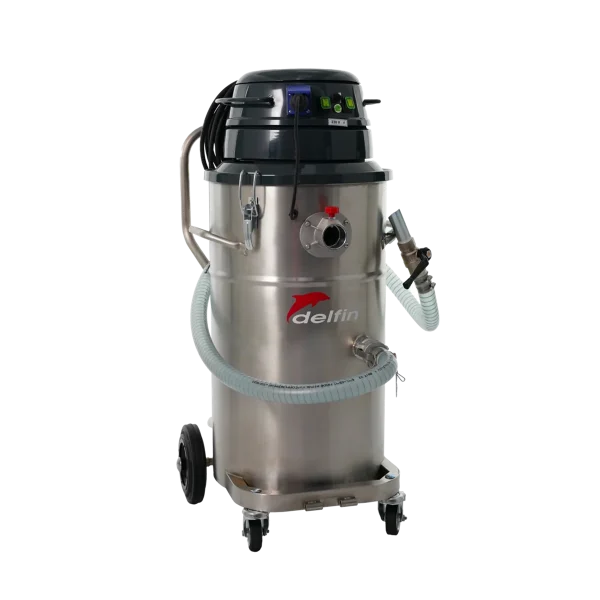
Single-phase wet & dry industrial vacuum built for liquid recovery — 2.7 HP, 211.9 CFM at 90.1 inH₂O, 21-gallon liquid capacity. Clears floods, coolant, wash-down and wet slurry.
- ✓ Polypropylene wet filter bag (300 µm) separates solids from the liquid stream
- ✓ Doubles as a dry vacuum on standard single-phase power
- ✓ In US stock · ships in 2 business days · genuine Delfin unit
In stock
· 2 Business DaysWhat our customers say
“Harry and team were professional, effective communicators as we set up the order, then they executed quickly and produced an amazing product for us at a very competitive price. Am looking forward to our next print w Additive Plus!”
“Great 3D printing service and the resin parts look super smooth and clean. Really happy with how everything turned out!”
“Harry was very professional and helped me out with my 3D printing needs and explained what options I have in terms of filaments such as PEEK. Highly recommended.”
“I needed a 3D enclosure printed urgently in a specific time period, they did great!”
Common questions
Don't see yours? Email [email protected] — NDA on request, typical reply within 4 hours.
What is the Mistral 451 BL Inert designed for?
How does immersion separation make reactive powder safe?
Which metals count as reactive and need this unit?
How is it different from the Mistral 451 BL D2?
Is it ATEX-rated, and can you supply documentation?
What are the suction and capacity specs?
What maintenance and consumables does it need?
Place your order, or talk to an engineer first
Order Delfin Mistral 451 BL Inert Vacuum – Reactive Metal Powder for 3D Printing | Immersion Separation direct, or talk to materials engineer