
Made to order

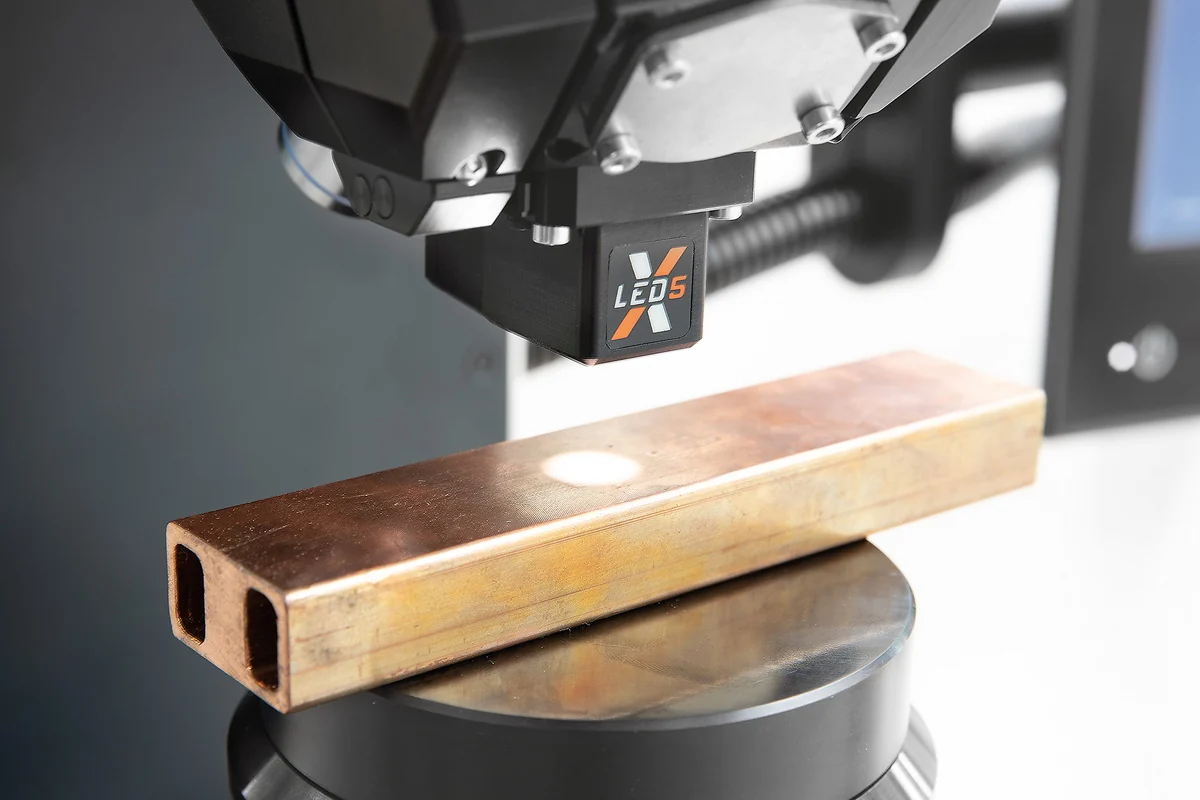
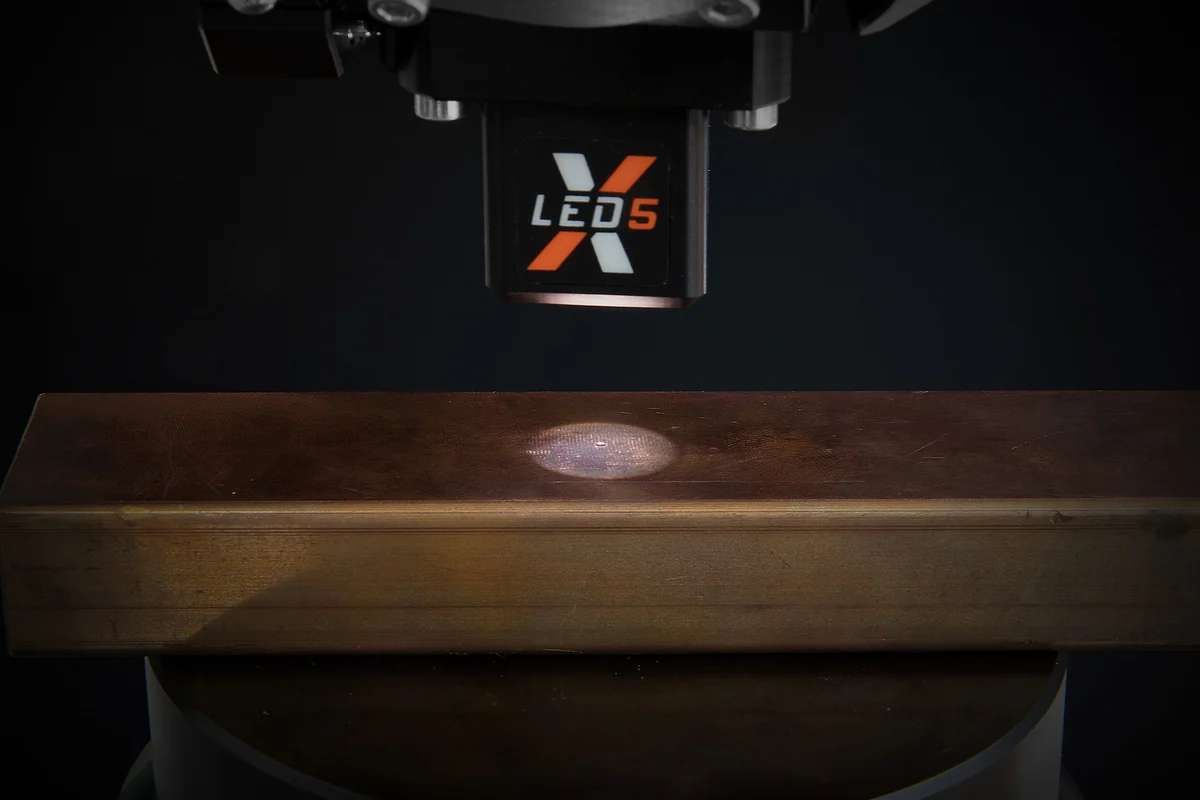
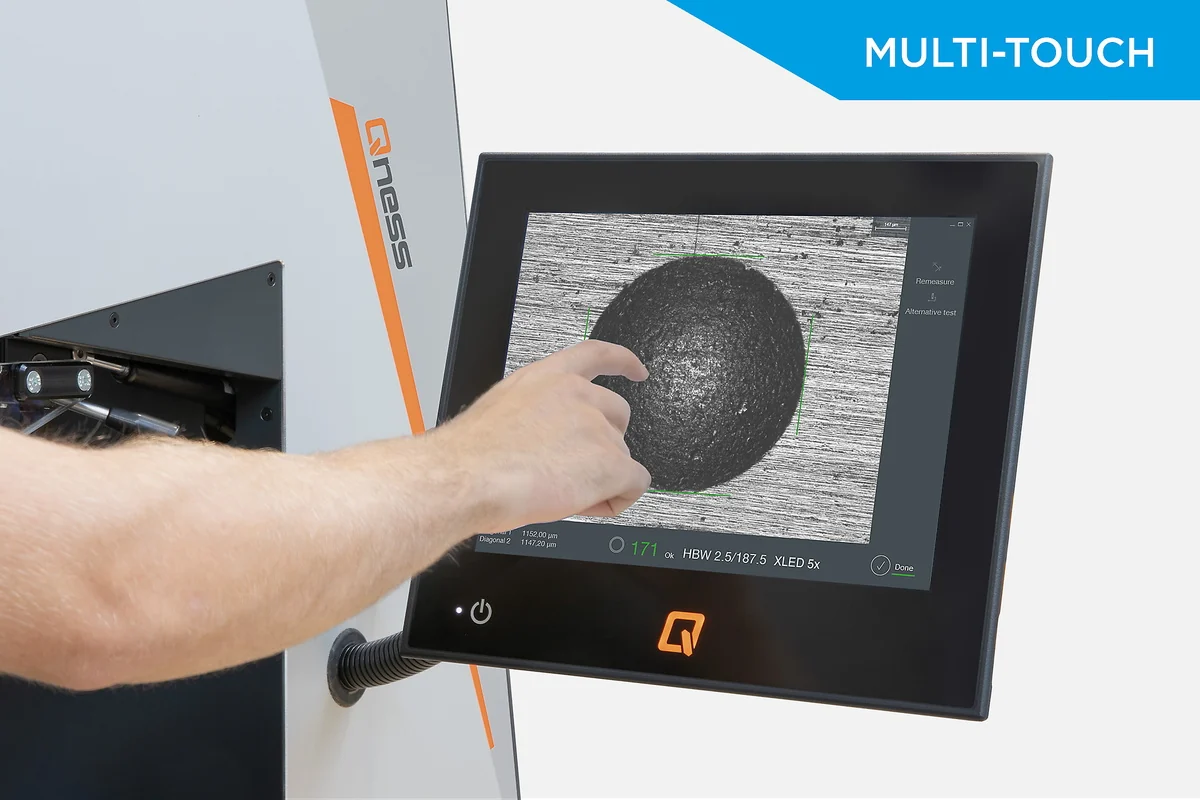
- Ready-to-test package XLED Brinell lenses, DAkkS + ASTM indenters and Qpix software license
- Install & training On-site install, calibration to ISO 6506 / 6507 / 6508 and operator training
QATM Qness 250 / 750 / 3000 M EVO Macro Hardness Tester – Brinell/Vickers/Rockwell/Knoop | 0.3–3000 kgf
Manual, semi-automatic macro hardness tester from QATM — Brinell, Vickers, Rockwell and Knoop across the 250, 750 and 3000 kgf classes, from 0.3 to 3000 kgf under electronic closed-loop force control.
What your metrology engineer actually checks
Traceable to the standard
Referenced to ISO 6506 / ISO 6507 / ISO 6508 and ASTM E10 / E92 / E18 — the conformity your AS9100 auditor and NADCAP assessor check. DAkkS-certified indenters ship in the box, so results are conformant, not just comparable.
An applications engineer on the line
Method development, indenter and lens selection, and calibration support from engineers who run metallography and AM materials in-house. Sub-4h reply, NDA standard.
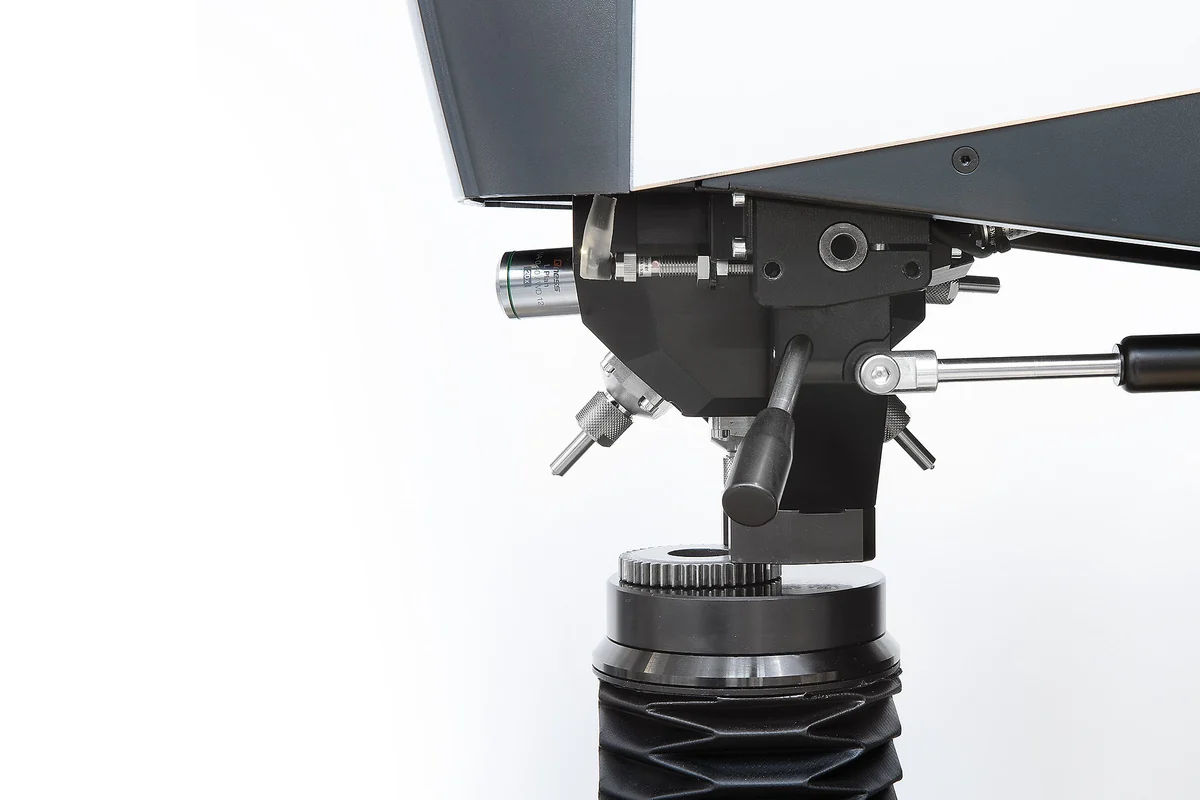
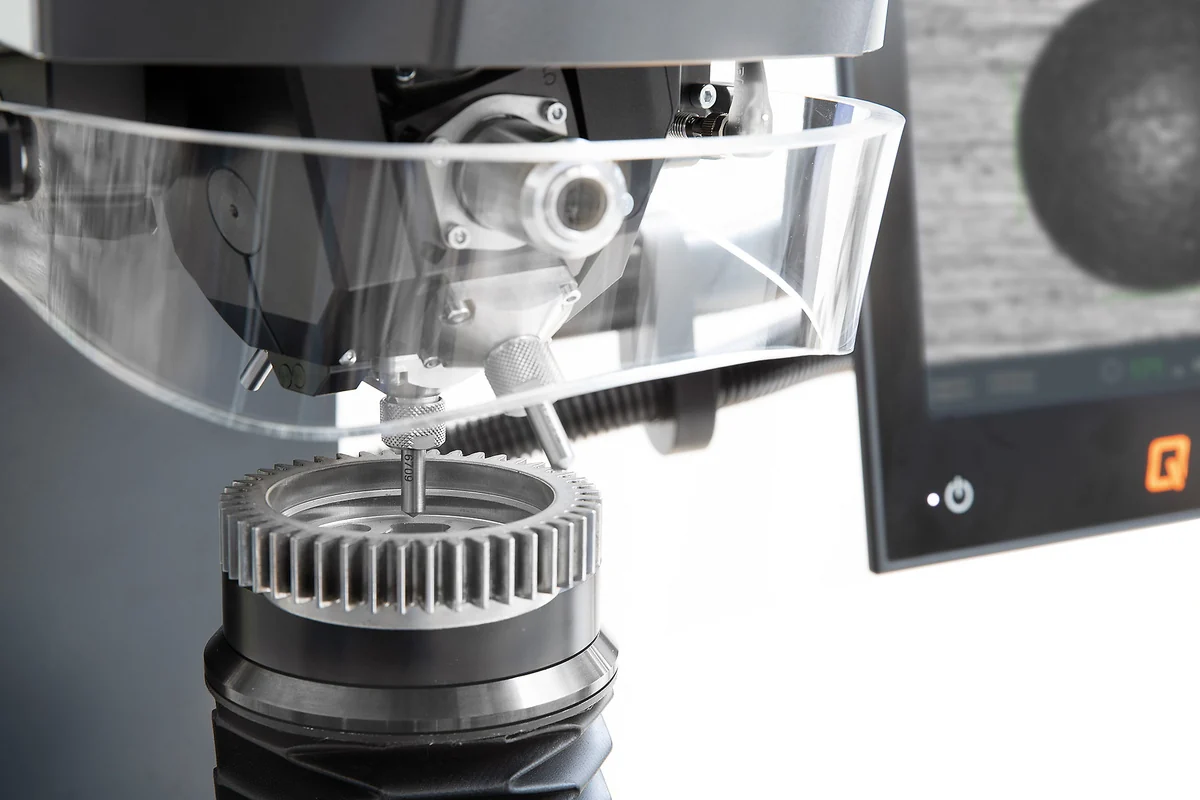
The QATM Qness 250 / 750 / 3000 M EVO is a manual, semi-automatic macro hardness tester family that runs Brinell, Vickers, Rockwell and Knoop across three force classes — 250, 750 and 3000 kgf — from 0.3 kgf up to 3000 kgf (2.94–29430 N) under electronic closed-loop force control, with a hand-wheel Z-axis, a 510 mm test height and XLED macro optics.
Why metrology labs choose the Qness 250 / 750 / 3000 M EVO
Three macro force classes, four methods and industrial optics on one manually operated frame.
Three force classes, one platform
Choose the 250, 750 or 3000 kgf frame. Together the M EVO family covers 0.3 kgf to 3000 kgf (2.94–29430 N) under electronic closed-loop force control — no dead weights to hang or swap.
Four methods, tool-free changes
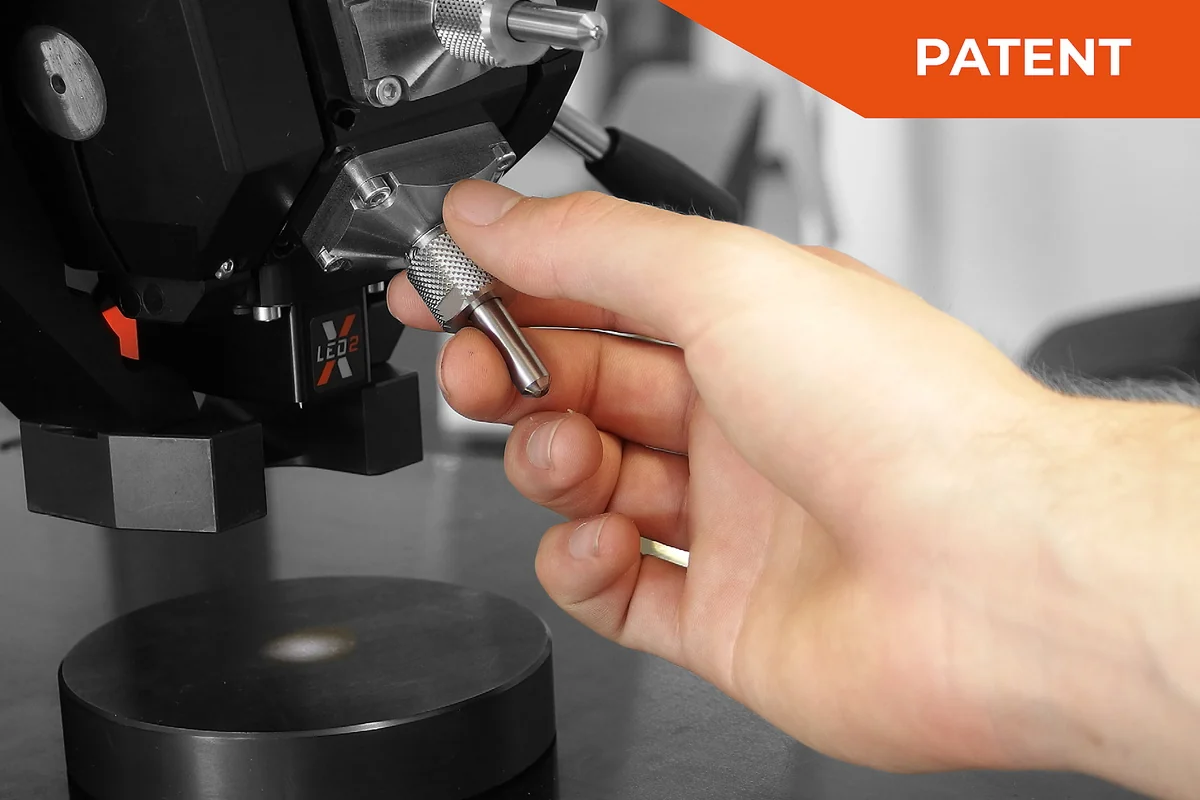
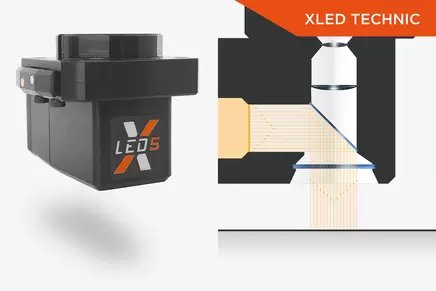
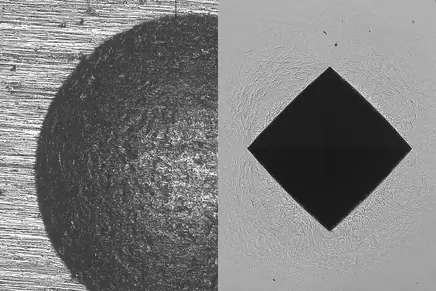
Brinell, Vickers, Rockwell and Knoop on one frame. The quick-release mechanism swaps indenters without tools, and XLED lenses read soft Brinell impressions cleanly and repeatably.
Built for large, heavy parts
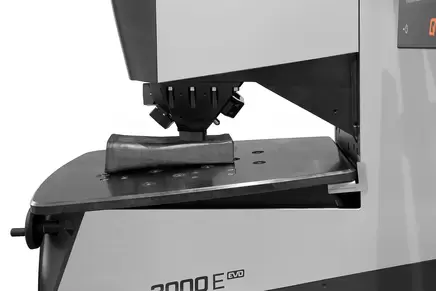
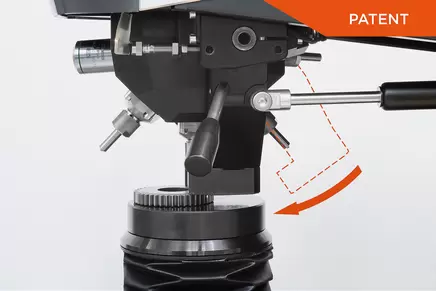
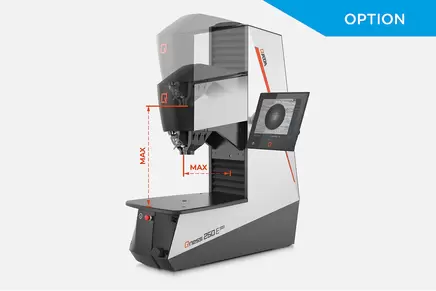
510 mm test height, 320 mm throat and a 584 × 450 mm anvil take unlimited workpiece weight. The swivel table tilts up to 5° with built-in grips, so bulky parts need no extra clamping.
Manual control, industrial optics
A smooth hand-wheel Z-axis positions the head by feel. A universal microscope resolves 0.1–8 mm fields, and a 5 MP Ethernet camera (up to 270 fps) streams to the PC over long cable runs.
How Additive Plus delivers it
Configured to your standards, installed and calibrated on-site, supported by engineers who run metallography daily.
Configure to your lab
We spec the frame class — 250, 750 or 3000 kgf — the indenters, XLED and objective lenses, clamping elements and Qpix software around the parts and standards you test.
Install & train on-site
Factory-trained engineers install the system, verify calibration against certified reference blocks per ISO 6506 / 6507 / 6508 and ASTM E10 / E18 / E92, and train your operators on Qpix.
Validated & supported
You leave with a tester that reproduces reference blocks in spec, DAkkS-traceable indenters in the box, and method support with a sub-24h engineer response.
Where the Qness 250 / 750 / 3000 M EVO earns its place
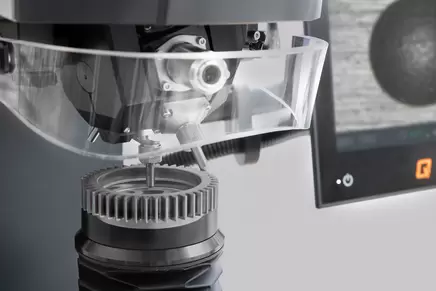
Macro hardness and imaging for QC labs, heat-treat shops and metallography on large parts.
Specifications
The Qness 250 / 750 / 3000 M EVO combines a 0.3 kgf – 3000 kgf test force range across three frame classes, a 510 mm test height, a 584 × 450 mm anvil, XLED and 5×–100× lenses, a 5 MP Ethernet camera and Qpix software. See the full specification table in the Specifications tab below for field-of-view, interfaces, weight and power supply.
Not sure the Qness 250 / 750 / 3000 M EVO is the right frame?
Compare it with the other Qness 250 / 750 / 3000 macro testers we supply.
Why source the Qness 250 / 750 / 3000 M EVO through Additive Plus
- Standards-first setup — calibrated to ISO 6506 / ISO 6507 / ISO 6508 and ASTM E10 / E18 / E92, with DAkkS-traceable indenters.
- Factory-trained install, calibration and operator training included with every system.
- Method development and application support from a team that runs metallography and AM materials work in-house.
- Tailored service and calibration plans; sub-24h engineer response across 23 countries.
| Brand | QATM |
| Test force range | Qness 250 M EVO: 1 - 250 kg (9.81 - 2450 N) Qness 750 M EVO: 0.3 – 750 kg (2.94 – 7358 N) Qness 3000 M EVO: 0.3 - 3000 kg (2.94 - 29430 N) |
| Height adjustment | manual / handwheel |
| Test height / Throat depth | 510 mm / 320 mm |
| Test anvil | 584 x 450 mm |
| Max. work piece weight | "unlimited" |
| Weight of basic machine | 490 kg |
| Test sequence | fully automatic / electronic force control |
| Software | Qpix T2 (Option: Qpix CONTROL 2 M) |
| Camerasystem / Image transfer | 5 MP Ethernet Industrial standard / up to 270FPS |
| Interfaces | 1x USB (Front) 4x USB, 2x RJ45 (Ethernet), 1x DisplayPort, 1x RS232, 1x HDMI |
| Lenses | XLED 1, XLED 2, XLED 5, 5x, 10x, 20x, 50x, 100x |
| Field of view (acc. to equipment) | 0.113x 0.084 mm (100x) up to 7.98 x 5.97 mm (XLED 1) |
| Display | Capacitive 12“ Touch - Display |
| Power supply | 230~1/N/PE, 110~1/N/PE |
| Max. power consumption | ~ 480 W |
Send us your samples and we'll run a benchmark hardness measurement in our lab, then share the report and recommended method before you buy.
Other products teams run alongside QATM Qness 250 / 750 / 3000 M EVO Macro Hardness Tester – Brinell/Vickers/Rockwell/Knoop | 0.3–3000 kgf
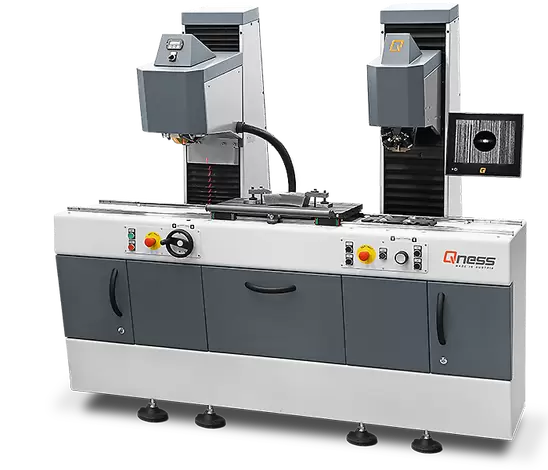
An automated QATM hardness testing plant with integrated test-point preparation — a milling unit machines a clean test surface, then the QNESS 750 universal unit runs a standardized Vickers, Brinell or Rockwell test in one cycle.
- ✓ Integrated milling prep — machines scaled/forged surfaces to a defined test point
- ✓ Universal testing (Vickers / Brinell / Rockwell) up to 750 kgf
- ✓ Prepare, indent and record automatically with QPIX data management
- ✓ Lead time: 4–8 months — engineered and built to order
Made to order
· Lead time: 4–8 months — engineered and built to order
Automatic C-frame universal hardness tester — Rockwell, Vickers and Brinell from 1–250 kgf, with a motorized three-axis stage, direct HEIDENHAIN depth gauge and 5-megapixel sample-image camera. Configured, installed and calibrated by Additive Plus.
Made to order
· Lead time: 6–10 weeks — configured to order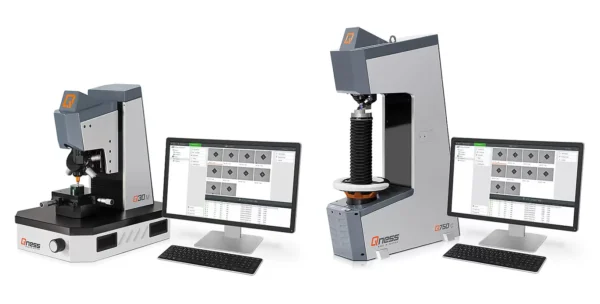
The Qpix Control2 software platform for manual, semi-automatic and Rockwell QATM Qness hardness testers — the same environment across the whole Qness range, so a mixed fleet runs one workflow with no extra operator training.
- ✓ Control2 M for manual and semi-automatic testers; Control2 R for Rockwell (ISO 6508 / ASTM E18)
- ✓ Clearly structured batch management and reusable test-project templates
- ✓ Licensed, installed and set up across your Qness fleet — configured to order
Made to order
· Licensed with your Qness systems — request configuration and lead time
Fully automated macro and universal hardness tester in three force classes — 250, 750 and 3000 kgf — running Vickers, Brinell and Rockwell from 0.3 up to 3000 kgf, with a motorized XY stage, full-table sample-image camera and automatic test-head height for unmanned cycles.
- ✓ Three macro methods on one automated frame, conformant to ISO 6506 / 6507 / 6508
- ✓ Qpix Control2 software, XLED Brinell lenses and DAkkS-certified indenters
- ✓ Install, calibration and operator training included · lead time 6–10 weeks, configured to order
Made to order
· Lead time: 6–10 weeks — configured to order
The connectivity platform that links your Verder Scientific lab instruments — ELTRA elemental analyzers, QATM hardness testers and Microtrac particle analyzers — to one app for remote monitoring, backup, software updates and diagnostics.
- ✓ Real-time monitoring and control from any mobile device or PC, with event notifications
- ✓ Central backup and restore, remote service diagnostics and one-click software updates
- ✓ Security-first — you decide what data each instrument shares; open XML, plug-ins and cloud
Made to order
· Configured with your instruments — request setup and lead time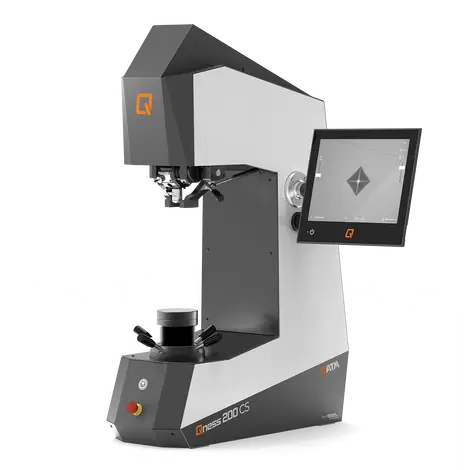
Automatic C-frame universal hardness tester — Rockwell, Vickers and Brinell across 0.5–187.5 kg (4.9–1839 N), with electronic force application, a direct 0.05 µm depth gauge, XLED Brinell optics and a 5 MP Ethernet camera.
- ✓ Three methods on one automatic C-frame, conformant to ISO 6508 / 6507 / 6506
- ✓ Qpix T2 software, DAkkS-certified indenters and XLED / 5×–100× lenses included
- ✓ Install, calibration and operator training included · lead time 6–10 weeks, configured to order
Made to order
· Lead time: 6–10 weeks — configured to order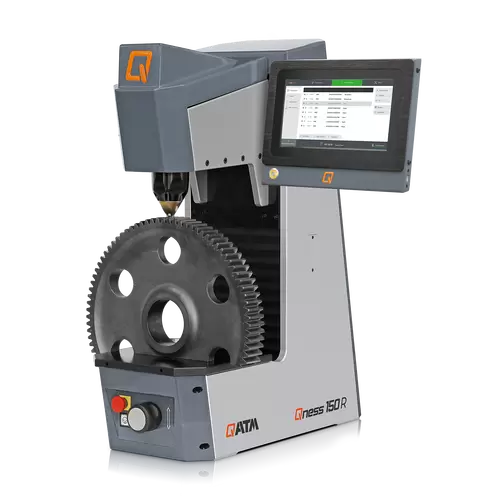
Made to order
· Lead time: 6–10 weeks — configured to order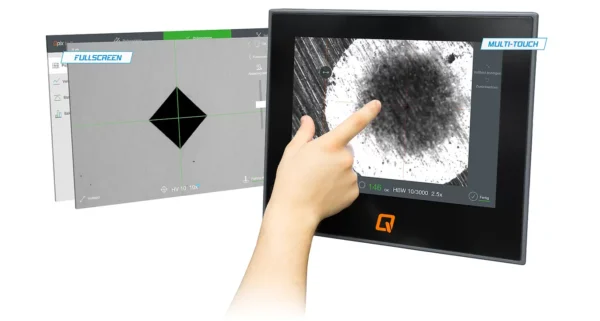
On-device software for QATM Qness hardness testers — programmed row tests, one-button protocols and data export, built for serial testing and in-line integration.
- ✓ Predefined row-test programs with manual slide, micrometre spindle and position feedback
- ✓ Export to PDF / XLSX / DOCX / XML / CSV and result release over RS232 or Ethernet
- ✓ Dynamic height with the Qness E frames and a Calibration Manager for audit-ready records
Made to order
· Licensed with your Qness system — request configuration and lead timeCommon questions
Don't see yours? Email [email protected] — NDA standard, typical reply within 4 hours.
Which hardness methods and force classes does the Qness 250/750/3000 M EVO cover?
What standards is it calibrated and verified to?
How does the manual M model differ from the A+, E and CS/C EVO models?
How large and heavy a part can it test?
Can it run case-hardening depth and weld surveys?
What is the lead time, and what does installation include?
Can it test additively manufactured parts, castings and forgings?
Place your order, or talk to an engineer first
Order QATM Qness 250 / 750 / 3000 M EVO Macro Hardness Tester – Brinell/Vickers/Rockwell/Knoop | 0.3–3000 kgf direct, or talk to materials engineer