
In stock
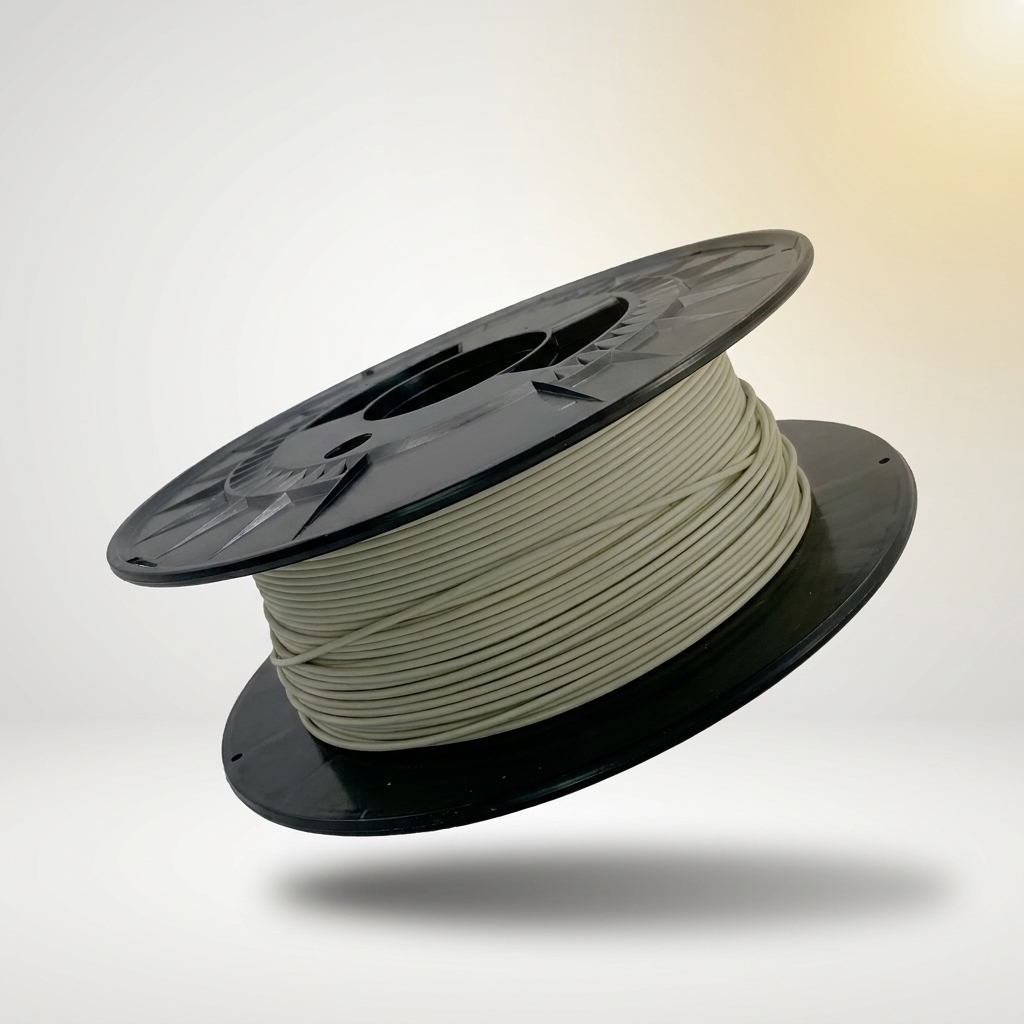
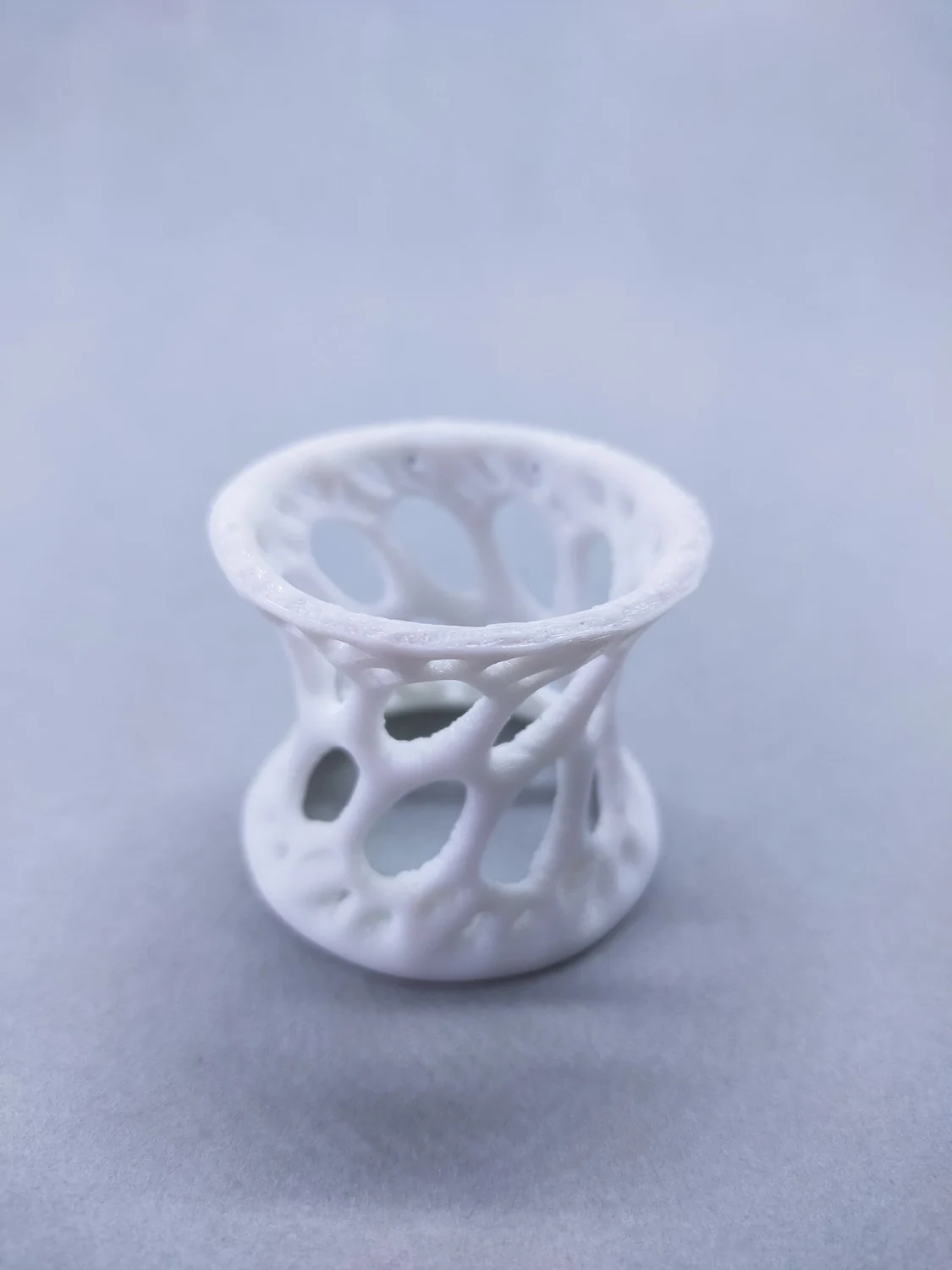
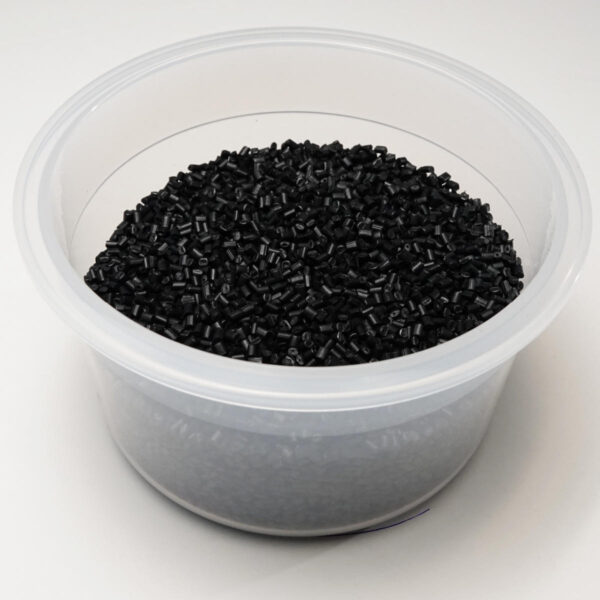
Zetamix Porcelain Filament 1,75mm
- ✔ Smooth, glazeable porcelain finish with a classic ceramic look
- ✔ Print → debind → fire — ceramic printing on an everyday FFF machine
- ✔ Genuine Zetamix by Nanoe · 500 g spool · lead time 10–20 business days (depending on order queue)
$225
Zetamix Porcelain filament lets you 3D-print authentic, vitrified porcelain on a standard FDM/FFF printer, then debind and sinter to a dense, food-safe (when glazed) ceramic part — the same print → debind → sinter workflow we run in-house on our 3DCeram M.A.T. It reaches complex geometries that throwing and casting cannot.

Why makers & designers choose Zetamix Porcelain filament
Real vitrified porcelain from a desktop FFF printer — documented shrinkage, glazeable and food-safe once fired and glazed.
Sinters to a dense, vitrified porcelain at 98–99% of theoretical density — the fired body of traditional porcelain, not a filled plastic.
Takes enamel and glaze; food-safe for tableware once glazed. Pause the sinter at 1000 °C to apply glaze, then finish to 1250 °C.
Print undercuts, thin walls and internal detail that throwing and casting cannot reach — straight from a digital model.
Linear shrinkage 13.8% (X/Y) and 26.4% (Z) — scale the model 116% and 136% for repeatable dimensions.
Porcelain material properties after sintering
- Body: fine porcelain, fully vitrified after sintering
- Density after sintering: 98–99% of theoretical
- Mechanical strength: comparable to traditional porcelain
- Food safety: food-safe for tableware when glazed
- Sintering: 1250 °C at 125 °C/h, 2 h hold
- Linear shrinkage: 13.8% (X/Y), 26.4% (Z) — scale 116% / 136%
- Nozzle: compatible with 0.4–1.0 mm nozzles
- Filament: 1.75 mm
Full specifications are listed in the Specifications tab. Mechanical values are process-dependent — final properties vary with print, debind and sinter parameters.
From spool to dense porcelain part
Three stages — the same workflow we run in-house.
Design & print
Scale the model 116% (X/Y) and 136% (Z) for shrinkage. Use 3 wall layers minimum and 15–100% infill, and print the green part on a flexible build plate for easy removal.
Debind
Solvent debind 24 h in acetone at 40 °C, then thermal debind at 7 °C/h from 50 to 500 °C to remove the binder before sintering.
Sinter & glaze
Sinter to 1250 °C at 125 °C/h with a 2 h hold to full vitrification. To glaze, pause at 1000 °C, apply glaze, then complete to 1250 °C. No furnace? We run this for you.
Where Zetamix Porcelain is used
Makers and designers print porcelain when they need a real, glazeable ceramic body in geometries traditional pottery cannot produce.
See real builds in our Zetamix case studies →
No sintering furnace or debinding station? Talk to our team — we’ll help you get set up. Get in touch →
See Zetamix Porcelain in action
Watch how Zetamix ceramic and metal filaments go from spool to dense, sintered part — the same FFF print → debind → sinter workflow we run in-house.
Choose your Zetamix material
Every Zetamix filament prints on a standard FFF 3D printer — we print and validate them in-house on our 3DCeram M.A.T. system — then debind and sinter to a dense ceramic or metal part. The highlighted row is the material on this page; compare the range below:
| Material | Type | Stands out for | Best for | From |
|---|---|---|---|---|
| Alumina | Technical ceramic | Electrical insulation, ~1550°C | Insulators, high-temp tooling | $495 |
| White Zirconia | Technical ceramic | Toughness & flexural strength | Wear & structural parts | $485 |
| Black Zirconia | Technical ceramic | Zirconia strength, black finish | Aesthetic + technical parts | $550 |
| Silicon Carbide | Technical ceramic | Extreme hardness & thermal | Abrasive / high-temp parts | $550 |
| Porcelain | Ceramic (art) | Glazeable, classic finish | Art, tableware, decorative | $225 |
| 316L | Stainless steel | Corrosion resistance, ductile | Functional metal parts | $420 |
| 17-4 PH | Stainless steel | High strength, hardenable | Tooling & functional parts | $420 |
| H13 | Tool steel | Hot hardness & wear | Dies, inserts, tooling | $420 |
| TiO2 | Specialty ceramic | Specialty technical ceramic | Niche functional parts | $550 |
| Brand | Zetamix by Nanoe |
| Printing Materials | Ceramic Filaments |
| Technology | FFF |
| Material | Porcelain |
| Application | Composite Tooling, Engineering, Jigs & Fixtures, Manufacturing |
Other products teams run alongside Zetamix Porcelain Filament 1,75mm
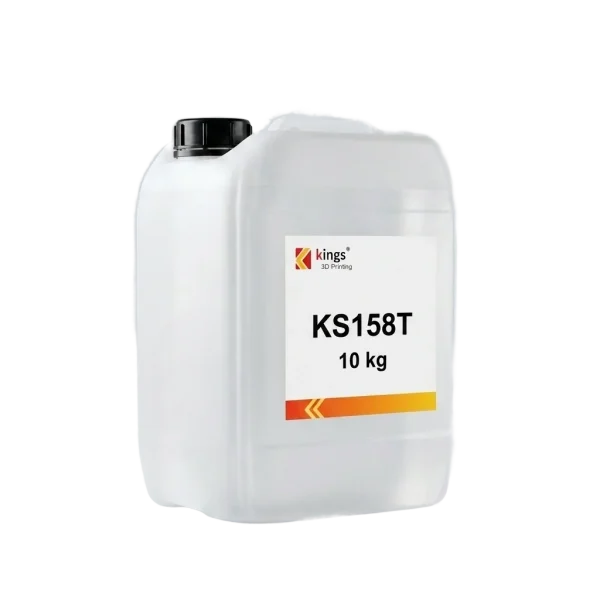
In stock
· In stock — ships in 1–2 business days from our Los Angeles warehouse.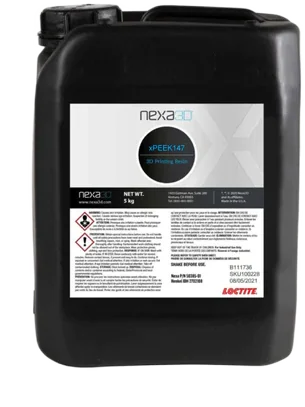
xPEEK147 is a high-temperature LSPc photopolymer in the performance range of PEEK — very high stiffness, 80 MPa tensile strength and heat deflection up to 230°C after a thermal post-cure.
- ✓ Heat deflection up to 230°C (0.45 MPa) after the 170°C bake
- ✓ PEEK-range stiffness — 3220 MPa modulus, Shore D 94
- ✓ 5 kg container for NXE 400 / 400Pro (405 nm LSPc)
- ✓ In stock — ships in 1–2 business days from US inventory
In stock
· In stock — ships in 1–2 business days from US inventory.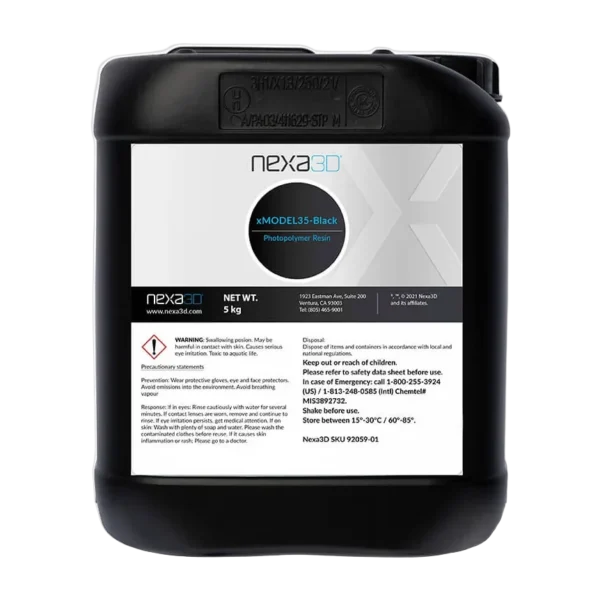
Nexa3D xMODEL35-Black is a rigid 405 nm LSPc photopolymer built for functional models — 2300 MPa flexural modulus, 83 Shore D and 87 °C HDT at 1.82 MPa, so parts hold their shape under load and warmth.
- ✓ Stiff and heat-resistant — UL94 HB rated, 112 °C glass transition
- ✓ Runs on Nexa3D XiP, XiP Pro and NXE 400 / NXE 400 Pro — 405 nm LSPc
- ✓ In US stock — ships in 2 business days, lot-matched for repeatable prints
In stock
· 2 Business Days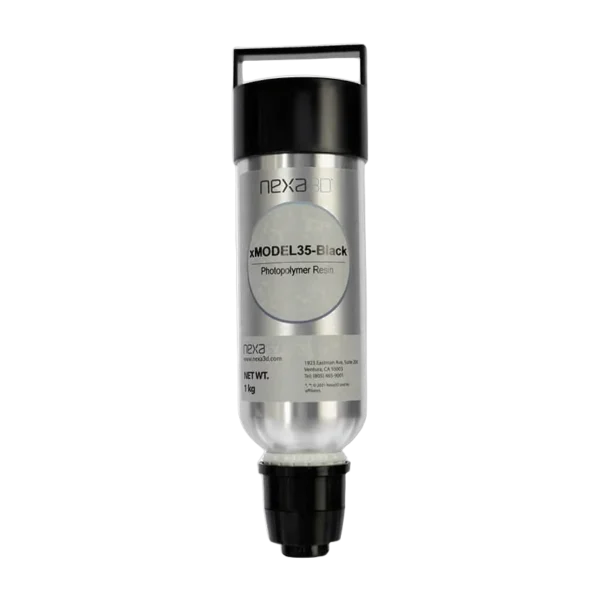
In stock
· 2 Business Days
IPA-free cleaning liquid that removes uncured resin from SLA and DLP 3D-printed parts before UV curing — non-flammable at ambient temperature and water-rinseable.
- ✓ Holds >15% dissolved resin vs IPA under 10% — fewer changeouts
- ✓ IPA-free, high flash point (75 °C), water-rinseable
- ✓ 18 kg · available to order, lead time confirmed after you order
Availability: confirmed at order. Supplier stock for this line varies — we verify availability and lead time on every order before processing, and offer an equivalent or a full refund if an item cannot be supplied. Cubic Ink equivalents →
Made to order
· Available to order — we confirm the lead time by email within one business day of your order.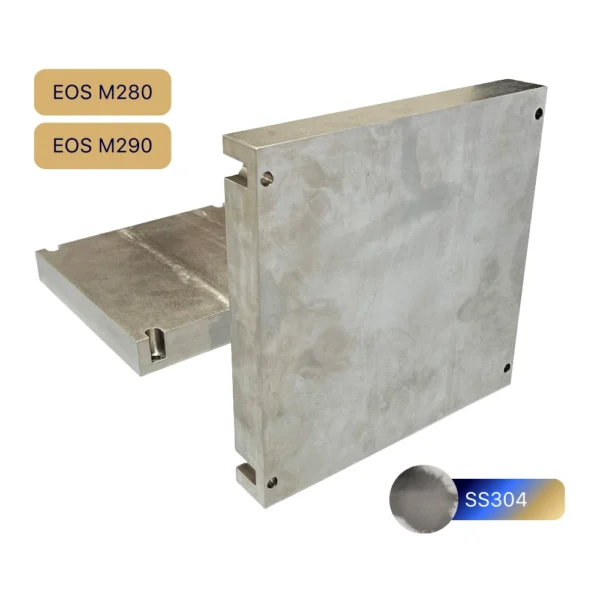
Request a custom quote — we manufacture precision build plates for most metal AM systems.
In stock
· Express 2–3 wks · Standard 6–8 wks
The most accessible resin on our Cubic Ink shelf — $119 per kg ($111.80/kg in the 5 kg canister). High Performance 2-1400 VP-SLA is the material ALTANA builds for laser SLA machines, supplied in translucent blue, with 10 kg canisters available on request — the only Cubic Ink resin offered that way.
New in the September 2026 range: ask us for the technical datasheet and print parameters for your machine, and we will send them the same day we have your printer model.
Made to order
In stock
· 1–2 Business DaysCommon questions
Don't see yours? Email [email protected] — NDA standard, typical reply within 4 hours.
What equipment do I need beyond my 3D printer?
How strong are the finished porcelain parts?
Can I use this with any FDM printer?
What safety precautions should I take?
How long does the complete process take?
Can I create food-safe items?
What's the shelf life of the filament?
How do I handle failed prints or support material?
Place your order, or talk to an engineer first
Order Zetamix Porcelain Filament 1,75mm direct, or talk to materials engineer